
Advocate in Delhi – Civil, Criminal, Commercial, Property, Matrimonial and Appellate Legal Representation in Delhi

Advocate in Delhi | Legal disputes in Delhi can arise suddenly and may involve far more than simply filing a case or appearing on the next court date.
A person facing arrest may need immediate advice on anticipatory or regular bail. A business may need to recover substantial outstanding dues through a commercial suit. A defendant may have only a limited procedural window to file a written statement. A property buyer may need documents examined before paying substantial consideration. A spouse may require advice regarding divorce, maintenance or child custody. A person convicted in a cheque bounce case may need to consider an appeal.
The appropriate legal strategy depends upon the nature of the dispute, jurisdiction, documents, limitation, available evidence, procedural stage and relief actually required.
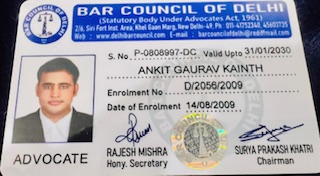
Advocate Ankit Gaurav Kainth and Associates represents and advises individuals, families, business owners, companies and other litigants in matters before courts in Delhi, with a substantial litigation practice connected with Dwarka Courts and South-West Delhi.
The practice covers civil litigation, criminal defence and bail, commercial disputes, cheque bounce cases, property matters, matrimonial disputes, cybercrime proceedings and appellate litigation.
Looking for an Advocate in Delhi? Start With the Nature of Your Case
Searching for an advocate should ideally begin with the legal problem rather than merely searching for a general lawyer.
Before engaging counsel, a litigant should identify:
- What type of case is involved?
- Which court has jurisdiction?
- Is there an urgent limitation period?
- Is arrest or coercive action apprehended?
- Is interim protection required?
- What documents and electronic evidence are available?
- Has a legal notice already been issued?
- Has a summons, FIR, complaint or court order already been received?
- Is settlement commercially or personally preferable to prolonged litigation?
- Is the matter at the trial, appeal or High Court stage?
A lawyer practising regularly before the relevant court and dealing with the concerned subject matter can examine these questions before a litigation strategy is finalised.
Courts in Delhi Where Legal Proceedings May Arise
Delhi has several District Court complexes in addition to the Delhi High Court and specialised courts and tribunals.
Depending upon territorial jurisdiction, subject matter and the nature of the proceedings, litigation may arise before:-
Dwarka Courts
Dwarka Courts deal with a substantial volume of civil, criminal, matrimonial, cheque bounce, property and other disputes arising particularly from South-West Delhi.
Our litigation practice is closely connected with Dwarka District Courts, Sector 10, New Delhi, including matters relating to Dwarka, Janakpuri, Vikaspuri, Uttam Nagar, Najafgarh, Palam, Dabri, Delhi Cantonment, Kapashera, Chhawla, Bindapur and adjoining areas.
Delhi High Court
Proceedings before the Delhi High Court may include:
- writ petitions;
- criminal petitions;
- bail proceedings;
- petitions for quashing;
- civil and commercial appeals;
- challenges to orders passed by subordinate courts;
- arbitration-related proceedings;
- constitutional remedies;
- other appellate and supervisory proceedings.
Whether a Delhi High Court proceeding is maintainable depends upon the particular statute, order challenged, jurisdiction and procedural circumstances.
Tis Hazari Courts
Tis Hazari is one of Delhi’s principal District Court complexes and deals with a broad range of civil and criminal litigation.
Saket Courts
Saket District Courts hear matters falling within their territorial and subject-matter jurisdiction, including civil, criminal, matrimonial and commercial disputes.
Rohini Courts
Rohini District Courts deal with litigation arising from areas falling within the concerned court districts and police-station jurisdictions.
Patiala House Courts
Patiala House Courts deal with several categories of criminal and other proceedings within their assigned jurisdiction.
Karkardooma Courts
The Karkardooma Court complex serves parts of East and North-East Delhi and handles civil, criminal and family-related litigation according to jurisdiction.
Rouse Avenue Courts
Certain specialised proceedings may fall within the jurisdiction of the Rouse Avenue Court complex.
Supreme Court of India
Cases reaching the Supreme Court may involve Special Leave Petitions, statutory appeals, transfer petitions and other proceedings maintainable before the Court.
The appropriate forum should always be determined from the facts, statute, territorial jurisdiction and order sought to be challenged.
Criminal Lawyer in Delhi – Defence, Bail and Criminal Proceedings
Being named in a criminal complaint, receiving a police notice or facing the possibility of arrest can create an immediate need for legal advice.
Criminal litigation requires attention not merely to the allegation but also to:
- contents of the FIR;
- role specifically attributed to the accused;
- documentary and electronic evidence;
- custodial interrogation requirements;
- recovery allegations;
- previous criminal involvement, if any;
- seriousness of the alleged offence;
- investigation already conducted;
- possibility of tampering with evidence;
- possibility of influencing witnesses;
- territorial jurisdiction;
- procedural compliance by the investigating agency.
Anticipatory Bail
Where a person reasonably apprehends arrest in a non-bailable offence, the circumstances may require examination of whether an application for anticipatory bail is maintainable and appropriate.
The strategy may differ depending upon whether:
- an FIR has already been registered;
- a complaint is still under inquiry;
- notice has been issued by the police;
- the person has already joined investigation;
- custodial interrogation is being sought;
- the matter involves economic offences, cybercrime, matrimonial allegations, POCSO, cheating or other serious offences.
Regular Bail
Where an accused is already in custody, regular bail may need to be considered before the court having jurisdiction.
Important factors can include the allegations, investigation status, nature of evidence, custody period, role of the accused, recovery, antecedents and other circumstances specific to the case.
Criminal Defence at Trial
Criminal defence does not end with obtaining bail.
Trial strategy may involve:
- examining the prosecution case;
- identifying contradictions;
- analysing electronic evidence;
- cross-examining prosecution witnesses;
- challenging inadmissible or unsupported evidence;
- producing defence evidence where required;
- preparing final arguments;
- challenging an adverse judgment before the appellate court.
Bail Lawyer in Delhi
Bail matters are often time-sensitive.
A person or family approaching an advocate regarding bail should preferably keep available:
- copy of FIR;
- police notice, if any;
- previous court orders;
- complaint or relevant allegations;
- identity documents;
- documents supporting the defence;
- communications relevant to the dispute;
- medical documents where legally relevant;
- proof of residence;
- details of previous cases, if any.
The correct bail forum depends on the nature of the case and procedural stage.
Where relief is refused by a lower court, the next available remedy must be examined from the actual order and applicable law rather than assuming that every rejection automatically produces the same remedy.
Cyber Crime Lawyer in Delhi
Cybercrime litigation has expanded significantly with the growth of online transactions, digital payments, cryptocurrency, social-media communication and remote financial fraud.
Matters may involve allegations relating to:
- online investment fraud;
- Telegram or WhatsApp investment schemes;
- mule bank accounts;
- digital arrest scams;
- cryptocurrency transactions;
- impersonation;
- online cheating;
- identity misuse;
- unauthorised banking transactions;
- multiple NCRP complaints;
- freezing of bank accounts;
- seizure of electronic devices;
- money-trail investigations.
A person whose bank account has received disputed funds may not necessarily have the same role as the person who originated or controlled the alleged fraud.
Therefore, transaction history, account control, communication records, device evidence and the alleged money trail may become important in determining the defence strategy.

Commercial Court Advocate in Delhi
Commercial litigation differs significantly from ordinary civil litigation.
Businesses involved in substantial contractual disputes may need to consider the provisions of the Commercial Courts Act and the amended provisions of the Code of Civil Procedure applicable to commercial disputes.
Commercial disputes may involve:
- unpaid invoices;
- outstanding receivables;
- supply agreements;
- service agreements;
- distribution arrangements;
- commercial contracts;
- business loans;
- partnership disputes;
- contractual damages;
- breach of commercial obligations;
- counterclaims and set-off.
Commercial Recovery Suits
Before filing a commercial recovery action, a claimant should examine:
- contractual documents;
- invoices;
- purchase orders;
- delivery records;
- bank statements;
- ledger accounts;
- email correspondence;
- acknowledgments of liability;
- limitation;
- territorial jurisdiction;
- pre-litigation requirements.
A strong recovery case generally begins with proper documentation before the plaint is drafted.
Defence of a Commercial Suit
A defendant receiving summons in a commercial case should treat the proceedings seriously from the beginning.
Commercial litigation contains stricter procedural requirements relating to matters such as written statements, disclosure and admission or denial of documents.
Delay at the beginning of the litigation can adversely affect procedural options later.
Document Disclosure
Commercial litigation places substantial importance upon disclosure and documentary evidence.
Parties should identify their relevant documents early rather than waiting until the evidence stage.
Case Management
Case-management procedures are intended to structure the progress of the commercial suit, including issues, evidence and timelines.
Businesses should therefore approach commercial litigation with a clear case strategy rather than treating each hearing as an isolated event.

Cheque Bounce Lawyer in Delhi – Section 138 NI Act
Cheque dishonour disputes under Section 138 of the Negotiable Instruments Act constitute a specialised area of litigation.
A cheque bounce case may involve:
- statutory demand notice;
- complaint proceedings;
- summons to the accused;
- appearance and bail;
- notice/plea stage;
- cross-examination of the complainant;
- examination of financial capacity where relevant;
- presumptions relating to negotiable instruments;
- defence evidence;
- final arguments;
- conviction or acquittal;
- appeal after conviction.
If You Have Received Summons
Receiving summons does not by itself mean that the accused has been convicted.
However, ignoring court summons can create additional procedural difficulties.
The accused should examine the complaint, cheque, legal notice, alleged transaction and supporting evidence before finalising the defence.
Cross-Examination in Cheque Bounce Cases
Cross-examination may become particularly important where the defence disputes:
- existence of legally enforceable liability;
- amount allegedly advanced;
- financial capacity;
- purpose for which the cheque was issued;
- date and manner of the transaction;
- documentary support;
- entries in accounts;
- circumstances in which the cheque came into possession of the complainant.
Questions should be prepared from the actual complaint and evidence rather than using a generic cross-examination template.
Appeal Against Section 138 Conviction
Where an accused has been convicted, the judgment, evidence, sentence and procedural history should be examined promptly to determine the appropriate appellate remedy.
The appellate strategy may require examination of both the conviction and consequential directions regarding sentence, compensation or deposit.
Civil Lawyer in Delhi
Civil litigation covers a wide range of disputes relating to property, contracts, possession, injunctions and private legal rights.
Matters may include:
- permanent injunction;
- mandatory injunction;
- declaration;
- possession;
- recovery of money;
- partition;
- specific performance;
- cancellation of documents;
- property disputes;
- landlord-tenant disputes;
- appeals;
- execution proceedings.
A civil case should preferably be evaluated before filing because defects relating to jurisdiction, limitation, cause of action, valuation, documents or relief can affect the litigation later.
Property Lawyer in Delhi
Property transactions and disputes often involve substantial financial exposure.
Legal assistance may be required both before purchase and after a dispute arises.
Property Document Verification
A buyer considering purchasing a flat, house or plot should generally examine the title and transaction documents before making substantial payment.
Depending upon the property, relevant documents may include:
- title documents;
- previous sale deeds;
- chain of ownership;
- Agreement to Sell;
- Bayana or token receipt;
- sanctioned building documents where applicable;
- property-tax records;
- mutation-related documents;
- possession documents;
- encumbrance-related information;
- loan or mortgage documents;
- society or authority documentation;
- identity and authority of the seller.
Property verification should not be treated merely as checking whether a person’s name appears on one document.
The objective is to understand the chain of title, authority to transfer, property description, restrictions, encumbrances and legal risks connected with the proposed transaction.
Property Litigation
Disputes may arise regarding:
- ownership;
- possession;
- partition;
- inheritance;
- injunction;
- agreement to sell;
- specific performance;
- unauthorised construction;
- family property;
- wills and succession;
- eviction;
- senior-citizen property disputes.
Divorce and Matrimonial Lawyer in Delhi
Matrimonial disputes require both procedural preparation and careful assessment of the family circumstances.
Legal proceedings may involve:
- mutual-consent divorce;
- contested divorce;
- judicial separation;
- annulment;
- maintenance;
- domestic-violence proceedings;
- child custody;
- visitation;
- guardianship;
- matrimonial criminal proceedings;
- settlement between spouses.
Mutual Consent Divorce
Where both spouses have decided to separate and can agree upon issues such as maintenance, property, custody and other claims, mutual-consent proceedings may be considered subject to the applicable legal requirements.
Settlement terms should be drafted carefully because unclear terms can create disputes even after the parties have broadly agreed to separate.
Contested Matrimonial Litigation
Where parties cannot agree, the strategy depends on the pleadings, evidence, allegations, financial circumstances, children and other relevant facts.
Matrimonial litigation should not be approached solely as an emotional dispute. Financial records, communication, pleadings and documentary evidence often become important.
Legal Notice Advocate in Delhi
A legal notice can sometimes resolve a dispute before litigation becomes necessary.
Not every case legally requires a notice, and the purpose of the notice differs depending upon the dispute.
Legal notices may arise in relation to:
- recovery of money;
- contractual breach;
- property disputes;
- cheque dishonour;
- landlord-tenant disputes;
- commercial disputes;
- employment-related claims;
- family or settlement matters.
A properly drafted notice should identify the facts, legal grievance and relief sought without unnecessarily exaggerating the allegations.

Advocate for Clients Living Outside Delhi or Abroad
A person may have litigation in Delhi despite residing elsewhere in India or outside the country.
Such clients may require assistance regarding:
- reviewing case documents remotely;
- obtaining updates regarding proceedings;
- coordinating affidavits and authorisations;
- attending hearings where virtual appearance is legally available;
- obtaining copies of orders;
- coordinating with local representatives;
- pursuing litigation while the client remains outside Delhi.
Whether physical appearance is necessary depends upon the particular proceeding and directions of the concerned court.
How We Approach Litigation
Every dispute is different, but a structured approach generally helps prevent avoidable errors.
1. Understand the Problem
The first step is to identify the client’s actual objective.
The desired result may be:
- protection from arrest;
- recovery of money;
- defence of a suit;
- injunction;
- possession;
- divorce;
- custody;
- challenge to a conviction;
- quashing;
- settlement;
- enforcement of contractual rights.
2. Examine Jurisdiction
Before filing proceedings, determine which court has territorial and subject-matter jurisdiction.
Filing in the wrong forum can waste significant time and cost.
3. Examine Limitation
Many legal remedies are subject to limitation periods.
Clients should therefore avoid delaying legal consultation merely because settlement discussions are continuing.
4. Review Documents
Good litigation strategy begins with documents.
Where possible, prepare a chronological file containing:
- agreements;
- notices;
- court orders;
- police documents;
- bank records;
- emails;
- WhatsApp conversations;
- invoices;
- title documents;
- photographs;
- audio or video evidence where relevant.
5. Identify Interim Relief
Sometimes the immediate issue is more important than the final relief.
Depending upon the case, interim protection may involve:
- bail;
- stay;
- injunction;
- preservation of property;
- suspension of sentence;
- protection against coercive action;
- other temporary relief permitted by law.
6. Evaluate Settlement
Settlement should neither be accepted merely to avoid litigation nor rejected merely because litigation has started.
It should be evaluated against:
- strength of evidence;
- financial exposure;
- litigation cost;
- commercial value;
- family circumstances;
- time;
- enforceability of proposed settlement terms.
Choosing an Advocate in Delhi
When selecting an advocate for litigation, clients may consider practical factors such as:
Relevant Practice Area
An advocate handling criminal bail regularly may not necessarily have the same practice focus as someone dealing primarily with property transactions or commercial suits.
Court Familiarity
Knowledge of the concerned court’s procedures, filing requirements and litigation workflow can help in managing the case efficiently.
Clear Fee Understanding
Professional fees should preferably be discussed transparently, including the scope of work and expenses likely to arise during litigation.
Document-Based Advice
Clients should be cautious about legal conclusions made without reviewing the important documents.
Realistic Assessment
No advocate can ethically guarantee the result of judicial proceedings.
Litigation involves evidence, law, judicial determination and conduct of the opposing party.
The proper role of an advocate is to analyse the case, prepare the legal strategy, present the client’s case and explain the available remedies.
Advocate in Dwarka Court – Our Principal Local Litigation Base
Although our practice covers litigation in Delhi, Dwarka Courts remain an important part of our day-to-day litigation practice.
Advocate Ankit Gaurav Kainth practises from Chamber No. 728, Dwarka Courts, Sector 10, New Delhi.
Clients approaching us from South-West Delhi commonly come from areas including:
Dwarka, Janakpuri, Vikaspuri, Uttam Nagar, Najafgarh, Palam, Dabri, Kapashera, Chhawla, Bindapur, Delhi Cantonment, Mohan Garden, Samalka and adjoining areas.
For matters outside Dwarka’s territorial jurisdiction, the appropriate court is determined from the facts and applicable law rather than selecting a court merely for convenience.
Why Local Court Knowledge Still Matters in a Delhi-Wide Practice
Delhi may be one city, but litigation is distributed among different court complexes and jurisdictions.
A matter should be filed in the correct court based upon factors such as:
- location of the property;
- place where the cause of action arose;
- police station concerned;
- residence or business of parties where legally relevant;
- value of the dispute;
- statutory forum;
- nature of the relief sought.
Therefore, searching for an Advocate in Delhi should ultimately lead to a more specific question:
Which lawyer is appropriate for my particular dispute, court and procedural stage?
Legal Consultation Before Filing a Case
One of the most useful stages of litigation is often the period before the case is filed.
Before commencing proceedings, a client should ideally understand:
- Which court has jurisdiction?
- Is the claim within limitation?
- What evidence is presently available?
- Which documents are missing?
- Is a legal notice required?
- What relief can realistically be claimed?
- Is urgent interim relief required?
- What court fee or litigation expenses may arise?
- Is settlement worth exploring first?
- Can the final order practically be enforced?
A carefully prepared case can avoid procedural problems that may otherwise appear months or years later.
Frequently Asked Questions – Advocate in Delhi
1. How do I choose an advocate in Delhi for my case?
Start by identifying the type of case and court involved. Examine whether the advocate regularly handles that area of litigation, understands the relevant procedural requirements and is willing to review the documents before advising you.
2. Which court in Delhi will hear my case?
The answer depends upon territorial jurisdiction, pecuniary jurisdiction, subject matter, police-station jurisdiction and the statute governing the dispute. Two people living in Delhi may still have cases before different District Court complexes.
3. Can an advocate practising in Dwarka Court appear in other Delhi courts?
An advocate enrolled to practise in accordance with applicable law is not confined to one District Court complex merely because their chamber is located there. The appropriate appearance arrangements depend upon the matter and forum. The Advocates Act, 1961 is the principal statute governing the legal profession in India.
4. Can I consult an advocate before an FIR is registered?
Yes. Where a person has received a police complaint, inquiry notice or reasonably apprehends criminal proceedings, early legal advice may help in understanding the allegations and available procedural remedies.
5. Should I send a legal notice before filing a case?
It depends upon the nature of the proceeding. Certain claims have statutory notice requirements or pre-litigation procedures, while other disputes do not necessarily require a notice. The decision should be based upon the applicable law and litigation strategy.
6. What documents should I bring for the first consultation?
Bring the main documents relating to the dispute, including notices, agreements, FIRs, court papers, orders, bank records, emails, messages, property documents, invoices or other relevant evidence.
A short written chronology of events can also make the consultation more productive.
7. Can clients living outside Delhi engage a Delhi advocate?
Yes. Many aspects of case preparation and consultation can be coordinated remotely. However, personal appearance may still be required in some proceedings depending upon the court’s directions and applicable procedure.
8. What should I do immediately after receiving court summons?
Do not ignore them. Identify the court, case number, next date and nature of proceedings. Obtain the complete case papers where available and seek advice regarding appearance, response, bail or written statement as applicable.
9. Can a Delhi advocate handle both trial and appeal?
This depends upon the advocate’s area of practice and the appellate forum. A case arising from a District Court may subsequently require proceedings before an appellate court or the Delhi High Court.
10. Can anyone guarantee the result of a case?
No genuine litigation assessment can guarantee a judicial outcome. Results depend upon law, evidence, facts, procedural compliance and judicial determination.
Areas of Practice
Legal assistance is available in relation to:
- Criminal Defence
- Anticipatory Bail
- Regular Bail
- Cyber Crime Bail
- Civil Litigation
- Commercial Court Matters
- Commercial Recovery Suits
- Cheque Bounce Cases
- Section 138 NI Act Defence
- Cheque Bounce Appeals
- Property Disputes
- Property Document Verification
- Injunction and Possession Cases
- Partition Suits
- Specific Performance
- Divorce and Matrimonial Matters
- Maintenance Proceedings
- Child Custody and Visitation
- Domestic Violence Proceedings
- Legal Notices
- Appeals
- Delhi High Court Litigation
- Supreme Court Proceedings
Advocate Ankit Gaurav Kainth – Delhi Litigation Practice
Advocate Ankit Gaurav Kainth is a practising litigation advocate and heads Ankit Gaurav Kainth & Associates.
The practice includes representation and advisory work relating to:
Civil Litigation | Criminal Defence | Bail | Commercial Courts | Cheque Bounce Cases | Property Matters | Matrimonial Litigation | Cybercrime | Appeals
The principal local court base is:
Chamber No. 728
Dwarka District Courts
Sector 10, New Delhi
Legal consultations may be scheduled in advance for clients who require preliminary case assessment, document review or litigation advice.
Before Starting Litigation
A legal dispute should not be approached solely on the basis of what the opposing party has said or what happened on the most recent date.
Before taking legal action:
Understand the facts.
Preserve the evidence.
Check limitation.
Identify jurisdiction.
Review the documents.
Understand the available relief.
Then decide the litigation strategy.
A well-prepared case begins before the first pleading is filed.
Legal Services & Litigation in Delhi
Explore our detailed legal resources covering criminal defence, bail, commercial disputes, cheque bounce cases, civil litigation, property matters, matrimonial disputes, Delhi High Court proceedings and Supreme Court litigation.
| Legal Matter | Legal Resource | What You Can Learn |
|---|---|---|
| Dwarka Court Litigation | Advocate Near Dwarka Court | Local litigation, court jurisdiction and legal assistance before Dwarka Courts. |
| Bail Matters | Bail Lawyer in Dwarka Court Delhi | Anticipatory bail, regular bail, interim protection and criminal bail proceedings. |
| Pre-Litigation Strategy | Before Filing a Case in Dwarka Court Delhi | Jurisdiction, limitation, documents, evidence, interim relief and litigation planning. |
| Legal Notices | Legal Notice Advocate Dwarka Court | Legal notices for recovery, contractual, property, cheque bounce and other disputes. |
| Commercial Litigation | Commercial Court Litigation in Delhi | Commercial suits, recovery disputes, documents, timelines and case strategy. |
| Summary Judgment | Summary Judgment in Commercial Courts | Understand when a commercial dispute may potentially be decided without a full trial. |
| Cheque Bounce Defence | Supreme Court Judgments on Cheque Bounce Defence | Defence principles, presumptions, evidence and cross-examination in Section 138 cases. |
| Criminal Complaints | FIR Through Complaint Case in Dwarka Court | Remedies where police action or FIR registration is disputed or delayed. |
| Criminal Investigation | Police Investigation Process in Criminal Cases | FIR, investigation, evidence, arrest, notices and criminal procedure. |
| Matrimonial Litigation | Divorce Advocate Dwarka Court | Divorce, maintenance, matrimonial disputes, custody and related proceedings. |
| Supreme Court | Filing a Petition in the Supreme Court of India | Supreme Court procedure, documentation and preparation before filing. |
| Supreme Court Bail | Supreme Court Bail Procedure | Bail challenges reaching the Supreme Court, documents and procedural stages. |
| Legal Services | Types of Cases We Handle | Overview of criminal, civil, bail, commercial and other litigation matters. |