

Introduction – Cheque Bounce Lawyer Dwarka Court
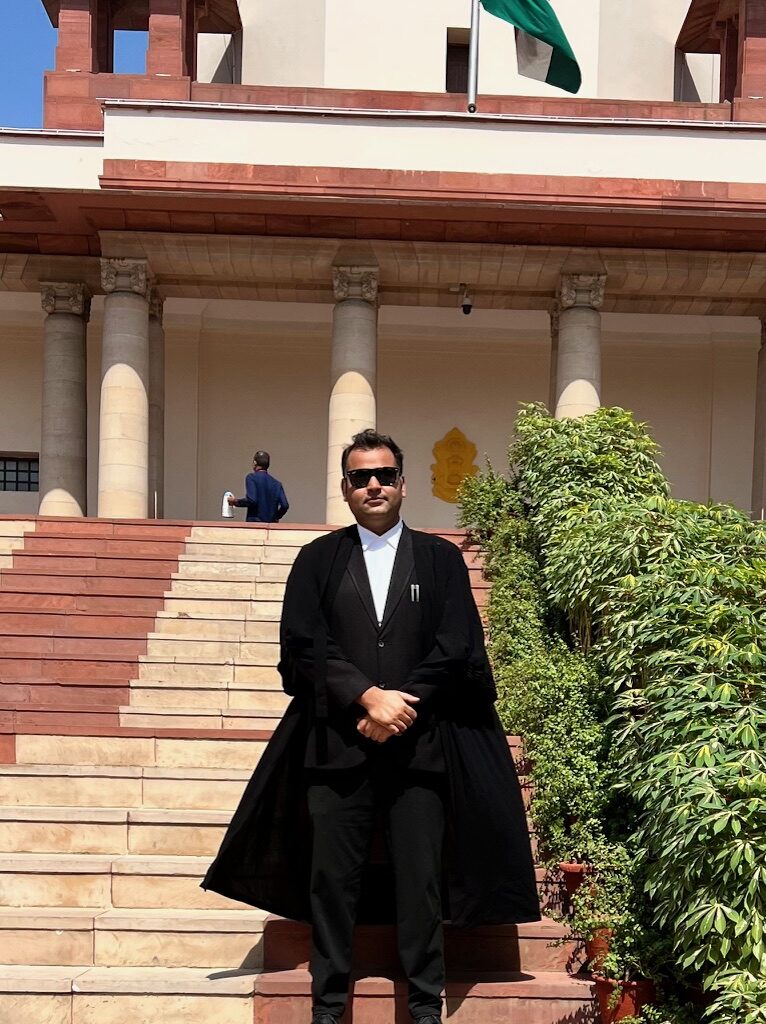
Cheque Bounce Lawyer in Dwarka Court Delhi | Section 138 NI Act Advocate
Cheque Dishonoured or Received a Section 138 Summons? Understand the Legal Notice, Complaint, Defence, Trial, Settlement and Appeal Process
A cheque bounce dispute can quickly move from a failed financial transaction to criminal litigation.
For the person who received the cheque, the immediate questions are usually:
How do I recover my money?
When should the legal notice be sent?
Where should the complaint be filed?
What documents are required?
For the person who issued the cheque, the concerns are very different:
I have received a legal notice—what should I do?
Does my signature automatically make me liable?
I have received summons from Dwarka Court—do I have to appear?
Can I contest the alleged debt?
Can I settle the case?
What happens if I am convicted?

A case under Section 138 of the Negotiable Instruments Act, 1881 is governed by a specific statutory sequence. Missing an important limitation period, failing to preserve the underlying transaction documents, or treating the case as a simple “bounced cheque” dispute can materially affect the proceedings.
At Ankit Gaurav Kainth & Associates, Section 138 NI Act matters are handled before Dwarka Courts for both complainants and accused persons, including trial proceedings, cross-examination, settlements and appeals against conviction where applicable.
What Is a Section 138 Cheque Bounce Case?
Section 138 of the Negotiable Instruments Act creates criminal consequences where a cheque issued toward discharge of a legally enforceable debt or liability is dishonoured and the other statutory requirements are fulfilled.
However, every dishonoured cheque does not automatically result in conviction.
The statutory process generally involves:
Cheque → Presentation → Dishonour → Bank Return Memo → Statutory Demand Notice → Failure to Pay → Complaint → Summoning → Trial → Judgment
Sections 138 to 148 of the Negotiable Instruments Act contain the principal statutory framework governing cheque-dishonour prosecutions, including presumptions, jurisdiction, summary trial, evidence by affidavit, compounding and appellate deposit provisions.
Section 138 Cases in Dwarka Court: Complainant and Accused Require Different Strategies
| If You Are the Complainant | If You Are the Accused |
| Preserve original cheque and return memo | Do not ignore legal notice or Court summons |
| Check limitation immediately | Examine whether a legally enforceable liability existed |
| Prepare statutory notice correctly | Examine underlying transaction |
| Establish debt/liability | Review complainant’s financial/documentary evidence |
| Determine territorial jurisdiction | Decide defence before plea/notice stage |
| File complaint within limitation | Consider Section 145(2) cross-examination |
| Prove transaction and cheque | Rebut Sections 118/139 presumptions where possible |
| Cross-examine defence witnesses if required | Lead defence evidence where strategically necessary |
| Consider settlement if commercially sensible | Consider settlement where appropriate |
| Defend acquittal/seek appropriate appellate remedy | Consider appeal and suspension after conviction |
The two sides should therefore not be handled with the same litigation strategy.
1. When Does Section 138 NI Act Apply?
Broadly, a prosecution may arise where:
- a cheque is drawn by a person on an account maintained by that person;
- it is issued toward discharge, wholly or partly, of a legally enforceable debt or liability;
- it is presented within its validity period;
- the cheque is returned unpaid;
- the payee issues the required statutory demand notice within the prescribed period;
- payment is not made within the statutory period after receipt of notice; and
- the complaint is instituted within the applicable limitation period.
These requirements should be checked carefully before a complaint is filed.
A cheque returning unpaid is only one part of the statutory cause of action.
2. Cheque Bounce Legal Notice: The First Critical Stage
A Section 138 case ordinarily begins with a statutory demand notice after dishonour.
The notice is not merely a formality.
It should normally identify:
- cheque number;
- cheque date;
- cheque amount;
- bank details where appropriate;
- dishonour;
- return memo;
- underlying liability;
- demand for payment; and
- relevant statutory requirements.
Incorrect drafting can create avoidable disputes concerning the demand, service, transaction or limitation.
A complainant should therefore preserve:
original cheque + return memo + legal notice + postal/courier records + delivery tracking + underlying transaction documents.
3. Received a Cheque Bounce Legal Notice? Do Not Ignore It
Receiving a Section 138 notice does not mean that you have already been convicted.
It means that the payee is asserting a statutory claim arising from dishonour of the cheque.
Before replying, the accused should examine:
- Was the cheque actually issued?
- Is the signature admitted?
- Why was the cheque given?
- Was it issued toward an existing liability?
- Was it a security cheque?
- Was the alleged amount actually payable on presentation?
- Has any amount already been paid?
- Is the claimed amount correct?
- Are there invoices, agreements or account statements?
- Was the cheque lost or misused?
- Was any stop-payment instruction issued?
- Does correspondence contradict the complainant’s version?
- Is there any written settlement?
A rushed reply can later become relevant evidence.
The response should therefore be consistent with the defence likely to be taken before Court.
4. Where Is a Cheque Bounce Complaint Filed?
Territorial jurisdiction under Section 138 is governed specifically by Section 142 of the Negotiable Instruments Act.
Where the cheque is delivered for collection through an account, Section 142(2)(a) generally places jurisdiction at the location of the bank branch where the payee maintains the account through which the cheque was collected.
The Supreme Court reaffirmed this principle in July 2025 while interpreting the post-2015 statutory framework.
Therefore, the drawer’s residence alone does not necessarily decide which Court will hear the complaint.
For proceedings before Dwarka Courts, jurisdiction should be verified from the banking and transaction facts before filing.
5. What Happens After a Section 138 Complaint Is Filed?
A cheque-bounce complaint does not immediately proceed to a full criminal trial.
The Court ordinarily examines the complaint and supporting material and determines whether grounds exist to summon the accused.
If summons are issued, the accused is required to respond before the Court.
The case may then proceed through stages such as:
Appearance → Bail/Bond Formalities → Plea/Notice → Complainant Evidence → Section 145(2) Cross-Examination → Defence Evidence, if any → Final Arguments → Judgment
The exact procedure can vary according to the case and Court directions.
6. Received Summons from Dwarka Court in a Cheque Bounce Case?
Court summons should not be ignored.
Ignoring proceedings can lead to coercive procedural consequences and make the case more difficult to manage.
An accused should ordinarily obtain and examine:
- copy of complaint;
- cheque;
- return memo;
- statutory notice;
- postal/service material;
- complainant’s affidavit;
- underlying invoices/agreement;
- account statement;
- summoning order; and
- any supporting documents filed with the complaint.
The defence should preferably be identified before important statements are made before Court.
7. Does the Accused Need Bail in a Section 138 Case?
Section 138 proceedings are criminal complaints, but they are distinct from many conventional FIR-based prosecutions.
After appearance pursuant to summons, the Court may require the accused to comply with appropriate bail/bond formalities.
The exact procedure should be considered from the Court order and stage of proceedings.
An accused should not avoid appearance merely because the dispute originally arose from a commercial or personal financial transaction.
8. The Most Important Question: Was There a Legally Enforceable Debt or Liability?
This is frequently the heart of Section 138 litigation.
The complainant may rely upon documents such as:
- loan agreement;
- invoices;
- purchase orders;
- delivery records;
- ledger accounts;
- bank transfers;
- acknowledgment of liability;
- WhatsApp or email communication;
- promissory documents;
- settlement agreements; or
- other evidence of the underlying transaction.
The accused may challenge:
- existence of the transaction;
- amount allegedly outstanding;
- complainant’s version of payment;
- financial capacity where legally relevant;
- adjustment or repayment;
- purpose for which the cheque was handed over;
- authenticity or completeness of documents;
- chronology of events; or
- whether any liability existed when the cheque was presented.
The cheque cannot always be analysed in isolation from the transaction behind it.
9. Presumption Under Sections 118 and 139 NI Act
Cheque-bounce litigation contains an important evidentiary feature.
Once the foundational requirements are established, Sections 118 and 139 can operate in favour of the holder.
Section 139 provides a statutory presumption concerning receipt of the cheque toward discharge of debt or liability, unless the contrary is proved.
The Supreme Court has repeatedly explained that where execution/signature is established, the statutory presumption arises, but it is rebuttable. The accused is not necessarily required to prove the defence beyond reasonable doubt; the rebuttal operates on the standard of preponderance of probabilities.
This means two opposite statements are both inaccurate:
“A signed cheque means automatic conviction.”
and
“Simply denying the debt defeats the complaint.”
The Court examines the evidence.
10. Can the Accused Rebut the Section 139 Presumption?
Yes.
But mere denial may not be enough.
The defence may emerge through:
- complainant’s own documents;
- contradictions during cross-examination;
- admitted correspondence;
- bank records;
- repayment evidence;
- inconsistencies regarding the transaction;
- absence of expected supporting records;
- circumstances surrounding issuance of the cheque; or
- defence evidence where necessary.
The Supreme Court has recognised that an accused can rebut the statutory presumption by establishing a probable defence.
In an August 2024 decision, the Supreme Court also upheld findings where the accused had created sufficient doubt regarding the complainant’s case to rebut the Section 139 presumption.
The defence should therefore focus on evidence and probabilities, not simply a general denial.
11. Cross-Examination Under Section 145(2) NI Act
Cross-examination of the complainant can be one of the most important stages for an accused.
Section 145 permits evidence on affidavit in cheque-bounce proceedings.
Where appropriate, an accused may seek examination/cross-examination of the complainant under Section 145(2).
Cross-examination should be planned around the actual defence.
Important areas may include:
Source of Money
Where does the complainant say the money came from?
Transaction
When, where and how was the amount allegedly advanced or liability created?
Documents
Was any agreement, invoice, receipt or acknowledgment created?
Financial Capacity
Where legally relevant, does the documentary record support the alleged transaction?
Cheque
When and in what circumstances was the cheque handed over?
Accounts
Is the alleged amount reflected in relevant books, bank records or financial documents?
Prior Payments
Were there payments that have not been properly accounted for?
Contradictions
Does the complaint differ from the legal notice, affidavit, documents or oral evidence?
Cross-examination should not become a long list of unrelated questions.
Every important question should ideally connect with the intended defence.
12. Security Cheque: Is Section 138 Automatically Inapplicable?
No.
Merely describing a cheque as a “security cheque” does not automatically end a Section 138 prosecution.
The real question may include whether a legally enforceable liability had crystallised or existed when the cheque was presented and whether the statutory ingredients are otherwise satisfied.
Therefore:
“It was only a security cheque”
should not be treated as a complete defence without examining the underlying transaction.
13. Blank Signed Cheque: Is That a Defence?
Giving a signed cheque without filling every particular does not necessarily by itself defeat a Section 138 complaint.
The Court may still examine:
- why the cheque was handed over;
- whether authority existed to complete it;
- what liability existed;
- whether the amount was correctly filled;
- surrounding correspondence; and
- the overall defence.
If misuse is alleged, the accused should ideally identify evidence supporting that allegation rather than relying solely upon the fact that portions of the cheque were filled by another person.
14. Stop-Payment Cheque and Section 138
A stop-payment instruction does not necessarily make Section 138 inapplicable.
The reason for dishonour must be considered together with the statutory requirements and underlying liability.
If payment was stopped because the drawer disputed the transaction, contemporaneous communications and documentary evidence can become particularly important.
15. Part Payment Before Presentation of Cheque
Part payment is a potentially important issue.
Suppose a cheque was originally issued for ₹10 lakh, but ₹4 lakh was subsequently paid before the cheque was presented.
The legal effect cannot simply be assumed.
The Court may need to examine the actual legally enforceable liability at the relevant stage, endorsements where applicable, the demand raised and the factual record.
Therefore, evidence of any repayment or adjustment should be preserved carefully.
16. Cheque Bounce Cases Involving Companies and Directors
Where the drawer is a company, Section 141 NI Act can become important.
Liability of the company and persons sought to be prosecuted on its behalf must be examined against the statutory requirements.
Being a director of a company does not mean that every person should automatically be treated identically.
The complaint and company records should be examined to determine:
- status of the accused;
- role attributed;
- responsibility for conduct of business;
- signatory status;
- relevant period; and
- statutory averments in the complaint.
Company cheque cases therefore require a separate analysis from an ordinary individual cheque.
17. Interim Compensation Under Section 143A
Section 143A of the Negotiable Instruments Act contains a mechanism concerning interim compensation in specified circumstances during the trial.
Whether an order should be made and how the statutory provision applies depends upon the stage and circumstances of the proceeding.
An accused should therefore treat an application under Section 143A as a substantive litigation issue rather than an administrative formality.
18. Can a Cheque Bounce Case Be Settled?
Yes.
Section 147 NI Act expressly makes offences under the Act compoundable. (India Code)
Settlement can occur:
- before complaint;
- after summons;
- during trial;
- during mediation;
- after evidence;
- at appellate stage; or
- in other legally permissible circumstances.
A settlement should clearly specify:
total amount → instalments → due dates → payment mode → default consequences → Court proceedings → withdrawal/compounding stage.
Avoid informal oral settlements in pending litigation where substantial money is involved.
The terms should be capable of being proved and implemented.
19. What Happens if the Accused Is Convicted Under Section 138?
A conviction can involve consequences prescribed under Section 138, including imprisonment and/or fine within the statutory limits.
The trial Court may also pass financial directions depending upon the judgment and applicable law.
A convicted person should immediately obtain and examine:
- judgment of conviction;
- order on sentence;
- compensation/fine directions;
- suspension-related order, if any; and
- certified copies required for appeal.
The limitation for appellate proceedings should be examined immediately.
20. Appeal Against Section 138 Conviction in Dwarka Court
A conviction by the trial Court does not necessarily end the proceedings.
The convicted person can examine the statutory appellate remedy before the competent appellate Court.
A cheque-bounce appeal is not simply a second trial.
The appellate Court may examine issues such as:
- whether statutory ingredients were proved;
- whether presumptions were correctly applied;
- whether a probable defence was ignored;
- material contradictions;
- admissibility and appreciation of documents;
- cross-examination;
- underlying liability;
- defence evidence; and
- reasoning of the trial Court.
Where the matter arises from a Magistrate Court at Dwarka, the appropriate appellate forum and procedure should be identified from the judgment and applicable law.
21. Section 148 Deposit During Appeal
Section 148 NI Act gives the appellate Court power concerning deposit of an amount pending an appeal against conviction.
This can become a major practical consideration for an accused immediately after conviction.
The trial judgment, compensation/fine amount, appellate grounds and applicable judicial decisions should therefore be examined before dealing with the deposit question.
A person should not assume either:
“A deposit can never be required”
or
“Exactly the same deposit must mechanically be ordered in every case.”
The applicable law and order of the appellate Court govern the matter.
22. What if the Accused Is Acquitted?
An acquittal does not always mean that no further proceedings are possible.
The complainant may need to examine the available remedy against acquittal under the applicable criminal appellate framework and the particular nature of the order.
Conversely, the accused should preserve the judgment and case record because an appellate challenge may subsequently be filed.
23. Multiple Cheques from the Same Transaction
Businesses frequently receive several cheques arising out of one commercial arrangement.
The legal consequences depend upon the presentation, dishonour, notices and individual cause of action.
In January 2026, the Supreme Court reiterated that separate cheques can give rise to separate causes of action where the statutory sequence is independently completed; their arising from a single broader transaction does not automatically merge them into one complaint.
This issue becomes especially important in running accounts and instalment arrangements.
24. Documents for Filing a Cheque Bounce Complaint
A complainant should ordinarily organise:
- original cheque;
- bank return memo;
- statutory legal notice;
- postal/courier receipt;
- tracking/service proof;
- invoices;
- agreement;
- loan documents;
- account statements;
- ledger;
- bank transfer evidence;
- acknowledgment;
- relevant messages/emails;
- identity and address records; and
- company authorisation documents where applicable.
The documents proving the underlying liability may ultimately be just as important as the cheque itself.
25. Documents for Defending a Cheque Bounce Case
An accused should consider preserving:
- complaint and annexures;
- cheque copy;
- legal notice;
- reply to notice;
- bank statements;
- repayment proof;
- agreements;
- invoices;
- ledger records;
- WhatsApp/email communications;
- settlement correspondence;
- stop-payment communications;
- police complaint concerning lost/misused cheque, if genuinely made;
- income/financial documents where relevant;
- transaction records; and
- prior Court orders.
The defence should be built from contemporaneous evidence wherever possible.
26. Common Mistakes by Complainants
A complainant can weaken an otherwise legitimate case by:
- missing limitation;
- sending an incorrect demand notice;
- filing in the wrong jurisdiction;
- failing to preserve original documents;
- claiming an amount inconsistent with records;
- not documenting the underlying transaction;
- giving contradictory versions;
- overlooking prior payments;
- failing to prove authority in company cases; or
- assuming that possession of a signed cheque alone guarantees conviction.
A strong complaint begins before the case is filed.
27. Common Mistakes by Accused Persons
An accused may damage the defence by:
- ignoring the legal notice;
- ignoring summons;
- changing the defence repeatedly;
- admitting facts without understanding their significance;
- claiming “security cheque” without supporting evidence;
- failing to preserve repayment proof;
- asking irrelevant questions in cross-examination;
- producing documents too late;
- taking inconsistent positions about the signature; or
- assuming that settlement can be postponed indefinitely.
The defence adopted at the beginning should remain consistent with the documents and evidence.
28. Cheque Bounce Lawyer in Dwarka Court: How the Case Should Be Approached
At Ankit Gaurav Kainth & Associates, Section 138 cases are approached by first identifying which stage the matter has reached.
For Complainants
The review may include:
Cheque → Liability → Dishonour → Notice → Service → Limitation → Jurisdiction → Complaint → Evidence
For Accused Persons
The review may include:
Summons/Notice → Complaint Documents → Signature → Underlying Transaction → Liability → Presumption → Probable Defence → Cross-Examination → Defence Evidence
After Conviction
The review changes again:
Judgment → Errors in Findings → Evidence → Sentence → Suspension → Section 148 → Appeal
This stage-based approach is more effective than treating every cheque-bounce dispute as the same case.
Cheque Bounce Matters Handled Before Dwarka Courts
Our practice includes assistance in matters involving:
- Section 138 complaints;
- cheque-bounce legal notices;
- reply to statutory notice;
- complainant-side proceedings;
- accused-side defence;
- summons proceedings;
- bail/bond formalities;
- Section 145(2) applications;
- cross-examination of complainant;
- defence evidence;
- Section 143A interim compensation;
- settlement and compounding;
- final arguments;
- conviction matters;
- appeal against Section 138 conviction;
- suspension of sentence;
- Section 148 deposit issues;
- complaints involving companies/directors; and
- connected proceedings before higher Courts where applicable.
Matters before Dwarka Courts may arise from business transactions, personal loans, property dealings, commercial supplies, service arrangements and other legally enforceable financial liabilities.
Ankit Gaurav Kainth & Associates
Advocates — Dwarka Courts, Delhi
Chamber No. 728, Dwarka District Court, New Delhi
| Cheque Bounce Guide | What You Will Learn | Read Guide |
|---|---|---|
| Cheque Bounce Lawyer in Dwarka Court | Complete guidance on Section 138 NI Act cases, legal notices, complaints, defence, evidence, settlement and court proceedings in Dwarka Court. | Read Complete Guide → |
| Section 138 NI Act Defence | 15 important mistakes accused persons should avoid, including summons, Section 139 presumptions, Section 145(2), cross-examination, defence evidence and Section 143A. | Section 138 Defence → |
| Defence Evidence in Cheque Bounce Cases | Understand when an accused should lead defence evidence, which documents may matter and how defence evidence fits into a Section 138 trial. | Defence Evidence Guide → |
| Section 143A Interim Compensation | Understand interim compensation under Section 143A NI Act, the 20% provision and issues relevant to complainants and accused persons. | Section 143A Guide → |
| Complete Section 138 NI Act Guide | A practical overview of cheque dishonour, statutory notice, complaint filing, summons, evidence, hearings and Section 138 proceedings. | Section 138 Guide → |
| Digital Guide to Section 138 Cases | Practical defence issues involving disputed liability, blank cheques, statutory presumptions, documentary evidence and cross-examination. | Read Digital Guide → |
| Supreme Court Judgments on Cheque Bounce Acquittal | Important Supreme Court principles concerning statutory presumptions, legally enforceable debt, financial capacity and defence in cheque bounce cases. | Supreme Court Judgments → |
| Cheque Bounce Advocate in Dwarka Court | Information for complainants and accused persons seeking assistance in Section 138 NI Act proceedings before Dwarka Court, Delhi. | Cheque Bounce Advocate → |
Frequently Asked Questions About Cheque Bounce Cases in Dwarka Court
1. Does a bounced cheque automatically create a Section 138 offence?
No. Dishonour is only one element. The statutory requirements relating to liability, presentation, notice, non-payment and complaint must also be fulfilled.
2. Can I file a cheque-bounce case in Dwarka simply because the accused lives in Dwarka?
Not necessarily. Territorial jurisdiction is governed by Section 142(2) NI Act and must be determined from the banking and presentation circumstances. The Supreme Court reaffirmed the statutory approach in 2025.
3. I signed the cheque. Does that mean I will definitely be convicted?
No. Admission/proof of execution can trigger statutory presumptions, but the presumptions are rebuttable. The case still has to be decided on the evidence and applicable law.
4. Can a security cheque result in a Section 138 case?
Potentially yes. Calling a cheque a security cheque does not automatically exclude Section 138. The underlying liability and circumstances at presentation must be examined.
5. Can I cross-examine the complainant?
Section 145 NI Act provides for evidence by affidavit and contains provisions relating to examination of the person giving affidavit evidence. Cross-examination can be a crucial defence stage.
6. Can a cheque-bounce case be settled?
Yes. Section 147 NI Act makes offences under the Act compoundable. Settlement can occur at different stages, subject to Court procedure.
7. What happens if I ignore summons from Dwarka Court?
Ignoring Court summons can result in escalating procedural consequences. The safer course is to obtain the complaint documents and address the proceedings through the appropriate Court procedure.
8. Can I appeal after conviction under Section 138?
Yes, subject to the applicable appellate procedure and limitation. The judgment and order on sentence should be examined promptly.
9. Can the appellate Court require a deposit after conviction?
Section 148 NI Act gives the appellate Court statutory power concerning payment/deposit pending an appeal against conviction. The applicable order and circumstances must be examined.
10. Can several bounced cheques result in several cases?
Potentially yes. The Supreme Court reiterated in January 2026 that distinct cheques can generate separate causes of action where the statutory requirements are separately completed.
Cheque Dishonoured or Received a Section 138 Summons?
The correct next step depends upon which side of the dispute you are on and how far the case has progressed.
For a complainant, the immediate issue may be:
Legal Notice | Limitation | Jurisdiction | Section 138 Complaint | Evidence | Recovery Strategy
For an accused, it may be:
Reply to Notice | Court Summons | Defence | Section 145(2) Cross-Examination | Settlement | Trial
After conviction, the focus may shift to:
Appeal | Suspension of Sentence | Section 148 Deposit | Challenge to Conviction
A Section 138 matter should therefore be examined from the transaction, documents, statutory timeline and current procedural stage before deciding the strategy.
Ankit Gaurav Kainth & Associates
Advocates — Dwarka Courts, Delhi
Chamber No. 728, Dwarka District Court
Disclaimer: This page contains general legal information and is not a substitute for advice based upon the documents and facts of an individual case. Section 138 proceedings depend upon statutory compliance, evidence and judicial determination. No result, acquittal, conviction, recovery or timeline can be guaranteed.