


Introduction – Criminal Defence Lawyer in Dwarka
Criminal Lawyer in Dwarka Court Delhi | Criminal Defence & Trial Representation
Facing an FIR, Police Notice, Arrest, Bail Matter or Criminal Trial?
A criminal case can begin long before an accused person enters a courtroom.
You may receive a police notice asking you to join an investigation. You may learn that an FIR has been registered against you. A family member may have been arrested. You may need anticipatory or regular bail. In another case, the police may already have filed a charge sheet and the matter may have reached the stage of charge, prosecution evidence, cross-examination, defence evidence or final arguments.
For a person facing criminal proceedings, the immediate question is often not merely:
“Which offence has been mentioned in the FIR?”
The more important questions may be:
- What exactly is the allegation?
- What role has been attributed to the accused?
- Is there an immediate risk of arrest?
- What evidence does the investigating agency presently have?
- What documents or electronic records support the defence?
- Is anticipatory bail or regular bail required?
- Has the investigation been conducted fairly?
- Can discharge, quashing, revision or appeal be considered?
- How should the defence prepare for trial and cross-examination?
A criminal case should therefore be examined stage by stage and document by document.
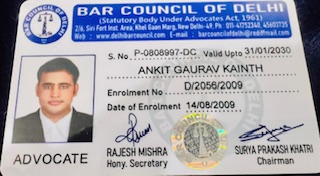
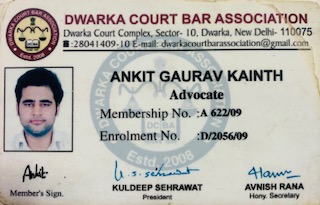
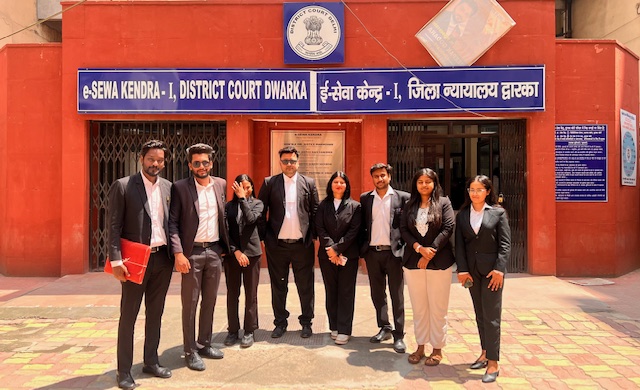
Advocate Ankit Gaurav Kainth and his litigation team represent clients in criminal proceedings before Dwarka Courts, Delhi, as well as appropriate proceedings before the Delhi High Court and other courts depending upon the nature and jurisdiction of the matter.
What Should You Do After Receiving a Police Notice, FIR or Criminal Complaint?
The initial response to a criminal allegation can significantly affect the subsequent proceedings.
A person facing an investigation should ordinarily avoid taking hurried steps without first understanding the nature of the allegations and the available legal remedies.
Depending upon the facts of the case, some immediate steps may include:
- Obtain and carefully examine the FIR, complaint or police notice, wherever available.
- Identify the police station, investigating officer and offences alleged.
- Assess whether there is an immediate apprehension of arrest.
- Prepare a clear chronology of events from the beginning of the dispute.
- Preserve relevant documentary and electronic evidence.
- Preserve WhatsApp conversations, emails, photographs, videos, CCTV recordings and financial records.
- Avoid deleting or altering electronic material that may later become relevant.
- Collect agreements, receipts, bank statements, invoices, notices and correspondence connected with the dispute.
- Avoid unnecessary confrontation with the complainant or witnesses.
- Obtain legal advice regarding investigation, bail and the next procedural stage.
Every criminal case is fact-specific. The appropriate strategy in a matrimonial FIR may be completely different from that required in a cyber-fraud investigation, property dispute, economic offence or assault case.
Criminal Cases Handled Before Dwarka Courts
Criminal litigation covers several different kinds of proceedings. A lawyer dealing with a criminal matter may become involved at the investigation stage, during bail proceedings, before trial, during evidence, at the stage of final arguments or after judgment.
FIR and Police Investigation Matters
Registration of an FIR is generally the beginning of a criminal investigation, not a determination of guilt.
During investigation, the police may examine witnesses, collect documents, obtain electronic evidence, seize articles, analyse financial transactions and take other steps permitted by law.
Legal assistance during this stage may involve:
- examining the FIR and allegations;
- advising regarding police notices;
- preparing the client for joining investigation;
- identifying relevant defence documents;
- preserving electronic evidence;
- examining the possibility of anticipatory bail;
- analysing the role attributed to the accused;
- addressing procedural issues arising during investigation; and
- preparing for subsequent bail or court proceedings.
Cooperation with investigation and protection of legal rights have to be considered together depending upon the circumstances of each matter.

Anticipatory Bail in Dwarka Court
Where a person reasonably apprehends arrest in a non-bailable criminal case, anticipatory bail may become an important remedy.
The court ordinarily considers the allegations, nature of the offence, role attributed to the applicant, available evidence, possibility of absconding, requirement of custodial interrogation, criminal antecedents and other relevant circumstances.
An anticipatory bail application should therefore not merely reproduce the FIR. It should place the defence position before the court in a structured manner and, where appropriate, support it with relevant documents.
Where anticipatory bail has been rejected by a lower court, further remedies may be examined depending upon the facts and procedural history of the case.
Related guide: Anticipatory and Regular Bail in Dwarka Court.
Regular Bail After Arrest
When an accused has already been arrested and is in custody, regular bail may be sought before the appropriate court.
The bail court may consider, among other factors:
- nature and seriousness of allegations;
- specific role attributed to the accused;
- stage of investigation;
- requirement of further custodial interrogation;
- recovery, if any;
- documentary or electronic evidence;
- possibility of influencing witnesses;
- possibility of absconding;
- antecedents;
- period of custody; and
- progress of investigation or trial.
Police custody and judicial custody are different legal stages, and the strategy in a bail matter may depend upon where the investigation presently stands.
Cheating, Fraud and Criminal Breach of Trust Cases
A large number of criminal complaints arise from financial transactions, business relationships, loans, investments, property transactions, partnerships and contractual disputes.
An important legal question in such matters can be whether the allegations disclose a criminal offence or principally arise from a civil or commercial dispute.
The answer depends on the facts, documents and intention alleged at the relevant stage.
Relevant material may include:
- agreements;
- invoices;
- payment records;
- bank statements;
- emails and WhatsApp conversations;
- representations made before the transaction;
- subsequent conduct of the parties; and
- circumstances surrounding transfer of money or property.
Merely labelling a dispute as “fraud” does not determine its legal character. The complete transaction has to be examined.
Cyber Crime and Online Fraud Cases
Cyber crime investigations increasingly involve complex digital and financial evidence.
Cases may relate to:
- online investment fraud;
- digital arrest scams;
- mule-account allegations;
- cryptocurrency transactions;
- UPI and banking transactions;
- Telegram or WhatsApp fraud;
- impersonation;
- phishing;
- online marketplace fraud;
- unauthorised access to digital accounts; and
- multiple complaints appearing on the National Cyber Crime Reporting Portal.
In many cyber cases, the accused’s precise role and connection with the alleged money trail become important.
A bank account receiving a disputed transaction does not by itself explain the complete factual background. Investigators and courts may examine the account holder’s knowledge, communications, transaction history, subsequent transfers and overall role.
Related guide: Cyber Crime Bail Lawyer in Dwarka Court Delhi.
Matrimonial Criminal Cases
Matrimonial disputes can sometimes result in parallel proceedings before different forums.
A criminal case may arise alongside:
- divorce proceedings;
- maintenance proceedings;
- domestic violence proceedings;
- custody litigation; or
- settlement negotiations.
The criminal allegations must nevertheless be examined independently on their own facts and evidence.
Representation may involve:
- investigation-stage assistance;
- anticipatory bail;
- regular bail;
- criminal complaints;
- trial proceedings;
- evidence and cross-examination; and
- appropriate proceedings before higher courts.
Because matrimonial disputes often involve continuing family relationships, correspondence, financial records and allegations covering several years, preparation of a detailed chronology can be particularly important.
Assault, Hurt and Physical Altercation Cases
Cases involving allegations of assault, hurt or physical confrontation may depend substantially upon:
- medical records;
- MLC;
- photographs;
- CCTV recordings;
- independent witnesses;
- place of occurrence;
- sequence of events;
- delay in reporting;
- recovery of alleged weapons; and
- inconsistencies between different versions of the incident.
In cross-cases or disputes involving allegations from both sides, the complete circumstances surrounding the occurrence require careful examination.
Property Disputes Involving Criminal Allegations
Property transactions sometimes lead to criminal complaints involving allegations of:
- cheating;
- forgery;
- criminal breach of trust;
- fabrication of documents;
- wrongful possession;
- misrepresentation;
- double sale; or
- misuse of title documents.
Such matters often contain both civil and criminal dimensions.
Sale deeds, agreements to sell, possession documents, payment records, property correspondence and the history of ownership may therefore become important evidence.
A criminal complaint should be analysed together with the underlying transaction rather than merely from the wording of the allegation.
Economic and White-Collar Criminal Cases
Economic offences generally involve substantial documentary and financial evidence.
Depending upon the case, relevant material may include:
- company records;
- agreements;
- bank transactions;
- invoices;
- accounting records;
- email communication;
- corporate authorisations;
- digital devices; and
- representations made to investors, lenders or counterparties.
These cases often require careful preparation before bail, investigation and trial proceedings because the factual record may extend across hundreds or thousands of documents.
From FIR to Judgment: Understanding the Criminal Case Journey
A criminal matter may pass through several stages.
| Stage | What May Happen | Legal Focus |
| Complaint | Allegations are made to police or court | Preliminary legal assessment |
| Police Notice | Person is asked to join investigation | Response and document preparation |
| FIR | Criminal investigation formally begins | Allegation and arrest-risk analysis |
| Arrest Apprehended | Accused fears arrest | Anticipatory bail |
| Arrest | Person is taken into custody | Regular/interim bail |
| Investigation | Evidence is collected | Defence documents and procedural strategy |
| Police Report/Charge Sheet | Investigation material is filed before court | Examination of prosecution case |
| Charge/Discharge | Court considers whether trial should proceed | Legal and evidentiary arguments |
| Prosecution Evidence | Witnesses enter the witness box | Cross-examination |
| Accused Statement | Accused responds to evidence | Defence position |
| Defence Evidence | Defence may lead evidence where appropriate | Supporting defence case |
| Final Arguments | Evidence is analysed before judgment | Legal and factual submissions |
| Judgment | Court decides the matter | Acquittal/conviction and consequences |
| Appeal/Revision | Order may be challenged | Appellate or revisional remedies |
Not every case follows precisely the same path. The applicable procedure depends upon the offence, court and circumstances of the case.
Criminal Trial Defence in Dwarka Court
A criminal trial is not decided merely on the allegations contained in the FIR.
The prosecution is required to establish its case through admissible evidence and the applicable standard of proof.
Effective criminal trial preparation may require examination of:
- statements of witnesses;
- police documents;
- seizure memos;
- medical records;
- electronic evidence;
- financial records;
- expert reports;
- CCTV footage;
- call-related records where lawfully produced;
- contradictions between witnesses;
- inconsistencies between the initial complaint and later evidence; and
- circumstances supporting the defence version.
The strategy should evolve as the evidence unfolds.
A defence that may appear relevant at the beginning of the case may require modification after prosecution witnesses are examined.
Cross-Examination in Criminal Cases
Cross-examination is one of the most important stages of many criminal trials.
Its purpose is not simply to ask a large number of questions.
Effective cross-examination may be directed toward specific objectives, including:
- testing the accuracy of a witness;
- exposing material contradictions;
- identifying improvements or omissions;
- testing whether the witness had an opportunity to observe the alleged incident;
- challenging financial or documentary claims;
- confronting a witness with earlier statements;
- examining motive or surrounding circumstances;
- testing electronic evidence; and
- establishing facts supporting the defence.
Questions should ordinarily be prepared with reference to the case record rather than in isolation.
The FIR, statements, charge sheet, previous proceedings, documentary evidence and defence theory should all be considered before important witnesses are cross-examined.
Evidence That May Matter in a Criminal Case
Modern criminal litigation increasingly involves a combination of physical, documentary and electronic evidence.
| Type of Evidence | Examples |
| Documentary | Agreements, receipts, notices, letters |
| Electronic | WhatsApp chats, emails, social-media records |
| Financial | Bank statements, UPI transfers, payment records |
| Video | CCTV footage, recordings |
| Medical | MLC and treatment records |
| Witness Evidence | Complainant, eyewitnesses, independent witnesses |
| Police Material | Seizure documents, investigation records |
| Digital Devices | Phones, computers and stored data |
| Business Records | Invoices, ledgers and company documents |
The relevance and admissibility of each type of evidence depend upon the facts of the case and applicable law.
For this reason, potentially relevant evidence should normally be preserved at the earliest stage.

Charge and Discharge in Criminal Proceedings
After investigation material is placed before the court, the case may reach the stage where the court considers whether charges should be framed.
Depending upon the nature of the case and the applicable procedure, the defence may contend that the available material does not justify proceeding against the accused.
A discharge application or arguments on charge require examination of the prosecution material and applicable legal principles.
This stage should not be treated as a miniature trial, but it can nevertheless be an important procedural point in suitable cases.
FIR Quashing Before the Delhi High Court
In appropriate cases, proceedings may be challenged before the High Court.
The availability of quashing depends upon the nature of the allegations, legal issues, settlement where legally permissible, and the circumstances of the case.
Quashing is not an automatic remedy merely because the accused disputes the allegations.
The FIR, complaint, investigation material and applicable precedents have to be examined before deciding whether such proceedings should be considered.
Related guide: FIR Quashing Lawyer in Delhi High Court.
Criminal Revision and Appeal
An adverse order or judgment is not necessarily the end of criminal proceedings.
Depending upon the nature of the order, legal remedies may include an appeal or revision before the appropriate court.
Potential issues may include:
- appreciation of evidence;
- evidentiary contradictions;
- procedural irregularity;
- admissibility of evidence;
- application of statutory presumptions;
- findings unsupported by the record;
- sentencing issues; or
- other questions of law.
The correct remedy depends upon the order being challenged and the court that passed it.

What If Anticipatory Bail Is Rejected by the Sessions Court?
Rejection of anticipatory bail by the Sessions Court does not automatically determine the criminal case itself.
Depending upon the circumstances, the accused may consider approaching the Delhi High Court for appropriate relief.
Before doing so, it is important to examine:
- the Sessions Court order;
- allegations in the FIR;
- investigation conducted so far;
- reasons for rejection;
- requirement of custodial interrogation;
- available defence documents; and
- subsequent developments, if any.
A higher-court bail application should therefore address the specific reasoning contained in the earlier order rather than merely reproducing the previous application.
Criminal Representation for Complainants and Victims
Criminal litigation is not limited to defending an accused person.
A complainant or victim may also require legal assistance at different stages.
Depending upon the matter, assistance may include:
- preparing or pursuing an appropriate criminal complaint;
- representation during court proceedings;
- examining investigation-related developments;
- opposing bail where legally justified;
- seeking cancellation of bail in appropriate circumstances;
- pursuing complaint proceedings before the Magistrate; and
- examining appellate or revisional remedies.
The appropriate course depends upon the nature of the alleged offence and procedural stage of the case.
Documents to Bring When Consulting a Criminal Lawyer
A properly organised first consultation can save considerable time later.
Depending upon the case, the following documents may be useful:
- copy of FIR;
- complaint;
- police notice;
- arrest memo, if applicable;
- bail application;
- bail order;
- previous court orders;
- charge sheet/police report;
- summons or warrants;
- agreements and receipts;
- bank statements;
- UPI/payment records;
- WhatsApp chats;
- emails;
- photographs;
- CCTV/video recordings;
- medical documents;
- property documents;
- company records;
- previous legal notices;
- chronology of events; and
- details of relevant witnesses.
Where documents are extensive, arranging them chronologically can make the consultation considerably more productive.

Why Local Criminal Litigation Experience at Dwarka Court Matters
Criminal cases require (Criminal Defence Lawyer in Dwarka) both legal preparation and familiarity with day-to-day court procedure.
A lawyer regularly practising before Dwarka Courts is ordinarily familiar with practical aspects such as:
- filing procedures;
- court allocation;
- bail filing requirements;
- certified copies;
- cause lists;
- court dates;
- surety and bail bond documentation;
- procedural applications; and
- day-to-day trial practice.
Advocate Ankit Gaurav Kainth practises from Chamber No. 728, Dwarka District Court, Sector 10, New Delhi, along with his litigation team.
The objective should not be to make unrealistic promises regarding the outcome of a criminal case, but to ensure that the client’s factual and legal position is properly prepared and presented before the appropriate forum.
Criminal Lawyer for Dwarka and South-West Delhi
Criminal matters before Dwarka Courts may arise from several police stations and localities across South-West and West Delhi.
Clients may approach for matters relating to:
Dwarka, Dwarka North, Dwarka South, Dwarka Sector 23, Janakpuri, Vikaspuri, Uttam Nagar, Najafgarh, Palam, Dabri, Bindapur, Chhawla, Kapashera, Delhi Cantonment, Samalka, Baba Haridas Nagar, Mohan Garden, Jaffarpur Kalan and surrounding areas.
Jurisdiction nevertheless depends upon the facts of each case, the place of occurrence and applicable procedural law.
Related Criminal Law Guides
For detailed information on specific issues, readers may also refer to the firm’s separate guides on:
- Bail Lawyer in Dwarka Court
- Anticipatory Bail in Dwarka Court
- Regular Bail after Arrest
- Cyber Crime Bail Lawyer in Dwarka Court
- Mule Account Cyber Fraud Cases
- FIR Quashing before Delhi High Court
- Criminal Appeals
- POCSO Bail Proceedings
- Police Notice and Investigation
- Criminal Cross-Examination
- Cheating and Fraud Cases
These specialised pages should be internally linked from the relevant sections above rather than repeating the same information on every page.
Frequently Asked Questions – Criminal Defence Lawyer in Dwarka
1. When should I contact a Criminal Lawyer in Dwarka?
Legal advice may be useful as soon as you receive a police notice, become aware of a complaint or FIR, apprehend arrest, receive court summons or need representation in an ongoing criminal case.
Early review of documents can help identify immediate procedural requirements and preserve relevant evidence.
2. What should I do if the police call me to the police station?
First identify the nature of the enquiry and whether any written notice has been issued. Obtain legal advice where necessary, keep relevant documents ready and avoid giving inaccurate or speculative information.
The appropriate response depends upon your role in the investigation and nature of the allegations.
3. Does registration of an FIR mean that the accused is guilty?
No.
An FIR records allegations and ordinarily initiates or forms part of the investigation process. Guilt or innocence is determined through the legal process on the basis of admissible evidence.
4. Can anticipatory bail be obtained before arrest?
In appropriate non-bailable cases, a person apprehending arrest may seek anticipatory bail before the competent court.
The decision depends upon the allegations, role attributed to the applicant, investigation requirements and other relevant circumstances.
5. What happens after a person is arrested?
Depending upon the case, the accused may be produced before the competent court and questions concerning police custody, judicial custody and bail may arise.
Legal representation should be considered promptly.
6. What is the difference between police custody and judicial custody?
Police custody generally places an accused in police custody for investigation subject to judicial authorisation, while judicial custody places the accused in jail under orders of the court.
The legal considerations surrounding bail and investigation can differ at these stages.
7. Can an FIR be quashed?
In appropriate cases, the Delhi High Court may be approached for quashing of criminal proceedings.
Whether such relief is available depends upon the allegations, nature of offence, legal grounds and circumstances of the case.
8. What happens after the charge sheet is filed?
The court examines the police report and accompanying material. Depending upon the nature of proceedings, issues relating to cognizance, supply of documents, charge, discharge and trial may then arise.
9. Can an accused seek discharge before trial?
In appropriate cases, yes.
Whether discharge can be sought depends upon the applicable procedural provision and the material placed before the court.
10. What happens during a criminal trial?
The prosecution ordinarily leads evidence through witnesses and documents. The defence may cross-examine prosecution witnesses, respond to the evidence, lead defence evidence where appropriate and address final arguments before judgment.
11. Can a criminal court judgment be challenged?
Depending upon the nature of the judgment or order, an appeal or revision may be available before the appropriate higher court.
Limitation and procedural requirements should be checked promptly.
12. What documents should I bring for the first consultation?
Bring the FIR or complaint, police notice, court orders, bail papers, charge sheet if available and all important supporting documents or electronic records connected with the allegations.
A concise written chronology is also extremely useful.
Consultation for Criminal Matters in Dwarka Court
If you or a family member is facing a criminal complaint, police investigation, apprehension of arrest, bail proceeding or criminal trial before Dwarka Courts, the first step should be to understand the allegations, procedural stage and available legal remedies.
The strategy in every criminal case depends upon its own facts, evidence and procedural history.
A proper consultation should therefore focus on the documents and chronology of the case rather than assumptions about the likely result.
Advocate Ankit Gaurav Kainth
Chamber No. 728
Dwarka District Court, Sector 10
New Delhi
Disclaimer
The information on this page is intended for general legal awareness and does not constitute legal advice for any particular case. Criminal proceedings are fact-specific and legal remedies depend upon the allegations, evidence, procedural stage and applicable law. Readers should obtain case-specific advice before taking legal action.
Important Criminal Law Guides for Dwarka Court
Criminal proceedings can involve different stages including police investigation, bail, trial, cyber crime allegations, financial offences, cheque bounce proceedings and post-bail issues. The following guides provide more detailed information on specific criminal-law topics.
| Criminal Law Topic | What the Guide Covers | Read More |
|---|---|---|
| Criminal Lawyer in Dwarka | Main criminal-law guide covering FIRs, police investigation, arrest, bail, criminal trials, evidence, cross-examination, appeals and revisions. | Criminal Lawyer in Dwarka |
| Bail Lawyer in Dwarka Court | Anticipatory bail, regular bail, interim bail and bail proceedings in criminal and FIR matters before Dwarka Courts. | Bail Lawyer in Dwarka Court |
| Police Notice & Investigation | What to do after receiving a police notice, how to join investigation and why early document and evidence preparation matters. | Police Notice Guide |
| Police Investigation Process | Understanding investigation, evidence collection, bail, charge-sheet and subsequent criminal-court proceedings. | Police Investigation Process |
| Bail in Cheating / Fraud Cases | Bail considerations in cheating and fraud allegations, including anticipatory and regular bail and the civil-versus-criminal nature of disputes. | Bail in Fraud Case |
| Cyber Crime Bank Account Freeze | Legal issues arising when a bank account is frozen during a cyber-fraud investigation, including money-trail allegations and defreezing remedies. | Cyber Crime Bank Account Freeze |
| Frozen Bank Account – Cyber Law Judgments | Important judicial principles concerning freezing and release of bank accounts and amounts during cyber-crime investigations. | Cyber Law Judgments on Frozen Accounts |
| Bail Bonds & Surety | Bail-bond procedure, surety requirements, documents and practical issues after bail is granted. | Bail Bonds & Surety Guide |
| Cancellation of Bail | When bail may be cancelled for misuse of liberty, witness intimidation, evidence tampering or violation of bail conditions. | Cancellation of Bail Guide |
| Death by Negligent Driving | FIR, evidence, medical and mechanical material, eyewitness testimony and defence considerations in negligent-driving cases. | Negligent Driving FIR Guide |
| Cheque Bounce Lawyer in Dwarka Court | Section 138 NI Act complaints, defence, statutory notice, evidence, settlement and trial procedure. | Cheque Bounce Lawyer Dwarka Court |
| Section 138 Defence Guide | Defence of an accused in a cheque-bounce case, including presumptions, legally enforceable debt, cross-examination and documentary evidence. | Section 138 Defence Guide |
Important: Every criminal case depends upon its own facts, evidence and procedural stage. These guides are for general legal information and should not be treated as a substitute for case-specific legal advice.