

Introduction – Advocate in Dwarka Sector 10 | Ankit Gaurav Kainth

Civil, Criminal, Commercial, Cheque Bounce, Property & Matrimonial Litigation
When a legal dispute is connected with Dwarka, South-West Delhi or a proceeding already pending before Dwarka Courts, the first question should not simply be:
“Which advocate should I contact?”
The more useful questions are:
- Which court actually has jurisdiction?
- What is the correct legal proceeding?
- Is the matter civil, criminal, commercial, matrimonial or under a special statute?
- Is there a limitation issue?
- Is urgent interim protection required?
- What documents and electronic evidence should be preserved?
- Has a case already been filed?
- Is the matter presently at notice, investigation, bail, evidence, trial, appeal or execution stage?
A legal case is usually better prepared when these questions are examined before drafting or filing begins.
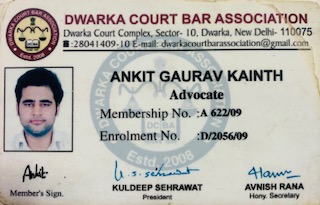
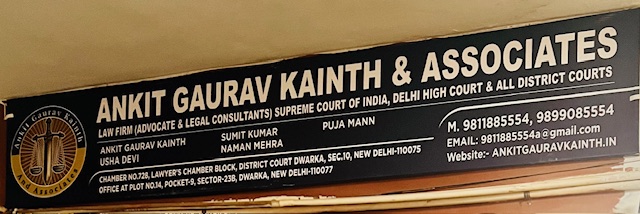
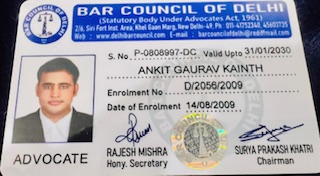
Advocate Ankit Gaurav Kainth practises from Chamber No. 728, 7th Floor, Dwarka Court Complex, Sector-10, New Delhi, with a litigation practice covering civil, criminal, commercial, cheque dishonour, matrimonial and property disputes.
With more than 18 years of legal practice, the focus of the office is on case assessment, preparation, court representation and regular communication with clients.
Dwarka Court, Sector-10: First Check Jurisdiction
Dwarka Courts are located in Sector-10, New Delhi. However, the fact that a person lives in Dwarka does not automatically mean that every dispute can be filed before Dwarka Courts.
Jurisdiction must be determined from the nature of the dispute and the applicable law.
Depending upon the case, relevant considerations may include:
Civil cases: location of property, residence or business of the parties, place where the cause of action arose, valuation and nature of relief.
Criminal cases: police station, place of alleged offence, stage of investigation, nature of offence and court allocation.
Property disputes: location of the immovable property and the relief claimed can be particularly important.
Matrimonial proceedings: jurisdiction depends upon the applicable matrimonial statute and facts such as marriage, residence and last matrimonial residence.
Cheque bounce cases: the Negotiable Instruments Act contains specific territorial-jurisdiction provisions.
Commercial disputes: the nature and specified value of the dispute, territorial jurisdiction and requirements of the Commercial Courts Act must be examined.
Therefore, jurisdiction should be checked before the petition, complaint or plaint is prepared, rather than after objections are raised by the opposite party.
What Type of Case Do You Have?
A Dwarka Court matter should first be classified correctly.
A property dispute should not automatically be treated as an injunction case.
A business recovery should not automatically be filed as an ordinary civil recovery suit if it satisfies the requirements of a commercial dispute.
A matrimonial disagreement may involve different proceedings concerning divorce, maintenance, domestic violence, custody or residence rights.
Similarly, a criminal complaint, FIR, police notice, bail proceeding and criminal trial involve very different stages and strategies.
A useful preliminary assessment normally examines:
facts → documents → jurisdiction → limitation → cause of action → legal remedy → evidence → immediate priority
Once these issues are clear, the case can be directed to the appropriate litigation route.
Civil Litigation Before Dwarka Courts
Civil disputes can involve property, money, contractual rights, possession, injunctions and several other private-law claims.
Our civil litigation work includes matters concerning:
- temporary and permanent injunctions;
- declaration suits;
- recovery of money;
- possession of immovable property;
- damages and mesne profits;
- partition disputes;
- specific performance;
- cancellation of documents;
- contractual disputes;
- written statements and defence of civil suits;
- applications under Order VII Rule 11 CPC;
- interim applications;
- evidence and cross-examination;
- civil appeals; and
- execution of decrees.
A civil matter should ordinarily be evaluated for cause of action, jurisdiction, limitation, valuation, court fee, documents and the precise relief sought before filing.
A plaintiff should know exactly what order is being requested from the Court.
A defendant should examine not only the allegations in the plaint, but also questions of maintainability, limitation, jurisdiction, admissions, documents and available procedural objections.
For a detailed explanation, readers can refer to our Civil Case Advocate Dwarka Court guide.
Property Disputes in Dwarka & South-West Delhi
Property litigation often becomes complicated because parties start proceedings before identifying whether the actual dispute concerns title, possession, co-ownership, documents or contractual rights.
Common property matters include:
- possession disputes;
- permanent and mandatory injunctions;
- partition between co-owners;
- declaration of rights;
- specific performance of agreements to sell;
- cancellation or challenge to documents;
- disputes concerning sale deeds, GPA documents or agreements;
- purchaser-seller disputes;
- landlord-tenant related civil proceedings where maintainable;
- damages or mesne profits; and
- execution proceedings relating to property.
Before filing, it is useful to organise the complete document chain and determine:
Who claims title?
Who is in possession?
What document supports each party?
When did the dispute arise?
What relief is legally required?
The correct remedy can differ considerably depending upon these answers.
Criminal Defence and Criminal Proceedings
Criminal litigation can begin long before a trial starts.
A person may first receive a police notice, become aware of a complaint, apprehend arrest, discover registration of an FIR or receive summons from a criminal court.
Criminal defence work may involve:
- investigation-stage representation;
- police notices;
- FIR-related proceedings;
- anticipatory bail;
- regular bail;
- complaint cases;
- criminal trials;
- consideration of chargesheet material;
- discharge or charge-related proceedings where applicable;
- prosecution evidence;
- defence evidence;
- cross-examination;
- criminal revisions;
- appeals; and
- appropriate proceedings before the High Court.
For contemporary criminal proceedings, the Bharatiya Nyaya Sanhita, Bharatiya Nagarik Suraksha Sanhita and Bharatiya Sakshya Adhiniyam form the current statutory framework, while IPC, CrPC and Indian Evidence Act provisions may continue to be relevant in older or transitional proceedings depending upon the case.
The correct defence strategy should therefore be based upon the date of the alleged occurrence, procedural stage, applicable statute, FIR/complaint, available evidence and court record.
Merely reading the allegations is not enough.
Bail Matters Before Dwarka Court
Bail requires a case-specific assessment.
Depending upon the circumstances, the matter may concern:
anticipatory bail → regular bail → interim protection → bail conditions → bail bonds → cancellation of bail → suspension of sentence at appellate stage
Factors considered by courts vary with the nature of the offence, allegations, investigation, evidence, conduct of the accused and applicable statutory restrictions.
No bail outcome can responsibly be guaranteed.
For clients facing an immediate apprehension of arrest or custody, the first requirement is generally to obtain and examine whatever material is available, including the complaint, FIR, notice, previous orders and relevant correspondence.
Commercial Court Litigation in Dwarka
Business disputes should be screened carefully to determine whether they constitute a commercial dispute under the Commercial Courts Act.
Commercial litigation may include disputes arising from:
- supply of goods;
- unpaid invoices;
- business contracts;
- service agreements;
- distribution arrangements;
- commercial transactions;
- partnership or business arrangements;
- contractual defaults; and
- commercial recovery claims.
Commercial Court procedure is materially different from an ordinary civil suit.
Questions concerning specified value, Section 12A pre-institution mediation, disclosure of documents, admission and denial, written-statement deadlines, summary judgment and case-management hearings may become important.
The plaintiff should therefore prepare the documentary record before filing.
The defendant should pay particular attention to procedural deadlines immediately after service.
Our detailed Commercial Court Advocate in Dwarka Court page explains these issues separately.
Cheque Bounce Cases Under Section 138 NI Act
Cheque dishonour proceedings involve strict statutory stages.
Depending upon whether the client is the complainant or accused, relevant issues can include:
- underlying legally enforceable debt or liability;
- cheque and bank return memo;
- statutory demand notice;
- service of notice;
- limitation;
- territorial jurisdiction;
- complaint and supporting documents;
- summons;
- plea and defence;
- statutory presumptions;
- cross-examination;
- defence evidence;
- settlement or compounding;
- judgment; and
- appeal.
A complainant should preserve the entire documentary trail relating to the transaction.
An accused should not assume that merely alleging misuse of a cheque is sufficient. The defence must be examined against the statutory presumptions, complainant’s evidence and available documentary record.
Our Cheque Bounce Lawyer Dwarka Court guide deals with the complete Section 138 process in greater detail.
Divorce, Maintenance and Matrimonial Litigation
Family disputes may involve more than one proceeding.
Depending upon the facts, a matrimonial dispute can involve:
- mutual-consent divorce;
- contested divorce;
- maintenance;
- domestic violence proceedings;
- interim maintenance;
- permanent alimony;
- child custody;
- visitation;
- guardianship;
- residence-related relief;
- matrimonial settlement; and
- execution or enforcement of orders.
For current maintenance proceedings, the applicable statutory framework should be examined carefully, including Section 144 BNSS, corresponding broadly with the earlier Section 125 CrPC framework, together with remedies under the Protection of Women from Domestic Violence Act and matrimonial statutes where applicable.
The financial record can become particularly important in maintenance litigation.
Income documents, bank accounts, tax material, employment records, expenses, liabilities and the parties’ financial affidavits may all require examination.
Matrimonial cases should therefore be prepared as litigation matters, not merely as negotiations between spouses.
Legal Notices and Pre-Litigation Assessment
Not every dispute should begin with immediate court filing.
Depending upon the subject, a legal notice may help:
- place the factual position on record;
- demand payment or compliance;
- respond to allegations;
- preserve contractual rights;
- identify the dispute;
- create documentary evidence of a demand or response; or
- explore lawful settlement before litigation.
But sending a notice is not automatically beneficial in every case.
The wording of a notice should be consistent with the evidence and the legal proceeding that may follow.
A poorly drafted notice can create unnecessary admissions or factual contradictions.
Before issuing or replying to a notice, the supporting documents and likely litigation strategy should therefore be considered together.
Why Maintaining a Chamber Inside Dwarka Court Matters Practically
The location of an advocate’s chamber does not decide the legal merits of a case and does not guarantee any particular result.
It can, however, provide practical convenience where the advocate regularly appears before that court.
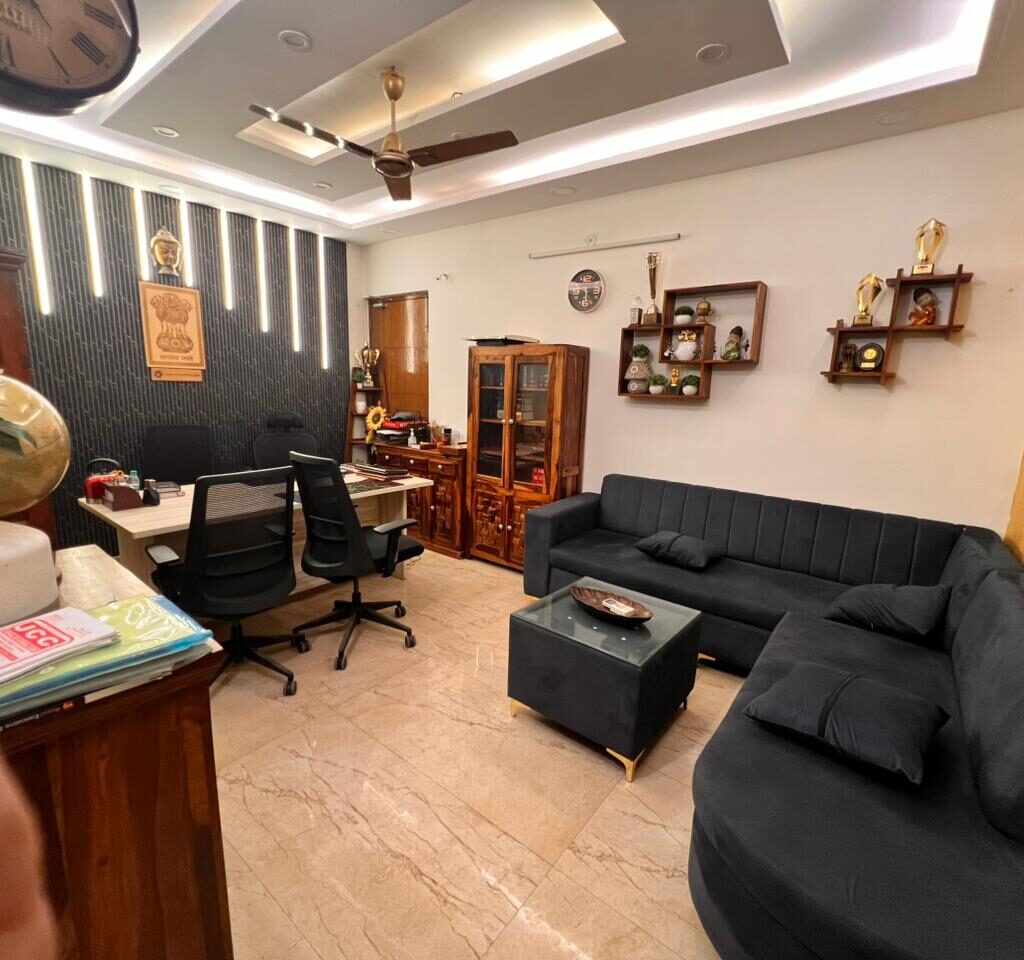
Our chamber is located at:
Chamber No. 728
7th Floor
Dwarka Court Complex
Sector-10, New Delhi
Regular practice at Dwarka Courts provides practical familiarity with filing systems, cause lists, court procedures, document requirements and day-to-day case management.
That familiarity should be understood as a procedural advantage in managing litigation, not as an assurance about the judicial outcome.
Ultimately, every case is decided according to its facts, evidence, applicable law and judicial determination.
What Should You Bring for the First Consultation?
A useful consultation becomes easier when the available record is organised chronologically.
Depending upon the matter, clients should consider bringing:
- court summons or notices;
- FIR, complaint or police notice;
- previous court orders;
- plaint, written statement or petition;
- agreements and contracts;
- property documents;
- sale deed, GPA, agreement to sell or possession documents;
- cheque and return memo;
- statutory legal notice;
- invoices and ledger accounts;
- emails;
- WhatsApp conversations;
- photographs;
- audio or video material;
- bank statements;
- payment records;
- matrimonial pleadings or previous orders; and
- any document that appears inconsistent with the opposite party’s version.
Do not discard a document merely because it appears unfavourable.
An advocate needs to understand both the strengths and weaknesses of the record before advising upon strategy.
How We Approach a New Matter
Our case assessment generally begins with five questions.
1. What exactly happened?
A chronological factual account is prepared.
2. What documents support those facts?
Oral instructions are checked against documents, messages, financial records and court material.
3. Which court or forum has jurisdiction?
Territorial, pecuniary and subject-matter jurisdiction are examined where relevant.
4. Is there any limitation or procedural deadline?
A legally strong claim can still face difficulty if proceedings are filed before the wrong forum or outside the applicable limitation period.
5. What result is the client legally seeking?
The relief must be identified before drafting begins.
The litigation strategy is then developed around the applicable law, evidence and procedural stage.
Court Preparation Is Different From Merely Filing a Case
Filing is only the beginning of litigation.
A matter may subsequently involve:
pleadings → interim applications → replies → admission/denial → framing of issues or charge → evidence → cross-examination → written submissions → final arguments → judgment → appeal or execution
Preparation at each stage matters.
For example, documents not organised at the beginning may become difficult to introduce later.
An inconsistent pleading may create problems during cross-examination.
A missed procedural deadline in commercial litigation can have serious consequences.
A decree without an execution strategy may still leave the successful party facing further proceedings.
The case should therefore be managed as a continuing process rather than a single filing event.
Client Communication and Case Management
Clients should know the present status of their matter and the purpose of the next stage.
Our case-management approach includes sharing relevant court orders and next dates, discussing important developments, identifying documents required from the client and preparing for evidence or hearings where necessary.
Professional fees depend upon the nature of the matter, stage, complexity and work involved.
Where representation is accepted, the professional arrangement should be explained clearly so that the scope of work and fee structure are understood.
Choosing an Advocate Practising in Dwarka Court
Instead of searching only for phrases such as “best advocate in Dwarka” or relying entirely upon online ratings, a client can verify more objective information.
Useful questions include:
Does the advocate actually practise before Dwarka Courts?
Is there a chamber or established professional presence?
What type of litigation does the advocate handle?
Can the advocate explain jurisdiction and procedure clearly?
Are the risks of the case discussed along with its strengths?
Will the fee arrangement be explained in writing?
Who will actually prepare and appear in the matter?
Will the client receive court orders and next-date updates?
The purpose of the consultation should be to understand the case and legal options—not to obtain a guarantee of success.
Common Mistakes Before Starting Litigation
Some recurring mistakes can complicate otherwise manageable cases:
Choosing the wrong court without checking jurisdiction.
Waiting too long and creating a limitation issue.
Sending an aggressive legal notice before examining the documents.
Deleting WhatsApp messages, emails or electronic records.
Relying on oral arrangements when documentary evidence exists.
Filing an injunction suit when possession has already been lost and a different remedy may be required.
Treating every business recovery as an ordinary civil suit without considering the Commercial Courts Act.
Ignoring a summons or court notice.
Assuming bail is automatic.
Preparing for evidence only after cross-examination has started.
Early document review can help identify many of these issues.
Advocate in Dwarka Sector-10 – Practice Areas
The litigation practice from Chamber No. 728, Dwarka Court includes:
Civil Litigation
Injunction, recovery, declaration, possession, partition, specific performance, appeals and execution.
Criminal Defence
FIRs, investigation, bail, criminal trials, revisions and appeals.
Commercial Litigation
Commercial recovery, contractual disputes, written statements, disclosure, summary judgment and related Commercial Court proceedings.
Cheque Bounce Cases
Section 138 NI Act complaints, defence, evidence, cross-examination and appeals.
Matrimonial Litigation
Divorce, maintenance, domestic violence, child custody and related Family Court proceedings.
Property Litigation
Possession, injunction, title-related disputes, partition, documents and property transactions.
Cyber & Financial Disputes
Cyber-fraud related criminal proceedings, account-freeze issues and associated litigation where maintainable.
| Practice Area | Detailed Guide | Suggested Internal-Link Anchor | What the Reader Will Learn | Recommended Placement | Page URL |
|---|---|---|---|---|---|
| Civil Litigation | Civil Case Advocate Dwarka Court | Civil Case Advocate in Dwarka Court | Jurisdiction, plaint, written statement, injunction, evidence, trial and execution. | Civil Litigation section | View Guide |
| Property Litigation | Property Lawyer in Dwarka Court | Property Disputes in Dwarka Court | Possession, injunction, partition, title, specific performance and property documents. | Property Disputes section | View Guide |
| Criminal Defence | Criminal Defence Lawyer in Dwarka | Criminal Defence in Dwarka Court | Police notices, FIR, investigation, chargesheet, trial, evidence and appeals. | Criminal Defence section | View Guide |
| Bail | Bail Lawyer in Dwarka Court | Bail Matters in Dwarka Court | Anticipatory bail, regular bail, investigation-stage issues and bail procedure. | Bail section | View Guide |
| Commercial Litigation | Commercial Court Advocate in Dwarka Court | Commercial Court Litigation in Dwarka | Section 12A mediation, recovery suits, written statements, disclosure and summary judgment. | Commercial Court section | View Guide |
| Cheque Bounce | Cheque Bounce Lawyer Dwarka Court | Section 138 NI Act Cases in Dwarka Court | Notice, jurisdiction, complaint, summons, evidence, cross-examination and appeal. | Cheque Bounce section | View Guide |
| Matrimonial Litigation | Divorce Advocate Dwarka Delhi | Divorce & Family Court Cases in Dwarka | Mutual and contested divorce, maintenance, custody and related matrimonial proceedings. | Matrimonial Litigation section | View Guide |
| Pre-Litigation | Legal Notice Advocate Dwarka Court | Legal Notice Before Litigation | When a notice may be useful, replying to notices and preparing for subsequent litigation. | Legal Notice section | View Guide |
Frequently Asked Questions
Is Dwarka Court located in Sector-10?
Yes. Dwarka Court Complex is situated in Sector-10, Dwarka, New Delhi.
Is your chamber inside Dwarka Court?
Yes. Advocate Ankit Gaurav Kainth’s chamber is Chamber No. 728, 7th Floor, Dwarka Court Complex, Sector-10, New Delhi.
Does living in Dwarka automatically give Dwarka Court jurisdiction?
No. Jurisdiction depends upon the nature of the case and applicable law. Residence can be relevant in some proceedings, but it is not the only factor.
What types of cases do you handle before Dwarka Court?
The practice includes civil, criminal, commercial, cheque bounce, matrimonial, property and related litigation.
Do you handle anticipatory and regular bail?
Yes. Bail matters are handled subject to the allegations, applicable law, stage of investigation and competent court.
Do you handle Commercial Court recovery cases?
Yes. Commercial disputes involving business transactions, contracts, invoices and recovery claims are handled after examining whether the matter falls within the Commercial Courts Act.
Do you handle Section 138 cheque bounce cases?
Yes. Representation is available for both complainants and accused persons in cheque dishonour proceedings, depending upon the facts and professional engagement.
Can I consult before filing a case?
Yes. Pre-litigation consultation is useful for checking jurisdiction, limitation, evidence, documents and appropriate remedies before proceedings are commenced.
What documents should I bring?
Bring all available documents connected with the dispute, including notices, agreements, FIRs, court orders, financial records, communications and electronic evidence.
Can a result be guaranteed?
No. No advocate can responsibly guarantee a judicial result. Outcomes depend upon the facts, evidence, applicable law, conduct of proceedings and judicial determination.
Consultation – Advocate in Dwarka Sector-10, New Delhi
For consultation relating to a matter pending or proposed before Dwarka Courts, the first step should be to collect the available documents and identify the current procedural stage.
Advocate Ankit Gaurav Kainth & Associates
Chamber:
Chamber No. 728, 7th Floor
Dwarka Court Complex
Sector-10, New Delhi
Practice:
Civil | Criminal | Commercial | Cheque Bounce | Matrimonial | Property Litigation
Consultation should preferably be scheduled in advance so sufficient time can be provided for understanding the facts and reviewing relevant documents.
Author
Advocate Ankit Gaurav Kainth
Litigation Practice – Dwarka Courts, Delhi
18+ Years of Legal Practice
Chamber No. 728, Dwarka Court Complex, Sector-10, New Delhi
Telephone: 9899085554 | 9811885554
When requesting an appointment, mention the type of dispute, whether proceedings are pending and any approaching hearing or deadline.
Author: Advocate Ankit Gaurav Kainth
Litigation practice at Dwarka Courts, Delhi.
This page provides general legal information. Advice depends on the individual facts and applicable law. Accessing this page does not create an advocate-client relationship or guarantee a judicial outcome.
Disclaimer
This page is intended for general legal information and legal awareness. It does not constitute legal advice for any particular dispute and does not create an advocate-client relationship merely by accessing the website.
Jurisdiction, limitation, remedies and procedural requirements depend upon the individual facts and applicable law. No statement on this page should be interpreted as a guarantee of any legal or judicial outcome.

FOLLOW US FOR MORE LEGAL UPDATES :-