

Introduction – Property Documents Verification in Dwarka Delhi

Buying a flat, builder floor, plot, house or commercial property? Understand how ownership, title documents, previous sale deeds, DDA/MCD records, sanctioned building plans, mortgages, litigation and the seller’s authority should be examined before you become financially committed.
Buying property involves much more than checking a photocopy of the Sale Deed.
Before paying substantial token money, signing an Agreement to Sell or completing registration, a buyer should understand:
- Who actually owns the property?
- How did the present seller acquire ownership?
- Is the previous chain of title complete?
- Are all co-owners participating in the transaction?
- Is there an existing mortgage or bank loan?
- Does the physical construction correspond with the available sanctioned building plan?
- Is the particular floor, parking space, terrace or other portion being sold clearly identified?
- Is the property involved in litigation or a family dispute?
- Are there issues relating to DDA, MCD, RERA, society records or other authorities?
- Does the proposed Agreement to Sell adequately protect the buyer if a title defect is later discovered?
Property document verification in Dwarka, Delhi should therefore be treated as legal due diligence—not merely document collection.
The purpose is to identify legal and documentary risks before the buyer commits substantial money to the transaction.
Before Paying Bayana or Token Money
One of the most important stages of property due diligence arises before substantial bayana or token money is paid.
A prospective buyer may sometimes be asked to make an immediate payment because another purchaser is allegedly interested in the property. However, urgency should not replace verification.
Depending upon the transaction, important questions may include:
Who is receiving the money?
The person receiving token money should have the necessary ownership or legal authority in relation to the property.
Is the person negotiating the transaction the registered owner?
If a broker, relative, attorney holder or other representative is handling the transaction, the legal authority of that person should be understood.
Are there multiple owners?
Where title belongs to several persons, the buyer should understand whether all necessary owners are agreeing to the proposed sale.
Is the property inherited?
Inheritance can require examination of the previous owner’s death, Will, succession, relinquishment, partition or other relevant documents depending upon the circumstances.
Does the bayana document correctly describe the property?
For a builder floor, for example, the document should not ambiguously mention only the plot or municipal number if the proposed purchase relates to a specific floor.
Where appropriate, an Agreement to Sell can also address what happens if a serious title or documentary defect is discovered before completion.
What Does Property Document Verification Actually Mean?
Property verification is not limited to determining whether documents appear genuine on their face.
A proper legal review may involve several separate enquiries:
1. Identity of the Property
The property described in the documents should correspond with the property that the buyer intends to purchase.
Important particulars may include:
- property or municipal number;
- plot number;
- sector/block;
- floor;
- area;
- boundaries;
- proportionate land rights;
- parking rights;
- terrace or roof rights;
- common areas;
- staircase or access rights.
Even a good ownership chain may create problems if the documents do not clearly identify the property actually being purchased.
2. Identity and Authority of the Seller
The seller’s name and capacity should be examined.
The seller may be:
- an individual registered owner;
- joint or co-owner;
- legal heir;
- beneficiary under a Will;
- attorney holder;
- company;
- LLP;
- partnership firm;
- authorised signatory; or
- another person claiming a transferable interest.
The documents required for verification will depend upon the seller’s legal capacity.
3. Chain of Ownership
A purchaser should understand how ownership travelled from the previous owner to the present seller.
The chain may involve documents such as:
Sale Deed → Conveyance Deed → Gift Deed → Relinquishment Deed → Partition documents → inheritance documents → court decree or other legally relevant instruments.
The objective is not simply to count the documents.
The important question is:
Does each link in the ownership chain legally and factually connect with the next?
Title Chain Verification Before Purchase
Problems can arise where the present seller possesses a document in his or her name but earlier links in the chain contain inconsistencies.
A buyer may need to examine whether:
- earlier title documents are available;
- the names of owners correspond throughout the chain;
- the property description remains consistent;
- the area has changed between documents;
- the seller acquired the entire property or only a share;
- a co-owner or legal heir has been omitted;
- any document was executed through a Power of Attorney;
- the previous transfer was properly documented;
- the title depends upon inheritance;
- the documents relate to the same floor or portion now being sold.
A missing or unexplained link does not automatically establish that the transaction is invalid, but it can require further legal examination before purchase.
Sale Deed and Conveyance Deed Verification
Where ownership is claimed through a registered Sale Deed or Conveyance Deed, the document should be read carefully rather than treated merely as proof that registration occurred.
Important aspects can include:
- names of transferor and transferee;
- description of the property;
- nature of ownership transferred;
- floor and area;
- consideration;
- previous title recitals;
- possession;
- easement or access rights;
- parking;
- proportionate land share;
- restrictions or conditions;
- execution through an attorney, if applicable.
Delhi also provides public e-search facilities for registered property documents. Depending upon the transaction and availability of the relevant records, registration particulars may form part of the due-diligence exercise.
A registration record is useful, but registration alone should not replace examination of the complete transaction and title history.
GPA, Agreement to Sell and Will Transactions in Delhi
Delhi property transactions sometimes involve documents such as:
- General Power of Attorney;
- Special Power of Attorney;
- Agreement to Sell;
- Will;
- possession letter;
- payment receipt; and
- other supporting documents.
Such documents should not automatically be treated as equivalent to a registered Sale Deed or Conveyance Deed transferring ownership.
The Supreme Court in Suraj Lamp & Industries Pvt. Ltd. v. State of Haryana examined so-called GPA/Agreement to Sell/Will transactions and clarified the importance of legally recognised conveyancing for transfer of title.
At the same time, a Power of Attorney, Agreement to Sell or Will can have its own legitimate legal purpose depending upon the facts.
Therefore, where the seller’s claim is based upon a GPA/Agreement/Will chain, the documents and transaction history require careful case-specific examination rather than a mechanical conclusion.
DDA Property Verification
Dwarka contains a substantial number of properties connected with the Delhi Development Authority.
Where relevant, verification may require consideration of documents such as:
- allotment documents;
- possession documents;
- leasehold/freehold records;
- Conveyance Deed;
- mutation;
- transfer documents;
- conversion documents;
- applicable DDA records;
- outstanding dues or conditions.
DDA presently provides online property metadata searches for categories including DDA plots, DDA flats and group-housing flats.
The particular documents required will depend upon whether the property is a DDA flat, plot, group-housing property or another category.
Builder Floor Verification in Delhi
A builder-floor purchase requires particular attention because ownership of the land and legality or status of the construction are separate issues.
A buyer should not stop after seeing the Sale Deed relating to the land.
Important questions can include:
- Which exact floor is being purchased?
- What proportionate rights in the land are transferred?
- Is parking specifically included?
- Who has terrace or roof rights?
- Are staircase and entrance rights clear?
- Are there common areas?
- Does the floor correspond with the documents?
- Is there an available sanctioned building plan?
- Does the existing construction correspond with that plan?
- Have substantial structural additions or deviations been made?
These questions become especially important where independent floors have been created on a plot originally acquired under an earlier title.

Does the Agreement Clearly Identify the Floor Being Purchased?
A common drafting problem arises where a transaction concerns a specific floor but the proposed bayana or Agreement to Sell describes only the entire property number.
For example, if the buyer is purchasing a particular floor, the agreement should clearly identify what is included in the transaction.
Depending upon the property, this may include:
- floor number;
- approximate or documented area;
- proportionate rights in land;
- parking;
- roof or terrace rights;
- staircase;
- common passage;
- entrance;
- water arrangements;
- electricity connection;
- common facilities.
Ambiguous property descriptions can later create disputes that could have been addressed before signing.
Mortgage, Bank Loan and Encumbrance Verification
The buyer should also understand whether the property is subject to an existing loan, mortgage or other financial obligation.
Questions may include:
- Are the original title documents with the seller?
- Are they deposited with a bank or financial institution?
- Is an existing housing loan outstanding?
- What documents will establish repayment or release?
- When will the original documents be handed over?
- Is any payment required directly to the lender?
- How will the transaction be completed if the seller’s loan must first be discharged?
The payment structure should be understood before substantial consideration changes hands.
Is a Bank Home Loan Enough Property Verification?
Not necessarily.
A buyer may consider the willingness of a bank to finance a transaction reassuring, and bank verification can certainly add another layer of scrutiny.
However, the buyer’s legal interests are not necessarily identical to the lender’s requirements.
A purchaser may still need advice about:
- exact ownership;
- title chain;
- construction issues;
- floor description;
- parking;
- terrace rights;
- possession;
- contractual protections;
- pending disputes;
- seller representations.
Therefore, bank loan approval should not automatically be treated as a substitute for independent legal due diligence.
Mutation, Property Tax and Utility Records
Mutation, property-tax records, electricity bills and water bills can be useful supporting records.
However, each document has a different legal purpose.
They should not automatically be treated as substitutes for a title document.
During due diligence they may assist in checking:
- name appearing in public or municipal records;
- property identification;
- outstanding dues;
- possession-related information;
- inconsistencies between records.
Where different records contain different names, numbers, areas or property descriptions, the discrepancy should be investigated rather than ignored.
RERA Verification for Applicable Projects
Where a transaction involves a project governed by the Real Estate (Regulation and Development) Act, the buyer should also consider the relevant RERA disclosures.
Depending upon the project, matters may include:
- project registration;
- identity of promoter;
- sanctioned plans;
- declared approvals;
- title-related information;
- disclosed encumbrances;
- project status;
- phase of the project;
- completion-related information;
- documents uploaded by the promoter.
Delhi has a Real Estate Regulatory Authority for projects falling within its jurisdiction.
RERA verification is particularly relevant for applicable builder/promoter transactions, but it is only one part of broader property due diligence.
Verification of Inherited Property
Inherited property requires additional attention because ownership may have passed after the death of the previous owner.
Depending upon the facts, documents may include:
- previous title deed;
- death certificate;
- Will;
- probate or letters of administration where applicable;
- succession-related documents;
- family settlement;
- relinquishment/release deed;
- partition deed;
- mutation;
- court order.
The legal heirs and nature of succession should be understood before accepting the seller’s authority to transfer the property.
The fact that one family member possesses the original papers does not by itself establish exclusive ownership.
Property Owned by Several Family Members
Where several persons have ownership rights, a buyer should understand:
the share of each person;
- whether the property has been partitioned;
- whether any owner is a minor;
- whether any person is acting through an attorney;
- whether a legal heir has relinquished rights;
- whether all necessary persons are executing the transaction.
Family understanding and legal title are not always the same thing.
A verbal statement that other family members have “no objection” should not replace the documentation required for the particular transaction.
Company, LLP or Partnership-Owned Property
Where the seller is a company, LLP or partnership, verification may extend beyond the property documents.
Depending upon the transaction, questions may arise regarding:
- ownership in the name of the entity;
- authority of the signatory;
- board resolution;
- partnership or LLP authority;
- corporate records;
- charges or mortgages;
- power to sell the asset;
- necessary internal approvals.
The buyer should establish not only that the entity owns the property but also that the person signing the transaction has authority to bind the entity.
Litigation and Property Disputes
Property due diligence should also consider whether there is any known or discoverable dispute that could affect the transaction.
Examples may include:
- ownership disputes;
- partition proceedings;
- injunction suits;
- possession disputes;
- specific-performance litigation;
- disputes between legal heirs;
- builder-owner disputes;
- society disputes;
- mortgage enforcement proceedings;
- attachment or court orders.
The scope of a litigation search depends upon the information available, parties involved and circumstances of the transaction.
No search should be described as an absolute guarantee that undisclosed litigation can never exist.
What Should Be Written Into the Agreement to Sell?
Legal verification and transaction drafting should work together.
Once the property has been reviewed, the Agreement to Sell may need provisions dealing with issues such as:
- seller’s ownership representation;
- clear property description;
- agreed consideration;
- amount already paid;
- payment schedule;
- existing bank loan;
- original title documents;
- vacant possession;
- outstanding electricity/water/property-tax dues;
- brokerage;
- registration expenses;
- time for completion;
- consequences of buyer or seller default;
- title defect;
- undisclosed litigation;
- third-party claims;
- indemnity;
- refund of money in specified circumstances.
The drafting should reflect the actual transaction rather than rely mechanically on a standard template.

12 Red Flags Before Buying Property in Delhi
A buyer should consider further verification where:
1. The seller refuses to provide the complete ownership chain.
2. Original title documents are unavailable without a satisfactory explanation.
3. Names or property descriptions differ across documents.
4. One or more co-owners are not participating in the transaction.
5. A broker or relative is handling everything but the owner remains unavailable.
6. The floor being sold is not clearly identified in the documents.
7. The actual construction appears materially different from the available plan.
8. The seller says documentation is unnecessary because “every property in the area is sold this way.”
9. A substantial cash component is proposed without proper documentation.
10. An existing bank loan is disclosed only at the last stage.
11. A family or inheritance dispute becomes apparent during negotiations.
12. The buyer is pressured to pay substantial bayana before documents can be examined.
A red flag does not always mean that a purchase must be abandoned. It means the issue should be understood before the buyer proceeds.

What Should a Property Due-Diligence Report Contain?
Where a written legal opinion is requested, a useful verification report may identify:
Documents Examined
A list of the documents supplied by the buyer or seller.
Ownership Chain
An explanation of how the present seller claims title.
Missing Documents
Documents that have not been supplied but may be relevant.
Inconsistencies
Differences in names, floor, area, property number, ownership or other material particulars.
Public-Record Checks
Relevant registration, DDA, municipal, RERA or other records examined where applicable and available.
Identified Legal Issues
Possible concerns relating to title, authority, mortgage, construction, disputes or documentation.
Further Action Required
Additional records, clarification, undertaking, NOC, document or professional inspection that may be advisable before completion.
The purpose of such an opinion is to help the buyer make an informed decision. A legal due-diligence exercise cannot guarantee that no concealed fraud, forged document, undisclosed claim or factual issue exists.
Our Approach to Property Document Verification
Document Review
We examine the documents supplied in relation to the proposed transaction and identify relevant missing links or inconsistencies.
Title Analysis
We consider how the present seller acquired the property and whether the available ownership chain supports the proposed transfer.
Public-Record Review
Where relevant and available, registration, DDA, MCD, RERA and other official records may be examined as part of the verification exercise.
Transaction Risk Assessment
Issues concerning ownership, seller authority, construction, mortgages, family claims, litigation or contractual terms can be identified for further consideration.
Agreement Review
The proposed bayana, Agreement to Sell or other transaction document can be reviewed in light of the issues discovered during due diligence.
Written Legal Opinion
Where required, the buyer can request a written opinion identifying documents examined, material issues noticed and further steps that may require attention.
Property Document Verification in Dwarka and Delhi
Our litigation practice is based at Dwarka Courts, Delhi, and property-related work includes document verification and legal due diligence for proposed transactions in Dwarka and other parts of Delhi.
The documents required are not identical for every property.
A DDA flat, cooperative-society flat, builder floor, inherited property, independent plot, commercial property and builder project can each raise different legal and documentary issues.
For this reason, property verification should be based upon the actual title documents and transaction, rather than a universal checklist downloaded from the internet.
Related Property Law & Civil Litigation Guides – Dwarka Court, Delhi
Property transactions and disputes can involve title verification, possession, construction, injunctions and civil litigation. The following guides explain related property-law issues in greater detail.
| Property Resource | Type | Main Issue Covered | Useful For | Recommended Anchor Text | Read Guide |
|---|---|---|---|---|---|
| Property Lawyer in Dwarka Court | Main Property Service Page | Property disputes, title, possession, partition, injunction and specific performance | Buyers or owners facing an existing property dispute | Property Lawyer in Dwarka Court | Read Property Lawyer Guide |
| Property & Real Estate Disputes | Property Practice Guide | Ownership, partition, mortgages, construction, registration and succession disputes | Understanding different kinds of property litigation | Property and Real Estate Disputes in Dwarka Court | Read Property Disputes Guide |
| Suit for Possession & Damages | Property Litigation Guide | Recovery of possession, mesne profits, damages and injunction | Owners dealing with illegal or unauthorised occupation | Suit for Possession and Damages in Dwarka Court | Read Possession & Damages Guide |
| Illegal Construction & MCD Action | Municipal / Property Blog | Unauthorised construction, MCD complaints, injunction and demolition proceedings | Buyers and owners concerned about sanctioned plans or illegal construction | Illegal Construction and MCD Action in Delhi | Read Illegal Construction Guide |
| Common Mistakes in Property Disputes | Property Awareness Blog | Documents, title problems, delayed action, possession and litigation mistakes | Property owners trying to avoid preventable litigation problems | Common Legal Mistakes in Property Disputes | Read Property Mistakes Guide |
| Civil Case Advocate in Dwarka Court | Civil Litigation Page | Injunction, declaration, possession, recovery and other civil remedies | Property matters that have developed into civil litigation | Civil Litigation Advocate in Dwarka Court | Read Civil Litigation Guide |
Frequently Asked Questions
Should property documents be verified before paying bayana?
Where possible, important ownership and transaction documents should be reviewed before the buyer makes a substantial financial commitment. If immediate token money is contemplated, the terms and consequences of an adverse title verification should be considered carefully.
Is a registered Sale Deed enough to buy property safely?
A registered Sale Deed is an important title document, but verification may still require examination of the previous ownership chain, seller’s authority, property description, mortgage status, construction-related records and other circumstances.
Can mutation prove ownership?
Mutation and municipal records can be relevant supporting records, but they should not automatically be treated as substitutes for examination of title documents.
Should I verify a builder floor even if a bank is giving a loan?
Yes. Bank scrutiny can be useful, but a purchaser may have transaction-specific concerns relating to title, exact floor, construction, parking, terrace rights, possession and contractual protections.
Can GPA property be purchased in Delhi?
A GPA can serve legitimate legal purposes, but a GPA by itself should not automatically be treated as equivalent to a registered conveyance transferring ownership. GPA/Agreement/Will transactions require examination of their individual history and legal effect.
Should the sanctioned building plan be checked for a builder floor?
Where building compliance is material to the proposed transaction, the available sanctioned plan and relevant municipal records should be considered along with the actual construction.
What if the seller has an existing home loan?
The outstanding loan, original title documents, lender requirements and mechanism for repayment/release should be understood before the final payment and registration are completed.
Can inherited property be purchased?
Inherited property can be transferred where the seller has the necessary title and authority. The succession history and relevant documents should be examined according to the particular facts.
Can a lawyer guarantee that a property is completely risk-free?
No legal due-diligence process can guarantee that an undisclosed fraud, forged document, concealed dispute or unknown factual defect can never exist. The purpose of verification is to examine available documentation and records, identify material issues and reduce avoidable transaction risk.
Verify Before You Become Financially Committed
Property disputes often begin with documents that were not examined carefully when the transaction was negotiated.
Before purchasing a flat, builder floor, plot, house or commercial property, it can be useful to establish:
Who owns it → how ownership was acquired → what exactly is being sold → whether the construction and records correspond → whether any mortgage or dispute exists → and whether the Agreement to Sell protects the proposed buyer.
Property document verification should therefore take place before the transaction becomes difficult or expensive to reverse.
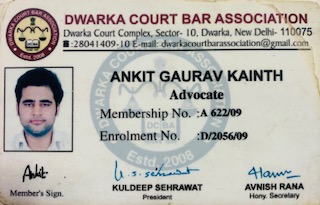
Ankit Gaurav Kainth & Associates provides property-document verification, title review, Agreement to Sell review and related legal assistance from its litigation practice based at Dwarka Courts, Delhi.
Consultations may be scheduled in advance for review of the proposed transaction and available documents.