
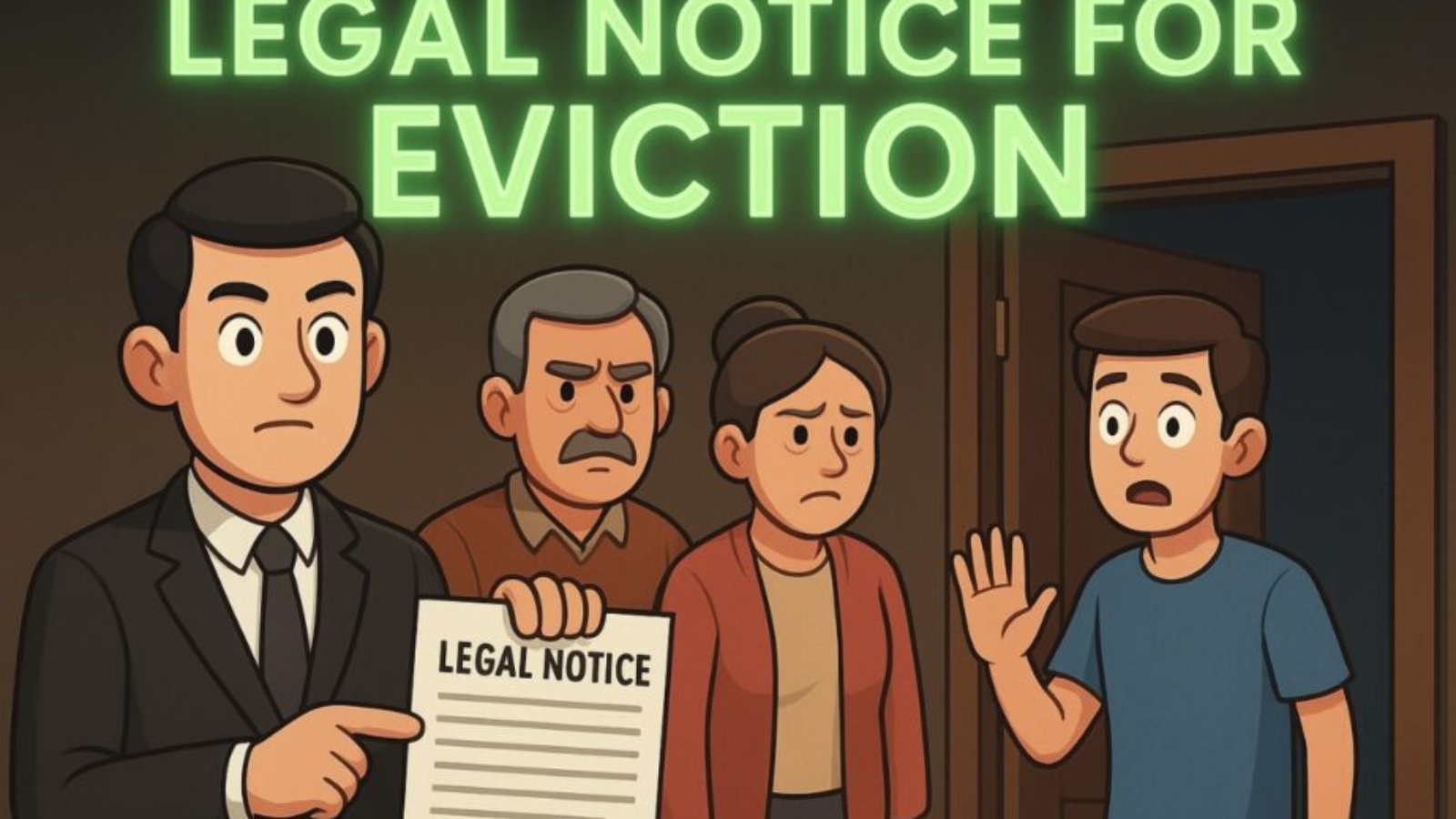
Family disputes in Dwarka Court around property are some of the most emotionally draining battles one can face. Yet, Indian law is clear: a grown-up child or any other relative living in the parents’ house is only a licensee, not an owner, unless there is a legal transfer of ownership. This means parents have every right to revoke that license if the situation becomes unbearable.
But how do you legally ask your own family member to leave the house?
Here’s a clear, structured, and practical guide.
⸻
1. Understanding What a “Licensee” Means (Dwarka Court)
When parents allow a child, sibling, or relative to live in their home out of love, affection, or convenience, it does not create ownership rights. It is merely permission—a license.
Once that permission ends, the relative has no legal right to continue occupying the property.
⸻
2. Why a Legal Notice Is Important(Dwarka Court)
Before initiating any police complaint or civil action, the law expects a formal revocation of permission.
A legal notice by an advocate serves as:
• A professional, documented communication
• A clear revocation of the license
• A warning of legal consequences
• A step that courts often examine before granting relief
⸻
3. What the Legal Notice Contains(Dwarka Court)
Your advocate in Dwarka Court will draft a detailed notice including:
1. Ownership proof of the parents
2. Statement that the relative is a licensee without any legal rights
3. Revocation of permission to stay in the property
4. A specific time period (commonly 15 or 30 days) to vacate the premises
5. Warning of legal action under:
• Senior Citizens Act (if parents are 60+)
• Civil suit for eviction
• Police complaint for harassment
⸻
4. What Happens After the Notice Period (Dwarka Court)
If the relative does not vacate:
• Parents may file a petition before the Maintenance Tribunal (fast-track remedy for senior citizens)
• Or a civil suit for mandatory injunction
• Or lodge a police complaint if the occupant becomes abusive or threatening
Courts strongly protect parents’ rights to peaceful living and full control over their property.
⸻
5. Why Professional Legal Help Matters (Dwarka Court)
Family disputes are sensitive. A properly worded notice avoids escalations and prevents the opposite party from twisting facts. An advocate:
• Drafts the notice strategically
• Sends it via valid modes (registered post/email)
• Guides parents through next steps
⸻
Conclusion
Evicting a family member isn’t easy emotionally—but legally, it is absolutely possible. Parents have the right to reclaim their peace, dignity, and property. A well-crafted legal notice is the first, most powerful step toward restoring harmony and asserting lawful ownership.
https://share.google/znGCrPkZYMJG4P3BD
#AdvocateinDwarkaCourt
#BestAdvocateinDwarkaCourt
#DivorceAdvocateinDwarkaCourt
#MatrimonialAdvocateinDwarkaCourt
#CivilAdvocateinDwarkaCourt
#Dwarkacourtadvocatecontactnumber
#Divorcelawyerindwarka
#BestAdvocatenearme
#BestLawyernearme
Consult an experienced advocate to determine the most suitable mode of service based on the facts of your case and court practice.
Contact me for Consultation :- 9899085554, 9811885554
Ankit Gaurav Kainth Advocate, Dwarka Court, Chamber No.728, 7th Floor, Dwarka, New Delhi
https://share.google/4r7kHm3s4da3OS9rS

Add a Comment