
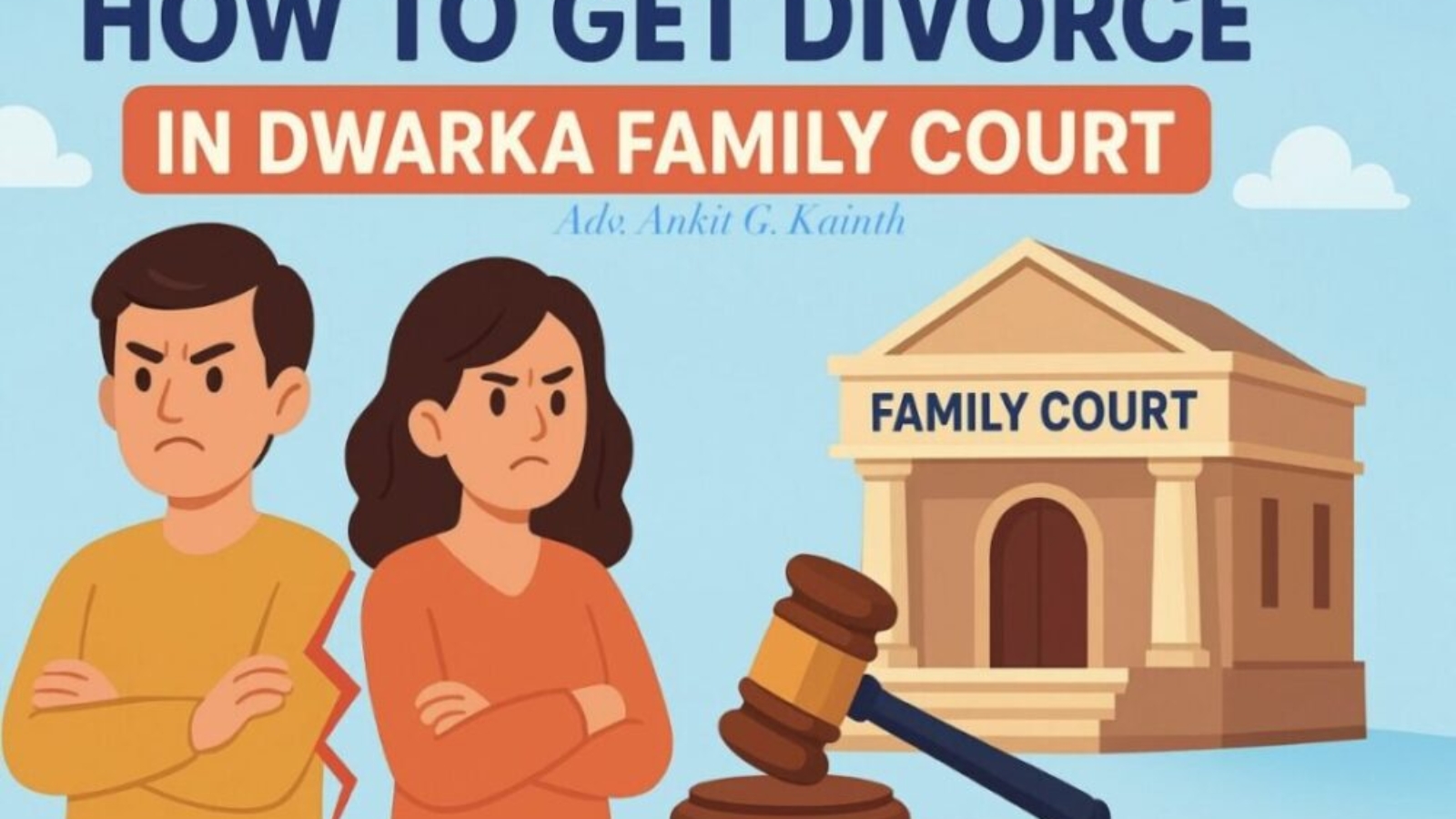
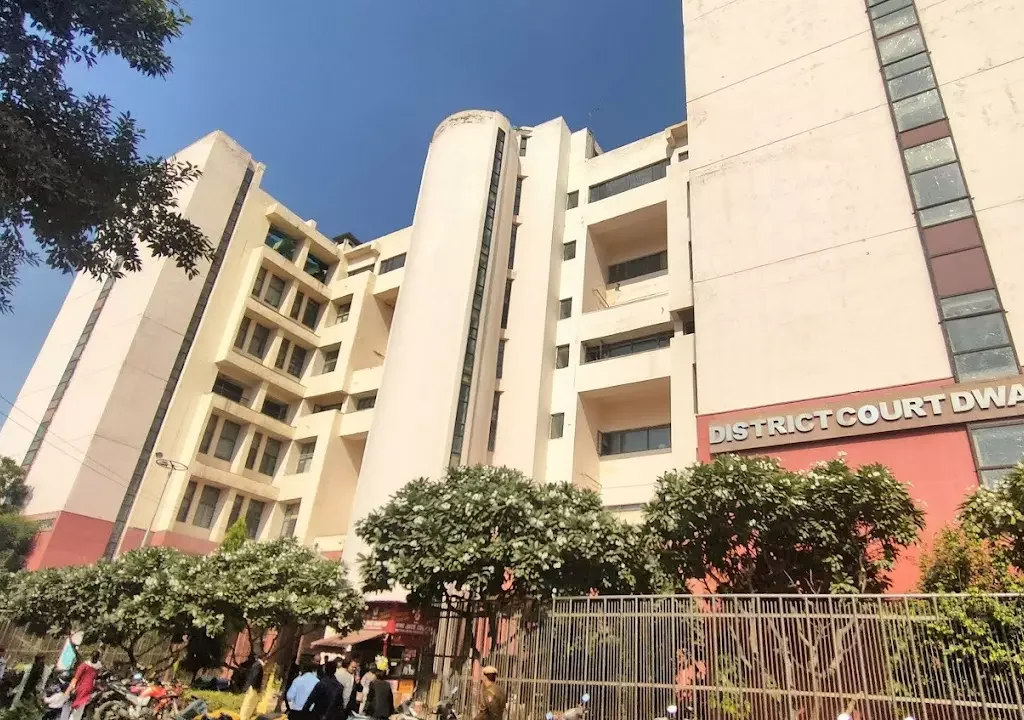
Divorce in Dwarka Court, Family Cases: Expert Guide + 10 Most Important Supreme Court Judgments.
Top Supreme Court Judgments on Divorce | Complete Guide for Dwarka Family Court Clients
Best 10 Supreme Court Judgments for Divorce | Guide to Filing Divorce in Dwarka Family Court, Delhi.
Introduction
Divorce is never easy — emotionally, socially or legally. But if a marriage becomes unworkable, sometimes ending it with dignity is the only practical solution. For those approaching a family court such as the one in Dwarka Court (New Delhi), knowing the landmark rulings of Supreme Court of India (SC) can make a big difference. These judgments shape how divorce petitions are framed, argued, and decided.
Here I outline ten of the most important Supreme Court judgments / principles that influence divorce law in India — particularly under the Hindu Marriage Act, 1955 (HMA) — along with “important notes” on each, and then offer my practical view and guidance: how a client in Dwarka Family Court may approach divorce “like a pro.”
Top 10 Supreme Court Judgments / Principles for Divorce
1. Irretrievable Breakdown / Irreconcilable Differences — Judicial Recognition
- In a recent ruling, SC held that even though “irretrievable breakdown of marriage” is not explicitly a ground under HMA, the Court — under its constitutional powers (Article 142) — can dissolve a marriage when it is “emotionally perished, dead, unworkable and beyond repair.”
- The Court emphasized that forcing a couple to continue living together when there is no possibility of reconciliation serves no purpose and only prolongs agony.
- Important Note: This judgment is a game-changer because it moves jurisprudence beyond the rigid “fault-based” grounds (cruelty, desertion, adultery), by recognizing “no-fault but failed marriage” as a valid basis for divorce — provided facts justify it. Courts will evaluate: period of separation, when last cohabited, attempts at reconciliation, gravity of allegations, etc.
2. Long Separation + Mental Cruelty / Failed Marital Relationship — Naveen Kohli v. Neelu Kohli (2006, 4 SCC 558)
- In this case, SC noted that when parties have lived separately for a “sufficient length of time,” petition for divorce may be granted — since continuation of an unworkable marriage causes more misery.
- The Court observed that “cruelty” under HMA need not always be active; prolonged hostility, humiliation, false accusations, separation etc., may cumulatively amount to mental cruelty.
- Important Note: This helps clients who may not have overt “violent cruelty” but have undergone years of alienation, neglect or irreparable breakdown. Long separation with no hope of reconciliation becomes a valid ground.
3. Definition of “Mental Cruelty” — Samar Ghosh v. Jaya Ghosh (2007, 4 SCC 511)
- In this landmark case, SC provided “illustrative guidelines” of what may constitute mental cruelty under Section 13(1)(i-a) of HMA. These are not exhaustive, but indicative.
- Examples include: sustained abusive or humiliating behaviour; refusal to fulfil marital obligations; public humiliation; false accusations of immorality; refusal to have children; long separation making cohabitation impossible.
- The Court also stressed that “cruelty” must be evaluated from the perspective of a “reasonable” spouse — not by sensitivity of petitioner. Everyday conflicts, small irritations or normal wear-and-tear do not count.
- Important Note: This case is often the foundation when clients come with allegations of “emotional cruelty,” “mental harassment,” “denial of marital rights,” especially where there are no physical abuses but persistent neglect, hostility or alienation.
4. Broad Application of “Cruelty” — V. Bhagat v. D. Bhagat (1994, 1 SCC 337)
- In this older but foundational case, the Court held that mental cruelty under HMA must be considered in light of the social status, background, capacity to endure, and individual circumstances. What is cruelty in one context may not be in another.
- The Court observed that cruelty does not require physical violence or injury; mental pain, suffering, anguish, intolerability of continued cohabitation suffice.
- Important Note: This judgment remains relevant — especially in Delhi courts — for clients whose suffering is intangible (emotional neglect, humiliation, pattern of hostility). It ensures that courts do not look only for physical abuses.
5. Adultery / Extramarital Relations as Component of Cruelty — e.g. Savitri Pandey v. Prem Chandra Pandey (AIR 2002 SC 591)
- In this case (and related jurisprudence), extramarital affairs, if proved, have been held to amount to mental cruelty, causing indignity, social humiliation, breach of trust, and therefore valid ground for divorce.
- Important Note: For clients in Dwarka, if there is credible evidence (phone records, testimonies, etc.) of infidelity, this ground remains viable — though courts today treat allegations carefully, and a mere suspicion may not suffice.
6. Provision for Alimony / Maintenance even in Void / Voidable or Broken Marriages — Sukhdev Singh v. Sukhbir Kaur (2025) (recent)
- In a 2025 decision, SC ruled that even when a marriage is declared void under HMA, a spouse may be entitled to interim maintenance or permanent alimony under Sections 24/25 of HMA.
- Important Note: This judgment brings hope to people whose marriage may be void or voidable (for example due to earlier existing marriage, bigamy, etc.) — they may still claim financial relief even if the marriage is annulled.
7. Preventing Misuse — Void Second Marriages / Bigamy and Legal Consequences — Sarla Mudgal v. Union of India (1995, AIR 1995 SC 1531)
- In this important precedent, the SC held that a second marriage obtained via conversion (to Islam) without dissolving the first marriage remains void, and such bigamy constitutes an offence under Indian Penal Code — thus emphasizing the sanctity of the first marriage and need for formal dissolution.
- Important Note: For clients in Dwarka (or elsewhere), this serves as caution: one cannot “escape” first marriage by conversion or back-door mechanisms — formal divorce/decree of annulment must precede any new marriage.
8. Judicial Finality — SC Encouraging “Quietus” to Prolonged Matrimonial Litigation: e.g. Manju Kumari Singh v. Avinash Kumar Singh (2018 SCC OnLine SC 739)
- In this case, SC observed that where parties have lived separately for long, all mediation / conciliation attempts failed, and litigation has dragged on, giving a final decree may bring peace and closure — especially when there are children grown-up and settlement is possible.
- Important Note: This demonstrates the Court’s sensitivity to mental distress, social impact and future of children; showing that SC can — and will — intervene to end “never-ending matrimonial warfare.”
9. Cooling-Off Period (Mutual Consent) Can Be Waived — Role of Consent under HMA’s Section 13B
- Under HMA, mutual-consent divorce typically requires a waiting (cooling) period (six months). But SC has held that in appropriate, exceptional situations — such as irretrievable breakdown, long separation and mutual agreement — this waiting period can be waived.
- Important Note: For couples seeking amicable separation and divorce by mutual consent, this flexibility helps expedite the process — especially useful in a busy family court like Dwarka, saving time, cost and emotional burden.
10. “Fault Theory” Remains, but Courts Interpret It Broadly — Understanding Statutory vs Judicial Grounds
- Under the HMA, Section 13(1) lists “fault-based” grounds (adultery, cruelty, desertion, etc.) for divorce. SC judgments — such as those above — show that fault need not be only physical or obvious; mental cruelty, desertion, prolonged separation, breakdown of relationship may all count.
- The Court’s jurisprudence reflects that “fault” is not narrowly defined; courts must look at totality of conduct, whether continued cohabitation is reasonable, and whether marriage has become a mere formality.
- Important Note: Clients should not assume that only dramatic events (violence, bigamy etc.) give grounds for divorce — repeated neglect, emotional cruelty, or long separation also qualify.
My View (as a Practitioner) — Divorce Cases in Dwarka Court, Delhi: How I Would Approach Them
Having seen several cases in Delhi’s Family Courts (including Dwarka), I believe that these developments make divorce more accessible — but proper strategy, documentation, and realistic expectations are essential. Here is how I would guide a client “like a pro”:
- Frame the Petition Based on Facts, Not Emotions Alone
- Use facts to show prolonged separation, breakdown of marriage, lack of cohabitation, no chance of reconciliation.
- If there is cruelty — whether mental, emotional, neglect, indifference — gather evidence: WhatsApp messages/chats, proof of separation, statements of friends/family, mail records, financial neglect, refusal to fulfil marital obligations, etc.
- Decide Between “Contested Divorce” vs “Mutual Consent / Waiver”
- If both spouses agree, a mutual-consent divorce could be fastest; but ensure consent is free, informed, documented.
- If there are differences or disputes (custody, alimony, behaviour), go the contested route — but anchor it on SC precedents (e.g. modern broad definition of cruelty / irretrievable breakdown).
- Prepare for Alimony / Maintenance — Even in Void / Voidable Cases
- If marriage is being annulled or declared void (void second marriage, bigamy, etc.), you can still claim maintenance / interim alimony under law as per recent SC judgment. This matters in Delhi, where cost of living is high.
- Use Separation/Cohabitation Gap Strategically
- Long separation itself is a strong ground now (see Naveen Kohli, Samar Ghosh). Many clients underestimate this. Show evidence of no cohabitation, no contact, estrangement, efforts of reconciliation failed — this helps even if there is no clear “violence.”
- Avoid “Over-Legalising” — But Don’t Under-Document Either
- Courts dislike petty “non-cooperation” or trivial complaints — they expect a threshold for cruelty. But also avoid vague allegations. Present well-documented, concrete behaviour that objectively shows breakdown.
- Be Realistic — Litigation Takes Time; But With Right Approach, Family Court in Dwarka Can Be Approached Confidently
- Family courts in Delhi are busy. But if the case is built properly, based on SC precedents, with clarity of facts and reasonable expectations, one can aim for a solid hearing.
How to File a Divorce “Like a Pro” in Dwarka / Delhi: Step-by-Step Guide
- Consult an experienced family-law lawyer. Review facts, documents, separation history, communications, behaviour.
- Decide grounds: cruelty, irretrievable breakdown, mutual consent, desertion, etc., whichever fits facts.
- Draft the petition under HMA (or relevant law) citing relevant SC judgments (as above) for support.
- Attach affidavits, proof of separation/cohabitation gap, correspondence, evidence of conduct, assets/income for alimony.
- Attend mandatory processes (reconciliation attempts, mediation if required), but be prepared to push for scrutiny under SC precedents.
- Be prepared for cross-examination if allegations involve cruelty / misconduct — ensure evidence backing.
- If mutual consent divorce, document voluntary agreement, settlement of alimony, custody, assets — and consider requesting waiver of cooling period if justified.
- After decree, complete ancillary proceedings (alimony, property settlement, custody, maintenance) — courts in Delhi generally respect SC-based precedents.
Conclusion
Divorce law in India has evolved significantly — from rigid fault-based grounds to a more realistic and humane jurisprudence recognising irretrievable breakdown, mental cruelty, long separation and overall unworkability of marriage. If you (or your client) are approaching a family court such as in Dwarka, New Delhi, understanding the key judgments of the Supreme Court is not just academic — it is strategic and practical.
With proper facts, documentation, and realistic strategy — built on the pillars of precedent such as Naveen Kohli, Samar Ghosh, V. Bhagat, Sukhdev Singh v. Sukhbir Kaur, Sarla Mudgal, among others — one can approach divorce proceedings confidently, with clarity, and a fair chance for a just outcome.
- Divorce in Dwarka CourtDivorce lawyer in Dwarka
- How to file divorce in Dwarka Family Court
- Supreme Court judgments on divorce
- Best divorce lawyer in Delhi
- Divorce on the ground of cruelty
- Irretrievable breakdown of marriage judgments
- Mutual consent divorce Dwarka
- Contested divorce Delhi
- Important divorce citations
- IndiaSupreme Court rulings on marital cruelty
- Dwarka Family Court legal advice
- Divorce case procedure Delhi
- Divorce filing process step by step
- Mental cruelty divorce case laws
- Separation and divorce Delhi
- Best Supreme Court judgments for divorce
- Filing divorce like a pro
- Legal guide for divorce clients Delhi
Consult an experienced advocate to determine the most suitable mode of service based on the facts of your case and court practice.
Contact me for Consultation :- 9899085554, 9811885554
Ankit Gaurav Kainth Advocate, Dwarka Court, Chamber No.728, 7th Floor, Dwarka, New Delhi
https://share.google/4r7kHm3s4da3OS9rS
FOLLOW US FOR MORE LEGAL AND RECENT UPDATES:-
https://www.linkedin.com/embed/feed/update/urn:li:share:7413981654014328832?collapsed=1
Add a Comment