best-advocate-in-dwarka-court-criminal-civil-matrimonial-cheque-cases

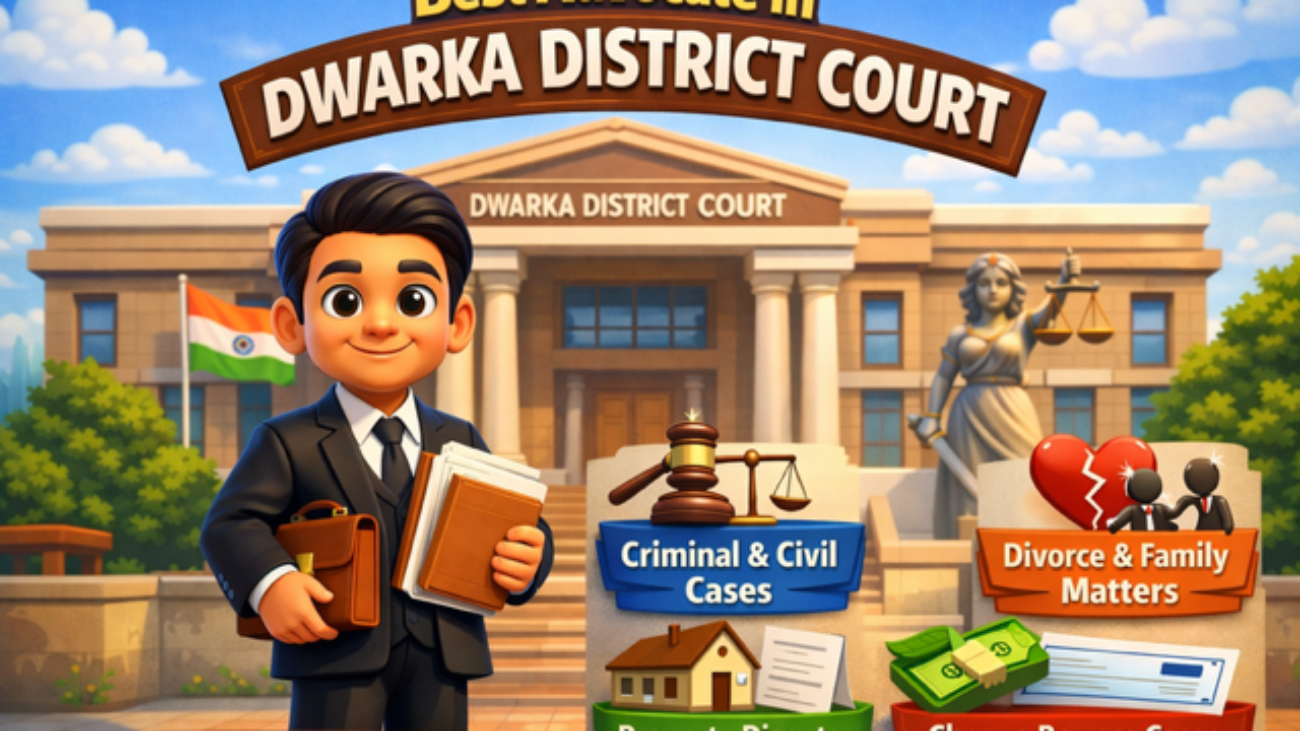
Best Advocate/Lawyer in Dwarka District Court, New Delhi – 18+ Years of Trusted Legal Experience

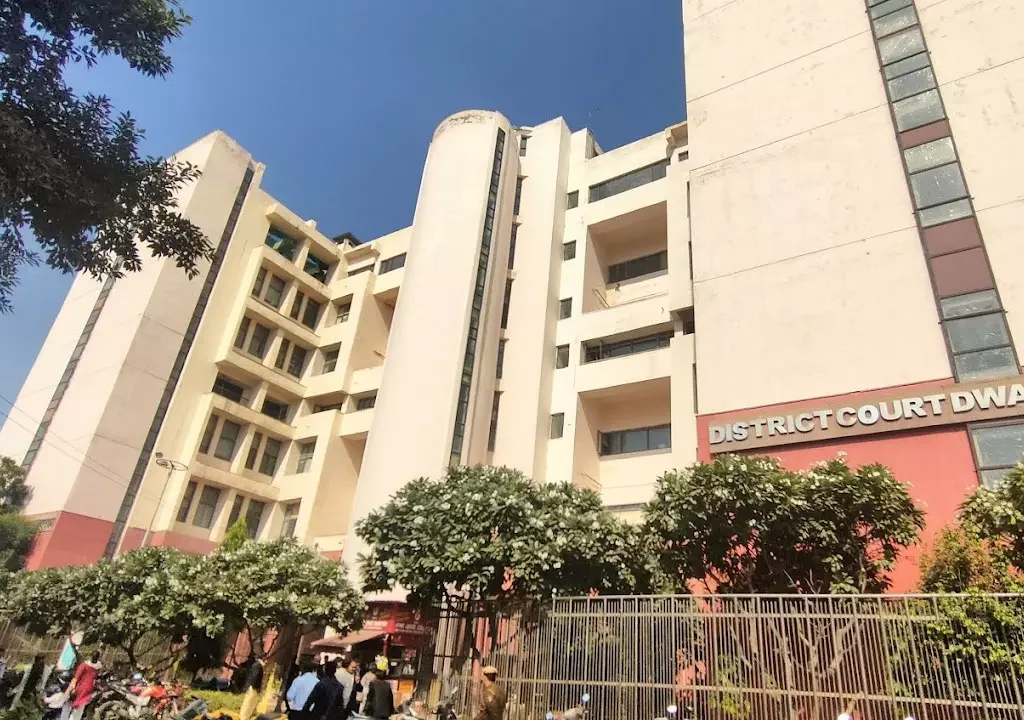
Dwarka District Court is one of the most prominent and busiest district courts in Delhi, catering to a vast population of South-West Delhi. Every day, hundreds of litigants approach the court for matters relating to civil disputes, criminal cases, matrimonial issues, property matters, banking disputes, and family law cases. In such situations, choosing an experienced advocate practicing regularly in Dwarka District Court becomes crucial.

With over 18 years of continuous legal practice, Advocate Ankit Gaurav Kainth has been actively representing clients before Dwarka District Court and allied courts. This long-standing experience brings not only knowledge of law but also a deep understanding of court procedures, filing practices, registry functioning, and practical courtroom dynamics.

How 18+ Years of Experience Assists Clients in Dwarka Court

Experience matters greatly in litigation. An advocate with years of courtroom exposure is better equipped to:

  • Analyse the strengths and weaknesses of a case
  • Draft precise and effective pleadings and applications
  • Advise clients on practical legal remedies
  • Handle matters efficiently before different courts and judges

Regular practice in Dwarka Courts ensures familiarity with daily listings, cause lists, timelines, and procedural requirements, which ultimately benefits the client by saving time, cost, and unnecessary litigation.

Areas of Practice at Dwarka District Court

Clients are represented in a wide range of legal matters, including:

⚖️ Criminal Matters

Bail applications, trials, complaints, FIR-related matters, and appeals.

⚖️ Civil Disputes

Property disputes, recovery suits, injunctions, declarations, and civil litigation.

⚖️ Matrimonial & Family Matters

Divorce, maintenance, domestic violence cases, child custody, and settlement matters.

⚖️ Banking & Financial Cases

Cheque bounce cases under NI Act, recovery matters, and financial disputes.

Each case is handled with confidentiality, diligence, and a strategy tailored to the client’s specific situation.

Dwarka District Court Jurisdiction – Who Can Approach Us

Clients residing or having legal issues in areas falling under Dwarka District Court jurisdiction can approach us for legal assistance. These areas include:

📍 Dwarka & Dwarka Sectors

📍 Janakpuri

📍 Vikaspuri

📍 Uttam Nagar

📍 Palam

📍 Najafgarh

📍 Bindapur

📍 Sagarpur

📍 Dabri

📍 Matiala

If your matter is registered or triable within the territorial jurisdiction of Dwarka District Court, professional representation from a local advocate ensures smoother handling of your case.

Why Choose a Local Advocate Practicing in Dwarka Court

✔️ Regular court appearances and practical exposure

✔️ Strong understanding of local court functioning

✔️ Efficient coordination with registry and court staff

✔️ Focused and transparent legal advice

Clients are always encouraged to share complete and truthful facts, enabling proper legal drafting and effective courtroom representation.

Your Legal Support at Dwarka District Court

Legal issues can be stressful, but with the right guidance and experienced representation, they can be handled effectively. With 18+ years of dedication to legal practice in Dwarka Courts, clients receive reliable advice, honest opinions, and committed representation.

Ankit Gaurav Kainth, Advocate

Dwarka District Court, Delhi

📞 Contact for legal consultation

Best Advocate in Dwarka District Court – 18+ Years of Trusted Legal Experience

Dwarka District Court is one of the most prominent and busiest district courts in Delhi, catering to a vast population of South-West Delhi. Every day, hundreds of litigants approach the court for matters relating to civil disputes, criminal cases, matrimonial issues, property matters, banking disputes, and family law cases. In such situations, choosing an experienced advocate practicing regularly in Dwarka District Court becomes crucial.

With over 18 years of continuous legal practice, Advocate Ankit Gaurav Kainth has been actively representing clients before Dwarka District Court and allied courts. This long-standing experience brings not only knowledge of law but also a deep understanding of court procedures, filing practices, registry functioning, and practical courtroom dynamics.

How 18+ Years of Experience Assists Clients in Dwarka Court

Experience matters greatly in litigation. An advocate with years of courtroom exposure is better equipped to:

  • Analyse the strengths and weaknesses of a case
  • Draft precise and effective pleadings and applications
  • Advise clients on practical legal remedies
  • Handle matters efficiently before different courts and judges

Regular practice in Dwarka Courts ensures familiarity with daily listings, cause lists, timelines, and procedural requirements, which ultimately benefits the client by saving time, cost, and unnecessary litigation.

Areas of Practice at Dwarka District Court

Clients are represented in a wide range of legal matters, including:

⚖️ Criminal Matters

Bail applications, trials, complaints, FIR-related matters, and appeals.

⚖️ Civil Disputes

Property disputes, recovery suits, injunctions, declarations, and civil litigation.

⚖️ Matrimonial & Family Matters

Divorce, maintenance, domestic violence cases, child custody, and settlement matters.

⚖️ Banking & Financial Cases

Cheque bounce cases under NI Act, recovery matters, and financial disputes.

Each case is handled with confidentiality, diligence, and a strategy tailored to the client’s specific situation.

Dwarka District Court Jurisdiction – Who Can Approach Us

Clients residing or having legal issues in areas falling under Dwarka District Court jurisdiction can approach us for legal assistance. These areas include:

📍 Dwarka & Dwarka Sectors

📍 Janakpuri

📍 Vikaspuri

📍 Uttam Nagar

📍 Palam

📍 Najafgarh

📍 Bindapur

📍 Sagarpur

📍 Dabri

📍 Matiala

If your matter is registered or triable within the territorial jurisdiction of Dwarka District Court, professional representation from a local advocate ensures smoother handling of your case.

Why Choose a Local Advocate Practicing in Dwarka Court

✔️ Regular court appearances and practical exposure

✔️ Strong understanding of local court functioning

✔️ Efficient coordination with registry and court staff

✔️ Focused and transparent legal advice

Clients are always encouraged to share complete and truthful facts, enabling proper legal drafting and effective courtroom representation.

Your Legal Support at Dwarka District Court

Legal issues can be stressful, but with the right guidance and experienced representation, they can be handled effectively. With 18+ years of dedication to legal practice in Dwarka Courts, clients receive reliable advice, honest opinions, and committed representation.

Ankit Gaurav Kainth, Advocate

Dwarka District Court, Delhi

📞 Contact for legal consultation

Mobile Number :- 9811885554, 9899085554

https://share.google/8rb0UJ27iSTMH2CDh

https://www.instagram.com/reel/DTzDA-6ic_c/?utm_source=ig_web_copy_link

Criminal-Advocate-in-dwarka-court

Why IPC & CrPC Sections Feel Like a New Combination Every Time You Read Them ⚖️📚

— Every Case Gives the Law a New Life

Anyone who has spent even a little time in criminal courts knows this truth: IPC and CrPC sections never behave the same way twice. You may read the same section a hundred times, cite it in dozens of matters, yet when a new case lands on your table, that very provision suddenly appears unfamiliar—almost like a new legal combination with a fresh mystery.

On paper, the Indian Penal Code and the Code of Criminal Procedure are fixed statutes. Their language does not change. Their numbering remains the same. But law is not meant to live only in books. It comes alive in courtrooms, through facts, evidence, arguments and judicial interpretation.

📌 Law Is Static in Text, Dynamic in Application

A section of IPC is only a framework. Its real meaning emerges when it meets facts. The same section relating to cheating, cruelty, criminal breach of trust or hurt may lead to completely different outcomes depending upon:

  • the intention (mens rea) of the accused
  • the sequence of events
  • the conduct of parties before and after the incident
  • the quality of evidence produced
  • the judicial mind interpreting it

Thus, every case gives the same section a new colour and a new soul.

🧠 Facts Are the Heart of Criminal Law

Criminal law is not arithmetic. It is not that Section “X” automatically results in punishment “Y”. Two FIRs may mention the same sections, yet one ends in discharge while the other proceeds to conviction. Why? Because facts make all the difference.

Even a small factual variation can change the entire complexion of a case. Timing of the incident, presence or absence of witnesses, medical opinion, recovery, delay in FIR—each factor reshapes how a section is understood and applied.

🧩 CrPC: Procedure With Infinite Possibilities

CrPC is often considered technical and procedural, but in practice it is deeply strategic. From registration of FIR to investigation, remand, bail, charge, trial and final arguments—no two criminal proceedings follow the same route.

A bail application under the same provision may be allowed in one case and rejected in another, solely because of:

  • seriousness of allegations
  • stage of investigation
  • criminal antecedents
  • cooperation of the accused
  • societal impact of the offence

This is why CrPC sections feel like a new puzzle every time.

🎓 Why Interns Must Understand This Early

For interns, this is a crucial lesson. Do not limit yourself to memorising sections. Bare Acts are important, but judgments are essential. Reading case law shows how courts breathe life into statutory provisions. This understanding separates a bookish student from a future lawyer.

👨‍⚖️ For Advocates: This Is Where Real Advocacy Begins

For advocates, this changing nature of sections is not a problem—it is an opportunity. The strength of a case lies in how well facts are presented within the legal framework. A skilled advocate does not merely quote sections; he connects law with life and presents a convincing legal story before the court.

🤝 For Clients: Why Outcomes Differ Under the Same Sections

Clients often ask, “This section is applied, what will be the result?” The honest answer is: it depends. Courts decide cases, not sections alone. Facts, evidence, conduct and credibility together shape the final outcome. Understanding this builds trust and realistic expectations.

✨ Conclusion

IPC and CrPC are not rigid formulas. They are living instruments of justice, evolving with every new case. Each matter gives sections a fresh interpretation, a new dimension and sometimes an unexpected twist. That is why criminal law remains challenging, fascinating and deeply human.

📌 Every case gives the law a new life—and every lawyer must learn to read the story hidden between the sections.

WRITTEN BY:-

Ankit Gaurav Kainth

Advocate

Chamber No.728, 7th floor, District Court Dwarka, New Delhi

Contact Number :- 9899085554, 9811885554

https://share.google/iWBSz1hXQRPuJmpoQ

Check my listing on Just Dial

https://jsdl.in/DT-23EJAE2U

Best-Cheque-Bounce-case-advocate-in-Dwarka-Court

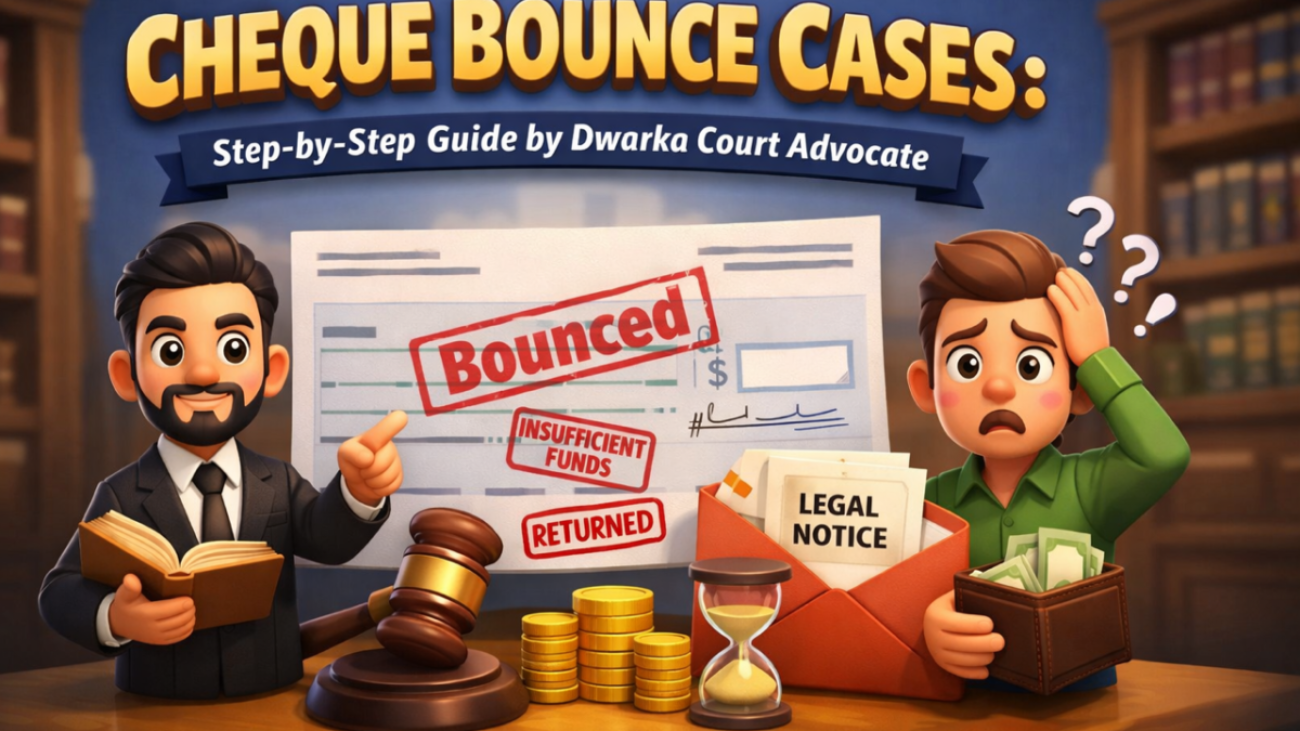
Cheque Bounce Cases & Its Stages in Dwarka Court

A Step-by-Step Practical Guide by an 18+ Years Experienced Advocate in Dwarka Court

Cheque bounce cases are among the most common financial disputes filed in Indian courts today. Despite being a criminal offence under law, many people—both complainants and accused—do not fully understand the procedure, timelines, and stages involved in a cheque bounce case.

As an advocate practicing for more than 18+ years in Dwarka Court, I have handled hundreds of cheque bounce matters, from the stage of legal notice to final conviction or settlement. This guide explains the entire process step by step, in simple language.

⚖️ What Is a Cheque Bounce Case?

A cheque bounce occurs when a cheque issued by a person is returned unpaid by the bank due to reasons like:

  • Insufficient funds
  • Account closed
  • Payment stopped
  • Signature mismatch

Such cases are governed by Section 138 of the Negotiable Instruments Act, 1881.

🧾 Essential Ingredients of a Valid Cheque Bounce Case

Before filing a case, the following conditions must be satisfied:

✔ The cheque must be issued for a legally enforceable debt

✔ Cheque should be presented within its validity period

✔ It must be returned unpaid by the bank

✔ Legal notice must be sent within the prescribed time

Failure in any of these may weaken the case.

📌 Stage 1: Issuance of Cheque

The process begins when the accused issues a cheque towards repayment of a loan, liability, or business transaction.

This cheque acts as a written promise to pay.

🏦 Stage 2: Presentation & Dishonour of Cheque

The cheque is deposited in the bank and returned unpaid with a Cheque Return Memo, mentioning reasons such as:

  • “Funds Insufficient”
  • “Account Closed”

📄 This return memo is a crucial document.

📩 Stage 3: Sending Legal Demand Notice (Within 30 Days)

After dishonour, the complainant must send a legal demand notice within 30 days of receiving the return memo.

The notice must:

  • Demand payment of cheque amount
  • Give 15 days’ time to make payment
  • Clearly mention cheque details

⚠️ Improper drafting of notice can lead to dismissal of the case.

⏳ Stage 4: Waiting Period of 15 Days

Once notice is served, the accused gets 15 days to make payment.

If payment is made → case ends.

If not → cause of action arises.

🏛️ Stage 5: Filing of Complaint in Court

After expiry of 15 days, the complaint must be filed within 30 days before the Metropolitan Magistrate, Dwarka Court, having jurisdiction.

Documents required:

📑 Original cheque

📑 Bank return memo

📑 Copy of legal notice

📑 Postal receipts & tracking report

📑 Affidavit of evidence

👨‍⚖️ Stage 6: Pre-Summoning Evidence

The complainant files an affidavit and documents.

The Magistrate examines whether a prima facie case is made out.

If satisfied → summons are issued to the accused.

📜 Stage 7: Appearance & Notice Under Section 251 CrPC

The accused appears before the court.

Notice of accusation is framed, and plea is recorded:

  • Guilty
  • Not guilty

Most cases proceed to trial.

🔍 Stage 8: Trial & Evidence

This includes:

  • Cross-examination of complainant
  • Defence evidence (if any)
  • Arguments by both sides

At this stage, experience of the advocate matters most.

⚖️ Stage 9: Final Arguments & Judgment

After hearing arguments, the court may:

✔ Convict the accused (fine / compensation / imprisonment)

✔ Acquit the accused

✔ Encourage settlement / mediation

💡 Punishment Under Section 138 NI Act

  • Imprisonment up to 2 years
  • Fine up to twice the cheque amount
  • Compensation to complainant

🤝 Importance of an Experienced Advocate

Cheque bounce cases look simple, but technical lapses can destroy a strong case. Proper drafting, correct limitation, effective cross-examination, and strategic settlement require practical court experience, especially in Dwarka Court procedures.

👨‍💼 How I & My Associates Can Assist You in Dwarka Court

With 18+ years of continuous practice in Dwarka Court, I, Advocate Ankit Gaurav Kainth, along with my dedicated team, provide:

✔ Drafting & sending of legal notice

✔ Filing & contesting cheque bounce cases

✔ Strong representation for complainant & accused

✔ Settlement & mediation assistance

✔ Regular court updates & transparent advice

📍 Chamber & Office in Dwarka Court Complex

📞 Professional, ethical, and result-oriented approach

If you are facing a cheque bounce issue or want to recover your hard-earned money through legal means, timely legal action is crucial. Proper guidance at the initial stage can save years of litigation.

📌 

For consultation and representation in Cheque Bounce Cases before Dwarka Court, feel free to connect with me and my associates.

https://jsdl.in/DT-23EJAE2U

Best-Cheque-case-advocate-in-Dwarka-court

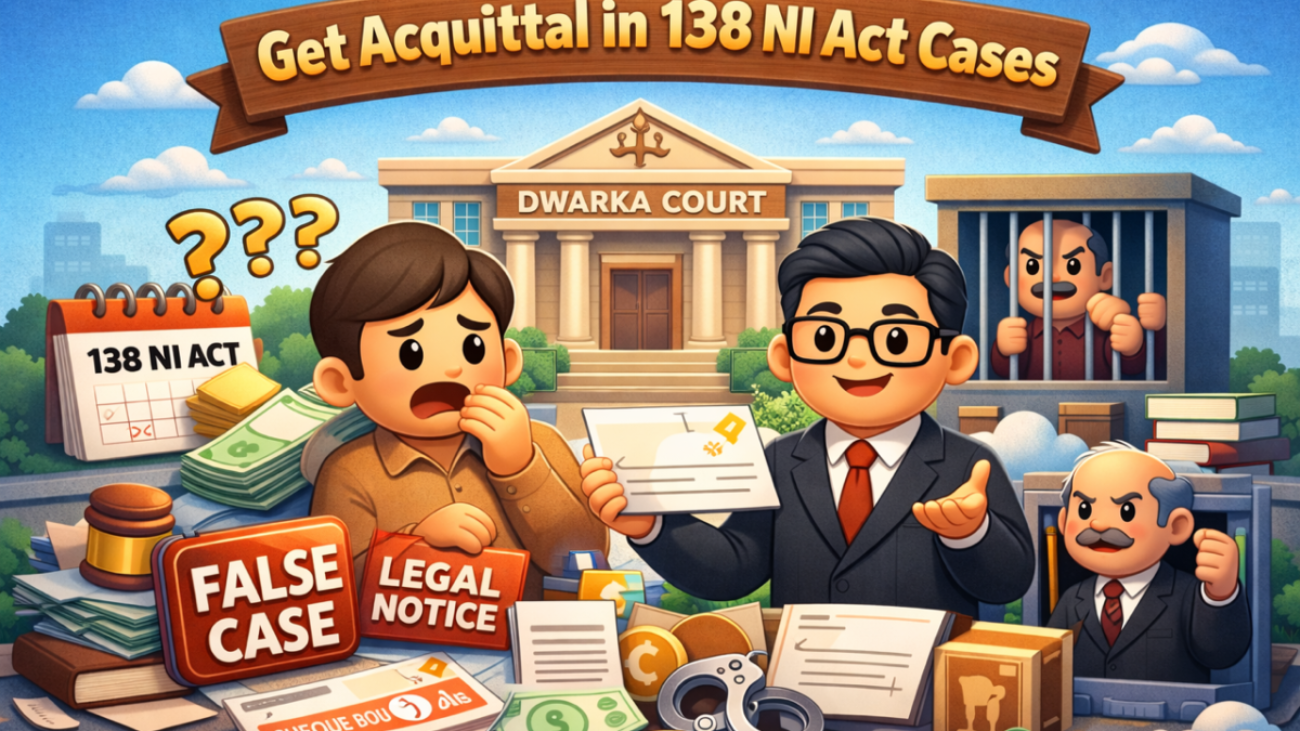
A Digital Guide for Dwarka Court in 138 NI Act Cases-By 18+ Experienced Cheque Bounce Advocate

How to Contest False Cheque Bounce Cases & Get Acquittal with the Help of an Experienced Advocate

Cheque bounce cases under Section 138 of the Negotiable Instruments Act (NI Act) are among the most commonly filed criminal complaints in Dwarka Court, Delhi. Every day, accused persons come to court with fear, confusion, and one common sentence:

“Sir, humne blank cheque diya tha. Saamne wali party ne misuse karke apni marzi se amount bhar diya aur 138 NI Act ka case kar diya. Ab hum kya kare?”

If you are facing a similar situation, don’t panic. A cheque bounce case is defendable, and with the right legal strategy and an experienced advocate, acquittal is very much possible.

With my 18+ years of experience in criminal litigation, especially in 138 NI Act cases at Dwarka Court, I am writing this digital guide to help accused persons understand how these cases work, how to contest them, and how false cases can be defeated legally.

Understanding Section 138 NI Act ⚖️

A case under Section 138 NI Act is filed when:

✔ A cheque is presented for payment

✔ The cheque is dishonoured

✔ A legal notice is sent within time

✔ Payment is not made within 15 days

However, not every cheque bounce leads to conviction. The law itself provides several legal defenses.

Common Reality of False 138 NI Act Cases 🚨

In Dwarka Court, we often see cases where:

  • Blank cheques were given as security
  • Cheques were issued for loan talks that failed
  • Amount was filled later without consent
  • No legally enforceable debt existed
  • Cheque was misused after business disputes

⚠️ Law presumes liability, but presumption is rebuttable. This is where experience matters.

How an Accused Can Get Acquittal in 138 NI Act Cases ✅

🔹 1. No Legally Enforceable Debt

The complainant must prove that:

  • A real debt existed
  • The amount mentioned is correct
  • The cheque was issued towards that liability

If the debt itself is doubtful, acquittal is possible.

🔹 2. Blank Cheque Misuse – A Strong Defence

Giving a blank cheque does not automatically mean guilt.

We challenge:

✔ Source of alleged loan

✔ Mode of payment (cash/bank proof)

✔ Financial capacity of complainant

✔ Why amount was not mentioned earlier

Courts in Dwarka regularly grant relief when misuse is established.

🔹 3. Defective Legal Notice 📩

Many cases fail because:

  • Notice not served properly
  • Wrong address
  • Incorrect amount
  • Notice beyond limitation

A technical defect can lead to dismissal.

🔹 4. Contradictions in Complainant’s Evidence

Cross-examination is the heart of 138 NI Act defence.

We expose:

✔ Inconsistencies in statements

✔ False affidavits

✔ Missing documents

✔ Fabricated stories

An experienced advocate knows what to ask and when to ask.

🔹 5. Rebutting Presumption under Law

Presumption under Sections 118 & 139 NI Act can be rebutted by:

  • Probable defence
  • Circumstantial evidence
  • Conduct of complainant
  • Documentary proof

You don’t need to prove innocence beyond doubt—only raise reasonable doubt.

Why Experience in Dwarka Court Matters 🏛️

Every court has its own working style. An advocate regularly practicing in Dwarka District Court understands:

✔ Magistrate-wise approach

✔ Local police procedures

✔ Filing practices

✔ Speedy disposal strategies

With 18+ years of continuous criminal practice, I have handled hundreds of 138 NI Act cases—from trial to acquittal to compounding.

How We Assist Our Clients 👥

✔ Case analysis before first appearance

✔ Proper reply to legal notice

✔ Strategic cross-examination

✔ Drafting of defence applications

✔ Regular updates & transparent advice

✔ Reasonable and clear fee structure

Our focus is not false assurance but realistic solutions.

Visit Our Chamber for Proper Legal Guidance 📍

If you are facing a false 138 NI Act case in Dwarka Court, meet us personally after a prior appointment.

🏛 Chamber Address:

Chamber No. 728, 7th Floor

District Court Dwarka, New Delhi – 110075

📞 Contact / WhatsApp:

9899085554 | 9811885554

Final Advice to Accused Persons ⚠️

❌ Do not ignore summons

❌ Do not rely on hearsay advice

❌ Do not panic or settle blindly

✔ Take early legal advice

✔ Prepare defence properly

✔ Trust an experienced 138 NI Act advocate

False cases can be fought. Acquittals are achievable.

All you need is the right legal strategy at the right time.

Blog by :-

Ankit Gaurav Kainth, Advocate, Chamber No.728, District Court Dwarka, Sector-10, New Delhi

Regards

F20C169E-1B32-4A5D-83D8-7070E5C0E2B3

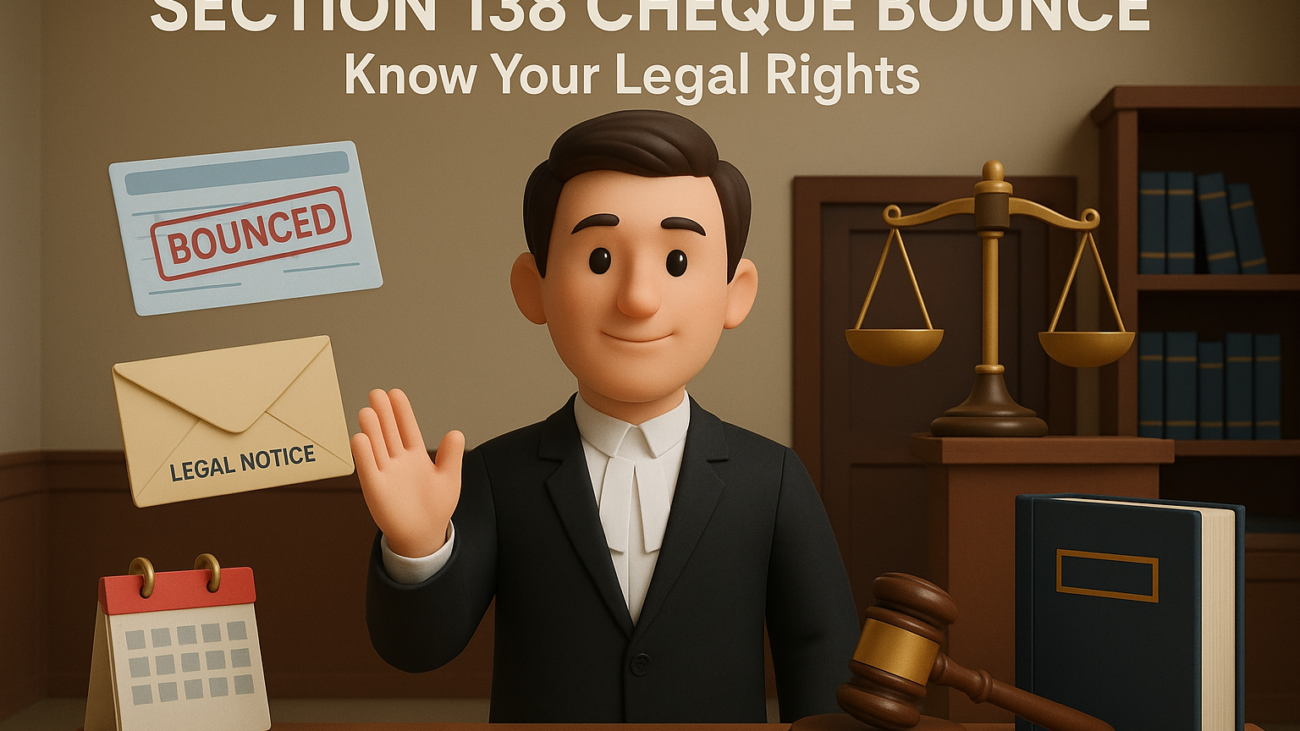
Section 138 Cheque Bounce: What Clients Should Know?

💼⚖️ A Practical Guide from 18+ Years of Courtroom Experience at Dwarka Courts, New Delhi

In my 18+ years of active legal practice at District Court Dwarka, I have seen thousands of cheque bounce cases—some genuine, some avoidable, and many arising simply due to lack of proper legal guidance at the right time.

Section 138 of the Negotiable Instruments Act, 1881, though seemingly simple, is a technical, time-bound and procedure-driven law. A single mistake can cost you the entire case.

This article is written to educate, empower, and protect clients, whether you are a complainant or an accused.

🔍 What is Section 138 Cheque Bounce Case?

A cheque bounce offence is committed when:

✔ A cheque is issued towards a legally enforceable debt or liability

✔ The cheque is returned unpaid due to insufficient funds / account closed / payment stopped

✔ A legal notice is issued within 30 days of dishonour

✔ Payment is not made within 15 days of receipt of notice

Only when all legal ingredients are fulfilled, criminal liability under Section 138 arises.

📌 It is not merely about bouncing of cheque—it is about compliance with strict statutory timelines.

⏳ Time Limits You Must Never Ignore

⏱ Cheque validity – Usually 3 months

⏱ Legal notice – Within 30 days of bank return memo

⏱ Payment window – 15 days after notice delivery

⏱ Complaint filing – Within 30 days thereafter

⚠️ One day’s delay without legal justification can result in dismissal.

🧾 Common Myths Clients Have

❌ “Cheque bounce is a civil matter only”

❌ “Case can be filed anytime”

❌ “Stop payment means no offence”

❌ “Security cheque is always safe”

✅ Reality: Courts at Dwarka and Delhi consistently hold that security cheques, post-dated cheques, and even blank signed cheques can attract Section 138 if liability is proved.

⚖️ Punishment under Section 138

🔹 Imprisonment up to 2 years

🔹 Fine up to double the cheque amount

🔹 Compensation under Section 357 CrPC

In many cases, settlement at the right stage saves clients from unnecessary litigation and financial loss.

🏛️ Why Cheque Bounce Cases Need Experienced Handling

From pre-litigation notice drafting to trial, cross-examination, and final arguments, cheque bounce cases are document-centric and strategy-driven.

Over the years at Dwarka Courts, I have seen cases fail because:

📉 Wrong notice was sent

📉 Complaint lacked proper averments

📉 Evidence was poorly presented

📉 Accused missed compounding opportunity

Experience matters—not just knowledge of law.

🤝 How I Help Clients at Dwarka Court (With My Team)

With 18+ years of courtroom exposure, I offer end-to-end legal assistance:

🖋 Drafting legally sound demand notices

📑 Filing & defending Section 138 complaints

🎯 Strategic cross-examination

🤝 Negotiated settlements & compounding

📂 Multiple cheque matters & bulk cases

🏛 Regular appearance before Dwarka Courts

My team ensures timely follow-ups, document management, and procedural compliance, so clients remain stress-free.

🔄 Settlement & Compounding: A Smart Option

Courts actively encourage settlement at early stages.

✔ Saves time

✔ Reduces cost

✔ Avoids criminal record

✔ Preserves business relationships

📌 With the right legal strategy, many matters are resolved before evidence stage.

👨‍⚖️ Accused in Cheque Bounce Case? Don’t Panic

If you have received summons:

🔹 Do not ignore it

🔹 Do not assume conviction is automatic

🔹 Do not delay legal advice

A strong defence may exist if:

✔ No legally enforceable debt

✔ Cheque misused

✔ Amount already paid

✔ Procedural lapses by complainant

Each case demands individual assessment.

🌟 Final Words from Experience

“Section 138 cases are not won by emotions, but by precision, timing, and strategy.”

Whether you are seeking recovery of your hard-earned money or defending against a false implication, professional guidance at the earliest stage makes all the difference.

At District Court Dwarka, New Delhi, my practice is built on clarity, commitment, and courtroom results.

🔎 SEO Search Title

Section 138 Cheque Bounce Case in Dwarka Court – Complete Legal Guide by Experienced Advocate

📢 Hashtags

#ChequeBounce

#Section138NIAct

#NegotiableInstrumentsAct

#ChequeBounceLawyer

#DwarkaCourt

#DelhiAdvocate

#LegalNotice

#ChequeBounceCase

#IndianCriminalLaw

#AdvocateDwarka

Consult an experienced advocate to determine the most suitable mode of service based on the facts of your case and court practice.

Contact me for Consultation :- 9899085554, 9811885554

Ankit Gaurav Kainth Advocate, Dwarka Court, Chamber No.728, 7th Floor, Dwarka, New Delhi

https://share.google/4r7kHm3s4da3OS9rS
IMG_1691

How to Get Acquittal in Cheque Bounce Case Under Section 138 NI Act in District Court Dwarka, New Delhi

A cheque bounce case can be one of the most stressful experiences for any businessperson or individual facing charges under Section 138 of the Negotiable Instruments Act, 1881. The good news? Acquittal is absolutely possible—and with the right legal strategy, expert advocacy, and proper understanding of procedural safeguards, you can successfully defend yourself in the District Court Dwarka.

With over 18+ years of experience in criminal defense and practicing at the District Court, Dwarka (Chamber no. 728, 7th floor), I have guided numerous clients through the complexities of Section 138 cases. This comprehensive guide walks you through the critical defense strategies and legal nuances that can secure your acquittal.

🎯 Understanding the Legal Framework: What the Prosecution Must Prove

Before diving into defense strategies, it’s essential to understand what the prosecution needs to establish for conviction under Section 138 NI Act. According to the landmark judgment in K. Bhaskaran v. Sankaran Vaidhyan Balan (AIR 1999 SC 3762), the Supreme Court laid down the five essential ingredients that must be proven:

1.    Drawing of a cheque for the discharge of any legally enforceable debt or liability

2.    Presentation of the cheque to the bank within three months

3.    Return of the cheque unpaid by the drawee bank

4.    Issuance of a legal notice by the payee within 30 days of cheque return

5.    Failure to pay the cheque amount within 15 days of receipt of notice

Critical Point: If even ONE of these ingredients is missing or defective, the entire case against you collapses. This is your first line of defense.

💡 The Power of Section 139: Understanding the Presumption That Can Work For You

Section 139 of the NI Act creates a statutory presumption in favor of the complainant—it presumes that every cheque was issued to discharge a legally enforceable debt. However, this presumption is NOT absolute. It is rebuttable, meaning you can challenge it.

The burden of proof initially lies on the complainant, but if they establish prima facie evidence of debt, the burden shifts to you to rebut the presumption. The critical aspect here is that you need not prove innocence beyond reasonable doubt—only raise a probable defense to shift the burden back to the complainant.

Landmark Guidance: In Basalingappa v. Mudibasappa (2019) 5 SCC 418, the Supreme Court held that the presumption under Section 139 is rebuttable, and the accused can succeed by presenting credible evidence of a probable defense—you don’t need mathematical certainty, just probabilities.

🛡️ Key Defense Strategies for Acquittal

1. No Legally Enforceable Debt or Liability

This is the most powerful defense in Section 138 cases. The prosecution must prove that a valid, legally enforceable debt existed when the cheque was issued. If they fail to do so, acquittal is virtually guaranteed.

Evidence to Present:

•    Business records showing no transaction with the complainant

•    Bank statements demonstrating no receipt of funds

•    Correspondence proving you never agreed to any loan

•    Witness testimony from colleagues or family confirming no debt

Real-World Application: In the recent case Vardhineedi Sri Ramanjaneyulu v. Yeeda Sasibhushan (2025 SCC OnLine AP 1801), the Andhra Pradesh High Court upheld the acquittal because the complainant failed to provide evidence of:[scconline]

•    The date and place of the alleged loan transaction

•    Documentation of the loan

•    Proof of financial capacity to lend the amount

The complainant’s own admission that the transaction was not recorded in his business account books was fatal to his case.

2. Cheque Given as Security, Not for Discharge of Debt

A legally valid defense is that the cheque was issued merely as a security deposit and not as payment toward an existing debt. If you can establish that the cheque was:[lawyered +1]

•    Post-dated with conditional arrangements

•    Held as a guarantee for future transactions

•    Part of a security arrangement, not a debt repayment

…then Section 138 does not apply. However, important caveat: You must prove that it was a security cheque, as the burden lies on you to establish this defense with credible evidence.

What to Document:

•    Written agreements mentioning the cheque as security

•    Correspondence indicating conditional arrangements

•    Witness testimony about the arrangement

•    Business context showing it was meant as security. 

3. Defective or Invalid Legal Notice

The statutory notice issued by the complainant must strictly comply with the law. Any defect is fatal to the prosecution. Check for:- 

•    Timing: Notice must be issued within 30 days of cheque dishonor

•    Content: Notice must clearly demand payment of the exact cheque amount

•    Service: Notice must be properly served on you (returned/undelivered notices don’t constitute valid service)

•    Precision: The amount demanded must match the cheque amount precisely—even a rupee difference can invalidate the notice

Supreme Court Standard: In recent rulings, the Supreme Court reaffirmed that strict compliance with Section 138’s statutory requirements is mandatory.

If the notice is defective, the case is dismissed—you get automatic acquittal.

4. Improper Service of Legal Notice

Even if the notice was issued correctly, if it wasn’t properly served on you, no cause of action arises. The burden is on the complainant to prove that:

•    You actually received the notice

•    The notice was delivered to your correct address

•    You had sufficient time to respond (15 days from receipt)

Evidence to Gather:

•    Postal receipts showing notices returned “undelivered”

•    Your residence proof showing the address on notice was incorrect

•    Witness testimony that you never received any notice

•    Affidavit stating non-receipt of notice.

5. Procedural Flaws in Complaint Filing

The complaint must be filed within 30 days of the notice period expiring (i.e., 30 days after the 15-day notice period expires). Any delay beyond this period is fatal to the case:- 

Defense Points:

•    Calculate the exact timeline from cheque dishonor to notice to complaint filing

•    If the 60-day window is exceeded, the complaint is barred by limitation

•    Jurisdictional issues: Cheque should be dishonored in the District Court’s jurisdiction. 

6. Lack of Financial Capacity of the Complainant

This defense challenges whether the complainant had the financial means to advance the alleged loan. If the amount is substantial and the complainant cannot prove they possessed those funds at the time of the alleged transaction, it weakens the prosecution’s case significantly.

🎬 Cross-Examination: The Art That Wins Cases

Cross-examination is where battles in Section 138 cases are won or lost. With proper preparation and strategic questioning, you can deconstruct the complainant’s version and create reasonable doubt. Here’s how:

Key Areas of Cross-Examination:-

•    When exactly did the loan transaction occur? (Demand specificity—dates, places, witnesses)

•    How was the money transferred? (Ask for bank statements, transaction records)

•    Do you have any written agreement or loan documentation?

•    Why isn’t this transaction recorded in your business accounts?

•    How do you claim to have lent such a large amount without documentation?

2. Challenge the Transaction’s Legitimacy:

•    Was this a formal loan or just a friendly arrangement?

•    What were the terms of repayment originally discussed?

•    Why wait months/years to issue a legal notice?

•    Did the accused accept the debt or deny it when contacted?

3. Highlight Contradictions:

•    Are the complainant’s statements consistent with documents produced?

•    Does the cheque amount match the alleged debt amount?

•    Are there gaps in the narrative that don’t add up?

4. Question the Cheque’s Purpose:

•    Was this cheque meant as security, not payment?

•    Did the complainant understand it was a conditional arrangement?

•    What was the actual context of issuing this cheque?

The goal is to shift the burden back to the complainant by raising probable doubts about the existence of the debt itself.

📋 Essential Evidence for Your Defense

To secure acquittal, you must present strong, credible evidence that supports your defense:

Documentary Evidence:

•    ✅ Bank statements (yours and the complainant’s if available)

•    ✅ Business records and account books

•    ✅ Correspondence (emails, messages, letters) relevant to the transaction

•    ✅ Cheque copy and cheque return memo

•    ✅ Copy of the legal notice

•    ✅ Written agreements or contracts (if applicable)

•    ✅ Proof of payment, if you later settled the matter

•    ✅ Postal receipts showing notice delivery issues

Witness Testimony:

•    ✅ Your own testimony explaining the cheque’s purpose

•    ✅ Witnesses to any loan transaction (or lack thereof)

•    ✅ Witnesses to the true nature of the cheque (as security)

•    ✅ Bank officials, if needed, to clarify cheque mechanics

•    ✅ Colleagues or family members who can testify about your financial position

Expert Evidence (if applicable):

•    ✅ Handwriting expert if cheque signature is disputed

•    ✅ Document examiner for material alterations

⚡ Landmark Supreme Court Judgment: Your Shield Against Conviction

The Supreme Court’s decision in K. Bhaskaran v. Sankaran Vaidhyan Balan (AIR 1999 SC 3762) established several critical principles that protect accused persons:

1.    All five ingredients must be proven: Deficiency in any one element can lead to acquittal.

2.    Burden of proof: Initially lies on the complainant to establish the debt.

3.    Rebuttal of presumption: The accused must present a probable defense; mere denial is insufficient, but credible evidence can reverse the presumption.

4.    Strict compliance with procedures: Any procedural defect (notice timing, service, complaint filing delay) can invalidate the case.

In this landmark case, even though the accused initially had a criminal conviction reversed by the High Court, the Supreme Court’s reasoning emphasizes that every element must be independently proven and procedural compliance is non-negotiable.

🏛️ Recent Judicial Wisdom: Acquittals in Your Favor

The recent decision in Vardhineedi Sri Ramanjaneyulu v. Yeeda Sasibhushan (2025 SCC OnLine AP 1801) demonstrates the current judicial trend favoring accused persons who present credible defense evidence:[scconline]

The Andhra Pradesh High Court upheld the trial court’s acquittal, noting that:

•    The complainant’s failure to document the transaction was fatal

•    Absence of corroborative evidence shifted the burden back to the complainant

•    The court would not interfere with acquittal unless the trial court’s view was perverse or unsupported by evidence

Takeaway: Modern courts are increasingly requiring complainants to prove their case with solid documentary and testimonial evidence, not just relying on the statutory presumption.

📊 The District Court Dwarka Advantage

Practicing at the District Court Dwarka, I have observed that this court takes a principled approach to Section 138 cases:

•    ✅ The court carefully examines whether all five ingredients are proven

•    ✅ Procedural defects are strictly scrutinized

•    ✅ The presumption under Section 139 is applied carefully—not mechanically

•    ✅ Quality of documentary evidence is valued over assumptions

•    ✅ Cross-examination is given significant weight in reaching conclusions

With experienced advocacy that highlights procedural safeguards and challenges evidence systematically, acquittal is a realistic goal.

🎯 Winning Strategy: A Step-by-Step Roadmap

Phase 1: Immediate Actions (Upon Being Charged)

1.    Do NOT ignore the complaint—file a reply immediately

2.    Gather all relevant documents (cheque copy, bank statements, correspondence)

3.    Document your defense position early

4.    Engage an experienced advocate familiar with Section 138 cases

Phase 2: Procedural Defenses (Before Trial)

1.    Examine the legal notice for defects (timing, content, service)

2.    Challenge jurisdiction if the cheque wasn’t dishonored in the District Court’s area

3.    File applications under Section 145(2) NI Act if applicable

4.    Move to quash the complaint if procedural requirements aren’t met

Phase 3: Trial Preparation

1.    Prepare detailed documentary evidence

2.    Coach witnesses thoroughly

3.    Plan cross-examination strategy against the complainant

4.    Research comparable case law and judgments

5.    Prepare your own testimony meticulously

Phase 4: Evidence Presentation

1.    Lead with your documentary evidence—it’s silent and credible

2.    Establish the absence of debt through your own testimony

3.    Use cross-examination to dismantle the complainant’s credibility

4.    Highlight contradictions and gaps in the prosecution’s case

Phase 5: Final Arguments

1.    Emphasize that the complainant has failed to discharge their burden

2.    Highlight all procedural defects

3.    Point out credible defenses you’ve raised

4.    Remind the court that the burden, once shifted, must be discharged by the complainant.

💼 Why Expert Advocacy Matters

Acquittal in cheque bounce cases is not about luck—it’s about systematic, strategic defense. An experienced advocate brings:

•    Deep knowledge of procedural safeguards that can lead to automatic dismissal

•    Cross-examination expertise that exposes weaknesses in the prosecution’s case

•    Understanding of local court practices at District Court Dwarka

•    Access to relevant case law and landmark judgments

•    Ability to navigate complex evidence and documentary proofs

•    Strategic timing in moving applications and raising defenses

With 18+ years of experience in handling Section 138 cases, I have guided clients to acquittals by identifying overlooked procedural defects, presenting compelling documentary evidence, and conducting thorough cross-examinations that expose the complainant’s inability to prove the legally enforceable debt.

✨ Conclusion: Acquittal is Achievable

The law provides robust safeguards for accused persons in Section 138 cases. While the statutory presumption initially favors the complainant, the presumption is rebuttable, and credible evidence can shift the burden back to the complainant. Procedural defects alone can lead to dismissal. A thorough understanding of the law, combined with meticulous preparation and expert advocacy, makes acquittal not just possible—it’s a realistic and achievable goal.

If you are facing a cheque bounce case in the District Court Dwarka, remember: You have strong legal grounds to fight back. The courts recognize that mere signature on a cheque, without proof of a legally enforceable debt, is insufficient for conviction.[youtube]

The path to acquittal is paved with evidence, procedure, and skilled advocacy. Let’s walk it together.

📌 SEO Optimization & Search Keywords

Meta Title: How to Get Acquittal in Section 138 NI Act Cheque Bounce Case – District Court Dwarka

Meta Description: Expert guide on acquiring cheque bounce case defenses, procedural safeguards, and cross-examination strategies under Section 138 NI Act in Delhi. 18+ years of advocacy experience.

Focus Keywords:

•    Cheque bounce acquittal Section 138 NI Act

•    How to defend cheque bounce case Delhi

•    Cheque dishonour legal defense strategy

•    Section 138 NI Act acquittal grounds

•    District Court Dwarka cheque case

•    Legally enforceable debt defense

•    Section 139 NI Act presumption rebuttal

•    Cheque bounce case procedure Delhi

🏷️ Hashtags for Social Media

#ChequeBounceAcquittal #Section138NIAct #ChequeBounceLaw #ChequeDefense #NegotiableInstrumentsAct #LegalDefense #DistrictCourtDwarka #DelhiAdvocate #CriminalLaw #LegalStrategy #ChequeDishonour #ChequeBounceCaseDelhi #AdvocateLife #LawInIndia #JusticeForAccused #CriminalJustice #LegalAwareness #LawAndOrder #CourtProcedure #LegitimateDefense #LawyerInDelhi #IndianLegalSystem #ChequeReturn #DebtLiability #LegalRights #CaseManagement #TrialStrategy #EvidenceInLaw #CrossExamination #LegalConsultation

Consult an experienced advocate to determine the most suitable mode of service based on the facts of your case and court practice.

Contact me for Consultation :- 9899085554, 9811885554

Ankit Gaurav Kainth Advocate, Dwarka Court, Chamber No.728, 7th Floor, Dwarka, New Delhi

https://share.google/4r7kHm3s4da3OS9rS

5C7F2E21-CD11-4E8C-BB6D-6C0F9C44F779

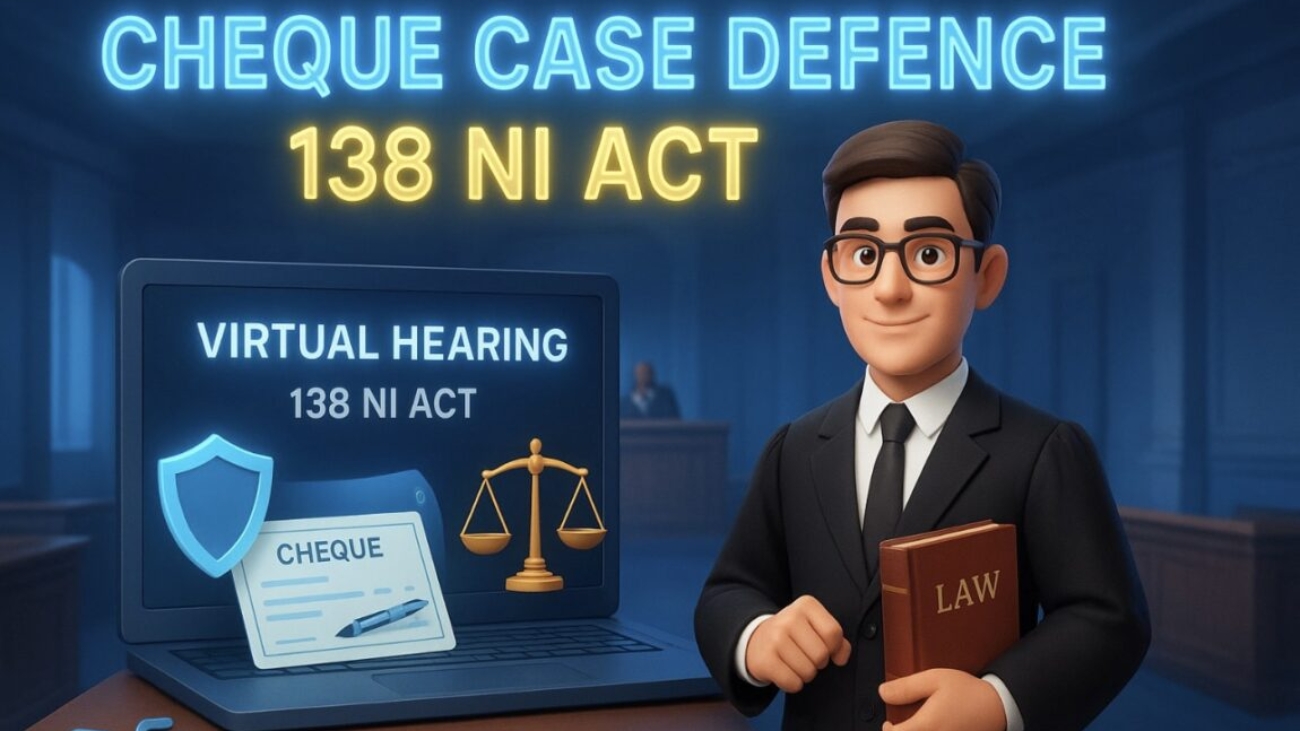
How to Defend a Cheque Case on Behalf of the Accused in District Court Dwarka, New Delhi – A Complete Guide

Cheque bounce litigation under Section 138 of the Negotiable Instruments Act is one of the most frequently contested matters in District Court Dwarka, New Delhi. With the rising workload and evolving digital infrastructure, the courts today have adopted Virtual Hearing, which has become a major advantage for complainants, accused persons, advocates, and judges. Virtual hearings save time, reduce physical appearances, and help cases proceed faster—especially in a metropolitan city like Delhi where technological standards of the judiciary have significantly improved.

But despite all technological advancements, defending an accused in a cheque bounce case remains one of the toughest challenges, mainly because the law starts with a strong presumption against the accused. According to Sections 118 & 139 of the NI Act, the court presumes that the cheque was issued legally and for a valid liability. This means the accused is considered “guilty” at the very first stage unless his advocate is skilled enough to shift the burden of proof back onto the complainant.

Therefore, choosing the right advocate becomes the most crucial decision an accused person will ever make.

Why Defence in a 138 NI Act Case Is More Complicated Than It Looks

Representation on behalf of the complainant appears simpler because the law supports his version from day one. However, defending the accused requires:

  • Strong legal strategy
  • Practical exposure to cheque bounce litigation
  • Powerful cross-examination skills
  • Ability to break the complainant’s presumption
  • Building a solid defence supported by documents & witnesses
  • Presenting compelling final arguments

An in-depth understanding of these technicalities is what separates an average advocate from a Dynamic, Experienced, Practically Skilled Defence Lawyer in District Court Dwarka.

Can an Accused Really Get Away With a Cheque Case?

Yes. Absolutely.

An accused can win a cheque bounce case—but only when represented by an advocate who understands the defence mechanisms under the NI Act.

Acquittal is possible through:

  • Weakening the complainant’s story
  • Proving lack of enforceable debt
  • Showing cheque misuse
  • Demonstrating absence of legally recoverable liability
  • Highlighting contradictions in evidence
  • Using defence evidence smartly
  • Presenting strong final arguments

A smart and experienced advocate can convert the entire case by shifting the preponderance of probabilities in favour of the accused.

Guide: How to Choose the Perfect Advocate for a Cheque Case in District Court Dwarka, New Delhi

Choosing the right advocate is not just important—it determines the final result of your case. Here is a complete guide for clients searching for a capable defence lawyer for 138 NI Act matters:

1. Prefer a Dynamic & Experienced Advocate

Cheque bounce litigation is technical and evidence-centric. Only choose an advocate who has:

  • Years of practical courtroom experience
  • Deep understanding of NI Act litigation
  • Exposure to hundreds of similar cases
  • Track record of acquittals

Experience always makes the difference.

2. Check the Advocate’s Court Presence in Dwarka Courts

A lawyer who regularly appears in Dwarka Court will naturally be familiar with:

  • The court staff
  • The courtroom process
  • The judges’ working styles
  • Local practicalities

This ensures faster work and smoother handling of filings, evidence, and arguments.

3. Verify the Advocate’s Case Record Through eCourts App

A very smart and transparent method is to check:

  • Number of pending cases
  • Nature of cases
  • Court of appearance
  • Progress of trials

This gives you a very clear idea of the advocate’s real courtroom practice.

4. Ask for Sample Cross-Examination (If Needed)

The heart of defending a cheque bounce matter is cross-examination of the complainant.

A strong cross can:

  • Break presumptions
  • Expose contradictions
  • Establish cheque misuse
  • Shift the burden back onto the complainant

If necessary, ask the advocate to show redacted or anonymized sample cross-examinations—it helps you understand his command over trial.

5. Demand Judgments of Acquittal in NI Act Cases

A good NI Act lawyer will have:

  • Past acquittal orders
  • Discharge orders
  • Judgments demonstrating strong defence strategies

These documents reflect real practical capability—not just claims.

6. Prefer Advocates Who Offer Legal Strategy in the First Consultation

A capable defender will:

  • Explain the legal position
  • Identify weaknesses in the complaint
  • Provide a clear defence plan
  • Estimate the timeline
  • Suggest documents and witnesses

A lawyer who gives proper guidance from the beginning usually handles the matter with confidence and depth.

7. Choose Someone Who Handles Virtual Hearings Efficiently

Since Dwarka Courts now follow hybrid hearings, your advocate must be:

  • Tech-savvy
  • Comfortable with virtual platforms
  • Capable of managing online filing & arguments

Virtual advocacy saves travel time and speeds up the trial tremendously.

8. Ensure Transparency in Fee Structure

Good advocates maintain clarity on:

  • Filing charges
  • Appearance fees
  • Evidence stage fees
  • Miscellaneous expenses

Avoid lawyers who offer extremely low fees—it usually results in poor representation.

Conclusion: A Good Advocate Can Change the Entire Outcome

A cheque bounce case is not impossible to win.

It requires:

  • A strategic defence
  • Skillful cross-examination
  • Well-planned evidence
  • Strong legal arguments

When represented by a Good, Dynamic, and Experienced Advocate, the accused stands a strong chance to secure acquittal and close the case victoriously.

  • Always research properly, verify credentials through eCourts, check previous performance, and choose only an advocate who understands the technical, legal, and practical aspects of defending 138 NI Act cases in District Court Dwarka, New Delhi.
  • How to Defend a Cheque Bounce Case | Best 138 NI Act Defence Lawyers in Dwarka Court Delhi.
  • Defence in 138 NI Act Cases | Top Cheque Bounce Lawyer in District Court Dwarka, New Delhi.
  • Learn how an accused can successfully defend a cheque bounce case under Section 138 NI Act in District Court Dwarka, New Delhi. This guide explains defence strategies, virtual hearings, how to choose the best advocate, and why an experienced trial lawyer can secure acquittal. Ideal for clients searching for top cheque bounce defence lawyers in Dwarka Court Delhi.

Consult an experienced advocate to determine the most suitable mode of service based on the facts of your case and court practice.

Contact me for Consultation :- 9899085554, 9811885554

Ankit Gaurav Kainth Advocate, Dwarka Court, Chamber No.728, 7th Floor, Dwarka, New Delhi

https://share.google/4r7kHm3s4da3OS9rS
3E3B13FE-EECE-4C19-914E-1AAAE4E1D999

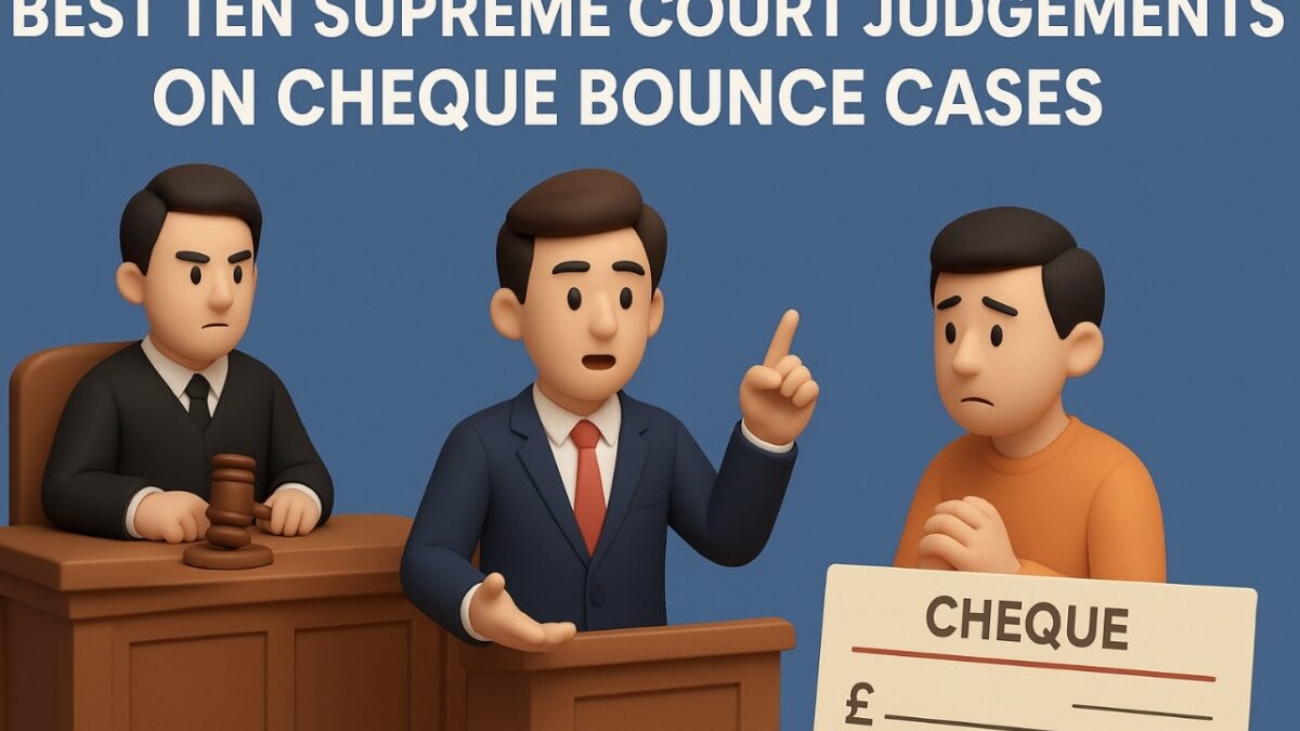
Best Ten Supreme Court Judgements on Acquittal in Cheque Bounce Cases – A Complete Guide for Defence Advocates

Section 138 NI Act Acquittal Guide: Top 10 SC Judgements & Defence Tactics for Accused.

Supreme Court’s Best Judgements on Cheque Bounce Acquittal | Practical Defence Tips for Lawyers.

Top Supreme Court Citations for Acquittal in Cheque Bounce Cases | Defence Strategy for Lawyers.

Cheque Bounce Acquittal: 10 Landmark Supreme Court Judgements Every Defence Advocate Must Know.

Cheque bounce litigation under Section 138 of the Negotiable Instruments Act is one of the most common criminal prosecutions in India. Yet, an accused is not always liable merely because a signature appears on the cheque. The Supreme Court has repeatedly clarified that presumptions under Sections 118 & 139 are rebuttable, and a smart, prepared and strategic defence can secure honourable acquittal.

Here are the Top 10 Supreme Court Judgments that every defence advocate must know while representing an accused in cheque bounce matters.

1. Basalingappa v. Mudibasappa (2019)

Key Notes:

  • The Court clarified that the presumption of legally enforceable debt is rebuttable.
  • Accused can rebut presumption through probabilities, not necessarily by producing defence evidence.
  • Cross-examination alone can be sufficient to demolish complainant’s case.

Use in Court:

Ideal when complainant has poor financial capacity or vague loan story.

2. Rangappa v. Sri Mohan (2010)

Key Notes:

  • Landmark ruling affirming that the presumption includes existence of debt, but accused can rebut it scientifically.
  • Defence needs to show preponderance of probability, not proof beyond reasonable doubt.

Use in Court:

Perfect base case for arguing the standard of rebuttal.

3. Kumar Exports v. Sharma Carpets (2009)

Key Notes:

  • Mere issuance of cheque does not automatically establish liability.
  • If complainant fails to prove foundational facts, accused gets benefit.

Use in Court:

Best for cases involving security cheques.

4. K. Subramani v. K. Damodara Naidu (2015)

Key Notes:

  • Complainant must independently prove his financial capacity.
  • Failure to show source of funds weakens prosecution.

Use in Court:

Very useful when complainant alleges huge cash loan without documents.

5. John K. Abraham v. Simon C. Abraham (2014)

Key Notes:

  • If complainant is inconsistent about date, amount, or transaction details, prosecution collapses.
  • Courts must ensure basic foundational evidence is present.

Use in Court:

Use when complainant’s story is contradictory.

6. Krishna Janardhan Bhat v. Dattatraya Hegde (2008)

Key Notes:

  • Accused has constitutional right not to be convicted unless case is proved beyond reasonable doubt.
  • Presumption does not extend to loan amount unless proved.

Use in Court:

Strong citation for arguing constitutional fairness & reasonable doubt.

7. Rohitbhai Jivanlal Patel v. State of Gujarat (2019)

Key Notes:

  • Though presumption is strong, if complainant’s evidence is hollow, presumption fails.
  • Complainant cannot rely on presumption alone.

Use in Court:

Great for challenging weak documentary support in complainant’s case.

8. M.S. Narayana Menon v. State of Kerala (2006)

Key Notes:

  • Defence can rely on probable alternative theories, such as repayment, business transaction adjustment, etc.
  • Personal testimony of accused can be enough if probable.

Use in Court:

Very useful for framing alternative narratives.

9. P. Rasiya v. Abdul Nazer (2022)

Key Notes:

  • Blank cheque defence is permissible.
  • Cheque issued as security that was misused may lead to acquittal.

Use in Court:

Important when signatures admitted but liability denied.

10. Dashrath Rupsingh Rathod v. State of Maharashtra (2014)

Key Notes:

  • Though modified later by amendment, it established important concepts of jurisdiction and procedural fairness.
  • Useful when complaint is filed in wrong jurisdiction leading to miscarriage of justice.

Use in Court:

Good for pointing out jurisdictional defects or procedural abuse.

My View: How to Defend the Accused Like a Pro in Cheque Bounce Cases

Representing an accused in cheque cases is an art. It’s not merely about denials — it’s about strategy, timing, and systematic demolition of the complainant’s story.

Here is my professional strategy:

1. Challenge Financial Capacity

Most cheque bounce prosecutions collapse when the complainant cannot prove:

  • Source of funds
  • Bank withdrawal proof
  • Income documents
  • ITR entries

Ask targeted questions in cross-examination.

2. Pinpoint Contradictions

Every cheque case has weak points:

  • Date of loan
  • Mode of transaction
  • Absence of written agreement
  • Unnatural conduct of lender

Highlight these inconsistencies.

3. Use Security Cheque Defence Properly

If cheque was given:

  • for business dealings,
  • for loan security,
  • for property/security agreements,
    then there is no legally enforceable debt on the cheque date.

4. Demand Original Documents

Make complainant produce:

  • Original promissory notes
  • Ledger accounts
  • WhatsApp chats
  • Bank statements

Their absence creates reasonable doubt.

5. Smart Use of Cross-examination

Most acquittals come from cross-examination alone.

Focus on:

  • Financial capacity
  • Knowledge of accused
  • Exact date/mode of loan
  • Circumstances of issuing cheque

A well-planned cross turns the entire case.

6. Highlight Unnatural Conduct

Ask:

  • Why give lakhs in cash without agreement?
  • Why no witness?
  • Why no earlier complaint?

These questions build doubt.

7. Use Standard of Proof

Remind court that:

  • Accused needs only probability
  • Complainant needs certainty

This principle alone wins half the cases.

Conclusion

These ten Supreme Court judgments form the backbone of every strong defence under Section 138 NI Act. An effective advocate doesn’t simply deny the transaction but strategically dismantles the complainant’s case using law, logic, probabilities, and precise cross-examination.

Cheque bounce defence is not about proving innocence —

it’s about demonstrating doubt, exposing inconsistencies, and showing that prosecution has failed its legal duty.

With the right approach, an accused can secure a clean and honourable acquittal.

  • A complete advocate’s guide on winning cheque bounce cases. Read the top 10 Supreme Court judgements on acquittal with key notes and defence strategies.
  • Master cheque bounce defence with the most powerful Supreme Court judgements on acquittal. Clear notes, legal reasoning, and practical tactics for advocates.
  • Learn the best Supreme Court rulings that help secure acquittal in cheque bounce matters. A practical, lawyer-focused guide with notes and defence insights.
  • Top 10 Supreme Court citations on cheque bounce acquittal explained with defence strategies, legal notes, and expert tips for lawyers fighting Section 138 cases.
  • Discover the 10 most important Supreme Court judgements on cheque bounce acquittal. A complete defence guide for advocates representing accused in Section 138 NI Act cases.

Consult an experienced advocate to determine the most suitable mode of service based on the facts of your case and court practice.

Contact me for Consultation :- 9899085554, 9811885554

Ankit Gaurav Kainth Advocate, Dwarka Court, Chamber No.728, 7th Floor, Dwarka, New Delhi

https://share.google/4r7kHm3s4da3OS9rS
203C31DB-43CE-4594-AB30-B815EABD675C

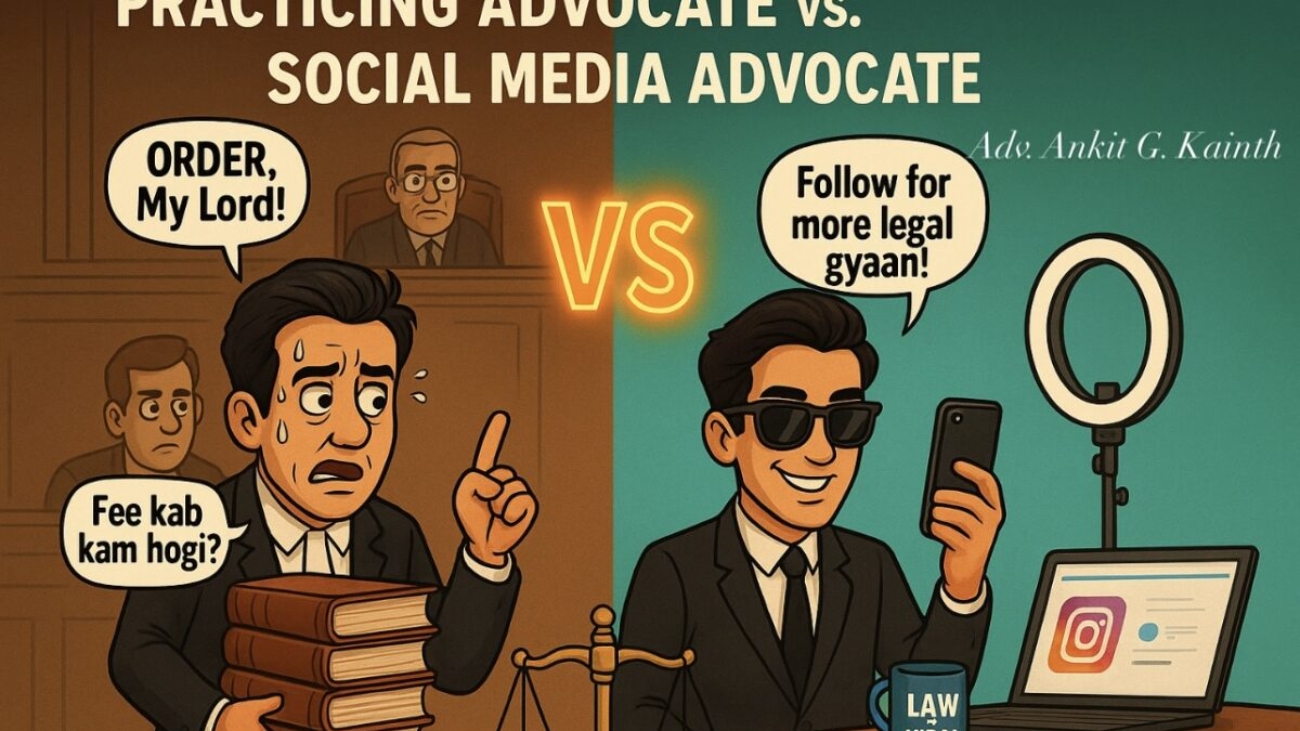
Practicing Advocate vs. Social Media Advocate 🤓📱⚖️

In today’s era, there are two species of lawyers roaming freely—
1. Practicing Advocates: Found in courts, drenched in sweat, burdened with files.
2. Social Media Advocates: Found online, drenched in filters, burdened with hashtags.

Let’s decode the epic differences between the two—because trust me, it’s more entertaining than any Netflix drama.

  1. Workstation 🏛️ vs. 📱
    • Practicing Advocate: Courtrooms, bar libraries, dusty registers.
    • Social Media Advocate: Cafés with Wi-Fi, reels with trending songs.
    👉 One-liner: “Court mein date milti hai, Insta pe followers!”

  1. Uniform 👔 vs. 👕
    • Practicing Advocate: Black coat, band, sweaty face.
    • Social Media Advocate: Blazer for DP, T-shirt for reel.
    👉 One-liner: “Practicing advocate wears black, social media advocate adds filters to black.”

  1. Arguments 🎤 vs. 🎶
    • Practicing Advocate: Argues before judges with citations.
    • Social Media Advocate: Argues before comments section with emojis.
    👉 One-liner: “One needs case laws, other just needs good captions.”

  1. Reality ⏳ vs. Views 👀
    • Practicing Advocate: Waits 4 hours for their matter to be called.
    • Social Media Advocate: Waits 4 seconds for likes to roll in.
    👉 One-liner: “Court ka patience > Insta ka algorithm.”

  1. Income 💰 vs. 💕
    • Practicing Advocate: Fee comes late, after multiple reminders.
    • Social Media Advocate: Payment? Nah, just “exposure” and “collabs.”
    👉 One-liner: “Advocate paisa ke liye fight karta hai, influencer spotlight ke liye.”

  1. Clients 👨‍👩‍👦 vs. 👥
    Practicing Advocate: Handles emotional clients shouting “Humari izzat ka sawal hai!”
    • Social Media Advocate: Handles followers shouting “Next reel kab aayegi?”
    👉 One-liner: “One manages affidavits, other manages aesthetics.”

  1. Legacy 📚 vs. 📸
    • Practicing Advocate: Builds reputation after years in court.
    • Social Media Advocate: Builds reputation after one viral reel.
    👉 One-liner: “Court mein senior ban’ne mein 20 saal, Insta pe sirf 20 seconds.”

Final Verdict ⚖️😂

Both are advocates in their own kingdoms. The practicing advocate fights for justice, while the social media advocate fights for attention. One seeks judgments, the other seeks engagement. Yet both remind us—law is not just about black coats, but also about adapting with time.

👉 Closing one-liner: “Courtroom ho ya Instagram, sabko apni audience chahiye!”

Consult an experienced advocate to determine the most suitable mode of service based on the facts of your case and court practice.

Contact me for Consultation :- 9899085554, 9811885554

Ankit Gaurav Kainth Advocate, Dwarka Court, Chamber No.728, 7th Floor, Dwarka, New Delhi

https://share.google/4r7kHm3s4da3OS9rS
FOLLOW US FOR MORE LEGAL & RECENT UPDATES:-

7271315D-29F9-417E-AFA8-6E8B3C833448

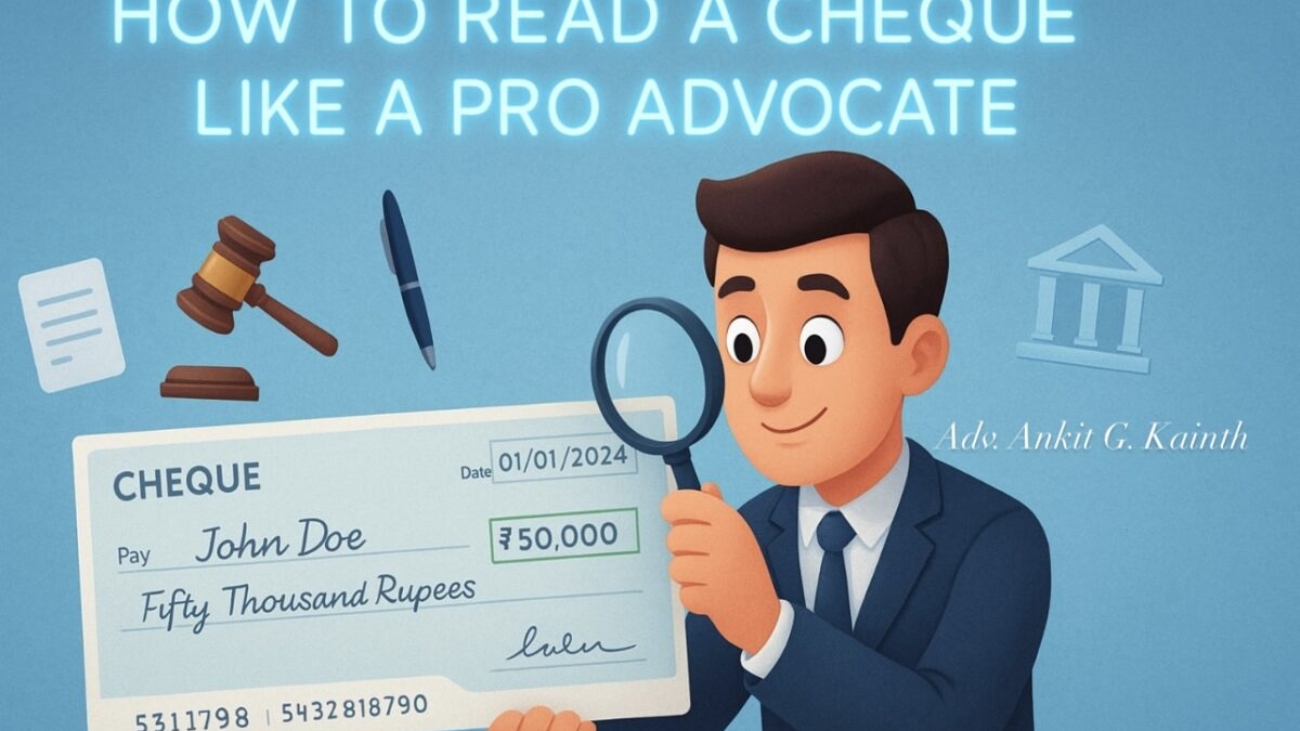
How to Read a Cheque Like a Pro Advocate 🏁✨-Blog by an Cheque Case Expert 18+ years of Experienced Advocate in Dwarka Court

Blog by a Cheque Case Expert | Practical Guide for Litigants in Dwarka Court

A cheque is not just a piece of paper. In Court, it is powerful evidence. One small mistake in reading a cheque can decide the fate of a case under Section 138 of the Negotiable Instruments Act. Therefore, whether you are a complainant or an accused, you must learn how to read a cheque like a seasoned advocate appearing daily before Dwarka Court.

With 18+ years of hands-on experience handling cheque bounce litigation in Court, I have seen cases won and lost purely on technical interpretation. This guide will help you understand what courts really look at.

📌 Why Reading a Cheque Properly Matters in Dwarka Court

Cheque bounce cases form a significant portion of criminal dockets in Dwarka Court. However, many litigants focus only on the amount. That is a mistake. Judges in Dwarka Court carefully analyse:

  • Date of cheque
  • Signature authenticity
  • Amount in words and figures
  • Bank branch details
  • Alterations or overwriting
  • Account status at presentation

Therefore, professional reading of a cheque strengthens your case before Court.

🏦 1️⃣ Date – The Starting Point of Limitation

First, check the date. In cheque litigation before Court, limitation is everything.

A cheque is valid for three months. If presented late, your complaint may fail in Court. Additionally, the legal notice must be sent within 30 days of dishonour. Thus, reading the date accurately protects your limitation rights.

✍️ 2️⃣ Signature – The Heart of Defence

Next, verify the drawer’s signature. In many matters before Court, accused persons admit the signature but dispute liability.

If the signature matches, a legal presumption arises under law. However, if it is disputed, handwriting examination may become necessary in Court proceedings.

This is where an experienced Criminal Lawyer Dwarka plays a crucial role.

💰 3️⃣ Amount in Words vs Figures

Always compare both carefully.

If there is a mismatch, banks generally honour the amount written in words. Yet, defence counsel in Court often challenge inconsistencies to create doubt.

Small technical discrepancies can influence the outcome in Court.

🖊️ 4️⃣ Overwriting & Alterations

Look for cutting, correction fluid, or different ink.

Judges in Dwarka Court examine whether alterations were authenticated by signature. If not, the cheque may be considered materially altered.

Therefore, before filing a case in Court, inspect the instrument professionally.

🏛️ 5️⃣ Reason for Dishonour

The bank return memo is equally important. Common reasons include:

  • Insufficient funds
  • Account closed
  • Payment stopped
  • Signature differs

Each reason carries different legal implications in Court. For example, “account closed” strengthens the complainant’s case in Court.

📜 6️⃣ Legally Enforceable Debt – The Core Issue

Even if the cheque is valid, the complainant must prove legally enforceable debt.

In Dwarka Court, courts evaluate:

  • Loan agreements
  • Property transactions
  • Friendly loans
  • Business invoices

Here, a Property Lawyer Dwarka may assist where cheques arise from real estate transactions. Similarly, matrimonial settlements may require guidance from a Divorce Lawyer Dwarka.

🚨 7️⃣ Defence Strategies in Dwarka Court

As someone practicing for 18+ years in Dwarka Court, I advise clients:

  • Preserve WhatsApp and email conversations
  • Maintain account statements
  • Avoid blank cheque misuse
  • Respond to legal notices properly

Strong documentation improves your standing before Court.

🎯 Common Mistakes Litigants Make

  • Filing complaint beyond limitation
  • Ignoring statutory notice defects
  • Failing to prove financial capacity
  • Not appearing regularly in Dwarka Court
  • Underestimating cross-examination

Because cheque cases are criminal in nature, non-appearance can even lead to coercive steps. In some situations, Bail Matters Court may arise if warrants are issued.

🌍 Jurisdictional Advantage

Clients from Janakpuri, Vikaspuri, Dwarka North, Dwarka South, Najafgarh, Uttam Nagar, Bindapur and surrounding areas approach Dwarka Court for cheque litigation. Territorial jurisdiction depends on bank presentation and notice compliance.

Regular practice in Dwarka Court ensures:

  • Proper drafting of complaints
  • Quick listing
  • Effective evidence strategy
  • Confident cross-examination

🏆 Why Experience Matters

If you are searching for the Top and Best Advocate in Dwarka Court for cheque cases, choose someone who:

  • Understands criminal procedure
  • Has trial experience in Dwarka Court
  • Handles both prosecution and defence
  • Advises strategically, not emotionally

With 18+ years of courtroom presence in Dwarka Court, I have successfully handled hundreds of cheque bounce cases, ensuring compliance with every procedural detail.

❓ FAQ – Cheque Cases in Dwarka Court

1️⃣ Is cheque bounce a criminal offence?

Yes. It is tried as a criminal complaint before Court.

2️⃣ Can I settle the case?

Yes. Settlement is possible at any stage in Dwarka Court.

3️⃣ What if cheque was given as security?

Security cheque defence can be taken, but evidence must support it before Dwarka Court.

4️⃣ Can arrest happen in cheque cases?

Normally summons are issued first. However, non-appearance may lead to warrants, requiring attention in Bail Matters Dwarka Court.

5️⃣ How long does a case take?

Timelines vary, but regular follow-up in Court ensures faster disposal.

🏛️ Final Words

A cheque speaks volumes. However, only a trained legal eye can read it like a pro advocate appearing daily in Dwarka Court.

If you want strategic advice from a cheque case expert with 18+ years of experience in Court, consult before taking any step. Early legal intervention often decides success.

📞 Call to Action

Facing cheque bounce litigation? Need expert guidance in Court?

Book a confidential consultation today. Protect your rights with experienced representation in Dwarka Court. ⚖️

Contact me for Consultation :- 9899085554, 9811885554

Ankit Gaurav Kainth Advocate, Dwarka Court, Chamber No.728, 7th Floor, Dwarka, New Delhi

https://share.google/4r7kHm3s4da3OS9rS
FOLLOW US FOR MORE LEGAL UPDATES ON :-