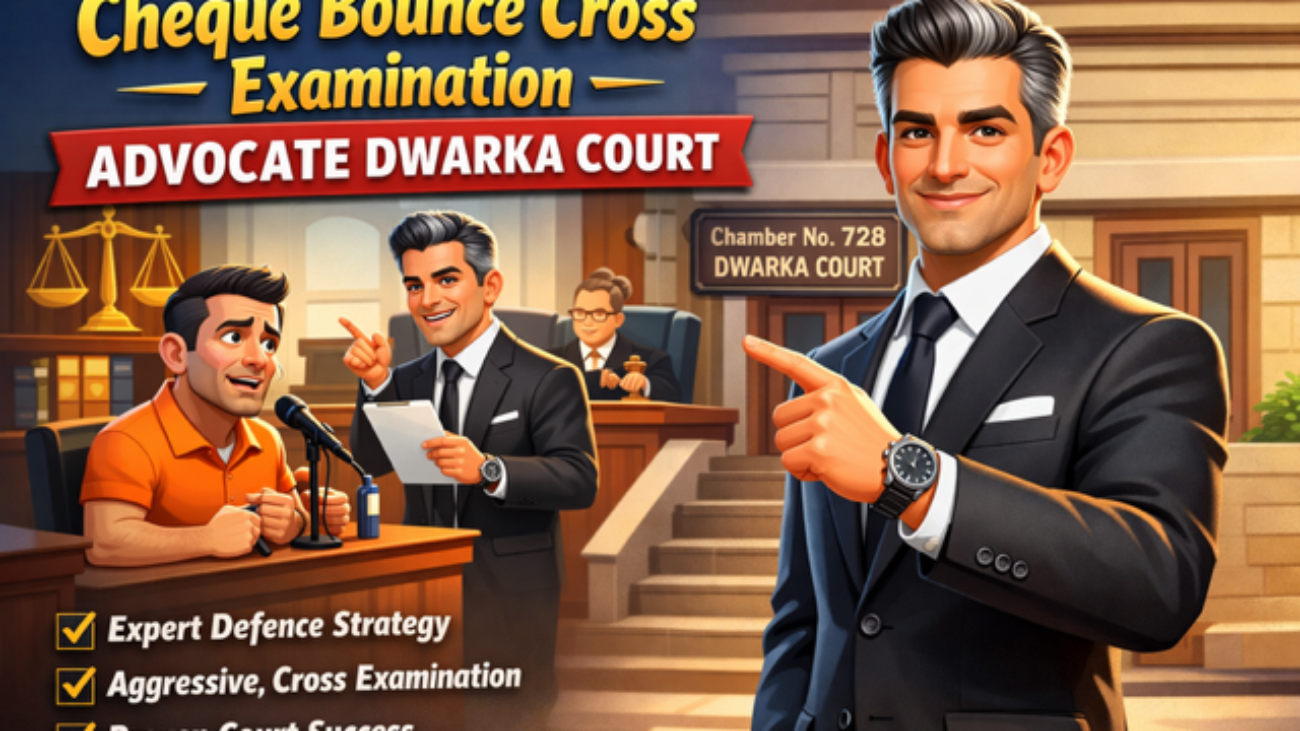
In today’s legal landscape, cheque bounce litigation under Section 138 of the NI Act has become one of the most frequently filed cases in Dwarka Court. However, not every case is handled with the same level of strategy, commitment, and expertise.
With my 18+ years of experience in Civil & Criminal litigation at Dwarka Court, I have closely observed a concerning trend. Many advocates often prefer unnecessary adjournments in cheque bounce cases. Thereafter, they advise their clients to settle—sometimes even when a strong defence exists.
⚠️ Unfortunately, such settlements are often forced, impractical, and sometimes not even honoured by the opposite party.
Facing a criminal case can be overwhelming. However, understanding the police investigation process in Dwarka Court can make a significant difference in protecting your rights. With 18+ years of experience, we, as a trusted Criminal Case Advocate Dwarka Court, guide clients at every stage—right from pre-litigation to trial.
⚖️ What is Police Investigation in Criminal Cases?
Police investigation is the process through which authorities collect evidence, examine witnesses, and determine whether an offence has been committed. Importantly, this stage lays the foundation of the entire case.
Understanding the investigation process helps you:
Avoid self-incrimination
Respond correctly to police notices
Build a strong defense early
Protect your reputation and rights
Therefore, always consult a Criminal Case Advocate Dwarka Court before taking any step.
❓ Frequently Asked Questions (FAQs)
Q1. Can police arrest without notice?
Yes, in serious offences. However, in many cases, notice under Section 41A CrPC is required.
Q2. When should I contact a lawyer?
Immediately after FIR or even before. Early guidance from a Criminal Case Advocate Dwarka Court is crucial.
Q3. What is anticipatory bail?
It is pre-arrest bail granted by court. A Top Regular Bail & Anticipatory Bail Lawyer Dwarka can assist you.
Q4. Can false cases be challenged?
Yes, false FIRs can be quashed or defended effectively with proper legal strategy.
Q5. How long does investigation take?
It depends on the case, but timely legal intervention can speed up the process.
📢 Final Words & CTA
If you or your loved one is facing a criminal investigation, do not delay. With 18+ years of experience in Dwarka Court, we provide strategic, reliable, and result-oriented legal assistance.
👉 Consult a Criminal Case Advocate Dwarka Court today
📞 Call / WhatsApp now for immediate legal help:- 9899085554, 9811885554.
Whether it is a criminal case, property dispute, or bail matter, clients want assurance that they are paying for real value, experience, and results, not unnecessary charges. Moreover, legal proceedings can be long-term, so affordability with quality becomes essential.
⏱️ Saves client time and repeated litigation costs
With 18+ years of experience in Dwarka Court, the approach is always:
Charge as per work done, not unnecessarily upfront.
Therefore, clients ultimately save money, time, and stress.
🔍
Difference: Experienced Advocate vs Fresher Advocate Fee Structure
🧑⚖️
Experienced Advocate
Charges stage-wise or work-based fees
Focuses on quality representation
Offers transparent fee agreements
Does not demand entire fee at the beginning
Strong understanding of Dwarka Court procedures
🧑🎓
Fresher Advocate
Often charges full fee upfront
Limited courtroom exposure
May take longer due to inexperience
Less clarity in fee structure
👉 Hence, choosing a Reasonable Fee Advocate Dwarka Court with experience ensures better outcomes with justified pricing.
📜
Why Fee Should Be Based on Work Done
A professional legal approach always follows:
📌 Filing charges
📌 Appearance charges
📌 Drafting charges
📌 Argument stages
This is why a Reasonable Fee Advocate Dwarka Court never burdens the client at the beginning. Instead, the fee is structured progressively and ethically.
Facing the fear of arrest in a criminal case can be overwhelming. However, with the right legal approach, timely action, and guidance from a Criminal Case Advocate Dwarka Court, you can avoid arrest and protect your rights effectively.
With 18+ years of experience as a Criminal Case Advocate Dwarka Court, we have consistently helped clients navigate such critical situations with confidence and strategy.
🚔 Understanding Arrest & Legal Protection
Firstly, it is important to understand that arrest is not mandatory in every criminal case. The law provides safeguards such as:
Notice under Section 41A CrPC
Anticipatory Bail
Interim Protection
Therefore, consulting a Criminal Case Advocate Dwarka Court at the earliest stage is crucial.
⚡ Stay Calm & Act Proactively
Whenever you find yourself in such harsh conditions, do not panic. Instead:
👉 Act quickly
👉 Stay informed
👉 Seek professional legal advice
Only an experienced Criminal Case Advocate Dwarka Court can guide you properly, because experience comes from handling real cases over years, not just theoretical knowledge.
👨⚖️ Choose Experience Over Appearance
Today, many dummy advocates appear confident but lack real courtroom experience. Therefore:
Always ask about years of practice
Check court experience
Prefer a regular Criminal Case Advocate Dwarka Court
👉 An experienced lawyer understands:
Police behaviour
Court procedures
Bail strategies
This makes a huge difference in avoiding arrest.
📍 Importance of Local Advocate in Dwarka Court
Choosing a local Criminal Case Advocate Dwarka Court gives you a strong advantage.
✔ Why Local Matters:
Familiarity with Dwarka Court procedures
Understanding of police station functioning
Coordination with court staff & bar association
The only reason we are able to file and represent cases in a very short time is because we are regular Criminal Case Advocate Dwarka Court, deeply aware of local processes.
🛡️ Legal Ways to Avoid Arrest
With proper guidance from a Criminal Case Advocate Dwarka Court, you can:
🔹 Apply for Anticipatory Bail
Protection before arrest in serious cases.
🔹 Respond to 41A Notice Properly
Avoid escalation by cooperating legally.
🔹 File Counter Complaint
If falsely implicated, take immediate legal action.
🔹 Prepare Documentation
Strong defence reduces chances of arrest.
👉 Therefore, timely legal strategy is the key.
⚖️ Prompt Action is the Key
In criminal matters, delay can be dangerous. On the other hand, quick legal action can:
“Do I have the right to remain silent?” — sounds cool, right? Straight out of a Hollywood movie. You imagine yourself as Harvey Specter, confidently handling the situation in Dwarka Court.
Now, let’s land back in India — especially within the Dwarka Court jurisdiction.
⚖️ Legal Reality: Yes, You Have the Right
Legally speaking, yes — you do have the right to remain silent. Under Article 20(3) of the Constitution of India, no accused person can be compelled to be a witness against themselves.
In simple terms, you cannot be forced to confess or say something that may harm your case. Therefore, every Criminal Case Advocate Dwarka Court will advise you to understand and exercise this right wisely.
😂 Practical Reality in India
However, let’s talk about reality.
Imagine you’re sitting in a police station under the Dwarka Court jurisdiction. The officer asks you questions. You calmly say,
“Sir, do I have the right to remain silent?”
At that exact moment, somewhere in the officer’s mind:
“Acha… law sikha raha hai? Abhi batata hoon…”
Of course, this is a humorous exaggeration. Yet, it reflects the gap between legal rights and ground reality. While the system is improving, experiences still vary.
🌍 India vs Foreign Practice
In countries like the United States, police officers inform you of your rights upfront.
However, in India, especially within the Dwarka Court jurisdiction, you are generally expected to already know your rights or be guided by a Criminal Case Advocate Dwarka Court.
⚡ The Smart Approach: Silence + Strategy
So yes, you can remain silent — but silence alone is not enough.
✔️ Stay calm and respectful
✔️ Do not volunteer unnecessary information
✔️ Ask for legal assistance immediately
✔️ Contact a Criminal Case Advocate Dwarka Court
Because while silence is your right, guided communication is your protection.
👨⚖️ Why Legal Assistance Matters in Dwarka Court
The reality is simple — criminal law is not just about rights; it is about timely action.
A skilled Criminal Case Advocate Dwarka Court ensures:
Proper handling of police interaction
Immediate protection in FIR cases
Strong defence strategy
Timely filing of bail applications
Whether you are looking for a Criminal Advocate Dwarka, Best Crime Lawyer Dwarka, or Top Regular Bail & Anticipatory Bail Lawyer Dwarka, professional guidance makes all the difference.
📂 Our Expertise in Dwarka Court
With 18+ years of experience, we are recognized as a Top and Best Advocate in Dwarka Court for criminal matters.
We specialise in:
FIR case handling
Bail Matters (Regular & Anticipatory)
Criminal disputes
Police complaint matters
As a dedicated Criminal Case Advocate Dwarka Court, we understand the system, procedures, and practical challenges of Dwarka Court deeply.
We provide services across all areas under Dwarka Court, including:
Janakpuri, Vikaspuri, Dwarka North, Dwarka South, Dwarka Sector-23, Delhi Cantonment, Chhawla, Bindapur, Baba Haridas Nagar, Mohan Garden, Palam Village, Najafgarh, Uttam Nagar, Samalka, Dabri, Kapashera, Jaffarpur Kalan, and Airport Police Station (Domestic & International).
🌟 Why Choose a Criminal Case Advocate Dwarka Court?
✔️ Local court expertise
✔️ Strong police coordination
✔️ Faster legal response
✔️ Practical courtroom strategy
✔️ Trusted by clients for years
A knowledgeable Criminal Case Advocate Dwarka Court ensures your rights are not just theoretical — but effectively protected.
📊 Final Thought
So next time you feel like saying,
“I choose to remain silent,”
Remember — in India, especially within Dwarka Court jurisdiction, it is not just a legal right… it is a strategic decision guided by a Criminal Case Advocate Dwarka Court.
❓ FAQ Section
Q1. Can I refuse to answer police questions in Dwarka Court jurisdiction?
Yes, you have the right to remain silent. However, always consult a Criminal Case Advocate Dwarka Court before taking any step.
Q2. Is silence enough to protect me?
No. Silence must be supported by proper legal guidance from a Criminal Case Advocate Dwarka Court.
Q3. When should I contact a lawyer?
Immediately after police contact or FIR registration in Dwarka Court jurisdiction.
Q4. Can police force me to confess?
No, as per Article 20(3). A Criminal Case Advocate Dwarka Court can ensure your rights are protected.
Q5. Do you handle bail matters?
Yes, we are experienced as a Top Regular Bail & Anticipatory Bail Lawyer Dwarka.
📞 Call to Action
If you are facing any criminal issue, FIR, or police inquiry, do not take risks.
With 18+ years of experience, we are your trusted Criminal Case Advocate Dwarka Court for effective and timely legal solutions.
👉 Contact now for expert assistance from a Top & Best Advocate in Dwarka Court- 9899085554, 9811885554.
In today’s fast-moving financial world, taking loans from banks has become a common necessity. However, sometimes due to unavoidable circumstances such as business losses, job instability, or financial setbacks, clients are unable to repay EMIs on time. Consequently, repeated defaults often lead banks to initiate legal action under Section 138 of the Negotiable Instruments Act in Dwarka Court, New Delhi.
Unfortunately, in many cases, banks present blank signed cheques and file complaints in Dwarka Court, New Delhi, irrespective of the client’s place of residence. As a result, clients are forced to travel long distances, face unnecessary pressure, and often feel compelled to settle under stress.
👉 But here’s the good news – you don’t have to face this alone.
⚖️
Why Clients Across India Trust Us
With 18+ years of experience in Dwarka Court, we have built a reputation as a Cheque Expert Advocate Dwarka Court. Over the years, we have successfully handled numerous cheque bounce matters with precision and strategy.
Moreover, we are not limited by geography. Clients from across India trust us because we offer seamless legal assistance without requiring frequent court visits.
✔️ Expertise in 138 NI Act cases
✔️ Strong courtroom strategy & documentation
✔️ Transparent communication & process
✔️ Dedicated support for outstation clients
📍
Hassle-Free Legal Assistance (Even If You Are Outside Delhi)
Many clients worry about traveling to Delhi repeatedly. However, Dwarka Courts provide Video Conferencing (VC) facilities, which makes legal representation much easier.
👉 Therefore, even if you are located outside Delhi, you can still effectively contest your case.
Dwarka North, Dwarka South, Sector-23, Janakpuri, Vikaspuri, Uttam Nagar, Najafgarh, Palam Village, Delhi Cantonment, Dabri, Chhawla, Samalka, Kapashera, Jaffarpur Kalan, Mohan Garden, Bindapur, Baba Haridas Nagar, Airport Police Station (Domestic & International) and nearby regions.
No matter where you are located, our team ensures that you receive top-tier legal representation from a Cheque Expert Advocate Dwarka Court.
📈
Our Commitment to Excellence (E-E-A-T)
Experience: 18+ years in Dwarka Court
Expertise: Specialized in 138 NI Act matters
Authoritativeness: Recognized as a Cheque Expert Advocate Dwarka Court
Trustworthiness: Transparent agreements & ethical practice
❓
Frequently Asked Questions (FAQs)
Q1. Do I need to come to Dwarka Court for every hearing?
👉 No. In most cases, appearances can be managed through Video Conferencing.
Q2. What if the cheque was blank or misused?
👉 We specialize in defending such cases as a Cheque Expert Advocate Dwarka Court.
Q3. How quickly can you start my case?
👉 Immediately after receiving your documents and signed Vakalatnama.
Q4. Can I hire you if I live outside Delhi?
👉 Absolutely. We regularly handle cases for outstation clients.
📢
Conclusion
In conclusion, cheque bounce cases can be stressful, but with the right legal support, they become manageable. Therefore, choosing a Cheque Expert Advocate Dwarka Court ensures that your rights are protected, your stress is reduced, and your case is handled professionally.
📞
Call To Action (CTA)– 9899085554, 9811885554
If you are facing a cheque bounce case under Section 138 NI Act, don’t delay.
👉 Contact us today and consult a Cheque Expert Advocate Dwarka Court with 18+ years of experience.
👉 Get expert guidance, strategic defence, and peace of mind.
Introduction – Police Notice under Section 35(3) BNSS
Receiving a police notice asking you to appear before an Investigating Officer can immediately raise concerns about arrest, questioning, an FIR and the future of the criminal case.
The first thing to understand is that a notice under Section 35(3) of the Bharatiya Nagarik Suraksha Sanhita, 2023 (BNSS) is not the same as an arrest warrant.
It is a statutory notice requiring a person to appear before the police and cooperate with an investigation where the police do not consider immediate arrest necessary at that stage.
should understand that in current proceedings the relevant provision is ordinarily Section 35(3) BNSS.
For a person who has received such a notice in Delhi, the correct response is neither panic nor disregard. The notice should be examined carefully, the allegations should be understood and the person should comply with the investigation while protecting his or her legal rights.
What Is a Notice Under Section 35(3) BNSS?
Section 35 BNSS deals with situations in which police may arrest a person without warrant.
Section 35(3) provides that where arrest is not required under Section 35(1), the police officer shall issue a notice directing a person against whom a reasonable complaint has been made, credible information has been received or reasonable suspicion exists of involvement in a cognizable offence to appear before the police officer or at another place specified in the notice.
This has an important practical consequence.
The police may investigate a person without immediately taking that person into custody.
A notice to join investigation is therefore an important procedural stage and should be treated seriously.
Section 41A CrPC vs Section 35(3) BNSS
The terminology changed after the introduction of the BNSS.
Earlier Law
Present Law
Section 41 CrPC
Section 35 BNSS
Section 41A CrPC
Section 35(3)–35(6) BNSS
Section 41D CrPC
Section 38 BNSS
Notice of appearance before police
Notice requiring appearance during investigation
Delhi Police’s own BNSS forms identify the notice for appearance under Section 35(3) BNSS as corresponding to the erstwhile Section 41A CrPC.
Therefore, an old article referring only to Section 41A CrPC is no longer sufficient for a person facing a current investigation.
Is a Section 35(3) BNSS Notice an Arrest Notice?
No.
A notice under Section 35(3) ordinarily indicates that, at the stage when the notice is issued, the Investigating Officer has chosen the notice-and-cooperation route rather than immediate arrest.
However, this should not be misunderstood to mean that arrest becomes legally impossible in every circumstance.
Section 35(5) BNSS provides an important protection where the person:
complies with the notice; and
continues to comply with its terms.
In such circumstances, the person should not be arrested in relation to the offence mentioned in the notice unless the police officer records reasons for forming the opinion that arrest has become necessary.
This makes continued compliance extremely important.
Supreme Court’s 2026 Clarification on Section 35 BNSS
The legal position was further clarified by the Supreme Court in Satender Kumar Antil v. Central Bureau of Investigation & Anr., 2026 INSC 115, decided on 15 January 2026.
The Supreme Court examined the relationship between:
Section 35(1)(b) BNSS;
Section 35(3) BNSS;
compliance with a police notice; and
subsequent arrest.
For offences punishable with imprisonment up to seven years, the Supreme Court clarified that issuance of notice under Section 35(3) is the rule, while arrest is an exception.
The Court further emphasised that arrest cannot be treated as a routine method merely for questioning a person.
The Investigating Officer must consider whether custody is objectively necessary for the investigation and comply with the safeguards contained in Section 35.
For a person who has already received a notice and continues to comply with it, the statutory protection under Section 35(5) therefore assumes substantial importance.
At the same time, the judgment should not be misunderstood as providing absolute protection from arrest in every case. Arrest can still arise where the statutory requirements are met and legally sufficient reasons exist.
What Should You Do Immediately After Receiving a Section 35(3) Notice?
The safest approach is to deal with the notice methodically.
1. Read the Entire Notice
Check:
FIR number;
date of FIR;
police station;
sections mentioned;
name of Investigating Officer;
date and time for appearance;
place where appearance is required;
documents, devices or information requested.
Do not rely only upon what somebody tells you verbally about the case.
Understanding the precise contents of the notice is the first step.
2. Verify the FIR and Allegations
Where an FIR number is mentioned, obtain and examine the FIR wherever legally accessible.
You need to understand:
who has made the complaint;
what acts are attributed to you;
which offences are alleged;
whether you are specifically named;
whether the dispute has documentary, financial, matrimonial, property, cyber or commercial background;
whether other accused persons are involved.
A police notice should be considered in the context of the entire case, not in isolation.
3. Do Not Ignore the Notice
Section 35(4) BNSS places a duty upon the noticee to comply with the terms of the notice.
Ignoring repeated notices without lawful justification can create unnecessary complications.
At the same time, non-compliance does not automatically mean arrest in every case. The Supreme Court has clarified that even arrest following non-compliance is not meant to operate mechanically.
Nevertheless, voluntarily creating a record of non-compliance is rarely a sensible litigation strategy without proper legal advice.
4. Preserve All Relevant Evidence
Before joining investigation, identify and preserve material relevant to the allegations, including where applicable:
WhatsApp conversations;
emails;
contracts;
bank statements;
payment records;
invoices;
photographs;
call records available with you;
property documents;
employment records;
business correspondence;
screenshots;
electronic transaction details;
earlier complaints and representations.
Do not delete, modify or fabricate digital evidence after receiving a police notice.
The surrounding electronic record may later become important both during investigation and during bail or trial proceedings.
5. Prepare a Chronology
A concise chronology often helps in understanding the case.
Record:
when the relationship or transaction began;
important dates;
payments made or received;
relevant meetings or communications;
emergence of the dispute;
earlier notices or complaints;
police communications;
filing of FIR, if known;
subsequent developments.
This helps distinguish relevant facts from assumptions and emotional responses.
Should You Take an Advocate to the Police Station?
A person receiving a notice can seek legal advice before joining investigation.
An advocate can assist by examining:
the FIR or complaint;
offences invoked;
arrest exposure;
documents relevant to the defence;
need for written representation;
bail implications;
manner in which investigation should be joined.
However, it is important not to overstate the advocate’s role.
The law does not necessarily give an advocate a right to sit beside a noticee throughout the entire police interrogation.
Section 38 BNSS provides that an arrested person is entitled to meet an advocate of his or her choice during interrogation, though not throughout interrogation.
Accordingly, professional legal assistance before and during the investigation stage can be valuable, but the precise extent of the advocate’s presence during questioning depends upon applicable law and circumstances.
The correct objective is to obtain lawful legal assistance—not to obstruct the investigation.
Can Police Arrest You After You Comply With the Notice?
Compliance provides an important statutory safeguard, but the answer is not an unconditional “no.”
Under Section 35(5), a person complying and continuing to comply with the notice should not be arrested for the offence referred to in the notice unless the police officer records reasons for concluding that arrest is necessary.
The Supreme Court’s January 2026 decision further emphasised that subsequent arrest should not become routine.
Therefore, factors such as the following can become relevant:
nature of allegations;
seriousness of offence;
punishment prescribed;
availability of evidence;
possibility of evidence being destroyed;
threat or influence upon witnesses;
likelihood of absconding;
cooperation with investigation;
requirement of custodial investigation;
developments discovered after issuance of notice.
Each case therefore requires an individual assessment.
What If You Cannot Appear on the Date Mentioned?
Do not simply remain absent.
If there is a genuine difficulty—such as illness, unavoidable travel, another court appearance or other legitimate circumstances—it may be appropriate to promptly communicate with the Investigating Officer and seek another date.
The communication should preferably create a proper record.
A request for another date is different from deliberately avoiding investigation.
Should You Give Documents to Police?
That depends upon what has been requested and the nature of the investigation.
Before handing over important original documents or electronic material, understand:
what is being requested;
under which authority;
whether originals are required;
whether copies can be provided;
whether an acknowledgment or seizure memo should be obtained;
whether the device or document contains unrelated confidential information.
Never fabricate or alter records in response to a police notice.
Should You Sign a Statement at the Police Station?
Do not sign documents blindly.
Read every document placed before you and understand its nature before signing.
There is an important distinction between:
acknowledging receipt or attendance;
handing over documents;
a seizure memo;
a written representation submitted by you;
a police-recorded statement;
other investigation documents.
These documents can have different legal consequences.
If uncertain, obtain legal advice before signing.
What About Self-Incrimination?
Article 20(3) of the Constitution provides protection against compelled self-incrimination to a person accused of an offence.
At the same time, receiving this constitutional protection does not mean that a person can simply disregard every lawful investigation requirement.
The distinction between lawful cooperation, production of material and compelled testimonial self-incrimination can be legally significant.
That is why case-specific legal advice becomes particularly important where questioning involves financial transactions, electronic evidence, passwords, business records or potentially incriminating circumstances.
Do You Need Anticipatory Bail After Receiving a Section 35(3) Notice?
Not automatically.
The fact that a Section 35(3) notice has been issued generally indicates that immediate arrest was not considered necessary when the notice was issued.
However, whether anticipatory bail should still be considered depends upon factors such as:
offences alleged;
maximum punishment;
conduct of investigation;
previous attempts at arrest;
allegations against co-accused;
changed circumstances;
previous notices;
nature of evidence;
actual apprehension of arrest.
Filing anticipatory bail mechanically merely because a police notice has been issued is not necessarily the correct approach.
Conversely, a genuine and reasonable apprehension of arrest should not be ignored merely because the person has earlier received a notice.
The strategy must depend upon the facts.
What If the Complaint Is False?
Receiving a police notice does not establish guilt.
If the allegations are demonstrably incorrect, useful material may include:
contemporaneous communications;
financial records;
location or transaction records;
contractual documents;
prior disputes;
earlier complaints;
photographs or recordings lawfully available;
independent witnesses.
A written representation may sometimes be appropriate.
A counter-complaint should not be filed automatically merely because someone has lodged an FIR against you. It should be considered only where the facts independently disclose a legal basis for such a complaint.
Retaliatory complaints without factual foundation can complicate the dispute rather than assist the defence.
Police Notice in Cheating and Financial Disputes
Section 35(3) notices frequently arise in disputes involving allegations of:
cheating;
breach of trust;
business transactions;
investment disputes;
property transactions;
loan disputes;
partnership disagreements;
online fraud;
cyber transactions.
In such cases, one of the central legal questions may be whether the material discloses a criminal offence or whether the dispute substantially arises from contractual or civil obligations.
For example, in a cheating allegation, the existence of dishonest intention at the relevant stage may become important.
Bank records, agreements, invoices, communications and transaction chronology can therefore be highly relevant.
Section 35 Notice in Matrimonial Cases
Investigation notices can also arise in matrimonial FIRs.
Relevant material may include:
marriage-related documents;
communications between spouses;
financial records;
previous litigation;
maintenance proceedings;
domestic violence proceedings;
complaints exchanged between parties;
settlement discussions.
The existence of matrimonial litigation does not by itself prove or disprove criminal allegations. Each proceeding must be assessed independently.
Cyber Crime and Digital-Evidence Cases
Where the investigation concerns cybercrime or online financial fraud, noticees should take particular care to preserve electronic evidence.
Relevant material may include:
bank transaction trails;
UPI details;
email headers;
device records;
account ownership details;
IP-related material where lawfully available;
screenshots;
cryptocurrency transaction details;
communications with banks and payment platforms.
Deleting accounts or resetting devices after receiving an investigation notice may create evidentiary complications.
Jurisdiction of Dwarka Courts and South-West Delhi
Criminal cases connected with police stations in South-West Delhi may ultimately be placed before courts at the Dwarka Courts Complex depending upon territorial jurisdiction, offence, police station and administrative assignment.
The correct court should always be verified from the:
FIR;
police station;
offence;
applicable jurisdiction; and
court allocation.
Merely residing in Dwarka does not by itself determine which court will hear every criminal case.
How a Criminal Defence Advocate Can Assist at the Investigation Stage
Legal assistance at this stage may include:
examining the police notice;
reviewing FIR and allegations;
explaining Section 35 BNSS;
assessing arrest exposure;
reviewing documents and electronic evidence;
preparing a chronology;
drafting an appropriate representation where required;
advising on compliance with investigation;
assessing anticipatory bail where justified;
appearing before the competent court where proceedings require;
advising on subsequent chargesheet, bail, discharge, trial, revision or quashing remedies.
The purpose of investigation-stage legal advice should be to help a person understand and exercise lawful rights while complying with legal obligations.
No lawyer can guarantee that an FIR will be cancelled, that arrest will never occur, or that a particular investigation will result in a specific outcome.
Practical Checklist Before Joining Investigation
Before going to the police station, verify:
Have I read the complete notice?
Do I know the FIR number and sections?
Have I obtained legal advice where necessary?
Have I prepared a truthful chronology?
Have I preserved relevant electronic evidence?
Do I know which documents have been requested?
Have I avoided contacting witnesses improperly?
Have I avoided deleting chats or transaction records?
Do I understand my arrest exposure?
Do I have a record showing my compliance with the notice?
Proper preparation is generally more useful than panic or avoidance.
Near conclusion or “what happens after investigation”
Post-investigation criminal procedure
Creates a natural investigation → chargesheet → trial content journey.
Frequently Asked Questions
Is Section 35(3) BNSS the same as old Section 41A CrPC?
Section 35 BNSS now substantially incorporates the framework that was earlier associated with Sections 41 and 41A CrPC. A present-day notice to appear during investigation is ordinarily issued under Section 35(3) BNSS.
Does receiving the notice mean I am guilty?
No. A police notice is part of an investigation. Guilt or innocence is not determined merely because a notice has been issued.
Does the notice mean police cannot arrest me?
Not absolutely. Continued compliance provides substantial statutory protection, but arrest may still occur if the legal requirements are satisfied and reasons are recorded.
Can police arrest me only because they want to question me?
The Supreme Court in Satender Kumar Antil v. CBI, 2026 INSC 115 emphasised that arrest should be based upon objective necessity and should not be treated merely as a convenient method of questioning.
What happens if I comply with the notice?
Section 35(5) provides that a person who complies and continues to comply should not be arrested in respect of the offence referred to in the notice unless reasons are recorded for concluding that arrest is necessary.
What happens if I miss one notice?
Non-compliance should not be treated casually. At the same time, the Supreme Court has clarified that failure to comply does not automatically mandate arrest. The circumstances and necessity of arrest must still be considered.
Can I ask for another date?
Where there is a genuine reason for inability to appear, the Investigating Officer may be approached promptly with a request for another date. The reason and communication should preferably be properly documented.
Can an advocate accompany me?
Legal assistance can be taken before joining investigation and an advocate may accompany the person where legally and practically permissible. However, an advocate does not automatically have a right to remain present throughout police questioning.
Should I immediately file anticipatory bail?
Not in every case. The appropriate remedy depends upon the offences, investigation history, actual apprehension of arrest and surrounding facts.
Can I file a complaint against the complainant?
Only if independent facts disclose an offence or other lawful basis for proceedings. A counter-complaint should not be filed merely as retaliation.
Can police ask for my phone or documents?
Investigating agencies have statutory powers relating to evidence and investigation, but the precise legal position depends upon what is demanded and under which provision. Obtain legal advice where sensitive documents or electronic devices are involved.
Conclusion
A Police Notice under Section 35(3) BNSS should be taken seriously, but receipt of the notice should not automatically be equated with arrest or guilt.
The present legal framework encourages investigation through cooperation where immediate arrest is not necessary.
The most important practical steps are to:
read the notice carefully;
understand the FIR and allegations;
preserve documents and electronic evidence;
comply with lawful investigation requirements;
maintain a record of compliance;
obtain case-specific legal advice where arrest, bail or evidentiary issues arise.
The Supreme Court’s decision in Satender Kumar Antil v. CBI, 2026 INSC 115 reinforces an important principle: for offences punishable up to seven years, notice is ordinarily the rule and arrest the exception, subject always to the statutory requirements and facts of the particular investigation.
FIR quashing proceedings where legally maintainable.
Every criminal case depends upon its own allegations, documents, evidence and applicable statutory provisions. No outcome should be assumed merely from receipt of a police notice.
Disclaimer: This article provides general legal information and does not constitute legal advice for any particular matter. Criminal investigations are fact-specific. Readers should obtain advice based upon the FIR, notice, allegations and current law applicable to their individual case.
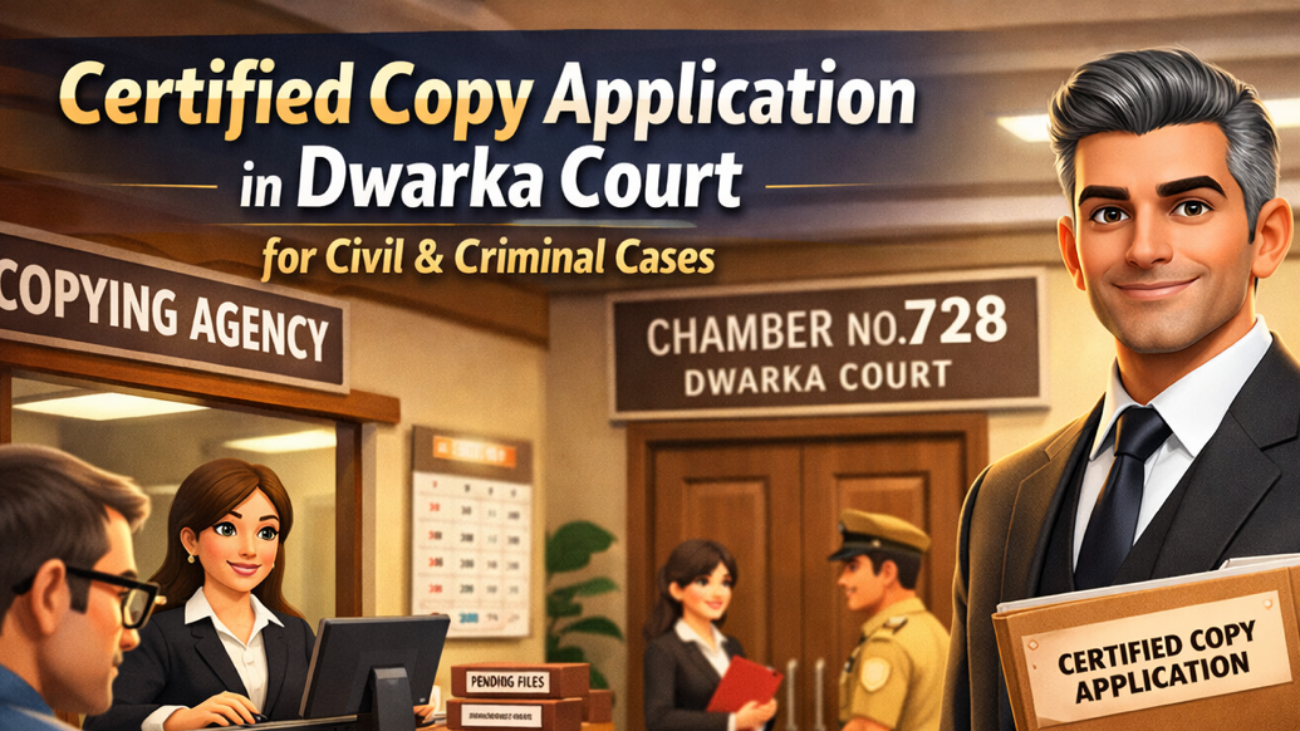
Getting a certified copy from Dwarka Court is a crucial step in both civil and criminal litigation. Whether you are dealing with a divorce matter, property dispute, or bail application, certified copies play an essential role in appeals, compliance, and legal strategy. Therefore, understanding the process in Dwarka Court can save both time and effort.
With over 18+ years of experience in Dwarka Court, we have assisted hundreds of clients in smoothly obtaining certified copies without unnecessary delays.
📌 What is a Certified Copy?
A certified copy is an officially verified copy of a court document issued by Dwarka Court. It carries legal authenticity and is often required for:
Filing appeals
Execution of orders
Bail matters
Divorce proceedings
Property disputes
In both civil and criminal cases in Dwarka Court, certified copies are indispensable.
📂 Step-by-Step Process to Apply for Certified Copy in Dwarka Court
1️⃣ Identify the Required Document
First, determine the document you need from Dwarka Court, such as:
Judgment
Order sheet
Evidence records
FIR or charge sheet (in criminal matters)
2️⃣ Draft the Application
Next, prepare an application mentioning:
Case title
Case number
Court details in Dwarka Court
Specific document required
Accuracy is critical because even minor errors can delay the process.
3️⃣ Submit Application at Copying Agency 🏢
After drafting, submit your application at the Copying Agency in Dwarka Court. This is the designated office for issuing certified copies.
4️⃣ Pay Prescribed Fees 💳
Then, pay the required court fees. The charges in Dwarka Court depend on:
Type of document
Urgency (ordinary or urgent copy)
5️⃣ Diary Number & Tracking 📑
Once submitted, you receive a diary number. Using this, you can track your application status in Dwarka Court.
6️⃣ Collection of Certified Copy ✅
Finally, collect your certified copy from Dwarka Court once it is ready. Urgent copies are usually processed faster.
⚡ Common Challenges in Dwarka Court
While the process seems simple, practical issues often arise in Dwarka Court:
Incorrect case details
Delay in file tracing
Objections from copying agency
Technical errors in application
Therefore, professional assistance ensures faster and hassle-free results.
👨⚖️ How We Assist You in Dwarka Court
With deep experience in Dwarka Court, we provide complete assistance:
✔️ Drafting accurate applications
✔️ Filing and follow-up in Dwarka Court
✔️ Handling objections instantly
✔️ Expediting urgent copy requests
✔️ Coordinating with court staff
Whether you need documents for Bail Matters Dwarka Court, divorce proceedings, or property litigation, we ensure efficiency at every step.
💼 Legal Services We Offer in Dwarka Court
We are recognised as a Trusted and Experienced Advocate in Dwarka Court, providing services in:
In civil litigation, experience is not just an advantage—it is the foundation of success. Whether it is a property dispute, injunction, recovery suit, or partition matter, the outcome often depends on how well your advocate understands the practical working of the court system, therefore you need Civil case Advocate Dwarka Court.
✨ Advocacy is an art, and like every art, it is mastered only over time. A skilled Civil Case Advocate Dwarka Court is not created overnight; rather, they are shaped through years of courtroom exposure, procedural knowledge, and strategic thinking.
⚖️ Why Experience Matters in Civil Cases
Civil litigation involves multiple stages—drafting, filing, evidence, arguments, and execution. Therefore, choosing an experienced Civil Case Advocate Dwarka Court ensures that every stage is handled with precision.
🔹 1. Deep Understanding of Court Procedures
An experienced Civil Case Advocate Dwarka Court is well-versed with court procedures, filing systems, and documentation. As a result, cases are filed accurately and without unnecessary delays.
🔹 2. Strategic Case Planning
With years of courtroom exposure, a seasoned Civil Case Advocate Dwarka Court knows how to build strong legal strategies. Consequently, clients receive practical solutions rather than theoretical advice.
🔹 3. Faster Case Filing & Execution
One of the biggest advantages of hiring a local Civil Case Advocate Dwarka Court is speed. Since we are familiar with the functioning of Dwarka Court, we ensure quick drafting and filing of civil suits.
🏛️ Our Experience in Dwarka Court
We have successfully handled a wide range of civil cases in Dwarka Court, including:
✔️ Property disputes
✔️ Injunction matters
✔️ Recovery suits
✔️ Partition suits
✔️ Possession cases
With 18+ years of experience in Dwarka Court and other District & High Courts across India, our law firm has built a reputation for reliability and results.
👉 This extensive exposure makes us a trusted Civil Case Advocate Dwarka Court for complex litigation matters.
📍 Why Clients Choose Us in Dwarka Court
🌟 1. Local Court Advantage
Being local advocates, we are deeply familiar with Dwarka Court’s procedures. Therefore, we can file and manage cases faster than others. This is a major reason why clients prefer our services as their Civil Case Advocate Dwarka Court.
🌟 2. Multi-Specialisation Expertise
We specialise in:
Civil Litigation
Criminal Cases
Banking Matters
Because of this, clients benefit from a holistic legal approach. Hence, we are widely recognised as a Civil Case Advocate Dwarka Court with diverse expertise.
Domestic disputes are painful. However, what hurts even more is when innocent family members get dragged into litigation without any real role. In many cases filed under the Domestic Violence Act, it is often seen that not only the husband, but also his father, mother, brother, sister, and even distant relatives are named as respondents. Contact Advocate in Dwarka Court.
If you or your loved ones are facing such a situation in Dwarka Court, Sector-10, New Delhi — take a deep breath. There are strong legal remedies available. ⚖️
⚠️ Why Are Relatives Implicated in DV Cases?
Unfortunately, it has become a common trend that once a complaint is filed, multiple family members are added to increase pressure on the husband.
However, courts have repeatedly held that:
General and vague allegations are not sufficient
Each accused must have a specific role
Misuse of law cannot be allowed
Therefore, if you are wrongly implicated, you have a solid chance to defend yourself legally with the help of an experienced Advocate in Dwarka Court.
📍 Understanding Summoning Orders in DV Cases
When a complaint is filed under the Domestic Violence Act, the Mahila Court may issue a summoning order against the respondents.
👉 This means:
You are formally called to appear before the court
Proceedings are initiated against you
Your legal rights and reputation are at stake
However, this is not the final stage. Importantly, the law provides remedies to challenge such orders.
⚖️ How to Challenge the Summoning Order?
If you believe that you or your relatives have been falsely implicated, here are the most effective legal steps:
1️⃣ Filing an Appeal Before the Sessions Court
One of the strongest remedies is to file an appeal against the summoning order before the Sessions Court.
✔️ This appeal challenges:
Lack of evidence
Absence of specific allegations
Mechanical issuance of summons
With the guidance of a skilled Advocate in Dwarka Court, this step can significantly change the outcome.
2️⃣ Highlighting False & Vague Allegations
Courts give importance to specific incidents and evidence.
👉 Therefore:
General statements like “they harassed me” are not enough
You must show absence of direct involvement
An experienced Advocate in Dwarka Court can effectively present these arguments.
3️⃣ Relying on Judicial Precedents
Higher courts have consistently protected innocent relatives from misuse of law.
Thus:
Previous judgments can be cited
Courts tend to remove names of distant relatives if no role is proved
This is where expertise of a seasoned Advocate in Dwarka Court becomes crucial.
4️⃣ Filing Discharge/Quashing Applications
Depending on the stage, your lawyer may also:
File discharge applications
Approach higher courts for quashing
Again, a knowledgeable Advocate in Dwarka Court ensures the right strategy is applied at the right time.
💔 A Real Story of Relief & Justice
Recently, one of our clients approached us with tears in his eyes. His elderly mother and younger brother were named in a false and fabricated domestic violence complaint.
They had never interfered in the couple’s life. Still, they were forced to face court proceedings.
👉 The situation was emotionally draining:
The mother feared arrest and social stigma
The brother’s career was getting affected
The entire family was under stress
However, after carefully examining the case, we advised filing an appeal before the Sessions Court.
With strong legal arguments and proper documentation:
✔️ We demonstrated lack of specific allegations
✔️ We proved false implication
✔️ We highlighted misuse of legal provisions
✨ Result: The Hon’ble Higher Court passed an order removing their names from the case.
The moment that order came — the relief on their faces was priceless.
👉 The mother said, “Justice still exists.”
👉 The client said, “You didn’t just fight our case, you saved our family.”
This is the power of the right legal guidance by an experienced Advocate in Dwarka Court.
📌 Why Choosing the Right Advocate Matters?
Domestic violence cases require:
Legal precision
Emotional understanding
Strategic planning
With 18+ years of experience, we have handled numerous such cases successfully.
As a trusted Advocate in Dwarka Court, we ensure:
✔️ Personalized legal strategy
✔️ Transparent advice
✔️ Aggressive yet ethical representation
We are known for handling:
Divorce matters
Property disputes
Criminal cases
Bail matters in Dwarka Court
🌍 Areas We Serve
We proudly assist clients across:
Janakpuri
Vikaspuri
Dwarka North
Dwarka South
Palam
Bindapur
Najafgarh
Uttam Nagar
Samalka
Kapashera
If you are looking for a reliable Advocate in Dwarka Court, we are here to guide you.
🚀 Why This Blog Matters for You
If you are reading this, chances are:
You or your family is wrongly implicated
You are confused about legal remedies
You are searching for the right Advocate in Dwarka Court
👉 Remember: Summoning is not conviction.
👉 You have legal rights.
👉 You can fight back — and win.
❓ FAQ Section
❓ Can relatives be removed from a DV case?
Yes. If there are no specific allegations, courts can remove their names.
❓ Where to challenge a summoning order in Dwarka Court?
You can file an appeal before the Sessions Court with the help of an experienced Advocate in Dwarka Court.
❓ Is it common to falsely implicate family members?
Unfortunately, yes. However, courts are aware of this misuse.
❓ How long does the appeal process take?
It depends on the case, but timely filing and proper representation can speed up relief.
❓ Do I need a criminal lawyer for DV cases?
Yes. A skilled Advocate in Dwarka Court with experience in criminal and family law is essential.
📞
Call to Action (CTA)– 9899085554, 9811885554
✨ Are you or your loved ones falsely implicated in a Domestic Violence case? Don’t suffer in silence.
With 18+ years of experience as an Advocate in Dwarka Court, we specialize in protecting innocent family members and securing justice.
📲 Book your consultation today
⚖️ Get expert legal advice
🏆 Fight your case with confidence
👉 Because justice is not just about law — it’s about protecting families.