


⚖️ Introduction: How to Read an FIR/ Why Reading an FIR Correctly Matters
An FIR is often the first major document in a criminal case. It records the information given to the police about an alleged offence. However, an FIR is not the final proof of guilt. It is a starting point for investigation and legal action.
Therefore, how to read an FIR is an important legal skill. A professional advocate does not read it only once. Instead, the advocate studies its facts, dates, allegations, sections, witnesses, documents and omissions.
A careful reading can reveal:
- Important factual inconsistencies.
- Delay in reporting the incident.
- Unclear or general allegations.
- Missing facts about the alleged offence.
- Contradictions between different parts of the FIR.
- Questions about the ingredients of the alleged offences.
- Issues relevant to bail, investigation or further legal remedies.
For a person facing criminal proceedings, this analysis can be extremely important.
🔍 How to Read an FIR Like a Professional Advocate
The first principle is simple: do not read an FIR emotionally. Read it legally.
A complainant may use strong words. The FIR may contain serious allegations. However, the advocate must separate allegations from legally relevant facts.
When considering how to read an FIR, a professional advocate normally asks:
Who? What? When? Where? How? Why? What evidence? What offence?
These questions help convert a long narrative into a structured legal analysis.
1. Check the Basic Details
Start with the basic information:
- FIR number.
- Police Station.
- Date of registration.
- Date and time of occurrence.
- Sections invoked.
- Name of complainant.
- Names of accused persons.
- Place of alleged occurrence.
- Investigating Officer, where available.
These details create the basic framework of the case.
For example, if the FIR mentions an incident on a particular date but registration took place after a significant delay, the reason for that delay may require examination.
However, delay alone does not automatically make an FIR false or legally invalid. The circumstances and explanation for the delay must be considered.
2. Identify the Exact Allegation Against Each Person
A professional advocate does not treat every accused person in the same manner.
Instead, ask:
What exactly has been alleged against each accused?
This is especially important where several family members, directors, partners, employees or associates have been named.
Look for specific acts attributed to each person.
An FIR may contain a general allegation against several persons. Therefore, the advocate should examine whether the FIR actually describes the individual role attributed to each accused.
This approach is useful while considering appropriate legal remedies, including bail or other proceedings, depending upon the facts and applicable law.
3. Match the Allegations With the Ingredients of the Offence/How to Read an FIR
This is one of the most important steps in understanding how to read an FIR.
Every criminal offence has legal ingredients. The allegations should therefore be compared with those ingredients.
For example, merely using the word “cheating” does not by itself establish the offence of cheating. The factual allegations must be examined against the legal requirements of the offence.
Similarly, in cases involving alleged criminal breach of trust, intimidation, assault, forgery, misappropriation or other offences, the advocate should identify the facts supporting each required ingredient.
A Simple FIR Reading Table
| FIR Point | What an Advocate Checks | Why It Matters |
| Date of incident | Exact date and timeline | Tests chronology |
| FIR registration | Date and time | Helps examine delay |
| Accused | Individual role | Prevents assumptions |
| Allegation | Specific act attributed | Identifies actual case |
| Offence sections | Legal ingredients | Tests applicability |
| Witnesses | Names and role | Assesses supporting material |
| Documents | Nature and relevance | Identifies evidence |
| Place of occurrence | Jurisdiction and facts | Checks territorial issues |
| Medical evidence | Injury and timing | Correlates allegations |
| Prior dispute | Earlier relationship or conflict | Provides background |
| Contradictions | Differences within record | Helps legal analysis |
| Omissions | Important facts missing | May require explanation |
| Investigation status | Stage of investigation | Guides next legal step |
4. Study the Timeline Carefully
A strong criminal defence often begins with chronology.
When learning how to read an FIR, prepare a simple timeline:
Alleged incident → communication → complaint → FIR → investigation → notice/arrest → recovery → chargesheet
Then compare every date.
For instance, examine whether the FIR was lodged immediately or after a substantial interval. Check whether the complainant refers to earlier complaints, calls, messages or meetings.
Moreover, compare the FIR with other available material.
A timeline does not prove a case by itself. However, it can expose questions that require further investigation or legal consideration.
5. Look for Omissions, Improvements and Contradictions/ How to Read an FIR
One of the most useful aspects of how to read an FIR is learning to distinguish between an omission and a contradiction.
An omission occurs when an important fact is absent from an earlier version but appears later.
A contradiction occurs when two versions contain materially different facts.
Therefore, the FIR should not be examined in isolation. Where legally permissible and available, an advocate may compare it with:
- Complaint.
- Statements.
- Medical records.
- Messages.
- Emails.
- Agreements.
- Bank records.
- CCTV footage.
- Call records.
- Other documentary material.
The significance of any inconsistency depends upon the facts, stage of proceedings and applicable law.
6. Examine the FIR From a Bail Perspective
For an accused person, FIR analysis can be particularly important before seeking legal relief.
A Regular Bail & Anticipatory Bail Lawyer Dwarka will generally examine factors such as:
- Nature of allegations.
- Punishment prescribed for the alleged offence.
- Specific role attributed to the accused.
- Need for custodial interrogation.
- Possibility of tampering with evidence.
- Possibility of influencing witnesses.
- Previous criminal history, where relevant.
- Cooperation with investigation.
- Recovery requirements.
- Stage of investigation.
The precise legal strategy depends on the facts and the applicable provisions.
Therefore, an FIR should never be assessed only by looking at the number of sections mentioned in it.
7. Do Not Assume That More Sections Mean a Stronger Case
Sometimes several penal sections appear in an FIR.
That can look alarming to an accused person. However, the number of sections does not, by itself, determine the strength of the prosecution case.
A Criminal Advocate Dwarka should examine whether the factual allegations actually correspond to the ingredients of each invoked offence.
This is why professional legal analysis is different from simply reading an FIR.
8. Examine the Background of the Dispute
The surrounding circumstances can be highly relevant.
For example, a criminal complaint may arise from:
- Business disagreements.
- Property disputes.
- Matrimonial conflict.
- Financial transactions.
- Employment disputes.
- Partnership disagreements.
- Contractual disputes.
- Family disagreements.
However, the existence of a civil or commercial dispute does not automatically make a criminal case invalid.
A professional advocate therefore studies the complete factual background instead of reaching a conclusion from the FIR alone.
This approach is also useful when advising clients who are dealing with overlapping civil and criminal proceedings.

FIR Analysis in Financial and Cheque Bounce Disputes
Not every financial dispute is identical.
A Cheque Bounce Lawyer in Dwarka Court may need to examine the underlying transaction, documents, payment history, notices, bank records and the nature of the allegations.
Likewise, where a financial disagreement develops into multiple proceedings, the advocate should map the entire dispute.
The same principle applies to property and commercial matters.
A Property Dispute Advocate, Recovery Suit Counsel or Commercial Litigation Lawyer may need to study the criminal allegations alongside agreements, receipts, correspondence and other documents.
Why Local Legal Experience in Dwarka Court Matters
Local court experience can make the legal process more efficient.
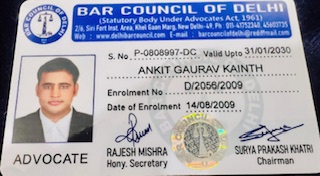
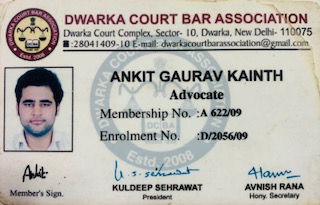
We are local Advocates in Dwarka Court, Delhi, with 18+ years of professional experience in Dwarka Court.
Our familiarity with local court procedures, filing practices, listing processes, documentation requirements and day-to-day working systems helps us respond promptly to litigation requirements.
This local experience is particularly useful when a matter requires urgent filing, appearance, procedural follow-up or coordination.
We assist clients at both stages:
🔹 Pre-Litigation Stage
Before litigation begins, we help clients understand their legal position and available options.
Depending on the matter, assistance may include:
- Reviewing documents.
- Examining notices and complaints.
- Analysing potential criminal exposure.
- Preparing legal replies.
- Advising on evidence preservation.
- Assessing settlement or negotiation options.
- Planning appropriate legal proceedings.
- Identifying procedural risks.
Early legal advice can help a client make an informed decision before a dispute becomes more complicated.
🔹 Litigation Stage
Once proceedings begin, legal assistance may include:
- Bail proceedings.
- Anticipatory bail matters.
- Criminal complaints.
- Trial proceedings.
- Evidence and cross-examination.
- Applications before the court.
- Procedural objections.
- Civil and commercial proceedings connected with the dispute.
- Appeals, revisions or other appropriate remedies.
A Criminal Disputes Advocate Dwarka Court must therefore look beyond the FIR and understand the complete litigation strategy.
📍 Serving Clients Across Dwarka and South-West Delhi
Our practice is focused on clients appearing before or dealing with matters connected with Dwarka Court and nearby areas.
Clients may approach us from:
Dwarka Sector 6, Sector 10, Sector 12, Dwarka Sector-23, Dwarka North, Dwarka South, Janakpuri, Vikaspuri, Uttam Nagar, Najafgarh, Palam Village, Dabri, Bindapur, Mohan Garden, Delhi Cantonment, Chhawla, Baba Haridas Nagar, Samalka, Jaffarpur Kalan, Kapashera and other nearby areas.
If you are searching for a Lawyer in South West Delhi or an Advocate in Dwarka Court near Dwarka Court, local professional assistance can help you understand the procedure and practical steps involved.
🤝 Building Client Trust Through Professional Standards
Legal representation requires more than legal knowledge. It also requires trust, communication and professional discipline.
We focus on:
✅ High professional standards
✅ Quick responsiveness
✅ Availability on call, subject to professional commitments
✅ Dedicated WhatsApp support for case-related communication
✅ Reasonable and transparent fee structure
✅ Proper Lawyer-Client Fee Agreements
✅ Fee receipts and acknowledgements
✅ Honest and fair dealings
✅ Clear communication about the legal process
A written fee arrangement helps both sides understand the professional engagement, scope of work and applicable charges.
Likewise, fee receipts and acknowledgements promote transparency and proper record keeping.
📞 What Should You Do After Receiving an FIR?
If you or someone close to you has received information about an FIR, do not panic.
First, obtain a copy of the FIR and related documents where legally available.
Next, avoid making statements or taking legal steps without understanding the situation.
Then prepare all relevant documents and communicate the complete facts to your advocate.
Finally, obtain advice on the appropriate legal remedy based on the actual allegations and procedural stage.
The objective is not simply to find a “loophole.” The objective is to understand the case accurately and respond according to law.
Five Questions Every Accused Person Should Ask
Before taking the next legal step, ask:
- What exactly is alleged against me?
- Which legal ingredients are being relied upon?
- What evidence is presently available?
- What is the current stage of investigation or proceedings?
- What legal remedy is appropriate at this stage?
These questions make how to read an FIR much easier for a person who is unfamiliar with criminal law.
Frequently Asked Questions
1. How to Read an FIR for the first time?
Start with the basic details, then identify the allegations, accused persons, dates, witnesses, documents and invoked offences. Finally, compare the factual allegations with the legal ingredients of the offences.
2. Does an FIR prove that a person is guilty?
No. An FIR contains information regarding an alleged offence and sets the criminal process in motion. Guilt must be determined through the legally applicable process and evidence.
3. Can an advocate identify weaknesses in an FIR?
An advocate can identify factual inconsistencies, omissions, unclear allegations, procedural issues and questions concerning the ingredients of alleged offences. Their legal significance depends on the complete facts and stage of the case.
4. Can I seek bail after an FIR is registered?
Depending on the offence, circumstances and procedural stage, a person may have remedies such as regular bail or anticipatory bail. The appropriate remedy must be assessed on the specific facts.
5. Why choose a local Advocate in Dwarka Court?
A local advocate familiar with Dwarka Court can provide practical assistance based on knowledge of local filing procedures, court processes, listing practices and day-to-day litigation requirements.
📊 Quick Professional FIR Review Checklist
| Stage | Key Question |
| 1️⃣ Basic details | Is the FIR number, police station and date correct? |
| 2️⃣ Timeline | What happened, and when? |
| 3️⃣ Role | What specific act is attributed to each accused? |
| 4️⃣ Sections | Do the allegations contain the ingredients of the offences? |
| 5️⃣ Evidence | What documents or witnesses support the allegation? |
| 6️⃣ Contradictions | Are there material inconsistencies? |
| 7️⃣ Delay | Is there a delay, and is there an explanation? |
| 8️⃣ Background | What is the history of the dispute? |
| 9️⃣ Investigation | What stage has the investigation reached? |
| 🔟 Remedy | What legal step is appropriate now? |
Conclusion
Learning how to read an FIR is not merely about understanding legal language. It is about analysing facts, chronology, allegations, evidence and legal ingredients with a disciplined approach.
A professional advocate reads the FIR carefully, verifies the surrounding material and then develops advice based on the actual circumstances.
For persons facing criminal allegations in Dwarka Court, early legal guidance can be valuable. Whether the matter involves bail, a criminal dispute, a financial disagreement, a property issue or connected civil proceedings, the first step is to understand the case clearly.

With 18+ years of experience in Dwarka Court, we assist clients during both the pre-litigation and litigation stages with a focus on professional standards, transparent communication and proper documentation.
📞 Need Legal Assistance in a Criminal Matter?
If you have received an FIR, police notice or complaint connected with Dwarka Court, take timely legal advice and understand your legal position before taking the next step.
Ankit Gaurav Kainth & Associates
Advocates in Dwarka Court, Delhi
📍 Chamber No. 728, 7th Floor, Lawyers Chambers Block, District Court Dwarka, Sector-10, New Delhi
📞 9899085554 | 9811885554
Disclaimer: This article is intended solely for general legal information and educational purposes. It does not constitute legal advice, does not create an advocate-client relationship and should not be treated as a substitute for examination of the facts and documents of an individual case. Legal remedies and procedures may vary according to the facts, applicable law and stage of proceedings.