
4E9F6223-25E2-454F-834B-47C7E1943EA8

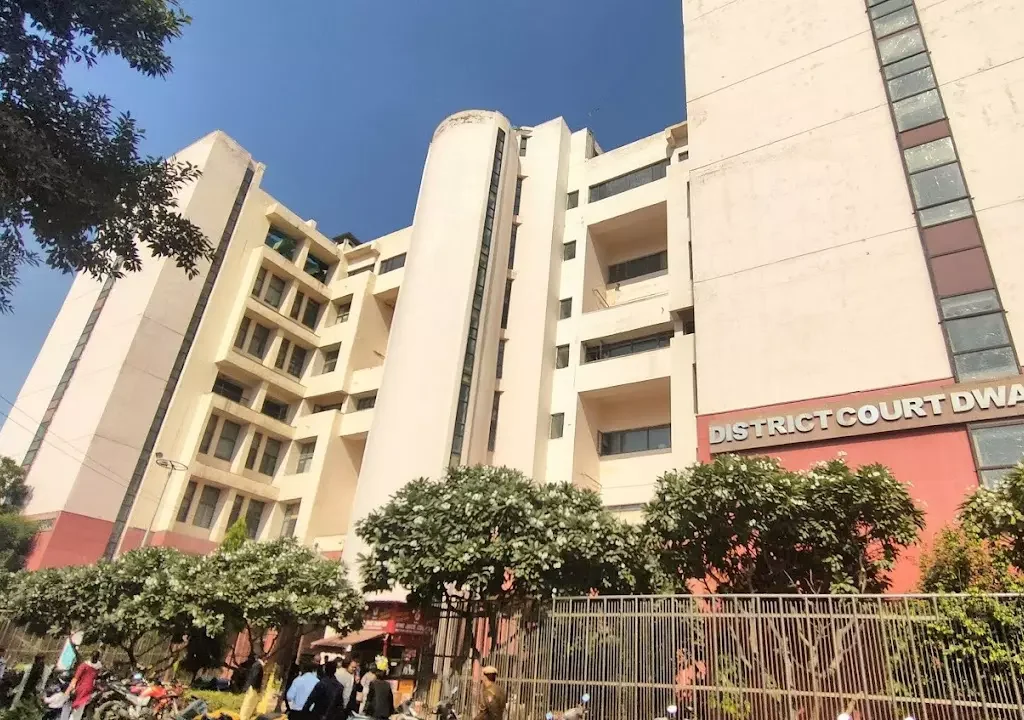
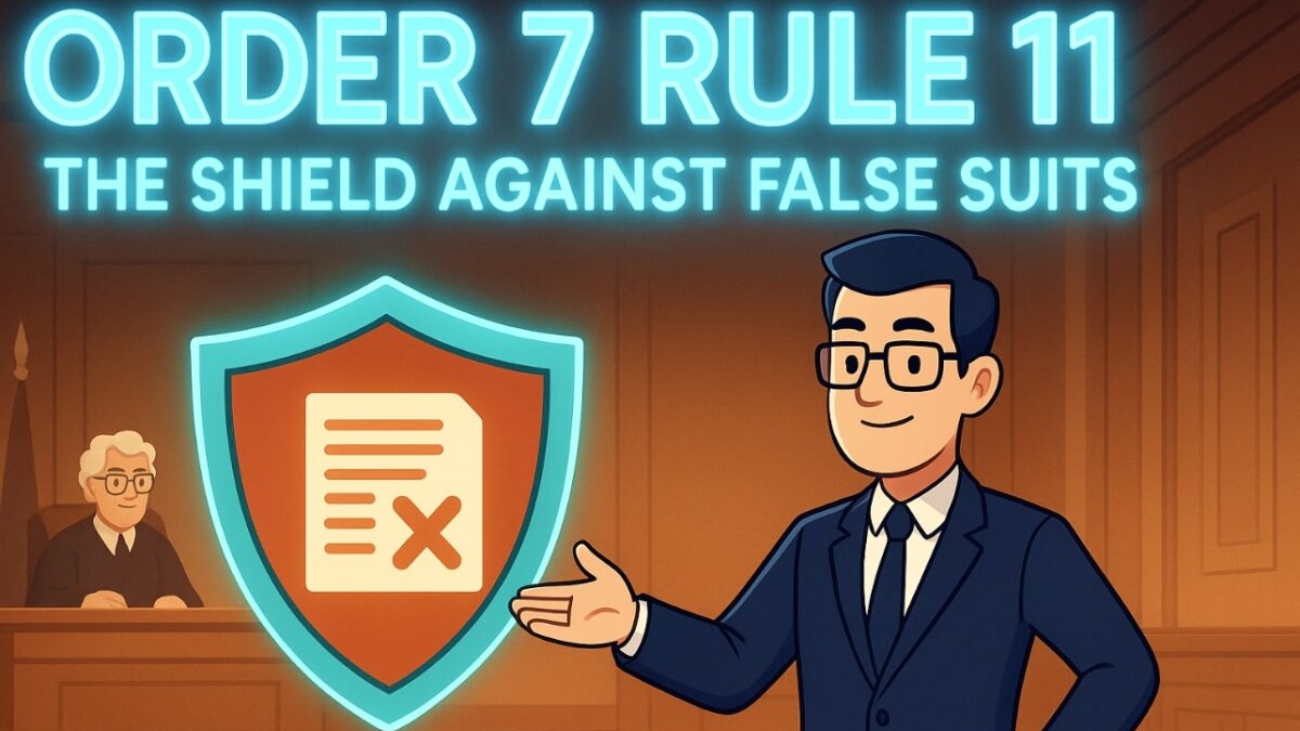
Order 7 Rule 11 – The Most Important Filter in Civil Procedure Code-How to use this in District Court Dwarka, New Delhi

Order 7 Rule 11 CPC – A Powerful Remedy to Reject a Civil Suit | Complete Guide

Order 7 Rule 11 CPC, rejection of plaint, frivolous civil suit, how to file O7R11, Dwarka Court Delhi, civil procedure code, reject suit for no cause of action, legal remedy against false suit

Detailed and practical guide on Order 7 Rule 11 CPC—its importance, usage, filing procedure in Dwarka Courts, and top Supreme Court judgments. Ideal for clients facing false or baseless civil cases.

Introduction

In my 18+ years of civil litigation, one provision that has consistently proven to be the sharpest shield for a defendant is Order 7 Rule 11 of the Civil Procedure Code (CPC).

It is not merely a technical section—it is a powerful safeguard to prevent frivolous, deceptive, non-maintainable or legally dead suits from wasting the court’s time and the defendant’s money, energy and peace.

This provision allows a court to reject a plaint at the very threshold, even before trial, if it does not disclose a valid cause of action or is barred by law.

What is Order 7 Rule 11 CPC? (Explained Simply)

Order 7 Rule 11 empowers the court to reject a plaint if it falls under any of these categories:

  1. No cause of action disclosed
  2. Relief undervalued and plaintiff fails to correct it
  3. Insufficient court fee, not cured after court’s order
  4. Suit barred by any law – limitation, statutory bar, jurisdiction issues
  5. Plaint filed in duplicate not submitted
  6. Plaint is vague, illusory or meaningless

This means the court can dismiss such a suit without calling witnesses or starting trial.

Why Order 7 Rule 11 Is Extremely Important?

✔ Saves the defendant from long years of litigation

✔ Stops misuse of court process

✔ Keeps judiciary efficient by removing frivolous suits

✔ Protects genuine litigants by ensuring court time is not wasted

✔ Gives immediate relief if the suit itself is defective or legally barred

In real practice, many plaintiffs file suits only to create pressure, gain bargaining advantage, or drag the defendant to court unnecessarily.

Order 7 Rule 11 is the antidote to such misuse.

My Perspective After 18+ Years of Advocacy

With nearly two decades in civil courts including Dwarka District Court, I can say:

  • Courts do not reject suits lightly.
  • A well-drafted O7R11 application with proper legal grounds impresses the court.
  • The defendant must use it only when the suit is truly non-maintainable, not as a delaying tactic.
  • Filing it at the right stage and under the right circumstances often changes the entire case strategy.

A balanced approach is essential:

Use this provision as a shield, not a sword.

When Should You Use Order 7 Rule 11? (Practical Guide)

You should use O7R11 when:

1. The plaint shows no cause of action

Many suits are drafted with emotional narrative but no legal cause of action.

If the plaint itself shows the plaintiff has no right, O7R11 is ideal.

2. The suit is hopelessly barred by limitation

If dates mentioned in the plaint show the suit is filed too late, the court must reject it.

3. Suit is filed to harass the defendant

Property disputes, injunction suits, partnership disputes often include vague or false pleading.

4. Suit is barred under any special statute

Examples:

  • Benami Prohibition Act
  • Specific Relief Act provisions
  • Delhi Rent Control Act
  • SARFAESI Act

5. No court fee / wrong valuation

If the plaintiff undervalues the relief, he must correct it or face O7R11.

How to File Order 7 Rule 11 Application in Dwarka District Court (Step-by-Step)

1. Drafting

Your advocate prepares a detailed application stating:

  • Grounds for rejection
  • Relevant statutory provisions
  • Supporting case laws
  • Extracts from plaint showing defects

2. Attachments

  • Copy of plaint
  • Documents relied on by plaintiff
  • Supporting judgments

3. Filing Section

The application is filed at the Filing Counter (Ground Floor) of Dwarka Courts.

4. Scrutiny & Listing

  • After scrutiny, it is listed before the court where the main suit is pending.
  • The court issues notice to the plaintiff.

5. Arguments

Arguments focus strictly on plaint allegations, because for O7R11, the court only examines the plaint—not your defence.

6. Court Order

If the court accepts the grounds:

→ Plaint is rejected

→ Defendant is relieved from the entire litigation

A certified copy can be taken immediately after the order for future use.

Top Supreme Court Judgments on Order 7 Rule 11 (Supra)

1. T. Arivandandam v. T.V. Satyapal (1977) 4 SCC 467

Supreme Court directed trial courts to strike out frivolous and vexatious suits at the threshold.

2. Sopan Sukhdeo Sable v. Assistant Charity Commissioner (2004) 3 SCC 137

Held that for O7R11, only plaint averments are considered, not defence.

3. Kamala v. K.T. Eshwara Sa (2008) 12 SCC 661

O7R11 can be invoked at any stage of the proceedings.

4. Church of Christ Charitable Trust v. Ponniamman Educational Trust (2012) 8 SCC 706

If suit is barred by limitation on the face of plaint → mandatory rejection.

5. Dahiben v. Arvindbhai Kalyanji Bhanusali (2020) 7 SCC 366

Plaint with illusory cause of action must be rejected.

6. Saleem Bhai v. State of Maharashtra (2003) 1 SCC 557

Court must not consider evidence at this stage.

Conclusion

Order 7 Rule 11 is not about “winning quickly”—

it is about preventing unjustified litigation from beginning at all.

As a defence tool, it is often underused by clients, mainly because they do not know such a strong legal remedy exists.

For defendants in Dwarka Courts or anywhere in India:

If the suit filed against you seems false, time-barred, or legally unsustainable—

O7R11 may provide immediate relief and save years of litigation.

Consult an experienced advocate to determine the most suitable mode of service based on the facts of your case and court practice.

Contact me for Consultation :- 9899085554, 9811885554

Ankit Gaurav Kainth Advocate, Dwarka Court, Chamber No.728, 7th Floor, Dwarka, New Delhi

https://share.google/4r7kHm3s4da3OS9rS

https://www.instagram.com/reel/DRrwtE6iS3q/?utm_source=ig_web_copy_link&igsh=MzRlODBiNWFlZA==
0699CDF6-CAD4-489B-96A2-799E18C2E9AB

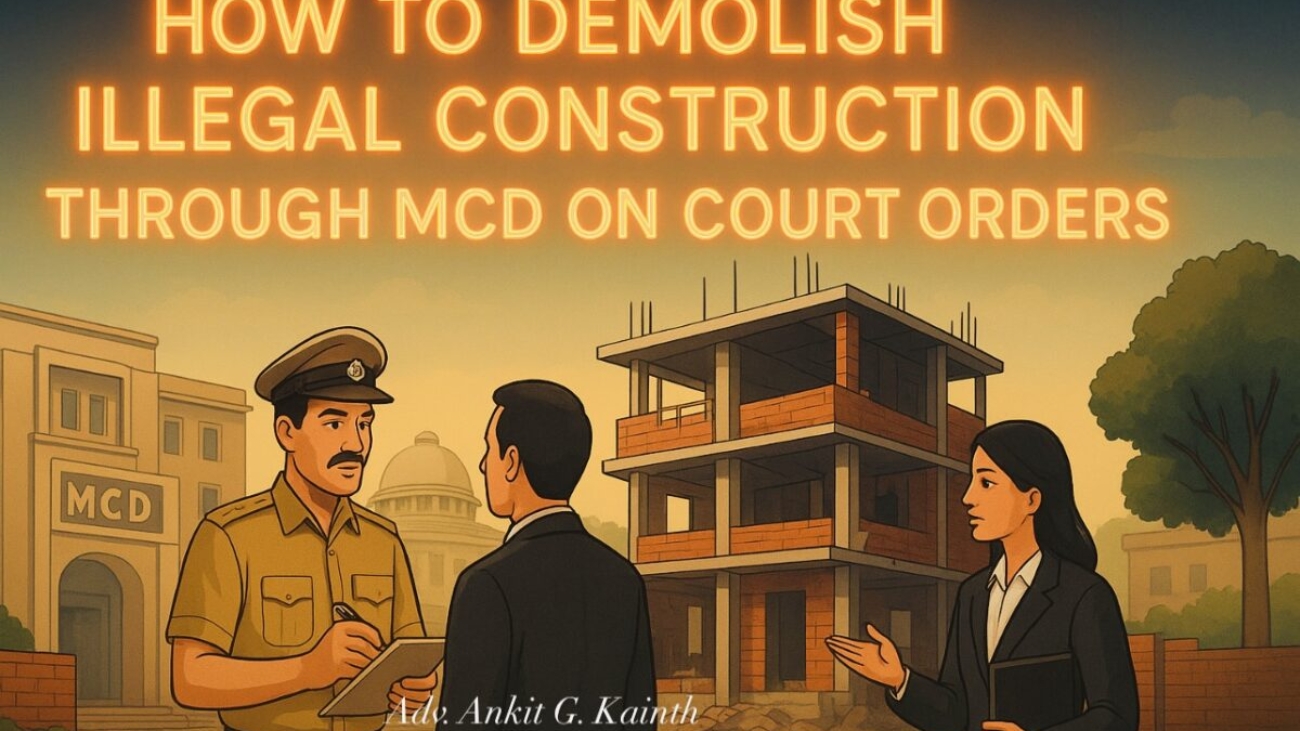
🚧 How to Get Illegal Construction Demolished Through MCD on Court Directions — A Complete Guide for Dwarka Court Litigants

Blog By Civil Advocate in Dwarka Court with 18+ years of Practical Knowledge in New Delhi.

Illegal construction has become one of the biggest civic challenges in New Delhi. Every lane has at least one neighbour raising extra floors, covering balconies, extending walls, or encroaching public spaces—completely ignoring safety norms and municipal laws. After working for more than 18+ years in Civil & Criminal litigation in District Courts & Delhi High Court, I can confidently say one thing:

Courts take illegal construction very seriously — and the law is completely on your side.

If your neighbour has raised an illegal structure, you can get it demolished. The process is systematic, legally strong, and absolutely effective when done correctly.

Why Illegal Construction Is Treated So Strictly

Illegal construction affects:

  • Structural safety of neighbouring buildings
  • Ventilation & sunlight
  • Fire safety and evacuation
  • Property valuation
  • Public pathways and civic amenities

This is why both MCD and Courts treat such violations as a zero-tolerance issue.

Step-by-Step Legal Procedure to Get Illegal Construction Removed

1️⃣ File a Complaint Before MCD (Chairman + Area Executive Engineer)

Your first mandatory step is to file a written complaint with:

  • MCD Chairman
  • Executive Engineer (Building) of your Zone
  • Copy to Deputy Commissioner

Why this is required?

Under municipal rules, MCD gets 90 days to inspect the property, issue notices under Section 343/344 DMC Act, and take demolition action.

Important Tip:

Always file complaints:

✔️ By speed post

✔️ Through online MCD portal

✔️ Maintain photocopies & receipts

These documents become crucial evidence in Court.

2️⃣ After 90 Days, You Have Two Remedies

(A) File a Writ of Mandamus in Delhi High Court

You can approach High Court seeking directions to MCD to:

  • Conduct inspection
  • Pass demolition orders
  • Remove the illegal structure

High Court is extremely strict on illegal construction and often issues time-bound directions to MCD.

(B) File a Suit Before Civil Court, Dwarka

In many cases, a Civil Suit is the more suitable and immediate remedy.

You may file:

  • Suit for Mandatory Injunction (for demolition)
  • Suit for Permanent Injunction (to restrain further construction)
  • Suit for Declaration (if property rights need clarification)

Dwarka District Court has repeatedly passed strong orders directing demolition and restraining illegal constructions.

3️⃣ Urgent Situations — Waiver of 90 Days Waiting Period

If the construction is:

  • Happening rapidly
  • Causing structural threat
  • Blocking light/air
  • Causing privacy issues
  • Endangering your property

…you are entitled to apply for waiver of 90-day MCD waiting period.

Courts may grant urgent interim relief like:

  • Stay on further construction
  • Immediate inspection by MCD
  • Status-quo orders
  • Time-bound demolition directions

You only need to provide justified reasons in writing.

My 18+ Years of Practical Courtroom Experience

From my practice in District Courts & Delhi High Court, I have observed that:

  • Courts are extremely fair and balanced.
  • MCD is bound to follow Court orders—no excuses.
  • Illegal construction cases move quickly when filed properly.
  • Documentary proof and timely complaints make the case strong.
  • Justice is always delivered, even if delayed.

Procedure is simple, effective, and 100% result oriented — never lose hope.

5 Supra Judgments on Illegal Construction & Demolition

1️⃣ M.I. Builders Pvt. Ltd. v. Radhey Shyam, (1999) 6 SCC 464

Relevance:

Supreme Court held that no authority can allow illegal construction; demolition is the rightful remedy to restore rule of law.

2️⃣ Friends Colony Development Committee v. State of Orissa, (2004) 8 SCC 733

Relevance:

Court emphasized strict action against builders violating sanctioned plans; illegal structures must be removed irrespective of investment.

3️⃣ Dipak Kumar Mukherjee v. Kolkata Municipal Corp., (2013) 5 SCC 336

Relevance:

SC directed Municipal authorities to act immediately against illegal construction without waiting for complaints.

4️⃣ Delhi Development Authority v. Skipper Construction, (1996) 4 SCC 622

Relevance:

Courts may pass harsh directions, including demolition, if construction violates building norms or misuses permissions.

5️⃣ A.P. Pollution Control Board v. Prof. M.V. Nayudu, (1999) 2 SCC 718

Relevance:

Reinforces the principle that environmental and structural safety must prevail over individual convenience — illegal structures must be removed.

  • How to Stop Illegal Construction by Neighbour in Delhi
  • How to Demolish Illegal Building Through Court Orders
  • MCD Demolition Procedure Explained
  • Dwarka Court Guide for Civil Suits on Illegal Construction
  • Mandatory Injunction Suits for Removing Illegal Construction

“How to Get Illegal Construction Demolished Through MCD on Court Orders – Complete Guide for Dwarka Court Litigants”

#IllegalConstruction #MCDActions #DwarkaCourt #DelhiHighCourt #CivilLitigation #PropertyLaw #DemolitionOrders #MandatoryInjunction #NeighbourDisputes #LegalAdviceDelhi

Consult an experienced advocate to determine the most suitable mode of service based on the facts of your case and court practice.

Contact me for Consultation :- 9899085554, 9811885554

Ankit Gaurav Kainth Advocate, Dwarka Court, Chamber No.728, 7th Floor, Dwarka, New Delhi

https://share.google/4r7kHm3s4da3OS9rS

Follow us for more Legal & Recent Updates :-

203C31DB-43CE-4594-AB30-B815EABD675C

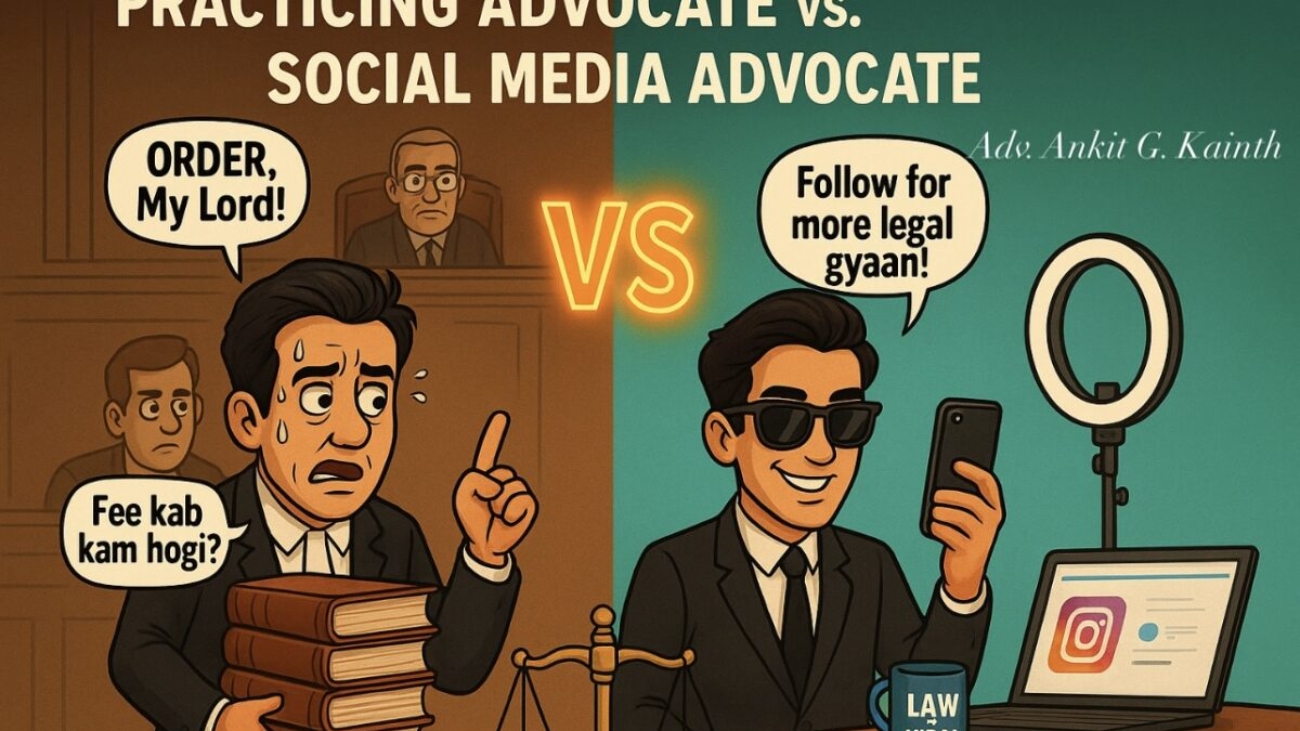
Practicing Advocate vs. Social Media Advocate 🤓📱⚖️

In today’s era, there are two species of lawyers roaming freely—
1. Practicing Advocates: Found in courts, drenched in sweat, burdened with files.
2. Social Media Advocates: Found online, drenched in filters, burdened with hashtags.

Let’s decode the epic differences between the two—because trust me, it’s more entertaining than any Netflix drama.

  1. Workstation 🏛️ vs. 📱
    • Practicing Advocate: Courtrooms, bar libraries, dusty registers.
    • Social Media Advocate: Cafés with Wi-Fi, reels with trending songs.
    👉 One-liner: “Court mein date milti hai, Insta pe followers!”

  1. Uniform 👔 vs. 👕
    • Practicing Advocate: Black coat, band, sweaty face.
    • Social Media Advocate: Blazer for DP, T-shirt for reel.
    👉 One-liner: “Practicing advocate wears black, social media advocate adds filters to black.”

  1. Arguments 🎤 vs. 🎶
    • Practicing Advocate: Argues before judges with citations.
    • Social Media Advocate: Argues before comments section with emojis.
    👉 One-liner: “One needs case laws, other just needs good captions.”

  1. Reality ⏳ vs. Views 👀
    • Practicing Advocate: Waits 4 hours for their matter to be called.
    • Social Media Advocate: Waits 4 seconds for likes to roll in.
    👉 One-liner: “Court ka patience > Insta ka algorithm.”

  1. Income 💰 vs. 💕
    • Practicing Advocate: Fee comes late, after multiple reminders.
    • Social Media Advocate: Payment? Nah, just “exposure” and “collabs.”
    👉 One-liner: “Advocate paisa ke liye fight karta hai, influencer spotlight ke liye.”

  1. Clients 👨‍👩‍👦 vs. 👥
    Practicing Advocate: Handles emotional clients shouting “Humari izzat ka sawal hai!”
    • Social Media Advocate: Handles followers shouting “Next reel kab aayegi?”
    👉 One-liner: “One manages affidavits, other manages aesthetics.”

  1. Legacy 📚 vs. 📸
    • Practicing Advocate: Builds reputation after years in court.
    • Social Media Advocate: Builds reputation after one viral reel.
    👉 One-liner: “Court mein senior ban’ne mein 20 saal, Insta pe sirf 20 seconds.”

Final Verdict ⚖️😂

Both are advocates in their own kingdoms. The practicing advocate fights for justice, while the social media advocate fights for attention. One seeks judgments, the other seeks engagement. Yet both remind us—law is not just about black coats, but also about adapting with time.

👉 Closing one-liner: “Courtroom ho ya Instagram, sabko apni audience chahiye!”

Consult an experienced advocate to determine the most suitable mode of service based on the facts of your case and court practice.

Contact me for Consultation :- 9899085554, 9811885554

Ankit Gaurav Kainth Advocate, Dwarka Court, Chamber No.728, 7th Floor, Dwarka, New Delhi

https://share.google/4r7kHm3s4da3OS9rS

FOLLOW US FOR MORE LEGAL & RECENT UPDATES:-

60239-adobestock_542324899-00858439

Top 5 Legal Mistakes People Make During Property Disputes in Dwarka Court (And How to Avoid Them)

Property disputes are one of the most common types of cases in Dwarka District Court. Most people make avoidable mistakes, which delay their case or weaken their position.

1. Not Keeping Proper Property Documents

Many disputes arise simply because owners do not maintain documents like sale deeds, GPA, agreements, and tax receipts.

2. Verbal Agreements with No Written Proof

Never rely on “bol diya toh ho gaya.” Legal documents are the backbone of any property transaction.

3. Not Verifying Ownership Before Purchase

People often skip title verification, which leads to fraud, double selling, or disputes with family members.

4. Delaying Legal Action

The longer you wait, the stronger the other party’s position becomes. Early consultation prevents bigger problems later.

5. Not Hiring a Professional Lawyer

Attempting to handle complex property cases without expert guidance leads to avoidable losses, delays, and stress.

Property disputes are emotionally exhausting and legally complex. Whether it is ancestral property, jointly purchased property, illegal possession, or builder disputes, one wrong step can weaken your entire case.

After 18+ years of continuous practice before Dwarka Court, I have seen a clear pattern — most people lose advantage not because their case is weak, but because they commit avoidable legal mistakes.

Let us understand the top 5 mistakes and how you can avoid them.


1️⃣ Delaying Legal Action

Many property owners wait too long, hoping the dispute will “settle itself.” Unfortunately, delay creates complications:

  • Opposite party strengthens possession
  • Evidence disappears
  • Limitation issues arise
  • Illegal construction gets completed

How to avoid it:
The moment you receive a legal notice, threat, or see unlawful construction, consult a lawyer immediately. Early injunction applications often protect ownership rights effectively.


2️⃣ Ignoring Proper Documentation

In property disputes, documents decide everything.

Common problems include:

  • Missing original sale deed
  • Unregistered agreements
  • No mutation records
  • Incomplete chain of title

Courts rely heavily on documentary evidence. Emotional claims without paperwork rarely succeed.

How to avoid it:
Maintain a complete property file including sale deed, GPA (if any), previous ownership documents, tax receipts, electricity bills, and possession proof.


3️⃣ Turning a Civil Dispute into an Emotional Battle

Family property matters often become personal. People start:

  • Blocking entry
  • Changing locks
  • Making threats
  • Filing exaggerated criminal complaints

Such actions sometimes weaken your civil case and create unnecessary criminal exposure.

How to avoid it:
Let the dispute remain legal, not personal. File appropriate civil suits for injunction, possession, or partition instead of reacting emotionally.


4️⃣ Filing the Wrong Case

Many litigants file only an injunction suit when possession relief is actually required. Later, courts dismiss such cases on technical grounds.

For example:
If construction is already complete and possession is lost, a mere injunction may not be sufficient.

How to avoid it:
Before filing, assess whether your case requires:

  • Suit for possession
  • Partition suit
  • Declaration suit
  • Permanent injunction
  • Criminal complaint (if cheating or trespass involved)

Correct remedy selection saves years of litigation.


5️⃣ Hiring a Lawyer Without Court-Specific Experience

Property litigation is procedural and technical. A lawyer unfamiliar with the working pattern of Dwarka Court may overlook registry objections, limitation issues, or strategic timing.

Regular court presence matters because:

  • Filing defects are cleared faster
  • Interim relief applications are moved effectively
  • Local judicial approach is understood

Experience inside the same court environment creates a practical advantage.


Practical Advice for Property Owners

✔ Never sign blank papers
✔ Avoid verbal settlements without documentation
✔ Do not ignore legal notices
✔ Preserve all digital and physical records
✔ Act before the opposite party strengthens possession

Property cases are rarely won by aggression. They are won by documentation, procedure, and timing.


Final Thoughts

Property disputes are about rights — but courts decide them on proof, not emotions. With proper documentation, timely filing, and strategic planning, even complex matters can be handled effectively.

After 18+ years of litigation practice, I firmly believe one principle:
Preparation prevents property loss.

If you are facing a property dispute, seek structured legal guidance before taking any step. A carefully planned approach today can prevent years of unnecessary litigation tomorrow.

⚖️ Experience. Strategy. Protection of Rights.

Final Advice:

Whether it’s a family dispute, partition matter, or property possession issue, timely legal guidance is the key to a faster and favourable outcome.

Consult an experienced advocate to determine the most suitable mode of service based on the facts of your case and court practice.

Contact me for Consultation :- 9899085554, 9811885554

Ankit Gaurav Kainth Advocate, Dwarka Court, Chamber No.728, 7th Floor, Dwarka, New Delhi

https://share.google/4r7kHm3s4da3OS9rS

Follow Us for more Legal Updates :-

https://www.threads.com/@ankit_gaurav_kainth_advocate/post/DU2YeFWmksMXGTXcX3vs5YeW9CTOV_MJ-6ukx40?xmt=AQF06I364Ei7RNwUiXX4giiQO0rEjazc9_LEnImTL_CyvQ