Best-Cheque-case-advocate-in-Dwarka-court

A Digital Guide for Dwarka Court in 138 NI Act Cases-By 18+ Experienced Cheque Bounce Advocate

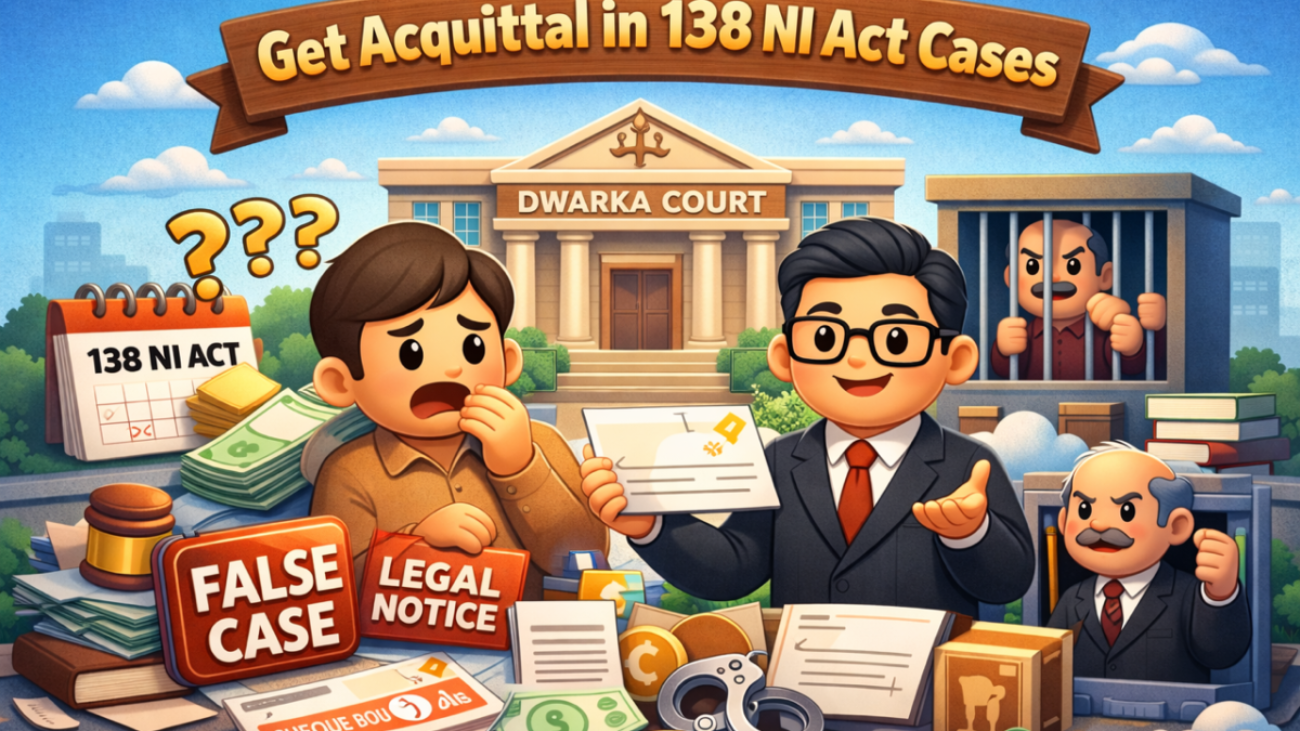
How to Contest False Cheque Bounce Cases & Get Acquittal with the Help of an Experienced Advocate

Cheque bounce cases under Section 138 of the Negotiable Instruments Act (NI Act) are among the most commonly filed criminal complaints in Dwarka Court, Delhi. Every day, accused persons come to court with fear, confusion, and one common sentence:

“Sir, humne blank cheque diya tha. Saamne wali party ne misuse karke apni marzi se amount bhar diya aur 138 NI Act ka case kar diya. Ab hum kya kare?”

If you are facing a similar situation, don’t panic. A cheque bounce case is defendable, and with the right legal strategy and an experienced advocate, acquittal is very much possible.

With my 18+ years of experience in criminal litigation, especially in 138 NI Act cases at Dwarka Court, I am writing this digital guide to help accused persons understand how these cases work, how to contest them, and how false cases can be defeated legally.

Understanding Section 138 NI Act ⚖️

A case under Section 138 NI Act is filed when:

✔ A cheque is presented for payment

✔ The cheque is dishonoured

✔ A legal notice is sent within time

✔ Payment is not made within 15 days

However, not every cheque bounce leads to conviction. The law itself provides several legal defenses.

Common Reality of False 138 NI Act Cases 🚨

In Dwarka Court, we often see cases where:

  • Blank cheques were given as security
  • Cheques were issued for loan talks that failed
  • Amount was filled later without consent
  • No legally enforceable debt existed
  • Cheque was misused after business disputes

⚠️ Law presumes liability, but presumption is rebuttable. This is where experience matters.

How an Accused Can Get Acquittal in 138 NI Act Cases ✅

🔹 1. No Legally Enforceable Debt

The complainant must prove that:

  • A real debt existed
  • The amount mentioned is correct
  • The cheque was issued towards that liability

If the debt itself is doubtful, acquittal is possible.

🔹 2. Blank Cheque Misuse – A Strong Defence

Giving a blank cheque does not automatically mean guilt.

We challenge:

✔ Source of alleged loan

✔ Mode of payment (cash/bank proof)

✔ Financial capacity of complainant

✔ Why amount was not mentioned earlier

Courts in Dwarka regularly grant relief when misuse is established.

🔹 3. Defective Legal Notice 📩

Many cases fail because:

  • Notice not served properly
  • Wrong address
  • Incorrect amount
  • Notice beyond limitation

A technical defect can lead to dismissal.

🔹 4. Contradictions in Complainant’s Evidence

Cross-examination is the heart of 138 NI Act defence.

We expose:

✔ Inconsistencies in statements

✔ False affidavits

✔ Missing documents

✔ Fabricated stories

An experienced advocate knows what to ask and when to ask.

🔹 5. Rebutting Presumption under Law

Presumption under Sections 118 & 139 NI Act can be rebutted by:

  • Probable defence
  • Circumstantial evidence
  • Conduct of complainant
  • Documentary proof

You don’t need to prove innocence beyond doubt—only raise reasonable doubt.

Why Experience in Dwarka Court Matters 🏛️

Every court has its own working style. An advocate regularly practicing in Dwarka District Court understands:

✔ Magistrate-wise approach

✔ Local police procedures

✔ Filing practices

✔ Speedy disposal strategies

With 18+ years of continuous criminal practice, I have handled hundreds of 138 NI Act cases—from trial to acquittal to compounding.

How We Assist Our Clients 👥

✔ Case analysis before first appearance

✔ Proper reply to legal notice

✔ Strategic cross-examination

✔ Drafting of defence applications

✔ Regular updates & transparent advice

✔ Reasonable and clear fee structure

Our focus is not false assurance but realistic solutions.

Visit Our Chamber for Proper Legal Guidance 📍

If you are facing a false 138 NI Act case in Dwarka Court, meet us personally after a prior appointment.

🏛 Chamber Address:

Chamber No. 728, 7th Floor

District Court Dwarka, New Delhi – 110075

📞 Contact / WhatsApp:

9899085554 | 9811885554

Final Advice to Accused Persons ⚠️

❌ Do not ignore summons

❌ Do not rely on hearsay advice

❌ Do not panic or settle blindly

✔ Take early legal advice

✔ Prepare defence properly

✔ Trust an experienced 138 NI Act advocate

False cases can be fought. Acquittals are achievable.

All you need is the right legal strategy at the right time.

Blog by :-

Ankit Gaurav Kainth, Advocate, Chamber No.728, District Court Dwarka, Sector-10, New Delhi

Regards
advocate-in-dwarka-court

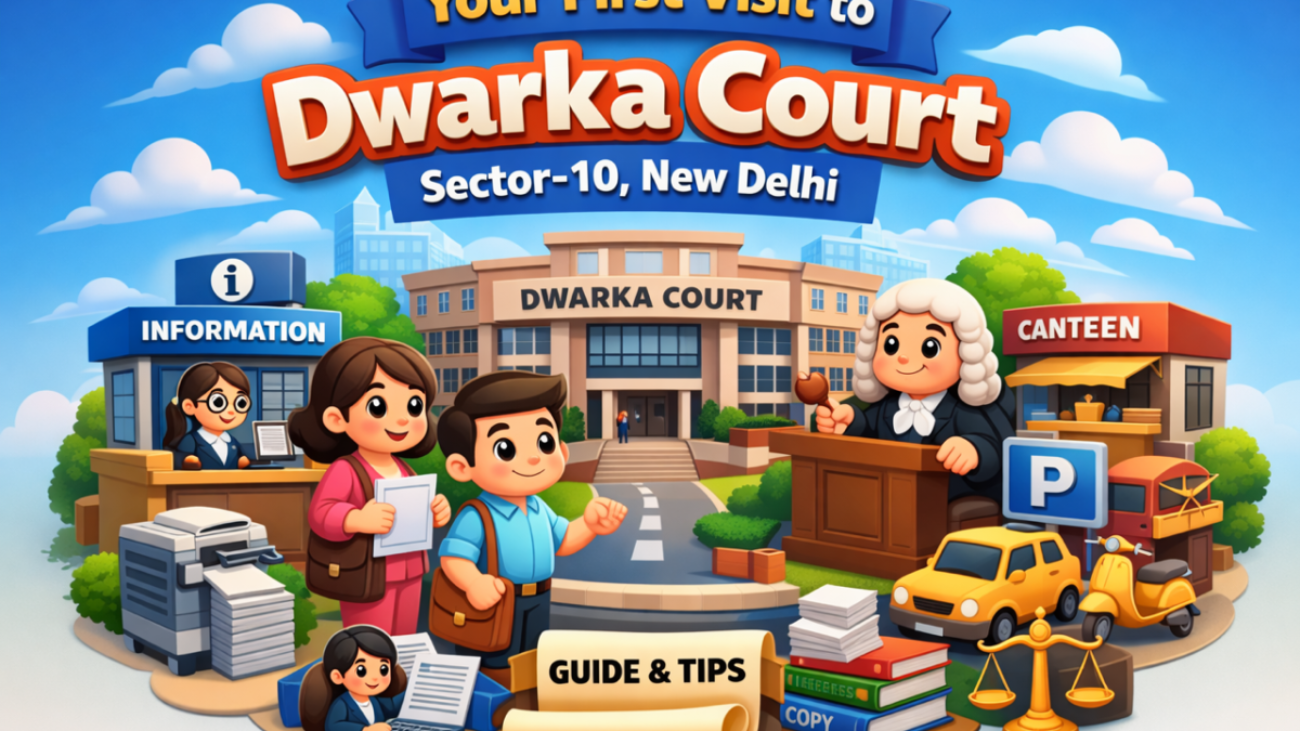
🏛️ Coming First Time to District Court Dwarka, Sector-10, New Delhi?

Complete Guide on How to Reach, Facilities, Judges, Lawyers’ Chambers & FAQs

Visiting a court for the first time can be stressful and confusing. District Court Dwarka, Sector-10, New Delhi is one of the largest and busiest district courts in Delhi. Every day, thousands of litigants, lawyers, witnesses, and visitors come here for civil, criminal, family, matrimonial, cheque bounce, bail, property, and other legal matters.

This complete guide will help you understand how to reach Dwarka Court, where to ask questions, court facilities, parking, food, lawyers’ chambers, types of judges, and FAQs for first-time visitors.


📍 Location of District Court Dwarka

Address:
District Court Complex, Sector-10, Dwarka, New Delhi – 110075

It is strategically located near residential and commercial sectors of Dwarka and is well connected by road and metro.


🚇 How to Reach District Court Dwarka

✔️ By Metro

  • Nearest Metro Station: Dwarka Sector-10 (Blue Line)
  • From the metro exit, the court complex is within walking distance (5–7 minutes).

✔️ By Car / Taxi

  • Easily accessible via Dwarka Link Road.
  • App-based cabs (Ola, Uber) and autos are readily available.

✔️ By Bus

  • DTC buses frequently stop near Dwarka Sector-10 & Sector-9.

👉 Tip: Always reach at least 30–45 minutes early to avoid security and entry delays.


🅿️ Parking Facility

🚗 Parking is available inside the court complex, but it often gets full during peak hours.

  • Two-wheelers & four-wheelers allowed
  • Limited parking space
  • Paid parking system

👉 Advice: Prefer metro or reach early if coming by car.


🔍 Where to Ask Questions in Dwarka Court

🧭 Facilitation Centre

This is the most important place for first-time visitors.

You can:

  • Ask about your court number
  • Find case status
  • Get help with filing counters
  • Get directions to courtrooms

📌 Located near the main entry.


🧑‍⚖️ Understanding District Court Dwarka

🏢 Court Structure

The Dwarka Court Complex has:

  • Multiple court buildings
  • Ground + multiple floors
  • Separate blocks for different courts

Each court is clearly numbered (Court No. 1, 2, 3…).


⚖️ Types of Judges in Dwarka Court

You may encounter different judges depending on your case:

  • 👨‍⚖️ District Judge (DJ)
  • 👩‍⚖️ Additional District Judge (ADJ) – Civil, Commercial, Family matters
  • 👨‍⚖️ Metropolitan Magistrate (MM) – Criminal cases
  • 👩‍⚖️ Chief Metropolitan Magistrate (CMM)
  • 👨‍⚖️ Family Court Judges
  • 👩‍⚖️ Special Courts – NI Act (Cheque Bounce), MACT, NDPS etc.

👉 Your case type decides the judge and court.


🧑‍💼 Lawyers’ Chamber Block

🏢 Dwarka Court has a dedicated Lawyers’ Chamber Block.

Importance of Chamber:

  • Easy availability of your advocate
  • Case discussion in privacy
  • Quick filing & coordination
  • Better court connectivity

👉 Always prefer an advocate having a chamber in Dwarka Court itself.


🖨️ Photocopy, Typing & Documentation Facilities

Inside the court complex, you will find:

  • 📄 Photocopy Shops
  • ⌨️ Typing Pool
  • 🖨️ Printing & Scanning services
  • 📝 Affidavit & drafting assistance

These are essential for last-minute court requirements.


📚 Library Facility

📖 The Dwarka Court Library is available for advocates.

  • Law books
  • Bare Acts
  • Latest judgments
  • Research material

Clients usually do not access the library, but it strengthens legal preparation by advocates.


🍽️ Canteen & Food Facilities

🥗 The court complex has:

  • Central canteen
  • Tea, coffee, snacks
  • Affordable meals

👉 Outside the court, many food joints and cafes are also available in Sector-10.


🧑‍🤝‍🧑 Common Bar Room

⚖️ Common Bar Rooms are meant for advocates:

  • Meeting colleagues
  • Case discussions
  • Short breaks between hearings

❓ FAQs for Clients Visiting Dwarka Court First Time

❓ Is it necessary to bring ID proof?

✔️ Yes, always carry Aadhaar / Voter ID / PAN.

❓ What should I wear?

✔️ Decent, formal, and respectful clothing is advised.

❓ Can I meet the judge directly?

❌ No. Communication happens only through your advocate.

❓ How will I know my court number?

✔️ Check:

  • Cause list outside courts
  • Online e-courts website
  • Facilitation Centre
  • Ask your advocate

❓ Can I use mobile phone inside?

✔️ Yes, but silent mode only. Photography is strictly prohibited.

❓ How long will my case take?

✔️ It depends on:

  • Nature of case
  • Stage of proceedings
  • Court workload

❓ Should I come alone or with advocate?

✔️ Always consult and come with your advocate, especially on important dates.


🧠 Final Advice for First-Time Visitors

✔️ Reach early
✔️ Stay calm and patient
✔️ Follow security rules
✔️ Trust professional legal advice
✔️ Do not rely on strangers or touts


🔑 Conclusion

District Court Dwarka, Sector-10, New Delhi is well-organized and client-friendly if you understand its structure and facilities. Knowing how to reach, where to ask questions, court layout, judges, chambers, and FAQs will make your first visit smooth and stress-free.

👉 A well-informed client is always better prepared for justice ⚖️

https://share.google/HxI8np1JelHMJ91IB

492518A9-C5E1-4849-9021-F26DABB794E8

How to Search the Best Advocate in Dwarka Court, Sector-10, Delhi?

A Practical & Experienced Client Guide by Advocate in Dwarka Court who is dealing in Civil, Criminal and Matrimonial cases from more than 18+ years in District court Dwarka, New Delhi.

Choosing the right advocate is one of the most crucial decisions in any legal dispute. Whether your matter relates to civil litigation, criminal defence, cheque bounce, matrimonial disputes, property matters, or commercial cases, the quality of legal representation directly affects the outcome. Dwarka Court, Sector-10, New Delhi is one of the busiest district courts in Delhi, housing multiple courts and thousands of advocates. For a client, this abundance often creates confusion rather than clarity.

This guide explains how a client can genuinely identify the best advocate in Dwarka Court, based on practical parameters and what 18+ years of court experience truly reveals.

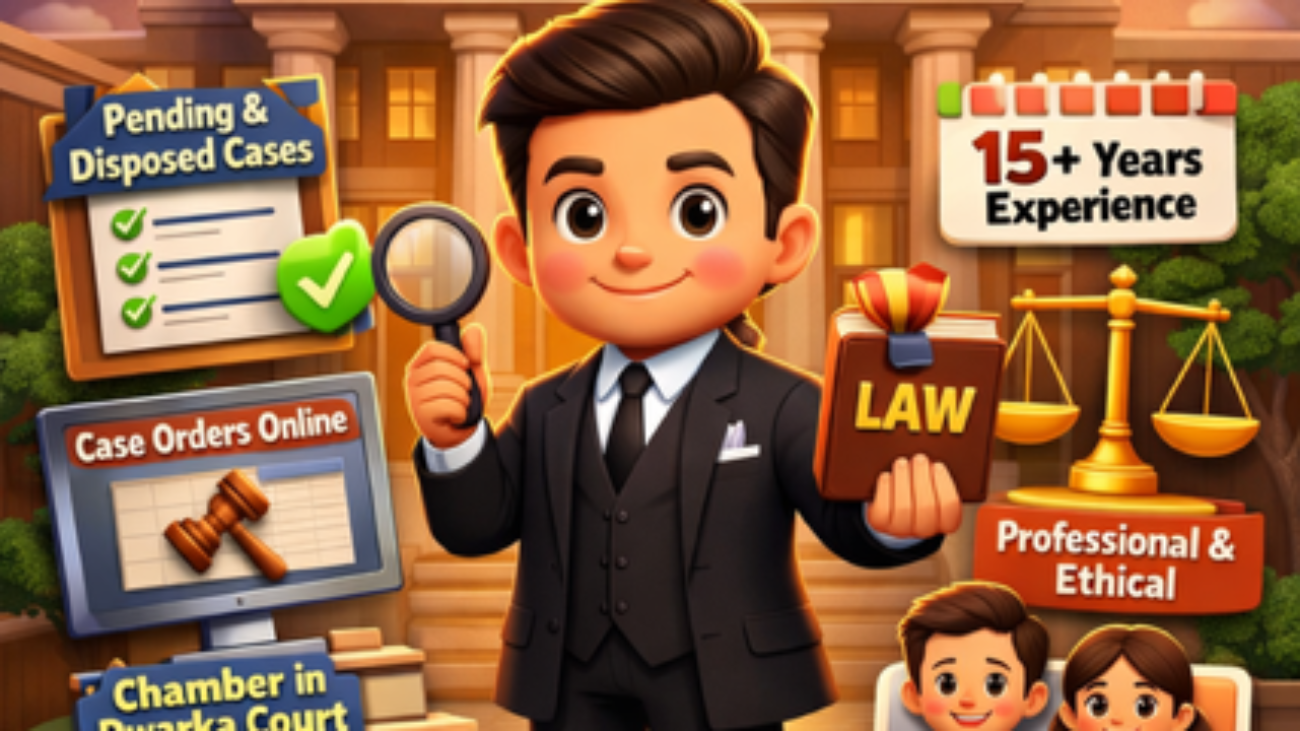
1. Check Advocate’s Pending & Disposed Cases in Dwarka Court

Before engaging any advocate, clients should verify their pending and disposed-off cases through the official eCourts portal. An advocate who regularly appears in Dwarka Court will have a visible litigation footprint. Disposed cases reflect courtroom experience, while pending matters show ongoing practice and engagement.

👉 What 18+ years of experience says:

A seasoned advocate maintains a balanced docket—neither overloaded nor inactive—ensuring proper attention to each case.

2. Review Previous Case Orders & Judgments

Clients should search for previous case orders argued by the advocate. These orders reveal the advocate’s drafting skills, understanding of law, and ability to persuade the court. Well-reasoned orders in favour of clients reflect sound legal strategy.

👉 Experience insight:

Judgments don’t lie. Years in court teach that solid preparation and legal clarity leave a permanent mark in judicial orders.

3. Advocate’s Chamber & Office Should Be in Dwarka Court

An advocate having a chamber and office within Dwarka Court, Sector-10 offers significant advantages—easy accessibility, regular court presence, familiarity with court staff, filing counters, and procedural nuances.

👉 From experience:

Local presence saves time, avoids delays, and ensures better coordination—especially during urgent hearings.

4. Prefer 15+ or 18+ Years of Experience

Experience matters immensely in litigation. An advocate with 18+ years of experience has witnessed changes in law, judicial mindset, procedural reforms, and evolving litigation trends. Such advocates can anticipate challenges before they arise.

👉 What 18+ years teaches:

Law is not just sections—it is timing, presentation, patience, and strategy. Experience teaches when to argue, when to negotiate, and when to wait.

5. Team Strength & Office Infrastructure

Modern litigation demands teamwork. A strong legal team ensures timely filings, research support, case tracking, and effective client communication. Team strength reflects the advocate’s seriousness and professionalism.

👉 Practical wisdom:

Behind every successful court argument is a prepared team working in coordination.

6. Professionalism, Ethics & Transparency

Clients must observe the advocate’s professional conduct—punctuality, clear advice, transparency in fees, and ethical practice. Avoid advocates who guarantee results or mislead clients.

👉 Experience lesson:

Honest advice, even if difficult, protects clients in the long run and builds lasting trust.

7. Specialization in Your Type of Case

Not every advocate handles every type of matter with equal expertise. Clients should choose advocates specializing in their legal issue—civil suits, criminal defence, matrimonial disputes, cheque bounce cases, property matters, etc.

👉 Court reality:

Specialization improves efficiency, confidence, and success rate.

8. Client Reviews & Reputation

Online reviews, word-of-mouth references, and courtroom reputation matter. An advocate respected by peers and judges reflects credibility and consistent conduct.

👉 Experience speaks:

Reputation is earned case by case, year by year—never overnight.

9. Communication & Regular Case Updates

A good advocate keeps clients informed, explains legal developments in simple language, and remains accessible for queries.

👉 From long practice:

Clients don’t fear cases—they fear uncertainty. Clear communication reduces stress and builds confidence.

Conclusion

Searching for the best advocate in Dwarka Court, Sector-10, Delhi requires careful evaluation—not impulse decisions. Checking case records, experience, professionalism, local presence, and ethical conduct ensures that your legal matter is handled competently.

An advocate with 18+ years of experience understands not only the law, but the courtroom, the system, and the client’s expectations. Such experience transforms legal representation from mere advocacy into strategic guidance.

Make an informed choice—because your case deserves nothing less than experience, integrity, and dedication.

https://www.linkedin.com/embed/feed/update/urn:li:share:7411035000114098177

image0-10

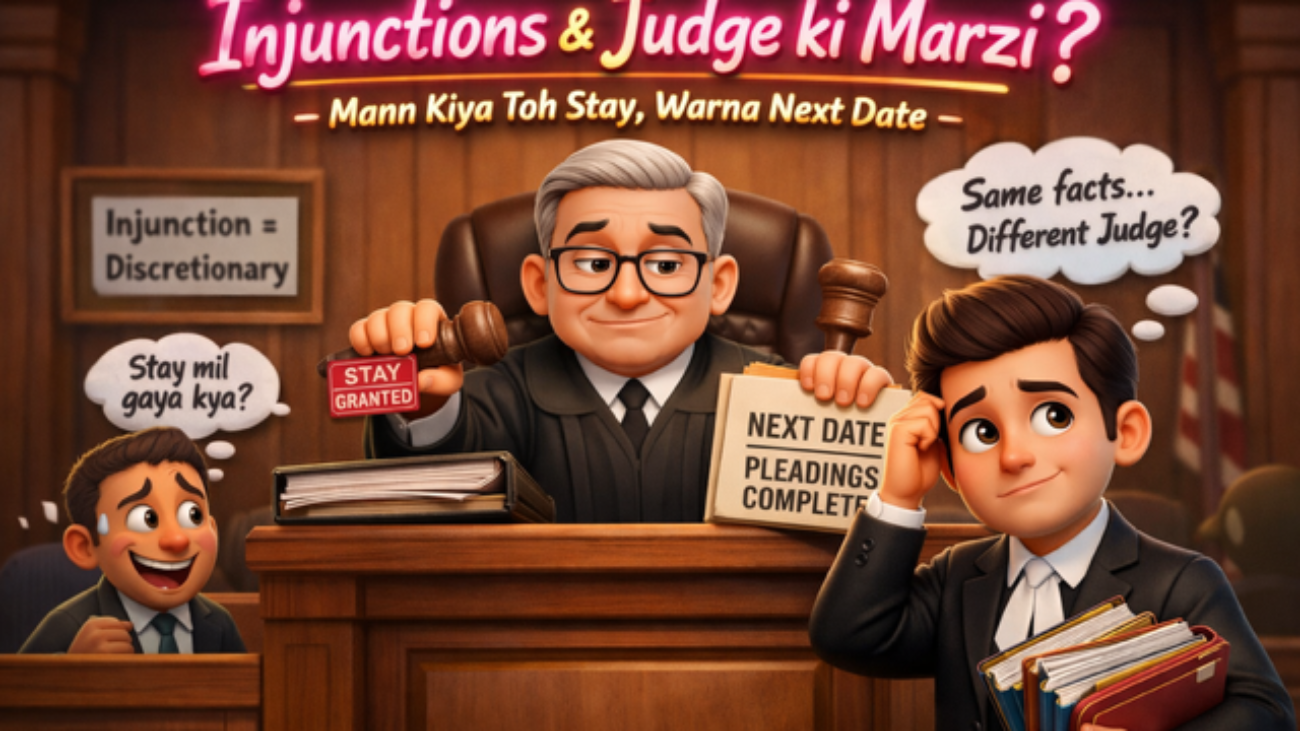
Injunctions & Judge ki Marzi? In Dwarka Court…

“Mann Kiya Toh Stay, Warna… Next Date Par Dekhte Hain” ⚖️😄

(Insights from 18+ years of courtroom experience)

Civil courts mein agar sabse zyada suspense kisi cheez ka hota hai, toh woh hai — temporary injunction.

Client ke liye ye oxygen hoti hai, advocate ke liye acid test, aur Judge ke liye… ek pure discretion ka exercise.

18+ saal court mein practice karne ke baad main itna zaroor keh sakta hoon —

👉 Injunction koi automatic right nahi hai.

👉 Jaise bail discretionary hoti hai, waise hi stay bhi discretionary hota hai.

Par ground reality ko thoda honest aur thoda humorous tareeke se samajhna zaroori hai.

“Same Facts, Same Law… Bas Judge Alag”

Kabhi aisa hota hai ki:

  • Strong prima facie case
  • Clear balance of convenience
  • Irreparable loss clearly shown

Aur phir bhi Judge sahab calmly bol dete hain:

🗣️ “Pehle pleadings complete karo.”

Aur kabhi bilkul wahi facts, wahi case law, wahi urgency…

🗣️ “Till next date, status quo be maintained.”

Yahin se young lawyers ke mann mein pehla bada sawal paida hota hai:

“Law badal gaya ya Judge ka approach?”

Sach ye hai ki law same rehta hai, par judicial temperament differ karta hai.

Koi Judge status quo dene mein comfortable hota hai, koi misuse se itna concerned hota hai ki stay dena last option bana deta hai.

Injunction bhi Bail jaisi hi hai

Jaise bail mein Judge dekhte hain:

  • Liberty vs investigation
  • Gravity of offence
  • Possibility of misuse

Waise hi injunction mein dekha jata hai:

  • Rights vs restraint
  • Urgency vs misuse
  • Equity vs equity

Isliye ye maanna galat hai ki “stay toh milna hi chahiye.”

Court ka perspective hota hai:

👉 “Agar maine stay de diya aur suit hi misuse nikla toh?”

Order Padhkar Kabhi-kabhi Advocate Bhi Sochta Hai…

Kabhi order aata hai aur usme likha hota hai:

📄 “Learned counsel has argued that…”

Aur advocate quietly apne junior se poochta hai:

“Maine ye argue kiya tha kya?” 😄

Yeh koi disrespect nahi, balki judicial writing ka practical side hai. Judge har submission ko apne judicial lens se summarize karta hai. Advocate ko yahan ego nahi, clarity aur maturity rakhni chahiye.

Clients ki Expectations vs Court ki Reality

Client ko lagta hai injunction ek switch hai:

🟢 File karo → Press karo → Stay mil gaya

Reality mein:

🔴 Judge bole: “Notice issue karo”

🔴 “Reply aane do”

🔴 “Next date”

Aur wo “next date” aksar client ke liye emotional test ban jaati hai.

Yahin advocate ka role sirf arguing ka nahi hota, balki expectation management ka hota hai.

18+ saal ke experience se ye seekha hai ki:

👉 Jo advocate pehle din hi client ko reality bata deta hai, wahi long-term trust bana pata hai.

My Balanced Suggestions from Experience

Is article ka maksad system ko blame karna nahi, balki system ko samajhna hai.

✔ For Young Advocates:

  • Har injunction application ko emergency surgery mat samjhiye
  • Judge ki approach, roster aur past trend ko samjhiye
  • Stay na mile toh confidence lose mat kijiye

✔ For Clients:

  • Injunction guarantee nahi hoti
  • Judge aapke dard se zyada systemic balance dekhta hai
  • Advocate ki advice par patience rakhiye

✔ For Drafting & Arguments:

  • Over-dramatization avoid karein
  • Facts ko clean, crisp aur honest rakhein
  • Har cheez ko “irreparable loss” batane se credibility kam hoti hai

Judge ki Marzi? Ya Judicial Conscience?

Courtroom ke bahar hum mazaak mein bol dete hain —

“Judge ki marzi.”

Par sach ye hai ki ye marzi bhi law ke framework ke andar hoti hai.

Judges bhi pressure, pendency aur misuse ke darr ke saath decisions lete hain.

Isliye jab stay na mile:

👉 Order ko samjhiye

👉 Next strategy banaiye

👉 Aur yaad rakhiye — aaj nahi toh kal

Conclusion

Civil litigation ka ye sach accept karna zaroori hai:

  • Injunction ek relief hai, entitlement nahi
  • Discretion ka matlab arbitrariness nahi hota
  • Har “No” final nahi hota

Aur jab next time court se bahar nikalte hue Judge bolein:

🗣️ “Next date par dekhenge”

Toh muskuraiye aur sochiye:

“Shayad next date kisi aur mood mein mil jaaye.” 😄⚖️

That’s litigation. That’s experience. And that’s the real court practice.

🔍 

Search Titles

  • Injunctions in Civil Cases: Judge’s Discretion Explained
  • Temporary Injunctions in India: Legal Reality vs Expectations
  • Why Stay Orders Are Discretionary in Civil Courts
  • Injunction & Bail: Understanding Judicial Discretion
  • Practical Guide on Temporary Injunctions by Senior Advocate

🏷️ 

Hashtags

#Injunction #TemporaryInjunction #CivilLitigation

#JudgeDiscretion #CourtPractice #IndianCourts

#AdvocateLife #LegalHumour #LitigationReality

#StayOrder #LegalExperience #LawPractice

Follow us on LinkedIn :-

https://www.linkedin.com/embed/feed/update/urn:li:share:7408907770810421248

image0-8

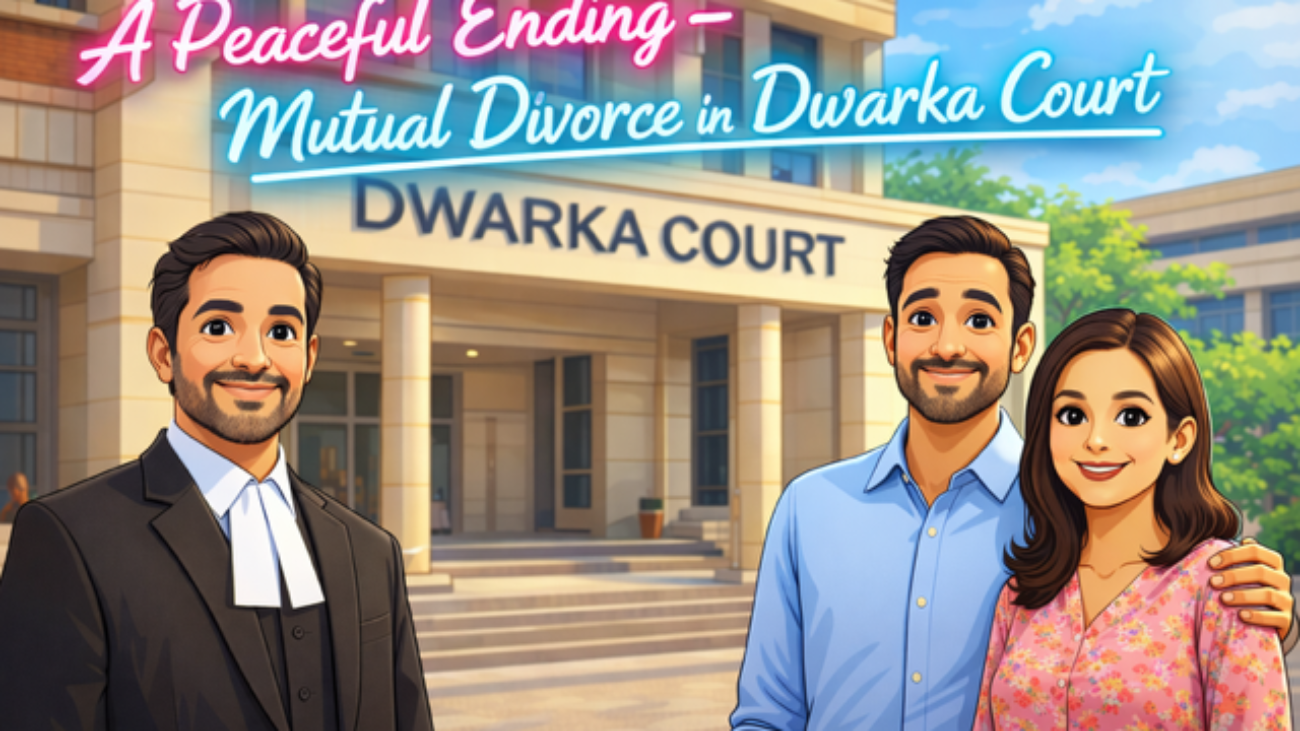
How to Take Mutual Divorce in District Court, Dwarka (Sector-10), New Delhi

A Step-by-Step Practical Guide by an Advocate with 18+ Years of Experience

(Family Court Lawyer in Dwarka)

Introduction

Marriage is a sacred institution, but when two individuals realize that living together has become impossible, the law provides a dignified and peaceful exit through Mutual Divorce. In my 18+ years of practice as a Family Court lawyer in Dwarka Courts, I have seen that mutual consent divorce is the fastest, least painful and most respectful way to end a marriage when both spouses agree.

This guide is specially written for clients and young advocates who are searching for clear, reliable and practical information on how to file and obtain a mutual divorce in District Court, Dwarka, Sector-10, New Delhi.

What is Mutual Divorce?

Mutual divorce is governed by Section 13-B of the Hindu Marriage Act, 1955 (similar provisions exist under other personal laws). It means that both husband and wife jointly agree that they can no longer live together and mutually decide to dissolve the marriage.

Key features:

  • No allegations or blame game
  • Faster disposal
  • Minimal emotional stress
  • Confidential and amicable process

Jurisdiction of District Court, Dwarka (South-West), New Delhi

The District Court Dwarka, Sector-10 has jurisdiction over matters arising from the South-West District of Delhi.

Areas Covered Under Dwarka Courts (South-West Delhi):

  • Dwarka (all Sectors)
  • Palam
  • Dabri
  • Najafgarh
  • Kapashera
  • Mahipalpur
  • Vasant Kunj (parts falling in South-West)
  • Bindapur, Uttam Nagar (relevant areas)

A mutual divorce petition can be filed in Dwarka Court if:

  • Marriage was solemnized within this jurisdiction, or
  • Either spouse is residing here, or
  • Parties last resided together within this jurisdiction

Who Can File for Mutual Divorce?

A petition for mutual divorce can be filed when:

  1. Husband and wife are legally married
  2. They have been living separately for at least one year
  3. They have mutually agreed that the marriage should be dissolved
  4. There is a complete settlement regarding:
    • Permanent alimony/maintenance
    • Child custody & visitation
    • Return of stridhan
    • Withdrawal of other cases (if any)

When Can Mutual Divorce Be Filed?

  • After one year of separation (physical or constructive)
  • At any stage after marriage if both parties genuinely agree
  • Even if other matrimonial or criminal cases are pending (subject to settlement)

Step-by-Step Procedure of Mutual Divorce in Dwarka Court

Step 1: Consultation & Settlement

Both parties consult a family lawyer and settle:

  • Alimony/one-time settlement
  • Custody and education of children
  • Return of articles and jewellery

Step 2: Drafting of First Motion Petition

A joint petition under Section 13-B(1) is drafted mentioning:

  • Date and place of marriage
  • Period of separation
  • Reasons for breakdown of marriage
  • Terms of settlement

Step 3: Filing in Family Court, Dwarka

The petition is filed in the Family Court, Dwarka (Sector-10) with affidavits of both parties.

Step 4: First Motion Statements

Both spouses appear before the Judge and confirm:

  • Free consent
  • No coercion or pressure

The court records statements and fixes a date for second motion.

Step 5: Cooling-Off Period

Statutory period of 6 months (can be waived in deserving cases).

Step 6: Second Motion Petition

After the cooling-off period, Section 13-B(2) petition is moved.

Step 7: Final Statements & Decree

After recording statements, the court grants the Decree of Divorce by Mutual Consent.

Can the 6-Month Cooling Period Be Waived?

Yes. Courts may waive the cooling-off period if:

  • Parties have already lived separately for long
  • All disputes are settled
  • There is no chance of reconciliation

Important Supreme Court Judgments (Supra)

Amardeep Singh v. Harveen Kaur, (2017) 8 SCC 746

Extract:

Cooling-off period under Section 13-B(2) is directory, not mandatory, and can be waived to do complete justice.

Sureshta Devi v. Om Prakash, (1991) 2 SCC 25

Extract:

Consent must continue till the decree is passed; either party may withdraw consent before final order.

Hitesh Bhatnagar v. Deepa Bhatnagar, (2011) 5 SCC 234

Extract:

Mutual consent should be free, voluntary and subsisting till second motion.

Documents Required for Mutual Divorce in Dwarka Court

  1. Marriage Certificate / Proof of Marriage
  2. Address Proof of both parties
  3. Identity Proof (Aadhaar, Passport, Voter ID)
  4. Photographs of marriage
  5. Details of children (if any)
  6. Settlement Agreement
  7. Income proof (if required for alimony)

Practical Tips from 18+ Years of Experience

  • Always opt for clear written settlement
  • Avoid emotional delays between first and second motion
  • Ensure compliance of settlement terms before final decree
  • Appear personally unless exempted by court

Why Mutual Divorce is the Best Option

✔ Faster (sometimes within 2–3 months with waiver)

✔ Cost-effective

✔ Preserves dignity of both parties

✔ Less burden on courts and families

Conclusion

Mutual divorce is not a failure; it is a mature legal solution when a marriage has irretrievably broken down. District Court, Dwarka (Sector-10), provides an efficient and sensitive forum for resolving such disputes. With proper legal guidance, the process can be smooth, respectful and swift.

Search Titles

  • Mutual Divorce Procedure in Dwarka Court
  • How to File Mutual Divorce in Dwarka Sector-10
  • Family Court Lawyer Dwarka Mutual Divorce Guide
  • Section 13B Mutual Divorce Delhi
  • Mutual Consent Divorce in South-West Delhi

Hashtags

#MutualDivorce

#DwarkaCourt

#FamilyCourtDwarka

#Section13B

#DivorceByMutualConsent

#SouthWestDelhi

#FamilyLawyer

#DelhiAdvocate

#MarriageLaw

Follow us on LINKEDIN for more updates:-

https://www.linkedin.com/embed/feed/update/urn:li:share:7408423003769741312

image0-6

Clients’ Most Common Questions About Advocate Fees – A Clear & Honest Guide from 18+ Years of Dwarka Court Practice 

Follow us on X

<blockquote class=”twitter-tweet” data-media-max-width=”560″><p lang=”zxx” dir=”ltr”><a href=”https://t.co/7zh4vLzihH”>https://t.co/7zh4vLzihH</a><br> <a href=”https://t.co/nShyCSZrHN”>https://t.co/nShyCSZrHN</a></p>&mdash; Ankit Gaurav Kainth &amp; Associates (Advocate dwarka) (@ankitkainthadv) <a href=”https://twitter.com/ankitkainthadv/status/2000547348821500215?ref_src=twsrc%5Etfw”>December 15, 2025</a></blockquote> <script async src=”https://platform.twitter.com/widgets.js” charset=”utf-8″></script>

Follow us on Instagram

View this post on Instagram

A post shared by Ankit Gaurav Kainth & Associates (@ankit_gaurav_kainth_advocate)

Follow us on Threads

https://www.threads.com/@ankit_gaurav_kainth_advocate/post/DSSNV4iAXDGzgssxyGJ9eoxZMHatEdZA1NaEa00?xmt=AQF0DNuWa6lM2MkPNNlWMOfMfvisJjpyF1aLY1RI1lwMfw

B5D98C5B-F044-4470-B850-8F20BBDF0AD9

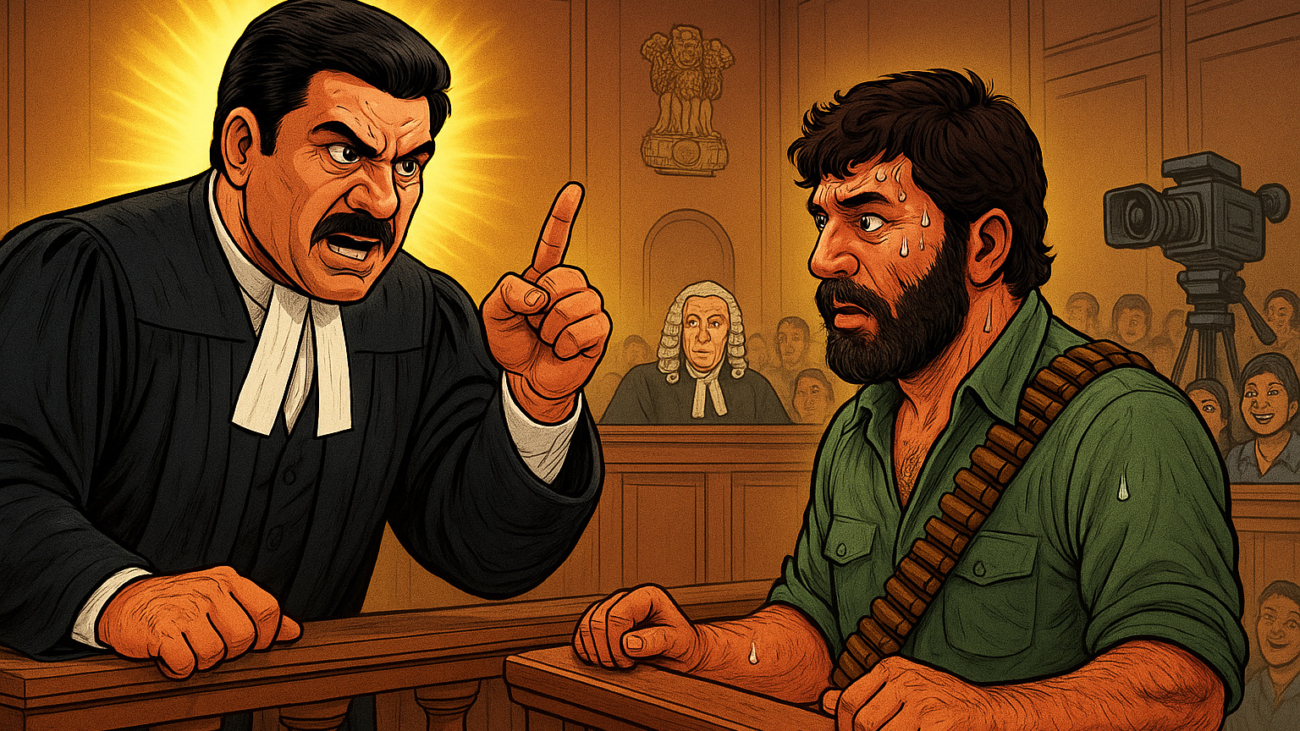
⚖️ How Advocates Can Grill a Police Officer Misusing His Position in Dwarka Court, New Delhi

https://www.linkedin.com/embed/feed/update/urn:li:share:7366460135499628545

⚖️ How Advocates Can Grill a Police Officer Misusing His Position

The uniform of a police officer represents law and order, but unfortunately, some misuse this sacred duty. From forcing illegal settlements inside the police station, demanding bribes to “close” cases, destroying or hiding evidence, or even beating an accused in custody — such acts are not only immoral but illegal.

An advocate’s role is not just to defend the client but also to ensure that misuse of police power is exposed in court. Here are effective strategies:


📜 1. Know the Legal Arsenal
• IPC Provisions:
• Sec. 166 IPC – Public servant disobeying law with intent to cause injury.
• Sec. 201 IPC – Causing disappearance of evidence.
• Sec. 323/325 IPC – Assault on accused in custody.
• Sec. 383 IPC – Extortion by threat.
• CrPC Provisions:
• Sec. 154 – Mandatory registration of FIR.
• Sec. 161/162 – Recording and use of witness statements.
• Sec. 172 – Case diary – defence can cross-check if officer uses it.
• Constitutional Safeguards:
• Art. 21 – Protection of life and liberty.
• D.K. Basu Guidelines – Mandatory safeguards in arrests and detention.


🛡️ 2. Cross-Examination in Court

A corrupt officer’s weakest point is his record. During trial:
• Confront him with contradictions between the FIR, case diary and charge sheet.
• Ask why material evidence/witness statements were omitted.
• Highlight any illegal “settlement” attempt – this shows abuse of power.
• Expose custody violence by producing medical reports, injury photographs, or witness testimony.
• Demand CCTV footage of the police station/cell (mandated in law).

Remember, courts take procedural lapses seriously. A single inconsistency can demolish an officer’s credibility.


📝 3. Filing Complaints Against Misuse

Beyond the courtroom, advocates should document and report misconduct:
• Lodge complaints with the Station House Officer, insist on DD entry.
• Escalate to Superintendent of Police or Commissioner.
• File before the State Police Complaints Authority or NHRC/SHRC for custodial torture, extortion, or illegal detention.
• Move the Magistrate under Sec. 190 CrPC for cognizance of offences committed by police officials.
• File RTI applications to obtain records and expose delays or tampering.


🔍 4. Practical Tips to “Grill” a Cop
• Always insist on case diary inspection if officer relies on it.
• Use independent witnesses and medical evidence to counter false police versions.


🌟 Conclusion

A police officer misusing his position is not above law. The courtroom is where truth meets record — and an advocate can ensure that corruption is grilled, exposed, and punished. By combining sharp cross-examination, solid documentation, and proper complaints, you not only protect your client but also safeguard the integrity of the justice system.


hashtag#Advocates hashtag#PoliceMisuse hashtag#CriminalLaw hashtag#Justice hashtag#Courtroom hashtag#Lawyers

image0-6

Clients’ Most Common Questions About Advocate Fees – A Clear & Honest Guide from 18+ Years of Dwarka Court Practice ⚖️

💬 “Sir, how much will you charge?”
💬 “Do we need to pay the entire fee at one go?”
💬 “Can we pay in parts?”

These are the most common and genuine questions I have heard from my clients over the last 18+ years of practice in Civil & Criminal matters before District Courts, including Dwarka Court, New Delhi.

Unfortunately, many clients have suffered due to lack of clarity about advocate fees, vague commitments, or paying the entire fee upfront—only to later realise that the advocate stops responding, loses interest, or fails to attend hearings regularly. With no option left, clients are forced to engage another experienced advocate and pay fees all over again.

This article is written to clear doubts, protect clients, and guide both new clients and those who have had bad past experiences, before engaging an advocate for any civil or criminal case.


📍 Always Choose the Right Court-Based Advocate

One of the biggest mistakes clients make is engaging an advocate not based in the court where the case is filed.

👉 For example, appointing an advocate whose main practice is in Tis Hazari Court, while your case is pending or to be filed in Dwarka Court.

🔹 Such advocates often fix dates as per their own convenience
🔹 Frequent travel affects availability
🔹 Court presence becomes irregular

✅ Always prefer an advocate who is regularly practicing in the same district court where your case is pending—Dwarka Court for Dwarka matters, Tis Hazari for Tis Hazari matters, and so on.


🔍 Research the Advocate’s Practice Area

Before engaging any advocate:

✔️ Ask about the practice area (Civil / Criminal / Matrimonial / Property / NI Act, etc.)
✔️ Enquire about similar cases handled
✔️ Understand whether the advocate personally appears or sends juniors

An experienced advocate in the relevant field will always give you clear answers, not vague assurances.


💼 Advocate–Client Fee Agreement (Most Important Step)

1️⃣ Written Agreement is a Must 📝

Always insist on a written Advocate–Client Fee Agreement.

The agreement should clearly define:

  • Scope of work
  • Duration of representation
  • Nature of proceedings
  • Fee structure

⚠️ Many disputes arise because these basics are never discussed.

Usually, a Vakalatnama covers representation for about 3 years. If this is not discussed beforehand, clients later feel shocked when fresh fees are demanded.


2️⃣ Miscellaneous Applications & Replies

Clarify in advance:

  • Whether miscellaneous applications
  • Replies, rejoinders, written arguments

are included in the agreed fee or chargeable separately.


3️⃣ Appellate Proceedings (Appeal / Revision)

Very important ❗
If you are dissatisfied with a lower court order:

  • Appeal
  • Revision
  • Petition

👉 These are separate proceedings and separate fees apply.
This must be discussed clearly at the beginning.


💰 Fee Structure, Payment Schedule & Receipts

This is where most clients suffer.

✔️ My Practical Suggestion (Client-Friendly Model)

💡 Never pay 100% fee upfront.

📌 Example:

  • Total agreed fee: ₹1,00,000/-
  • Advance payment: 25%–30% (₹25,000–₹30,000)
  • Remaining amount: Per-hearing basis

📅 For instance:

  • ₹5,000/- per hearing
  • Till the total reaches ₹1,00,000/-

Why this works best?

✅ Advocate remains actively involved
✅ Client sees advocate present on every date
✅ Continuous professional motivation
✅ Healthy and transparent relationship

This system ensures accountability on both sides.

📄 Always insist on payment receipts.


📎 Miscellaneous Expenses – Discuss in Writing

Clarify whether the following are included or extra:

🖨️ Photocopy & printing
💾 USB / Scanning
🌐 Translation charges
🚕 Travel / Police Station visits
📮 Postal / Process fee
🧑‍⚖️ Expert / Transcription charges

Nothing should come as a surprise later.


⚖️ Default, Jurisdiction & Dispute Resolution

Your agreement should mention:

  • Event of default
  • Jurisdiction (Civil Court / Arbitration)
  • Dispute resolution mechanism

This protects both advocate and client.


📞 Repeated Consultation Fees

Clarify:

  • Number of free consultations
  • Charges for repeated or long consultations

Time is valuable—for both sides.


📅 Commencement of Agreement

The agreement must clearly mention:

  • Date of commencement
  • Stage from which services begin

🤝 My Practice Philosophy

In my practice at Dwarka Court, Sector-10, New Delhi, we always execute a proper Advocate–Client Agreement.

Clients entrust us with:

  • Their liberty
  • Their property
  • Their family disputes
  • Their future

This trust must never be broken.

When a client is treated fairly, informed transparently, and represented sincerely—referrals automatically follow. That is how long-term legal practice is built.


🔍 Final Advice for Clients

✔️ Ask questions
✔️ Demand clarity
✔️ Avoid emotional decisions
✔️ Choose experience + transparency

A good advocate doesn’t just fight cases—he protects his client’s peace of mind.


📌 Suggested Blog Title

“Advocate Fees Explained: Common Client Questions Answered by an Experienced Dwarka Court Lawyer ⚖️”


🔎 Titles

  • How Advocate Fees Are Charged in India
  • Do Clients Need to Pay Advocate Fees in Full?
  • Advocate Fee Agreement Explained
  • Best Advocate in Dwarka Court – Fee Structure Guide
  • How to Choose the Right Advocate in Dwarka Court

🏷️ Hashtags

#AdvocateFees
#LegalAwareness
#DwarkaCourtAdvocate
#BestAdvocateInDwarka
#ClientRights
#LegalFeesExplained
#CivilLawyerDwarka
#AnkitGauravKainth

842843F1-4B50-4845-A404-67FB29CA1E5D

Why Having a Local Dwarka Court Advocate Matters More Than a ‘Big Name’ Lawyer

(What Clients Really Want to Know – FAQs Answered)

👨‍⚖️ Choosing the right advocate is not about popularity. It’s about proximity, practice, and performance.

When a legal problem arises, most people instinctively search for a “big name lawyer”—someone famous, senior, or highly advertised. But when your case is filed or pending in Dwarka District Courts, New Delhi, the real question is:

❓ Do you need a famous lawyer—or a lawyer who knows Dwarka Courts inside out?

From years of practice and client interaction, one truth consistently emerges:

👉 A competent local Dwarka Court advocate often delivers better, faster, and more practical results than a distant big-name lawyer.

Let us understand why.

🔍 

1. Ground Reality of Dwarka Courts Matters

Dwarka District Courts are among the largest court complexes in Asia, with multiple courts functioning simultaneously—family courts, criminal courts, civil courts, magisterial courts, MACT, NI Act courts, etc.

A local Dwarka advocate knows:

✅ Which court functions on which day

✅ How each judge prefers arguments

✅ How cause lists actually move

✅ How registry and filing sections work

✅ Court staff procedures and timelines

📌 A big-name lawyer sitting in another district or High Court often depends on juniors or briefed counsel—you become one of many files.

⏱️ 

2. Accessibility & Immediate Action

Legal matters often require urgent presence:

⚖️ Bail applications

⚖️ Stay matters

⚖️ Domestic violence cases

⚖️ Interim reliefs in family disputes

⚖️ Execution or urgent objections

A local Dwarka advocate can:

🕒 Appear at short notice

📄 File documents the same day

📞 Update clients in real time

🏃‍♂️ Handle emergencies personally

A distant “big name” lawyer may not even be available for direct communication.

💰 

3. Cost vs Value – What Are You Really Paying For?

Many clients assume:

“Expensive lawyer = better result”

This is a myth.

💸 Big lawyers charge for reputation, not daily involvement

💸 Clients pay high fees for minimal personal attention

💸 Local coordination is often outsourced

A local Dwarka advocate offers:

✔ Transparent fees

✔ Direct handling of your matter

✔ Better value for money

✔ No unnecessary delegation

⚖️ Justice is not sold by brand names—it is earned by preparation.

🧠 

4. Local Experience Beats Generic Expertise

Law is not only about sections and judgments—it is about application.

A Dwarka-based advocate understands:

📍 Police stations under Dwarka jurisdiction

📍 Local investigation practices

📍 Mediation and counselling centres

📍 Court-annexed settlement culture

📍 Practical outcomes, not just theory

📌 A big-name lawyer may know the law—but a local advocate knows how the law actually works here.

🤝 

5. Client-Advocate Trust & Communication

Clients frequently complain:

❌ “My lawyer never updates me”

❌ “I can’t speak to the main advocate”

❌ “Everything is handled by juniors”

A local advocate builds:

🤝 Personal rapport

🗣 Honest legal advice

📑 Clear explanation of stages

🧭 Realistic expectations

📝 Good advocacy is not about false hope; it’s about honest guidance.

❓ 

Frequently Asked Questions (FAQs)

❓ 

Is a big-name lawyer always better?

No. Reputation does not guarantee involvement. Many cases require daily follow-ups and presence—something local advocates excel at.

❓ 

Can a local Dwarka advocate handle serious cases?

Absolutely. Many Dwarka advocates regularly handle complex criminal, matrimonial, civil, and commercial matters with excellent results.

❓ 

Will a local lawyer be taken seriously by the court?

Yes. Judges value clarity, preparation, and punctuality, not fame.

❓ 

Is hiring a local advocate cheaper?

Often yes—but more importantly, it is cost-effective because you pay for actual work, not just a name.

❓ 

Can a local advocate argue confidently against senior counsels?

Courtrooms are equal grounds. Merit of argument matters, not seniority alone.

⚖️ 

The Final Word

🌟 A “big name” may impress others—but a local Dwarka Court advocate protects you.

When your liberty, family, property, or reputation is at stake, you need:

✔ Presence over popularity

✔ Preparation over promotion

✔ Commitment over convenience

📌 Choose an advocate who walks the same corridors daily, understands the pulse of Dwarka Courts, and treats your case as personal—not peripheral.

Because in law, local wisdom often wins where distant fame fails.

🔹 Justice is local. Advocacy should be too.

🔍 SEO Titles (Choose Any / Rotate)

1. Why Hiring a Local Dwarka Court Advocate Matters More Than a Big Name Lawyer

2. Local Dwarka Court Advocate vs Big Name Lawyer – What Clients Must Know

3. Why a Dwarka Court Lawyer Is Better Than a Famous Advocate for Your Case

4. Choosing the Right Advocate in Dwarka Court: Local Experience vs Big Names

5. Dwarka Court Cases: Why Local Advocates Deliver Better Legal Results

6. Big Name Lawyer or Local Dwarka Advocate? The Truth Every Client Should Know

7. How a Local Dwarka Court Advocate Can Make or Break Your Case

8. Best Advocate for Dwarka Court Cases – Why Local Matters Most

📌  Hashtags 

🔹 

#DwarkaCourt

#DwarkaCourtAdvocate

#DwarkaLawyer

#LocalAdvocate

#DistrictCourtLawyer

#DelhiAdvocate

🔹 

#BestLawyerInDwarka

#HireAdvocate

#LegalAdviceDelhi

#CourtCaseHelp

#AdvocateNearMe

#LawyerForMyCase

🔹 

#CriminalLawyerDwarka

#FamilyLawyerDwarka

#DivorceLawyerDwarka

#BailMatters

#CivilCases

#LegalSupport

🔹 

#JusticeMatters

#LegalAwareness

#KnowYourRights

#CourtroomExperience

#TrustedAdvocate

Consult an experienced advocate to determine the most suitable mode of service based on the facts of your case and court practice.

Contact me for Consultation :- 9899085554, 9811885554

Ankit Gaurav Kainth Advocate, Dwarka Court, Chamber No.728, 7th Floor, Dwarka, New Delhi

https://share.google/4r7kHm3s4da3OS9rS

ChatGPT Image Dec 14, 2025 at 12_12_27 PM

**First Time Visiting Dwarka Court Sector-10, New Delhi?🏛️

Step-by-Step Guide for Litigants**

A practical, client-friendly guide to help you confidently navigate Dwarka District Court and choose the right advocate


Visiting a court for the first time can be stressful, confusing, and overwhelming—especially if you are already dealing with a legal dispute. If you are visiting Dwarka Court, Sector-10, New Delhi, for the first time, this detailed guide will help you understand how the court functions, what types of cases are heard here, which judges sit here, facilities available, and how an experienced Dwarka Court advocate can assist you effectively ⚖️

Dwarka Court is one of the largest District Courts in Delhi, catering mainly to South-West Delhi, and thousands of litigants visit it daily.


📍 About Dwarka Court, Sector-10, New Delhi

Dwarka Court is a District Court, not a High Court. It deals with civil, criminal, family, commercial, traffic, and special statutory matters at the district level.

📌 Location: Sector-10, Dwarka, New Delhi🚇 Metro Connectivity: Dwarka Sector-10 Metro Station — just adjacent to the court premises, making it extremely convenient for litigants and advocates.


🏛️ Types of Courts & Judges in Dwarka Court

Dwarka Court houses multiple courts with different jurisdictions. Understanding this helps you know where your case will be listed 👇

👨‍⚖️ Judges Sitting in Dwarka Court

  • Metropolitan Magistrates (MM)

  • Additional Chief Metropolitan Magistrates (ACMM)

  • Civil Judges (Junior & Senior Division)

  • Additional District Judges (ADJ)

  • Sessions Judges & Additional Sessions Judges (ASJ)

Each judge handles a specific category of cases as per law.


📂 Types of Cases Listed in Dwarka Court

Dwarka Court handles a wide range of cases, including:

🔹 Criminal Matters

  • FIR trials (IPC & special laws)

  • Bail & anticipatory bail matters

  • Cheque bounce cases (Section 138 NI Act)

  • Domestic violence cases

  • Criminal complaints & revisions

🔹 Civil Matters

  • Property disputes

  • Injunction & recovery suits

  • Partition & possession cases

  • Declaration suits

🔹 Family & Matrimonial Cases

  • Divorce (mutual & contested)

  • Maintenance & alimony

  • Child custody & visitation

  • Domestic violence proceedings

🔹 Sessions Court Matters

  • Criminal appeals

  • Criminal revisions

  • Serious offence trials


⚡ Special Courts in Dwarka Court Complex

Dwarka Court also houses specialized courts, such as:

  • ⚡ Electricity Courts (power theft cases)

  • 🏙️ MCD / Municipal Courts

  • 🚦 Traffic Challan Courts

  • 💼 Commercial Courts

  • 🧾 Summary & Special Statutory Courts

Knowing the correct court avoids unnecessary delays and confusion.


🪜 Step-by-Step: What to Do on Your First Visit

✅ Step 1: Entry & Security Check

  • Police check-out at the main gate

  • Carry valid ID proof

  • Restricted items are not allowed

✅ Step 2: Facilitation Centre (Enquiry Counter)

🧭 This is the most important place for first-time visitors.Here you can:

  • Check court number

  • Confirm case listing

  • Get basic procedural guidance

✅ Step 3: Advocate Meeting

Meet your advocate to:

  • Understand your case status

  • Confirm next date & strategy

  • Prepare documents


🏢 Facilities Available for Litigants in Dwarka Court

Dwarka Court is well-equipped with essential facilities 👇

  • 🍽️ Canteen (inside court complex)

  • ⌨️ Typing Pool

  • 🖊️ Notary Attestation Services

  • 📜 Oath Commissioner

  • 🖨️ Photocopy & Printing Shops

  • 🧭 Facilitation Centre / Enquiry Counter

  • 🧑‍⚕️ Medical Centre

  • 🏦 SBI Bank Branch

  • 💳 ATM Counter

  • 👮 Police Assistance Booth

  • 🚗 Parking Available Outside for Clients

  • 👨‍⚖️ Bar Rooms for Advocates

These facilities make Dwarka Court client-friendly and accessible.


🔍 Why Choosing a Local & Experienced Dwarka Court Advocate Matters

Many litigants make the mistake of hiring a lawyer unfamiliar with Dwarka Court procedures. A local, experienced Dwarka Court advocate offers:

✔️ Practical court knowledge✔️ Familiarity with judges & court functioning✔️ Faster procedural handling✔️ Better case planning✔️ Reduced delays & unnecessary adjournments


🤝 How Our Firm Assists You in Dwarka Court

With more than 18+ years of professional experience, our firm has been regularly practicing before Dwarka Court, New Delhi, handling a wide variety of cases.

👨‍⚖️ Our Assistance Includes:

  • Case evaluation & legal opinion

  • Drafting & filing of cases

  • Bail & urgent relief matters

  • Divorce, family & matrimonial disputes

  • Cheque bounce & criminal cases

  • Civil & property litigation

  • Appeals & revisions before Sessions Court

We focus on clarity, transparency, and result-oriented advocacy, ensuring that clients are informed at every stage of their case.


📌 Final Words for First-Time Litigants

Visiting Dwarka Court for the first time does not have to be intimidating. With the right guidance, proper preparation, and an experienced advocate, your legal journey becomes much smoother.

If you are searching for a good, experienced, or best advocate in Dwarka Court, New Delhi, always choose someone who:

  • Practices regularly in Dwarka Court

  • Explains legal procedures clearly

  • Respects your time & concerns

  • Has proven court experience


🔎 Search Titles (SEO-Friendly)

  • First Time Visiting Dwarka Court Sector-10 New Delhi – Complete Litigant Guide

  • Dwarka Court District Court Guide: Cases, Judges & Facilities

  • Best Advocate in Dwarka Court New Delhi – What Clients Must Know


🏷️ Hashtags

#DwarkaCourt#DwarkaCourtSector10#DwarkaCourtAdvocate#BestAdvocateInDwarkaCourt#DistrictCourtDwarka#DelhiDistrictCourt#FirstTimeInCourt#LegalHelpDwarka#ExperiencedAdvocateDelhi