

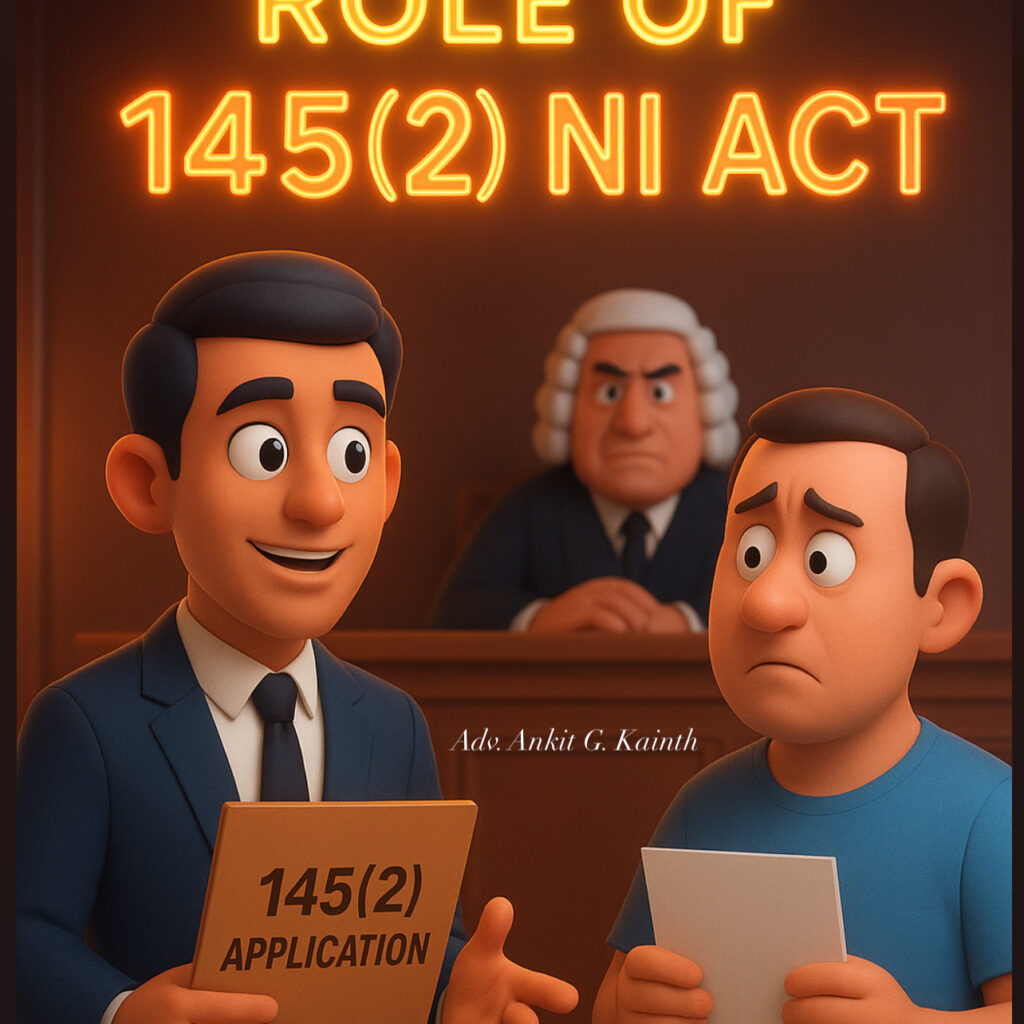
📌Role of Application U/s 145(2) in NI Act (Cheque Case) Dwarka Court — Important or Negligible? (2026)

In cheque bounce cases under the Negotiable Instruments Act, one small application often decides the entire direction of the trial — the Application U/s 145(2). Many treat it casually, and surprisingly, some courts even allow the accused to proceed without filing it. But if you appear for the complainant, this practice can seriously weaken your case.

So the real question is — Is Section 145(2) important?

👉 Absolutely. Extremely. Unavoidably. Important.

⚖️ What is Section 145(2)?

Section 145(1) NI Act permits evidence-by-affidavit of the complainant.

But Section 145(2) empowers the accused to seek permission to cross-examine the complainant/witnesses.

In simple terms:

📝 No 145(2) = No Cross-Examination.

🎯 Why Filing 145(2) is Mandatory (in complainant’s interest)

🛡️ 1. Accused Must Disclose Defence

A 145(2) application is not a formality — it forces the accused to reveal:

    •    What is his defence?

    •    Which parts of the complainant’s affidavit he disputes?

    •    On which points he wants to cross-examine?

This removes surprise elements and prevents ambush strategies.

🎯 2. Cross-Examination Cannot Go Beyond What’s Mentioned

This is the most powerful reason for complainants.

If the accused does not mention specific points in the 145(2) application:

❌ He cannot cross-examine on those points later.

❌ He cannot introduce new defences halfway.

❌ He cannot go on “fishing inquiries”.

This gives the complainant a strong procedural shield.

⚠️ 3. Silent or Vague Application = No Right to Ask Questions

If the application is vague like:

“I want to cross-examine”

…without explaining why and on what issues, then:

👉 The accused loses the right to question on undisclosed points.

This helps advocates maintain a disciplined and focused trial.

📚 4. Helps Court Understand the Scope of Trial

Judges can clearly see:

    •    What is admitted

    •    What is disputed

    •    What requires adjudication

It narrows down the controversy and speeds up the trial.

🔍 Then Why Are Some Courts Allowing Cross-Examination Without It?

Because many courts prioritize speed over procedure.

But speed cannot override statutory safeguards.

If a court allows cross-examination without a 145(2) application, the complainant should object — politely but firmly.

💡 Final Thoughts

For a complainant’s advocate, never waive the requirement of a properly drafted 145(2) application.

It ensures:

✔️ clarity

✔️ discipline

✔️ limited defences

✔️ focused cross-examination

✔️ stronger complainant case

Section 145(2) isn’t negligible —

✨ It’s a strategic weapon. Use it wisely.

#AdvocateinDwarkaCourt

#BestAdvocateinDwarkaCourt

#DivorceAdvocateLaw

#MatrimonialAdvocateinDwarkaCourt

#Dwarkacourtadvocatecontactnumber

#Divorcelawyerindwarka

#BestAdvocatenearme

#BestLawyernearme

#NegotiableInstrumentsAct #Section145(2)#ChequeBounceCase #NIACT #LegalProcedures #TrialStrategy #CrossExamination #1452Application

https://www.linkedin.com/posts/ankitgauravkainthandassociates_advocateindwarkacourt-bestadvocateindwarkacourt-activity-7395771749780504576-4-rP?utm_source=share&utm_medium=member_desktop&rcm=ACoAAFkUbj0BMjOviULod04rtCj5qsR03cu3OTY


https://share.google/WYmmToovotFnMEHrl

View this post on Instagram

A post shared by Ankit Gaurav Kainth & Associates (@ankit_gaurav_kainth_advocate)

Consult an experienced advocate to determine the most suitable mode of service based on the facts of your case and court practice.

Contact me for Consultation :- 9899085554, 9811885554

Ankit Gaurav Kainth Advocate, Dwarka Court, Chamber No.728, 7th Floor, Dwarka, New Delhi

https://share.google/4r7kHm3s4da3OS9rS

https://share.google/EI77lPy4DcIiIYGhd

60239-adobestock_542324899-00858439

Top 5 Legal Mistakes People Make During Property Disputes in Dwarka Court (And How to Avoid Them)

Property disputes are one of the most common types of cases in Dwarka District Court. Most people make avoidable mistakes, which delay their case or weaken their position.

1. Not Keeping Proper Property Documents

Many disputes arise simply because owners do not maintain documents like sale deeds, GPA, agreements, and tax receipts.

2. Verbal Agreements with No Written Proof

Never rely on “bol diya toh ho gaya.” Legal documents are the backbone of any property transaction.

3. Not Verifying Ownership Before Purchase

People often skip title verification, which leads to fraud, double selling, or disputes with family members.

4. Delaying Legal Action

The longer you wait, the stronger the other party’s position becomes. Early consultation prevents bigger problems later.

5. Not Hiring a Professional Lawyer

Attempting to handle complex property cases without expert guidance leads to avoidable losses, delays, and stress.

Property disputes are emotionally exhausting and legally complex. Whether it is ancestral property, jointly purchased property, illegal possession, or builder disputes, one wrong step can weaken your entire case.

After 18+ years of continuous practice before Dwarka Court, I have seen a clear pattern — most people lose advantage not because their case is weak, but because they commit avoidable legal mistakes.

Let us understand the top 5 mistakes and how you can avoid them.


1️⃣ Delaying Legal Action

Many property owners wait too long, hoping the dispute will “settle itself.” Unfortunately, delay creates complications:

  • Opposite party strengthens possession
  • Evidence disappears
  • Limitation issues arise
  • Illegal construction gets completed

How to avoid it:
The moment you receive a legal notice, threat, or see unlawful construction, consult a lawyer immediately. Early injunction applications often protect ownership rights effectively.


2️⃣ Ignoring Proper Documentation

In property disputes, documents decide everything.

Common problems include:

  • Missing original sale deed
  • Unregistered agreements
  • No mutation records
  • Incomplete chain of title

Courts rely heavily on documentary evidence. Emotional claims without paperwork rarely succeed.

How to avoid it:
Maintain a complete property file including sale deed, GPA (if any), previous ownership documents, tax receipts, electricity bills, and possession proof.


3️⃣ Turning a Civil Dispute into an Emotional Battle

Family property matters often become personal. People start:

  • Blocking entry
  • Changing locks
  • Making threats
  • Filing exaggerated criminal complaints

Such actions sometimes weaken your civil case and create unnecessary criminal exposure.

How to avoid it:
Let the dispute remain legal, not personal. File appropriate civil suits for injunction, possession, or partition instead of reacting emotionally.


4️⃣ Filing the Wrong Case

Many litigants file only an injunction suit when possession relief is actually required. Later, courts dismiss such cases on technical grounds.

For example:
If construction is already complete and possession is lost, a mere injunction may not be sufficient.

How to avoid it:
Before filing, assess whether your case requires:

  • Suit for possession
  • Partition suit
  • Declaration suit
  • Permanent injunction
  • Criminal complaint (if cheating or trespass involved)

Correct remedy selection saves years of litigation.


5️⃣ Hiring a Lawyer Without Court-Specific Experience

Property litigation is procedural and technical. A lawyer unfamiliar with the working pattern of Dwarka Court may overlook registry objections, limitation issues, or strategic timing.

Regular court presence matters because:

  • Filing defects are cleared faster
  • Interim relief applications are moved effectively
  • Local judicial approach is understood

Experience inside the same court environment creates a practical advantage.


Practical Advice for Property Owners

✔ Never sign blank papers
✔ Avoid verbal settlements without documentation
✔ Do not ignore legal notices
✔ Preserve all digital and physical records
✔ Act before the opposite party strengthens possession

Property cases are rarely won by aggression. They are won by documentation, procedure, and timing.


Final Thoughts

Property disputes are about rights — but courts decide them on proof, not emotions. With proper documentation, timely filing, and strategic planning, even complex matters can be handled effectively.

After 18+ years of litigation practice, I firmly believe one principle:
Preparation prevents property loss.

If you are facing a property dispute, seek structured legal guidance before taking any step. A carefully planned approach today can prevent years of unnecessary litigation tomorrow.

⚖️ Experience. Strategy. Protection of Rights.

Final Advice:

Whether it’s a family dispute, partition matter, or property possession issue, timely legal guidance is the key to a faster and favourable outcome.

Consult an experienced advocate to determine the most suitable mode of service based on the facts of your case and court practice.

Contact me for Consultation :- 9899085554, 9811885554

Ankit Gaurav Kainth Advocate, Dwarka Court, Chamber No.728, 7th Floor, Dwarka, New Delhi

https://share.google/4r7kHm3s4da3OS9rS

Follow Us for more Legal Updates :-

https://www.threads.com/@ankit_gaurav_kainth_advocate/post/DU2YeFWmksMXGTXcX3vs5YeW9CTOV_MJ-6ukx40?xmt=AQF06I364Ei7RNwUiXX4giiQO0rEjazc9_LEnImTL_CyvQ

Delhis-Dwarka-Court-complex (1)

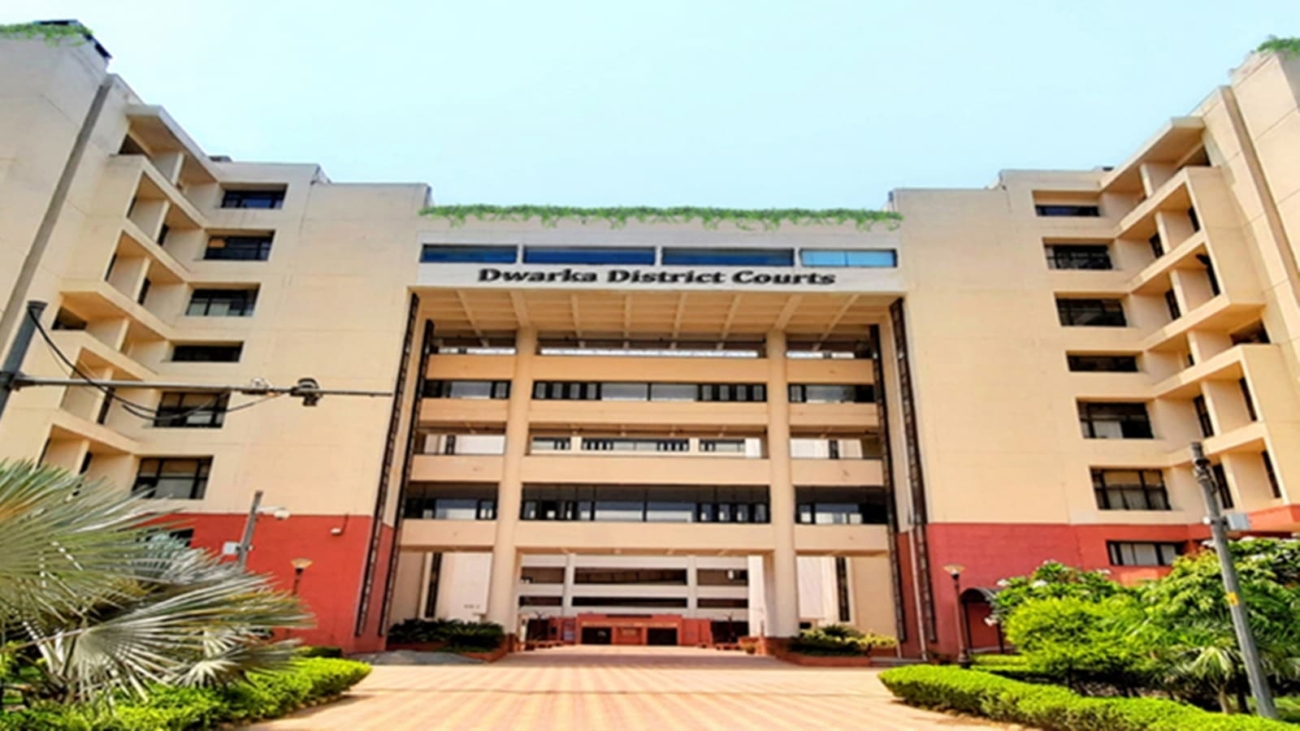
Don’t Risk Your Case – Choose a Lawyer Who Lives and Breathes Dwarka Court (2026)

People often underestimate how important it is to hire a lawyer who regularly practices in the same court where their case is filed.

1. Understanding of Court Environment

A local lawyer is familiar with Dwarka Court’s procedures, staff, filing etiquettes, and judge-specific working styles.

2. Faster Filing & Case Movement

Since the lawyer is available on-site, filing documents, case follow-ups, and urgent applications happen quickly.

3. Practical Knowledge Matters

Local practitioners know which arguments work better, how to navigate complex court days, and how to avoid unnecessary delays.

4. Easy Availability for Clients

Meeting, discussing strategies, or submitting documents becomes easier when the lawyer is close to the court.

5. Better Representation & Confidence

A lawyer who appears daily in Dwarka Court is more confident with court timings, cause-lists, and judge behaviour—leading to better results.

Consult an experienced advocate to determine the most suitable mode of service based on the facts of your case and court practice.

Contact me for Consultation :- 9899085554, 9811885554

Ankit Gaurav Kainth Advocate, Dwarka Court, Chamber No.728, 7th Floor, Dwarka, New Delhi
https://share.google/4r7kHm3s4da3OS9rS

Follow us for more Legal Updates:-

⚖️ Why Choose a Local Lawyer for District Court Dwarka? (2026 Practical Insight)

When a legal dispute arises, most clients focus only on “Who is the best lawyer?”
But an equally important question is — “Does the lawyer regularly practice in the same court where my case is filed?”

If your matter is before Dwarka Court, choosing a lawyer who appears there daily can make a measurable difference in strategy, speed, and results.

With 18+ years of continuous practice in Dwarka Court, I have personally observed how local courtroom experience impacts outcomes.

Let us understand this practically.


🏛️ 1️⃣ Understanding the Court Environment

Every court has its own functioning style.

A local lawyer practicing regularly in Dwarka Court understands:

✔ Filing procedures and registry objections
✔ Court staff coordination
✔ Daily cause-list patterns
✔ Bench-specific working styles
✔ Practical courtroom discipline

These are not written in books — they are learned through consistent physical presence.


📂 2️⃣ Faster Filing & Quicker Case Movement

Legal strategy is not just about arguments. It is also about timing.

When your advocate is regularly present at Dwarka Court:

  • Urgent applications can be filed immediately
  • Defects can be removed the same day
  • Case status can be checked personally
  • Listing issues can be followed up promptly

Outstation lawyers may need coordination time. A local lawyer acts instantly.

In bail matters, stay orders, and injunctions — speed often determines success.


⚖️ 3️⃣ Practical Knowledge Beyond Theory

Courtroom litigation is not academic law — it is applied law.

A regular practitioner at Dwarka Court knows:

  • Which arguments receive judicial attention
  • How evidence is typically scrutinized
  • How to structure anticipatory bail
  • How mediation trends work in matrimonial disputes
  • How property disputes often convert into criminal complaints

This practical knowledge cannot be replaced by reputation alone.


👥 4️⃣ Easy Accessibility for Clients

Clients often need:

  • Quick meetings
  • Urgent documentation review
  • Strategy discussions before hearing
  • Immediate response in emergencies

When your lawyer’s chamber is in Dwarka Court premises, coordination becomes seamless.

No delays. No long scheduling gaps. No communication hurdles.


📑 5️⃣ Confidence in Representation

A lawyer who appears daily before the same benches develops:

✔ Courtroom confidence
✔ Familiarity with judicial expectations
✔ Better anticipation of queries
✔ Stronger oral advocacy

This comfort level translates into effective representation.

Whether it is:

  • Divorce litigation
  • Bail matters
  • Cheque bounce cases
  • Domestic violence proceedings
  • Property disputes

Confidence matters inside the courtroom.


🎯 6️⃣ Strategic Advantage in Complex Cases

In 18+ years of regular appearance before Dwarka Court, I have seen that:

  • Timing of filing anticipatory bail is critical
  • Drafting errors delay relief
  • Registry objections can derail urgent cases
  • Procedural compliance avoids dismissal

A local lawyer anticipates these hurdles in advance.


📍 Serving Dwarka Court Jurisdiction

Clients from:

  • Janakpuri
  • Vikaspuri
  • Dwarka North
  • Dwarka South
  • Najafgarh
  • Uttam Nagar
  • Bindapur

often prefer representation by a lawyer who understands the local litigation pattern of Dwarka Court.

Consistency builds courtroom familiarity.

https://www.facebook.com/share/p/1bgNRat17N


🧠 Final Thoughts – Experience + Proximity = Stronger Representation

Choosing a lawyer is not only about qualifications — it is about regular presence, procedural awareness, and strategic clarity.

If your matter is pending in Dwarka Court, selecting a local advocate ensures:

⚖ Faster procedural movement
⚖ Better courtroom confidence
⚖ Immediate accessibility
⚖ Practical litigation strategy
⚖ Reduced unnecessary delays

Legal success is rarely accidental. It is prepared.


📞 Consultation

If you are seeking representation in District Court Dwarka, feel free to consult for structured and strategic guidance.

Ankit Gaurav Kainth
Advocate, Dwarka Court
Chamber No. 728, 7th Floor
New Delhi

📱 9899085554
📱 9811885554

Experience. Preparation. Professionalism.

https://www.instagram.com/reel/DUhlx6xCUSn/?utm_source=ig_web_copy_link&igsh=MzRlODBiNWFlZA==

https://share.google/n2yJmIruGDzESNyTs

Anticipatory-Bail-Application-Lawyers-in-Chennai

Understanding Bail Procedure in Dwarka Court: A Complete Step-By-Step Guide

If you or someone you know has been arrested, understanding the bail procedure becomes extremely important. In Dwarka District Court, the process is straightforward, but knowing the right steps can save both time and stress.

1. What Is Bail?

Bail is a legal process that allows an arrested person to remain free while their case is ongoing, by submitting a bond or surety.

2. Types of Bail in Dwarka Court

  • Regular Bail – applied after arrest
  • Anticipatory Bail – applied before arrest
  • Interim Bail – temporary bail until a regular hearing

3. Documents Required

  • Aadhar Card / ID Proof
  • Surety documents
  • FIR copy
  • Personal bond
  • Arrest memo (in some cases)

4. How the Bail Hearing Works

Your lawyer files the bail application → Matter is listed before the judge → Arguments from both sides → Judge grants or denies bail.

5. Why Legal Help Matters

When an arrest happens, panic spreads faster than facts. Families rush to Dwarka Court with one urgent question — “How do we get bail?”

After 18+ years of continuous practice in Dwarka Court, I can confidently say this: timely strategy matters more than emotional reaction. If you understand the procedure clearly, the process becomes structured, manageable, and far less stressful.

Let us break it down step-by-step.


📌 What Is Bail?

Bail is a legal mechanism under the Code of Criminal Procedure that allows an accused person to remain free during investigation or trial, subject to conditions imposed by the court.

In simple words:
Custody is the exception. Liberty is the rule — subject to judicial discretion.


🏛️ Step 1: Identify the Type of Bail Required

Before filing anything in Dwarka Court, the first question is — what kind of bail applies?

1️⃣ Anticipatory Bail

Filed before arrest when apprehension exists.

2️⃣ Regular Bail

Filed after arrest when the accused is already in custody.

3️⃣ Interim Bail

Temporary protection granted until final hearing.

Choosing the correct category is the first strategic decision.


📄 Step 2: Collect Essential Documents

Documentation strength often determines success. Typically required:

  • FIR copy
  • Arrest memo (if applicable)
  • ID proof of accused
  • Surety documents
  • Previous case details (if any)
  • Medical documents (if relevant)

Incomplete paperwork delays relief in Dwarka Court.


🖊️ Step 3: Drafting the Bail Application

This is not a routine formality.

A professionally drafted bail application must include:

✔ Brief facts of case
✔ False implication or defence theory
✔ Lack of criminal antecedents
✔ Cooperation with investigation
✔ Legal grounds under CrPC
✔ Judicial precedents (if required)

In my experience, weak drafting is one of the most common reasons for rejection.


⚖️ Step 4: Filing Before the Appropriate Court

Most bail matters first come before the Metropolitan Magistrate in Dwarka Court.

Serious offences may require filing before the Sessions Court.

Correct forum selection prevents technical objections.


🗣️ Step 5: Bail Hearing & Arguments

On the hearing date:

  • Prosecution presents objections
  • Defence counters allegations
  • Court examines gravity, evidence, and conduct

Judges in Dwarka Court carefully evaluate:

  • Nature of offence
  • Role attributed to accused
  • Possibility of tampering evidence
  • Flight risk
  • Criminal history

Calm, structured arguments always perform better than emotional pleas.


🧾 Step 6: Bail Order & Conditions

If granted, the Court may impose:

  • Personal bond
  • Surety bond
  • Travel restrictions
  • No contact with complainant
  • Regular investigation attendance

Compliance is critical. Violation may lead to cancellation.


⏳ Step 7: Post-Bail Responsibility

Many accused believe bail means the case is over. That is incorrect.

After bail:

  • Attend all court dates
  • Avoid influencing witnesses
  • Maintain clean conduct
  • Stay in coordination with your lawyer

Bail is liberty with responsibility.


🔎 Common Bail Trends in Dwarka Court (2026)

Based on recent courtroom experience:

  • Digital evidence is heavily scrutinized
  • Delay in FIR sometimes strengthens defence
  • Matrimonial disputes often receive balanced approach
  • First-time offenders get reasonable consideration
  • Strong documentation improves chances significantly

Judicial reasoning is structured, not sentimental.


🎯 Why Experience Matters

In 18+ years of practice at Dwarka Court, I have observed:

✔ Each judge has a distinct courtroom style
✔ Filing defects delay urgent matters
✔ Timing of anticipatory bail is crucial
✔ Coordination with investigation officers helps

Bail strategy is courtroom science — not guesswork.


📌 Practical Advice for Families

👉 Do not delay consultation
👉 Do not hide facts from your lawyer
👉 Preserve digital communication
👉 Avoid media or social confrontation
👉 Stay patient and disciplined

Prepared clients always stand stronger in Dwarka Court.


❓ Frequently Asked Questions

Q1. How long does bail take in Dwarka Court?

Usually 1–3 hearings, depending on seriousness and prosecution response.

Q2. Can bail be rejected?

Yes. However, remedy lies before a higher court.

Q3. Is anticipatory bail easy?

It depends on allegations, evidence, and timing of filing.

Q4. Does court consider settlement?

In matrimonial or minor disputes, settlement discussions help.


🌟 Final Words

Arrest creates fear. Law provides structure.

Understanding the bail procedure at Dwarka Court reduces uncertainty and builds confidence.

If you or your family member requires urgent bail assistance, professional guidance makes a decisive difference.

With over 18 years of active courtroom experience, I ensure:

⚖️ Strong drafting
⚖️ Strategic arguments
⚖️ Timely filing
⚖️ Ethical representation

Act quickly. Prepare properly. Protect your liberty.

https://share.google/ywohvkWHTpzh387qV

 Consult an experienced advocate to determine the most suitable mode of service based on the facts of your case and court practice.

Contact me for Consultation :- 9899085554, 9811885554

Ankit Gaurav Kainth Advocate, Dwarka Court, Chamber No.728, 7th Floor, Dwarka, New Delhi
https://share.google/4r7kHm3s4da3OS9rS

https://www.linkedin.com/embed/feed/update/urn:li:share:7413981654014328832?collapsed=1

https://www.linkedin.com/posts/ankitgauravkainthandassociates_advocateindwarkacourt-bestadvocateindwarkacourt-activity-7413981656459706368-8Ezb?utm_source=share&utm_medium=member_desktop&rcm=ACoAAFkUbj0BMjOviULod04rtCj5qsR03cu3OTY