
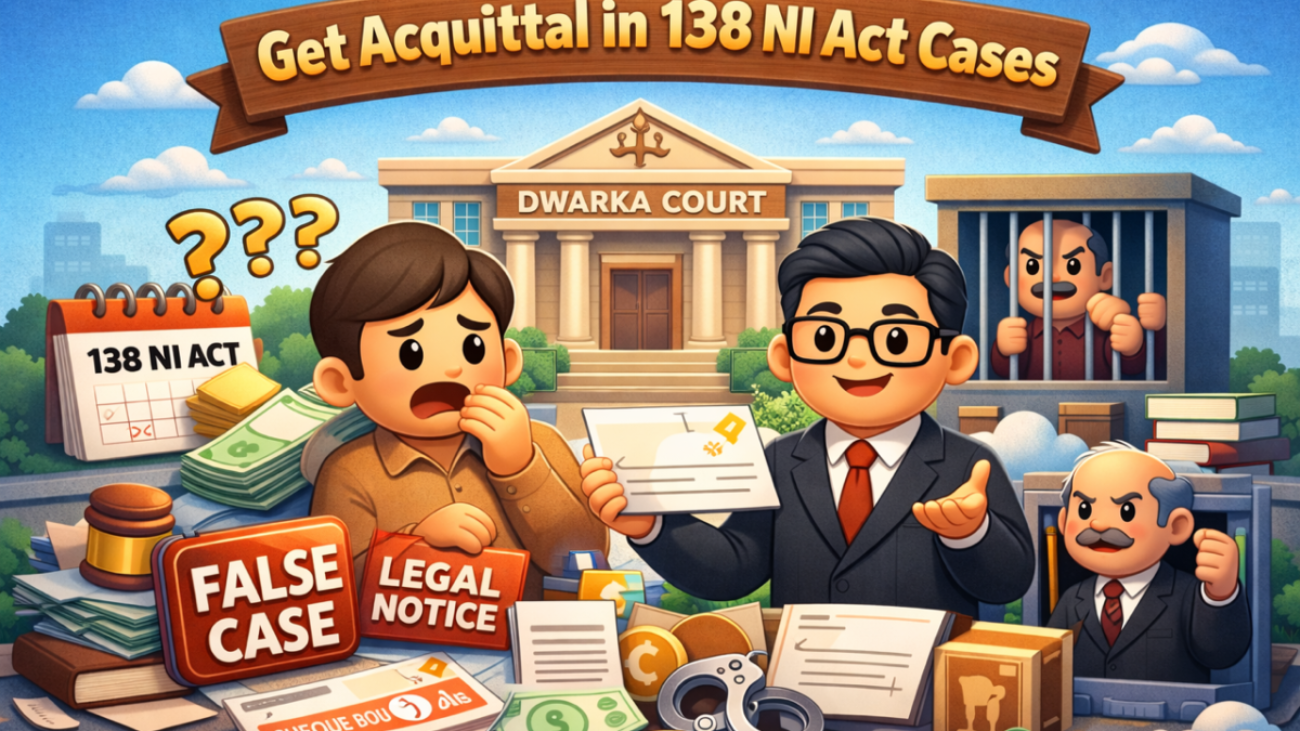
Best-Cheque-case-advocate-in-Dwarka-court

A Digital Guide for Dwarka Court in 138 NI Act Cases-By 18+ Experienced Cheque Bounce Advocate

How to Contest False Cheque Bounce Cases & Get Acquittal with the Help of an Experienced Advocate

Cheque bounce cases under Section 138 of the Negotiable Instruments Act (NI Act) are among the most commonly filed criminal complaints in Dwarka Court, Delhi. Every day, accused persons come to court with fear, confusion, and one common sentence:

“Sir, humne blank cheque diya tha. Saamne wali party ne misuse karke apni marzi se amount bhar diya aur 138 NI Act ka case kar diya. Ab hum kya kare?”

If you are facing a similar situation, don’t panic. A cheque bounce case is defendable, and with the right legal strategy and an experienced advocate, acquittal is very much possible.

With my 18+ years of experience in criminal litigation, especially in 138 NI Act cases at Dwarka Court, I am writing this digital guide to help accused persons understand how these cases work, how to contest them, and how false cases can be defeated legally.

Understanding Section 138 NI Act ⚖️

A case under Section 138 NI Act is filed when:

✔ A cheque is presented for payment

✔ The cheque is dishonoured

✔ A legal notice is sent within time

✔ Payment is not made within 15 days

However, not every cheque bounce leads to conviction. The law itself provides several legal defenses.

Common Reality of False 138 NI Act Cases 🚨

In Dwarka Court, we often see cases where:

  • Blank cheques were given as security
  • Cheques were issued for loan talks that failed
  • Amount was filled later without consent
  • No legally enforceable debt existed
  • Cheque was misused after business disputes

⚠️ Law presumes liability, but presumption is rebuttable. This is where experience matters.

How an Accused Can Get Acquittal in 138 NI Act Cases ✅

🔹 1. No Legally Enforceable Debt

The complainant must prove that:

  • A real debt existed
  • The amount mentioned is correct
  • The cheque was issued towards that liability

If the debt itself is doubtful, acquittal is possible.

🔹 2. Blank Cheque Misuse – A Strong Defence

Giving a blank cheque does not automatically mean guilt.

We challenge:

✔ Source of alleged loan

✔ Mode of payment (cash/bank proof)

✔ Financial capacity of complainant

✔ Why amount was not mentioned earlier

Courts in Dwarka regularly grant relief when misuse is established.

🔹 3. Defective Legal Notice 📩

Many cases fail because:

  • Notice not served properly
  • Wrong address
  • Incorrect amount
  • Notice beyond limitation

A technical defect can lead to dismissal.

🔹 4. Contradictions in Complainant’s Evidence

Cross-examination is the heart of 138 NI Act defence.

We expose:

✔ Inconsistencies in statements

✔ False affidavits

✔ Missing documents

✔ Fabricated stories

An experienced advocate knows what to ask and when to ask.

🔹 5. Rebutting Presumption under Law

Presumption under Sections 118 & 139 NI Act can be rebutted by:

  • Probable defence
  • Circumstantial evidence
  • Conduct of complainant
  • Documentary proof

You don’t need to prove innocence beyond doubt—only raise reasonable doubt.

Why Experience in Dwarka Court Matters 🏛️

Every court has its own working style. An advocate regularly practicing in Dwarka District Court understands:

✔ Magistrate-wise approach

✔ Local police procedures

✔ Filing practices

✔ Speedy disposal strategies

With 18+ years of continuous criminal practice, I have handled hundreds of 138 NI Act cases—from trial to acquittal to compounding.

How We Assist Our Clients 👥

✔ Case analysis before first appearance

✔ Proper reply to legal notice

✔ Strategic cross-examination

✔ Drafting of defence applications

✔ Regular updates & transparent advice

✔ Reasonable and clear fee structure

Our focus is not false assurance but realistic solutions.

Visit Our Chamber for Proper Legal Guidance 📍

If you are facing a false 138 NI Act case in Dwarka Court, meet us personally after a prior appointment.

🏛 Chamber Address:

Chamber No. 728, 7th Floor

District Court Dwarka, New Delhi – 110075

📞 Contact / WhatsApp:

9899085554 | 9811885554

Final Advice to Accused Persons ⚠️

❌ Do not ignore summons

❌ Do not rely on hearsay advice

❌ Do not panic or settle blindly

✔ Take early legal advice

✔ Prepare defence properly

✔ Trust an experienced 138 NI Act advocate

False cases can be fought. Acquittals are achievable.

All you need is the right legal strategy at the right time.

Blog by :-

Ankit Gaurav Kainth, Advocate, Chamber No.728, District Court Dwarka, Sector-10, New Delhi

Regards
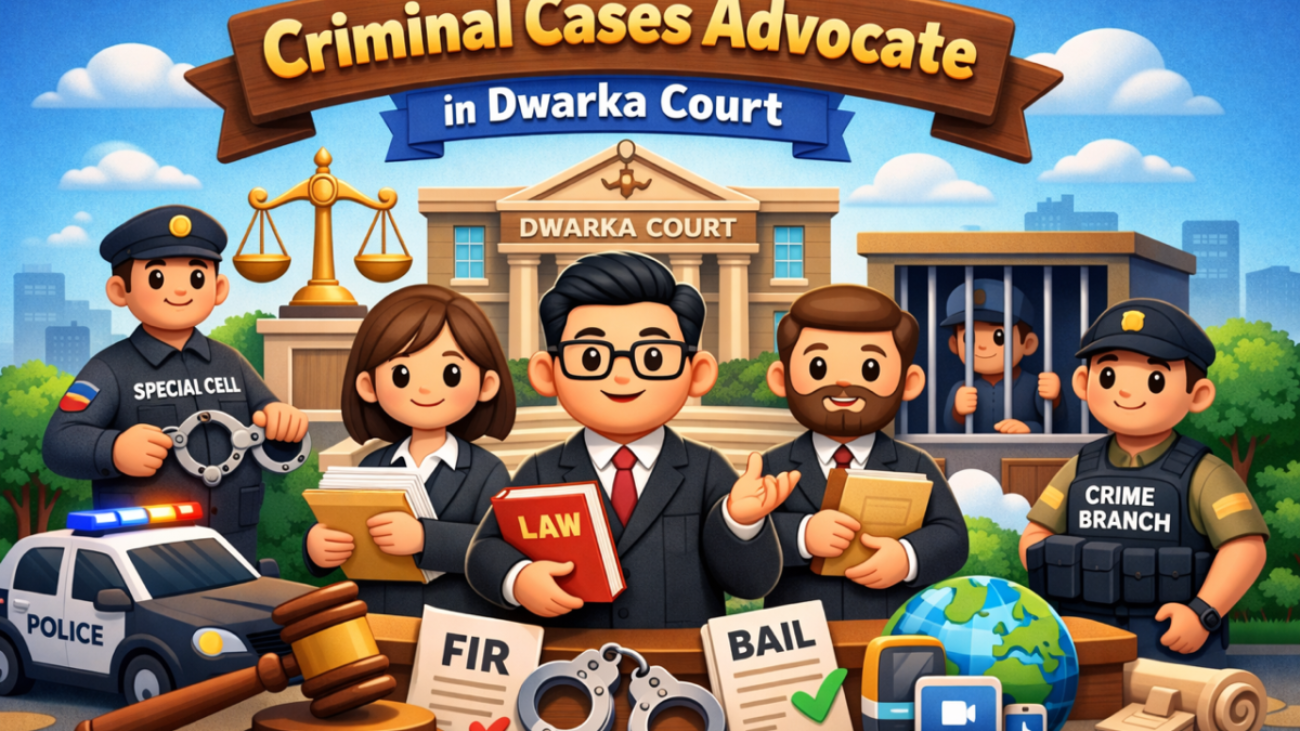
Best-criminal-advocate-in-dwarka-court

Criminal Cases Advocate in Dwarka Court, Delhi

When liberty, reputation, and future are at stake, choosing the right Criminal Advocate in Dwarka Court becomes the most crucial decision. Criminal cases are sensitive, time-bound, and demand not only legal knowledge but also experience, strategy, and immediate action. Criminal Cases Advocate in Dwarka Court, Delhi – 18+ Years of Trusted Criminal Law Practice

I have been actively engaged in criminal law practice for more than 18+ years, representing accused, complainants, and victims across Dwarka District Court, Delhi, as well as matters registered with Special Cell and Crime Branch Police Stations. Along with my strong team of 35+ advocates, interns, and clerks, we provide comprehensive criminal litigation and advisory services under one roof.

Why Experience Matters in Criminal Cases ⚖️

Criminal law is not theoretical—it is practical, procedural, and tactical. An experienced criminal advocate understands:

✔ How police investigation works

✔ When and how to apply for bail

✔ How to protect clients from illegal arrest

✔ How to challenge false implications

✔ How to handle pressure situations and media-sensitive cases

With 18+ years of courtroom experience, I have handled thousands of criminal matters involving serious and complex allegations.

Criminal Cases Handled at Dwarka Court 🏛️

We deal with all types of criminal cases registered in Dwarka and Delhi, including but not limited to:

🔹 Serious & Heinous Offences

  • Murder (Section 302 IPC)
  • Attempt to Murder (Section 307 IPC)
  • Rape & Sexual Offences
  • POCSO Cases
  • Criminal Conspiracy
  • Arms Act Cases

🔹 Police Station Based Cases

  • Special Cell Police Station Cases
  • Crime Branch Police Station Cases
  • FIRs registered under IPC, BNS, NDPS, Arms Act, IT Act, etc.

🔹 Bail Matters (Most Time-Sensitive)

  • Anticipatory Bail
  • Regular Bail
  • Interim Bail
  • Default Bail
  • Bail Cancellation Matters

⏱ Swift bail strategy can make the difference between freedom and prolonged custody.

🔹 Other Criminal Matters

  • Cheating & Fraud Cases
  • Cyber Crime
  • Domestic Violence
  • Dowry Harassment (498A IPC)
  • Criminal Breach of Trust
  • Economic Offences
  • White Collar Crimes
  • Criminal Appeals & Revisions

Expert Handling by a Trained Criminal Law Team 👥

Our strength lies in our well-trained and disciplined team.

Every advocate, intern, and clerk is personally trained by me to ensure:

✔ Proper drafting of bail applications & petitions

✔ Timely court filings

✔ Regular client updates

✔ Strategic coordination with seniors

✔ Ethical and result-oriented representation

With 35+ professionals working together, we ensure that no case is neglected and no client is left uninformed.

Chamber & Office – Easily Accessible in Dwarka 📍

For the convenience of our clients, we operate from both court chamber and office:

🏛 Chamber Address:

Chamber No. 728, 7th Floor, District Court Dwarka, Sector-10, Delhi

🏢 Office Address:

Plot No. 14, Pocket-9, Sector-23B, Dwarka, Delhi

Being physically present inside Dwarka Court allows us to provide quick filings, urgent mentions, and immediate court assistance.

Serving Clients Across India & Abroad 🌍

We proudly represent clients from all over India and from abroad.

Our practice is tech-friendly, enabling us to assist NRI and foreign clients through:

📞 Video consultations

📧 Digital document exchange

📲 Regular case updates

📄 Online drafting & filings

Distance is never a barrier when your legal support system is strong and organized.

Why Clients Trust Us as Criminal Advocate in Dwarka Court ⭐

✔ 18+ years of criminal litigation experience

✔ Expertise in bail & serious offences

✔ Dedicated and trained legal team

✔ Chamber inside Dwarka Court

✔ Swift response & strategic action

✔ Transparent advice & ethical practice

✔ Nationwide & international client support

Searching for an Experienced Criminal Advocate in Dwarka Court?

If you or your loved one is facing a criminal case, arrest threat, FIR, or investigation, do not delay legal consultation. Early legal advice often prevents irreversible damage.

🔍 An experienced criminal advocate doesn’t just fight cases—he protects futures.

Regards 

Ankit Gaurav Kainth Advocate 

You me Contact me on :- 

9899085554

9811885554

https://share.google/9KPDxJ1frjWnWABIA

advocate-in-dwarka-court

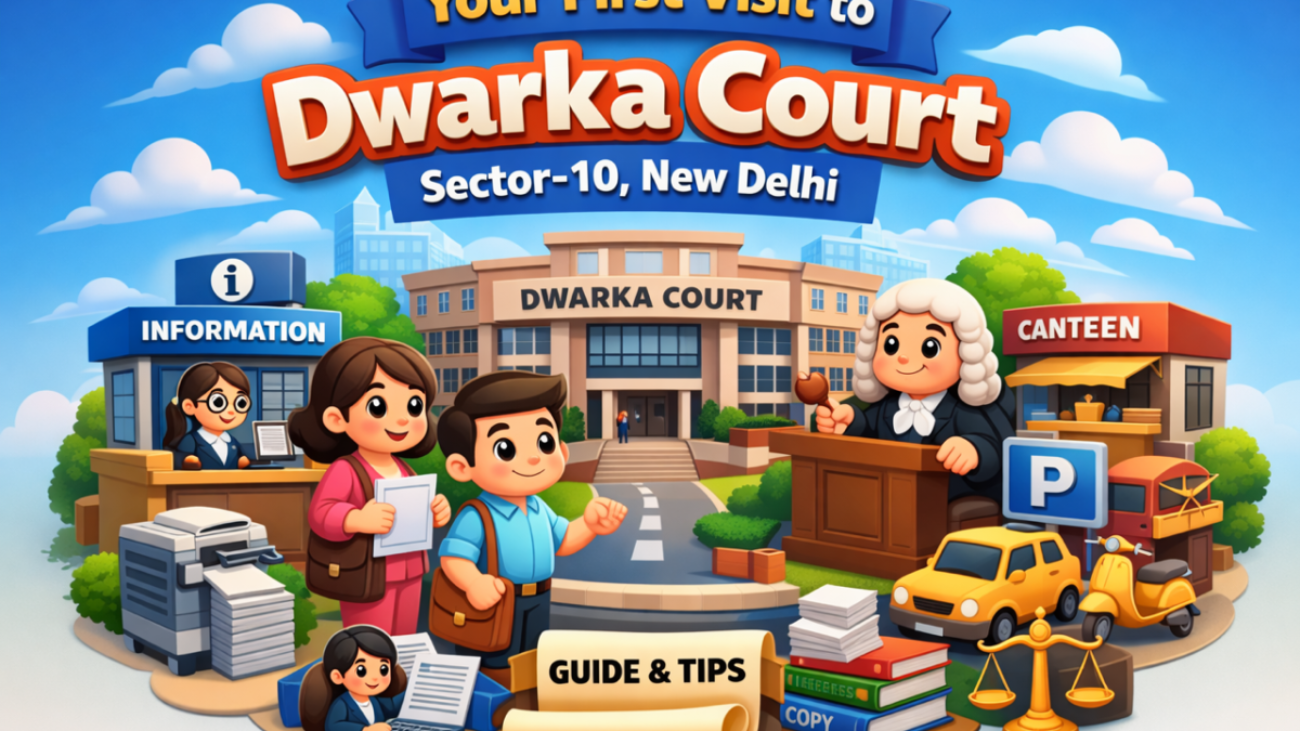
🏛️ Coming First Time to District Court Dwarka, Sector-10, New Delhi?

Complete Guide on How to Reach, Facilities, Judges, Lawyers’ Chambers & FAQs

Visiting a court for the first time can be stressful and confusing. District Court Dwarka, Sector-10, New Delhi is one of the largest and busiest district courts in Delhi. Every day, thousands of litigants, lawyers, witnesses, and visitors come here for civil, criminal, family, matrimonial, cheque bounce, bail, property, and other legal matters.

This complete guide will help you understand how to reach Dwarka Court, where to ask questions, court facilities, parking, food, lawyers’ chambers, types of judges, and FAQs for first-time visitors.


📍 Location of District Court Dwarka

Address:
District Court Complex, Sector-10, Dwarka, New Delhi – 110075

It is strategically located near residential and commercial sectors of Dwarka and is well connected by road and metro.


🚇 How to Reach District Court Dwarka

✔️ By Metro

  • Nearest Metro Station: Dwarka Sector-10 (Blue Line)
  • From the metro exit, the court complex is within walking distance (5–7 minutes).

✔️ By Car / Taxi

  • Easily accessible via Dwarka Link Road.
  • App-based cabs (Ola, Uber) and autos are readily available.

✔️ By Bus

  • DTC buses frequently stop near Dwarka Sector-10 & Sector-9.

👉 Tip: Always reach at least 30–45 minutes early to avoid security and entry delays.


🅿️ Parking Facility

🚗 Parking is available inside the court complex, but it often gets full during peak hours.

  • Two-wheelers & four-wheelers allowed
  • Limited parking space
  • Paid parking system

👉 Advice: Prefer metro or reach early if coming by car.


🔍 Where to Ask Questions in Dwarka Court

🧭 Facilitation Centre

This is the most important place for first-time visitors.

You can:

  • Ask about your court number
  • Find case status
  • Get help with filing counters
  • Get directions to courtrooms

📌 Located near the main entry.


🧑‍⚖️ Understanding District Court Dwarka

🏢 Court Structure

The Dwarka Court Complex has:

  • Multiple court buildings
  • Ground + multiple floors
  • Separate blocks for different courts

Each court is clearly numbered (Court No. 1, 2, 3…).


⚖️ Types of Judges in Dwarka Court

You may encounter different judges depending on your case:

  • 👨‍⚖️ District Judge (DJ)
  • 👩‍⚖️ Additional District Judge (ADJ) – Civil, Commercial, Family matters
  • 👨‍⚖️ Metropolitan Magistrate (MM) – Criminal cases
  • 👩‍⚖️ Chief Metropolitan Magistrate (CMM)
  • 👨‍⚖️ Family Court Judges
  • 👩‍⚖️ Special Courts – NI Act (Cheque Bounce), MACT, NDPS etc.

👉 Your case type decides the judge and court.


🧑‍💼 Lawyers’ Chamber Block

🏢 Dwarka Court has a dedicated Lawyers’ Chamber Block.

Importance of Chamber:

  • Easy availability of your advocate
  • Case discussion in privacy
  • Quick filing & coordination
  • Better court connectivity

👉 Always prefer an advocate having a chamber in Dwarka Court itself.


🖨️ Photocopy, Typing & Documentation Facilities

Inside the court complex, you will find:

  • 📄 Photocopy Shops
  • ⌨️ Typing Pool
  • 🖨️ Printing & Scanning services
  • 📝 Affidavit & drafting assistance

These are essential for last-minute court requirements.


📚 Library Facility

📖 The Dwarka Court Library is available for advocates.

  • Law books
  • Bare Acts
  • Latest judgments
  • Research material

Clients usually do not access the library, but it strengthens legal preparation by advocates.


🍽️ Canteen & Food Facilities

🥗 The court complex has:

  • Central canteen
  • Tea, coffee, snacks
  • Affordable meals

👉 Outside the court, many food joints and cafes are also available in Sector-10.


🧑‍🤝‍🧑 Common Bar Room

⚖️ Common Bar Rooms are meant for advocates:

  • Meeting colleagues
  • Case discussions
  • Short breaks between hearings

❓ FAQs for Clients Visiting Dwarka Court First Time

❓ Is it necessary to bring ID proof?

✔️ Yes, always carry Aadhaar / Voter ID / PAN.

❓ What should I wear?

✔️ Decent, formal, and respectful clothing is advised.

❓ Can I meet the judge directly?

❌ No. Communication happens only through your advocate.

❓ How will I know my court number?

✔️ Check:

  • Cause list outside courts
  • Online e-courts website
  • Facilitation Centre
  • Ask your advocate

❓ Can I use mobile phone inside?

✔️ Yes, but silent mode only. Photography is strictly prohibited.

❓ How long will my case take?

✔️ It depends on:

  • Nature of case
  • Stage of proceedings
  • Court workload

❓ Should I come alone or with advocate?

✔️ Always consult and come with your advocate, especially on important dates.


🧠 Final Advice for First-Time Visitors

✔️ Reach early
✔️ Stay calm and patient
✔️ Follow security rules
✔️ Trust professional legal advice
✔️ Do not rely on strangers or touts


🔑 Conclusion

District Court Dwarka, Sector-10, New Delhi is well-organized and client-friendly if you understand its structure and facilities. Knowing how to reach, where to ask questions, court layout, judges, chambers, and FAQs will make your first visit smooth and stress-free.

👉 A well-informed client is always better prepared for justice ⚖️

https://share.google/HxI8np1JelHMJ91IB

Ankit Gaurav Kainth, Chamber No.728, Dwarka Court, Sector-10, Dwarka, New Dwarka

Why My 369 Five-Star Google Business Profile Reviews Give My Clients Confidence & Trust

🌟🌟🌟🌟🌟

My Google Business Profile Reviews link:-

https://share.google/kHtueHDMhe9iTa563

In today’s digital era, choosing the right advocate is no longer based only on word-of-mouth or personal references. Most clients searching for an advocate in District Court Dwarka, Sector-10, New Delhi first turn to Google. They read profiles, compare experience, and most importantly, trust genuine client reviews.

My Google Business Profile, which is verified and listed by Google for a long period, reflects this evolving reality. With 369 five-star reviews, it stands as a transparent mirror of my professional journey, client satisfaction, and ethical legal practice.

Why Google Reviews Matter in Legal Services

Legal matters are sensitive. Clients approach an advocate during some of the most stressful phases of their lives—criminal accusations, matrimonial disputes, recovery cases, property conflicts, or civil litigation. At such moments, trust becomes the foundation of the advocate-client relationship.

Google reviews provide:

  • Social proof of reliability
  • Real experiences shared by genuine clients
  • Confidence that the advocate delivers results with professionalism

When a client sees hundreds of consistent five-star reviews, it reassures them that they are not alone in trusting that advocate.

Authentic Reviews, Not Artificial Ratings

I personally request my clients to leave a review only after they have experienced my services. These reviews are not paid, scripted, or manipulated. They are honest reflections of:

  • How their matter was handled
  • How clearly the legal process was explained
  • How respectfully they were treated

This transparency helps future clients make an informed decision and also helps me identify areas for improvement.

Reviews as a Tool for Self-Improvement & Research

Many people assume reviews are only for marketing. For me, they are a research and development tool. Every review—positive or constructive—helps me understand:

  • Client expectations
  • Communication gaps
  • Areas where legal processes need to be explained better

This continuous feedback loop allows me to evolve as a professional and deliver better service to every new client who walks into my chamber at Dwarka Court.

Why Reviews Build Trust Among New Clients

When someone searches “Advocate in Dwarka Court” or “Best lawyer near me”, they are often anxious and unsure. Seeing a verified Google profile with consistent five-star ratings gives them:

  • Psychological comfort
  • A sense of safety
  • Confidence that the advocate is experienced and dependable

Unlike advertisements, reviews are written by real people who had real legal problems—and found solutions.

My Experience: Assisting Clients Professionally & Correctly

Over the years, my experience has taught me that legal knowledge alone is not enough. Clients value:

  • Honest case assessment (not false promises)
  • Clear explanation of legal remedies
  • Timely communication
  • Ethical representation

Many reviews mention professionalism, patience, and guidance. This confirms my belief that correct legal advice, transparency, and dedication matter more than shortcuts or exaggerations.

Why Location-Specific Trust Matters

Clients specifically searching for an advocate in District Court Dwarka, Sector-10 want someone who:

  • Regularly practices in the same court
  • Understands local procedures
  • Is accessible and accountable

My Google profile reflects this local credibility, helping clients connect with an advocate who is genuinely present and practicing in the same court complex.

Conclusion: Trust Is Earned, Not Claimed

My 369 five-star Google reviews are not just numbers. They represent years of hard work, ethical practice, client satisfaction, and continuous learning. They help new clients trust me even before our first meeting—and they remind me daily of the responsibility that comes with that trust.

In law, reputation is everything. And in the digital age, Google reviews have become the most honest measure of that reputation.

Regards

Ankit Gaurav Kainth Advocate, Chamber No.728, District Court Dwarka, Sector-10, New Delhi

Bestadvocateindwarkacourt

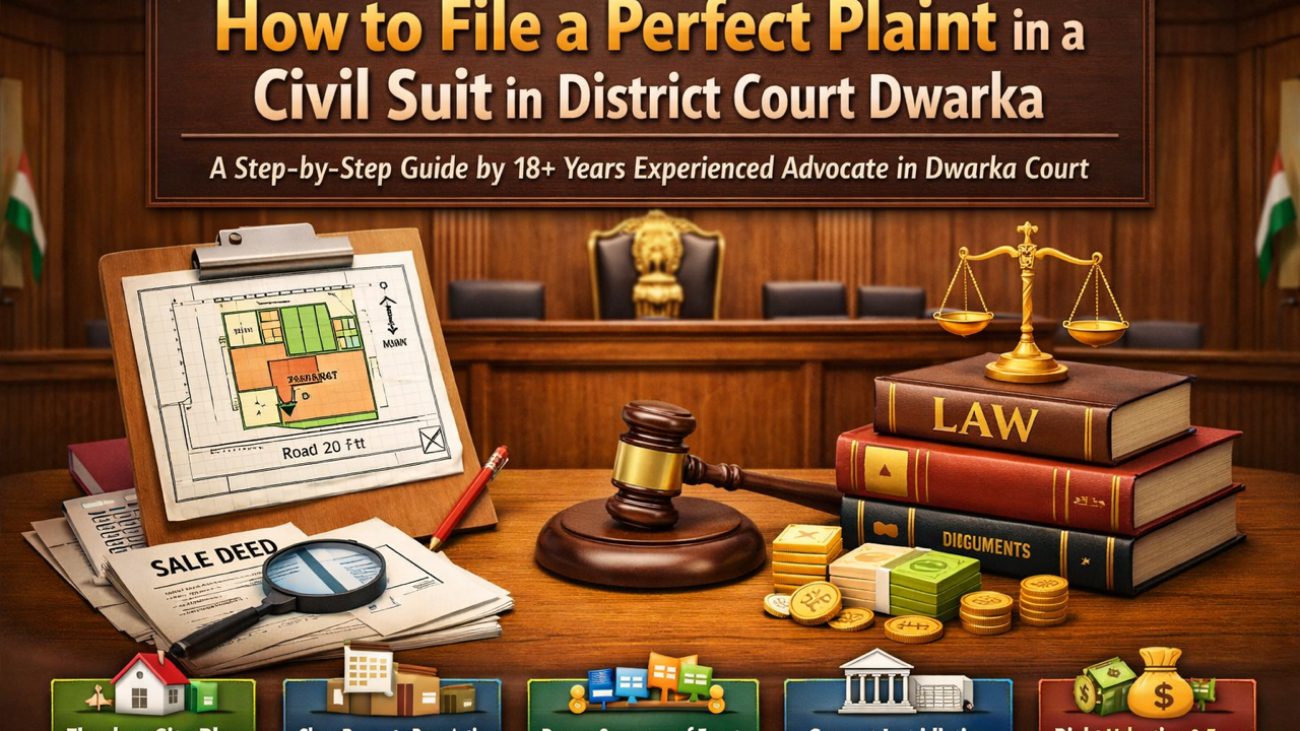
🏛️ How to File a Perfect Plaint in a Civil Suit in District Court Dwarka

A Step-by-Step Practical Guide by an Advocate with 18+ Years of Experience in Dwarka Court

Filing a civil suit is not merely a formality of drafting papers and submitting them in court. A perfect Plaint is the foundation of your entire civil litigation. In my 18+ years of practice as an Advocate in Dwarka Court, Sector-10, New Delhi, I have seen excellent cases fail only because the Plaint was poorly drafted, casually structured, or legally incomplete.

This guide is written from ground-level experience of District Court Dwarka, and not from theory books. If you want your civil case to survive objections, scrutiny, and trial, this guide is for you.

🗺️ 1️⃣ First Make a Flawless Site Plan – The Soul of a Civil Suit

Before drafting even a single line of the Plaint, prepare a clear, accurate and detailed Site Plan.

⚠️ One of the biggest mistakes I see younger advocates make is:

They first draft the Plaint and later adjust the Site Plan to match it.

This approach is completely wrong.

🔑 Site Plan is the soul of your civil suit, especially in:

  • Property disputes
  • Possession suits
  • Injunction matters
  • Partition suits
  • Encroachment cases

The Site Plan must:

✔ Clearly show boundaries

✔ Mention measurements

✔ Indicate directions (North, South, East, West)

✔ Match the title documents exactly

🧠 In my experience at Dwarka District Court, judges first look at the Site Plan, not the Plaint. If the Site Plan is confusing, your case loses credibility from Day One.

✍️ 2️⃣ Draft the Plaint – Precise, Crisp & To the Point

Remember one golden rule:

⚖️ We are Advocates, not poets or novel writers.

A Plaint must be:

✔ Simple

✔ Clear

✔ Direct

✔ Legally relevant

Avoid:

❌ Unnecessary emotional language

❌ Long stories

❌ Repetition of facts

Judges in Dwarka Court handle hundreds of matters daily.

Don’t make your Plaint a puzzle for the judge.

Use simple legal language, short paragraphs, and clear cause of action.

⏳ 3️⃣ Maintain Proper Hierarchy of Events

Every civil suit stands on chronology.

📌 Events must be written:

  • In proper date order
  • Without contradiction
  • Without jumping back and forth

Each paragraph should deal with one event only.

⚠️ Mixing timelines is a common drafting defect that leads to:

  • Objections
  • Confusion
  • Weak cross-examination

From my long practice as a Best Advocate in Dwarka Court, I can confidently say:

A well-ordered sequence of events itself convinces the court.

🏠 4️⃣ Clear Description of Property – No Ambiguity Allowed

Property description must be:

✔ Exact

✔ Identical to documents

✔ Free from assumptions

It must match:

  • Sale Deed
  • GPA
  • Will
  • Agreement to Sell
  • Previous court orders

Even a small mismatch in area, floor, or boundary can destroy your case during evidence.

Judges in Dwarka District Court Sector-10 are very strict about property descriptions.

📑 5️⃣ Jurisdiction – Territorial & Pecuniary Must Be Correct

Always check:

✔ Whether Dwarka Court has territorial jurisdiction

✔ Whether valuation is correct

Wrong jurisdiction = rejection or return of Plaint.

As an experienced Advocate in Dwarka Court, I always advise clients to verify jurisdiction before filing, not after objections are raised.

🧾 6️⃣ Cause of Action – Clearly Defined & Continuing

Your Plaint must clearly explain:

  • When the cause of action arose
  • How it continues
  • Why the suit is maintainable

A vague cause of action is a fatal defect.

💰 7️⃣ Proper Valuation & Court Fees

Incorrect valuation is one of the most common objections raised in civil suits at Dwarka Court.

Ensure:

✔ Correct relief valuation

✔ Correct court fees

✔ Proper stamp

This reflects seriousness and professionalism.

🧠 8️⃣ Relief Clause – Draft with Legal Wisdom

Reliefs should be:

✔ Specific

✔ Enforceable

✔ Supported by facts

Avoid asking for unnecessary or contradictory reliefs.

A good advocate knows what NOT to ask.

📎 9️⃣ Documents – Relevant & Properly Numbered

Attach only:

✔ Relevant documents

✔ Properly indexed

✔ Legible copies

Unnecessary documents only confuse the court.

⚖️ 10️⃣ Final Review – Think Like a Judge

Before filing:

🔍 Read the Plaint like a judge

🔍 Identify gaps

🔍 Remove repetitions

This habit, developed over 18+ years of practice in Dwarka District Court, separates an average advocate from a best advocate in Dwarka Court.

⭐ Final Words from Experience

A perfect Plaint saves years of litigation.

In my long professional journey at District Court Dwarka, Sector-10, New Delhi, I have learned that:

Strong drafting wins half the case even before evidence begins.

If you want your civil suit to stand strong, invest time in drafting, planning, and precision.

🔎 

#BestAdvocateinDwarkaCourt

#CivilSuitAdvocateinDwarkaCourtSector-10

#HowtofilePlaintinDwarkaCourt

#Experienced Advocate in Dwarka District Court

#CivilCaseDraftingExpertDwarkaCourt

Ankit-gaurav-kainth-advocate-in-dwarkacourt

What Makes an Advocate a Good and Responsible Professional in Dwarka Court? A guide by an Experienced Advocate 18+ years of Practice 

An advocate is not merely a representative in court; he is a trustee of justice, confidence, and conscience. A good and responsible advocate plays a pivotal role in shaping the outcome of legal disputes and safeguarding the faith of litigants in the justice delivery system. Over my 18+ years of active practice in Dwarka Court, New Delhi, I have learned that true advocacy goes far beyond drafting and arguments—it is about ethics, accountability, accessibility, and commitment.

1. Professional Integrity and Ethical Conduct

The foundation of a good advocate lies in unwavering integrity. An advocate must never mislead the court, manipulate facts, or provide false assurances to clients. Honest advice—whether favourable or uncomfortable—is the hallmark of responsible advocacy. Clients deserve clarity, not false hope.

2. Accountability Towards Clients

A responsible advocate remains answerable to his client at every stage of the case. This includes:

  • Informing clients about case progress
  • Explaining risks and legal consequences
  • Being transparent about fees and timelines

Accountability builds trust, and trust sustains long-term professional relationships.

3. Legal Knowledge and Continuous Learning

Law is dynamic. A good advocate keeps himself updated with:

  • Latest judgments
  • Amendments in law
  • Procedural changes in courts

Experience combined with updated knowledge ensures effective representation. With 18+ years of courtroom experience, practical exposure adds depth to legal strategy that books alone cannot teach.

4. Accessibility: Why an Advocate Should Never Change His Mobile Number

One of the most ignored yet crucial aspects of advocacy is accessibility. An advocate should never frequently change his mobile number because:

  • Clients often contact their advocate during anxiety or urgency
  • Old cases may revive due to appeals, execution, or compliance
  • A consistent contact number builds reliability and trust

Changing numbers repeatedly creates confusion and disconnect. A responsible advocate ensures his clients can reach him even years later.

I have consciously maintained the same professional contact numbers:

  • 9899085554
  • 9811885554

These numbers are not just contacts; they represent continuity, availability, and accountability. Many of my clients approach me again after years because they know their advocate remains reachable.

5. Importance of Experience: Why 18+ Years Matter

Experience teaches what law schools cannot:

  • How courts function in reality
  • How judges perceive arguments
  • When to settle and when to contest
  • How to manage pressure and urgency

With more than 18 years of practice, I have handled diverse matters, understood client psychology, and learned that patience, preparation, and precision decide cases.

6. Importance of Having a Chamber and Office in Dwarka Court

For an advocate practicing in Dwarka Court, Sector-10, New Delhi, having a chamber and office within Dwarka is not a luxury—it is a necessity.

Why it matters:

  • Immediate Court Access: Quick filing, urgent mentions, and compliance
  • Client Convenience: Clients can meet their advocate before or after hearings
  • Better Coordination: Easy interaction with court staff, registry, and colleagues
  • Local Practice Insight: Familiarity with court functioning, listing patterns, and procedures

An advocate operating remotely or without a local chamber often lacks real-time court engagement. A Dwarka-based office reflects serious commitment to the jurisdiction and clients.

7. Discipline, Time Management, and Respect for Court

A good advocate respects:

  • Court timings
  • Judicial decorum
  • Opposing counsel

Discipline reflects professionalism. Judges and clients alike value advocates who are punctual, prepared, and composed.

8. Empathy and Client Sensitivity

Clients come to advocates during the most stressful phases of their lives—disputes, criminal allegations, family conflicts, or financial distress. A responsible advocate listens patiently, reassures ethically, and guides rationally.

9. Team Strength and Office Management

An experienced advocate understands the importance of a strong team:

  • Juniors for research and drafting
  • Clerks for filings and court coordination
  • Organized office records

This ensures efficiency and prevents errors that may harm a client’s case.

10. Reputation Built on Trust, Not Marketing

True reputation is built through:

  • Consistent results
  • Ethical conduct
  • Client satisfaction

A good advocate allows his work and conduct to speak louder than advertisements.

Conclusion

A good and responsible advocate is defined by integrity, experience, accessibility, local presence, and unwavering commitment to clients and the court. Maintaining consistent contact numbers like 9899085554 and 9811885554, practicing for over 18+ years, and having a dedicated chamber and office in Dwarka Court are not coincidences—they are conscious professional choices aimed at delivering responsible and dependable legal services.

In the legal profession, trust once earned must be preserved for a lifetime—and that is the true measure of a responsible advocate

3BD8D912-C305-44FD-A6F7-0BC42A77BE82

Does the Blindfold Get a Peek When Money Is Offered in Court?👩‍⚖️👨‍⚖️🤑Myth, Reality, and the Uncomfortable Truth


Justice is symbolised as blindfolded — not blind to facts, but blind to faces, power, and money. Yet a question that burns silently in every litigant’s heart is this: does that blindfold ever slip when money is offered for a favourable result? Is corruption in the judiciary a myth whispered by the disappointed, or a hard truth we refuse to confront?

This question is not merely legal; it is emotional. It strikes at faith itself.

The honest answer is uncomfortable but necessary: the judiciary as an institution is not corrupt, but corruption does exist at its fringes. Courts are run by human beings, and where humans exist, weaknesses can creep in. However, equating isolated incidents with a rotten system is both unfair and dangerous.

Data, inquiries, and internal mechanisms tell an important story. Complaints of corruption against judges are statistically rare compared to the millions of cases decided annually. Conviction or removal of judges happens, but only after rigorous scrutiny. This itself shows that the system is not asleep. A corrupt judiciary would never punish its own.

Most manipulation, where it occurs, does not happen inside the courtroom during judgment. It often lurks in the shadows — touts, middlemen, false assurances, and unethical intermediaries who sell dreams in the name of judges. Many litigants are cheated not by courts, but by those who claim to “manage” courts.

Judges decide on records, evidence, and law. Bribes cannot erase documents, cross-examinations, or binding precedents. A favourable order that defies law does not survive appeals. This layered structure — trial court, appellate court, high court, supreme court — is the judiciary’s strongest armour against corruption.

Yet perception matters. Delay, opaque procedures, and lack of communication often feel like injustice. When justice is slow, people suspect it is sold. When outcomes hurt, people assume money spoke louder than law. But pain is not proof.

The truth is this: corruption survives in silence, fear, and ignorance — not in open courtrooms. Transparency, digital records, open hearings, reasoned judgments, and vigilant lawyers are steadily tightening the blindfold, not loosening it.

Justice is not perfect. But it is not for sale either.

To lose faith in the judiciary is to surrender the last line of defence for the common citizen. Criticise it, question it, demand accountability — yes. But do not declare it blind to money without evidence.

Because once we believe justice is sold, truth itself becomes homeless.

hashtag#AdvocateinDwarkaCourt
hashtag#BestAdvocateinDwarkaCourt
hashtag#DivorceAdvocateinDwarkaCourt
hashtag#MatrimonialAdvocateinDwarkaCourt
hashtag#CivilAdvocateinDwarkaCourt
hashtag#Dwarkacourtadvocatecontactnumber
hashtag#Divorcelawyerindwarka
hashtag#BestAdvocatenearme
hashtag#BestLawyernearme
hashtag#Lawfirmindwarkacourt
hashtag#AdvocateinJanakpuri
hashtag#Advocateinnajafgarh
hashtag#Advocateinvikaspuri
hashtag#Advocate

image0-13

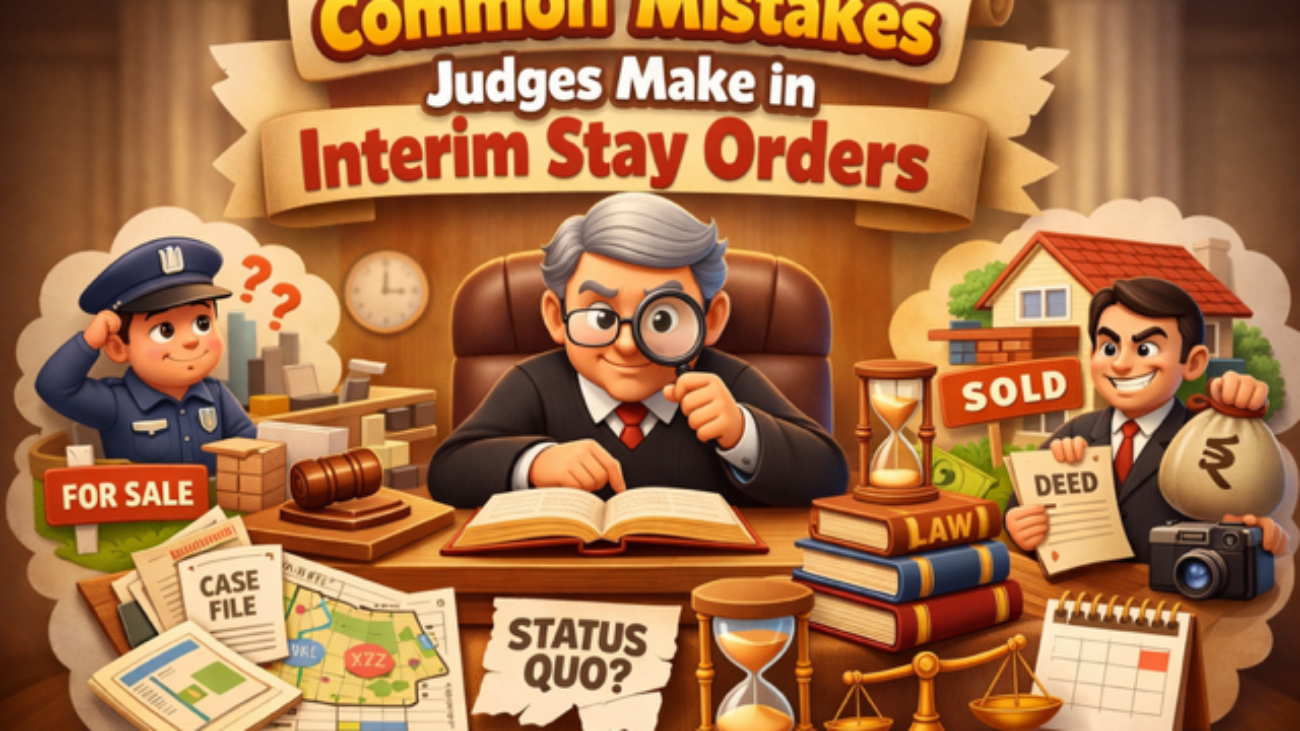
Common Mistakes Sometimes Judges Do While Passing Interim Orders under Order 39 Rule 1 & 2 CPC – Practical Insights from 18+ Years of Court Experience in Dwarka Court

Applications under Order 39 Rule 1 & 2 of the Code of Civil Procedure, 1908 are among the most frequently moved applications in civil litigation, particularly in property disputes. The purpose of such applications is simple yet critical—to protect the subject matter of the suit and prevent irreparable loss until final adjudication.

However, in actual court practice, it is often seen that interim injunction orders, though well-intended, sometimes become ineffective, ambiguous, or practically unenforceable. This happens not only due to haste or heavy judicial workload, but also because of unclear pleadings, vague prayers, and improper assistance by litigants or advocates.

Based on my 18+ years of continuous practice in civil courts, I have observed some recurring mistakes which substantially dilute the effectiveness of interim orders.

1. Failure to Clearly Specify the Implementing Authority

One of the most common and practical mistakes is passing an injunction order without naming the authority responsible for its implementation.

Orders often state “police assistance be provided” or “concerned police to ensure compliance”. In reality, unless the order clearly directs the SHO or DCP of the concerned police station by name or designation, police authorities hesitate to act due to fear of departmental consequences.

In my experience, such vague directions result in litigants repeatedly approaching courts for “clarifications”, thereby defeating the very purpose of interim relief.

2. Absence of Restraint on Creation of Third-Party Interest

Another serious error is failing to restrain defendants from creating third-party rights.

Many interim orders only mention “status quo be maintained” without specifically restraining sale, transfer, alienation, lease, or creation of third-party interest. Defendants often exploit this ambiguity by executing documents, creating possession rights, or transferring interests, which leads to multiplicity of proceedings.

From long-standing court practice, it is clear that every injunction in property matters must specifically bar third-party interest, otherwise the order becomes toothless.

3. Site Plan and Injunction Order Not Correlated

In property disputes, the site plan is the backbone of interim relief. Yet, many injunction orders fail because the restrained portion mentioned in the order does not clearly match the site plan on record.

If the site plan is vague, unnumbered, or unclear, and the order restrains interference in “portion shown in red colour” without clarity, such orders become impossible to enforce on ground. My experience suggests that courts must ensure that the site plan and operative directions are perfectly aligned.

4. No Clear Findings on the Three Essential Ingredients

Order 39 injunctions must necessarily be based on:

  • Prima facie case
  • Balance of convenience
  • Irreparable loss

However, at times interim orders are passed without recording clear findings on these three essentials. Such orders are highly vulnerable in appeal and often get stayed or set aside by appellate courts.

5. Casual Use of the Term “Status Quo”

The expression “status quo” is one of the most misused terms in interim orders. Status quo regarding what—possession, construction, title, nature of property, or revenue record?

Without clarity, parties interpret the order conveniently, resulting in allegations of violation and contempt petitions.

6. Failure to Fix Timeline or Next Date

Another practical issue is grant of interim relief without fixing timelines for compliance or further hearing. This creates uncertainty and encourages misuse of interim protection for prolonged periods.

7. Ignoring Ground Realities and Documents

Photographs, revenue records, electricity bills, and municipal documents often reflect the real status of property. Ignoring these while passing interim orders sometimes results in orders disconnected from ground realities, leading to unnecessary execution problems.

What 18+ Years of Experience Suggest

My experience clearly suggests that an interim injunction is not merely a legal formality but a practical tool. Precision in drafting, clarity in directions, and enforceability on ground are essential. Courts and advocates must remember that a vague interim order creates more litigation than it resolves.

A well-drafted and well-reasoned interim order saves judicial time, protects rights, and maintains faith in the justice delivery system.

Conclusion

Interim orders under Order 39 Rule 1 & 2 CPC must be clear, specific, and executable. Any ambiguity regarding authority, property identification, scope of restraint, or duration weakens the order and defeats its purpose. Justice is not only about passing orders—it is about passing orders that actually work.

SEO Search Titles

  • Common Mistakes in Interim Injunction Orders under Order 39 CPC
  • Order 39 Rule 1 & 2 CPC: Practical Problems in Interim Stay Orders
  • Why Interim Injunction Orders Fail in Property Disputes
  • Advocate’s Guide to Effective Interim Orders under CPC
  • Common Errors in Temporary Injunction Orders Explained by Senior Advocate

SEO Hashtags

#Order39CPC

#InterimInjunction

#TemporaryInjunction

#CivilProcedureCode

#PropertyDisputes

#StatusQuoOrder

#InjunctionLaw

#IndianCivilLaw

#AdvocateExperience

#CourtPractice

https://www.linkedin.com/embed/feed/update/urn:li:share:7411617339345141760

https://share.google/sTqVWmkTVmsy9Sve3

D1FF749B-8E07-42AE-B673-6943223B2466

Why a Strong Legal Team Matters: How My 30–35 Member Associate Team Strengthens Every Case in Dwarka Courts, New Delhi

Choosing the right advocate is not just about individual experience—it is about the strength of the team standing behind your case. In today’s complex legal environment, especially in busy courts like District Court Dwarka, Sector-10, New Delhi, a well-coordinated and experienced legal team can make a decisive difference in the outcome of your matter.

With 18+ years of continuous practice in Dwarka Courts, I have learned one crucial lesson: no important case can be handled effectively by a single lawyer alone. This is precisely why my firm operates with a dedicated team of 30 to 35 well-qualified and professionally trained associates, working together from Chamber No. 728, 7th Floor, Dwarka Court Complex.

⚖️ Why a Strong Legal Team Is Essential for Your Case

Legal cases today involve multiple layers—procedural compliance, documentation, research, court appearances, client coordination, and real-time strategy. A strong team ensures:

✅ No missed dates or procedural lapses

✅ Faster drafting and filing

✅ Better preparation for arguments

✅ Continuous follow-up with courts and authorities

✅ Efficient handling of urgent and parallel matters

When your case is important, time-sensitive, or high-stakes, a solo approach can be risky. A team-based approach ensures accuracy, speed, and strategic depth.

👨‍⚖️ My Experience + Their Execution = Strong Representation

With 18+ years of hands-on litigation experience in Dwarka Courts, I personally train, guide, and supervise every associate working with me. Each member of my team is:

📌 Legally well-qualified

📌 Court-experienced

📌 Procedurally sound

📌 Trained under my supervision

📌 Familiar with Dwarka Courts’ functioning

This combination of experience-led strategy and team-driven execution ensures that clients receive consistent, reliable, and professional legal assistance at every stage.

🤝 What My Team Helps Me With (And How It Benefits You)

Our assistance covers the entire legal journey, from the first complaint to the highest courts in India:

🚔 Police Station & Pre-Litigation Support

  • Police station visits
  • Complaint drafting and follow-ups
  • FIR-related assistance
  • Negotiation and mediation efforts

📝 Drafting & Documentation

  • Civil suits, recovery matters, injunctions
  • Written statements, replies, rejoinders
  • Interim applications and affidavits
  • Appeals and revisions

🏛️ Court Work at Dwarka District Courts

  • Filing and scrutiny of cases
  • Daily court appearances
  • Date tracking and compliance
  • Coordination with court staff

📚 Legal Research & Case Strategy

  • In-depth research on latest judgments
  • Preparing case law compilations
  • Issue-wise strategy discussions
  • Anticipating opposition arguments

⚡ Urgent & Complex Matters

  • Stay applications
  • Interim relief matters
  • Emergency filings

🏛️ High Court & Pan-India Matters

  • Drafting petitions for High Courts
  • Coordination with counsels across India
  • Filing matters pan India
  • Ensuring continuity of legal strategy

🧠 Why Teamwork Matters in Important Cases

When you are contesting an important civil, criminal, or commercial case, the margin for error is extremely small. A strong team ensures:

🔹 Multiple legal minds reviewing your case

🔹 Faster response to sudden developments

🔹 Parallel handling of court, drafting, and client communication

🔹 Backup in case of overlapping dates or urgent listings

This means your case never suffers due to absence, delay, or oversight.

📍 Advantage of a Dedicated Team at Dwarka Courts

Being permanently based at Dwarka Courts, Sector-10, gives our team a strong local advantage:

📌 Familiarity with court procedures

📌 Practical understanding of court working

📌 Efficient coordination within the complex

📌 Regular interaction with court staff

This local presence, combined with national-level legal handling, offers clients the best of both worlds.

🌟 What This Means for Clients Searching an Advocate in Dwarka

If you are searching for a reliable advocate or law firm in Dwarka Court, New Delhi, remember this:

👉 You are not hiring just one advocate

👉 You are hiring an entire legal ecosystem

👉 A team that works tirelessly behind the scenes

👉 Guided by 18+ years of courtroom experience

Our goal is simple: to protect your rights, save your time, and strengthen your case at every stage.

📞 Final Thought

Law is not just about arguments—it is about preparation, coordination, and execution. A strong, trained, and experienced team is the backbone of effective legal representation. With my dedicated associates at Chamber No. 728, 7th Floor, Dwarka Court, clients can be assured that their case is handled with professionalism, diligence, and strategic precision.

When your matter is important, a strong legal team makes all the difference ⚖️💼

492518A9-C5E1-4849-9021-F26DABB794E8

How to Search the Best Advocate in Dwarka Court, Sector-10, Delhi?

A Practical & Experienced Client Guide by Advocate in Dwarka Court who is dealing in Civil, Criminal and Matrimonial cases from more than 18+ years in District court Dwarka, New Delhi.

Choosing the right advocate is one of the most crucial decisions in any legal dispute. Whether your matter relates to civil litigation, criminal defence, cheque bounce, matrimonial disputes, property matters, or commercial cases, the quality of legal representation directly affects the outcome. Dwarka Court, Sector-10, New Delhi is one of the busiest district courts in Delhi, housing multiple courts and thousands of advocates. For a client, this abundance often creates confusion rather than clarity.

This guide explains how a client can genuinely identify the best advocate in Dwarka Court, based on practical parameters and what 18+ years of court experience truly reveals.

1. Check Advocate’s Pending & Disposed Cases in Dwarka Court

Before engaging any advocate, clients should verify their pending and disposed-off cases through the official eCourts portal. An advocate who regularly appears in Dwarka Court will have a visible litigation footprint. Disposed cases reflect courtroom experience, while pending matters show ongoing practice and engagement.

👉 What 18+ years of experience says:

A seasoned advocate maintains a balanced docket—neither overloaded nor inactive—ensuring proper attention to each case.

2. Review Previous Case Orders & Judgments

Clients should search for previous case orders argued by the advocate. These orders reveal the advocate’s drafting skills, understanding of law, and ability to persuade the court. Well-reasoned orders in favour of clients reflect sound legal strategy.

👉 Experience insight:

Judgments don’t lie. Years in court teach that solid preparation and legal clarity leave a permanent mark in judicial orders.

3. Advocate’s Chamber & Office Should Be in Dwarka Court

An advocate having a chamber and office within Dwarka Court, Sector-10 offers significant advantages—easy accessibility, regular court presence, familiarity with court staff, filing counters, and procedural nuances.

👉 From experience:

Local presence saves time, avoids delays, and ensures better coordination—especially during urgent hearings.

4. Prefer 15+ or 18+ Years of Experience

Experience matters immensely in litigation. An advocate with 18+ years of experience has witnessed changes in law, judicial mindset, procedural reforms, and evolving litigation trends. Such advocates can anticipate challenges before they arise.

👉 What 18+ years teaches:

Law is not just sections—it is timing, presentation, patience, and strategy. Experience teaches when to argue, when to negotiate, and when to wait.

5. Team Strength & Office Infrastructure

Modern litigation demands teamwork. A strong legal team ensures timely filings, research support, case tracking, and effective client communication. Team strength reflects the advocate’s seriousness and professionalism.

👉 Practical wisdom:

Behind every successful court argument is a prepared team working in coordination.

6. Professionalism, Ethics & Transparency

Clients must observe the advocate’s professional conduct—punctuality, clear advice, transparency in fees, and ethical practice. Avoid advocates who guarantee results or mislead clients.

👉 Experience lesson:

Honest advice, even if difficult, protects clients in the long run and builds lasting trust.

7. Specialization in Your Type of Case

Not every advocate handles every type of matter with equal expertise. Clients should choose advocates specializing in their legal issue—civil suits, criminal defence, matrimonial disputes, cheque bounce cases, property matters, etc.

👉 Court reality:

Specialization improves efficiency, confidence, and success rate.

8. Client Reviews & Reputation

Online reviews, word-of-mouth references, and courtroom reputation matter. An advocate respected by peers and judges reflects credibility and consistent conduct.

👉 Experience speaks:

Reputation is earned case by case, year by year—never overnight.

9. Communication & Regular Case Updates

A good advocate keeps clients informed, explains legal developments in simple language, and remains accessible for queries.

👉 From long practice:

Clients don’t fear cases—they fear uncertainty. Clear communication reduces stress and builds confidence.

Conclusion

Searching for the best advocate in Dwarka Court, Sector-10, Delhi requires careful evaluation—not impulse decisions. Checking case records, experience, professionalism, local presence, and ethical conduct ensures that your legal matter is handled competently.

An advocate with 18+ years of experience understands not only the law, but the courtroom, the system, and the client’s expectations. Such experience transforms legal representation from mere advocacy into strategic guidance.

Make an informed choice—because your case deserves nothing less than experience, integrity, and dedication.

https://www.linkedin.com/embed/feed/update/urn:li:share:7411035000114098177