



Introduction – Mule Account Cyber Fraud Case in Delhi
Mule Account Cyber Fraud Case in Delhi: 10 Powerful Bail Factors Every Accused Should Understand
Fraud Money Entered Your Bank Account? Understand What Courts May Examine Before Anticipatory or Regular Bail.
Your bank account received money allegedly connected with an online investment scam, digital arrest fraud, Telegram task scam or other cybercrime. The Cyber Police now calls it a “mule account.” You may have received a Section 35(3) BNSS notice, your account may have been frozen, or the police may be asking who controlled your ATM card, mobile number, UPI or banking application.
The immediate questions are usually: Can I be arrested? Can I apply for anticipatory bail? What happens if I am already arrested? What exactly will the Court examine?
The important point is that a mule-account allegation does not by itself decide guilt or bail. The Court may examine the accused’s precise role, knowledge, control over the account, transaction sequence, digital evidence, NCRP complaints, cooperation, requirement of recovery or custodial interrogation, and the stage of investigation.
What Is a Mule Account in a Cyber Fraud Investigation?
In cyber-fraud investigations, the expression “mule account” is commonly used for a bank account allegedly used to receive, hold, transfer, layer or withdraw money connected with the suspected fraud.
But the name appearing on the account is only the beginning of the investigation. A crucial question is: Who actually controlled and operated it, and with what knowledge?
| Alleged Role | What Investigators May Allege |
|---|---|
| Account holder | Account received disputed money |
| Account supplier | Account was knowingly made available |
| Operator | Personally controlled banking/UPI access |
| Cash withdrawer | Withdrew alleged fraud proceeds |
| Beneficiary | Retained money or earned commission |
| Recruiter | Procured further mule accounts |
| SIM/device supplier | Facilitated OTP or account access |
| Handler | Coordinated movement of funds |
| Alleged mastermind | Controlled a larger cyber-fraud network |
This distinction can become extremely important during bail arguments.
1. What Is the Exact Alleged Role of the Accused?
A bail application should not stop at the statement, “I am innocent.”
The Court will ordinarily be concerned with the specific role attributed by the prosecution. Was the accused merely the account holder? Did he knowingly rent the account? Was he operating the mobile banking application? Did he withdraw cash? Did he recruit other account holders? Was commission allegedly received?
A passive account holder, alleged cash withdrawer, recruiter and alleged mastermind may stand on very different factual footing.
2. Which Layer of the Money Trail Is the Account In?
Cyber investigations frequently reconstruct money movement like this:
Victim → Layer-1 Account → Layer-2 Account → Further Accounts → Withdrawal/Beneficiary
The closer the account is to the victim’s original payment, the transaction sequence, speed of onward movement and surrounding evidence may all become relevant.
In Mohd Ahmad v. State of NCT of Delhi, decided on 17 February 2026, the Delhi High Court dealt with an allegation that ₹2,16,015 entered a second-layer mule account and was withdrawn by self-cheque on the same day. The Court considered that sequence significant while declining anticipatory bail because the applicant’s role required closer investigation. The order should not, however, be treated as an automatic rule for every second-layer account.
3. Who Actually Controlled and Operated the Bank Account?
Account Ownership Is Not Always the Same as Account Operation
One of the most important questions in a mule-account case is:
“Whose name is on the bank account?” is different from “Who actually controlled and operated the account?”
Investigators may examine:
- registered mobile number and SIM;
- OTP control;
- banking-app and UPI access;
- debit-card possession;
- cheque-book possession;
- ATM withdrawals;
- beneficiary additions;
- device/IP information;
- transaction instructions; and
- communications with other accused.
In Sudhakar Dwivedi v. State (NCT of Delhi), 3 August 2026, the prosecution alleged that ₹5 lakh entered an account held in the applicant’s wife’s name, but that the account was being operated through the applicant’s mobile phone. The account was also alleged to be linked with approximately 16 NCRP complaints involving about ₹76.26 lakh. These circumstances formed part of the Court’s assessment of the anticipatory-bail request.
4. What Happened Immediately After the Money Was Credited?
Transaction chronology can sometimes reveal more than an isolated credit entry.
Scenario A: Money enters the account and remains untouched.
Scenario B: Money forms part of an ordinary, documented business transaction.
Scenario C: Money is immediately transferred to an unfamiliar account.
Scenario D: Money is withdrawn in cash or through self-cheque the same day.
Scenario E: Similar credits, onward transfers and withdrawals occur repeatedly.
The prosecution may rely heavily on rapid withdrawal or layering. The defence, depending upon the facts, may need documents explaining the transaction.
5. One NCRP Complaint or Multiple NCRP Complaints?
NCRP refers to complaints generated through the National Cyber Crime Reporting Portal.
There is a significant practical difference between one disputed transaction and an account appearing in several unrelated complaints from different victims or States.
Multiple NCRP complaints do not automatically establish guilt, but they can substantially increase investigative scrutiny.
For example, in Dipankar Bhowmick v. State, 23 July 2026, the Delhi High Court recorded that apart from the transaction involved in the FIR, the account was linked to two further cybercrime complaints—one from Andhra Pradesh and another from Bihar. The ongoing money-trail investigation was one of the circumstances considered by the Court.
6. Did the Account Holder Know Why the Account Was Being Used?
Knowledge and intention can become central issues.
There may be very different factual situations:
- account allegedly rented for commission;
- ATM card or cheque book given to another person;
- OTPs voluntarily shared;
- account allowed to be operated by a friend;
- account allegedly hacked;
- unauthorised access discovered later;
- genuine business receipt;
- trading or cryptocurrency explanation.
Receipt of money, knowledge of its source, participation in the fraud, benefit and conspiracy are distinct questions.
If the defence is that somebody else used the account, supporting evidence becomes important.
7. What Does the Digital Evidence Show?
WhatsApp, Telegram, SIMs and Mobile Phones May Matter as Much as Bank Statements
Modern cybercrime investigations rarely stop with a bank statement. Police may examine:
- WhatsApp and Telegram conversations;
- account details shared through chats;
- OTP messages;
- registered SIM cards;
- device information;
- banking-app activity;
- communications with co-accused; and
- alleged malicious APK files.
In Aditya Singh v. State NCT of Delhi, 15 May 2026, the prosecution alleged that the applicant arranged mule accounts and shared malicious APK files through WhatsApp/Telegram. The Court also noted prosecution allegations regarding evasive cooperation and failure to provide requisite device details while declining anticipatory bail.
Digital evidence can support the prosecution, but depending on its contents, it may also support the defence.
8. Has the Accused Actually Cooperated With Investigation?
Joining Investigation Is Not Always the Same as Cooperating
Merely appearing before the Investigating Officer may not end the inquiry.
The Court may examine whether the accused:
- answered relevant questions;
- explained disputed transactions;
- provided documents;
- preserved devices and records;
- complied with interim directions; and
- identified persons connected with the transactions.
In Sumial Ali v. State, 4 August 2026, concerning Cyber Cell, South-West Delhi, the applicant had appeared and supplied some information. The prosecution nevertheless contended that the cooperation had not taken the investigation to its logical conclusion and that custody was required to uncover the alleged wider syndicate.
Therefore, meaningful cooperation can matter more than merely recording attendance.
9. Is Custodial Interrogation or Recovery Still Required?
The prosecution may argue that custody is required to:
- trace additional mule accounts;
- identify beneficiaries;
- recover mobiles or SIM cards;
- locate debit cards or cheque books;
- identify cash withdrawals;
- confront the accused with digital evidence; or
- uncover a larger network.
The defence may, depending upon the facts, point out that relevant banking records are already available, accounts are frozen, devices have been supplied, documentary evidence has been collected, recovery is substantially complete or the applicant has a limited alleged role.
But documentary evidence does not automatically mean custody can never be required.
10. What Is the Stage of the Case?
Bail strategy changes considerably with the procedural stage.
| Procedural Stage | Typical Bail Question |
|---|---|
| Genuine apprehension of arrest | Whether anticipatory bail under Section 482 BNSS should be sought |
| Already arrested | Whether regular bail should be filed |
| Police custody | What interrogation/recovery remains |
| Judicial custody | Whether continued detention is required |
| Charge sheet filed | Whether further custody remains justified |
| Sessions Court rejection | Whether Delhi High Court remedy should be considered |
Section 482 BNSS specifically deals with directions for grant of bail to a person apprehending arrest.

Does Receiving Cyber Fraud Money Automatically Make You Guilty?
No automatic conclusion should be drawn merely from a credit entry.
The surrounding circumstances require examination: knowledge, account control, withdrawal, onward transfer, commission, communications, repeated transactions, digital evidence and the explanation for receiving the money.
At the same time, absence of direct communication with the victim does not by itself establish innocence.
What If My Friend Used My Bank Account?
Expect questions such as:
Why was access given? Who possessed the ATM card? Who controlled the registered SIM? Were OTPs forwarded? Who withdrew the money? Did the account holder receive commission? When was the alleged misuse discovered?
A bare statement that “my friend used my account” is considerably weaker than an explanation supported by objective records.
What If My Bank Account Was Hacked?
Contemporaneous evidence can become important, including:
- complaint to the bank;
- cyber/NCRP complaint;
- disputed-transaction request;
- SIM blocking;
- password reset;
- login alerts; and
- bank acknowledgments.
A complaint made before police contact may have greater factual value than an unsupported hacking explanation raised only after investigation begins.
What If the Transactions Were Genuine Business or Cryptocurrency Transactions?
Preserve documentary support such as invoices, contracts, GST records where applicable, correspondence, exchange records, wallet statements, transaction IDs and bank records.
The explanation has to be tested against the actual money trail.
Anticipatory Bail in a Mule Account Cyber Fraud Case
For a person genuinely apprehending arrest, anticipatory bail under Section 482 BNSS may be considered.
Important factors may include the alleged role, money trail, cooperation, digital material, requirement of recovery, custodial interrogation, antecedents, multiple complaints and the stage of investigation.
Anticipatory bail is not automatic merely because the accused is willing to join investigation.
Regular Bail After Arrest
Once arrest has taken place, the procedural context changes.
Regular bail arguments may focus on the custody already undergone, completion of police custody, progress of investigation, recovery, charge-sheet status, documentary nature of evidence, antecedents, parity with co-accused and the accused’s precise role.
An accused who could not obtain anticipatory bail can still have an independently examinable case for regular bail after arrest, depending on subsequent developments.
Mule Account Bail Rejected by Sessions Court — What Next?
Rejection by the Sessions Court does not mean the High Court will automatically grant bail.
First examine the rejection order carefully:
- Why was bail refused?
- Was non-cooperation alleged?
- What recovery remains?
- What money trail was relied upon?
- How many NCRP complaints exist?
- What role is attributed?
- Has investigation progressed since the earlier order?
- Are there subsequent or changed circumstances?
The High Court application should answer the weaknesses identified in the earlier order instead of merely repeating the same grounds.

Six Mistakes That Can Damage a Mule Account Bail Case
- Deleting WhatsApp or Telegram chats.
- Factory-resetting the mobile phone.
- Ignoring a lawful police notice.
- Giving inconsistent explanations.
- Failing to preserve banking or business records.
- Claiming another person operated the account without identifying supporting evidence.
A Section 35(3) BNSS notice is a formal police notice requiring appearance during investigation and should not simply be ignored.
Documents to Take to a Cyber Crime Bail Lawyer
Keep available, as applicable: FIR, Section 35 BNSS notice, NCRP details, bank statements, KYC papers, UPI/IMPS/NEFT/RTGS records, ATM and cheque information, WhatsApp/Telegram chats, emails, SIM/device details, business invoices, bank complaints, NCRP complaints, proof of business/income and previous bail or remand orders.
Prepare a Transaction Chronology Before Bail Arguments
| Date | Credit | Source | Debit/Withdrawal | Destination | Explanation | Supporting Document |
|---|
A chronology can quickly show where the disputed money entered, how long it remained, how it moved and what evidence supports the explanation.
It is a preparation tool, not a statutory legal requirement.
₹50,000, ₹2 Lakh or ₹20 Lakh Entered Your Account — Does the Amount Decide Bail?
The amount can influence how seriously the prosecution presents the case, but it is rarely the only consideration.
A more realistic assessment is:
Amount + role + knowledge + account operation + transaction pattern + NCRP complaints + digital evidence + recovery + cooperation + antecedents + investigation stage.
Mule Accounts in Digital Arrest, Investment and Task Scam Cases
Mule-account allegations increasingly appear in investigations involving digital-arrest scams, WhatsApp investment frauds, Telegram task scams, fake trading platforms, impersonation fraud and other online financial offences.
The bail issue, however, remains individual: what exactly is the evidence connecting this particular accused to the alleged fraud?
Why Local Delhi / Dwarka Court Experience Can Matter
Cyber bail matters can require urgent filing, examination of police notices, jurisdiction analysis, preparation of money-trail documents and coordination with investigating agencies.
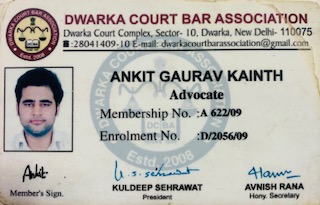
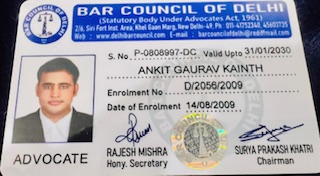
Advocate Ankit Gaurav Kainth, Chamber No. 728, Dwarka Court, New Delhi, has 18+ years of litigation experienceand handles criminal and cyber-fraud bail matters connected with Dwarka Courts and Delhi courts.
The relevance of local experience is procedural and practical; no lawyer can responsibly guarantee bail or any particular result.
FAQs
1. Can a mule-account holder get anticipatory bail in Delhi?
Yes, an accused apprehending arrest may seek anticipatory bail under Section 482 BNSS, but the result depends upon the role, evidence, cooperation, money trail and investigation requirements.
2. Does receiving cyber fraud money automatically make me guilty?
No. Receipt is an important fact, but knowledge, control, transaction pattern, benefit and surrounding evidence must also be examined.
3. Can police arrest me if my friend used my bank account?
That depends upon the evidence and investigation. Police may examine why access was given and who controlled the SIM, OTP, ATM card and transactions.
4. What if I did not know the money came from cyber fraud?
Lack of knowledge may be relevant, but it should be assessed against the complete factual record and supporting evidence.
5. What happens if several NCRP complaints are linked to my account?
Multiple complaints do not automatically establish guilt, but may significantly increase investigative scrutiny and affect bail arguments.
6. Can police examine or seize my mobile phone?
Digital devices can become relevant evidence where investigators allege banking-app access, OTP control, chats or communication with co-accused. Applicable legal procedure must be followed.
7. Does same-day withdrawal make anticipatory bail difficult?
It can become an adverse circumstance depending on the explanation and other evidence, but it does not create an automatic rule against bail.
8. Can I get bail if police allege that I received commission?
Bail remains fact-specific. The prosecution may rely on alleged commission as evidence of knowledge or participation; the defence must examine the evidence supporting that allegation.
9. What if Sessions Court rejects my bail?
The rejection order should be analysed carefully before considering an application before the Delhi High Court.
10. Can regular bail be considered after the charge sheet?
Yes. Filing of the charge sheet, custody undergone, recovery, evidence, antecedents and continued need for detention may all become relevant considerations.
Conclusion
A Mule Account Cyber Fraud Case in Delhi cannot responsibly be assessed merely by asking whether disputed money entered a particular bank account.
The real assessment requires examination of the accused’s precise role, knowledge, account control, transaction sequence, Layer-1/Layer-2 position, NCRP linkages, digital evidence, cooperation, recovery requirements and procedural stage.
If you receive a Cyber Cell notice, apprehend arrest or discover that your account has been linked with cyber-fraud transactions, preserve your devices, bank statements, chats, transaction records and contemporaneous complaints. Early factual reconstruction can be important for both investigation and bail strategy.
Professional Assistance
Advocate Ankit Gaurav Kainth
Chamber No. 728, Dwarka Court, New Delhi
Mobile: 9899085554 / 9811885554
Assistance may be sought for Section 35 BNSS notices, anticipatory bail, regular bail, cyber-fraud investigation, Sessions Court matters and appropriate proceedings before the Delhi High Court.
Disclaimer: This article is for general legal information only and does not constitute legal advice for any particular case. Bail depends upon the FIR, offences alleged, evidence, jurisdiction, investigation stage, criminal antecedents and individual facts.
| Cyber Cell Dwarka: | The Ultimate Blueprint to Get Bail at the Earliest Stage ⭐ |
| 🚨 Received a Notice Under Section 35(3) BNSS from Cyber Cell Dwarka? | The Ultimate Playbook to Protect Your Rights |
| Expedited Relief: | How to Secure Anticipatory Bail Swiftly in Cyber Fraud Cases at Dwarka Court |
| Cyber Crime Investigation | Can Police Freeze Your Bank Account in Cyber Crime Investigation? |
| 🚨 Is your bank account frozen by Cyber Police? | How to Release the Amount Freeze by Cyber Police from Dwarka Court?💰👮🚨 |
| Criminal Defense Lawyer | Criminal Defense Lawyer in Dwarka, Delhi |
| Consult Today | Criminal Case Advocate Dwarka Court |
| Bail Lawyer in Dwarka Court | Professional Bail Lawyer in Dwarka Court |
| Bail in 420 IPC / Fraud Cases | Local Criminal Case Bail Advocate Dwarka Court |
[…] Mule Account Cyber Fraud Case in Delhi: 10 Bail Factors […]