

80D0F050-5570-40BC-AC3A-0E14A7E7F506

All-Time Best Citations & Landmark Judgments Under the Civil Procedure Code (CPC)-By Advocate dealing in Civil Cases from 18+ Years

Essential Guide for Litigants, Law Students & Legal Professionals

The Civil Procedure Code, 1908 (CPC) is the backbone of Indian civil litigation. Every suit, appeal, decree, execution, and interim proceeding rests on CPC’s procedural foundation. Over decades, Indian courts—especially the Supreme Court—have delivered landmark judgments that interpret and refine these procedures, ensuring justice is not defeated by technicalities. Below is a curated list of the all-time most important CPC judgments, covering jurisdiction, injunctions, limitation, amendment of pleadings, res judicata, and more—perfect for anyone wanting a deep yet practical understanding.


1. Satyadhyan Ghosal v. Deorajin Debi (1960)

A classic judgment explaining Res Judicata under Section 11. The Court held that once a matter is finally decided between the same parties, it cannot be reopened. This ensures finality of litigation and prevents harassment through repeated suits. This case is often cited to define constructive res judicata and issue estoppel.


2. K. Shasidhar v. Indian Overseas Bank (2019)

A crucial judgment interpreting Order 41 Rule 31, reaffirming the duty of appellate courts to give reasoned judgments. The Supreme Court clarified that even when confirming lower court decrees, appellate courts must apply their independent mind. This ruling protects litigants from mechanical affirmations.


3. T. Arivandandam v. T.V. Satyapal (1977)

This famous judgment strengthened Order 7 Rule 11. The Court held that frivolous, vexatious, or bogus suits must be rejected at the threshold. It empowered trial courts to prevent misuse of judicial process and eliminate suits that disclose no cause of action.


4. Salem Advocate Bar Association (I) & (II) (2003, 2005)

Two historic judgments modernising Indian procedure. The Supreme Court validated CPC Amendments of 1999 & 2002, introduced case management, emphasised ADR, and clarified the scope of costs and written statements. These rulings shaped contemporary civil litigation and efficiency in trial courts.


5. Surya Dev Rai v. Ram Chander Rai (2003)

A key judgment on supervisory jurisdiction under Article 227 and revisional powers. The Court expanded the scope of judicial review in civil matters, distinguishing between appealability and maintainability of writs. Though later modified, it remains a cornerstone in understanding certiorari and revisions under CPC.


6. Kailash v. Nanhku (2005)

A widely cited ruling interpreting Order 8 Rule 1 (filing of written statement). The Supreme Court held that the 90-day limit is directory, not mandatory, and courts may grant extensions when justified. This judgment balanced strict procedural timelines with substantive justice.


7. Rajesh Kumar Aggarwal v. K.K. Modi (2006)

A landmark on Order 6 Rule 17 – Amendment of Pleadings. The Court held that amendments necessary for determining the real issues between parties must be liberally allowed, provided they do not cause injustice. This case remains the gold standard for amendment jurisprudence.


8. Morgan Stanley Mutual Fund v. Kartick Das (1994)

A foundational judgment on temporary injunctions under Order 39. The Court clarified the essential triad:
✔ Prima facie case
✔ Balance of convenience
✔ Irreparable injury
It also warned against granting ex parte injunctions without adequate urgency and reasons.


9. Padam Sen v. State of UP (1961)

A defining judgment on inherent powers of the court (Section 151). The Court held that inherent powers cannot override express provisions of CPC and may be exercised only to prevent abuse of process or secure ends of justice. This ruling is central to understanding judicial discretion.


10. Ghanshyam Dass v. Anant Kumar Sinha (1991)

This judgment stressed that procedural laws are handmaids of justice and should not be used to defeat substantive rights. Courts must adopt a justice-oriented approach while applying CPC provisions. This principle still guides modern civil jurisprudence.


Why These Judgments Matter Today

These rulings collectively define the practical functioning of CPC:

  • Ensuring fairness in procedure
  • Curtailing abuse of process
  • Balancing technical compliance with justice
  • Empowering courts with discretion
  • Modernising civil litigation

For litigants, practitioners, and students, understanding these decisions is essential for strategy, pleadings, and courtroom advocacy.

Best Supreme Court Judgments Under CPC | Top Landmark Civil Procedure Code Cases.

Explore the most important Supreme Court judgments interpreting the Civil Procedure Code (CPC). Essential citations on res judicata, injunctions, amendments, appeals, and inherent powers.

CPC landmark judgments, civil procedure code cases, res judicata case law, Order 7 Rule 11 judgment, amendment of pleadings Supreme Court, best CPC citations India.

Consult an experienced advocate to determine the most suitable mode of service based on the facts of your case and court practice.

Contact me for Consultation :- 9899085554, 9811885554

Ankit Gaurav Kainth Advocate, Dwarka Court, Chamber No.728, 7th Floor, Dwarka, New Delhi
https://share.google/4r7kHm3s4da3OS9rS

84BD04A8-3688-4F42-B17F-8C4061C1D7D0

Best Supreme Court Judgments for Divorce on Grounds of Cruelty | 2025 Guide by Experienced 18+ years of Practice, Advocate in Dwarka Court

Explore the most important Supreme Court citations for divorce on cruelty. Clear explanations of mental, emotional, and litigation-based cruelty grounds.

  • All-Time Best Citations for Divorce on the Ground of Cruelty

    Your Ultimate Legal Guide by Advocate Ankit G. Kainth
    When a marriage becomes a source of constant pain, humiliation, or emotional exhaustion, the law provides a powerful remedy—divorce on the ground of cruelty. Over the years, Indian courts have delivered landmark judgments that define, reinterpret, and expand the meaning of “cruelty” under matrimonial laws. Whether you are a litigant, a law student, or a professional, understanding these iconic citations helps in grasping how courts view cruelty in modern marriages.
    Below are the all-time most impactful and frequently relied-upon judgments that shaped the legal landscape of divorce based on cruelty.


    1. K. Srinivas Rao v. D.A. Deepa (2013)

    This landmark Supreme Court judgment is one of the clearest illustrations of emotional and mental cruelty. The Court held that false allegations, filing multiple baseless complaints, and continuous harassment by one spouse amount to cruelty. The ruling emphasized that litigation misuse itself can destroy marital peace.


    2. Naveen Kohli v. Neelu Kohli (2006)

    One of the most quoted cases in divorce jurisprudence, this judgment recognizes that when a marriage has irretrievably broken down and both parties are living in constant bitterness, forcing them to stay together serves no purpose. The Court’s observation that a marriage dead for all practical purposes must be dissolved became a guiding principle.


    3. Shobha Rani v. Madhukar Reddy (1988)

    This classic Supreme Court ruling expanded the definition of cruelty by holding that cruelty need not be physical. Emotional trauma, humiliation, repeated taunts, financial harassment, and conduct making life unbearable are equally potent grounds. This case laid the foundation for psychological cruelty in Indian matrimonial law.


    4. Samar Ghosh v. Jaya Ghosh (2007)

    No discussion on cruelty is complete without this judgment. It serves as a master checklist of what constitutes mental cruelty. The Court listed illustrations such as:
    • Persistent refusal to have marital relations
    • Indifference or neglect
    • Humiliation in public
    • Unfounded allegations
    • Long periods of separation
      This judgment is frequently used by courts as the gold standard for evaluating cruelty.


    5. V. Bhagat v. D. Bhagat (1994)

    A groundbreaking decision where the Court held that long-drawn, bitter litigation itself can be cruelty. When spouses engage in continuous allegations, cross-allegations, and stressful court battles, the emotional strain is considered sufficient ground for divorce. This case is especially relevant in contested matters where hostility has lasted for years.


    Why These Citations Are Considered “All-Time Best”

    These judgments collectively cover every dimension of cruelty:✔ Physical cruelty✔ Emotional and psychological cruelty✔ Social humiliation✔ Litigation harassment✔ Breakdown of marriage✔ Continuous mental agony
    They empower courts to evaluate not just single acts, but the overall impact on the mental peace and dignity of the spouse.


    Final Thoughts

    Cruelty is no longer limited to physical violence. The modern interpretation recognizes emotional harm, loss of dignity, and sustained mental stress as equally damaging. These judgments have shaped a more humane and realistic understanding of marriage and personal freedom.
    If you are facing similar issues or need precise legal guidance on divorce matters, consulting an experienced advocate can provide clarity, strategy, and confidence at every stage.

#divorceoncruelty

#SupremeCourtcrueltyjudgments

#mentalcrueltyinmarriage

#landmarkdivorcecitationsIndia

#bestjudgmentsfordivorceIndia

Consult an experienced advocate to determine the most suitable mode of service based on the facts of your case and court practice.

Contact me for Consultation :- 9899085554, 9811885554

Ankit Gaurav Kainth Advocate, Dwarka Court, Chamber No.728, 7th Floor, Dwarka, New Delhi
https://share.google/4r7kHm3s4da3OS9rS

203C31DB-43CE-4594-AB30-B815EABD675C

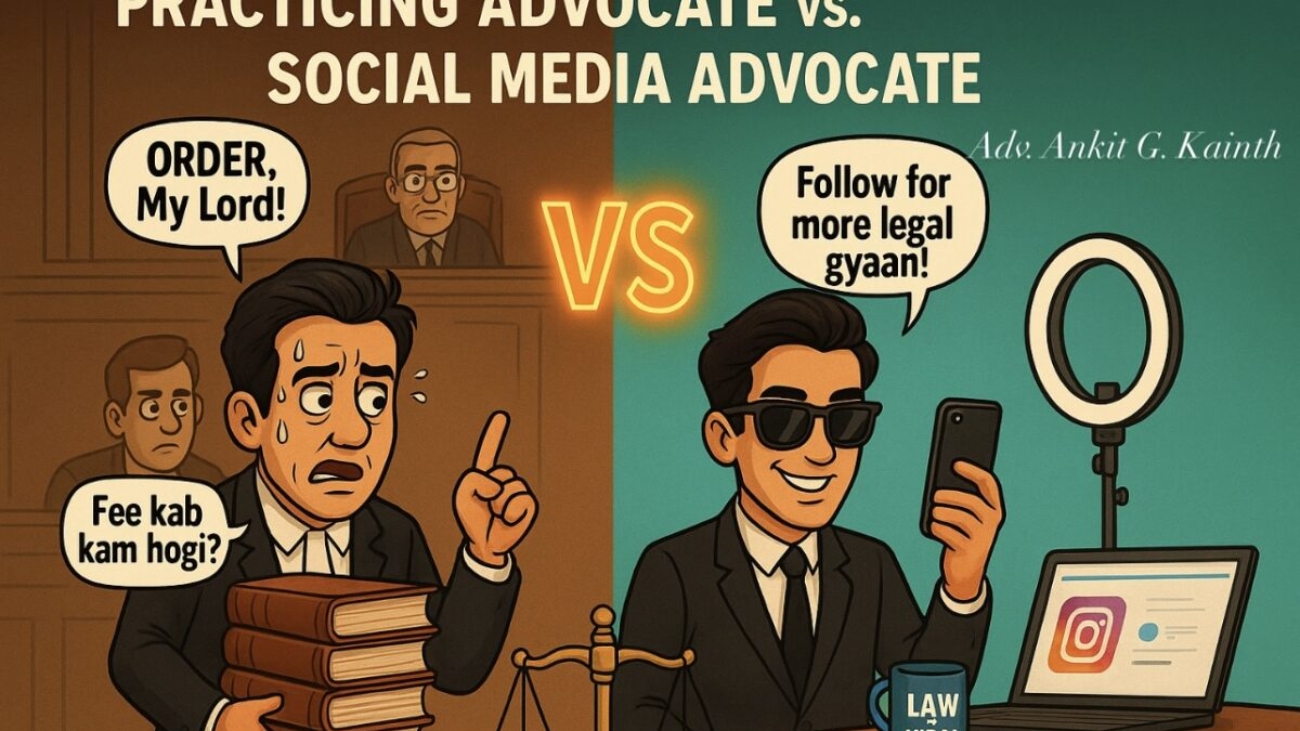
Practicing Advocate vs. Social Media Advocate 🤓📱⚖️

In today’s era, there are two species of lawyers roaming freely—
1. Practicing Advocates: Found in courts, drenched in sweat, burdened with files.
2. Social Media Advocates: Found online, drenched in filters, burdened with hashtags.

Let’s decode the epic differences between the two—because trust me, it’s more entertaining than any Netflix drama.

  1. Workstation 🏛️ vs. 📱
    • Practicing Advocate: Courtrooms, bar libraries, dusty registers.
    • Social Media Advocate: Cafés with Wi-Fi, reels with trending songs.
    👉 One-liner: “Court mein date milti hai, Insta pe followers!”

  1. Uniform 👔 vs. 👕
    • Practicing Advocate: Black coat, band, sweaty face.
    • Social Media Advocate: Blazer for DP, T-shirt for reel.
    👉 One-liner: “Practicing advocate wears black, social media advocate adds filters to black.”

  1. Arguments 🎤 vs. 🎶
    • Practicing Advocate: Argues before judges with citations.
    • Social Media Advocate: Argues before comments section with emojis.
    👉 One-liner: “One needs case laws, other just needs good captions.”

  1. Reality ⏳ vs. Views 👀
    • Practicing Advocate: Waits 4 hours for their matter to be called.
    • Social Media Advocate: Waits 4 seconds for likes to roll in.
    👉 One-liner: “Court ka patience > Insta ka algorithm.”

  1. Income 💰 vs. 💕
    • Practicing Advocate: Fee comes late, after multiple reminders.
    • Social Media Advocate: Payment? Nah, just “exposure” and “collabs.”
    👉 One-liner: “Advocate paisa ke liye fight karta hai, influencer spotlight ke liye.”

  1. Clients 👨‍👩‍👦 vs. 👥
    Practicing Advocate: Handles emotional clients shouting “Humari izzat ka sawal hai!”
    • Social Media Advocate: Handles followers shouting “Next reel kab aayegi?”
    👉 One-liner: “One manages affidavits, other manages aesthetics.”

  1. Legacy 📚 vs. 📸
    • Practicing Advocate: Builds reputation after years in court.
    • Social Media Advocate: Builds reputation after one viral reel.
    👉 One-liner: “Court mein senior ban’ne mein 20 saal, Insta pe sirf 20 seconds.”

Final Verdict ⚖️😂

Both are advocates in their own kingdoms. The practicing advocate fights for justice, while the social media advocate fights for attention. One seeks judgments, the other seeks engagement. Yet both remind us—law is not just about black coats, but also about adapting with time.

👉 Closing one-liner: “Courtroom ho ya Instagram, sabko apni audience chahiye!”

Consult an experienced advocate to determine the most suitable mode of service based on the facts of your case and court practice.

Contact me for Consultation :- 9899085554, 9811885554

Ankit Gaurav Kainth Advocate, Dwarka Court, Chamber No.728, 7th Floor, Dwarka, New Delhi
https://share.google/4r7kHm3s4da3OS9rS

FOLLOW US FOR MORE LEGAL & RECENT UPDATES:-

7B3359CC-2D29-4C7D-80E5-3D9CA472EF3A

How to Check eCourts Services App to See an Advocate’s Pending & Disposed Cases in Dwarka Court🧑‍💼📊✨

Yes, you read it right—you can check the total number of cases presently filed by any Advocate in any District Court or dwarka court across India through the eCourts Services App. This simple check can give clients a major boost of confidence and helps them understand the actual practice profile of the lawyer they intend to engage.

Most clients feel confused while choosing the right advocate. Some rely on word of mouth, others rely on online profiles. But the most authentic data is available directly from the judicial system itself. The eCourts App allows you to see how many cases an Advocate has filed, in which courts they appear frequently, and how active their litigation practice really is.


How to Check an Advocate’s Case Data on eCourts Services App 🏛️📱
1. Download the “eCourts Services” App from Play Store or App Store.
2. Open the app and select ‘Search by Advocate Name’.
3. Choose the State and the District Court.
4. Enter the Advocate’s Name exactly as registered on court records.
5. Instantly, you’ll see the details of:
• Pending cases
• Disposed cases
• Court number & case type
• Year of filing

This tool reveals an Advocate’s primary practice area, the type of matters they handle, and the courts where they consistently appear.


Example: My Case Data from Dwarka District Court, New Delhi 🏛️📍

For illustration, here is my own active filing record as visible on eCourts:
1. Chief Metropolitan Magistrate (South-West) DWK – 16 Cases
2. Senior Civil Judge-cum-RC (South-West) DWK – 14 Cases
3. Principal Judge Family Court (South-West) DWK – 22 Cases
4. District & Sessions Judge (South-West) DWK – 22 Cases

Total: 16 + 14 + 22 + 22 = 74 cases
This reflects only my filed matters in Dwarka Courts.
In addition, I regularly appear in:
✔ All Six Delhi District Courts
✔ Delhi High Court
✔ All Haryana District Courts
✔ Chandigarh High Court
✔ Nainital High Court
✔ Jaipur High Court

Do note: The app shows only cases filed by the lawyer, not the matters where the lawyer appears as counsel for defendants or accused.


Why This Data Matters for Clients & Advocates 🔍💡
• Authenticity: You get court-verified information—not marketing claims.
• Transparency: Clients can see where the advocate genuinely practices.
• Specialization Insight: More filings in a particular court show a strong command in that jurisdiction.
• Referral Decisions: Even advocates can verify the presence and experience of fellow lawyers before referring matters.
• Confidence Building: When clients see real data, decision-making becomes easier, faster, and more trust-based.


In today’s digital era, knowledge empowers clients. The eCourts App is a simple yet powerful tool that helps you understand an advocate’s real-world litigation footprint and ensures you engage someone truly active and experienced in the relevant court.

#Law
#BestAdvocateinDwarkaCourtdelhi

Consult an experienced advocate to determine the most suitable mode of service based on the facts of your case and court practice.

Contact me for Consultation :- 9899085554, 9811885554

Ankit Gaurav Kainth Advocate, Dwarka Court, Chamber No.728, 7th Floor, Dwarka, New Delhi
https://share.google/4r7kHm3s4da3OS9rS

5A9613DD-2C15-4975-992A-0B53575EF501

How to Cancel a Non-Bailable Warrant (NBW) Issued Against an Accused? – A Complete Guide by Advocate in Dwarka Court 🧑🏻‍⚖️👮‍♂️⛓️‍💥🚨🚓

A Non-Bailable Warrant (NBW) is one of the strictest orders a court can issue. It authorizes the police to arrest the accused and produce them before the court. Unlike regular warrants, an NBW is not automatically cancelled on appearance—you need proper legal steps. Understanding NBWs is extremely important for clients, advocates, and anyone facing criminal proceedings.

What Is a Non-Bailable Warrant?

A Non-Bailable Warrant is a court order directing police to arrest a person who has repeatedly avoided court proceedings. It is mostly issued in criminal matters when:
• The accused does not appear despite summons or bailable warrants.
• The court believes the accused is deliberately avoiding the trial.
• Presence of the accused is essential for further proceedings.

Why Do Courts Issue NBWs?

Courts issue NBWs to ensure:
• Attendance of the accused
• Smooth progress of the trial
• Prevention of delay and misuse of legal process

In short, NBWs are issued when the court loses trust that the accused will appear voluntarily.

How Can an NBW Be Cancelled?

Cancelling an NBW requires immediate and strategic action, usually through an advocate. The steps include:
1. Drafting a Cancellation Application before the same court that issued the NBW.
2. Explaining the reason for absence, such as medical emergency, genuine mistake, travel issues, or lack of knowledge of the date.
3. Producing supporting documents, if any.
4. Ensuring the accused is present in court, unless the court permits exemption.
5. Requesting the court to restore the trust by imposing a fine or taking a fresh bond.

If the court is satisfied with the explanation, it cancels the NBW on the same day.

What Happens if You Ignore an NBW?

Ignoring an NBW can lead to:
• Immediate arrest at home or workplace
• Cancellation of bail
• Issuance of proclamation under Section 82 CrPC (declaring you absconding)
• Attachment of property under Section 83 CrPC
• Serious damage to your credibility in the case

An NBW never disappears on its own—it only gets worse if ignored.

How an Advocate Helps You (Yes, with a small fee 😉)

An experienced criminal advocate can:
• Draft a strong NBW cancellation application
• Present proper legal grounds before the judge
• Protect you from arrest during the hearing
• Ensure smooth compliance and avoid future NBWs
• Guide you on court etiquette and preventive measures

A skilled advocate not only cancels the NBW but also protects your record and reputation.


If you or someone you know has an NBW issued, act fast. Timely legal help can turn a stressful situation into a manageable one—sometimes within a single hearing.

hashtag#AdvocateinDwarkaCourt
hashtag#BestAdvocateinDwarkaCourt
hashtag#DivorceAdvocateinDwarkaCourt
hashtag#MatrimonialAdvocateinDwarkaCourt
hashtag#CivilAdvocateinDwarkaCourt
hashtag#Dwarkacourtadvocatecontactnumber
hashtag#Divorcelawyerindwarka
hashtag#BestAdvocatenearme

Consult an experienced advocate to determine the most suitable mode of service based on the facts of your case and court practice.

Contact me for Consultation :- 9899085554, 9811885554

Ankit Gaurav Kainth Advocate, Dwarka Court, Chamber No.728, 7th Floor, Dwarka, New Delhi
https://share.google/4r7kHm3s4da3OS9rS

Follow us for more legal updates:-

7271315D-29F9-417E-AFA8-6E8B3C833448

How to Read a Cheque Like a Pro Advocate 🏁✨-Blog by an Cheque Case Expert 18+ years of Experienced Advocate in Dwarka Court

Blog by a Cheque Case Expert | Practical Guide for Litigants in Dwarka Court

A cheque is not just a piece of paper. In Court, it is powerful evidence. One small mistake in reading a cheque can decide the fate of a case under Section 138 of the Negotiable Instruments Act. Therefore, whether you are a complainant or an accused, you must learn how to read a cheque like a seasoned advocate appearing daily before Dwarka Court.

With 18+ years of hands-on experience handling cheque bounce litigation in Court, I have seen cases won and lost purely on technical interpretation. This guide will help you understand what courts really look at.

📌 Why Reading a Cheque Properly Matters in Dwarka Court

Cheque bounce cases form a significant portion of criminal dockets in Dwarka Court. However, many litigants focus only on the amount. That is a mistake. Judges in Dwarka Court carefully analyse:

  • Date of cheque
  • Signature authenticity
  • Amount in words and figures
  • Bank branch details
  • Alterations or overwriting
  • Account status at presentation

Therefore, professional reading of a cheque strengthens your case before Court.

🏦 1️⃣ Date – The Starting Point of Limitation

First, check the date. In cheque litigation before Court, limitation is everything.

A cheque is valid for three months. If presented late, your complaint may fail in Court. Additionally, the legal notice must be sent within 30 days of dishonour. Thus, reading the date accurately protects your limitation rights.

✍️ 2️⃣ Signature – The Heart of Defence

Next, verify the drawer’s signature. In many matters before Court, accused persons admit the signature but dispute liability.

If the signature matches, a legal presumption arises under law. However, if it is disputed, handwriting examination may become necessary in Court proceedings.

This is where an experienced Criminal Lawyer Dwarka plays a crucial role.

💰 3️⃣ Amount in Words vs Figures

Always compare both carefully.

If there is a mismatch, banks generally honour the amount written in words. Yet, defence counsel in Court often challenge inconsistencies to create doubt.

Small technical discrepancies can influence the outcome in Court.

🖊️ 4️⃣ Overwriting & Alterations

Look for cutting, correction fluid, or different ink.

Judges in Dwarka Court examine whether alterations were authenticated by signature. If not, the cheque may be considered materially altered.

Therefore, before filing a case in Court, inspect the instrument professionally.

🏛️ 5️⃣ Reason for Dishonour

The bank return memo is equally important. Common reasons include:

  • Insufficient funds
  • Account closed
  • Payment stopped
  • Signature differs

Each reason carries different legal implications in Court. For example, “account closed” strengthens the complainant’s case in Court.

📜 6️⃣ Legally Enforceable Debt – The Core Issue

Even if the cheque is valid, the complainant must prove legally enforceable debt.

In Dwarka Court, courts evaluate:

  • Loan agreements
  • Property transactions
  • Friendly loans
  • Business invoices

Here, a Property Lawyer Dwarka may assist where cheques arise from real estate transactions. Similarly, matrimonial settlements may require guidance from a Divorce Lawyer Dwarka.

🚨 7️⃣ Defence Strategies in Dwarka Court

As someone practicing for 18+ years in Dwarka Court, I advise clients:

  • Preserve WhatsApp and email conversations
  • Maintain account statements
  • Avoid blank cheque misuse
  • Respond to legal notices properly

Strong documentation improves your standing before Court.

🎯 Common Mistakes Litigants Make

  • Filing complaint beyond limitation
  • Ignoring statutory notice defects
  • Failing to prove financial capacity
  • Not appearing regularly in Dwarka Court
  • Underestimating cross-examination

Because cheque cases are criminal in nature, non-appearance can even lead to coercive steps. In some situations, Bail Matters Court may arise if warrants are issued.

🌍 Jurisdictional Advantage

Clients from Janakpuri, Vikaspuri, Dwarka North, Dwarka South, Najafgarh, Uttam Nagar, Bindapur and surrounding areas approach Dwarka Court for cheque litigation. Territorial jurisdiction depends on bank presentation and notice compliance.

Regular practice in Dwarka Court ensures:

  • Proper drafting of complaints
  • Quick listing
  • Effective evidence strategy
  • Confident cross-examination

🏆 Why Experience Matters

If you are searching for the Top and Best Advocate in Dwarka Court for cheque cases, choose someone who:

  • Understands criminal procedure
  • Has trial experience in Dwarka Court
  • Handles both prosecution and defence
  • Advises strategically, not emotionally

With 18+ years of courtroom presence in Dwarka Court, I have successfully handled hundreds of cheque bounce cases, ensuring compliance with every procedural detail.

❓ FAQ – Cheque Cases in Dwarka Court

1️⃣ Is cheque bounce a criminal offence?

Yes. It is tried as a criminal complaint before Court.

2️⃣ Can I settle the case?

Yes. Settlement is possible at any stage in Dwarka Court.

3️⃣ What if cheque was given as security?

Security cheque defence can be taken, but evidence must support it before Dwarka Court.

4️⃣ Can arrest happen in cheque cases?

Normally summons are issued first. However, non-appearance may lead to warrants, requiring attention in Bail Matters Dwarka Court.

5️⃣ How long does a case take?

Timelines vary, but regular follow-up in Court ensures faster disposal.

🏛️ Final Words

A cheque speaks volumes. However, only a trained legal eye can read it like a pro advocate appearing daily in Dwarka Court.

If you want strategic advice from a cheque case expert with 18+ years of experience in Court, consult before taking any step. Early legal intervention often decides success.

📞 Call to Action

Facing cheque bounce litigation? Need expert guidance in Court?

Book a confidential consultation today. Protect your rights with experienced representation in Dwarka Court. ⚖️

Contact me for Consultation :- 9899085554, 9811885554

Ankit Gaurav Kainth Advocate, Dwarka Court, Chamber No.728, 7th Floor, Dwarka, New Delhi

https://share.google/4r7kHm3s4da3OS9rS

FOLLOW US FOR MORE LEGAL UPDATES ON :-

0C121AE0-A474-40FC-B241-ECF4C87B106C

Dynamic Fresher 👦or Experienced Advocate 👴— What Should Clients Choose? How to choose Best advocate in Dwarka Court

When clients look for a new advocate, the first confusion is often: Should I hire a young, dynamic fresher or go with a seasoned, experienced lawyer? The truth is, both bring unique strengths to the table, and the right choice depends on the nature of your case, your budget, and your expectations.

A dynamic fresher enters the profession with energy, passion, and a hunger to prove themselves. They are often quick thinkers, tech-savvy, and ready to spend more time researching, drafting, and preparing your matter. Freshers can also be more approachable and flexible, making clients feel heard and involved.
However, their limitation is obvious — they may not have handled a large variety of cases and might take a little longer to strategize or predict courtroom behaviour. They usually shine in matters that require hard work, detailed documentation, or innovative legal approaches.

An experienced advocate, on the other hand, carries the weight of years in courtrooms. They understand the psychology of judges, the rhythm of procedures, and the practical shortcuts that come only from exposure. Their confidence and clarity often save clients time, and their advice usually comes shaped by countless past outcomes.
The downside? Experienced lawyers may charge higher fees and sometimes have limited time due to heavy workloads. In rare cases, they may also rely on routine methods instead of fresh perspectives.

So what should clients choose?
If your case is procedurally simple, documentation-heavy, or demands close attention, a fresher can be a great fit. If your matter is high-stakes, complex, or requires courtroom strategy, experience can make a real difference.

Ultimately, the best advocate is the one who understands your issue, communicates clearly, and earns your confidence — whether fresher or veteran.

#AdvocateinDwarkaCourt
#BestAdvocateinDwarkaCourt
#DivorceAdvocateinDwarkaCourt
#MatrimonialAdvocateinDwarkaCourt
#CivilAdvocateinDwarkaCourt
#Dwarkacourtadvocatecontactnumber

Consult an experienced advocate to determine the most suitable mode of service based on the facts of your case and court practice.

Contact me for Consultation :- 9899085554, 9811885554

Ankit Gaurav Kainth Advocate, Dwarka Court, Chamber No.728, 7th Floor, Dwarka, New Delhi

https://share.google/4r7kHm3s4da3OS9rS

1DC51E2A-CFAC-459C-BF1B-7F0A15BCECC0

How to Terminate a Family Member’s License to Live in the House Through a Legal Notice📜🧑🏻‍⚖️🏠-In Dwarka Court Jurisdiction-Perfect Guide by a 18+ Years of Experienced Advocate in Dwarka Court

Family disputes around property are some of the most emotionally draining battles one can face. Yet, Indian law is clear: a grown-up child or any other relative living in the parents’ house is only a licensee, not an owner, unless there is a legal transfer of ownership. This means parents have every right to revoke that license if the situation becomes unbearable.

But how do you legally ask your own family member to leave the house?

Here’s a clear, structured, and practical guide.


1. Understanding What a “Licensee” Means

When parents allow a child, sibling, or relative to live in their home out of love, affection, or convenience, it does not create ownership rights. It is merely permission—a license.

Once that permission ends, the relative has no legal right to continue occupying the property.


2. Why a Legal Notice Is Important

Before initiating any police complaint or civil action, the law expects a formal revocation of permission.

A legal notice by an advocate serves as:
• A professional, documented communication
• A clear revocation of the license
• A warning of legal consequences
• A step that courts often examine before granting relief


3. What the Legal Notice Contains

Your advocate will draft a detailed notice including:
1. Ownership proof of the parents
2. Statement that the relative is a licensee without any legal rights
3. Revocation of permission to stay in the property
4. A specific time period (commonly 15 or 30 days) to vacate the premises
5. Warning of legal action under:
• Senior Citizens Act (if parents are 60+)
• Civil suit for eviction
• Police complaint for harassment


4. What Happens After the Notice Period

If the relative does not vacate:
• Parents may file a petition before the Maintenance Tribunal (fast-track remedy for senior citizens)
• Or a civil suit for mandatory injunction
• Or lodge a police complaint if the occupant becomes abusive or threatening

Courts strongly protect parents’ rights to peaceful living and full control over their property.


5. Why Professional Legal Help Matters

Family disputes are sensitive. A properly worded notice avoids escalations and prevents the opposite party from twisting facts. An advocate:
• Drafts the notice strategically
• Sends it via valid modes (registered post/email)
• Guides parents through next steps


Conclusion

Evicting a family member isn’t easy emotionally—but legally, it is absolutely possible. Parents have the right to reclaim their peace, dignity, and property. A well-crafted legal notice is the first, most powerful step toward restoring harmony and asserting lawful ownership.

https://share.google/znGCrPkZYMJG4P3BD


#AdvocateinDwarkaCourt
#BestAdvocateinDwarkaCourt
#DivorceAdvocateinDwarkaCourt
#MatrimonialAdvocateinDwarkaCourt
#CivilAdvocateinDwarkaCourt
#Dwarkacourtadvocatecontactnumber
#Divorcelawyerindwarka
#BestAdvocatenearme
#BestLawyernearme

Consult an experienced advocate to determine the most suitable mode of service based on the facts of your case and court practice.

Contact me for Consultation :- 9899085554, 9811885554

Ankit Gaurav Kainth Advocate, Dwarka Court, Chamber No.728, 7th Floor, Dwarka, New Delhi
https://share.google/4r7kHm3s4da3OS9rS

5E85460A-7BFF-4A11-A9CC-417359B15A25

Before Panic, Know the Law – Strong Legal Defences for Husbands in Dwarka Court

In matrimonial litigation, discussions often focus on the rights of wives. However, husbands also have strong legal protections under Indian law, especially when cases are filed in Dwarka Court. With 18+ years of active practice before Dwarka Court, I have represented numerous husbands facing false allegations, exaggerated maintenance claims, property disputes, and criminal complaints.

This article explains the legal remedies available to husbands in Dwarka Court, how to protect yourself, and when to consult a Divorce Lawyer Dwarka, Criminal Lawyer Dwarka, or Property Lawyer Dwarka.

⚖️ Understanding the Reality in Dwarka Court

In matrimonial disputes before Dwarka Court, husbands commonly face:

  • False complaints under Section 498A IPC
  • Domestic Violence cases
  • Maintenance claims under Section 125 CrPC
  • Property and residence disputes
  • Child custody battles

However, the law is balanced. Dwarka Court ensures that misuse of law does not go unchecked. Therefore, husbands have procedural and substantive rights.

🛡️ 1. Right to Defend False Criminal Allegations

When a false FIR is lodged, a husband can:

  • Seek anticipatory bail
  • File for quashing before the High Court
  • Challenge exaggerated allegations through evidence

A seasoned Criminal Lawyer Dwarka can strategically handle Bail Matters Dwarka Court and protect reputation and liberty. Over the years in Dwarka Court, I have secured bail relief and protected clients from unnecessary arrest.

💰 2. Right to Contest Maintenance Claims

Maintenance is not automatic. In Dwarka Court, the husband can:

  • Prove wife’s independent income
  • Show desertion without cause
  • Demonstrate suppression of facts
  • Seek modification of excessive interim maintenance

The court examines income affidavits carefully. Thus, financial transparency is critical in Dwarka Court proceedings.

🏠 3. Property & Residence Rights

Contrary to common belief, a wife does not automatically get ownership in husband’s self-acquired property.

Before Dwarka Court, a Property Lawyer Dwarka can help:

  • Defend self-acquired property rights
  • Contest false shared household claims
  • Protect ancestral assets

In multiple matters at Dwarka Court, I have successfully defended husbands from illegal property occupation claims.

👶 4. Child Custody & Visitation Rights

Under guardianship laws, fathers have equal parental rights. In Dwarka Court, custody decisions are based on:

  • Welfare of the child
  • Financial stability
  • Emotional bonding
  • Educational continuity

Even if custody is granted to the mother, fathers can secure structured visitation orders from Dwarka Court.

📑 5. Right to Seek Divorce on Legal Grounds

A husband can file for divorce in Dwarka Court on grounds such as:

  • Cruelty (mental or physical)
  • Desertion
  • Adultery
  • False criminal complaints

A professional Divorce Lawyer Dwarka ensures documentation, evidence preservation, and strategic pleadings before Dwarka Court.

🚨 6. Protection Against Misuse of Domestic Violence Act

The Protection of Women from Domestic Violence Act is meant for genuine cases. However, if misused, the husband can:

  • Challenge interim residence orders
  • Contest inflated monetary relief
  • Seek dismissal for lack of evidence

Dwarka Court carefully evaluates affidavits and cross-examination.

🎯 Strategic Approach in Dwarka Court

From my 18+ years of litigation in Dwarka Court, I have learned:

  • Early legal advice prevents escalation
  • Documentation is your strongest defense
  • Calm strategy works better than emotional reactions
  • Proper drafting influences judicial perception

Clients from Janakpuri, Vikaspuri, Dwarka North, Dwarka South, Najafgarh, Uttam Nagar, Bindapur and surrounding jurisdictions frequently approach Dwarka Court for relief. Each locality falls within the territorial jurisdiction of Dwarka Court, making it one of the busiest courts in Delhi.

📊 Why Choosing the Right Advocate Matters

If you are searching for the Top and Best Advocate in Dwarka Court, focus on:

  • Experience in matrimonial + criminal litigation
  • Proven record in Bail Matters Court
  • Knowledge of property disputes
  • Transparent strategy

As a practicing advocate with 18+ years exclusively appearing before Court, I bring courtroom insight, procedural command, and tactical negotiation skills.

📍 Jurisdictional Advantage

Litigation strategy changes depending on courtroom practice. Regular practice in Dwarka Court gives:

  • Familiarity with procedural nuances
  • Speed in listing and relief
  • Practical knowledge of filing defects
  • Efficient coordination with registry

This practical exposure makes a significant difference.

❓ Frequently Asked Questions (FAQ)

1️⃣ Can a husband get anticipatory bail in 498A cases?

Yes. Court regularly grants anticipatory bail depending on facts and cooperation.

2️⃣ Is maintenance mandatory?

No. In Dwarka Court, maintenance depends on wife’s income, conduct, and circumstances.

3️⃣ Can a husband evict his wife from self-acquired property?

Ownership rights remain protected. However, residence rights are assessed by Court based on facts.

4️⃣ Can false cases be dismissed?

Yes. With strong evidence and proper representation before Court, false cases can be challenged.

5️⃣ Does father get child custody?

Yes. Court prioritizes welfare of the child, not gender.

🏛️ Final Thoughts

The legal system is not one-sided. Upholds fairness, evidence, and justice. Husbands facing litigation should act wisely, not emotionally. Early intervention by a skilled Divorce Lawyer Dwarka, Criminal Lawyer Dwarka, or Property Lawyer Dwarka can completely change the outcome.

With 18+ years of hands-on experience, I have defended countless clients across Janakpuri, Vikaspuri, Dwarka North, Dwarka South, Najafgarh, Uttam Nagar, Bindapur and nearby areas.

📞 Call to Action

If you are facing matrimonial, criminal, property, or Bail Matters, consult an experienced professional immediately.

Book a confidential consultation today and protect your rights before Court. ⚖️

https://share.google/znGCrPkZYMJG4P3BD

Consult an experienced advocate to determine the most suitable mode of service based on the facts of your case and court practice.

Contact me for Consultation :- 9899085554, 9811885554

Ankit Gaurav Kainth Advocate, Dwarka Court, Chamber No.728, 7th Floor, Dwarka, New Delhi

https://share.google/4r7kHm3s4da3OS9rS

https://www.instagram.com/reel/DTzDA-6ic_c/?utm_source=ig_web_copy_link&igsh=MzRlODBiNWFlZA==

Follow us for More Legal updates on :-

E4B4257A-3947-4C1B-AD60-BF927DE34E5C

How to Release the Amount Freeze by Cyber Police from Dwarka Court?💰👮🚨

🚨 Is your bank account frozen by Cyber Police?

If yes, don’t panic. In most cases, the amount can be legally released through proper proceedings before Dwarka Court. With the right legal strategy, timely filing, and proper documentation, relief is absolutely possible.

As an advocate practicing for 18+ years in Dwarka Court, I have successfully handled multiple cyber freeze matters, cheque bounce disputes, property litigation, divorce cases, and bail matters. This guide explains the step-by-step process to unfreeze your bank account through Dwarka Court in 2026.

Why Does Cyber Police Freeze Bank Accounts?

Usually, Cyber Police freeze accounts under suspicion of:

  • Online fraud or phishing complaints
  • Suspicious UPI or wallet transactions
  • Alleged involvement in money laundering
  • Transfer of disputed funds

Often, innocent account holders suffer because someone else transferred disputed funds into their account. In such cases, immediate legal action in Dwarka Court becomes essential.

Legal Provision to Release Frozen Amount in Dwarka Court ⚖️

The remedy generally lies under:

  • Section 102 CrPC (Police power to seize property)
  • Application for release before the concerned Magistrate

You must file an Application for De-freezing/Release of Bank Account before the concerned Metropolitan Magistrate in Dwarka Court.

Step-by-Step Process to Unfreeze Account in Dwarka Court

1️⃣ Obtain Freeze Intimation

First, collect:

  • Bank freeze email/letter
  • Transaction statement
  • FIR copy (if registered)

Without documents, Dwarka Court will not grant relief.

2️⃣ Draft Proper Application

Your advocate files an application before Dwarka Court stating:

  • You are a bona fide account holder
  • No involvement in alleged fraud
  • Funds are legitimate earnings
  • Financial hardship due to freeze

This stage is crucial. A well-drafted petition increases success chances in Dwarka Court.

3️⃣ Attach Supporting Documents 📑

  • ITR / Salary slips
  • Business invoices
  • GST returns
  • Bank statements
  • Affidavit of innocence

Strong documentation helps convince Dwarka Court that the freeze is unjustified.

4️⃣ Notice to IO & Cyber Cell

The Magistrate in Dwarka Court issues notice to:

  • Investigating Officer
  • Cyber Police Station

The IO may file a reply supporting or opposing release.

5️⃣ Arguments Before Dwarka Court

After hearing both sides, Dwarka Court may:

✔ Release entire amount

✔ Release partial amount

✔ Allow operation with restrictions

✔ Direct furnishing of surety/bond

Every case depends on facts. However, experienced representation in Dwarka Court makes a major difference.

Important Practical Tips 💡

  • Do not ignore freeze notices
  • Avoid direct confrontation with police
  • Never admit liability without legal advice
  • File application promptly in Dwarka Court
  • Keep transaction records ready

Delay reduces chances of quick relief from Dwarka Court.

Time Frame to Get Relief from Dwarka Court

Normally:

  • Filing to first hearing: 3–7 days
  • Final order: 2–4 weeks (depending on complexity)

Urgent matters can be mentioned before Dwarka Court for faster listing.

Why Experience Matters in Dwarka Court

Cyber cases require:

  • Knowledge of criminal procedure
  • Drafting precision
  • Strategic arguments
  • Understanding of digital evidence

With 18+ years of courtroom experience in Dwarka Court, I have handled:

Being regularly present in Dwarka Court helps in faster coordination with court staff, prosecution, and registry.

Common Mistakes People Make ❌

  • Waiting for police to “automatically” unfreeze
  • Submitting incomplete documents
  • Filing wrong type of application
  • Hiring inexperienced counsel

Remember, proper legal filing before Dwarka Court is the only reliable solution.

Areas We Serve

If your account is frozen and you reside in:

  • Janakpuri
  • Vikaspuri
  • Dwarka North
  • Dwarka South
  • Najafgarh
  • Uttam Nagar
  • Bindapur

You can seek remedy before Dwarka Court depending on jurisdiction.

FAQs – Release of Frozen Amount in Dwarka Court

Q1. Can Cyber Police freeze account without notice?

Yes, under Section 102 CrPC. However, you can challenge it before Dwarka Court.

Q2. How long does Dwarka Court take to unfreeze account?

Usually 2–4 weeks, depending on complexity.

Q3. Can partial amount be released?

Yes. Dwarka Court may allow partial withdrawal subject to conditions.

Q4. Is personal appearance mandatory?

In most cases, advocate appearance before Dwarka Court is sufficient.

Q5. What if FIR is false?

You can seek remedy before Dwarka Court and also pursue quashing or discharge separately.

Why Choose a Top Advocate in Dwarka Court?

✔ 18+ years experience in Dwarka Court

✔ Regular practice in criminal & cyber matters

✔ Transparent strategy

✔ Strong courtroom presence

✔ Quick drafting & urgent listing

If you are searching for the Top and Best Advocate in Janakpuri, Vikaspuri, Dwarka North, Dwarka South, Najafgarh, Uttam Nagar or Bindapur practicing in Dwarka Court, professional guidance can protect both your money and reputation.

📞 Call to Action

Your hard-earned money should not remain frozen due to procedural delay.

If Cyber Police has frozen your bank account, take immediate legal action in Dwarka Court.

📍 Chamber Practice: Dwarka Court

🎓 18+ Years Courtroom Experience

⚖ Criminal, Cyber, Bail, Property & Matrimonial Matters

Book a consultation today and get expert legal assistance for release of frozen amount from Dwarka Court.

#Cyberfraudcaseadvocateindwarkadelhi

https://share.google/KRffktBcT1l1YIFSI

https://www.linkedin.com/embed/feed/update/urn:li:share:7397134118628593664?collapsed=1

Consult an experienced advocate to determine the most suitable mode of service based on the facts of your case and court practice.

Contact me for Consultation :- 9899085554, 9811885554

Ankit Gaurav Kainth Advocate, Dwarka Court, Chamber No.728, 7th Floor, Dwarka, New Delhi
https://share.google/4r7kHm3s4da3OS9rS

https://share.google/avNVyQWfcW0BaoArn

Follow Us for more Legal Updates :-

https://www.instagram.com/reel/DTOCNLhgbRF/?utm_source=ig_web_copy_link&igsh=MzRlODBiNWFlZA==