LinkedIn is not just a platform. It’s a courtroom of opportunities, a chamber of ideas, a library of practical wisdom, and a networking arena where your digital presence argues for you long before you draft your first submission, what you should know about Dwarka Court Advocate on Digital platforms.
In the last 5 months, my own journey on LinkedIn has been nothing short of surprising, motivating, and deeply rewarding. My posts crossed 9,00,000+ organic views, I gained 5700+ followers, built 4500+ meaningful connections, and even created a power team of professionals who now work, grow, and strategize with me.
So the natural question is—
How did this happen? Why did it happen? And why should every advocate—whether in India or abroad—take LinkedIn seriously?
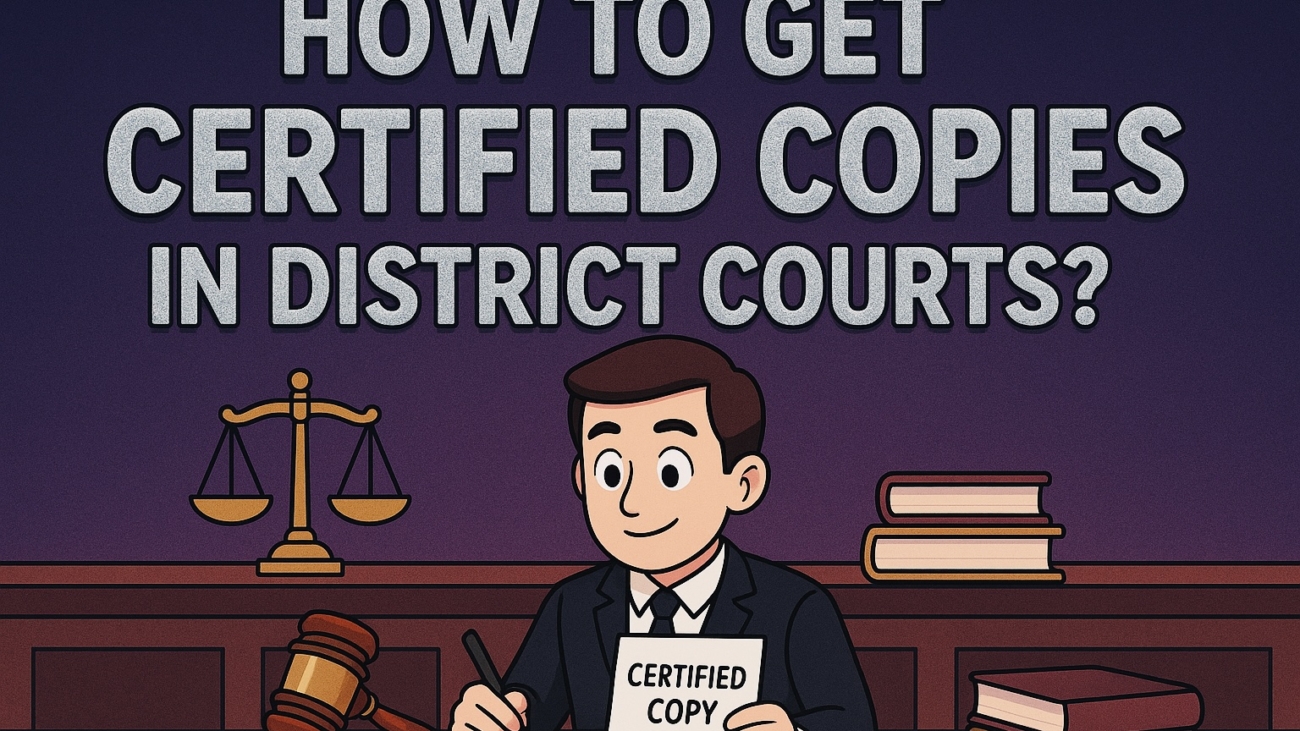
If you spend enough time in court corridors, you’ll realise one eternal truth—a certified copy seems useless… until you urgently need one.
It looks like a simple, clerk-level formality, but when you are preparing a bail application in Sessions Court, or drafting a criminal appeal before the High Court, suddenly this “simple” document becomes the single biggest hurdle.
In my 18+ years of practice, I have seen young advocates, litigants and even seasoned practitioners run from one window to another, chasing the Copying Agency like it’s the final lifeboat on a sinking ship. And the irony is—99% of delays happen not because the court staff is slow, but because the application form is filled incorrectly.
This blog breaks down the right procedure, common mistakes, and how my trained associates assist clients and advocates in getting copies quickly, smoothly and without objections.
Top Advocate in Dwarka Court
Why Certified Copies Matter So Much?
A certified copy is not just a photocopy. It is the official, court-verified, seal-marked document that higher courts rely upon. It becomes essential for:
Bail applications
Criminal revision/appeals
Stay applications
Execution proceedings
Transfer petitions
Civil appeals
Filing complaints before specialised tribunals
Missing a certified copy can mean delay of weeks, adjournments, and sometimes loss of liberty for the accused. I have seen situations where a bail plea could not be moved on time because a simple order sheet copy wasn’t ready. That’s when the “simple” becomes the “critical.”
The Procedure: How to Apply For a Certified Copy Correctly-Dwarka Court
1. Identify the Exact Document Needed-Dwarka Court
This step is often ignored. You must know precisely what you need:
Order sheet
Judgment
Evidence (PW/DW statements)
Application or reply
FIR, charge-sheet, complaint
Daily order
Any exhibited document
🚫 Never write vague descriptions like “all documents.”
This immediately triggers an objection.
2. Fill the Certified Copy Application Form Completely-Dwarka Court
This is where 90% people go wrong.
Every column matters:
Case number (criminal/civil)
CNR number
Names of parties
Date of order
Judge’s name
Whether urgent or ordinary
Whether copy is for filing or personal use
Whether inspection done
Document name and page number
A missing detail = objection.
An objection = delay.
I’ve seen applicants waste 3–5 days because they forgot to write the judge’s name or mis-typed the order date.
3. Attach the Required Court Fee-Dwarka Court
Each court has its own fee schedule. If the fee is short, the copy will not even move ahead for processing. My office routinely checks fee charts so that the application is never returned.
4. Mark Urgent or Non-Urgent-Dwarka Court
Urgent copies can be issued within 24 hours or same day (depending on court rules), but only if:
Urgent fee is paid
Reason is specified
The document is identifiable and traceable
If you mark urgent but submit a half-filled form, you will simply waste both time and money.
5. Track the Status at the Copying Agency-Dwarka Court
Once filed, the application gets a Copying Agency Receipt Number.
Always note it carefully.
Copies move through:
Filing
Scrutiny
Calculation of pages
Typing/Scanning
Verification
Seal/Signature
Delivery counter
Any stage can get stuck if details are missing.
Advocate in Dwarka Court
6. Collect the Copy With the Original Receipt
No receipt = no copy.
I have seen litigants panic because they misplaced the receipt, and the court will not release documents without proper identification.
Why Every Column Matters So Much?
Courts deal with thousands of cases daily.
The staff does not have time to “guess” what document you want.
A wrongly written case number or order date can lead to:
The staff searching in the wrong file
File not traceable remarks
Unnecessary delays of days or weeks
Application being put under “objection”
Fresh filing required
Urgent fee wasted
A careless 30 seconds at the desk can cost someone their bail hearing.
How My Associates Help You—The Hassle-Free Process
With 18+ years of practice across multiple district courts, High Court and appellate forums, I have trained my associates to understand the importance of documentation discipline.
We assist clients and advocates by:
✔ Identifying the exact document required
✔ Filling every column accurately
✔ Ensuring correct fee is attached
✔ Marking urgent applications properly
✔ Doing file inspection where needed
✔ Dealing with scrutiny objections instantly
✔ Tracking the CA number from filing to delivery
✔ Collecting the certified copy on the earliest possible date
✔ Sending soft scanned copies immediately to the client
This saves time, money and stress, especially in urgent bail or appeal matters.
Common Mistakes That Cause Unnecessary Delays
❌ Writing wrong case number
❌ Mentioning wrong order date
❌ Not attaching page details
❌ Forgetting judge’s name
❌ Not paying the right fee
❌ Asking for “entire file” without clarity
❌ Misplacing the receipt
❌ Not doing inspection before applying
Each of these triggers objections, and objections turn a one-day job into a one-week problem.
Civil advocate in Dwarka court
Final Advice from Experience
A certified copy is the backbone of many legal proceedings.
“Small steps create big consequences” is the unwritten rule of court practice.
Treat the certified copy process as seriously as drafting your petition.
It saves adjournments, saves money, and sometimes—saves liberty.
Whenever you need a copy urgently, contact us.
My team and I ensure you get it accurately, timely and without the running-around that most litigants fear.
Consult an experienced advocate to determine the most suitable mode of service based on the facts of your case and court practice.
Contact me for Consultation :- 9899085554, 9811885554
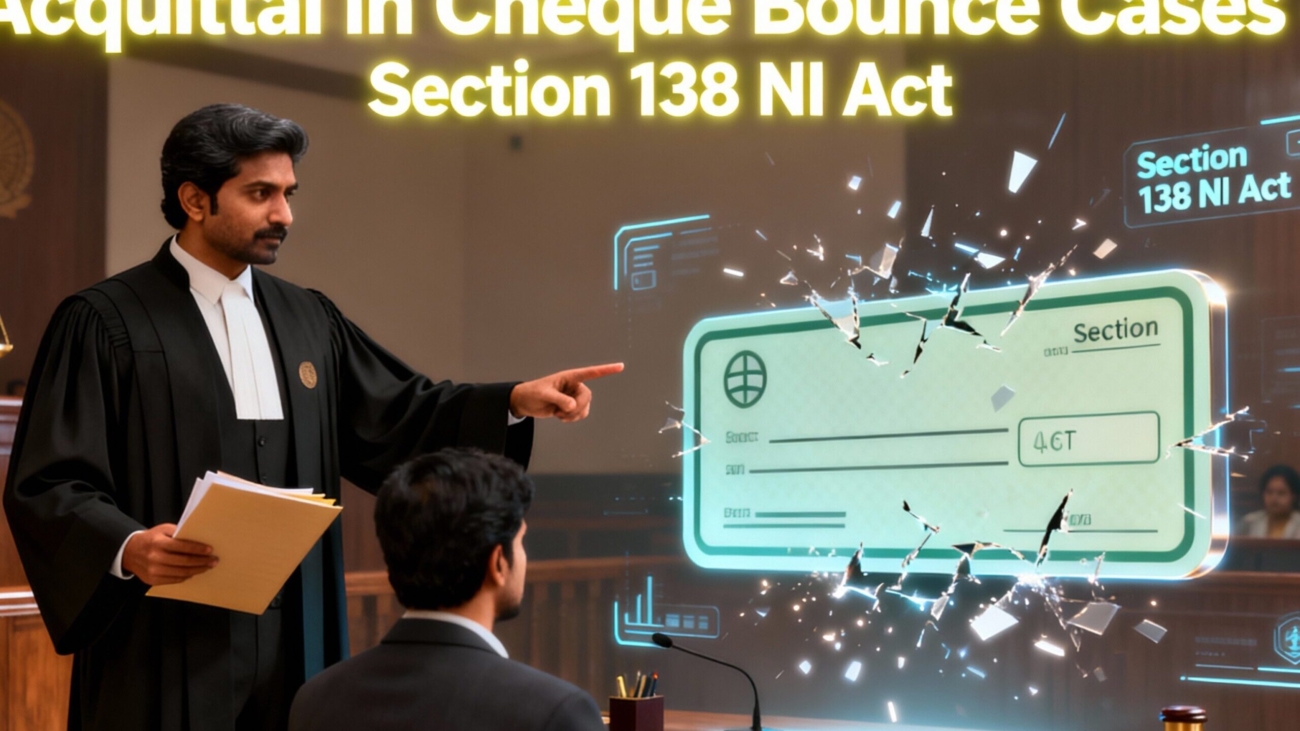
Get Acquittal in Section 138 NI Act in District Court Dwarka – Today. A cheque bounce case can be one of the most stressful experiences for any businessperson or individual facing charges under Section 138 of the Negotiable Instruments Act, 1881. The good news? Acquittal is absolutely possible—and with the right legal strategy, expert advocacy, and proper understanding of procedural safeguards, you can successfully defend yourself in the District Court Dwarka.
With over 18+ years of experience in criminal defense and practicing at the District Court, Dwarka (Chamber no. 728, 7th floor), I have guided numerous clients through the complexities of Section 138 cases. This comprehensive guide walks you through the critical defense strategies and legal nuances that can secure your acquittal in Section 138 NI Act.
🎯 Understanding the Legal Framework: What the Prosecution Must Prove
Before diving into defense strategies, it’s essential to understand what the prosecution needs to establish for conviction under Section 138 NI Act. According to the landmark judgment in K. Bhaskaran v. Sankaran Vaidhyan Balan (AIR 1999 SC 3762), the Supreme Court laid down the five essential ingredients that must be proven:
1. Drawing of a cheque for the discharge of any legally enforceable debt or liability
2. Presentation of the cheque to the bank within three months
3. Return of the cheque unpaid by the drawee bank
4. Issuance of a legal notice by the payee within 30 days of cheque return
5. Failure to pay the cheque amount within 15 days of receipt of notice
Critical Point: If even ONE of these ingredients is missing or defective, the entire case against you collapses. This is your first line of defense in Section 138 NI Act. Get Acquittal in Section 138 NI Act in District Court Dwarka.
💡 The Power of Section 139: Understanding the Presumption That Can Work For You
Section 139 of the NI Act creates a statutory presumption in favor of the complainant—it presumes that every cheque was issued to discharge a legally enforceable debt. However, this presumption is NOT absolute. It is rebuttable, meaning you can challenge it in Section 138 NI Act.
The burden of proof initially lies on the complainant, but if they establish prima facie evidence of debt, the burden shifts to you to rebut the presumption. The critical aspect here is that you need not prove innocence beyond reasonable doubt—only raise a probable defense to shift the burden back to the complainant. Get Acquittal in Section 138 NI Act in District Court Dwarka.
Landmark Guidance: In Basalingappa v. Mudibasappa (2019) 5 SCC 418, the Supreme Court held that the presumption under Section 139 is rebuttable, and the accused can succeed by presenting credible evidence of a probable defense—you don’t need mathematical certainty, just probabilities.
Criminal lawyer in dwarka court
🛡️ Key Defense Strategies for Acquittal
1. No Legally Enforceable Debt or Liability
This is the most powerful defense in Section 138 cases. The prosecution must prove that a valid, legally enforceable debt existed when the cheque was issued. If they fail to do so, acquittal is virtually guaranteed.
Evidence to Present:
-Business records showing no transaction with the complainant
-Bank statements demonstrating no receipt of funds
-Correspondence proving you never agreed to any loan
-Witness testimony from colleagues or family confirming no debt
Real-World Application: In the recent case Vardhineedi Sri Ramanjaneyulu v. Yeeda Sasibhushan (2025 SCC OnLine AP 1801), the Andhra Pradesh High Court upheld the acquittal because the complainant failed to provide evidence of:[scconline]
-The date and place of the alleged loan transaction
-Documentation of the loan
-Proof of financial capacity to lend the amount
The complainant’s own admission that the transaction was not recorded in his business account books was fatal to his case. Therefore, Get Acquittal in Section 138 NI Act in District Court Dwarka.
2. Cheque Given as Security, Not for Discharge of Debt
A legally valid defense is that the cheque was issued merely as a security deposit and not as payment toward an existing debt. If you can establish that the cheque was:
• Post-dated with conditional arrangements
• Held as a guarantee for future transactions
• Part of a security arrangement, not a debt repayment
…then Section 138 does not apply. However, important caveat: You must prove that it was a security cheque, as the burden lies on you to establish this defense with credible evidence.
What to Document:
• Written agreements mentioning the cheque as security
• Business context showing it was meant as security.
3. Defective or Invalid Legal Notice
The statutory notice issued by the complainant must strictly comply with the law. Any defect is fatal to the prosecution. Check for:-
• Timing: Notice must be issued within 30 days of cheque dishonor
• Content: Notice must clearly demand payment of the exact cheque amount
• Service: Notice must be properly served on you (returned/undelivered notices don’t constitute valid service)
• Precision: The amount demanded must match the cheque amount precisely—even a rupee difference can invalidate the notice
Supreme Court Standard: In recent rulings, the Supreme Court reaffirmed that strict compliance with Section 138’s statutory requirements is mandatory.
If the notice is defective, the case is dismissed—you get automatic acquittal. Get Acquittal in Section 138 NI Act in District Court Dwarka
4. Improper Service of Legal Notice
Even if the notice was issued correctly, if it wasn’t properly served on you, no cause of action arises. The burden is on the complainant to prove that:
• You actually received the notice
• The notice was delivered to your correct address
• You had sufficient time to respond (15 days from receipt)
Evidence to Gather:
• Postal receipts showing notices returned “undelivered”
• Your residence proof showing the address on notice was incorrect
• Witness testimony that you never received any notice
• Affidavit stating non-receipt of notice.
5. Procedural Flaws in Complaint Filing
The complaint must be filed within 30 days of the notice period expiring (i.e., 30 days after the 15-day notice period expires). Any delay beyond this period is fatal to the case:-
Defense Points:
• Calculate the exact timeline from cheque dishonor to notice to complaint filing
• If the 60-day window is exceeded, the complaint is barred by limitation
• Jurisdictional issues: Cheque should be dishonored in the District Court’s jurisdiction. Get Acquittal in Section 138 NI Act in District Court Dwarka. Get Acquittal in Section 138 NI Act in District Court Dwarka.
6. Lack of Financial Capacity of the Complainant
This defense challenges whether the complainant had the financial means to advance the alleged loan. If the amount is substantial and the complainant cannot prove they possessed those funds at the time of the alleged transaction, it weakens the prosecution’s case significantly.
🎬 Cross-Examination: The Art That Wins Cases in Section 138 NI Act
Cross-examination is where battles in Section 138 cases are won or lost. With proper preparation and strategic questioning, you can deconstruct the complainant’s version and create reasonable doubt. Here’s how:
Key Areas of Cross-Examination:-
• When exactly did the loan transaction occur? (Demand specificity—dates, places, witnesses)
• How was the money transferred? (Ask for bank statements, transaction records)
• Do you have any written agreement or loan documentation?
• Why isn’t this transaction recorded in your business accounts?
• How do you claim to have lent such a large amount without documentation?
2. Challenge the Transaction’s Legitimacy:
• Was this a formal loan or just a friendly arrangement?
• What were the terms of repayment originally discussed?
• Why wait months/years to issue a legal notice?
• Did the accused accept the debt or deny it when contacted?
3. Highlight Contradictions:
• Are the complainant’s statements consistent with documents produced?
• Does the cheque amount match the alleged debt amount?
• Are there gaps in the narrative that don’t add up?
4. Question the Cheque’s Purpose:
• Was this cheque meant as security, not payment?
• Did the complainant understand it was a conditional arrangement?
• What was the actual context of issuing this cheque?
The goal is to shift the burden back to the complainant by raising probable doubts about the existence of the debt itself. Get Acquittal in Section 138 NI Act in District Court Dwarka.
📋 Essential Evidence for Your Defense
To secure acquittal, you must present strong, credible evidence that supports your defense in Section 138 NI Act:
Documentary Evidence:
• ✅ Bank statements (yours and the complainant’s if available)
• ✅ Business records and account books
• ✅ Correspondence (emails, messages, letters) relevant to the transaction
• ✅ Cheque copy and cheque return memo
• ✅ Copy of the legal notice
• ✅ Written agreements or contracts (if applicable)
• ✅ Proof of payment, if you later settled the matter
• ✅ Postal receipts showing notice delivery issues
Witness Testimony:
• ✅ Your own testimony explaining the cheque’s purpose
• ✅ Witnesses to any loan transaction (or lack thereof)
• ✅ Witnesses to the true nature of the cheque (as security)
• ✅ Bank officials, if needed, to clarify cheque mechanics
• ✅ Colleagues or family members who can testify about your financial position
Expert Evidence (if applicable):
• ✅ Handwriting expert if cheque signature is disputed
• ✅ Document examiner for material alterations
⚡ Landmark Supreme Court Judgment: Your Shield Against Conviction
The Supreme Court’s decision in K. Bhaskaran v. Sankaran Vaidhyan Balan (AIR 1999 SC 3762) established several critical principles that protect accused persons:
1. All five ingredients must be proven: Deficiency in any one element can lead to acquittal.
2. Burden of proof: Initially lies on the complainant to establish the debt.
3. Rebuttal of presumption: The accused must present a probable defense; mere denial is insufficient, but credible evidence can reverse the presumption.
4. Strict compliance with procedures: Any procedural defect (notice timing, service, complaint filing delay) can invalidate the case.
In this landmark case, even though the accused initially had a criminal conviction reversed by the High Court, the Supreme Court’s reasoning emphasizes that every element must be independently proven and procedural compliance is non-negotiable. Get Acquittal in Section 138 NI Act in District Court Dwarka.
🏛️ Recent Judicial Wisdom: Acquittals in Your Favor
The recent decision in Vardhineedi Sri Ramanjaneyulu v. Yeeda Sasibhushan (2025 SCC OnLine AP 1801) demonstrates the current judicial trend favoring accused persons who present credible defense evidence:[scconline]
The Andhra Pradesh High Court upheld the trial court’s acquittal, noting that:
• The complainant’s failure to document the transaction was fatal
• Absence of corroborative evidence shifted the burden back to the complainant
• The court would not interfere with acquittal unless the trial court’s view was perverse or unsupported by evidence
Takeaway: Modern courts are increasingly requiring complainants to prove their case with solid documentary and testimonial evidence, not just relying on the statutory presumption.
📊 The District Court Dwarka Advantage
Practicing at the District Court Dwarka, I have observed that this court takes a principled approach to Section 138 cases:
• ✅ The court carefully examines whether all five ingredients are proven
• ✅ Procedural defects are strictly scrutinized
• ✅ The presumption under Section 139 is applied carefully—not mechanically
• ✅ Quality of documentary evidence is valued over assumptions
• ✅ Cross-examination is given significant weight in reaching conclusions
With experienced advocacy that highlights procedural safeguards and challenges evidence systematically, acquittal is a realistic goal.
🎯 Winning Strategy: A Step-by-Step Roadmap
Phase 1: Immediate Actions (Upon Being Charged)
1. Do NOT ignore the complaint—file a reply immediately
2. Gather all relevant documents (cheque copy, bank statements, correspondence)
3. Document your defense position early
4. Engage an experienced advocate familiar with Section 138 cases
Phase 2: Procedural Defenses (Before Trial)
1. Examine the legal notice for defects (timing, content, service)
2. Challenge jurisdiction if the cheque wasn’t dishonored in the District Court’s area
3. File applications under Section 145(2) NI Act if applicable
4. Move to quash the complaint if procedural requirements aren’t met
Phase 3: Trial Preparation
1. Prepare detailed documentary evidence
2. Coach witnesses thoroughly
3. Plan cross-examination strategy against the complainant
4. Research comparable case law and judgments
5. Prepare your own testimony meticulously
Phase 4: Evidence Presentation
1. Lead with your documentary evidence—it’s silent and credible
2. Establish the absence of debt through your own testimony
3. Use cross-examination to dismantle the complainant’s credibility
4. Highlight contradictions and gaps in the prosecution’s case
Phase 5: Final Arguments
1. Emphasize that the complainant has failed to discharge their burden
2. Highlight all procedural defects
3. Point out credible defenses you’ve raised
4. Remind the court that the burden, once shifted, must be discharged by the complainant.
💼 Why Expert Advocacy Matters
Acquittal in cheque bounce cases is not about luck—it’s about systematic, strategic defense. An experienced advocate brings:
• Deep knowledge of procedural safeguards that can lead to automatic dismissal
• Cross-examination expertise that exposes weaknesses in the prosecution’s case
• Understanding of local court practices at District Court Dwarka
• Access to relevant case law and landmark judgments
• Ability to navigate complex evidence and documentary proofs
• Strategic timing in moving applications and raising defenses
With 18+ years of experience in handling Section 138 cases, I have guided clients to acquittals by identifying overlooked procedural defects, presenting compelling documentary evidence, and conducting thorough cross-examinations that expose the complainant’s inability to prove the legally enforceable debt.
The law provides robust safeguards for accused persons in Section 138 cases. While the statutory presumption initially favors the complainant, the presumption is rebuttable, and credible evidence can shift the burden back to the complainant. Procedural defects alone can lead to dismissal. A thorough understanding of the law, combined with meticulous preparation and expert advocacy, makes acquittal not just possible—it’s a realistic and achievable goal.
If you are facing a cheque bounce case in the District Court Dwarka, remember: You have strong legal grounds to fight back. The courts recognise that mere signature on a cheque, without proof of a legally enforceable debt, is insufficient for conviction.
The path to acquittal is paved with evidence, procedure, and skilled advocacy. Let’s walk it together in Section 138 NI Act.
Consult an experienced advocate to determine the most suitable mode of service based on the facts of your case and court practice.
Contact me for Consultation :- 9899085554, 9811885554.
An Inspirational Guide for Young Advocates & Interns – In Dwarka Court
There are moments in an advocate’s journey that leave a lifelong imprint—the first day in court, the first time your senior trusts you with a file, the first argument, and above all, your first income. That small envelope, that quiet UPI ping, that modest cash handed by a grateful client—whatever its form, it carries the weight of your entire journey so far.
Years of study, lectures, internships, library hours, case briefs, rejections, and countless “Sir, I will come tomorrow”—all melt into one powerful feeling:
“I have finally earned through my own knowledge.”
And yet, many young interns and new advocates make the same mistake:
They save their first income.
Not because saving is wrong, but because they forget what the first income truly symbolizes.
My humble and heartfelt advice to you:
Don’t save it. Spend it. Celebrate it. You earned it—so enjoy it.
🌟
Why Your First Earning Matters More Than Its Amount
Your first income may be ₹500, ₹2000, or ₹5000—it truly doesn’t matter. What matters is what it represents:
Entry into professional life
Ability to earn through ethics and knowledge
Transformation from student to an advocate
Belief that you can build your career brick by brick
It is not the money you are celebrating—it is the moment.
There is a beautiful quote:
“Money grows, but moments don’t. Celebrate the moment—money will follow.”
📘 Buy Something That Stays With You Forever
Every advocate remembers the first law book they bought from their own earnings.
Ask any seasoned lawyer—there’s a sparkle in their eyes when they say:
“This book? I bought it from my first fee.”
Books become legacy. They stay with you longer than your first income ever will.
My personal recommendation?
Buy a commentary you love—CPC, Evidence, Transfer of Property, or Criminal Procedure.
It becomes a reminder that your journey has begun.
🍽️ Treat Your Family—They Deserve It as Much as You Do
Behind every advocate, there is a quiet army:
Parents who encouraged you, siblings who supported you, friends who listened to your rants.
Take them out for a small dinner.
You will remember that evening far longer than the amount you saved.
As the saying goes:
“Joy multiplies when shared with those who helped you survive the struggle.”
✨ A Story Every Young Advocate Should Hear
A senior advocate once shared this story with me:
“My first earning was only ₹800. I spent it all buying samosas and tea for my parents and juniors. Today when I charge ₹3 lakh per hearing, I still say—those samosas were the best investment of my life.”
What he meant was powerful:
Celebrate small beginnings. They become the seeds of big successes.
🌱 Faith Builds Your Future
One of the greatest truths of the legal profession is:
Consistency turns small earnings into big incomes.
You may feel your first income is small today, but trust your journey.
If you stay persistent, ethical, and hard-working, the same advocate who earned ₹2000 today will one day earn ₹2 lakh with dignity.
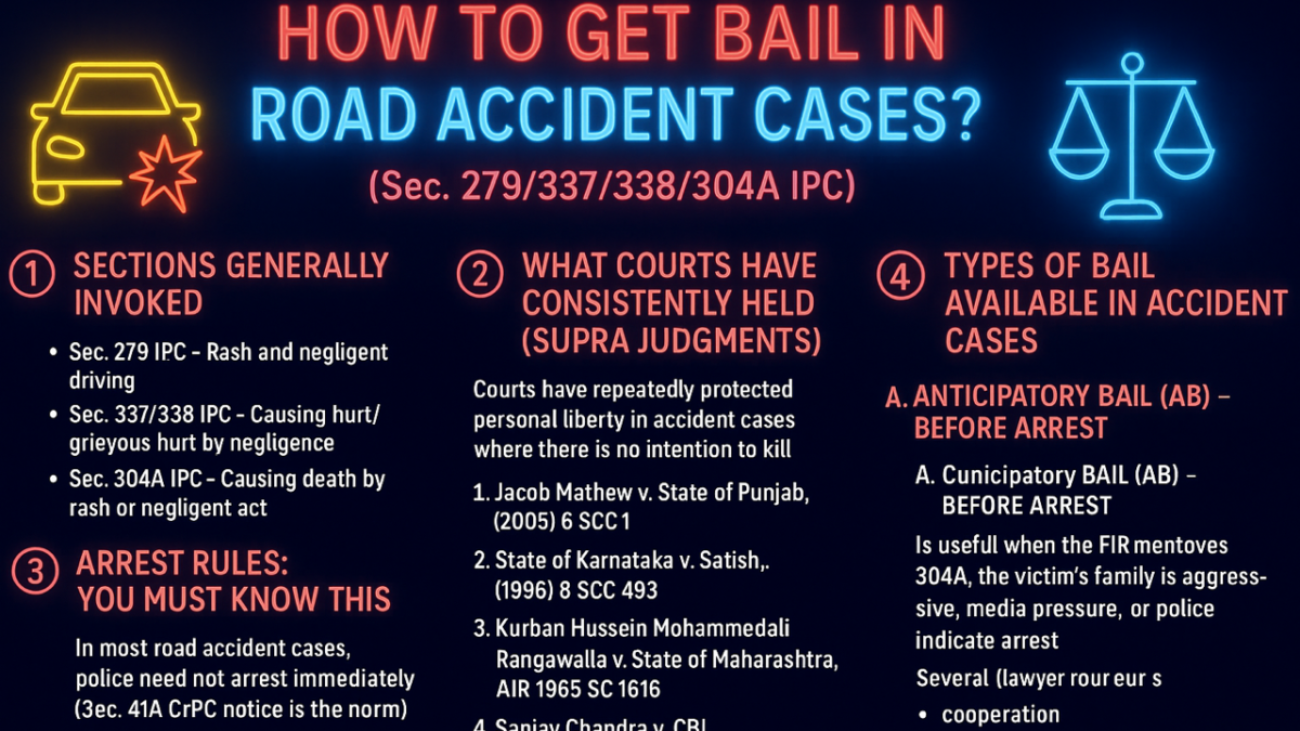
How to Get Bail in Road Accident & 304A IPC Cases | Legal Rights, Process & Judgments
Road accidents are unfortunate—but when an accident results in injury or even loss of life, the situation becomes emotionally, legally, and socially overwhelming for the accused. Many clients walk into a lawyer’s chamber with fear:
“Sir, will I be arrested?”
“Can I get bail?”
“Is it treated like murder?”
Let us understand this calmly. Indian criminal law differentiates between intentional crime and negligence. A road accident, unless proved otherwise, is treated as rash or negligent act, NOT culpable homicide. This difference is the foundation of bail.
🚨 1. Sections Generally Invoked
Most road accident cases involve:
Sec. 279 IPC – Rash and negligent driving
Sec. 337/338 IPC – Causing hurt/grievous hurt by negligence
Sec. 304A IPC – Causing death by rash or negligent act
👉 These are bailable or non-heinous offences, and the Courts treat them differently from murder (302 IPC) or culpable homicide (304 IPC).
⚖️ 2. What Courts Have Consistently Held (Supra Judgments)
Courts have repeatedly protected personal liberty in accident cases where there is no intention to kill.
📌 Landmark Judgments:
Jacob Mathew v. State of Punjab, (2005) 6 SCC 1
The Supreme Court held that criminal liability for negligence requires gross negligence, not mere accident.
Important principle: Negligence ≠ Intention.
State of Karnataka v. Satish, (1998) 8 SCC 493
Speed alone is not proof of rashness.
Bail was upheld because prosecution failed to show reckless disregard.
Kurban Hussein Mohammedali Rangawalla v. State of Maharashtra, AIR 1965 SC 1616
For culpable homicide (Sec. 304 IPC), intention or knowledge must be proved.
This is why accident deaths fall under 304A.
Sanjay Chandra v. CBI, (2012) 1 SCC 40
Supreme Court reiterated that bail is the rule, jail is the exception — extremely helpful in 304A applications.
These judgments guide Magistrates and Sessions Courts while granting bail.
📝 3. Arrest Rules: You Must Know This
In most road accident cases:
✔ Police need not arrest immediately (Sec. 41A CrPC notice is the norm).
✔ Accused is usually called for inquiry.
✔ Arrest is justified only if:
Accused is absconding
Not cooperating
Tampering of evidence
Repeat offender
👉 This makes bail even smoother.
📄 4. Types of Bail Available in Accident Cases
A. Anticipatory Bail (AB) – Before Arrest
Useful when:
FIR includes 304A
Victim’s family is aggressive
Media pressure
Police indicate arrest
Your lawyer will argue:
You are cooperating
No criminal antecedents
No intention to harm
Fixed residence + job
Based on supra judgments, offence is punishable up to 2 years only (304A)
Courts generally grant AB with conditions like joining investigation.
B. Regular Bail – After Arrest
Even if arrest happens, you are entitled to bail because:
304A is not a heinous offence
Maximum punishment is 2 years
Offence is based on negligence, not mens rea
Courts consider:
Conduct after accident (calling ambulance, informing police)
Whether the accused ran away or helped
Family background
No tampering with evidence possible
Vehicle documents valid
Insurance compliance
🔗 5. Practical Tips to Strengthen Bail
✔ Inform Police Immediately
Non-reporting creates unnecessary suspicion.
✔ Do Not Run Away From the Spot
Helping the injured shows good conduct.
✔ Keep Driving Licence & RC Ready
Courts frown upon unlicensed driving.
✔ Offer Compensation (Without Admitting Guilt)
Under Sec. 357 CrPC, compensation reflects responsibility and helps the bail court view you favourably.
✔ Maintain a Respectful Demeanor in Court
Bail is discretionary—attitude matters.
🧭 6. Court’s Approach in Death Cases (Sec. 304A IPC)
Even in cases of death, Courts differentiate between:
Negligence (304A)
Culpable Homicide (304/302)
👉 Unless prosecution proves intention or knowledge, the case stays under 304A.
Courts consider:
Was the road narrow or visibility poor?
Was the victim suddenly crossing?
Was the vehicle overloaded?
Was the accused intoxicated?
Was there mechanical failure?
If intoxication or racing is not proved, bail becomes even smoother.
📚 7. Sample Court Observation (Typical)
Magistrates commonly record:
“Considering the nature of allegations, absence of criminal intent, cooperation by accused, and the law laid down by the Hon’ble Supreme Court, this Court is inclined to grant bail.”
This is the practical reality.
🌟 8. Why Bail Is Important in Accident Cases
Because:
You must take care of your family
You must face trial with dignity
You must cooperate with investigation
Jail serves no purpose when the act was unintentional
As the Supreme Court observed:
“Punishment begins only after conviction; why jail before trial?”
🎯 Conclusion
A road accident is a tragedy for everyone involved—but the law recognises the difference between a deliberate crime and a misfortune caused by negligence. Bail is not only possible, it is normally favoured by the courts when handled properly.
With the right legal strategy, empathy toward the victim’s family, and proper documentation, you can navigate the process smoothly and respectfully.
When clients first hear the phrase “furnish bail bond before the Court”, they often panic. Many imagine a complicated, risky, or expensive procedure. After handling thousands of bail matters in my 18+ years of practice, I can confidently say: bail bonds are simple—if you understand them correctly.
This blog breaks down myths, common questions, documents required, responsibilities of surety, consequences, and practical experience that every accused or family member should know before presenting a bail bond before a Metropolitan Magistrate.
🔶 What Exactly Is a Bail Bond?
A bail bond is a written undertaking submitted to the court stating that:
👤 The accused will appear before the Court as required,
📝 A surety stands guarantee for this promise,
💰 A specific amount will be forfeited if the accused does not comply.
It is not a payment made to the court. It is simply a formal promise backed by documents and a surety.
🔶 What Is a Surety?
A surety is a responsible person who assures the court that the accused will comply with bail conditions.
✔ A surety must:
Be a law-abiding citizen
Have a verified identity & address
Provide acceptable proof of financial stability
✔ Role of a Surety
If the accused fails to appear, the surety is liable to pay the forfeiture amount mentioned in the bail bond.
✔ Amount That Gets Forfeited
Example:
If a bail bond is set at ₹20,000, and the accused absconds, the court may:
Forfeit the amount
Issue recovery proceedings against the surety
Initiate notice for cancellation of bail
So, the surety’s responsibility is real and must be taken seriously.
🔶 How Bail Bonds Are Furnished in Court
Here is the step-by-step process, based on daily practice in District Courts:
1️⃣ Drafting the Bail Bond
The advocate prepares the prescribed bail bond format mentioning:
Case details
Name of accused
Name of surety
Surety’s address & identification
Forfeiture amount
2️⃣ Verification of Surety
The court staff checks:
Valid ID proof (Aadhar mandatory)
Address proof
Financial document (FD, property paper, etc.)
Photograph of surety
3️⃣ Submission Before Court
The bail bond along with original documents is presented before the Magistrate.
4️⃣ Acceptance & Filing
If satisfied, the Magistrate accepts the bail bond, signs it, and sends it to the case file.
🔶 Documents Required While Furnishing Bail Bond
Clients are often unaware of what they must carry. Here is an essential checklist:
📌 Mandatory Documents
🪪 Hard copy of Aadhar Card – both Accused & Surety
📸 One passport size photograph of Surety
📄 Original financial document (one of the following):
Original Fixed Deposit (FD)
Property documents (free from disputes)
Vehicle RC ONLY if no loan is pending
🚫 Not Accepted by Courts
❌ Photocopies of documents
❌ Car or bike registration with hypothecation/loan endorsement
❌ Cash deposits in place of surety
❌ Online documents without physical originals
✔ Why Originals Are Needed?
Judges require originals to verify authenticity. They are kept temporarily or returned after inspection depending on the case.
🔶 Common Myths About Bail Bonds (Busted!)
❌ Myth 1: A Surety must be a relative
✔ Truth: Any responsible adult citizen can be a surety.
❌ Myth 2: Cash is taken by court for bail
✔ Truth: Courts do not take cash. Only documents like FD or property papers are accepted.
❌ Myth 3: Surety becomes permanently liable
✔ Truth: Surety’s liability ends once the case is disposed of or bond is canceled by court.
❌ Myth 4: Bail bond guarantees acquittal
✔ Truth: Bail is temporary liberty, not a judgment on the merits.
🔶 Actual Contents of a Bail Bond
A standard bail bond contains:
Full identity of accused
Identity of surety
Forfeiture amount
Undertaking to appear before court
Undertaking to follow bail conditions
Signature or thumb impression
Verification of documents
These details ensure the court that the accused and surety understand their responsibilities.
🔶 Consequences of Violating Bail Bond
If the accused:
❗ Misses a court date
❗ Violates bail conditions
❗ Tries to flee jurisdiction
The court may:
Cancel bail
Issue NBWs (Non-Bailable Warrants)
Forfeit bond amount
Recover money from surety
Summon surety & issue notices
Therefore, appearing before the court on every date is crucial.
🔶 My 18+ Years of Experience: Practical Tips for Clients
Practicing daily before the courts of Dwarka, Saket, Rohini & Patiala House, I have seen many clients suffer unnecessary delays because they came unprepared.
Here are professional tips:
✔ Collect all documents a day before
✔ Ensure RC is loan-free
✔ Keep FD original in a transparent file
✔ Carry Aadhar photocopies and originals
✔ Keep advocate informed of any address change
✔ Choose a surety who is reliable & available
A seasoned lawyer ensures that the process is smooth, fast, and stress-free.
🔶 Why You Need an Experienced Advocate
An experienced advocate helps you:
Understand documents
Avoid mistakes that cause rejection
Coordinate with court staff
Present bond before Magistrate
Save valuable time
Your lawyer acts as your shield during a stressful time. Always choose wisely.
🔶 Final Words
Submitting a bail bond is not something to fear. With the right knowledge and preparation, it becomes a smooth and predictable process. As someone practicing for more than 18 years in both Civil & Criminal Courts—especially in District Court Dwarka—my aim is to make your legal journey simple, structured, and tension-free.
If you or your family ever need help in furnishing bail bonds or understanding surety, always consult an experienced advocate who can guide you properly.
🔷 Title
Myths & Common Questions About Bail Bonds | Dwarka Court Guide
🔷 Description
Understand bail bonds, surety requirements, documents, and consequences. A complete guide by an advocate with 18+ years’ experience in Delhi & Dwarka Courts.
🔷 Keywords
Bail bond meaning
Bail bond procedure Delhi
How to furnish bail bond in court
Surety requirements for bail
Bail bond documents needed
Bail bond Dwarka Court
Bail bond surety Delhi
Bail bond myths explained
Criminal bail procedure India
What is surety in bail?
Forfeiture of bail bond
Bail bond for accused Delhi NCR
Bail bond lawyer in Dwarka Court
Best advocate for bail Dwarka
How to prepare bail bond documents
🔷 Keywords
How to furnish bail bond in District Court Dwarka
Documents required for bail bond in Delhi
Best advocate for bail in Dwarka Court
Surety rules and responsibilities in criminal cases
Step-by-step process for bail bond filing Delhi
Bail bond verification before Metropolitan Magistrate
Consult an experienced advocate to determine the most suitable mode of service based on the facts of your case and court practice.
Contact me for Consultation :- 9899085554, 9811885554
Visiting an advocate in District Court Dwarka, for the first time is often overwhelming for clients.
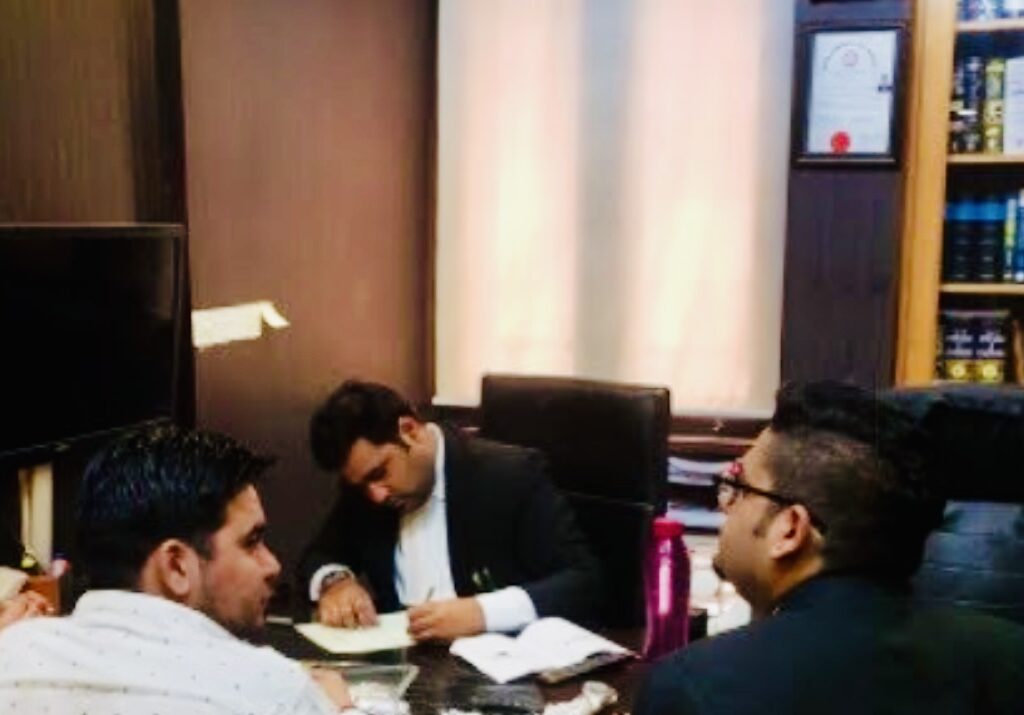
Most people arrive with fear, anxiety, confusion, and endless questions. After practicing for 18+ years in District Court Dwarka, I have learned that what clients need most is clarity—clear answers that give them direction, confidence, and a sense of control over their legal battle.
Clients often move from chamber to chamber, searching for the “right” advocate who can guide them correctly. Their expectations are simple:“Tell me the truth, show me the path, and stand with me in the fight for justice.” Below are the most common questions clients ask when they first meet an advocate in Dwarka Court, along with the precise answers they hope to hear from a competent legal professional.
1. “What are my legal options in this case?”
Ideal Answer Clients Expect:“You have two to three possible routes. Let me explain each with the consequences, time, and cost involved. Based on your situation, this option is the legally strongest and safest for you.” Clients want clarity, not confusion. A good advocate simplifies the law.
2. “How strong is my case?”
Ideal Answer:“On the basis of your facts and documents, your case has ___ strengths and ___ weaknesses. We will work on the weak points and rely on the strong ones. I won’t promise a guaranteed win, but I will give you a legally realistic assessment.” Clients hate exaggerated promises—they prefer honest, balanced guidance.
3. “How long will this case take?”
Ideal Answer:“Court timelines depend on several factors like court workload, evidence, and party cooperation. Typically, this type of case in Dwarka Court takes ___ months/years. I will try to speed it up wherever legally possible.” Clients want transparency, even if the timeline isn’t short.
4. “What will be the cost or total fees?”
Ideal Answer:“My fee includes professional charges for drafting, filing, arguments, and appearances. I will give you a written fee structure so there is no confusion later. There are also official court fees which I will explain separately.” Clients look for financial clarity and no hidden charges.
5. “Do I need to appear in court frequently?”
Ideal Answer:“For most hearings, your presence is not required unless evidence or your statement is needed. I will inform you well in advance whenever your presence is compulsory.” Clients want to know how much their routine will be affected.
6. “What documents do you need from me?”
Ideal Answer:“I will provide you a checklist of required documents—ID proofs, case papers, agreements, photos, bank statements, or any other relevant material. Keep everything organised. It strengthens your case from day one.” A document checklist gives confidence and clarity.
7. “Is there any risk or downside in filing this case?”
Ideal Answer:“Yes, every legal action has risks—cost, time, emotional pressure. But I will guide you to minimise those risks and ensure you take a well-informed decision before moving forward.” Clients appreciate truthful, responsible advice.
8. “Can this case be settled outside court?”
Ideal Answer:“Settlement is always an option if both parties agree. If a settlement benefits you legally and financially, I will advise you accordingly. If not, we will contest strongly in court.” Clients want to know whether a faster, peaceful route is possible.
9. “What is the next step after this meeting?”
Ideal Answer:“Step 1 — Give me your documents.Step 2 — I will prepare the draft.Step 3 — We will review it together.Step 4 — Filing in Dwarka Court.Step 5 — First hearing.” Clear steps reduce anxiety and give clients a sense of progress.
Why Clients Find It Difficult to Choose a Competent Advocate in Dwarka Court
Choosing the right advocate is challenging because:
1. Lack of Legal Awareness
Clients don’t always understand who is actually experienced or competent.
2. Conflicting Opinions
When they visit multiple chambers, they hear different strategies, timelines, and fees—causing confusion.
3. Fear of Making a Wrong Decision
Clients know that one wrong legal step can cost time, money, and peace.
4. Overemphasis on Low Fees
Many clients compare advocates based only on fees, not experience or capability.A competent advocate gives value, not the cheapest rate.
5. Pressure & Anxiety
Court matters themselves create stress, making decision-making difficult.
6. Need for Trust
Clients want someone who listens, explains, guides, and stands with them—not someone who rushes them. A competent advocate in Dwarka Court is one who blends experience, honesty, communication, strategy, and ethics.
Conclusion
For any client approaching District Court Dwarka, the right advocate is one who provides:✔ Clear legal strategy✔ Honest assessment✔ Transparent fees✔ Step-by-step guidance✔ Courtroom confidence✔ Professional drafting and arguments✔ Emotional assurance and support A well-informed client and a competent advocate together make a strong legal team—ready to face the battlefield of the District Courts.
Common Questions Clients Ask Advocates in District Court DwarkaHow to Choose a Competent Lawyer in Dwarka CourtClient–Advocate Guide: Legal Consultation in Dwarka CourtsFrequently Asked Questions Before Hiring a Dwarka Court Advocate
Divorce litigation becomes even more complex when one spouse is living abroad. For Non-Resident Indians (NRIs), distance, time-zone differences, and unfamiliarity with procedures often create confusion and anxiety. However, Dwarka Court, New Delhi (South-West District) has emerged as one of the most efficient and technologically adaptive court complexes for handling such matters, especially NRI matrimonial disputes.
After 18+ years of practice in New Delhi’s District Courts—particularly Dwarka Court—let me clarify one essential truth:
👉 No advocate can secure a decree of divorce on the ground of cruelty unless you provide strong, clear, and admissible evidence.
Law is evidence-driven. Experience only matters when it is combined with your cooperation and factual material.
Why NRI Clients Can File Divorce in Dwarka Court? 🏛️
There are multiple territorial jurisdiction grounds under the Hindu Marriage Act (HMA) that make Dwarka Court the correct forum. You may file your case in Dwarka Court when:
1️⃣ Marriage was solemnized within South-West Delhi
If your wedding took place in Delhi—especially within areas like Dwarka, Palam, Najafgarh, Vikas Puri, Uttam Nagar, Sagarpur, Dabri—Dwarka Court has clear jurisdiction.
2️⃣ Wife last resided within the South-West District
Under Section 19 of HMA, the wife’s last place of residence gives Dwarka Court the authority to hear the matter.
3️⃣ Both parties last resided together in South-West District
If the matrimonial home was in Dwarka or nearby areas, the case can be filed here even if you are currently abroad.
4️⃣ Husband resides or works for gain in South-West Delhi
If you have a residence, rented accommodation, or employment address here, the court can exercise jurisdiction.
Why NRI Clients Prefer Lawyers With Strong Practice in Dwarka Court? 👨⚖️✨
✔ Deep familiarity with local court procedures
Every court has its own working culture, timing patterns, document preferences, and registry’s way of handling filing defects. A seasoned Dwarka practitioner knows exactly how to navigate these efficiently.
✔ Strong coordination with court staff & filing counters
For NRIs, avoiding unnecessary adjournments is crucial. An advocate who regularly practices here ensures smooth listing, timely filing, and quick rectification of objections.
✔ Understanding of NRI matrimonial complexities
Issues like foreign addresses, apostille of documents, POA attestation, and overseas evidence need a lawyer experienced in international matrimonial litigation.
✔ Practical know-how for Virtual Hearing (VC) matters
Dwarka Courts have become highly VC-friendly. Experienced local advocates know how to ensure smooth hybrid appearances.
You Can Appear Through Video Conferencing 💻📱
If you’re unable to travel to India, the court may permit appearance through VC (Video Conferencing)—especially for evidence, counselling sessions, and arguments.
Technology is playing a critical role today:
📌 Hybrid hearings
📌 E-filing in some matters
📌 WhatsApp/email updates
📌 Online certified copy applications
This convenience allows NRIs to litigate without physical presence on most dates.
What Constitutes Cruelty for NRI Divorce Cases? 💔❗
Cruelty under Section 13(1)(ia) HMA includes both physical and mental cruelty. Common grounds used by NRIs include:
🌐 Typical Grounds of Cruelty for NRIs
Constant abuse, humiliation, or threats
Regular fights and mental harassment
False criminal cases filed against the spouse or family
Denial of conjugal rights without reasonable cause
Abandonment or refusal to join spouse abroad
Excessive interference by in-laws
Financial exploitation, forcing money transfers, or harassment for funds
📌 Proof of visa refusal due to spouse’s non-cooperation
📌 Emails/letters requesting spouse to join abroad (no response = evidence of cruelty/desertion)
Your advocate builds the entire case around your evidence.
Why Experience & Precision Matter in Choosing the Right Advocate 🎯👨⚖️
1️⃣ Courtroom precision comes only with long practice
Matrimonial law is emotional, technical, and highly procedural. A seasoned lawyer knows how judges think, what evidence matters, and how to structure arguments.
2️⃣ Experienced advocates avoid delays
Proper drafting, proper filing, and proper pre-analysis prevent unnecessary adjournments—crucial for NRIs.
3️⃣ Strong cross-examination skills
Winning a cruelty case often depends on exposing contradictions in the opposite party’s testimony.
4️⃣ Strategy & foresight
An experienced advocate knows when to push, when to settle, and when to seek judicial intervention.
5️⃣ Better negotiation for settlement or mutual consent
Experience brings balance—something essential in emotionally charged cases.
“How NRIs Can Get Divorce on Cruelty Grounds from Dwarka Court, Delhi – Complete Guide”
Order 7 Rule 11 CPC – A Powerful Remedy to Reject a Civil Suit | Complete Guide For Dwarka Court.
Order 7 Rule 11 CPC, rejection of plaint, frivolous civil suit, how to file O7R11, Dwarka Court Delhi, civil procedure code, reject suit for no cause of action, legal remedy against false suit
Detailed and practical guide on Order 7 Rule 11 CPC—its importance, usage, filing procedure in Dwarka Courts, and top Supreme Court judgments. Ideal for clients facing false or baseless civil cases.
Introduction
In my 18+ years of civil litigation, one provision that has consistently proven to be the sharpest shield for a defendant is Order 7 Rule 11 of the Civil Procedure Code (CPC).
It is not merely a technical section—it is a powerful safeguard to prevent frivolous, deceptive, non-maintainable or legally dead suits from wasting the court’s time and the defendant’s money, energy and peace.
This provision allows a court to reject a plaint at the very threshold, even before trial, if it does not disclose a valid cause of action or is barred by law.
Dwarka Court
What is Order 7 Rule 11 CPC? (Explained Simply)
Order 7 Rule 11 empowers the court to reject a plaint if it falls under any of these categories:
No cause of action disclosed
Relief undervalued and plaintiff fails to correct it
Insufficient court fee, not cured after court’s order
Suit barred by any law – limitation, statutory bar, jurisdiction issues
Plaint filed in duplicate not submitted
Plaint is vague, illusory or meaningless
This means the court can dismiss such a suit without calling witnesses or starting trial.
Why Order 7 Rule 11 Is Extremely Important?
Saves the defendant from long years of litigation
Stops misuse of court process
Keeps judiciary efficient by removing frivolous suits
Protects genuine litigants by ensuring court time is not wasted
Gives immediate relief if the suit itself is defective or legally barred
In real practice, many plaintiffs file suits only to create pressure, gain bargaining advantage, or drag the defendant to court unnecessarily.
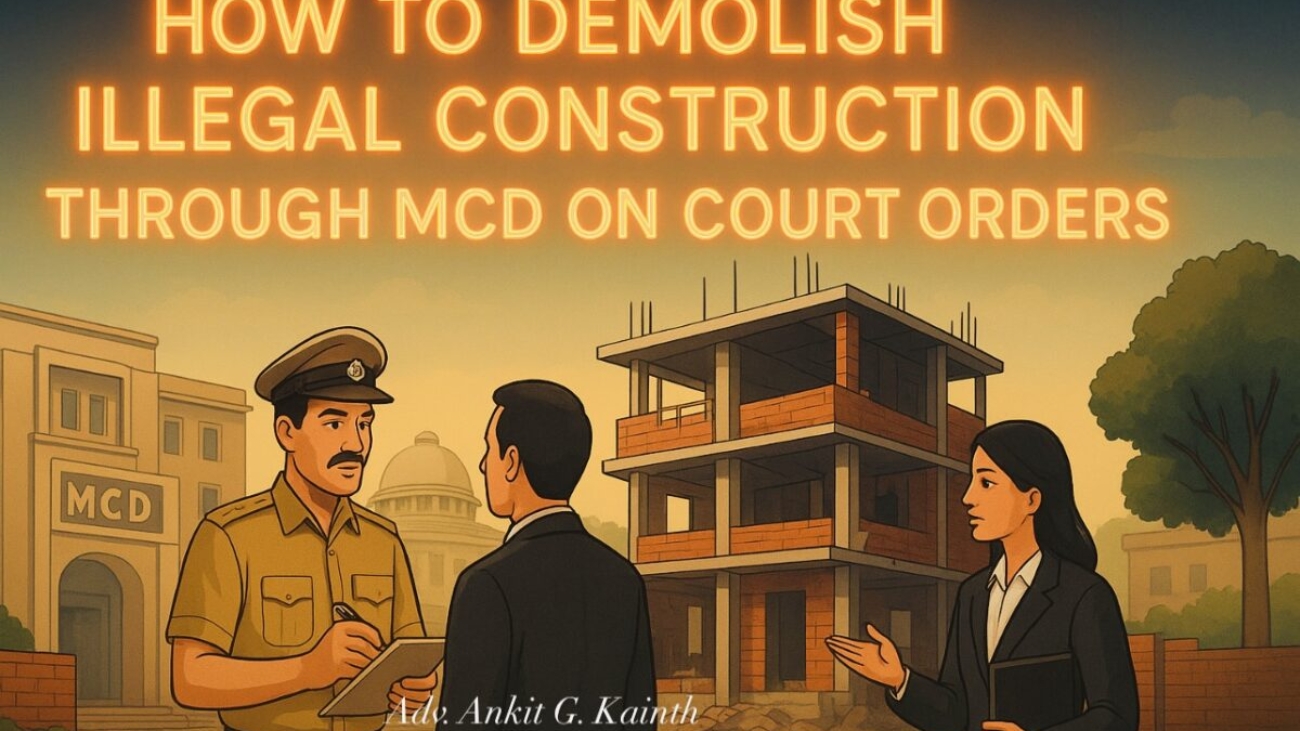
Illegal construction has become one of the biggest civic challenges in New Delhi. Every lane has at least one neighbour raising extra floors, covering balconies, extending walls, or encroaching public spaces—completely ignoring safety norms and municipal laws. After working for more than 18+ years in Civil & Criminal litigation in District Courts & Delhi High Court, I can confidently say one thing:
Courts take illegal construction very seriously — and the law is completely on your side.
If your neighbour has raised an illegal structure, you can get it demolished. The process is systematic, legally strong, and absolutely effective when done correctly.
Why Illegal Construction Is Treated So Strictly
Illegal construction affects:
Structural safety of neighbouring buildings
Ventilation & sunlight
Fire safety and evacuation
Property valuation
Public pathways and civic amenities
This is why both MCD and Courts treat such violations as a zero-tolerance issue.
Step-by-Step Legal Procedure to Get Illegal Construction Removed
1️⃣ File a Complaint Before MCD (Chairman + Area Executive Engineer)
Your first mandatory step is to file a written complaint with:
MCD Chairman
Executive Engineer (Building) of your Zone
Copy to Deputy Commissioner
Why this is required?
Under municipal rules, MCD gets 90 days to inspect the property, issue notices under Section 343/344 DMC Act, and take demolition action.
Important Tip:
Always file complaints:
✔️ By speed post
✔️ Through online MCD portal
✔️ Maintain photocopies & receipts
These documents become crucial evidence in Court.
2️⃣ After 90 Days, You Have Two Remedies
(A) File a Writ of Mandamus in Delhi High Court
You can approach High Court seeking directions to MCD to:
Conduct inspection
Pass demolition orders
Remove the illegal structure
High Court is extremely strict on illegal construction and often issues time-bound directions to MCD.
(B) File a Suit Before Civil Court, Dwarka
In many cases, a Civil Suit is the more suitable and immediate remedy.
You may file:
Suit for Mandatory Injunction (for demolition)
Suit for Permanent Injunction (to restrain further construction)
Suit for Declaration (if property rights need clarification)
Dwarka District Court has repeatedly passed strong orders directing demolition and restraining illegal constructions.
3️⃣ Urgent Situations — Waiver of 90 Days Waiting Period
If the construction is:
Happening rapidly
Causing structural threat
Blocking light/air
Causing privacy issues
Endangering your property
…you are entitled to apply for waiver of 90-day MCD waiting period.
Courts may grant urgent interim relief like:
Stay on further construction
Immediate inspection by MCD
Status-quo orders
Time-bound demolition directions
You only need to provide justified reasons in writing.
My 18+ Years of Practical Courtroom Experience
From my practice in District Courts & Delhi High Court, I have observed that:
Courts are extremely fair and balanced.
MCD is bound to follow Court orders—no excuses.
Illegal construction cases move quickly when filed properly.
Documentary proof and timely complaints make the case strong.
Justice is always delivered, even if delayed.
Procedure is simple, effective, and 100% result oriented — never lose hope.
5 Supra Judgments on Illegal Construction & Demolition