Introduction – Cheque Bounce Lawyer in Dwarka Court
18+ Years of Legal Experience | Chamber No. 728, District Court Dwarka, Sector 10, New Delhi
A cheque may look like a simple piece of paper. However, when a cheque is dishonoured, the resulting legal dispute can become highly technical. Questions relating to the legally enforceable debt, presentation of the cheque, statutory notice, limitation, presumptions under the Negotiable Instruments Act, evidence, cross-examination, defence, settlement and final arguments can significantly affect the outcome.
Clients searching online for a Cheque Bounce Lawyer in Dwarka Court often find numerous advocates and legal listings. This can naturally create confusion: How should a person choose the right advocate for a cheque bounce case in Dwarka Court?
If you are searching for a Cheque Bounce Lawyer in Dwarka Court, it is important to look beyond advertisements and listings. Experience in handling Section 138 NI Act litigation, understanding of evidence, knowledge of court procedure, ability to conduct effective cross-examination and preparation of strong final arguments are all important.
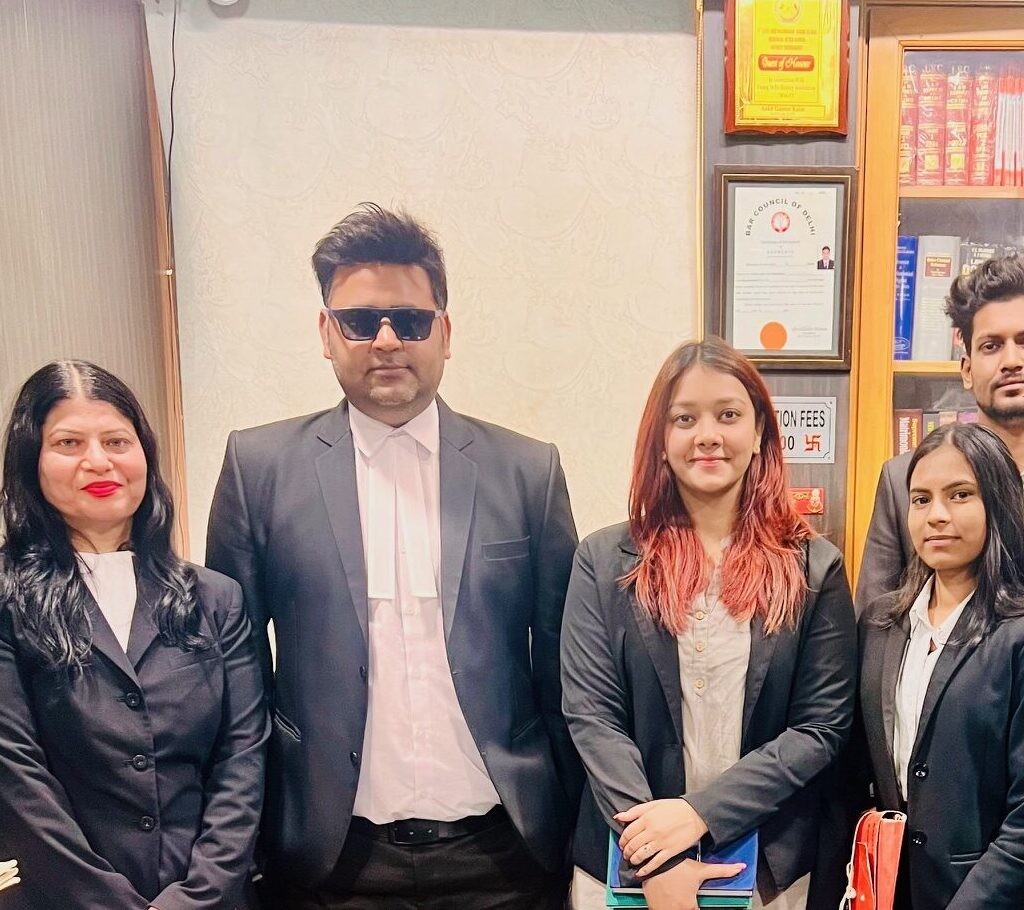
At Ankit Gaurav Kainth & Associates, we handle cheque dishonour and Section 138 NI Act matters before Dwarka Court, New Delhi. With 18+ years of legal practice, our work includes assisting complainants as well as accused persons at different stages of cheque bounce litigation.
⚖️ What Is a Cheque Bounce Case Under Section 138 NI Act?
Section 138 of the Negotiable Instruments Act, 1881 deals with dishonour of a cheque issued towards payment of a legally enforceable debt or other liability.
Where the statutory requirements are satisfied, dishonour of the cheque can result in criminal prosecution. Section 138 provides punishment of imprisonment for a term which may extend to two years, or fine which may extend to twice the amount of the cheque, or both.
However, every dishonoured cheque does not automatically result in a successful Section 138 case. Statutory requirements must be properly satisfied and proved.
Therefore, a person looking for a Cheque Bounce Lawyer in Dwarka Court should obtain legal advice at the earliest stage instead of waiting until the case reaches evidence.
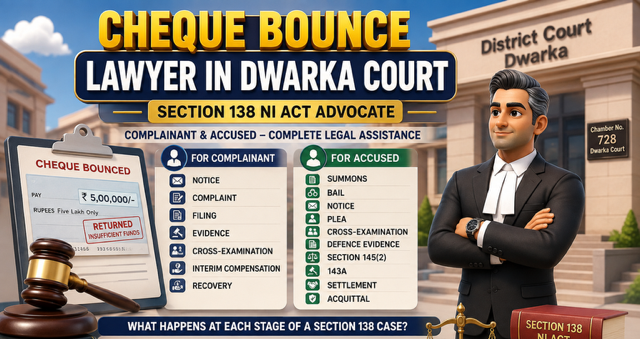
🧾 For Complainant – Cheque Bounce Services
A complainant is generally the payee or holder in due course who alleges that the cheque issued towards a legally enforceable debt or liability was dishonoured.
Our Cheque Bounce Lawyer in Dwarka Court assists complainants from the pre-litigation stage through filing, evidence, cross-examination and final arguments.
1. 📩 Legal Notice
The statutory notice is one of the most important steps.
After receiving information from the bank regarding dishonour, the payee or holder in due course generally has to make a written demand within 30 days. The drawer is then given 15 days from receipt of the notice to make payment.
A properly drafted notice should clearly address:
- Cheque details
- Date and amount
- Bank return information
- Underlying transaction
- Legally enforceable liability
- Demand for payment
- Consequences of non-payment
A careless notice can create avoidable complications later.
2. 📑 Complaint Preparation
If payment is not made within the statutory period, a Section 138 complaint may be prepared.
The complaint should be supported by relevant documents, including:
- Original cheque
- Bank return memo
- Legal notice
- Proof of dispatch/service
- Relevant agreements or invoices
- Account statements, where appropriate
- Correspondence between the parties
- Other documents establishing the underlying transaction
The Supreme Court has reiterated the importance of the statutory sequence of presentation, notice and payment periods in Section 138 proceedings.
3. 🏛️ Filing Before the Competent Court
Jurisdiction is an important issue in cheque cases.
Section 142(2) specifies the territorial jurisdiction depending, among other things, upon the bank branch where the payee maintains the account when the cheque is delivered for collection through an account.
A local Cheque Bounce Lawyer in Dwarka Court can assist in identifying the appropriate court, preparing the complaint and supporting documents, and completing the filing process.
4. 📚 Evidence
Evidence can determine the strength of a cheque bounce case.
The complainant may need to establish the transaction, issuance of the cheque, dishonour, statutory notice and failure to pay. The Negotiable Instruments Act also contains statutory presumptions that can become important during trial.
The evidence must therefore be carefully prepared rather than treated as a routine formality.
5. 🔍 Cross-Examination
Cross-examination is often one of the most important stages in contested cheque bounce litigation.
The questions may focus on:
- Source of funds
- Nature of transaction
- Existing liability
- Date and circumstances of issuance
- Security cheque defence
- Accounts and records
- Previous communications
- Contradictions
- Notice and service
- Capacity and credibility
An experienced Cheque Bounce Lawyer in Dwarka Court understands that cross-examination must be based on the pleadings, documents, admissions and evidence already available on record.
6. 💰 Interim Compensation Under Section 143A
Section 143A permits the Court, in specified circumstances, to direct the drawer to pay interim compensation to the complainant. The amount cannot exceed 20% of the cheque amount. The statutory provision also deals with the time for payment and consequences if the drawer is subsequently acquitted.
Therefore, a complainant should understand Section 143A before assuming that interim compensation is automatic.
7. 💵 Recovery and Final Relief
A Section 138 case can involve questions of compensation, fine and recovery.
Where appropriate, settlement may also be explored. Offences under the Negotiable Instruments Act are compoundable under Section 147. (India Code)

🛡️ For Accused – Cheque Bounce Defence Services
Receiving a cheque bounce summons can be stressful. However, the accused should not panic or ignore the proceedings.
An accused requires a carefully prepared defence based upon the facts, documents, statutory presumptions and evidence.
Our Cheque Bounce Lawyer in Dwarka Court assists accused persons through the following stages.
1. 📬 Summons
Once proceedings are instituted and the Court issues summons, the accused must respond appropriately.
Ignoring court summons can create unnecessary procedural difficulties.
2. ⚖️ Bail / Appearance
Depending upon the circumstances and stage of proceedings, appropriate steps may be taken regarding appearance, bail and exemption from personal appearance where legally permissible.
The correct strategy depends upon the particular case and the orders passed by the Court.
3. 📩 Statutory Notice
The legal notice received before filing the complaint should be examined carefully.
We analyse:
- Whether notice was properly issued
- Contents of the demand
- Amount demanded
- Address and service
- Dates
- Transaction referred to
- Whether the notice contains material inconsistencies
4. 🗣️ Plea and Defence
The accused must have a coherent defence.
Possible factual issues may include:
- No legally enforceable debt
- Cheque issued as security
- Payment already made
- Dispute regarding the underlying transaction
- Material alteration or misuse
- Lack of consideration
- Incorrect amount
- Contradictions in the complainant’s version
- Absence of supporting documents
Every defence must be assessed according to the evidence and facts of the individual case.
5. 🔍 Section 145(2) and Cross-Examination
Section 145(1) permits evidence of the complainant to be given by affidavit. Section 145(2) provides for examination of a person giving evidence by affidavit on the application of the prosecution or accused, subject to the statutory provision.
This stage can be extremely important for the accused.
Effective cross-examination may test:
- The existence of liability
- Financial capacity
- Source of funds
- Documents
- Account entries
- Previous dealings
- Security cheque allegations
- Contradictions
- Admissions
- Notice contents
- Circumstances of cheque issuance
A Cheque Bounce Lawyer in Dwarka Court should prepare cross-examination from the complete case record rather than asking routine questions.
6. 📚 Defence Evidence
Depending upon the facts, the accused may consider leading defence evidence.
Documents, witnesses, bank records, correspondence and other admissible material may become relevant.
The defence strategy should be prepared early rather than at the last moment.
7. 💰 Section 143A
Where Section 143A is invoked, the accused should understand the statutory framework, the stage at which the provision may apply and the implications of an interim compensation order. The statutory ceiling is 20% of the cheque amount.
8. 🤝 Settlement
Not every cheque dispute must necessarily proceed to final judgment.
Section 147 makes offences under the NI Act compoundable. Therefore, depending on the facts, commercial considerations and instructions of the parties, settlement may be explored at an appropriate stage.
9. ✅ Acquittal
Where the prosecution fails to establish the offence and the accused successfully establishes the applicable defence, the Court may acquit the accused.
A Cheque Bounce Lawyer in Dwarka Court should therefore prepare the case from the first hearing with the final outcome in mind.
⏱️ What Happens at Each Stage of a Section 138 Case?
A typical Section 138 matter may broadly progress as follows:
Stage 1 – Cheque Issued
The drawer issues a cheque towards an alleged legally enforceable debt or liability.
Stage 2 – Presentation
The cheque is presented within its applicable validity period. Section 138 refers to presentation within six months or the period of validity, whichever is earlier.
Stage 3 – Dishonour
The bank returns the cheque unpaid and issues a return memo.
Stage 4 – Legal Notice
The payee generally sends a written demand notice within 30 days from receiving information regarding dishonour.
Stage 5 – 15-Day Payment Period
The drawer gets 15 days from receipt of the notice to make payment.
Stage 6 – Cause of Action
If payment is not made within the statutory period, the cause of action arises.
Stage 7 – Complaint
The complaint is ordinarily filed within one month from the date the cause of action arises, subject to the statutory provision permitting delayed cognizance where sufficient cause is shown.
Stage 8 – Cognizance and Summons
The Magistrate considers the complaint and supporting material. If proceedings continue, summons may be issued to the accused.
Stage 9 – Appearance / Bail
The accused appears before the Court and takes appropriate procedural steps.
Stage 10 – Notice / Plea
The case proceeds according to the applicable procedure and the accused’s response is recorded.
Stage 11 – Complainant Evidence
The complainant’s evidence is placed before the Court.
Stage 12 – Cross-Examination
The opposite side may cross-examine the witness in accordance with law.
Stage 13 – Defence
The accused may lead defence evidence where appropriate.
Stage 14 – Final Arguments
Both sides present their legal and factual arguments.
Stage 15 – Judgment
The Court decides whether the offence has been established.
Stage 16 – Settlement / Appeal, Where Applicable
Depending upon the outcome, settlement, compounding or appellate remedies may be considered.
Important: The actual duration varies from case to case. Court schedules, service of summons, evidence, applications, settlement negotiations and other procedural factors can affect the timeline.
⚠️ Why Choose an Experienced Cheque Bounce Advocate in Dwarka Court?
Cheque bounce litigation is not simply about filing a complaint.
The real skill often appears during:
Evidence → Cross-Examination → Defence → Final Arguments
An experienced Cheque Bounce Lawyer in Dwarka Court should understand both the complainant’s strategy and the accused’s possible defences.
At Ankit Gaurav Kainth & Associates, we have 18+ years of legal practice involving civil and criminal litigation and experience assisting clients in cheque dishonour disputes before Dwarka Court, New Delhi.
Our Chamber is situated at:
Chamber No. 728, 7th Floor, Lawyers Chambers Block, District Court Dwarka, Sector 10, New Delhi.
Being locally based at Dwarka Court helps us understand the filing process, court procedures, listing practices and day-to-day working environment of the Court.
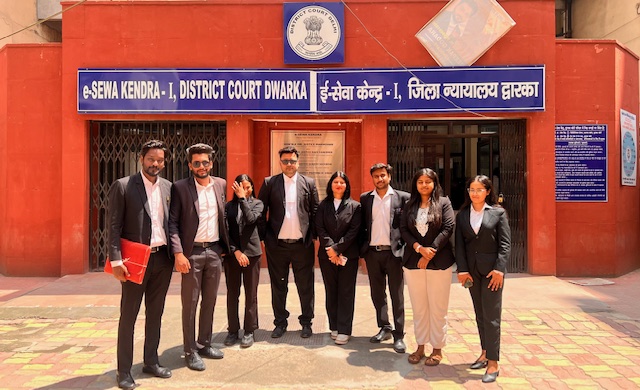
📍 Serving Clients Across Dwarka and Delhi
Clients looking for a Cheque Bounce Lawyer in Dwarka Court may approach us.
We also receive enquiries from clients residing outside Delhi and from persons who require assistance in a Dwarka Court matter while living elsewhere in India or abroad.
🤝 Pre-Litigation and Ongoing Litigation Assistance
Our role does not necessarily begin after a case is filed.
Before Litigation
We can assist with:
- Reviewing the cheque
- Reviewing the underlying transaction
- Examining bank documents
- Preparing or replying to legal notice
- Assessing limitation
- Identifying potential risks
- Exploring settlement
- Preparing a litigation strategy
During Litigation
We assist with:
- Filing
- Court appearances
- Bail and procedural applications
- Evidence
- Cross-examination
- Section 145(2) applications
- Section 143A issues
- Defence evidence
- Final arguments
- Settlement
- Judgment and subsequent remedies
This complete approach allows a Cheque Bounce Lawyer in Dwarka Court to prepare the case strategically instead of dealing with every hearing in isolation.
🔐 Client Trust, Transparency and Professional Standards
Legal representation should be based on trust.
We therefore focus on:
⚖️ High professional standards
📞 Quick responsiveness
📱 Dedicated WhatsApp communication for case updates
💬 Availability on call, subject to professional commitments
💰 Reasonable and transparent fee structure
📝 Proper Lawyer-Client Fee Agreements
🧾 Fee receipts and acknowledgements
✅ Honest and fair dealings
Our objective is to ensure that clients understand the nature of their case, the legal process, professional fees and the realistic options available to them.
🔎 How to Choose the Cheque Bounce Advocate in Dwarka Court?
Before appointing a lawyer, ask:
- Does the advocate regularly handle Section 138 NI Act matters?
- Does the advocate understand both complainant and accused strategy?
- Can the advocate conduct effective cross-examination?
- Does the lawyer personally understand the Court’s procedure?
- Is the fee structure transparent?
- Will you receive proper fee documentation?
- Is there a reliable communication system?
- Does the advocate explain risks instead of promising guaranteed results?
- Can the advocate handle evidence and final arguments?
- Is the lawyer experienced in the relevant court?
Searching for the 138 NI Act Lawyer in Dwarka should therefore involve more than looking at online ratings. Experience, preparation, communication, professional conduct and courtroom strategy matter.
🏆 Advocate for Cheque Bounce Cases in Dwarka Court
If you are searching for the Cheque Bounce Lawyer in Dwarka Court, it is important to choose an advocate who can handle the complete litigation cycle.
At Ankit Gaurav Kainth & Associates, our approach is based on:
18+ Years of Experience + Local Dwarka Court Presence + Evidence Preparation + Cross-Examination + Strategic Defence + Final Arguments
We assist both complainants and accused persons in Section 138 NI Act matters.
Clients may also verify publicly available case information through the eCourts Services system, wherever records are available. Publicly accessible orders and case information can help clients understand a lawyer’s professional court work, subject to the limitations of online court records.
We believe that an advocate should earn client confidence through professional work, transparent communication and responsible legal advice—not merely through advertising.
Section 138 cheque bounce legal notice
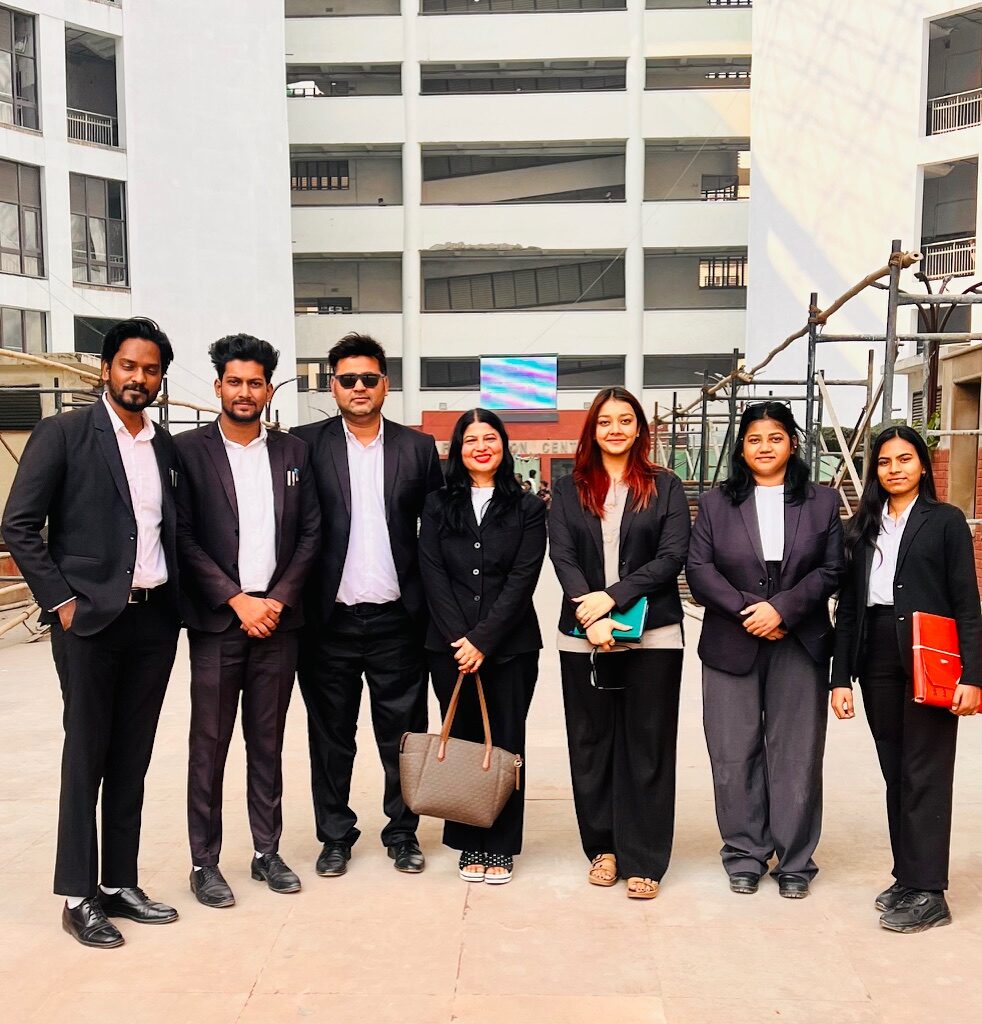
📞 Need a Cheque Bounce Lawyer in Dwarka Court?
If your cheque has been dishonoured, do not wait until the limitation period is close to expiring.
If you have received a cheque bounce notice or summons, do not ignore it.
If you are a business owner, professional, individual, company or creditor dealing with a cheque dispute, obtain timely legal advice.
⚖️ Ankit Gaurav Kainth & Associates
Cheque Bounce Lawyer in Dwarka Court | Section 138 NI Act Advocate
📍 Chamber No. 728, 7th Floor, Lawyers Chambers Block, District Court Dwarka, Sector 10, New Delhi
📞 9899085554
📞 9811885554
Contact us for professional legal assistance regarding cheque dishonour and Section 138 NI Act matters in Dwarka Court, New Delhi.
Legal matters are fact-specific. The information above is for general educational purposes and should not be treated as a substitute for advice based on the documents and facts of an individual case.
❓ Frequently Asked Questions
1. What is a cheque bounce case under Section 138 NI Act?
A Section 138 case may arise when a cheque issued towards a legally enforceable debt or liability is dishonoured and the statutory requirements relating to presentation, notice and non-payment are satisfied.
2. How long do I have to send a cheque bounce notice?
The statutory demand notice is generally required to be issued within 30 days from receipt of information from the bank regarding dishonour.
3. How much time does the drawer get after receiving the notice?
The drawer generally gets 15 days from receipt of the notice to make payment of the cheque amount.
4. When can a Section 138 complaint be filed?
After the drawer fails to make payment within the statutory 15-day period, the cause of action arises. The complaint is ordinarily required to be filed within one month thereafter, subject to the statutory provision concerning delay.
5. What is the punishment under Section 138?
The punishment may extend to two years’ imprisonment, fine up to twice the cheque amount, or both, subject to the applicable law and facts.
6. Can the accused get bail in a cheque bounce case?
Appropriate procedural relief may be available depending upon the stage and circumstances of the case. The accused should obtain case-specific advice rather than ignoring the summons.
7. What is Section 145(2) in a cheque bounce case?
Section 145(2) deals with examination of a person who has given evidence by affidavit, on application in accordance with the statutory provision. It can become particularly relevant to cross-examination.
8. What is interim compensation under Section 143A?
Section 143A permits the Court, in specified circumstances, to order interim compensation to the complainant, subject to a statutory maximum of 20% of the cheque amount.
9. Can a cheque bounce case be settled?
Yes. Section 147 of the Negotiable Instruments Act provides that offences under the Act are compoundable. The timing and terms of settlement depend on the case and applicable court orders.
10. How do I choose a Cheque Bounce Lawyer in Dwarka Court?
Look for experience in Section 138 litigation, knowledge of evidence and cross-examination, familiarity with Dwarka Court procedure, transparent professional fees, clear communication and a realistic assessment of your case.
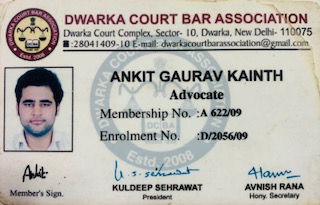
Written & Reviewed by Advocate Ankit Gaurav Kainth
18+ Years of Litigation Experience | District Court Dwarka, New Delhi