

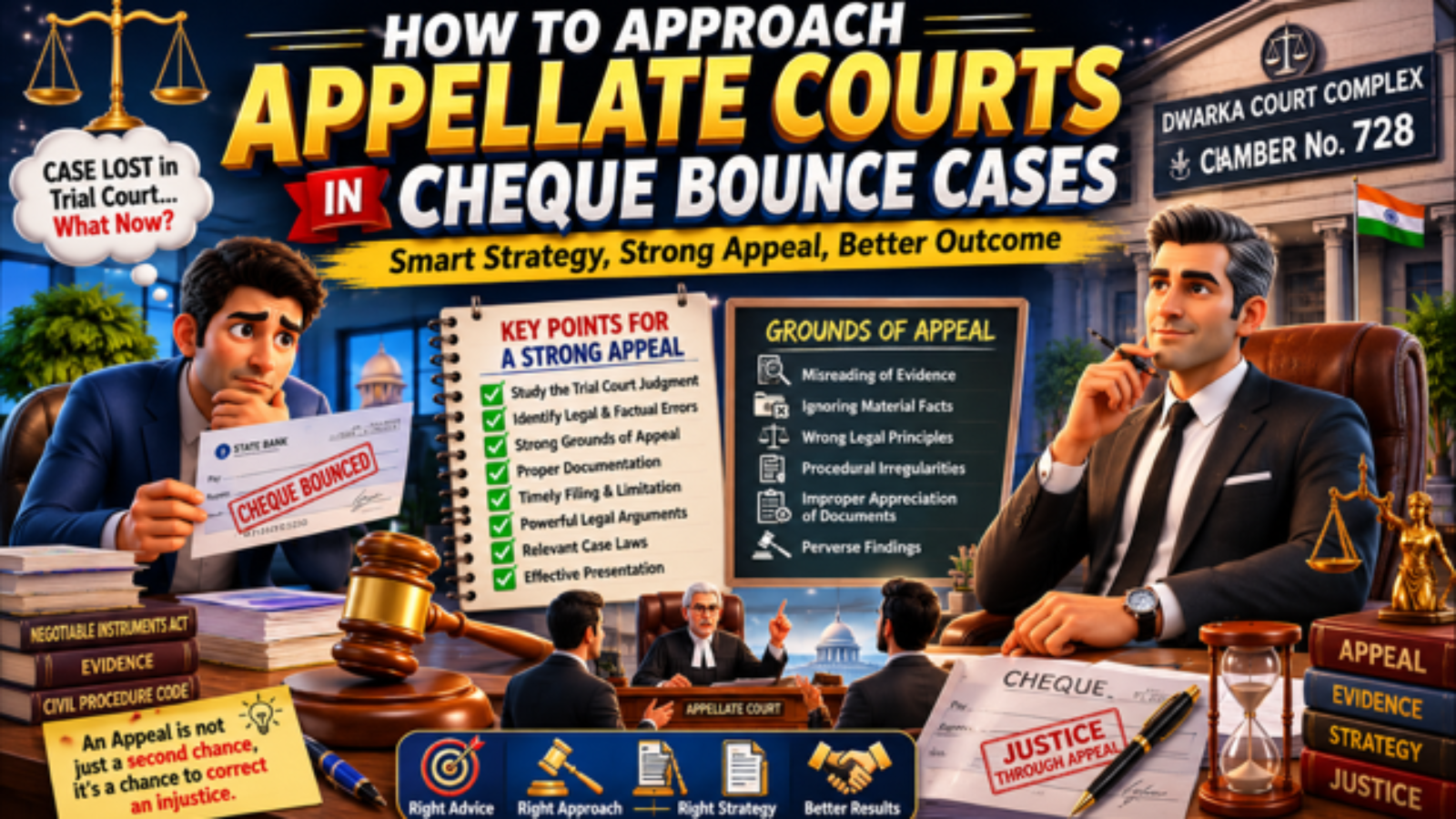
⚖️ Introduction – How to Approach Appellate Courts in Cheque Bounce Cases
Receiving an unfavourable judgment in a cheque bounce case can be frustrating. However, an adverse order does not always mean the end of your legal journey. The law provides an opportunity to challenge eligible orders before the appropriate appellate court. Therefore, understanding how to approach appellate courts in cheque bounce cases is essential.
An appeal is not simply a second chance to repeat the same arguments. Instead, it requires careful legal analysis, proper documentation, and a well-prepared strategy. Consequently, seeking timely legal advice can make the appellate process more effective and efficient.
Whether you are the complainant or the accused, understanding how to approach appellate courts in cheque bounce cases helps you make informed decisions.
⚖️ What Is a Cheque Bounce Case?
A cheque bounce case generally arises when a cheque issued towards a legally enforceable debt or liability is dishonoured by the bank due to reasons such as insufficient funds or other legally relevant grounds. Subject to fulfilment of statutory requirements, proceedings may be initiated under the applicable provisions of the Negotiable Instruments Act, 1881.
However, every case depends upon its own facts, evidence, and compliance with legal timelines.
📑 When Can an Appeal Be Filed?
Many people believe that every unfavourable order can automatically be challenged.
That is not always correct.
The right to appeal depends upon the nature of the order and the applicable law.
Generally, appellate courts examine whether:
✅ The trial court correctly appreciated the evidence.
✅ Relevant legal provisions were properly applied.
✅ Procedural requirements were followed.
✅ Material evidence was overlooked.
✅ The judgment contains legal or factual errors warranting appellate consideration.
Therefore, understanding how to approach appellate courts in cheque bounce cases begins with evaluating whether an appeal is legally maintainable.
🚫 Common Mistakes People Make During Appeals
Many appeals become difficult because of avoidable mistakes.
Some common errors include:
❌ Filing after limitation without proper explanation.
❌ Preparing incomplete documentation.
❌ Depending on assumptions instead of evidence.
❌ Ignoring procedural requirements.
❌ Filing without obtaining proper legal advice.
❌ Misunderstanding the grounds available in appeal.
Consequently, preparation is often as important as the appeal itself.
📋 Essential Documents Before Filing an Appeal
Every case is unique. However, parties commonly require documents such as:
| 📄 Document | Why It Matters |
| Certified copy of the judgment | Forms the foundation of the appeal. |
| Trial court record | Helps understand the evidence considered. |
| Relevant pleadings | Supports legal submissions. |
| Documentary evidence | Strengthens factual arguments. |
| Orders passed during proceedings | Provides procedural history. |
| Other relevant records | Depends upon the facts of the case. |
Proper documentation significantly improves the quality of legal preparation.
⚖️ Why Strategy Matters in Appellate Courts
Unlike trial proceedings, appellate courts primarily examine whether the trial court committed legal or factual errors based on the record before it.
Accordingly, effective appellate preparation involves:
✔️ Careful review of the judgment.
✔️ Identifying sustainable legal grounds.
✔️ Analysing documentary evidence.
✔️ Reviewing witness testimony where relevant.
✔️ Researching applicable precedents.
✔️ Presenting clear and structured legal arguments.
Therefore, knowing how to approach appellate courts in cheque bounce cases involves more than simply filing an appeal.
🛡️ Pre-Litigation: Why Early Legal Advice Matters
Many cheque bounce disputes can be managed more effectively before court proceedings begin.
Early legal guidance often helps parties understand their legal position, preserve evidence, and explore lawful options before litigation escalates.
Accordingly, we assist clients with:
✅ Legal consultations
✅ Case evaluation
✅ Drafting statutory notices
✅ Replying to legal notices
✅ Settlement discussions where appropriate
✅ Documentation review
✅ Recovery strategy
Timely legal advice frequently saves unnecessary litigation, cost, and time.

⚖️ Litigation & Appellate Representation
Where litigation becomes necessary, professional representation remains important at every stage.
We regularly assist clients in matters involving:
⚖️ Cheque Bounce Cases
⚖️ Appeals in Cheque Bounce Matters
⚖️ Criminal Litigation
⚖️ Bail Matters
⚖️ Civil Litigation
⚖️ Commercial Disputes
⚖️ Recovery Proceedings
Each case receives individual attention because every legal dispute has its own facts and legal issues.
📍 Why Choose a Local Advocate in Dwarka Court?
Experience and local knowledge often improve efficiency.
For more than 18 years, we have been assisting clients before Dwarka Court.
Being a local Advocate in Dwarka Court allows us to understand filing procedures, registry practices, documentation requirements, and day-to-day court functioning.
Consequently, clients benefit from timely filings, procedural clarity, and effective coordination throughout the litigation process.
We regularly represent clients across:
📍 Dwarka Sector 6
📍 Dwarka Sector 10
📍 Dwarka Sector 12
📍 Dwarka Sector 23
📍 Dwarka North
📍 Dwarka South
📍 Janakpuri
📍 Vikaspuri
📍 Uttam Nagar
📍 Najafgarh
📍 Palam Village
📍 Mohan Garden
📍 Dabri
📍 Bindapur
📍 Delhi Cantonment
📍 Chhawla
📍 Baba Haridas Nagar
📍 Samalka
📍 Kapashera
📍 Jaffarpur Kalan
…and other areas near Dwarka Court and across South West Delhi.
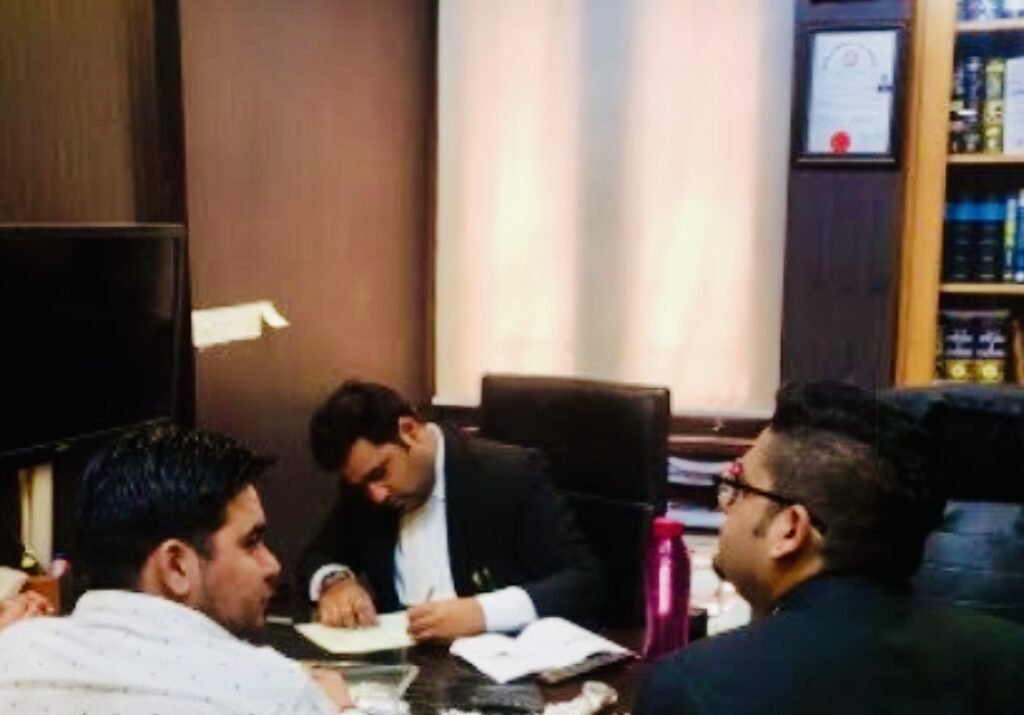
🤝 Why Clients Continue to Trust Us
Trust is earned through consistency.
Accordingly, we maintain:
✅ High professional standards
✅ Quick responsiveness
✅ Dedicated WhatsApp support
✅ Availability on call
✅ Transparent communication
✅ Reasonable fee structure
✅ Proper Lawyer–Client Fee Agreements
✅ Fee receipts and acknowledgements
✅ Honest and ethical legal advice
Our objective is to ensure every client understands the legal process before making important decisions.
📌 Conclusion
Understanding how to approach appellate courts in cheque bounce cases requires more than simply filing an appeal. Careful legal evaluation, proper documentation, adherence to limitation periods, and well-structured legal arguments are all essential.
Every appeal depends upon its own facts, evidence, and applicable law. Therefore, obtaining timely legal guidance helps parties understand their rights, procedural requirements, and available legal remedies.
If you are considering an appeal in a cheque bounce matter, early preparation can make the legal process more organised and effective.
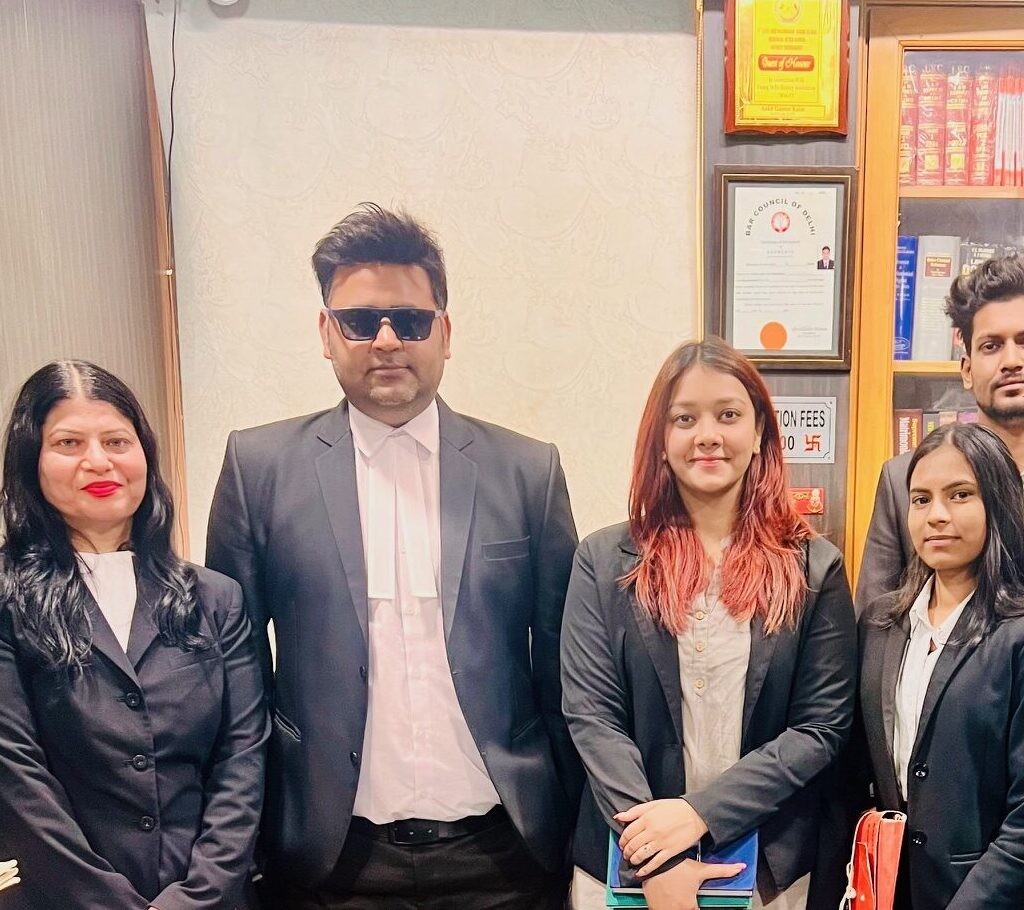
📊 Table: Trial Court vs Appellate Court in Cheque Bounce Cases
| Aspect | Trial Court | Appellate Court |
| Primary Purpose | Determines facts and decides the case initially | Reviews the legality and correctness of the trial court’s decision |
| Evidence | Evidence is produced and witnesses are examined | Usually reviews the existing record; additional evidence is allowed only in limited circumstances as permitted by law |
| Witness Examination | Yes | Generally, no fresh examination unless legally permitted |
| Legal Focus | Appreciation of evidence and facts | Review of legal errors, procedural issues, and findings |
| Documentation | Complaint, notices, evidence, affidavits | Trial court record, judgment, appeal memo, certified copies, and relevant documents |
| Timeline | Depends on the nature of proceedings | Depends on court workload and the facts of the appeal |
| Objective | Decide the original dispute | Examine whether the impugned judgment calls for appellate interference |
📋 Common Reasons Parties Prefer Filing an Appeal
| Situation | Why Legal Advice Matters |
| Conviction in a cheque bounce case | Evaluate available statutory remedies and appellate grounds |
| Acquittal of the accused | Assess whether an appeal or other legal remedy is maintainable |
| Procedural irregularities | Review compliance with applicable law |
| Improper appreciation of evidence | Examine whether the record supports an appellate challenge |
| Legal errors in the judgment | Identify sustainable grounds under the law |
| Limitation concerns | Ensure timely filing or consider applications where legally permissible |
Frequently Asked Questions (FAQs)
1. Can every cheque bounce judgment be challenged in appeal?
Not necessarily. The availability of an appeal depends on the nature of the order, the applicable law, and the facts of the case. A lawyer can advise you on the appropriate legal remedy.
2. What documents are generally required for filing an appeal?
Commonly required documents include the certified copy of the judgment, trial court record, pleadings, relevant documentary evidence, and any other documents necessary for preparing the appeal.
3. Is there a time limit for filing an appeal in a cheque bounce case?
Yes. Appeals are generally subject to statutory limitation periods. If there is a delay, the court may consider an application for condonation where the law permits and sufficient cause is shown.
4. Can a cheque bounce matter be settled even after litigation has started?
Depending on the facts and the applicable legal framework, parties may explore lawful settlement options at different stages of the proceedings.
5. Why should I engage a local Advocate in Dwarka Court?
A local advocate is familiar with the court’s filing procedures, registry practices, and day-to-day functioning, which can help ensure efficient handling of procedural aspects and representation.
📞 Need Legal Assistance?
If you require legal assistance regarding a cheque bounce case, an appeal arising from such proceedings, criminal litigation, civil disputes, recovery matters, or commercial litigation, we are available to assist with professionalism, transparency, and dedicated legal support.
⚖️ 18+ Years of Experience before Dwarka Court
📍 Local Advocate in Dwarka Court serving clients throughout South West Delhi.
📞 Call: 9899085554 | 9811885554
Timely legal advice can help you understand your legal position and the procedural steps relevant to your case.
[…] The Dismissal of Writ Petition frequently arises in matters involving: […]
[…] The Appeal Process in Cheque Bounce Cases in Dwarka Court demands careful legal analysis, proper documentation, timely filing, and persuasive legal arguments. Every matter presents different factual and legal issues. Consequently, professional guidance at the earliest stage can help parties understand their legal options and procedural requirements. […]
[…] Every Cheque Bounce Case in Dwarka Court is unique. However, the following documents are commonly required: […]