
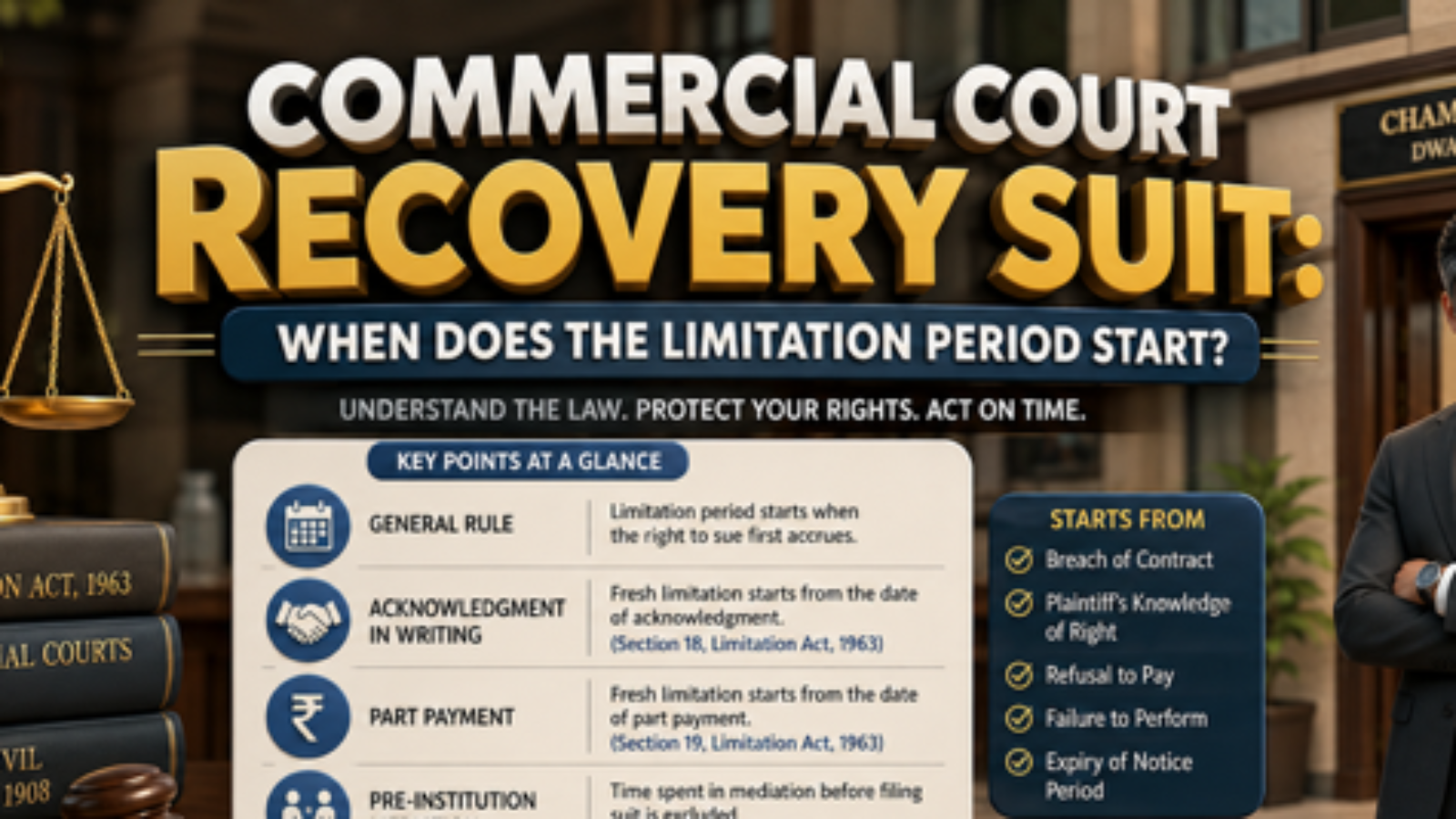

Introduction: Commercial Court Recovery Suit – Why Limitation Matters in Money Recovery ⚖️
If a business, company, firm or individual has to recover money under a commercial transaction, one of the first legal questions is simple: when does the limitation period start? A Commercial Court Recovery Suit is not only about proving that money is due. It is also about filing the claim within the period allowed by law.
In many ordinary money recovery claims, the limitation period is three years, but the exact starting point depends on the nature of the transaction, the agreed payment date, the cause of action, and the documents available. Therefore, a person should not assume that every money claim automatically gets three years from the date of the invoice or agreement.
The Limitation Act, 1963 contains different limitation rules for different causes of action. In addition, a written acknowledgment of liability made before expiry of limitation can result in a fresh period of limitation under Section 18. A qualifying part-payment can also have an effect under Section 19.
This article explains the issue in a practical way for businesses and clients considering a Commercial Court Recovery Suit in Delhi and other parts of India.
What Is the Limitation Period for a Commercial Recovery Suit?
For many suits seeking recovery of money based on contracts, accounts or similar obligations, the applicable limitation is commonly three years. However, the date from which those three years are counted is critical.
The starting date may depend on when the money became legally due, when payment was refused, when a stipulated period expired, or another event specified by the applicable Article of the Limitation Act. Therefore, limitation must be examined from the documents and facts of each case.
A Commercial Court Recovery Suit filed after limitation may face a serious legal objection. Thus, early legal review is important even when the client believes that the debt is clear.
When Does the Limitation Period Start? 🔎Commercial Court Recovery Suit
The key principle is that limitation normally runs from the date prescribed by the relevant provision of the Limitation Act. In a contractual money claim, this often means the date on which the amount became due and payable.
For example, if a written contract says that payment must be made within 30 days of delivery, the limitation analysis may begin with the date on which the contractual right to demand payment arose. If the contract contains several invoices or instalments, each amount may require separate examination.
Moreover, a demand notice does not automatically create a new limitation period. The legal effect of a notice depends on the underlying cause of action and the applicable law.
Quick Table: Understanding Limitation in Money Recovery
| Situation | What to examine | Possible limitation effect |
| Fixed payment date in contract | Date the amount became due | Usually counted from the legally relevant due date |
| Invoice-based transaction | Invoice terms, delivery and agreed credit period | Examine when payment became due |
| Written acknowledgment of liability | Date and contents of signed acknowledgment | Section 18 can provide a fresh period if its requirements are met |
| Part-payment of debt | Date and proof of qualifying payment | Section 19 can provide a fresh period if statutory requirements are met |
| Multiple instalments | Due date of each instalment and contract terms | Limitation may need separate analysis for each instalment |
| Demand made after default | Original cause of action and contractual terms | Demand letter alone does not necessarily restart limitation |
| Commercial pre-institution mediation | Date of application and mediation period | The statutory mediation period is not counted for limitation under Section 12A, subject to the Act |
| Fraud or concealed facts | Date of discovery and Section 17 requirements | Limitation may be affected where statutory conditions are satisfied |
Section 18 of the Limitation Act states that, where a qualifying acknowledgment is made in writing and signed before expiry of the prescribed period, a fresh period is computed from the time of signing. Section 19 addresses qualifying payments made before expiry of the prescribed period.
Example 1: Fixed Due Date Under a Business Contract
Suppose Company A supplies goods to Company B under a written contract. The contract states that the invoice amount must be paid within 30 days of delivery. The goods are delivered on 1 January 2026, and payment becomes due on 31 January 2026.
If Company B does not pay, the limitation analysis would ordinarily focus on when the debt became legally due under the contract and the applicable provision of the Limitation Act. Company A should therefore obtain legal advice promptly rather than waiting until the end of the three-year period.
If Company B later signs a written acknowledgment of the outstanding liability before limitation expires, Section 18 may become relevant and a fresh limitation period may run from the date of that acknowledgment, provided the statutory requirements are satisfied.
Example 2: Part-Payment and Written Acknowledgment
Assume a business is owed ₹15 lakh under a commercial transaction. The debtor pays ₹2 lakh before the original limitation period expires and the payment is properly documented. Later, the debtor also signs a written statement acknowledging the outstanding balance.
The legal effect of the payment and acknowledgment must be examined separately under Sections 18 and 19 of the Limitation Act. They may affect the calculation of limitation if the statutory conditions are satisfied. Therefore, bank statements, receipts, emails, letters and signed balance confirmations can become important evidence.
The lesson is clear: do not calculate limitation from memory alone. Check the complete documentary history.
Does a Legal Notice Restart Limitation?
This is a common question in a Commercial Court Recovery Suit. A legal notice can be valuable because it records the demand, sets out the claim and may support later proceedings. However, sending a notice does not, by itself, automatically extend or restart the limitation period.
Therefore, a client should not wait for the notice period to expire without checking the limitation position. The legal notice should form part of a wider litigation strategy, not be treated as a substitute for timely filing.
What About Pre-Institution Mediation in Commercial Cases?
Section 12A of the Commercial Courts Act, 2015 provides for pre-institution mediation for commercial suits that do not contemplate urgent interim relief. The statutory framework also provides that the period during which the parties remain occupied with pre-institution mediation is not computed for limitation, subject to the requirements of the Act.
This is important because mediation should not be treated as a reason to ignore limitation. Instead, the limitation position should be calculated before commencing the process, with the statutory exclusion properly considered.

Why Pre-Litigation Legal Assistance Matters 📝
Before filing a Commercial Court Recovery Suit, we assist clients at the pre-litigation stage. This stage can make a major difference to the quality and clarity of the eventual case.
Our work may include reviewing contracts, invoices, purchase orders, account statements, emails, delivery records, acknowledgments, payment records and correspondence. We also examine the cause of action, limitation, jurisdiction, specified value and available remedies.
Where appropriate, we help clients assess whether a legal notice, settlement discussion or pre-institution mediation should be pursued. The objective is to identify the legal position early and avoid preventable procedural problems.
For overseas businesses and clients located outside Delhi, this preliminary review can be especially useful. Documents can be examined remotely, while the litigation strategy can be planned for proceedings in Delhi where jurisdiction is legally available.
Assistance During the Litigation Stage ⚖️
Once proceedings begin, a Commercial Court Recovery Suit requires careful handling at every stage. We assist with pleadings, filing, documents, interim applications, written statements, evidence, cross-examination, arguments and other procedural requirements, depending on the nature of the case.
As a Commercial Court Advocate Delhi, our focus is not limited to filing the plaint. We also examine the defendant’s defence, documentary evidence and procedural objections, including limitation, jurisdiction and maintainability.
Our experience also covers connected civil and commercial matters. Depending on the dispute, clients may require a Civil Litigation Lawyer in Delhi, Property Dispute Advocate, Commercial Litigation Lawyer, or Commercial Disputes Advocate Dwarka Court.

Why a Local Advocate in Dwarka Court Can Help 🚀
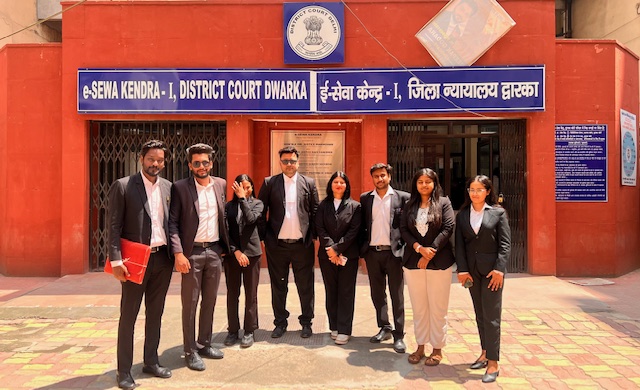
We are local advocates practising at Dwarka Court, New Delhi, including the Lawyers’ Chambers area. With more than 18 years of experience in litigation in Delhi, we have practical familiarity with filing processes, court procedures, listing systems and the working environment of the local court.
This local presence can help us coordinate filing and representation efficiently. For clients who need a Commercial Court Lawyer in Dwarka Court, local court familiarity can also make communication with the office, filing teams and court processes more practical.
Our practice is relevant to clients from Dwarka Sector 6, Sector 10, Sector 12 and Sector 23, as well as people and businesses from Janakpuri, Vikaspuri, Dwarka North, Dwarka South, Delhi Cantonment, Chhawla, Bindapur, Baba Haridas Nagar, Mohan Garden, Palam Village, Najafgarh, Uttam Nagar, Samalka, Dabri, Jaffarpur Kalan and Kapashera, and other areas near Dwarka Court.
Serving Clients Across India and Internationally 🌍
A commercial dispute may involve parties located in different cities or countries. A client may have a business in Delhi while its directors, shareholders or commercial partners live abroad.
We assist clients who need to pursue or defend commercial litigation in Delhi, subject to jurisdiction and applicable law. International clients may include individuals and businesses connected with the United States, United Kingdom, Canada, Australia, United Arab Emirates, Singapore, Germany, France and New Zealand.
For such matters, a Recover of Money Commercial Court Lawyer Dwarka can help coordinate the Indian litigation side, document review and communication with the client. Where foreign law, evidence or enforcement issues arise, appropriate specialist advice may also be required.
Client Trust: Professional, Transparent and Responsive Service ✅
Legal representation involves trust. Therefore, we follow a professional and transparent approach in client dealings.
Our client-service approach includes:
- ⚖️ High professional standards in legal drafting, preparation and representation.
- 📞 Quick responsiveness for important case-related communication.
- 📱 Availability on call for practical updates and coordination.
- 💬 Dedicated WhatsApp support for client communication and case updates.
- 💰 Reasonable and transparent fee structure explained in advance.
- 📝 Proper Lawyer-Client Fee Agreements recording the agreed professional terms.
- 🧾 Fee receipts and acknowledgements for transparent financial records.
- 🤝 Honest, fair and transparent dealings throughout the professional relationship.
These practices are intended to make the legal process easier to understand and more organised for clients.
What Documents Should You Keep Ready?
Before consulting a Recovery Suit Commercial Court Counsel, keep the key documents together. These may include:
- Agreement, contract or purchase order.
- Invoices and tax documents.
- Delivery challans or proof of performance.
- Bank statements and payment records.
- Ledger or statement of account.
- Emails, WhatsApp messages and business correspondence.
- Written acknowledgments of liability.
- Records of part-payments.
- Legal notices and replies.
- Documents showing jurisdiction and the commercial relationship.
Most importantly, arrange these documents by date. A clear chronology often makes the limitation analysis much easier.
Common Mistakes That Can Affect a Recovery Claim ⚠️
1. Waiting too long
A client may spend months negotiating without checking limitation. Negotiations do not automatically stop the clock.
2. Assuming every claim has the same limitation period
Different legal claims can have different limitation rules. The exact Article must be identified from the facts.
3. Treating a demand notice as an extension
A legal notice can support the case, but it does not automatically create a fresh limitation period.
4. Ignoring acknowledgments and payments
Signed acknowledgments and qualifying payments may materially affect limitation. Therefore, preserve all such records.
5. Filing without checking commercial procedure
A commercial dispute may involve specified-value requirements, pre-institution mediation and other procedural rules. The Commercial Courts Act contains a dedicated framework for commercial disputes and pre-institution mediation.
Why Early Legal Review Is Important
The limitation question should ideally be examined before filing a Commercial Court Recovery Suit. Early review allows the lawyer to identify the correct cause of action, calculate the relevant dates, check contractual terms, preserve evidence and consider pre-litigation options.
It also helps clients avoid a common problem: discovering a limitation issue only after substantial time and money have already been spent.

Frequently Asked Questions
1. What is the usual limitation period for a Commercial Court Recovery Suit?
For many money recovery claims, the limitation period is three years. However, the exact period and starting point depend on the nature of the claim and the applicable provision of the Limitation Act.
2. When does limitation start in a money recovery case?
It generally starts from the date prescribed by the applicable limitation provision. In contractual claims, the relevant date is often connected with when the amount became due. The agreement and transaction documents must be examined carefully.
3. Can a written acknowledgment extend limitation?
Yes, a qualifying written acknowledgment made and signed before expiry of the prescribed period can lead to a fresh period under Section 18 of the Limitation Act.
4. Does pre-institution mediation affect limitation?
For applicable commercial suits under Section 12A, the statutory period during which the parties remain occupied with pre-institution mediation is not counted for limitation, subject to the Act.
5. Can I file a commercial recovery case from outside Delhi?
Potentially, yes, where Delhi has legally valid territorial and subject-matter jurisdiction. A jurisdiction analysis should be completed before filing. Clients located elsewhere in India or abroad can obtain legal assistance remotely, subject to the facts and applicable law.
Conclusion
Limitation is one of the most important issues in a Commercial Court Recovery Suit. The key is not simply to remember the phrase “three years.” Instead, the correct starting date, applicable limitation provision, contractual terms, acknowledgments, payments and statutory exclusions must be examined together.
Therefore, if money remains unpaid under a commercial transaction, obtain legal advice at the earliest stage. A timely review can help identify the cause of action, preserve evidence and plan the appropriate pre-litigation or litigation strategy.
If you are looking for a Commercial Court Advocate Delhi, Commercial Court Lawyer in Dwarka Court, Commercial Disputes Advocate Dwarka Court, or Advocate in Dwarka Court, professional advice should be based on the documents and facts of your particular dispute.
📞 Legal Consultation & Assistance – Commercial Court Recovery Suit
If you are considering a Commercial Court Recovery Suit for recovery of money from a company, firm, business partner, customer or other commercial party, you may contact us for a preliminary discussion regarding your legal position, documents, limitation and available procedural options.
Mobile: 9899085554 | 9811885554
Ankit Gaurav Kainth & Associates
Advocate in Dwarka Court, New Delhi
Chamber No. 728, Lawyers’ Chambers Block, District Court Dwarka, Sector-10, New Delhi
⚠️ Legal Disclaimer
This article is intended for general legal information and educational purposes. Limitation depends on the facts, documents, cause of action and applicable statutory provisions. It should not be treated as a substitute for case-specific legal advice. The information stated above should be verified against the law applicable to the particular dispute before taking legal action.
✍️ Author – Commercial Court Recovery Suit
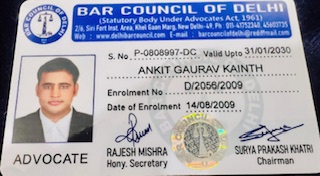
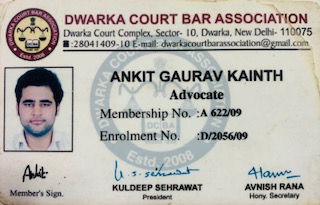
This article is written by Ankit Gaurav Kainth, Advocate, based on 18+ years of litigation experience in Delhi, including practice at Dwarka Court.
| Important Topics | Text |
| Commercial Court practice page | Commercial Court Lawyer in Dwarka Court |
| Commercial Court Recovery Suit: | When Does the Limitation Period Start? |
| Commercial Lease Dispute Dwarka | Powerful Ground Every Client Should Know |
| Written Statement 120 Days in Commercial Court Recovery Suit | Important Law |
| Commercial Money Recovery Suit in Delhi | A Complete Guide for International Clients & Foreign Companies |
| The Unassailable Blueprint to Lead Defence Evidence Like a Professional in Commercial Court Cases | Advanced Litigation Strategies Every Lawyer Should Master |
| Commercial Court Is Fast | But Only If Your Lawyer Does This in Delhi Court |
| Why Businesses Lose Strong Commercial Cases Despite Having Agreements? | Experienced Commercial Court Advocate Dwarka Delhi |
| Powerful Commercial Court Recovery Case | Acquittal Strategies for Fearless Defence |
| What Happens After Receiving a Legal Notice | in a Commercial Matter? |
[…] Understanding the strict 120-day deadline for filing a written statement in a Commercial Court recov… […]
[…] When Does the Limitation Period Start? […]
[…] Understanding commercial lease disputes, unpaid invoices and money recovery proceedings before Comme… […]
[…] When Does the Limitation Period Start? […]
[…] When Does the Limitation Period Start? […]
[…] When Does the Limitation Period Start? […]
[…] When Does the Limitation Period Start? […]
[…] When Does the Limitation Period Start? […]
[…] When Does the Limitation Period Start? […]
[…] When Does the Limitation Period Start? […]
[…] When Does the Limitation Period Start? […]
[…] When Does the Limitation Period Start? […]