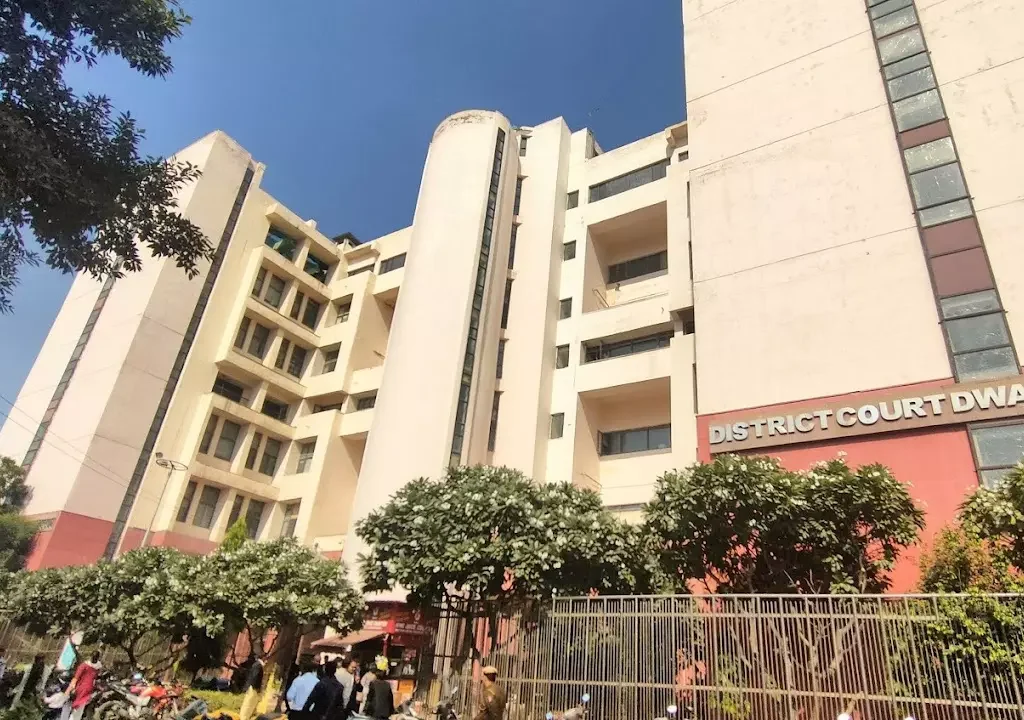
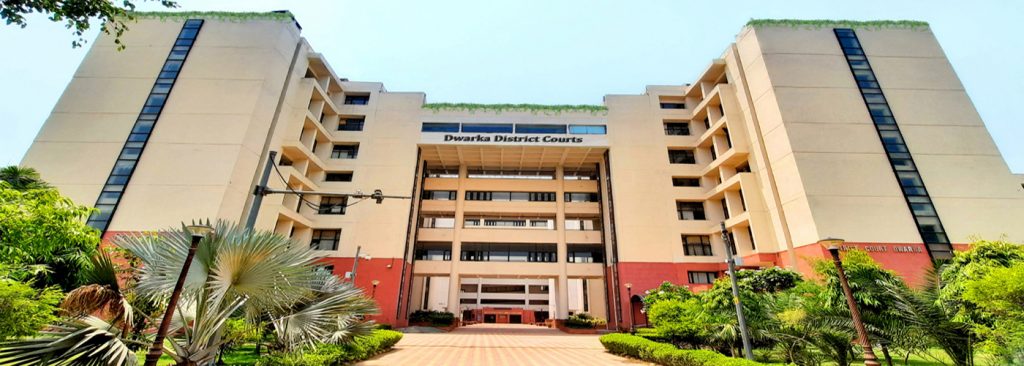
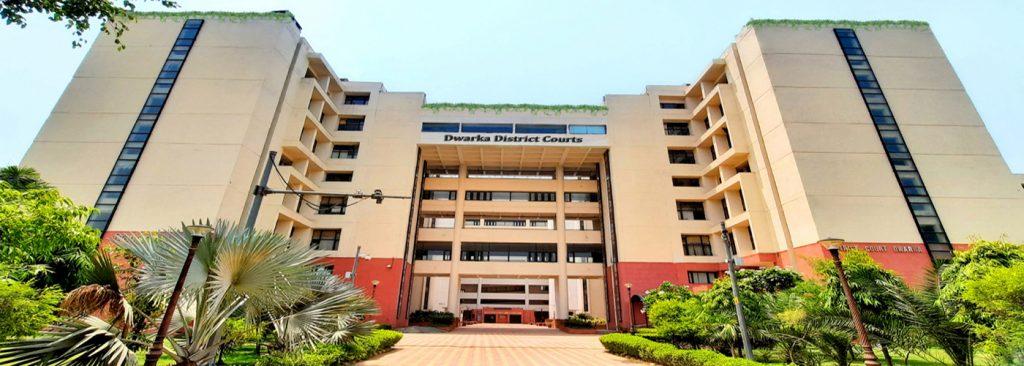
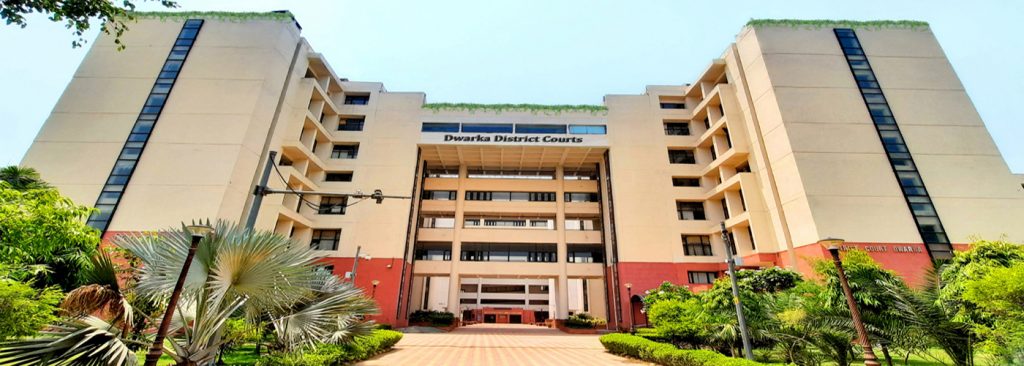
In criminal litigation, one of the most powerful remedies available to an accused person is quashing of FIR. If you or your family member is facing a false or settlement-based criminal case within the jurisdiction of Dwarka Court, this guide explains the complete process in simple language.
With 18+ years of active practice in Dwarka Court, I have handled numerous quashing petitions arising from matrimonial disputes, property conflicts, cheque bounce matters, and cross-complaints. Therefore, this article is based on practical courtroom experience — not just theory.
📌 What Is Quashing of FIR?
An FIR (First Information Report) starts a criminal case. However, in many situations, the dispute later gets settled, or the FIR is found to be false. In such cases, the accused can approach the High Court for quashing.
Importantly, Dwarka Court cannot quash an FIR. Only the High Court has the power under Section 482 CrPC (now Section 528 BNSS equivalent).
For matters arising from police stations falling under Dwarka Court jurisdiction, the petition is filed before the:
The courts have clarified principles in Gian Singh v. State of Punjab. Based on experience in Dwarka Court matters, FIR quashing is commonly allowed in:
✅ 498A / Matrimonial disputes after settlement
✅ Property disputes with criminal colour
✅ Minor hurt / verbal altercation cases
✅ Cheque bounce cross-cases
✅ Cases where no prima facie offence is made out
However, serious offences like rape, murder, or offences against society generally cannot be quashed merely on compromise.
🏛️ How Matters Move from Dwarka Court to High Court
Most criminal cases begin in Dwarka Court. Police stations in Janakpuri, Vikaspuri, Dwarka North, Dwarka South, Najafgarh, Uttam Nagar and Bindapur fall under Dwarka Court jurisdiction.
Once settlement happens, the process is:
1️⃣ Settlement agreement drafted
2️⃣ Statements recorded in Dwarka Court (if required)
3️⃣ Petition prepared
4️⃣ Filing before Delhi High Court
5️⃣ Notice to State
6️⃣ Complainant confirms settlement
7️⃣ FIR quashed
Typically, the process takes 3–6 months, depending on listing.
📂 Documents Required for FIR Quashing
Copy of FIR
Charge sheet (if filed in Dwarka Court)
Settlement deed
Affidavits of parties
Identity documents
Bail order (if granted in Bail Matters Dwarka Court)
Proper documentation ensures smooth disposal.
👨⚖️ What Happens to Bail After FIR Is Quashed?
If bail was granted in Dwarka Court, once FIR is quashed:
Bail automatically becomes infructuous
Trial proceedings stop
Accused is discharged permanently
Therefore, timely action is crucial.
🔎 Why Experience in Dwarka Court Matters
Every Dwarka Court case has procedural nuances. For example:
Timing of settlement
Whether charge sheet is filed
Whether charges are framed
Coordination with Investigating Officer
As a Criminal Lawyer Dwarka, I ensure that the quashing petition aligns with the stage of proceedings pending before Dwarka Court.
Moreover, clients often approach me after consulting a Divorce Lawyer Dwarka or Property Lawyer Dwarka because matrimonial and property disputes frequently turn into criminal litigation.
🌟 Why Clients Choose Us in Dwarka Court Jurisdiction
With 18+ years of courtroom experience:
✔ Deep familiarity with Dwarka procedure
✔ Regular practice before Delhi High Court
✔ Expertise in Bail Matters Court
✔ Strong drafting and settlement strategy
✔ Transparent consultation
Our office regularly handles matters from Dwarka Court, Janakpuri, Vikaspuri, Najafgarh, Uttam Nagar and surrounding jurisdictions.
📈 Strategic Advantage: Early Legal Intervention
Many accused persons delay action. However, early consultation with a Criminal Lawyer Dwarka helps:
Prevent arrest
Secure anticipatory bail
Structure lawful settlement
Prepare strong quashing grounds
In matrimonial matters, coordination between Divorce Lawyer Dwarka and criminal counsel is essential. Similarly, in property disputes, guidance from a Property Lawyer Dwarka strengthens the overall strategy.
❓ Frequently Asked Questions (FAQs)
1. Can Dwarka Court cancel or quash FIR directly?
No. Dwarka Court conducts trial proceedings. Only the Delhi High Court can quash FIR.
2. Is personal appearance required?
Yes. Generally, the complainant must appear before the High Court to confirm settlement.
3. Can FIR be quashed after charge sheet?
Yes. Even if charge sheet is filed in Court, FIR can still be quashed.
4. How long does quashing take?
Usually 3–6 months, depending on listing and compliance.
5. Is settlement mandatory?
In compromise cases, yes. However, FIR can also be quashed if allegations are legally unsustainable.
Then choosing experienced representation is crucial. Legal strategy, drafting quality, and courtroom confidence make the difference.
📞 Final Words – Take Timely Legal Action
A pending FIR can affect passport, employment, business reputation and mental peace. Therefore, do not delay.
With 18+ years of practice in Dwarka Court jurisdiction, I provide structured consultation and High Court representation for FIR quashing matters across Janakpuri, Vikaspuri, Dwarka North, Dwarka South, Najafgarh, Uttam Nagar and Bindapur.
Getting the right legal advice at the right time can completely change the outcome of your case. Whether it is divorce, property dispute, criminal allegation, Bail Matters, or a Cheque Bounce case in Dwarka Court, the first consultation often decides your legal direction.
With 18+ years of continuous practice in Dwarka Court, I have guided hundreds of clients from Janakpuri, Vikaspuri, Dwarka North, Dwarka South, Najafgarh and surrounding jurisdictions. In this guide, I will explain how to get legal consultation from an Advocate in Dwarka Court, through a real-life conversation format.
⚖️ Why Legal Consultation in Dwarka Court Matters
Many clients come to Dwarka Court confused, stressed, and sometimes misinformed. However, a structured consultation helps you:
✔️ Understand your legal position
✔️ Avoid unnecessary litigation
✔️ Prepare documents properly
✔️ Protect yourself in urgent Bail Matters
✔️ Choose the right strategy before filing in Dwarka Court
Therefore, consultation is not just a meeting — it is legal planning.
💬 A Real Conversation at Dwarka Court (2026)
👤 Client:
“Sir, I received a legal notice. What should I do?”
👨⚖️ Advocate:
“First, don’t panic. Let me see the notice. Is this related to divorce, property, criminal case, or cheque bounce in Dwarka Court?”
🏠 If It Is a Property Matter
If the issue relates to ownership, partition, possession, or stay order, you need a Property Lawyer Dwarka who understands valuation, jurisdiction, and interim relief practice in Dwarka Court.
During consultation, we discuss:
Title documents
Sale deed or GPA
Possession proof
Urgency for injunction
Then, we decide whether to file immediately in Dwarka Court or send a reply first.
💔 If It Is a Divorce or Matrimonial Dispute
Many clients approach a Divorce Lawyer Dwarka after receiving notice for divorce, maintenance, or domestic violence.
In consultation at Dwarka Court, we analyse:
Marriage documents
Income details
Child custody concerns
Property rights
Early legal advice prevents mistakes that could affect long-term rights.
🚔 If It Is a Criminal Complaint or FIR
👤 Client:
“I received a call from police. They may register FIR.”
👨⚖️ Advocate:
“In that case, we must immediately assess anticipatory Bail Matters in Dwarka Court.”
As a Criminal Lawyer Dwarka, I evaluate:
Allegations in complaint
Evidence strength
Risk of arrest
Strategy for anticipatory bail
Quick action before filing in Dwarka Court increases chances of protection.
💳 If It Is a Cheque Bounce Case in Dwarka Court
Cheque bounce under NI Act is common in Dwarka Court.
During consultation, we review:
Cheque copy
Bank return memo
Legal notice timeline
Limitation period
Whether you are complainant or accused, proper drafting and timing in Dwarka Court is crucial.
📋 What Happens During Legal Consultation?
A professional consultation at Dwarka Court includes:
1️⃣ Listening to your facts carefully
2️⃣ Reviewing documents
3️⃣ Identifying legal remedies
4️⃣ Explaining risks and timelines
5️⃣ Suggesting practical strategy
6️⃣ Discussing court process in Dwarka Court
7️⃣ Estimating realistic outcomes
Transparency builds trust.
🏆 Why Experience in Dwarka Court Matters
Legal advice must be practical, not theoretical.
With 18+ years of courtroom experience in Dwarka Court, I understand:
Judge-specific procedure style
Filing requirements
Interim relief practice
Settlement trends
Mediation scope
Therefore, clients benefit from courtroom-tested strategy — not guesswork.
📍 Areas Served Under Dwarka Court Jurisdiction
Legal consultation available for clients from:
Janakpuri
Vikaspuri
Dwarka North
Dwarka South
Najafgarh
Uttam Nagar
Bindapur
Other notified areas under Dwarka Court
Correct jurisdiction selection prevents dismissal at initial stage.
📈 SEO Visibility & Authority Approach
To rank as Top and Best Advocate in Dwarka Court, the focus remains on:
✔️ Clear headings
✔️ Local keyword relevance
✔️ Structured FAQs
✔️ Experience-based insights
✔️ Informational intent content
✔️ Strong on-page optimisation
Consistent informative blogs on Dwarka Court improve visible SERP presence and long-term authority.
❓ Frequently Asked Questions (FAQ)
Q1. How much time does consultation take?
Usually 30–60 minutes depending on case complexity in Dwarka Court.
Q2. What documents should I carry?
All related documents — notices, FIR copy, agreements, bank records, property papers.
Q3. Can consultation prevent court case?
Yes. In many situations, strategic reply or settlement avoids litigation in Dwarka Court.
Q4. Do I need separate lawyer for criminal and civil case?
Sometimes yes. However, coordinated strategy in Dwarka Court ensures better protection.
Q5. Is online consultation possible?
Yes, but physical consultation helps detailed document review for cases filed in Dwarka Court.
📞 Book Legal Consultation with Experienced Advocate in Dwarka Court (2026)
If you are facing legal confusion, do not delay. Early advice protects rights and reduces risk.
With 18+ years of practice in Dwarka Court, I provide strategic consultation in:
Property disputes are among the most emotionally and financially sensitive cases filed in Dwarka Court. Whether it is a family disagreement, illegal possession, or builder conflict, timely legal strategy makes all the difference.
With 18+ years of active practice in Dwarka Court, I have represented clients across Janakpuri, Vikaspuri, Dwarka North, Dwarka South, Najafgarh, Uttam Nagar, Bindapur and surrounding jurisdictions. This guide explains the types of property cases filed in Dwarka Court, the legal process, and how to protect your rights effectively in 2026.
⚖️ Why Property Matters Are Common in Dwarka Court
Dwarka is a rapidly developing residential and commercial zone. Therefore, property transactions, inheritance claims, and builder-buyer disputes frequently reach Dwarka Court.
Moreover, many matrimonial disputes handled by a Divorce Lawyer Dwarka also involve property division. Similarly, criminal elements sometimes arise, where a Criminal Lawyer Dwarka may also be required alongside civil remedies.
🏠 Types of Property Cases Filed in Dwarka Court
Below are the most common property disputes regularly filed in Dwarka Court:
1️⃣ Partition Suits (Family Property Disputes)
When legal heirs disagree over ancestral or jointly owned property, a partition suit is filed in Dwarka Court.
👉 Common scenarios:
Brothers disputing parental property
Dispute after father’s or mother’s death
Claim by married daughters under Hindu Succession Act
In such matters, a skilled Property Lawyer Dwarka ensures proper valuation, court fees calculation, and protection against illegal sale during proceedings.
2️⃣ Injunction Suits (Stay Orders)
An injunction suit is filed to restrain someone from:
Selling the property
Creating third-party interest
Forcibly dispossessing the lawful owner
These cases are urgent. Therefore, immediate filing in Dwarka Court is crucial. Courts examine prima facie case, balance of convenience, and irreparable loss before granting stay.
3️⃣ Possession & Eviction Cases
Possession suits are filed when:
Tenant refuses to vacate
Illegal occupant encroaches
Buyer not given possession by seller
Similarly, eviction petitions under Rent laws are commonly filed before the appropriate court jurisdiction connected to Dwarka Court.
4️⃣ Builder-Buyer Disputes
With increasing construction in Dwarka and nearby areas, disputes arise regarding:
Delay in possession
Poor construction quality
Deviation from sanctioned plan
While some matters go to RERA, many civil disputes still reach Dwarka Court for recovery or compensation.
5️⃣ Specific Performance Suits
If a property sale agreement is signed but the seller refuses to execute the sale deed, a specific performance suit is filed in Dwarka Court.
This remedy ensures enforcement of the contract through court direction.
6️⃣ Declaration Suits
When ownership title is disputed, a declaration suit is filed seeking court recognition of lawful ownership.
Such cases require documentary strength — sale deeds, GPA, will, mutation records, electricity bills, and property tax receipts.
Therefore, property and matrimonial litigation frequently overlap in Dwarka Court.
8️⃣ Criminal Aspects in Property Disputes
In some cases, cheating, forgery, trespass or criminal intimidation may arise.
In such situations:
FIR may be registered
Anticipatory bail may be required
Bail Matters Dwarka Court become urgent
Here, coordination between a Criminal Lawyer Dwarka and civil counsel becomes essential.
📋 Step-by-Step Legal Roadmap in Dwarka Court (2026)
Here is how a property case typically progresses in Dwarka Court:
Legal Notice (where required)
Drafting & Filing of Suit
Court Fee & Valuation Assessment
Issuance of Summons
Written Statement by Opposite Party
Framing of Issues
Evidence Stage
Cross-Examination
Final Arguments
Judgment & Decree
Execution proceedings may follow if decree is not complied with.
📍 Jurisdiction of Dwarka Court
Dwarka Court handles matters from:
Janakpuri
Vikaspuri
Dwarka North
Dwarka South
Najafgarh
Uttam Nagar
Bindapur
Other notified jurisdictions
Choosing the correct jurisdiction is critical for maintainability.
🏆 Why Experience Matters in Dwarka Court
Property law is document-driven and strategy-sensitive. Over my 18+ years of continuous practice in Dwarka Court, I have handled:
✔️ High-value partition suits
✔️ Urgent injunction matters
✔️ Complex builder disputes
✔️ Matrimonial-linked property conflicts
✔️ Criminal cross-litigation cases
This practical courtroom experience ensures procedural accuracy, strong drafting, and strategic interim relief applications.
🛑 How to Get Injunction in Dwarka Court
To obtain an injunction in Dwarka Court, you must file a civil suit along with an application under Order 39 Rule 1 & 2 CPC seeking interim stay. The court examines three essentials: prima facie case, balance of convenience, and irreparable loss. Therefore, strong documents like sale deed, possession proof, and photographs are crucial. After urgent hearing, Dwarka Court may grant temporary stay to restrain sale, construction, or dispossession. Immediate legal action increases chances of relief.
❓ Frequently Asked Questions (FAQ)
Q1. How long does a property case take in Dwarka Court?
It depends on complexity. Contested suits may take 2–5 years, while injunction matters may get interim relief within weeks.
Q2. Can I get stay order immediately?
Yes, if urgency and prima facie case is proven before Dwarka Court.
Q3. Is police complaint useful in property dispute?
Only if criminal elements exist. Otherwise, civil remedy is primary.
Q4. What documents are required?
Sale deed, GPA, will, mutation, electricity bills, property tax receipts, site plan.
Q5. Can property disputes be settled outside court?
Yes. Mediation and negotiated settlement are encouraged before and during proceedings in Dwarka Court.
📞 Consult the Best Property Lawyer in Dwarka Court (2026)
If you are facing a property dispute in Dwarka Court, early legal advice can prevent years of litigation and financial loss.
With 18+ years of courtroom experience, I provide strategic, transparent and result-oriented representation across civil, matrimonial, and criminal litigation.
📍 Serving: Janakpuri | Vikaspuri | Dwarka North | Dwarka South | Najafgarh | Uttam Nagar | Bindapur
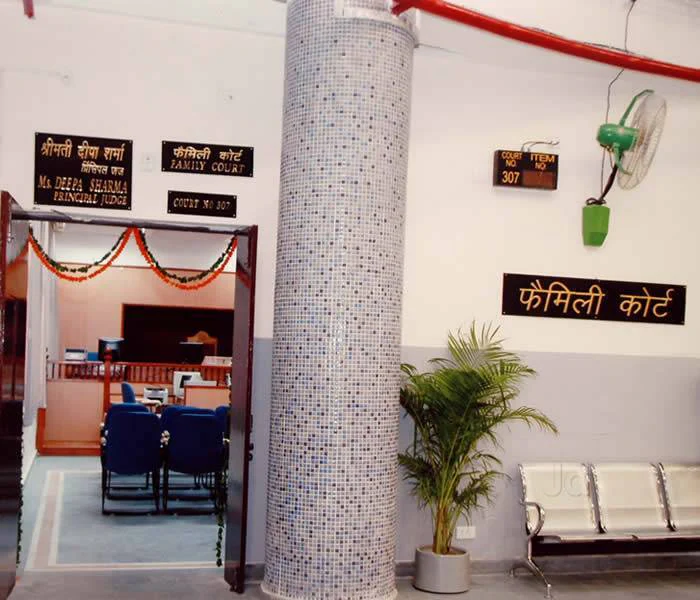
If both spouses have decided to part ways peacefully, mutual divorce Dwarka Court is the fastest and most dignified legal route. At Dwarka Court (Family Court, Sector-10), mutual consent petitions have steadily increased over the last few years. In fact, practitioners have observed a consistent rise in filings post-pandemic due to changing social dynamics, financial independence, and faster settlement culture.
With 18+ years of experience in Dwarka Court, our team at Chamber 728 has handled hundreds of mutual consent matters smoothly—covering Janakpuri, Vikaspuri, Dwarka North, Dwarka South, Najafgarh and nearby jurisdictions.
📈 Why Are Mutual Divorce Filings Rising at Dwarka Court?
Firstly, couples today prefer closure over prolonged litigation.
Secondly, courts encourage amicable settlements.
Moreover, January 2026 family law observations from the Delhi High Court emphasised child welfare and fair maintenance, reinforcing balanced settlements.
As a result, family court Dwarka process 2026 is becoming more streamlined for genuine cases.
⚖️ Step-by-Step Mutual Divorce Process at Dwarka Court
1️⃣ Drafting & Filing the Joint Petition
Both spouses file a joint petition under Section 13B of the Hindu Marriage Act before the Family Court at Dwarka Court.
Traditionally, there is a 6-month gap between first and second motion. However, courts may waive this period in genuine cases following Supreme Court guidelines.
In practice at Dwarka Court, waiver applications succeed where:
Settlement is comprehensive
No possibility of reconciliation
All disputes are resolved
Experience in local courtroom procedures makes a significant difference.
4️⃣ Second Motion & Final Decree
After the cooling period (or waiver), statements are recorded again. If satisfied, the court grants the divorce decree.
Organised documentation reduces adjournments at Dwarka Court.
👶 Child Custody & Maintenance – Latest Approach
Recent judicial trends, including guidance from the Delhi High Court, prioritise:
Best interest of the child
Educational stability
Financial transparency
Therefore, structured parenting plans are essential. Over 18+ years in Dwarka Court, I have ensured child-centric settlements that avoid future litigation.
💰 How Long Does Mutual Divorce Take in Dwarka Court?
Typically:
6–8 months (standard timeline)
3–5 months (if cooling period waived)
However, proper documentation and proactive follow-ups at Dwarka Court reduce delays significantly.
💼 What Are the Costs?
Costs depend on:
Complexity of settlement
Property division issues
Custody disputes
Urgency
Transparent consultation at Chamber 728 ensures clarity from day one.
Many clients initially approach a Criminal Lawyer Dwarka or Property Lawyer Dwarka due to overlapping disputes. Coordinated strategy avoids contradictory pleadings, especially where bail or property litigation is ongoing in Dwarka Court.
🌟 18+ Years of Experience at Dwarka Court
For nearly two decades, I have represented clients in matrimonial, criminal and civil matters at Dwarka Court. This experience helps in:
Negotiating fair alimony
Drafting airtight settlements
Preventing post-divorce litigation
Coordinating with connected Bail Matters Dwarka Court
E-E-A-T principles—Experience, Expertise, Authoritativeness and Trust—form the foundation of our practice.
❓ FAQ – Mutual Divorce Dwarka Court
Q1. Is one year separation mandatory?
Yes, generally required before filing mutual consent petition.
Q2. Can cooling period be waived?
Yes, subject to court satisfaction and complete settlement.
Q3. Can alimony be paid in instalments?
Yes, structured settlements are common in Dwarka Court.
Q4. What if one party withdraws?
The petition fails; consent must continue till second motion.
Q5. Do both parties need to be present?
Yes, physical presence is usually required at both motions.
📍 Areas Served
Janakpuri | Vikaspuri | Dwarka North | Dwarka South | Najafgarh | Palam | Uttam Nagar
All matrimonial matters under Dwarka Court jurisdiction are handled at Chamber 728 with professionalism and discretion.
📞 Contact for Seamless Filing– 9899085554, 9811885554
If you are considering mutual divorce Dwarka Court, early consultation prevents delay and protects your legal interests.
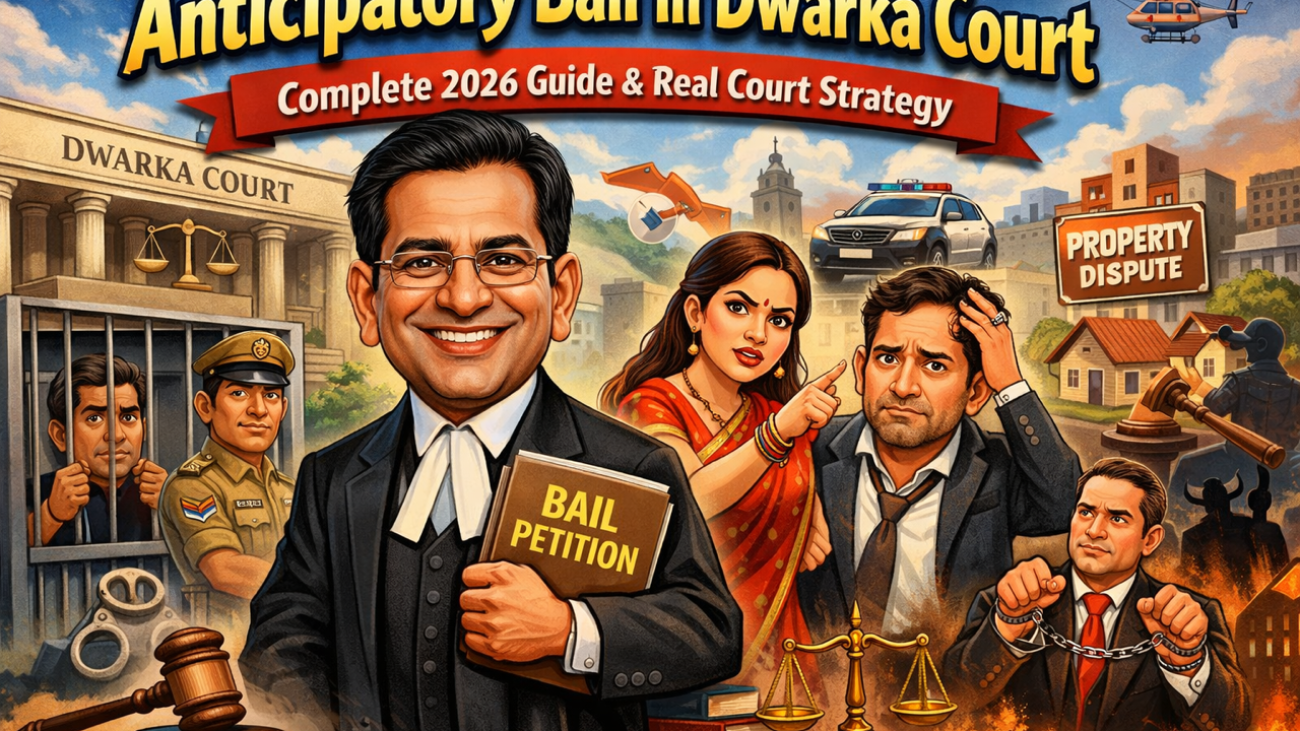
⚖️ Facing a possible arrest in a criminal case in Dwarka Court?
If you anticipate arrest in an FIR registered within the jurisdiction of Dwarka Court, filing for Anticipatory Bail under Section 438 CrPC can protect your liberty before the police take you into custody.
With 18+ years of courtroom experience in Dwarka Court, I have handled complex anticipatory bail matters involving 498A, cheating, property disputes, domestic violence cross-cases, business disputes, and false FIRs. This 2026 guide explains the real court strategy, practical timelines, and how to maximise your chances of bail.
🔎 What is Anticipatory Bail?
Anticipatory bail is a pre-arrest legal protection granted by the Sessions Court or High Court. In Delhi, such applications are commonly filed before the Sessions Court at Dwarka if the FIR is registered in police stations under Dwarka jurisdiction.
There is a matrimonial dispute escalating toward criminal litigation
Business or property partners have threatened criminal action
Early legal intervention significantly improves success rates in Bail Matters Dwarka Court.
⚖️ Step-by-Step Process of Anticipatory Bail in Dwarka Court (2026)
1️⃣ Case Analysis & FIR Review
A strategic review of the FIR, complaint, and background facts is crucial. Often, exaggeration and civil disputes are converted into criminal cases. This is where experience matters.
2️⃣ Drafting the Bail Application
The application must clearly demonstrate:
No criminal antecedents
False implication or civil nature of dispute
Willingness to cooperate
No risk of absconding
Strong drafting improves judicial confidence.
3️⃣ Filing Before Sessions Court
The matter is listed before the Ld. ASJ at Dwarka Court. Notice is issued to the State.
4️⃣ Prosecution Reply & Arguments
Here lies the real court strategy:
Highlight contradictions in FIR
Emphasise delay in complaint
Show documentary proof in property or matrimonial matters
Argue absence of custodial interrogation requirement
5️⃣ Court Order
The Court may grant:
Interim Protection
Full Anticipatory Bail with conditions
Conditions usually include:
Joining investigation
Not leaving India
Not influencing witnesses
🎯 Real Court Strategy That Works in Dwarka
After 18+ years in Dwarka Court, I have observed:
✔ Judges examine intent and gravity, not just allegations
✔ Matrimonial and property disputes require careful narrative framing
✔ Cooperation with IO strengthens your case
✔ Clean documentation helps in civil-nature disputes
In 2026, courts increasingly favour structured arguments supported by documents. Consequently, preparation is everything.
👨⚖️ Experience Matters – 18+ Years in Dwarka Court
For over 18 years, I have represented clients in complex bail and criminal litigation matters at Dwarka Court. My courtroom experience includes:
Handling urgent late-evening bail mentions
Securing interim protection in sensitive matrimonial cases
Strategically defending business owners in false FIRs
Coordinating criminal defence with ongoing divorce and property suits
This hands-on experience builds credibility and trust — core pillars of E-E-A-T (Experience, Expertise, Authoritativeness & Trustworthiness).
📊 Authority & Strategy (Why This Matters to You)
Best Advocate in Janakpuri
Top Advocate in Dwarka North
Criminal Lawyer Dwarka
Bail Matters Dwarka Court
❓ Frequently Asked Questions (FAQ)
Q1. How long does anticipatory bail take in Dwarka Court?
Usually 3–10 days depending on urgency. Interim protection may be granted earlier.
Q2. Can anticipatory bail be rejected?
Yes. However, you may approach the High Court if rejected by Sessions Court.
Q3. Is anticipatory bail permanent?
It generally continues till trial unless cancelled for violation of conditions.
Q4. Can husband seek anticipatory bail in 498A case?
Yes. It is highly recommended before arrest in matrimonial disputes.
Q5. Do I need to appear personally?
Generally yes, unless exempted. Proper legal advice is essential.
🚨 Final Advice
Liberty once lost is difficult to restore. Therefore, if you foresee arrest, act immediately. Consult an experienced Criminal Lawyer Dwarka handling Bail Matters Dwarka Court on a daily basis.
With 18+ years of courtroom experience in Dwarka Court, I focus on strategic defence, documentation, and strong advocacy.
📞 Need urgent legal assistance?
Contact now for confidential consultation and immediate bail strategy discussion. Protect your liberty with a Top and Best Advocate in Dwarka Court.
A common assumption in matrimonial disputes is that maintenance can only be claimed by a wife from her husband.
That is not completely correct.
Under the Hindu Marriage Act, 1955, a husband may, in appropriate circumstances, seek interim maintenance, litigation expenses and even permanent alimony from his wife.
However, this right is not automatic merely because the wife earns more.
The husband must establish the legal requirements of the provision under which maintenance is claimed, disclose his own financial position honestly and satisfy the Family Court that the circumstances justify monetary support.
For matrimonial proceedings falling within the jurisdiction of Dwarka Courts, Delhi, this distinction becomes particularly important because different maintenance statutes confer different rights.
This 2026 guide explains:
When a husband can claim maintenance
Section 24 Hindu Marriage Act
Section 25 Hindu Marriage Act
Whether Section 144 BNSS helps a husband
Whether the Special Marriage Act permits a husband’s maintenance claim
What financial documents the Family Court examines
How the Rajnesh v. Neha financial disclosure requirements affect the case
Circumstances in which a husband’s application may be rejected
Practical procedure before the Family Court at Dwarka
Short Answer: Can a Husband Claim Maintenance from His Wife?
Yes, under certain matrimonial laws.
For a Hindu marriage governed by the Hindu Marriage Act, 1955, both husband and wife are expressly covered by Sections 24 and 25.
Section 24 HMA
A husband who does not have independent income sufficient for his support and the necessary expenses of the matrimonial proceeding may seek:
Maintenance during the pendency of the case; and
Expenses of the matrimonial proceedings.
The provision expressly refers to “either the wife or the husband.”
Section 25 HMA
At the time of passing a matrimonial decree, or subsequently, either spouse may apply for permanent alimony and maintenance.
The Family Court considers the income, property and financial circumstances of both parties along with other relevant circumstances.
Therefore, the legal question is not simply:
“Is the wife earning?”
The better question is:
“Does the husband satisfy the requirements of the particular maintenance provision after his own income, assets, liabilities, qualifications and circumstances are examined?”
Sections 24 and 25 expressly permit an application by either spouse.
1. Section 24 Hindu Marriage Act – Interim Maintenance for Husband
Section 24 of the Hindu Marriage Act deals with maintenance pendente lite and expenses of proceedings.
In simple terms, it operates while the main matrimonial proceeding is pending.
The provision applies where it appears to the Court that either spouse has no independent income sufficient for his or her support and the necessary expenses of the proceeding.
Therefore, a husband may make an application under Section 24 where the factual circumstances support such a claim.
The Court may consider:
Husband’s actual monthly income
Wife’s income
Assets belonging to both spouses
Employment status
Educational and professional qualifications
Business interests
Investments
Rent or other recurring income
Financial liabilities
Dependants
Medical circumstances, where relevant
Reasonable monthly expenditure
Standard of living
Overall financial circumstances
Section 24 does not say that merely earning less than the wife automatically entitles a husband to maintenance.
The Court examines whether his independent income is sufficient for his support and litigation expenses.
2. What Does “No Independent Income Sufficient for His Support” Mean?
This expression is important.
A husband does not necessarily have to prove that he has absolutely no income.
The statutory question is whether the income available to him is sufficient for:
His reasonable support; and
The necessary expenses of the matrimonial litigation.
For example, suppose:
The husband is temporarily without employment;
The wife has substantial independent income;
The husband has little or no independent assets;
Matrimonial litigation is already pending; and
His financial disclosures support the claim.
The Court can examine whether relief under Section 24 is justified.
But the result may be different if the evidence shows that the husband:
Has substantial undisclosed income;
Has income-producing property;
Continues to operate a business;
Deliberately suppresses bank accounts;
Is financially supported by significant investments or assets; or
Is intentionally avoiding work despite substantial capacity and opportunity to earn.
Every application therefore depends upon evidence rather than gender alone.
3. Wife Earning More Does Not Automatically Mean Husband Gets Maintenance
This distinction should be prominently understood.
Consider:
Husband earns ₹80,000 per month. Wife earns ₹2,00,000 per month.
The fact that the wife earns substantially more does not automatically establish that the husband has no sufficient independent income.
Compare it with another situation:
Husband has no current income because of genuine circumstances. Wife earns ₹2,00,000 per month. Husband has no significant assets or recurring investment income.
The second situation raises a materially different question.
Thus, income disparity is relevant, but it is not the sole test.
The Court examines the complete financial picture.
4. Section 25 Hindu Marriage Act – Can Husband Claim Permanent Alimony?
Yes.
Section 25 of the Hindu Marriage Act permits an application by either the wife or the husband for permanent alimony and maintenance.
The application may arise at the time of passing a decree or at any time subsequent thereto, subject to the statutory framework.
While deciding the question, the Court may consider matters including:
Income of the wife
Property of the wife
Income of the husband
Property of the husband
Conduct of the parties
Other circumstances of the case
The relief may take the form contemplated by Section 25, depending upon the Court’s determination.
Permanent alimony is therefore discretionary judicial relief, not an automatic consequence of divorce.
The Supreme Court has continued to emphasise that maintenance under Sections 24 and 25 requires consideration of the relevant financial material and circumstances of the parties.
5. Can Husband Claim Maintenance Under Section 144 BNSS?
This is where the law must be clearly distinguished.
Since 1 July 2024, Section 144 of the Bharatiya Nagarik Suraksha Sanhita, 2023 is the present provision corresponding broadly to the earlier Section 125 CrPC maintenance framework.
But Section 144 BNSS does not create a reciprocal claim by a husband against his wife merely because she earns more.
The provision deals with maintenance of specified categories such as:
Wife
Children
Father
Mother
Therefore, a husband seeking maintenance from his wife should not describe Section 144 BNSS as a general gender-neutral spousal maintenance provision.
The appropriate remedy depends upon the personal matrimonial law governing the parties and the pending proceedings.
6. Section 125 CrPC or Section 144 BNSS?
For current proceedings, legal content should ordinarily refer to:
Section 144 BNSS — corresponding to the earlier Section 125 CrPC framework.
Section 125 CrPC remains important for understanding older proceedings, orders and precedents.
However, a husband cannot simply file a Section 144 BNSS application against his wife seeking personal maintenance on the same footing on which a wife may proceed against her husband.
This distinction is particularly important when reading older websites that broadly state that “maintenance law is gender-neutral.”
That statement is too wide.
Some matrimonial provisions are gender-neutral.
Others are not.
7. Can Husband Claim Maintenance Under the Special Marriage Act?
This also requires an important clarification.
The Special Marriage Act, 1954 should not be described as giving husbands the same maintenance entitlement as Sections 24 and 25 of the Hindu Marriage Act.
Section 36 of the Special Marriage Act addresses alimony pendente lite on an application by the wife.
Section 37 deals with permanent alimony and maintenance in favour of the wife.
Therefore, where a marriage has been solemnised or matrimonial proceedings are governed by the Special Marriage Act, the statutory provision should be examined carefully rather than assuming that the Hindu Marriage Act rules automatically apply.
8. Other Personal Laws May Have Different Rules
Maintenance rights depend partly upon the statute governing the marriage.
For example, Sections 39 and 40 of the Parsi Marriage and Divorce Act, 1936 contain provisions framed in terms of either the wife or husband in the relevant matrimonial proceedings.
Other matrimonial statutes may use different language.
Therefore, before filing any maintenance application, determine:
What law governs the marriage?
What matrimonial case is presently pending?
Which provision authorises the relief?
Which Court has jurisdiction?
Does that provision permit a husband to apply?
A maintenance application drafted under an incorrect statutory provision can create unnecessary procedural difficulties.
9. Rajnesh v. Neha – Financial Disclosure Is Extremely Important
Modern maintenance litigation is heavily document-driven.
In Rajnesh v. Neha, (2021) 2 SCC 324, the Supreme Court laid down guidelines requiring disclosure of assets and liabilities in maintenance proceedings.
The disclosure framework is intended to enable Courts to examine the actual financial position of the parties.
The Supreme Court directed that the prescribed affidavits of assets and liabilities should be filed in maintenance proceedings before Family Courts, District Courts and Magistrates’ Courts across the country.
For a husband claiming maintenance, therefore, merely stating:
“My wife earns more than me”
is unlikely to be sufficient by itself.
The applicant should be prepared to disclose his own finances comprehensively.
10. Documents a Husband Should Keep Ready
Depending upon the facts of the case, relevant financial material may include:
Income Documents
Income-tax returns
Form 16
Salary slips
Employment records
Professional receipts
Business accounts
GST documents, where relevant
Partnership or company records
Bank and Investment Documents
Bank statements
Fixed deposits
Mutual funds
Shares and securities
Demat statements
Insurance investments
Other financial instruments
Property Documents
Ownership documents
Rent agreements
Rental income records
Loan statements
Property-related liabilities
Expense Documents
Rent
Medical expenditure
Loan EMIs
Household expenditure
Dependant family expenses
Litigation expenses
Other recurring liabilities
Employment Material
Where unemployment or loss of employment is relied upon, relevant material may include:
Termination letter
Resignation records
Previous salary documents
Medical records where health affects employment
Evidence explaining the present employment position
Full and truthful disclosure is important.
11. Can an Unemployed Husband Claim Maintenance?
Potentially, yes.
But unemployment by itself does not automatically establish entitlement.
The Court may examine:
Why is the husband unemployed?
How long has he been unemployed?
What was his previous employment?
What are his qualifications?
Does he own property?
Does he have investments?
Does he earn through business or professional activity?
Has he voluntarily stopped working?
Is the financial difficulty temporary or genuine?
What is the wife’s actual financial position?
There is a significant difference between:
genuine inability to maintain oneself
and
deliberately remaining unemployed to create a maintenance claim.
The Court may examine the surrounding circumstances.
12. What If the Husband Is Highly Qualified but Not Working?
Educational qualification is relevant, but it should not be treated as a substitute for evidence about actual finances.
The Family Court may consider:
Educational qualifications
Professional experience
Previous employment
Past salary
Present employment opportunities
Medical condition
Age
Business interests
Assets
Reasons for unemployment
A highly qualified person cannot necessarily establish a maintenance claim merely by showing zero current salary.
At the same time, qualification alone does not mean the Court must pretend that actual unemployment, illness, business failure or other genuine circumstances do not exist.
The decision is fact-specific.
13. What If the Wife Is a Government Employee or Senior Corporate Executive?
Her actual income will naturally become relevant if the husband invokes a statutory provision such as Section 24 or Section 25 HMA.
Relevant documents may include:
Salary records
Income-tax returns
Employment information
Bank records
Investment information
Property details
But again, the wife earning a substantial salary is only one part of the analysis.
The husband’s own resources must also be disclosed.
14. Can a Businessman Husband Claim Maintenance?
Being described as a “businessman” does not decide the application either way.
The Family Court may examine:
Nature of business
Turnover
Profit
Income-tax returns
GST filings
Directorships
Shareholding
Partnership interests
Bank transactions
Business assets
Loans
Lifestyle
Financial commitments
A business may have substantial turnover but limited profit.
Conversely, a person may show little salary while exercising significant control over business resources.
Therefore, financial analysis cannot be reduced to a single salary figure.
15. Can a Husband Claim Litigation Expenses from Wife?
Under Section 24 HMA, the relief is not confined to monthly maintenance.
The statute also refers to necessary expenses of the matrimonial proceeding.
Therefore, where the statutory conditions are satisfied, a husband may seek litigation expenses from his wife.
This can be relevant where there is a substantial financial imbalance and the husband genuinely lacks sufficient resources to conduct the matrimonial litigation.
16. What About Maintenance for Children?
Maintenance payable for a child is legally distinct from personal maintenance claimed by a husband.
A father who has custody of a child should therefore distinguish between:
His personal claim as a spouse; and
Financial support required for the child.
The rights and obligations concerning children require a separate legal analysis based upon the applicable statutory framework and facts.
Do not mix the husband’s personal maintenance claim with the child’s financial entitlement.
17. Circumstances in Which Husband’s Maintenance Claim May Face Difficulty
An application may face serious resistance where evidence indicates that the husband:
Has sufficient independent income
Owns substantial assets
Receives rental income
Has profitable business interests
Has investments capable of supporting him
Has deliberately concealed income
Has provided incomplete financial disclosure
Has intentionally left employment without reasonable explanation
Has misstated his expenses
Has suppressed bank accounts or property
Has presented financial claims inconsistent with his apparent lifestyle
The Court decides the application on the evidence before it.
Therefore, accuracy is more important than exaggeration.
18. Wife’s Defence to Husband’s Maintenance Application
A wife opposing such an application may produce material showing:
Husband’s salary
Previous salary
Business interests
Income-tax returns
Company directorships
Ownership of property
Rental receipts
Investments
Bank transactions
Professional qualifications
Lifestyle indicators
Other financial resources
She may also challenge inaccuracies in his affidavit of assets and liabilities.
Maintenance proceedings can therefore involve detailed financial scrutiny of both parties.
19. Practical Procedure Before Family Court at Dwarka
The exact procedure depends upon the matrimonial case and applicable law, but broadly an application may involve:
Step 1 – Identify the Governing Matrimonial Law
First determine whether the proceedings arise under:
Hindu Marriage Act
Special Marriage Act
Parsi Marriage and Divorce Act
Another applicable matrimonial law
Step 2 – Identify the Correct Provision
For a Hindu husband, Sections 24 and 25 HMA may become relevant depending upon the stage and nature of proceedings.
Step 3 – Prepare Financial Disclosures
Collect complete records relating to:
Income
Bank accounts
Property
Investments
Loans
Expenses
Dependants
Employment
Step 4 – File the Application
The application should explain:
Pending matrimonial proceeding
Applicant’s present financial condition
Respondent’s known financial position
Relevant expenses
Legal basis of relief
Supporting documents
Step 5 – Reply by Opposite Party
The wife can contest the allegations and place her own financial documents on record.
Step 6 – Financial Affidavits
The Court may examine the parties’ affidavits of assets and liabilities in accordance with the applicable maintenance framework.
Step 7 – Hearing and Order
The Family Court considers the pleadings, documents, disclosures and submissions before determining whether any relief is justified.
20. How Much Maintenance Can a Husband Get?
There is no universal formula saying:
“The husband gets X% of the wife’s salary.”
Maintenance is not calculated by simply applying one fixed percentage.
The Court examines the relevant statutory factors and financial circumstances.
These can include:
Income of applicant
Income of respondent
Assets
Liabilities
Reasonable expenditure
Dependants
Standard of living
Nature of employment
Financial obligations
Circumstances of the case
Every matter therefore requires individual assessment.
21. Does Husband Automatically Get the Same Lifestyle as Wife?
Not automatically.
Maintenance law is not intended simply to equalise every difference in income between spouses.
The Court examines whether the statutory threshold for relief is satisfied and, if so, what amount would be reasonable in the circumstances.
This is why comparing only two salary figures can be misleading.
22. Is Section 24 Maintenance Permanent?
No.
Section 24 concerns maintenance and litigation expenses during the pendency of matrimonial proceedings.
Permanent alimony is separately dealt with under Section 25 HMA.
This distinction should remain clear in pleadings and client advice.
23. Can Husband Seek Maintenance After Divorce?
Where Section 25 of the Hindu Marriage Act applies, either spouse may seek permanent alimony in accordance with that provision.
The Court retains discretion after considering the statutory circumstances.
A husband’s claim therefore does not automatically end merely because the decree of divorce has been passed.
The applicability of Section 25 and subsequent modification of an order must be examined according to the facts and statutory conditions.
24. Maintenance Cases Require Financial Evidence, Not Assumptions
Maintenance litigation increasingly depends upon documentary financial evidence.
Statements such as:
“She earns a lot”
“He has no income”
“His business is running well”
“She owns several properties”
should, wherever possible, be supported by credible material.
Useful documents may include:
Salary statements
Income-tax filings
Bank statements
Property documents
Corporate records
Loan records
Investment statements
Employment information
Accurate documentation helps the Court make a more informed determination.
25. Why Correct Statutory Provision Matters
A particularly important point for clients is that all maintenance laws are not interchangeable.
For example:
Law
Can Husband Claim Personal Maintenance from Wife?
Section 24 Hindu Marriage Act
Yes, subject to statutory requirements
Section 25 Hindu Marriage Act
Yes, subject to statutory requirements
Section 144 BNSS
Not as a husband’s reciprocal spousal claim
Earlier Section 125 CrPC
Not as a husband’s reciprocal spousal claim
Sections 36–37 Special Marriage Act
Provisions are framed in favour of wife
Sections 39–40 Parsi Marriage & Divorce Act
Relevant provisions refer to either spouse
Therefore, before asking, “Can the husband claim maintenance?”, first ask:
“Under which statute?”
That is often the decisive starting point.
S. No.
Supporting Page / Blog
Main Topic
Why It Supports This Article
Suggested Anchor Text
Internal Link
1
How a Wife Can Get Maintenance from Husband in Dwarka Court
Maintenance proceedings, income and financial disclosure
Provides the corresponding guide explaining maintenance claims from the wife’s perspective and helps build a complete maintenance-law content cluster.
Useful for readers considering whether maintenance and permanent alimony issues can instead be resolved through a negotiated mutual-consent settlement.
1. Can a husband claim maintenance from his wife in Dwarka Court?
Yes, where the applicable matrimonial statute permits it. Under Sections 24 and 25 of the Hindu Marriage Act, either spouse may seek the specified maintenance or alimony subject to the statutory requirements.
2. Can a husband claim maintenance merely because his wife earns more?
No. Higher income of the wife is relevant, but it does not by itself create an automatic entitlement. The husband’s own income, assets, expenses and financial circumstances are also examined.
3. Can an unemployed husband get maintenance?
Possibly, depending upon why he is unemployed, his financial resources, earning circumstances, qualifications, assets and the wife’s financial position.
4. Can a husband claim maintenance under Section 144 BNSS?
Section 144 BNSS does not provide a general reciprocal maintenance remedy enabling a husband to claim personal spousal maintenance from his wife.
5. Can a husband claim maintenance under Section 24 HMA?
Yes. Section 24 expressly applies to either the wife or the husband who lacks sufficient independent income for support and necessary litigation expenses.
6. Can a husband claim permanent alimony?
Section 25 HMA permits an application by either wife or husband, subject to judicial determination of the relevant circumstances.
7. Can a husband claim litigation expenses?
Yes, Section 24 HMA also deals with expenses of matrimonial proceedings where its statutory requirements are satisfied.
8. Does the husband have to disclose his bank accounts?
Financial disclosure is an important feature of maintenance proceedings. The Supreme Court’s directions in Rajnesh v. Neha provide for affidavits disclosing assets and liabilities in maintenance matters.
9. Can a working husband still seek Section 24 maintenance?
The fact that he earns something does not automatically bar an application. The statutory test concerns whether his independent income is sufficient for his support and necessary proceeding expenses. However, actual income and resources will be closely examined.
10. Is maintenance automatically 25% of the wife’s salary?
No. There is no universal fixed percentage applicable to every matrimonial maintenance case.
Conclusion – Husband’s Maintenance Claim Depends on the Applicable Law and Financial Evidence
A husband can claim maintenance from his wife in India under certain matrimonial statutes, but the proposition should never be stated as though every maintenance law is gender-neutral.
For Hindu matrimonial proceedings, Sections 24 and 25 of the Hindu Marriage Act expressly recognise applications by either spouse.
At the same time:
Section 144 BNSS should not be treated as a husband’s reciprocal maintenance remedy.
The Special Marriage Act should not be incorrectly described as granting the husband the same statutory right under Sections 36 and 37.
Financial disclosure remains central.
The wife’s higher income alone does not guarantee an order.
The husband’s income, property, earning circumstances and expenses must also be examined.
For proceedings before Dwarka Courts, Delhi, the correct approach is therefore:
First identify the matrimonial law → identify the correct maintenance provision → examine jurisdiction → prepare complete financial disclosures → then decide whether a maintenance application is legally sustainable.
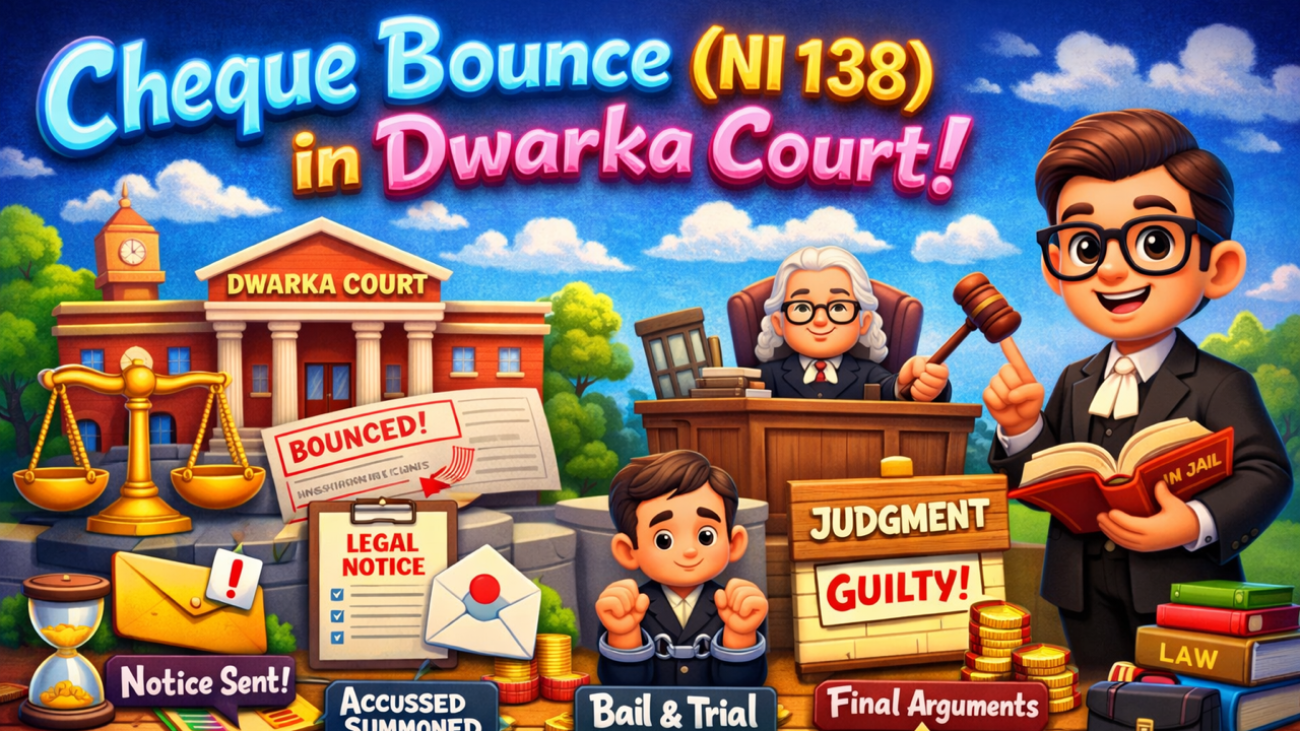
Cheque dishonour cases under Section 138 of the Negotiable Instruments Act, 1881 are among the most commonly filed criminal complaints at Dwarka Court (Sector-10), New Delhi. Whether you are a business owner, property dealer, spouse in a matrimonial dispute, or a professional recovering dues, understanding the correct timeline and stages can make or break your case.
With 18+ years of regular practice in Dwarka Court, I have handled hundreds of cheque bounce matters — from pre-litigation notices to trial, compounding, and execution.
This 2026 guide explains everything step-by-step in a practical, courtroom-oriented manner. ⚖️
📌 What Is Section 138 NI Act?
Section 138 makes cheque dishonour for “insufficient funds” or “exceeds arrangement” a criminal offence.
A case is maintainable when:
Cheque issued towards legally enforceable debt
Cheque presented within validity period (3 months)
Returned unpaid by bank
Legal demand notice sent within 30 days
Payment not made within 15 days of notice
Miss one step — and the complaint may fail.
🕒 Timeline of Cheque Bounce Case in Dwarka Court
Here is the realistic timeline observed at Dwarka Court:
1️⃣ Cheque Dishonour
Bank returns cheque with memo (Insufficient Funds / Account Closed / Stop Payment).
2️⃣ Legal Demand Notice (Within 30 Days)
Notice must be drafted carefully. Many cases collapse due to defective notices.
3️⃣ 15 Days Waiting Period
If drawer does not pay within 15 days — cause of action arises.
4️⃣ Filing of Complaint (Within 30 Days Thereafter)
Complaint under Section 138 is filed before the concerned MM Court at Dwarka.
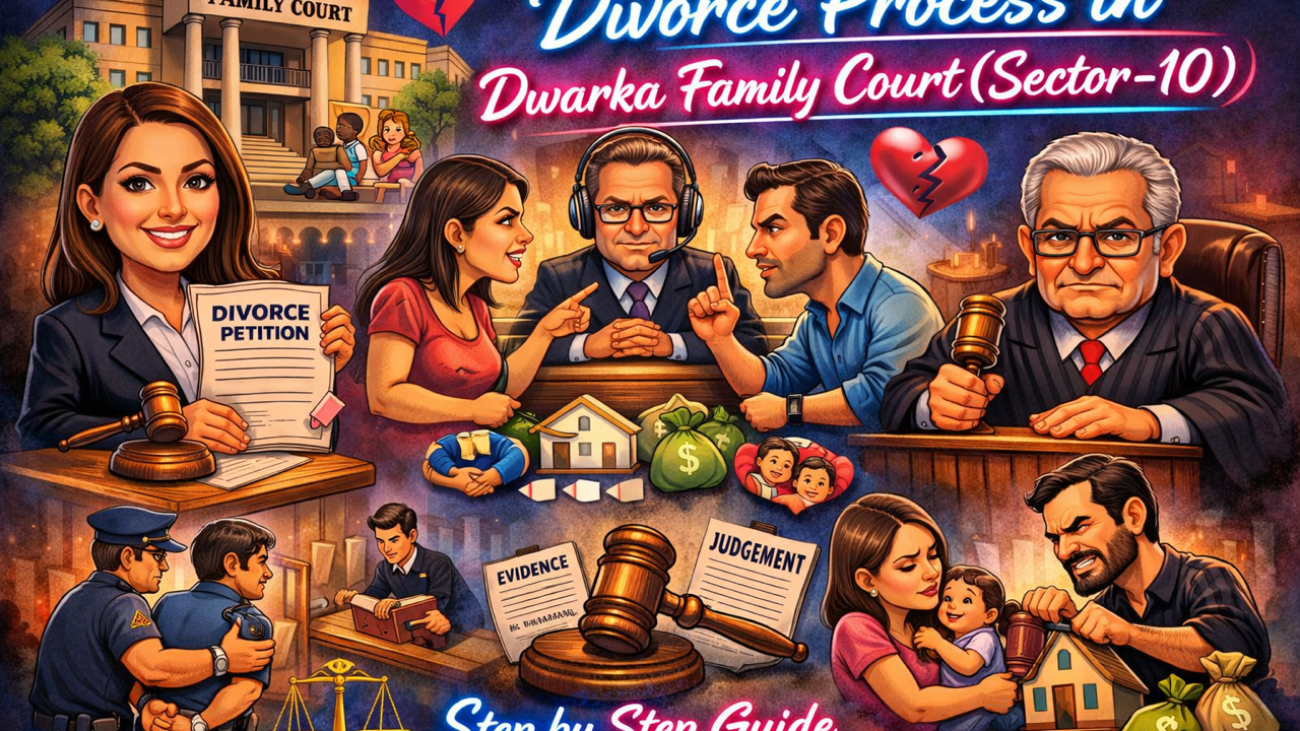
Divorce is not just a legal battle — it is an emotional and financial turning point. If you are filing or defending a divorce in Dwarka Family Court (Sector-10), understanding the exact court process helps you stay confident and prepared in Dwarka Court.
With 18+ years of practice in Dwarka Court, I have handled complex matrimonial disputes involving custody, maintenance, domestic violence, property division and even connected criminal proceedings. This step-by-step guide explains how a divorce case actually moves inside the court system in 2026.
civil advocate in Dwarka court
If you are searching for a Divorce Lawyer Dwarka, this guide will give you clarity before you step into court.
⚖️ Step 1: Filing of Divorce Petition
A divorce begins with filing a petition under:
Section 13, Hindu Marriage Act (Contested Divorce)
Section 13B, Hindu Marriage Act (Mutual Consent Divorce)
Special Marriage Act (if applicable)
The petition is filed before the Family Court at Sector-10, Dwarka.
The petition must include:
Marriage details
Grounds of divorce
Details of children
Maintenance claims
Stridhan / property issues
Proper drafting is crucial. A technically weak petition can delay relief.
🏛 Step 2: Scrutiny & First Date of Hearing
After filing, the court scrutinizes documents. If everything is in order, the case gets a diary number and first hearing date.
Documentary evidence (Chats, medical records, financial records)
Strong courtroom advocacy matters here.
If property disputes arise, coordination with a Property Lawyer Dwarka ensures proper financial protection.
🧑⚖️ Step 8: Final Arguments
Both sides present:
Legal precedents
Documentary analysis
Evidence interpretation
Strategic argument often decides the outcome.
📜 Step 9: Judgment
Court may:
Grant Divorce
Dismiss Petition
Grant partial relief
If aggrieved, appeal lies before Delhi High Court.
Mutual Consent Divorce – Special Timeline (2026 Update)
1️⃣ First Motion Statement
2️⃣ Six Month Cooling Period (can be waived)
3️⃣ Second Motion Statement
4️⃣ Decree of Divorce
In Dwarka Court, properly drafted mutual divorce matters can conclude smoothly within statutory framework.
Connected Proceedings in Dwarka Court
Divorce rarely travels alone. It is often connected with:
Domestic Violence Act cases
498A IPC cases
Maintenance under 125 CrPC
Child custody litigation
Property injunction matters
That is why clients often look for a combined strategy from a Top and Best Advocate in Dwarka Court who understands civil, criminal and family litigation together.
Practical Timelines in Dwarka Family Court
Mutual Divorce: 6–12 months
Contested Divorce: 2–5 years (depending on complexity)
With 18+ years of experience in Dwarka Court, I have witnessed:
✔ Tactical misuse of legal provisions
✔ False allegations in matrimonial disputes
✔ Property complications during divorce
✔ Criminal proceedings used as pressure tactics
An experienced Divorce Lawyer Dwarka understands not just the law, but the court’s working pattern, judge-specific expectations, mediation strategies and practical outcomes.
Areas We Serve in Dwarka Court Jurisdiction
We regularly represent clients from:
Janakpuri
Vikaspuri
Dwarka North
Dwarka South
Najafgarh
Uttam Nagar
Delhi Cantt
If you are searching for the Best / Top Advocate in Janakpuri, Vikaspuri, Dwarka North, Dwarka South or Najafgarh, ensure your lawyer understands both litigation and settlement dynamics.
Frequently Asked Questions (SEO Boost Section)
How long does divorce take in Dwarka Court?
Mutual consent cases are faster. Contested matters depend on evidence and conduct of parties.
Can maintenance be stopped?
Yes, subject to court order and changed circumstances.
Can criminal cases affect divorce?
Yes. Allegations under IPC or Domestic Violence Act impact strategy.
Is property divided automatically?
No. Property division depends on ownership and legal claims.
Domestic violence litigation in Dwarka Court (2026) demands strategy, experience, and precision drafting. Whether you are a wife seeking protection or a husband/family member defending false allegations, understanding the journey from Police Station to CAW Cell to Mahila Court is crucial.
With 18+ years of experience in Dwarka Court, our legal team has handled complex Domestic Violence (DV), 498A, maintenance, custody, and connected matrimonial disputes across Janakpuri, Vikaspuri, Dwarka North, Dwarka South, Najafgarh, and other jurisdictions of South-West Delhi.
This guide explains everything — step by step. ⚖️
⚖️ Step 1: Police Complaint & Initial Strategy
Most domestic disputes begin with a complaint at the local police station (Dwarka North / South / Najafgarh).
Two possibilities arise:
Pre-FIR Inquiry
Direct FIR under relevant provisions including:
Section 498A IPC
Section 406 IPC
Protection of Women from Domestic Violence Act, 2005
Matrimonial disputes are not just legal battles — they are emotional, financial, and reputational challenges. For husbands facing litigation in Dwarka Court, the right legal strategy can make the difference between prolonged stress and a dignified resolution.
With 18+ years of continuous practice in Dwarka Court, we have built a reputation as a Advocate in Dwarka Court, especially for husbands seeking fair representation in complex matrimonial disputes.
Understanding Matrimonial Disputes in Dwarka Court
In 2026, matrimonial litigation has become more strategic and documentation-driven. Common cases include:
Divorce petitions (Contested & Mutual Consent)
False 498A IPC cases
Domestic Violence complaints
Maintenance under Section 125 CrPC
Child Custody disputes
Restitution of Conjugal Rights
As a leading Divorce Lawyer Dwarka, we focus on preventive legal strategy — not reactive litigation.
Why Husbands Trust Us in Dwarka Court 💼
1️⃣ 18+ Years of Ground-Level Courtroom Experience
Experience matters — especially in matrimonial litigation. With nearly two decades in Dwarka Court, we understand:
Courtroom tendencies
Mediation approaches
Practical settlement strategies
Bail procedures in urgent cases
This courtroom familiarity makes us a reliable Top Lawyer Dwarka for strategic planning.
2️⃣ Strong Defense in False 498A & Criminal Allegations 🚨
False criminal complaints can damage reputation overnight. We provide:
Immediate legal consultation
Anticipatory Bail & Regular Bail in Bail Matters Dwarka Court
Evidence structuring
Strategic cross-examination planning
Our integrated practice as a Criminal Lawyer Dwarka ensures matrimonial and criminal defense go hand-in-hand.
3️⃣ Data-Driven & Evidence-Based Legal Strategy 📑
In 2026, matrimonial litigation is document-heavy. We assist clients with:
Financial documentation review
Income assessment for maintenance defense
Digital evidence preservation
Settlement negotiation strategy
This structured approach strengthens your legal position from day one.
This system has made us a reliable Top and Best Advocate in Dwarka Court for husbands
Emotional Strength Meets Legal Precision
We understand the silent pressure husbands face — social stigma, financial burden, parental responsibilities, and professional impact. Our role is not just to argue in court but to restore balance, dignity, and fairness.
You deserve representation that is strategic, strong, and supportive.
Call to Action
If you are facing a matrimonial dispute, criminal complaint, or urgent bail matter in Dwarka Court, do not delay.
With 18+ years of experience in Dwarka Court, we are committed to protecting your rights with precision and professionalism.
👉 Book your confidential consultation today.
👉 Get clear legal direction before taking your next step.
Your case deserves experience. Your future deserves protection. ⚖️
Matrimonial litigation may involve divorce, maintenance, custody,
domestic violence proceedings and connected civil or criminal issues.
For an overview of our wider litigation practice, visit our
Advocate in Delhi
page.