
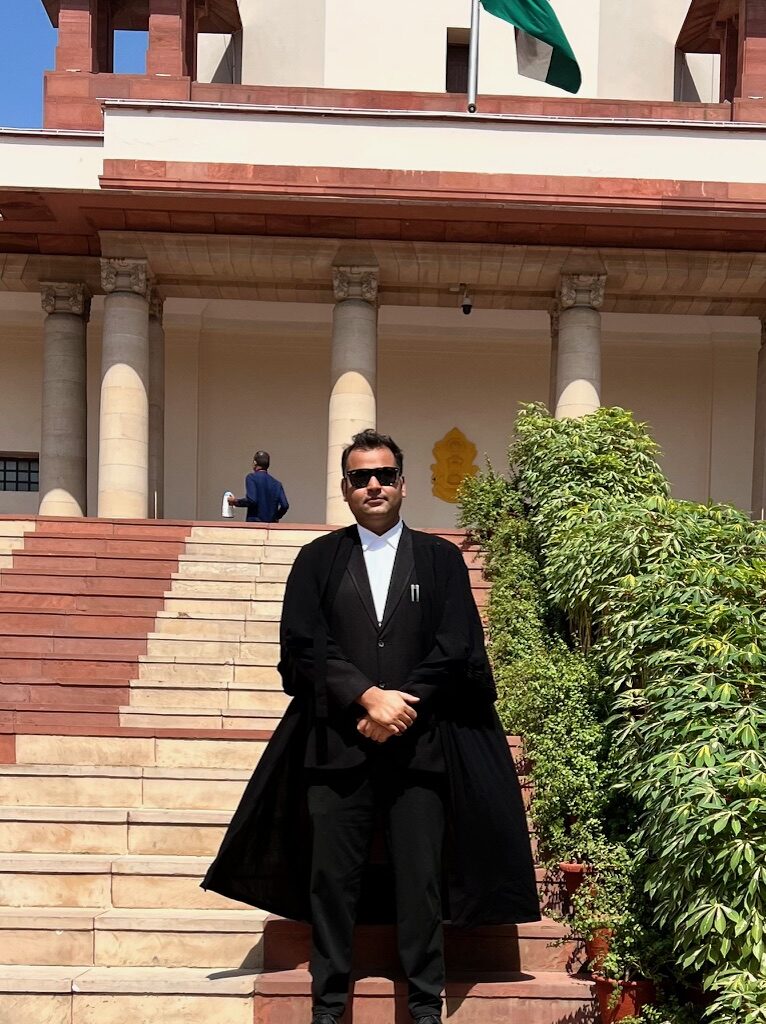
📖 Introduction The Ramayan is not just a story of Lord Ram, Sita, and Ravan—it is a timeless text filled with lessons on ethics, duty, and justice. Interestingly, the same teachings can guide us in the noble profession of advocacy. Just as every character in the Ramayan stood for certain principles, an advocate too must learn to balance truth, duty, and strategy in the courtroom.
⚖️ 1. The Power of Truth (Satya) In the Ramayan, Lord Ram symbolizes satya (truth) and dharma (duty). For an advocate, truth is the foundation of credibility. A lawyer who manipulates facts may win a case once, but loses respect forever. As the couplet says:
👉 “Rahupati Reet Sada chali aai, Pran jaan par vachan na jaye.”
Just like Lord Ram never went back on His word, an advocate should stand firmly by their promises—to clients, to the court, and to their own conscience.
🛡️ 2. Courage in Adversity Hanuman’s journey to Lanka teaches us courage, perseverance, and the importance of preparation. Similarly, an advocate often faces hostile courts, tricky witnesses, or overwhelming evidence. But courage, backed by preparation, makes the difference between panic and performance.
📚 3. Importance of Research & Strategy Ravan was a brilliant scholar but his arrogance blinded him. Vibhishan, on the other hand, chose the path of righteousness and strategy. For a Lawyer, research (knowing the law, precedents, and facts) is the backbone. Strategy—when to argue, when to stay silent, when to push—defines success.
🤝 4. Advocacy as Service, Not Business Ram’s leadership was marked by service, not selfishness. He listened, cared, and fought for his people. Likewise, advocacy should be seen as a service to society and justice, not merely as a profession for money. A good Lawyer earns respect by standing for justice first, fee second.
🧭 5. Discipline & Integrity Ram lived a life of discipline—whether in exile, war, or rule. Discipline for an advocate means punctuality, ethical behavior, respect for the bench, and consistency in preparation. These qualities slowly build the reputation of a “trusted vakil.”
🌟 Conclusion The Ramayan is not just a spiritual guide; it is a practical handbook for life. For a Lawyer, its teachings remind us: • Speak truth like Ram. • Be courageous like Hanuman. • Strategize like Vibhishan. • Serve like Ram Rajya.
An advocate who follows “Rahupati Reet Sada chali aai” — never going back on their word, even at personal cost — will always shine in the court of law and in the court of conscience. #BestAdvocateinDwarkaCourt
Consult an experienced advocate to determine the most suitable mode of service based on the facts of your case and court practice.
Contact me for Consultation :- 9899085554, 9811885554
The uniform of a police officer represents law and order, but unfortunately in Dwarka Court Jurisdiction, some misuse this sacred duty. From forcing illegal settlements inside the police station, demanding bribes to “close” cases, destroying or hiding evidence, or even beating an accused in custody — such acts are not only immoral but illegal.
An advocate’s role is not just to defend the client but also to ensure that misuse of police power is exposed in court. Here are effective strategies:
⸻
📜 1. Know the Legal Arsenal • IPC Provisions: • Sec. 166 IPC – Public servant disobeying law with intent to cause injury. • Sec. 201 IPC – Causing disappearance of evidence. • Sec. 323/325 IPC – Assault on accused in custody. • Sec. 383 IPC – Extortion by threat. • CrPC Provisions: • Sec. 154 – Mandatory registration of FIR. • Sec. 161/162 – Recording and use of witness statements. • Sec. 172 – Case diary – defence can cross-check if officer uses it. • Constitutional Safeguards: • Art. 21 – Protection of life and liberty. • D.K. Basu Guidelines – Mandatory safeguards in arrests and detention.
⸻
🛡️ 2. Cross-Examination in Court
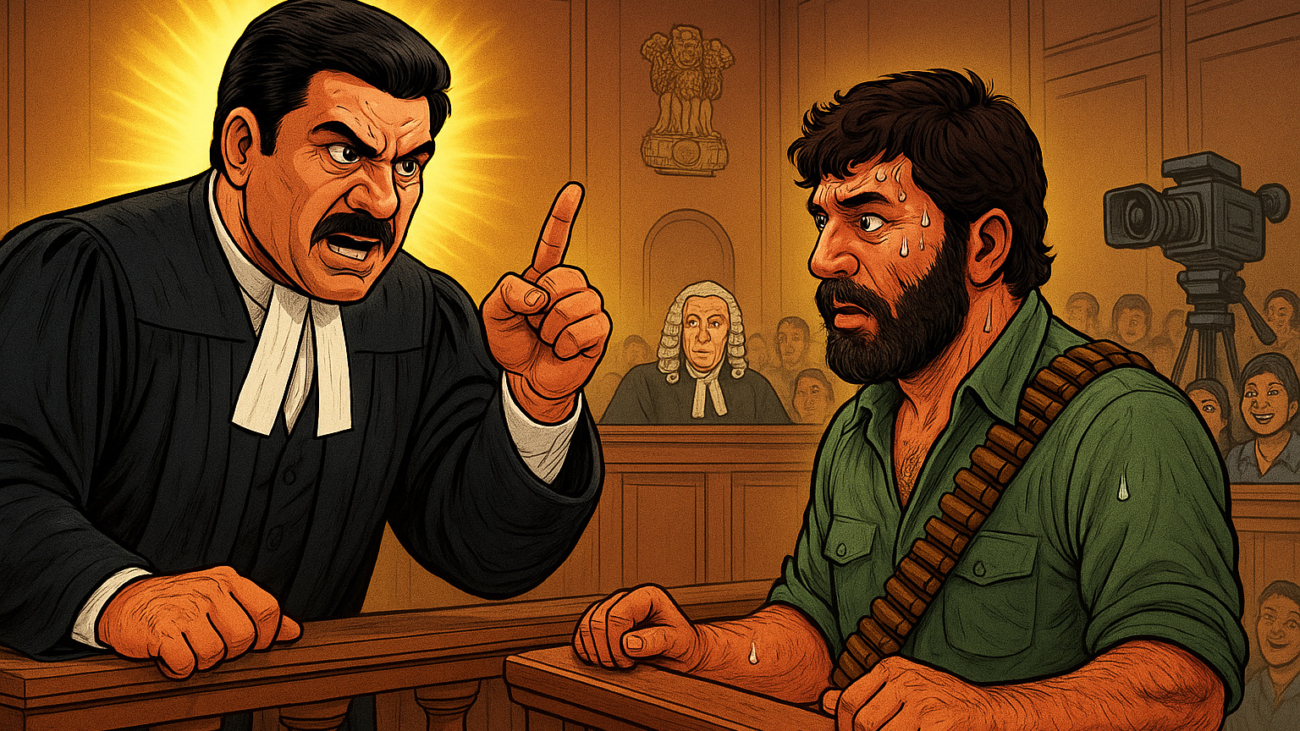
A corrupt officer’s weakest point is his record. During trial: • Confront him with contradictions between the FIR, case diary and charge sheet. • Ask why material evidence/witness statements were omitted. • Highlight any illegal “settlement” attempt – this shows abuse of power. • Expose custody violence by producing medical reports, injury photographs, or witness testimony. • Demand CCTV footage of the police station/cell (mandated in law).
Remember, courts take procedural lapses seriously. A single inconsistency can demolish an officer’s credibility.
⸻
📝 3. Filing Complaints Against Misuse
Beyond the courtroom, advocates should document and report misconduct: • Lodge complaints with the Station House Officer, insist on DD entry. • Escalate to Superintendent of Police or Commissioner. • File before the State Police Complaints Authority or NHRC/SHRC for custodial torture, extortion, or illegal detention. • Move the Magistrate under Sec. 190 CrPC for cognizance of offences committed by police officials. • File RTI applications to obtain records and expose delays or tampering.
⸻
🔍 4. Practical Tips to “Grill” a Cop • Always insist on case diary inspection if officer relies on it. • Use independent witnesses and medical evidence to counter false police versions.
⸻
🌟 Conclusion
A police officer misusing his position is not above law. The courtroom is where truth meets record — and an advocate can ensure that corruption is grilled, exposed, and punished. By combining sharp cross-examination, solid documentation, and proper complaints, you not only protect your client but also safeguard the integrity of the justice system.
⸻
🤝 Pre-Litigation Support: Solving Problems Before Court
Many clients approach us before filing a case. As a Criminal Case Advocate Dwarka Court, we strongly believe:
👉 Not every dispute should reach the courtroom.
How We Help Before Litigation:
Legal consultation and case analysis
Drafting legal notices
Negotiation and settlement discussions
Risk assessment and strategy planning
Clients from Janakpuri, Vikaspuri, Uttam Nagar, Palam Village, Najafgarh, and Samalka often resolve disputes at this stage itself.
A Simple, Practical & Client-Friendly Guide for People Seeking Recovery Through an Experienced Advocate in Dwarka Court, Sector-10, New Delhi
Top Advocate in Dwarka Court
Recovery of money is one of the most common civil disputes in India. Whether it is unpaid friendly loans, business dues, outstanding invoices, dishonoured commitments, or breach of contract—law provides an effective remedy through a Suit for Recovery of Money, in Dwarka Court.
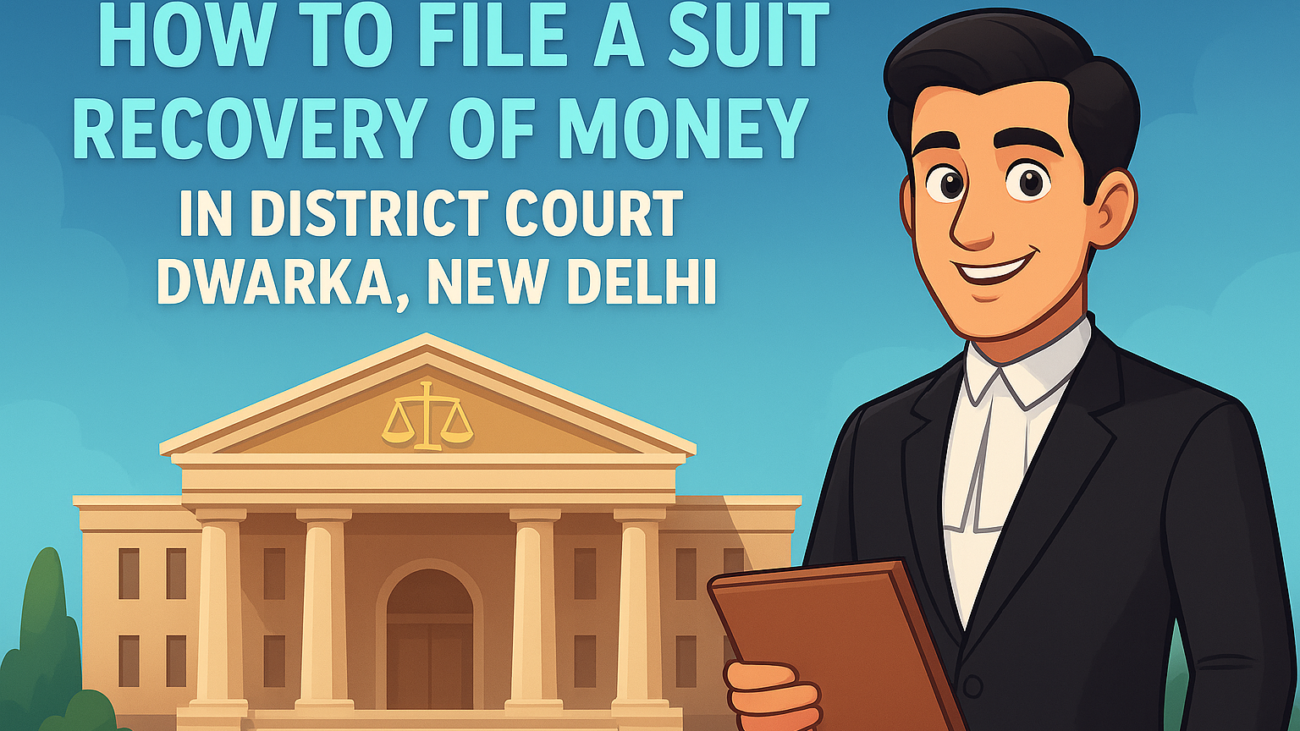
If you are planning to file a recovery suit in District Court, Dwarka, New Delhi, this detailed guide will help you understand the entire process step-by-step, the time involved, the court fees, the jurisdiction up to ₹2 Crores, and why engaging an experienced Dwarka Court advocate makes a real difference ⚖️in Dwarka Court.
📍 Jurisdiction of Dwarka Court for Recovery Suits
Dwarka Court is a District Court having jurisdiction over South-West Delhi. You can file a Suit for Recovery of Money in Dwarka Court if:
✅ The defendant resides or carries on business within Dwarka jurisdiction ✅ The cause of action (transaction, agreement, payment) arose within Dwarka ✅ The amount claimed falls within the pecuniary jurisdiction
💰 Pecuniary Jurisdiction
Recovery suits up to ₹2 Crores can be filed before the District Courts at Dwarka
Suits beyond this limit are filed before the High Court
📂 What Is a Suit for Recovery of Money?
A Suit for Recovery of Money is a civil action filed under the Code of Civil Procedure, 1908 (CPC), where a person (plaintiff) seeks a decree directing the other party (defendant) to pay a legally recoverable amount along with interest and costs.
Common examples:
Friendly loan not returned
Business dues / unpaid invoices
Recovery based on written agreements
Recovery from breach of contract
Outstanding professional fees
🪜 Step-by-Step Process to File a Recovery Suit in Dwarka Court
👉 Time can be reduced, and in many cases, early relief or settlement is possible.
🤝 Role of Mediation in Recovery Suits
Mediation is a highly effective and practical option once the suit is filed.
Benefits of Mediation:
Faster resolution
Cost-effective
Confidential
Preserves relationships
Court-assisted settlement
📌 Dwarka Court has a Mediation Centre, and many recovery cases are successfully resolved there once the defendant realises the seriousness of litigation.
⚠️ Why You Need an Experienced Advocate in Dwarka Court
Recovery suits are not just about filing papers—they are about strategy, timing, and court practice.
An experienced Dwarka Court advocate:
Knows court procedures & judges’ expectations
Avoids unnecessary adjournments
Uses mediation effectively
Drafts strong pleadings
Pushes for early hearing & compliance
📉 An inexperienced or non-local lawyer may unknowingly delay your own recovery.
👨⚖️ How Our Firm Assists You in Recovery Matters
With 18+ years of experience in handling civil and recovery matters before Dwarka District Court, Sector-10, our firm provides:
✔ Case evaluation & legal opinion ✔ Drafting & filing of recovery suits up to ₹2 Crores ✔ Court representation at all stages ✔ Mediation & settlement assistance ✔ Execution of decree for actual recovery
We believe recovery of money should be swift, strategic, and legally sound.
📌 Important Points Clients Should Remember
Limitation period is crucial (generally 3 years)
Documents matter—but absence of documents is not always fatal
Correct court & advocate save time and money
Mediation can give faster results than full trial
Execution of decree is as important as judgment
Criminal Appeal Advocate Dwarka
🏁 Conclusion
If someone owes you money and is avoiding payment, law provides you a strong and effective remedy through a Suit for Recovery of Money in Dwarka Court, New Delhi.
With the right legal guidance, experienced drafting, and strategic representation, recovery suits can be decided faster, and you may even get relief earlier than expected.
Choosing an experienced advocate in Dwarka Court is not an expense—it is an investment towards timely justice and financial recovery ⚖️
🔎 Titles
How to File Recovery Suit in Dwarka Court New Delhi
Suit for Recovery of Money in District Court Dwarka – Complete Guide
Best Advocate for Recovery of Money in Dwarka Court
Consult an experienced advocate to determine the most suitable mode of service based on the facts of your case and court practice.
Contact me for Consultation :- 9899085554, 9811885554
Step-by-Step Guide for Litigants visiting Dwarka Court
A practical, client-friendly guide to help you confidently navigate Dwarka Court and choose the right advocate
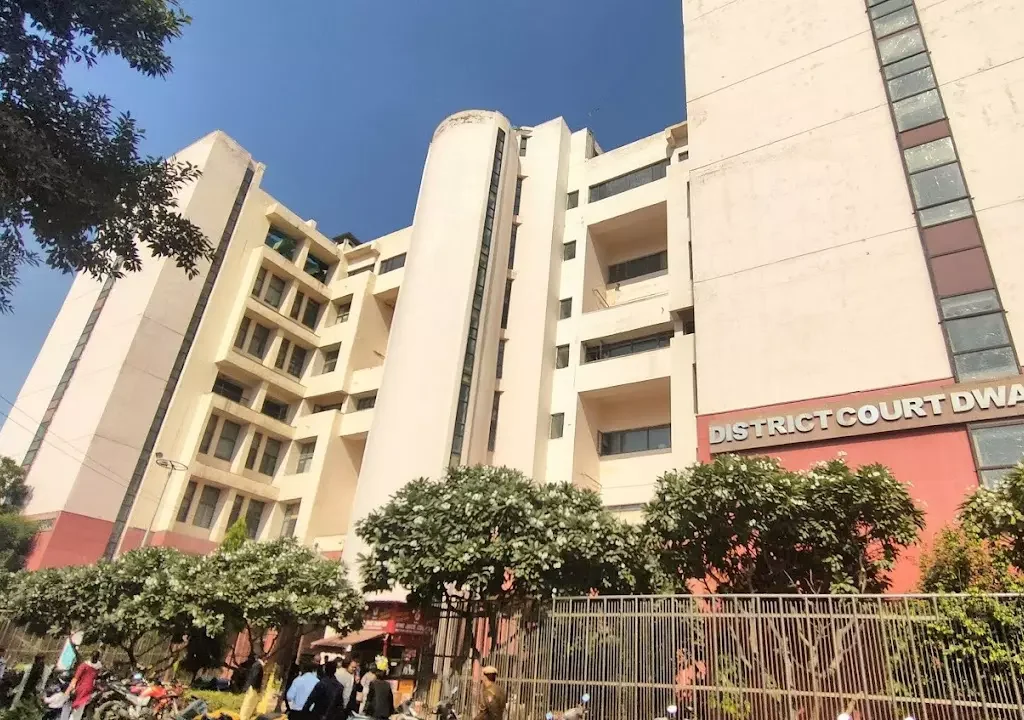
Visiting a court for the first time can be stressful, confusing, and overwhelming—especially if you are already dealing with a legal dispute. If you are visiting Dwarka Court, Sector-10, New Delhi, for the first time, this detailed guide will help you understand how the court functions, what types of cases are heard here, which judges sit here, facilities available, and how an experienced Dwarka Court advocate can assist you effectively ⚖️
Dwarka Court is one of the largest District Courts in Delhi, catering mainly to South-West Delhi, and thousands of litigants visit it daily.
📍 About Dwarka Court, Sector-10, New Delhi
Dwarka Court is a District Court, not a High Court. It deals with civil, criminal, family, commercial, traffic, and special statutory matters at the district level.
📌 Location: Sector-10, Dwarka, New Delhi🚇 Metro Connectivity:Dwarka Sector-10 Metro Station — just adjacent to the court premises, making it extremely convenient for litigants and advocates.
🏛️ Types of Courts & Judges in Dwarka Court
Dwarka Court houses multiple courts with different jurisdictions. Understanding this helps you know where your case will be listed 👇
Dwarka Court also houses specialized courts, such as:
⚡ Electricity Courts (power theft cases)
🏙️ MCD / Municipal Courts
🚦 Traffic Challan Courts
💼 Commercial Courts
🧾 Summary & Special Statutory Courts
Knowing the correct court avoids unnecessary delays and confusion.
🪜 Step-by-Step: What to Do on Your First Visit
✅ Step 1: Entry & Security Check
Police check-out at the main gate
Carry valid ID proof
Restricted items are not allowed
✅ Step 2: Facilitation Centre (Enquiry Counter)
🧭 This is the most important place for first-time visitors.Here you can:
Check court number
Confirm case listing
Get basic procedural guidance
✅ Step 3: Advocate Meeting
Meet your advocate to:
Understand your case status
Confirm next date & strategy
Prepare documents
🏢 Facilities Available for Litigants in Dwarka Court
Dwarka Court is well-equipped with essential facilities 👇
🍽️ Canteen (inside court complex)
⌨️ Typing Pool
🖊️ Notary Attestation Services
📜 Oath Commissioner
🖨️ Photocopy & Printing Shops
🧭 Facilitation Centre / Enquiry Counter
🧑⚕️ Medical Centre
🏦 SBI Bank Branch
💳 ATM Counter
👮 Police Assistance Booth
🚗 Parking Available Outside for Clients
👨⚖️ Bar Rooms for Advocates
These facilities make Dwarka Court client-friendly and accessible.
🔍 Why Choosing a Local & Experienced Dwarka District Court Advocate Matters
Many litigants make the mistake of hiring a lawyer unfamiliar with Dwarka District Court procedures. A local, experienced Dwarka Court advocate offers:
🤝 How Our Firm Assists You in Dwarka District Court
With more than 18+ years of professional experience, our firm has been regularly practicing before Dwarka Court, New Delhi, handling a wide variety of cases.
👨⚖️ Our Assistance Includes:
Case evaluation & legal opinion
Drafting & filing of cases
Bail & urgent relief matters
Divorce, family & matrimonial disputes
Cheque bounce & criminal cases
Civil & property litigation
Appeals & revisions before Sessions Court
We focus on clarity, transparency, and result-oriented advocacy, ensuring that clients are informed at every stage of their case.
📌 Final Words for First-Time Litigants
Visiting Dwarka Court for the first time does not have to be intimidating. With the right guidance, proper preparation, and an experienced advocate, your legal journey becomes much smoother.
If you are searching for a good, experienced, or best advocate in Dwarka District Court, New Delhi, always choose someone who:
Practices regularly in Dwarka District Court
Explains legal procedures clearly
Respects your time & concerns
Has proven court experience
🔎 Search Titles
First Time Visiting Dwarka District Court Sector-10 New Delhi – Complete Litigant Guide
Dwarka Court District Court Guide: Cases, Judges & Facilities
Best Advocate in Dwarka District Court New Delhi – What Clients Must Know
Visiting an advocate in District Court Dwarka, for the first time is often overwhelming for clients.
Most people arrive with fear, anxiety, confusion, and endless questions. After practicing for 18+ years in District Court Dwarka, I have learned that what clients need most is clarity—clear answers that give them direction, confidence, and a sense of control over their legal battle.
Clients often move from chamber to chamber, searching for the “right” advocate who can guide them correctly. Their expectations are simple:“Tell me the truth, show me the path, and stand with me in the fight for justice.” Below are the most common questions clients ask when they first meet an advocate in Dwarka Court, along with the precise answers they hope to hear from a competent legal professional.
1. “What are my legal options in this case?”
Ideal Answer Clients Expect:“You have two to three possible routes. Let me explain each with the consequences, time, and cost involved. Based on your situation, this option is the legally strongest and safest for you.” Clients want clarity, not confusion. A good advocate simplifies the law.
2. “How strong is my case?”
Ideal Answer:“On the basis of your facts and documents, your case has ___ strengths and ___ weaknesses. We will work on the weak points and rely on the strong ones. I won’t promise a guaranteed win, but I will give you a legally realistic assessment.” Clients hate exaggerated promises—they prefer honest, balanced guidance.
3. “How long will this case take?”
Ideal Answer:“Court timelines depend on several factors like court workload, evidence, and party cooperation. Typically, this type of case in Dwarka Court takes ___ months/years. I will try to speed it up wherever legally possible.” Clients want transparency, even if the timeline isn’t short.
4. “What will be the cost or total fees?”
Ideal Answer:“My fee includes professional charges for drafting, filing, arguments, and appearances. I will give you a written fee structure so there is no confusion later. There are also official court fees which I will explain separately.” Clients look for financial clarity and no hidden charges.
5. “Do I need to appear in court frequently?”
Ideal Answer:“For most hearings, your presence is not required unless evidence or your statement is needed. I will inform you well in advance whenever your presence is compulsory.” Clients want to know how much their routine will be affected.
6. “What documents do you need from me?”
Ideal Answer:“I will provide you a checklist of required documents—ID proofs, case papers, agreements, photos, bank statements, or any other relevant material. Keep everything organised. It strengthens your case from day one.” A document checklist gives confidence and clarity.
7. “Is there any risk or downside in filing this case?”
Ideal Answer:“Yes, every legal action has risks—cost, time, emotional pressure. But I will guide you to minimise those risks and ensure you take a well-informed decision before moving forward.” Clients appreciate truthful, responsible advice.
8. “Can this case be settled outside court?”
Ideal Answer:“Settlement is always an option if both parties agree. If a settlement benefits you legally and financially, I will advise you accordingly. If not, we will contest strongly in court.” Clients want to know whether a faster, peaceful route is possible.
9. “What is the next step after this meeting?”
Ideal Answer:“Step 1 — Give me your documents.Step 2 — I will prepare the draft.Step 3 — We will review it together.Step 4 — Filing in Dwarka Court.Step 5 — First hearing.” Clear steps reduce anxiety and give clients a sense of progress.
Why Clients Find It Difficult to Choose a Competent Advocate in Dwarka Court
Choosing the right advocate is challenging because:
1. Lack of Legal Awareness
Clients don’t always understand who is actually experienced or competent.
2. Conflicting Opinions
When they visit multiple chambers, they hear different strategies, timelines, and fees—causing confusion.
3. Fear of Making a Wrong Decision
Clients know that one wrong legal step can cost time, money, and peace.
4. Overemphasis on Low Fees
Many clients compare advocates based only on fees, not experience or capability.A competent advocate gives value, not the cheapest rate.
5. Pressure & Anxiety
Court matters themselves create stress, making decision-making difficult.
6. Need for Trust
Clients want someone who listens, explains, guides, and stands with them—not someone who rushes them. A competent advocate in Dwarka Court is one who blends experience, honesty, communication, strategy, and ethics.
Conclusion
For any client approaching District Court Dwarka, the right advocate is one who provides:✔ Clear legal strategy✔ Honest assessment✔ Transparent fees✔ Step-by-step guidance✔ Courtroom confidence✔ Professional drafting and arguments✔ Emotional assurance and support A well-informed client and a competent advocate together make a strong legal team—ready to face the battlefield of the District Courts.
Common Questions Clients Ask Advocates in District Court DwarkaHow to Choose a Competent Lawyer in Dwarka CourtClient–Advocate Guide: Legal Consultation in Dwarka CourtsFrequently Asked Questions Before Hiring a Dwarka Court Advocate
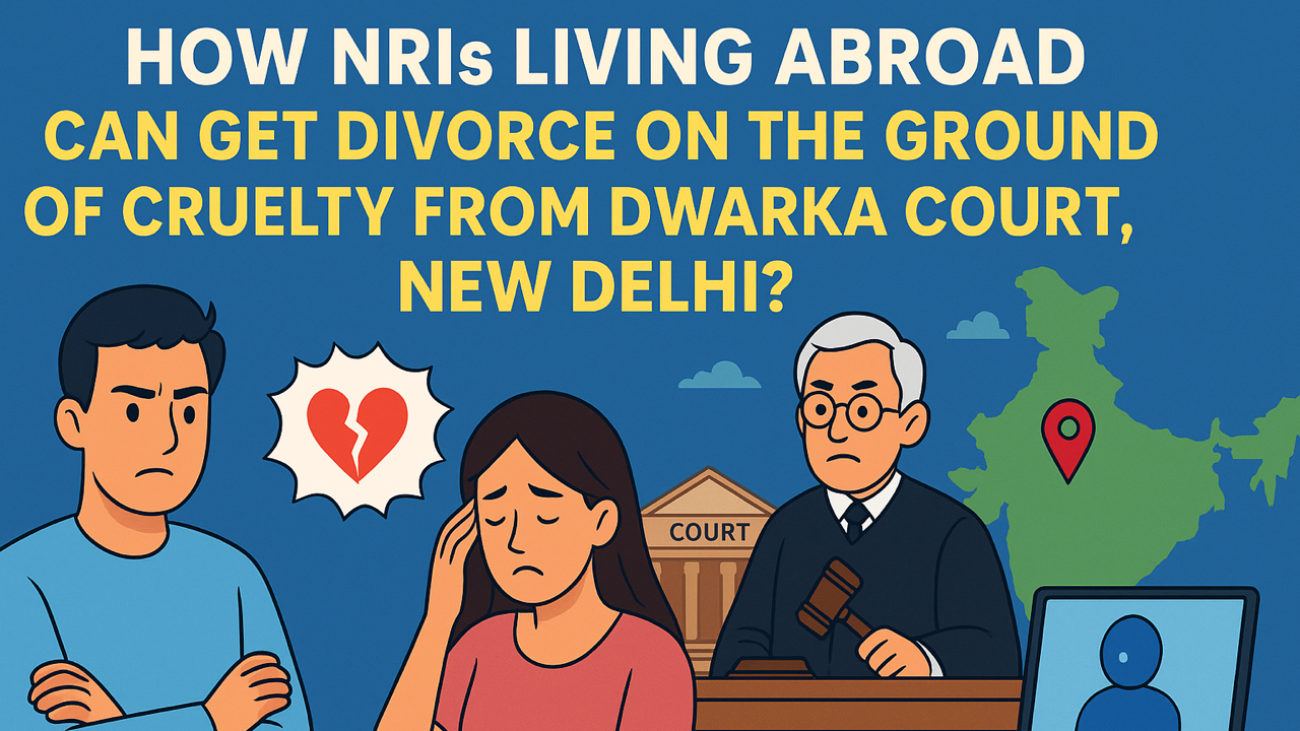
Divorce litigation becomes even more complex when one spouse is living abroad. For Non-Resident Indians (NRIs), distance, time-zone differences, and unfamiliarity with procedures often create confusion and anxiety. However, Dwarka Court, New Delhi (South-West District) has emerged as one of the most efficient and technologically adaptive court complexes for handling such matters, especially NRI matrimonial disputes.
After 18+ years of practice in New Delhi’s District Courts—particularly Dwarka Court—let me clarify one essential truth:
👉 No advocate can secure a decree of divorce on the ground of cruelty unless you provide strong, clear, and admissible evidence.
Law is evidence-driven. Experience only matters when it is combined with your cooperation and factual material.
Why NRI Clients Can File Divorce in Dwarka Court? 🏛️
There are multiple territorial jurisdiction grounds under the Hindu Marriage Act (HMA) that make Dwarka Court the correct forum. You may file your case in Dwarka Court when:
1️⃣ Marriage was solemnized within South-West Delhi
If your wedding took place in Delhi—especially within areas like Dwarka, Palam, Najafgarh, Vikas Puri, Uttam Nagar, Sagarpur, Dabri—Dwarka Court has clear jurisdiction.
2️⃣ Wife last resided within the South-West District
Under Section 19 of HMA, the wife’s last place of residence gives Dwarka Court the authority to hear the matter.
3️⃣ Both parties last resided together in South-West District
If the matrimonial home was in Dwarka or nearby areas, the case can be filed here even if you are currently abroad.
4️⃣ Husband resides or works for gain in South-West Delhi
If you have a residence, rented accommodation, or employment address here, the court can exercise jurisdiction.
Why NRI Clients Prefer Lawyers With Strong Practice in Dwarka Court? 👨⚖️✨
✔ Deep familiarity with local court procedures
Every court has its own working culture, timing patterns, document preferences, and registry’s way of handling filing defects. A seasoned Dwarka practitioner knows exactly how to navigate these efficiently.
✔ Strong coordination with court staff & filing counters
For NRIs, avoiding unnecessary adjournments is crucial. An advocate who regularly practices here ensures smooth listing, timely filing, and quick rectification of objections.
✔ Understanding of NRI matrimonial complexities
Issues like foreign addresses, apostille of documents, POA attestation, and overseas evidence need a lawyer experienced in international matrimonial litigation.
✔ Practical know-how for Virtual Hearing (VC) matters
Dwarka Courts have become highly VC-friendly. Experienced local advocates know how to ensure smooth hybrid appearances.
You Can Appear Through Video Conferencing 💻📱
If you’re unable to travel to India, the court may permit appearance through VC (Video Conferencing)—especially for evidence, counselling sessions, and arguments.
Technology is playing a critical role today:
📌 Hybrid hearings
📌 E-filing in some matters
📌 WhatsApp/email updates
📌 Online certified copy applications
This convenience allows NRIs to litigate without physical presence on most dates.
What Constitutes Cruelty for NRI Divorce Cases? 💔❗
Cruelty under Section 13(1)(ia) HMA includes both physical and mental cruelty. Common grounds used by NRIs include:
🌐 Typical Grounds of Cruelty for NRIs
Constant abuse, humiliation, or threats
Regular fights and mental harassment
False criminal cases filed against the spouse or family
Denial of conjugal rights without reasonable cause
Abandonment or refusal to join spouse abroad
Excessive interference by in-laws
Financial exploitation, forcing money transfers, or harassment for funds
📌 Proof of visa refusal due to spouse’s non-cooperation
📌 Emails/letters requesting spouse to join abroad (no response = evidence of cruelty/desertion)
Your advocate builds the entire case around your evidence.
Why Experience & Precision Matter in Choosing the Right Advocate 🎯👨⚖️
1️⃣ Courtroom precision comes only with long practice
Matrimonial law is emotional, technical, and highly procedural. A seasoned lawyer knows how judges think, what evidence matters, and how to structure arguments.
2️⃣ Experienced advocates avoid delays
Proper drafting, proper filing, and proper pre-analysis prevent unnecessary adjournments—crucial for NRIs.
3️⃣ Strong cross-examination skills
Winning a cruelty case often depends on exposing contradictions in the opposite party’s testimony.
4️⃣ Strategy & foresight
An experienced advocate knows when to push, when to settle, and when to seek judicial intervention.
5️⃣ Better negotiation for settlement or mutual consent
Experience brings balance—something essential in emotionally charged cases.
“How NRIs Can Get Divorce on Cruelty Grounds from Dwarka Court, Delhi – Complete Guide”
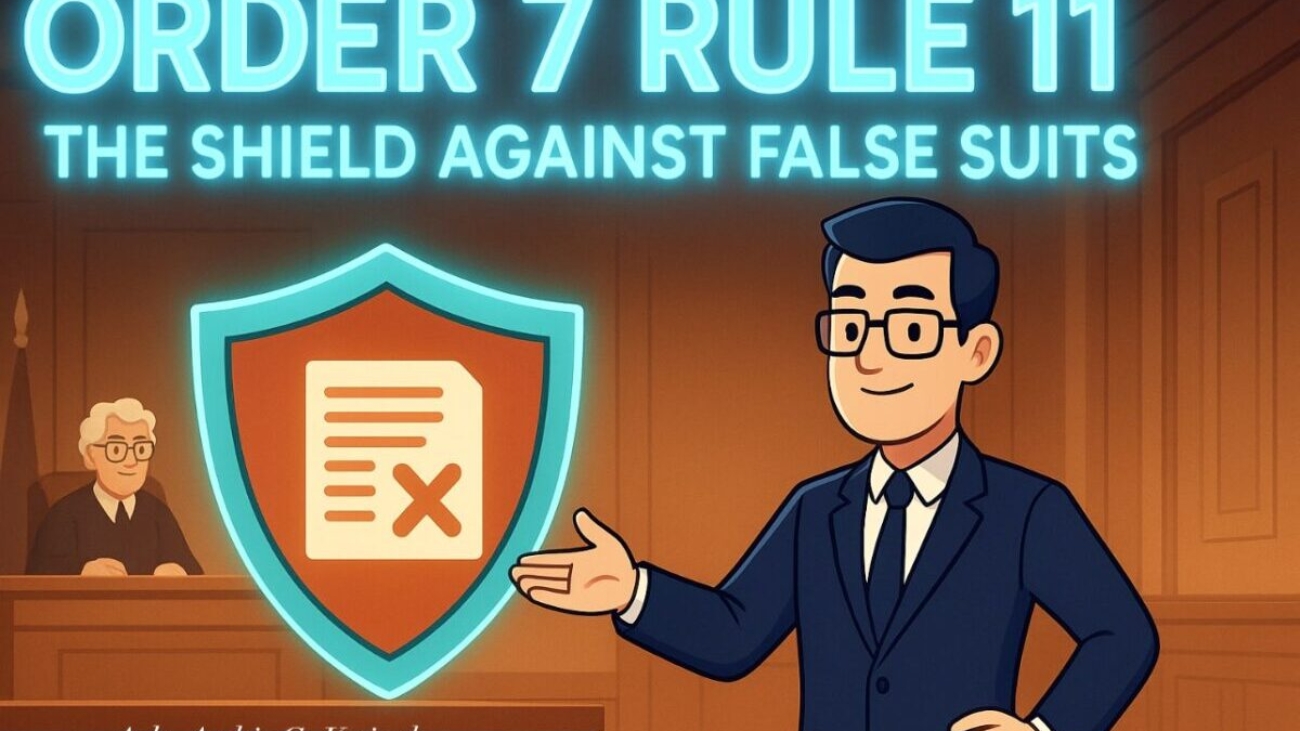
Order 7 Rule 11 CPC – A Powerful Remedy to Reject a Civil Suit | Complete Guide For Dwarka Court.
Order 7 Rule 11 CPC, rejection of plaint, frivolous civil suit, how to file O7R11, Dwarka Court Delhi, civil procedure code, reject suit for no cause of action, legal remedy against false suit
Detailed and practical guide on Order 7 Rule 11 CPC—its importance, usage, filing procedure in Dwarka Courts, and top Supreme Court judgments. Ideal for clients facing false or baseless civil cases.
Introduction
In my 18+ years of civil litigation, one provision that has consistently proven to be the sharpest shield for a defendant is Order 7 Rule 11 of the Civil Procedure Code (CPC).
It is not merely a technical section—it is a powerful safeguard to prevent frivolous, deceptive, non-maintainable or legally dead suits from wasting the court’s time and the defendant’s money, energy and peace.
This provision allows a court to reject a plaint at the very threshold, even before trial, if it does not disclose a valid cause of action or is barred by law.
Dwarka Court
What is Order 7 Rule 11 CPC? (Explained Simply)
Order 7 Rule 11 empowers the court to reject a plaint if it falls under any of these categories:
No cause of action disclosed
Relief undervalued and plaintiff fails to correct it
Insufficient court fee, not cured after court’s order
Suit barred by any law – limitation, statutory bar, jurisdiction issues
Plaint filed in duplicate not submitted
Plaint is vague, illusory or meaningless
This means the court can dismiss such a suit without calling witnesses or starting trial.
Why Order 7 Rule 11 Is Extremely Important?
Saves the defendant from long years of litigation
Stops misuse of court process
Keeps judiciary efficient by removing frivolous suits
Protects genuine litigants by ensuring court time is not wasted
Gives immediate relief if the suit itself is defective or legally barred
In real practice, many plaintiffs file suits only to create pressure, gain bargaining advantage, or drag the defendant to court unnecessarily.
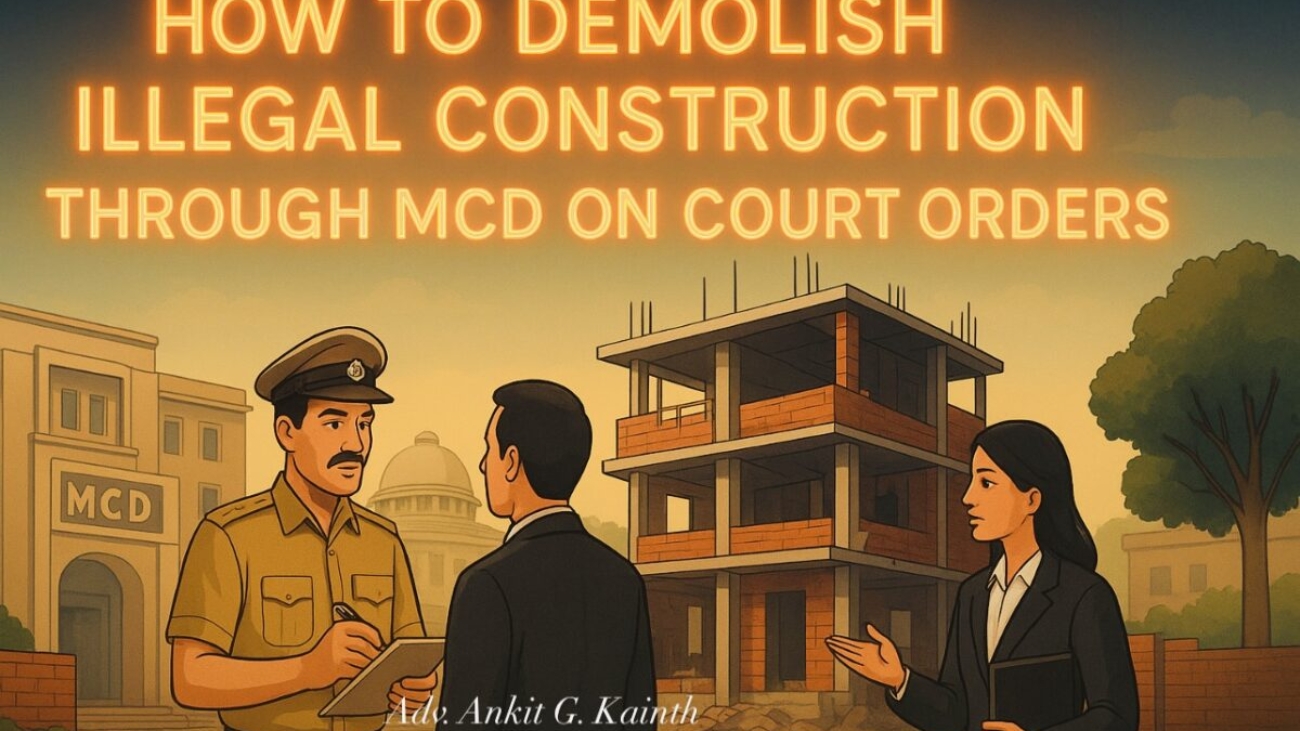
Illegal construction has become one of the biggest civic challenges in New Delhi. Every lane has at least one neighbour raising extra floors, covering balconies, extending walls, or encroaching public spaces—completely ignoring safety norms and municipal laws. After working for more than 18+ years in Civil & Criminal litigation in District Courts & Delhi High Court, I can confidently say one thing:
Courts take illegal construction very seriously — and the law is completely on your side.
If your neighbour has raised an illegal structure, you can get it demolished. The process is systematic, legally strong, and absolutely effective when done correctly.
Why Illegal Construction Is Treated So Strictly
Illegal construction affects:
Structural safety of neighbouring buildings
Ventilation & sunlight
Fire safety and evacuation
Property valuation
Public pathways and civic amenities
This is why both MCD and Courts treat such violations as a zero-tolerance issue.
Step-by-Step Legal Procedure to Get Illegal Construction Removed
1️⃣ File a Complaint Before MCD (Chairman + Area Executive Engineer)
Your first mandatory step is to file a written complaint with:
MCD Chairman
Executive Engineer (Building) of your Zone
Copy to Deputy Commissioner
Why this is required?
Under municipal rules, MCD gets 90 days to inspect the property, issue notices under Section 343/344 DMC Act, and take demolition action.
Important Tip:
Always file complaints:
✔️ By speed post
✔️ Through online MCD portal
✔️ Maintain photocopies & receipts
These documents become crucial evidence in Court.
2️⃣ After 90 Days, You Have Two Remedies
(A) File a Writ of Mandamus in Delhi High Court
You can approach High Court seeking directions to MCD to:
Conduct inspection
Pass demolition orders
Remove the illegal structure
High Court is extremely strict on illegal construction and often issues time-bound directions to MCD.
(B) File a Suit Before Civil Court, Dwarka
In many cases, a Civil Suit is the more suitable and immediate remedy.
You may file:
Suit for Mandatory Injunction (for demolition)
Suit for Permanent Injunction (to restrain further construction)
Suit for Declaration (if property rights need clarification)
Dwarka District Court has repeatedly passed strong orders directing demolition and restraining illegal constructions.
3️⃣ Urgent Situations — Waiver of 90 Days Waiting Period
If the construction is:
Happening rapidly
Causing structural threat
Blocking light/air
Causing privacy issues
Endangering your property
…you are entitled to apply for waiver of 90-day MCD waiting period.
Courts may grant urgent interim relief like:
Stay on further construction
Immediate inspection by MCD
Status-quo orders
Time-bound demolition directions
You only need to provide justified reasons in writing.
My 18+ Years of Practical Courtroom Experience
From my practice in District Courts & Delhi High Court, I have observed that:
Courts are extremely fair and balanced.
MCD is bound to follow Court orders—no excuses.
Illegal construction cases move quickly when filed properly.
Documentary proof and timely complaints make the case strong.
Justice is always delivered, even if delayed.
Procedure is simple, effective, and 100% result oriented — never lose hope.
5 Supra Judgments on Illegal Construction & Demolition
How to File a Good, Balanced & Effective Civil Suit
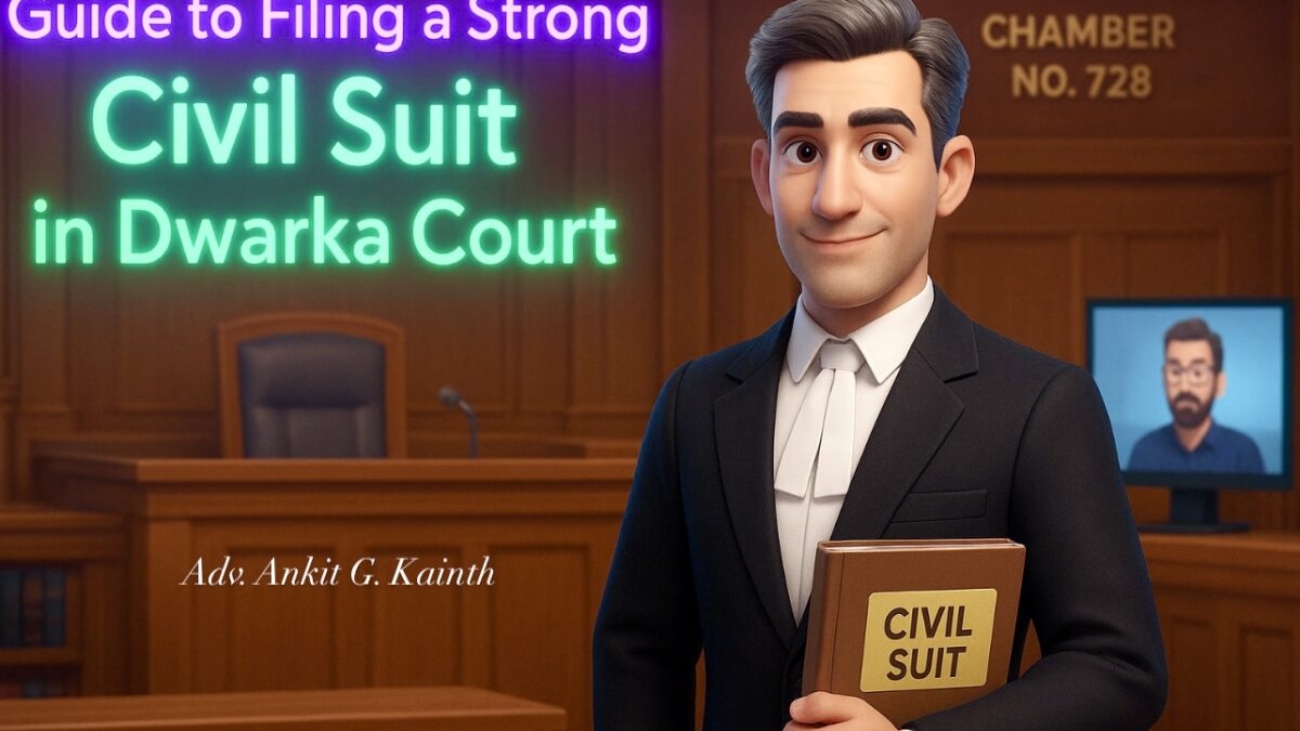
Filing a civil suit may appear simple on the surface, but presenting a well-structured, balanced, legally sound and persuasive case requires deep understanding, precise drafting and practical courtroom experience. In a metropolitan city like Delhi, especially at District Court Dwarka, the standard of civil litigation has risen tremendously with improved infrastructure, digital platforms, and hybrid hearings. Therefore, you need to know “How to File a Good, Balanced & Effective Civil Suit in Dwarka Court”.
Today, courts have adopted Virtual Hearings for civil matters—an absolute boon for litigants, lawyers and judges. NRIs, out-station clients, senior citizens, working professionals and individuals living far away can now file civil suits and attend hearings through VC without physically visiting the court. This shift has made justice more accessible, efficient and time-saving.
After more than 18+ years of experience, one thing is absolutely clear:
Clients win when their advocate takes a stand for them.
A determined, honest and skilled advocate can change the entire direction of a civil case. Nothing is impossible inside a courtroom when you are genuinely seeking justice and your lawyer is ready to fight for your rights.
Civil litigation is not only about filing a plaint. It involves:
Understanding cause of action
Choosing correct jurisdiction
Drafting the plaint with legal reasoning
Attaching relevant documents
Seeking appropriate reliefs
Maintaining balance between facts, law and evidence
Filing applications (Order 39 Rule 1 & 2, Order 7 Rule 14, Order 6 Rule 17, etc.)
Leading plaintiff evidence
Cross-examining defendant’s witnesses
Presenting final arguments
A well-drafted plaint itself decides half the case. A balanced plaint is neither exaggerated nor under-stated—it is compelling, factual, chronological and supported by documents.
How to File a Good, Balanced & Effective Civil Suit
Can You Win a Civil Case Through Speedy Trial? Absolutely—If You Don’t Waste Dates
In civil litigation, speedy disposal is possible, provided:
Your advocate does not seek unnecessary adjournments
Evidence is ready before each hearing
Documents are filed on time
Summons, service and process are monitored correctly
Your lawyer is prepared for every stage
Cross-examination is not delayed
Final arguments are delivered with precision
The court always appreciates proactive advocates who are organized, punctual and prepared.
If your lawyer never wastes dates, maintains momentum and pushes the matter forward, the chances of securing a Decree increase significantly.
Guide: How to File a Good & Balanced Civil Suit in Dwarka Court
Below is a step-by-step guide for litigants who want to file a proper civil suit that stands strong throughout the trial:
1. Identify the Correct Cause of Action
Every civil suit must arise from a clear legal cause of action.
Examples:
Recovery of money
Possession & injunction
Partition & declaration
Damages & compensation
Breach of contract
Easement & property disputes
A vague or poorly defined cause of action can weaken the entire case.
2. Choose the Correct Jurisdiction in Dwarka Court
This is where an experienced civil advocate makes a massive difference.
4. Attach All Essential Documents
Every document supporting your case must be filed along with the plaint:
Agreements
Receipts
Emails & WhatsApp chats
Bank statements
Photographs
NOCs
Notices & replies
Documents are the backbone of civil litigation.
How to File a Good, Balanced & Effective Civil Suit
5. File Interim Applications (If Needed)
Civil suits often require urgent reliefs.
E.g.:
Order 39 Rule 1 & 2 (Stay / Injunction)
Order 40 (Appointment of Receiver)
Order 6 Rule 17 (Amendment)
Immediate protective orders safeguard your rights during the trial.
6. Ensure Proper Service of Summons
Civil cases slow down mainly because summons aren’t served properly.
Your advocate must actively:
Track service reports
Use speed post, courier, WhatsApp service (if permitted)
File process fee on time
Seek substituted service if necessary
7. Lead Strong Plaintiff Evidence
Your plaintiff evidence should be:
Consistent
Documentary supported
Chronologically presented
Confidently testified
A single contradiction can weaken years of preparation.
How to File a Good, Balanced & Effective Civil Suit
8. Prepare for Powerful Cross-Examination
Cross-examination is where civil cases turn.
A skilled advocate can:
Expose contradictions
Break false defences
Strengthen your claim
Establish credibility
Cross-examination is an art mastered only through years of trial practice.
9. Present Focused Final Arguments
Final arguments must be:
Logical
Legally supported
Evidence-based
Precise
Persuasive
A good argument ties the entire case together and leads to Decree & Victory.
How to File a Good, Balanced & Effective Civil Suit
How to Choose a Good & Experienced Civil Advocate in District Court Dwarka
Here are the most important factors clients should consider:
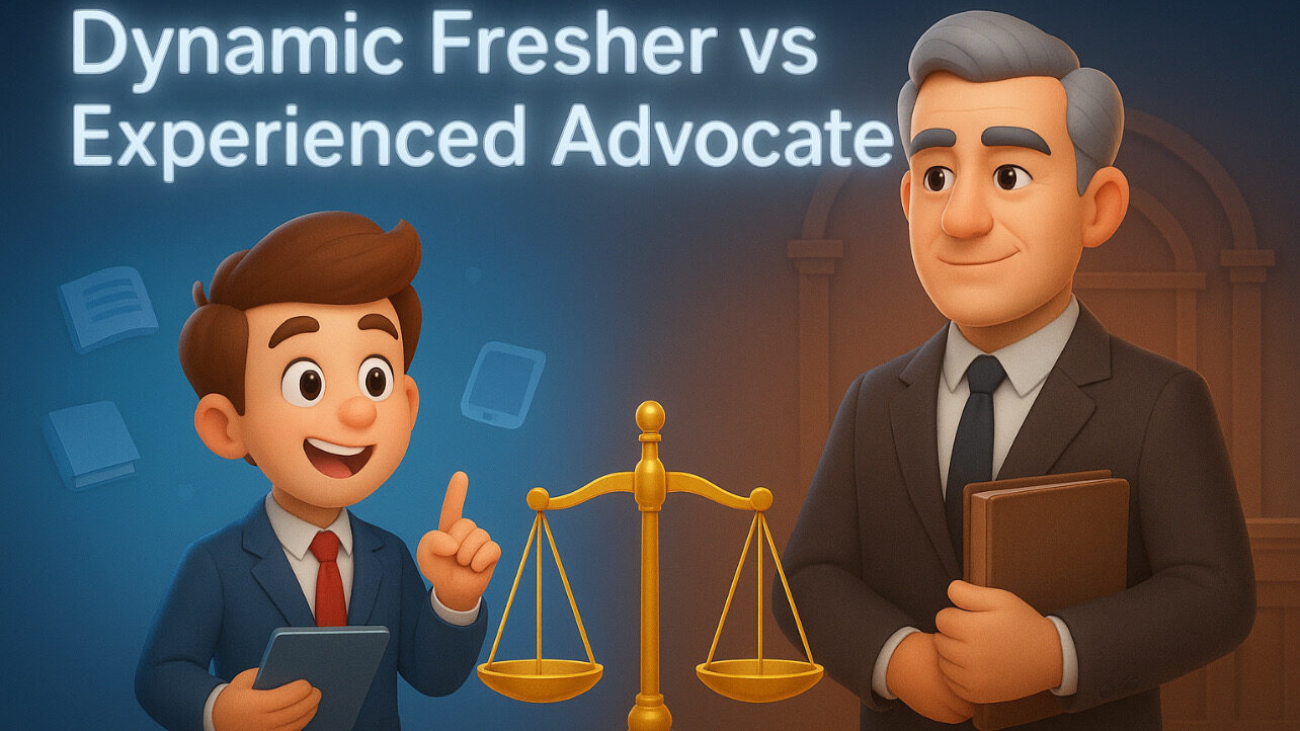
1. Prefer a Dynamic & Experienced Advocate
Experience = understanding of strategy, drafting, evidence and court procedure.
Civil cases require maturity, patience and courtroom wisdom.
2. Check his Civil Case Record on eCourts App
Before hiring:
Check number of civil cases handled
Nature of matters
Past orders & judgments
Regular court appearances
This ensures the lawyer is genuinely practicing in Dwarka Court.
3. Check His Drafting Skills
Ask for:
Sample plaints (redacted)
Past judgments
Written arguments
Quality drafting shows real expertise.
4. Verify Cross-Examination Skills
A civil lawyer must be genuinely strong in cross-examination.
You may ask for redacted copies of past cross-examinations.
5. Evaluate Communication & Strategy
A good civil lawyer:
Explains your case clearly
Sets realistic expectations
Prepares you for evidence
Gives strategic advice
Is always updated on next hearing
6. Avoid Lawyers Who Delay Proceedings
Unnecessary adjournments weaken your case and annoy the court.
Fast civil litigation is possible only if your advocate:
Prepares beforehand
Files documents timely
Does not depend on “next dates”
Maintains continuity in the case
Conclusion: Civil Litigation Is Completely Winnable When Handled Properly
A well-drafted, balanced and strategically presented civil suit can be won—often faster than expected—when represented by a:
✔ Good
✔ Dynamic
✔ Experienced
✔ Practically Skilled
advocate who understands the technicalities of civil procedure and the reality of trial practice.
Proper research, checking eCourts, verifying drafting quality and choosing the right advocate will ensure your case moves smoothly and ends with a Decree & Victory ✌️
How to File a Strong Civil Suit in Dwarka Court | Complete Guide
A detailed guide on filing a balanced civil suit, choosing an experienced Dwarka Court advocate, virtual hearings, speedy trials, and winning strategies.
Consult an experienced advocate to determine the most suitable mode of service based on the facts of your case and court practice.
Contact me for Consultation :- 9899085554, 9811885554
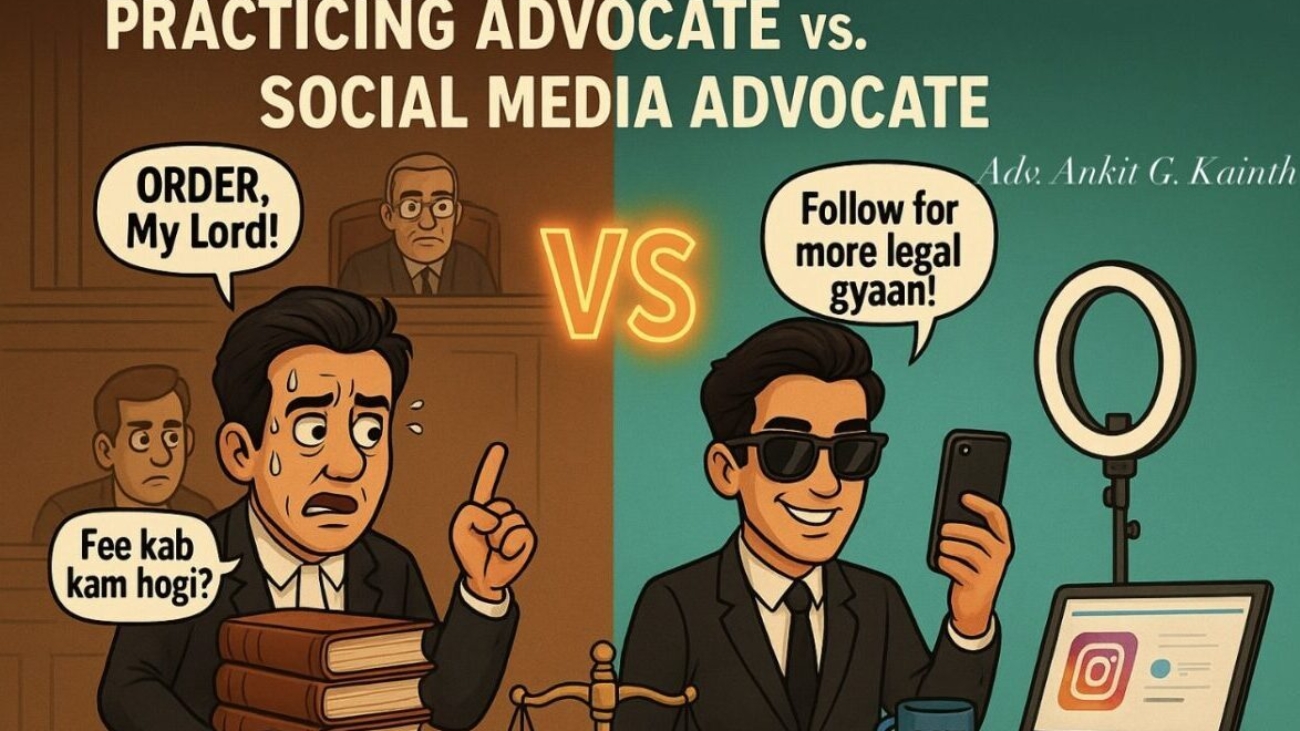
In today’s era, there are two species of Advocate/lawyers roaming freely— 1. Practicing Advocates: Found in courts, drenched in sweat, burdened with files. 2. Social Media Advocates: Found online, drenched in filters, burdened with hashtags.
Let’s decode the epic differences between the two—because trust me, it’s more entertaining than any Netflix drama.
Workstation 🏛️ vs. 📱 • Practicing Advocate: Courtrooms, bar libraries, dusty registers. • Social Media Advocate: Cafés with Wi-Fi, reels with trending songs. 👉 One-liner: “Court mein date milti hai, Insta pe followers!”
⸻
Uniform 👔 vs. 👕 • Practicing Advocate: Black coat, band, sweaty face. • Social Media Advocate: Blazer for DP, T-shirt for reel. 👉 One-liner: “Practicing advocate wears black, social media advocate adds filters to black.”
⸻
Arguments 🎤 vs. 🎶 • Practicing Advocate: Argues before judges with citations. • Social Media Advocate: Argues before comments section with emojis. 👉 One-liner: “One needs case laws, other just needs good captions.”
⸻
Reality ⏳ vs. Views 👀 • Practicing Advocate: Waits 4 hours for their matter to be called. • Social Media Advocate: Waits 4 seconds for likes to roll in. 👉 One-liner: “Court ka patience > Insta ka algorithm.”
⸻
Income 💰 vs. 💕 • Practicing Advocate: Fee comes late, after multiple reminders. • Social Media Advocate: Payment? Nah, just “exposure” and “collabs.” 👉 One-liner: “Advocate paisa ke liye fight karta hai, influencer spotlight ke liye.”
⸻
Clients 👨👩👦 vs. 👥 • Practicing Advocate: Handles emotional clients shouting “Humari izzat ka sawal hai!” • Social Media Advocate: Handles followers shouting “Next reel kab aayegi?” 👉 One-liner: “One manages affidavits, other manages aesthetics.”
Advocate in Dwarka Court
⸻
Legacy 📚 vs. 📸 • Practicing Advocate: Builds reputation after years in court. • Social Media Advocate: Builds reputation after one viral reel. 👉 One-liner: “Court mein senior ban’ne mein 20 saal, Insta pe sirf 20 seconds.”
⸻
Final Verdict ⚖️😂
Both are advocates in their own kingdoms. The practicing advocate fights for justice, while the social media advocate fights for attention. One seeks judgments, the other seeks engagement. Yet both remind us—law is not just about black coats, but also about adapting with time.
👉 Closing one-liner: “Courtroom ho ya Instagram, sabko apni audience chahiye!”
Consult an experienced advocate to determine the most suitable mode of service based on the facts of your case and court practice.
Contact me for Consultation :- 9899085554, 9811885554