Yes, you read it right—you can check the total number of cases presently filed by any Advocate in any District Court or dwarka court across India through the eCourts Services App. This simple check can give clients a major boost of confidence and helps them understand the actual practice profile of the lawyer they intend to engage.
Most clients feel confused while choosing the right advocate. Some rely on word of mouth, others rely on online profiles. But the most authentic data is available directly from the judicial system itself. The eCourts App allows you to see how many cases an Advocate has filed, in which courts they appear frequently, and how active their litigation practice really is.
⸻
How to Check an Advocate’s Case Data on eCourts Services App 🏛️📱 1. Download the “eCourts Services” App from Play Store or App Store. 2. Open the app and select ‘Search by Advocate Name’. 3. Choose the State and the District Court. 4. Enter the Advocate’s Name exactly as registered on court records. 5. Instantly, you’ll see the details of: • Pending cases • Disposed cases • Court number & case type • Year of filing
This tool reveals an Advocate’s primary practice area, the type of matters they handle, and the courts where they consistently appear.
⸻
Example: My Case Data from Dwarka District Court, New Delhi 🏛️📍
For illustration, here is my own active filing record as visible on eCourts: 1. Chief Metropolitan Magistrate (South-West) DWK – 16 Cases 2. Senior Civil Judge-cum-RC (South-West) DWK – 14 Cases 3. Principal Judge Family Court (South-West) DWK – 22 Cases 4. District & Sessions Judge (South-West) DWK – 22 Cases
Total: 16 + 14 + 22 + 22 = 74 cases This reflects only my filed matters in Dwarka Courts. In addition, I regularly appear in: ✔ All Six Delhi District Courts ✔ Delhi High Court ✔ All Haryana District Courts ✔ Chandigarh High Court ✔ Nainital High Court ✔ Jaipur High Court
Do note: The app shows only cases filed by the lawyer, not the matters where the lawyer appears as counsel for defendants or accused.
⸻ Why This Data Matters for Clients & Advocates 🔍💡 • Authenticity: You get court-verified information—not marketing claims. • Transparency: Clients can see where the advocate genuinely practices. • Specialization Insight: More filings in a particular court show a strong command in that jurisdiction. • Referral Decisions: Even advocates can verify the presence and experience of fellow lawyers before referring matters. • Confidence Building: When clients see real data, decision-making becomes easier, faster, and more trust-based.
⸻
In today’s digital era, knowledge empowers clients. The eCourts App is a simple yet powerful tool that helps you understand an advocate’s real-world litigation footprint and ensures you engage someone truly active and experienced in the relevant court.
An appeal may be available—but success depends on proper legal grounds, documentation, and timely filing, not simply disagreeing with the judgment.#ChequeBounce#DwarkaCourt#Appeal#LegalAwareness
Blog by a Cheque Case Expert | Practical Guide for Litigants in Dwarka Court
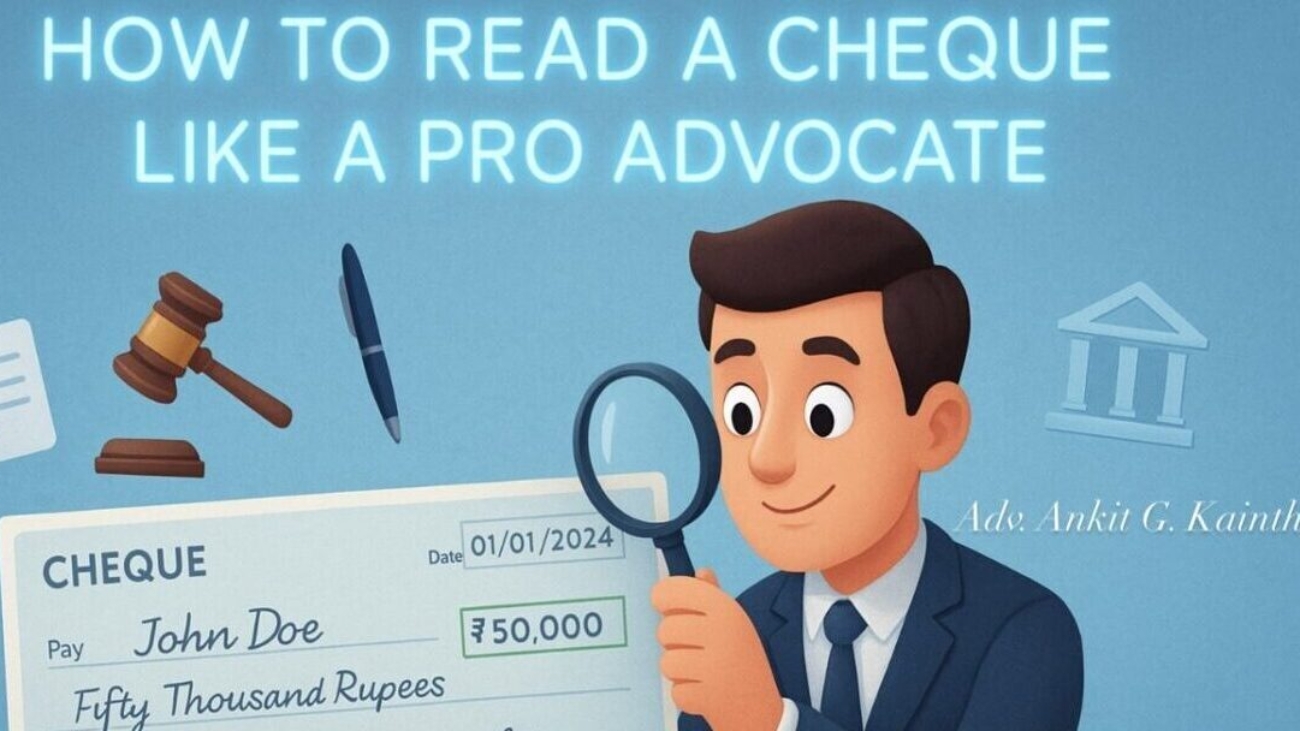
A cheque is not just a piece of paper. In Court, it is powerful evidence. One small mistake in reading a cheque can decide the fate of a case under Section 138 of the Negotiable Instruments Act. Therefore, whether you are a complainant or an accused, you must learn how to read a cheque like a seasoned advocate appearing daily before Dwarka Court.
With 18+ years of hands-on experience handling cheque bounce litigation in Court, I have seen cases won and lost purely on technical interpretation. This guide will help you understand what courts really look at.
📌 Why Reading a Cheque Properly Matters in Dwarka Court
Cheque bounce cases form a significant portion of criminal dockets in Dwarka Court. However, many litigants focus only on the amount. That is a mistake. Judges in Dwarka Court carefully analyse:
Date of cheque
Signature authenticity
Amount in words and figures
Bank branch details
Alterations or overwriting
Account status at presentation
Therefore, professional reading of a cheque strengthens your case before Court.
🏦 1️⃣ Date – The Starting Point of Limitation
First, check the date. In cheque litigation before Court, limitation is everything.
A cheque is valid for three months. If presented late, your complaint may fail in Court. Additionally, the legal notice must be sent within 30 days of dishonour. Thus, reading the date accurately protects your limitation rights.
✍️ 2️⃣ Signature – The Heart of Defence
Next, verify the drawer’s signature. In many matters before Court, accused persons admit the signature but dispute liability.
If the signature matches, a legal presumption arises under law. However, if it is disputed, handwriting examination may become necessary in Court proceedings.
This is where an experienced Criminal Lawyer Dwarka plays a crucial role.
If there is a mismatch, banks generally honour the amount written in words. Yet, defence counsel in Court often challenge inconsistencies to create doubt.
Small technical discrepancies can influence the outcome in Court.
🖊️ 4️⃣ Overwriting & Alterations
Look for cutting, correction fluid, or different ink.
Judges in Dwarka Court examine whether alterations were authenticated by signature. If not, the cheque may be considered materially altered.
Therefore, before filing a case in Court, inspect the instrument professionally.
🏛️ 5️⃣ Reason for Dishonour
The bank return memo is equally important. Common reasons include:
Insufficient funds
Account closed
Payment stopped
Signature differs
Each reason carries different legal implications in Court. For example, “account closed” strengthens the complainant’s case in Court.
📜 6️⃣ Legally Enforceable Debt – The Core Issue
Even if the cheque is valid, the complainant must prove legally enforceable debt.
In Dwarka Court, courts evaluate:
Loan agreements
Property transactions
Friendly loans
Business invoices
Here, a Property Lawyer Dwarka may assist where cheques arise from real estate transactions. Similarly, matrimonial settlements may require guidance from a Divorce Lawyer Dwarka.
🚨 7️⃣ Defence Strategies in Dwarka Court
As someone practicing for 18+ years in Dwarka Court, I advise clients:
Preserve WhatsApp and email conversations
Maintain account statements
Avoid blank cheque misuse
Respond to legal notices properly
Strong documentation improves your standing before Court.
🎯 Common Mistakes Litigants Make
Filing complaint beyond limitation
Ignoring statutory notice defects
Failing to prove financial capacity
Not appearing regularly in Dwarka Court
Underestimating cross-examination
Because cheque cases are criminal in nature, non-appearance can even lead to coercive steps. In some situations, Bail Matters Court may arise if warrants are issued.
🌍 Jurisdictional Advantage
Clients from Janakpuri, Vikaspuri, Dwarka North, Dwarka South, Najafgarh, Uttam Nagar, Bindapur and surrounding areas approach Dwarka Court for cheque litigation. Territorial jurisdiction depends on bank presentation and notice compliance.
Regular practice in Dwarka Court ensures:
Proper drafting of complaints
Quick listing
Effective evidence strategy
Confident cross-examination
🏆 Why Experience Matters
If you are searching for the Top and Best Advocate in Dwarka Court for cheque cases, choose someone who:
Understands criminal procedure
Has trial experience in Dwarka Court
Handles both prosecution and defence
Advises strategically, not emotionally
With 18+ years of courtroom presence in Dwarka Court, I have successfully handled hundreds of cheque bounce cases, ensuring compliance with every procedural detail.
❓ FAQ – Cheque Cases in Dwarka Court
1️⃣ Is cheque bounce a criminal offence?
Yes. It is tried as a criminal complaint before Court.
2️⃣ Can I settle the case?
Yes. Settlement is possible at any stage in Dwarka Court.
3️⃣ What if cheque was given as security?
Security cheque defence can be taken, but evidence must support it before Dwarka Court.
4️⃣ Can arrest happen in cheque cases?
Normally summons are issued first. However, non-appearance may lead to warrants, requiring attention in Bail Matters Dwarka Court.
5️⃣ How long does a case take?
Timelines vary, but regular follow-up in Court ensures faster disposal.
🏛️ Final Words
A cheque speaks volumes. However, only a trained legal eye can read it like a pro advocate appearing daily in Dwarka Court.
If you want strategic advice from a cheque case expert with 18+ years of experience in Court, consult before taking any step. Early legal intervention often decides success.
📞 Call to Action
Facing cheque bounce litigation? Need expert guidance in Court?
Book a confidential consultation today. Protect your rights with experienced representation in Dwarka Court. ⚖️
Contact me for Consultation :- 9899085554, 9811885554
When clients look for a new advocate, the first confusion is often: Should I hire a young, dynamic fresher or go with a seasoned, experienced lawyer? in Dwarka Court.The truth is, both bring unique strengths to the table, and the right choice depends on the nature of your case, your budget, and your expectations.
A dynamic fresher enters the profession with energy, passion, and a hunger to prove themselves. They are often quick thinkers, tech-savvy, and ready to spend more time researching, drafting, and preparing your matter. Freshers can also be more approachable and flexible, making clients feel heard and involved. However, their limitation is obvious — they may not have handled a large variety of cases and might take a little longer to strategize or predict courtroom behaviour. They usually shine in matters that require hard work, detailed documentation, or innovative legal approaches.
An experienced advocate, on the other hand, carries the weight of years in courtrooms. They understand the psychology of judges, the rhythm of procedures, and the practical shortcuts that come only from exposure. Their confidence and clarity often save clients time, and their advice usually comes shaped by countless past outcomes.
The downside? Experienced lawyers may charge higher fees and sometimes have limited time due to heavy workloads. In rare cases, they may also rely on routine methods instead of fresh perspectives.
So what should clients choose? If your case is procedurally simple, documentation-heavy, or demands close attention, a fresher can be a great fit. If your matter is high-stakes, complex, or requires courtroom strategy, experience can make a real difference.
“Agar Vakalat Acche Aur Sache Tarike Se Karni Hai Toh, Client Ki Peeth Dekhna Seekho”
In the journey of advocacy, one of the hardest lessons is valuing your own worth. Many young advocates reduce their fee just to get a case, gain experience. https://t.co/2YS2ugqIRp
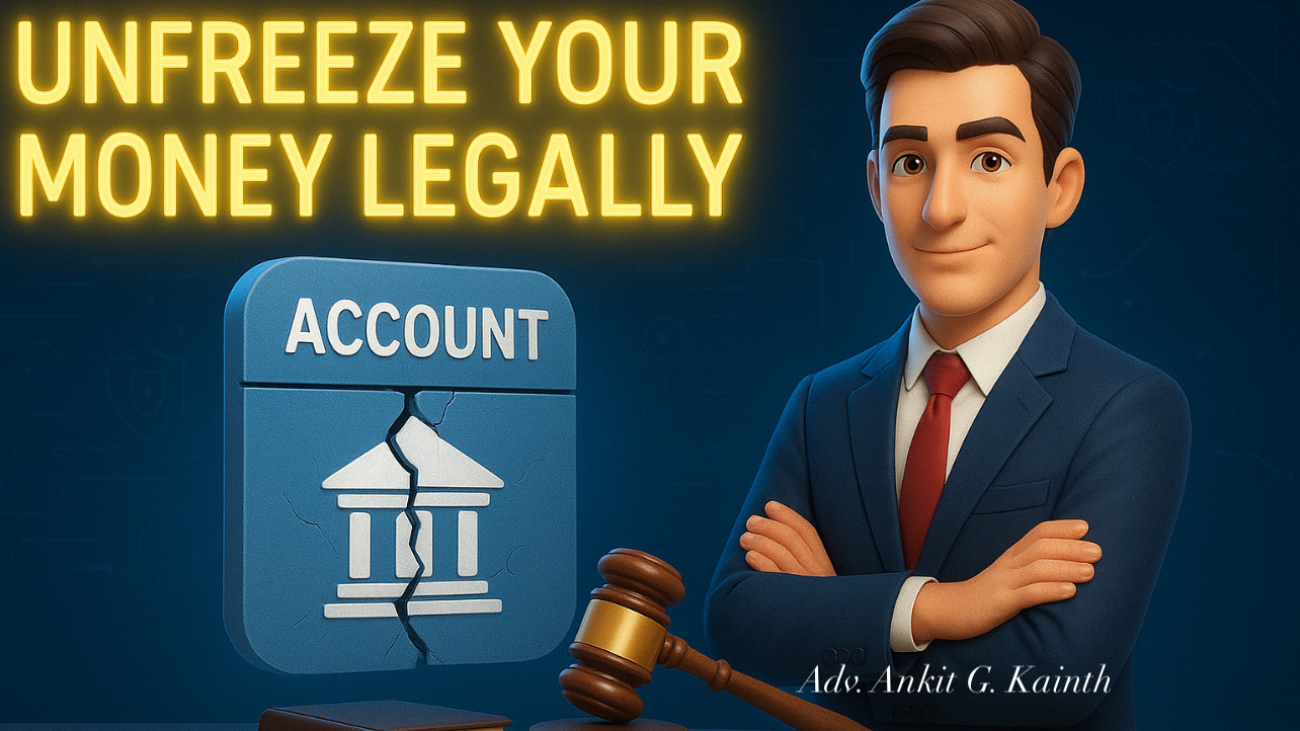
Introduction – Amount Freezed by Cyber Police ?🚨 Is your bank account frozen by Cyber Police?
If yes, don’t panic. In most cases, the amount can be legally released through proper proceedings before Dwarka Court. With the right legal strategy, timely filing, and proper documentation, relief is absolutely possible.
As an advocate practicing for 18+ years in Dwarka Court, I have successfully handled multiple cyber freeze matters, cheque bounce disputes, property litigation, divorce cases, and bail matters. This guide explains the step-by-step process to unfreeze your bank account through Dwarka Court in 2026.
Why Does Cyber Police Freeze Bank Accounts?
Usually, Cyber Police freeze accounts under suspicion of:
Online fraud or phishing complaints
Suspicious UPI or wallet transactions
Alleged involvement in money laundering
Transfer of disputed funds
Often, innocent account holders suffer because someone else transferred disputed funds into their account. In such cases, immediate legal action in Dwarka Court becomes essential.
Legal Provision to Release Frozen Amount in Dwarka Court ⚖️
The remedy generally lies under:
Section 102 CrPC (Police power to seize property)
Application for release before the concerned Magistrate
You must file an Application for De-freezing/Release of Bank Account before the concerned Metropolitan Magistrate in Dwarka Court.
Step-by-Step Process to Unfreeze Account in Dwarka Court
1️⃣ Obtain Freeze Intimation
First, collect:
Bank freeze email/letter
Transaction statement
FIR copy (if registered)
Without documents, Dwarka Court will not grant relief.
2️⃣ Draft Proper Application
Your advocate files an application before Dwarka Court stating:
You are a bona fide account holder
No involvement in alleged fraud
Funds are legitimate earnings
Financial hardship due to freeze
This stage is crucial. A well-drafted petition increases success chances in Dwarka Court.
3️⃣ Attach Supporting Documents 📑
ITR / Salary slips
Business invoices
GST returns
Bank statements
Affidavit of innocence
Strong documentation helps convince Dwarka Court that the freeze is unjustified.
4️⃣ Notice to IO & Cyber Cell
The Magistrate in Dwarka Court issues notice to:
Investigating Officer
Cyber Police Station
The IO may file a reply supporting or opposing release.
5️⃣ Arguments Before Dwarka Court
After hearing both sides, Dwarka Court may:
✔ Release entire amount
✔ Release partial amount
✔ Allow operation with restrictions
✔ Direct furnishing of surety/bond
Every case depends on facts. However, experienced representation in Dwarka Court makes a major difference.
Important Practical Tips 💡
Do not ignore freeze notices
Avoid direct confrontation with police
Never admit liability without legal advice
File application promptly in Dwarka Court
Keep transaction records ready
Delay reduces chances of quick relief from Dwarka Court.
Time Frame to Get Relief from Dwarka Court
Normally:
Filing to first hearing: 3–7 days
Final order: 2–4 weeks (depending on complexity)
Urgent matters can be mentioned before Dwarka Court for faster listing.
Why Experience Matters in Dwarka Court
Cyber cases require:
Knowledge of criminal procedure
Drafting precision
Strategic arguments
Understanding of digital evidence
With 18+ years of courtroom experience in Dwarka Court, I have handled:
Being regularly present in Dwarka Court helps in faster coordination with court staff, prosecution, and registry.
Common Mistakes People Make ❌
Waiting for police to “automatically” unfreeze
Submitting incomplete documents
Filing wrong type of application
Hiring inexperienced counsel
Remember, proper legal filing before Dwarka Court is the only reliable solution.
Areas We Serve
If your account is frozen and you reside in:
Janakpuri
Vikaspuri
Dwarka North
Dwarka South
Najafgarh
Uttam Nagar
Bindapur
You can seek remedy before Dwarka Court depending on jurisdiction.
FAQs – Release of Frozen Amount in Dwarka Court
Q1. Can Cyber Police freeze account without notice?
Yes, under Section 102 CrPC. However, you can challenge it before Dwarka Court.
Q2. How long does Dwarka Court take to unfreeze account?
Usually 2–4 weeks, depending on complexity.
Q3. Can partial amount be released?
Yes. Dwarka Court may allow partial withdrawal subject to conditions.
Q4. Is personal appearance mandatory?
In most cases, advocate appearance before Dwarka Court is sufficient.
Q5. What if FIR is false?
You can seek remedy before Dwarka Court and also pursue quashing or discharge separately.
Why Choose an Advocate in Dwarka Court?
✔ 18+ years experience in Dwarka Court
✔ Regular practice in criminal & cyber matters
✔ Transparent strategy
✔ Strong courtroom presence
✔ Quick drafting & urgent listing
If you are searching for the Advocate in Janakpuri, Vikaspuri, Dwarka North, Dwarka South, Najafgarh, Uttam Nagar or Bindapur practicing in Dwarka Court, professional guidance can protect both your money and reputation.
📞 Call to Action
Your hard-earned money should not remain frozen due to procedural delay.
If Cyber Police has frozen your bank account, take immediate legal action in Dwarka Court.
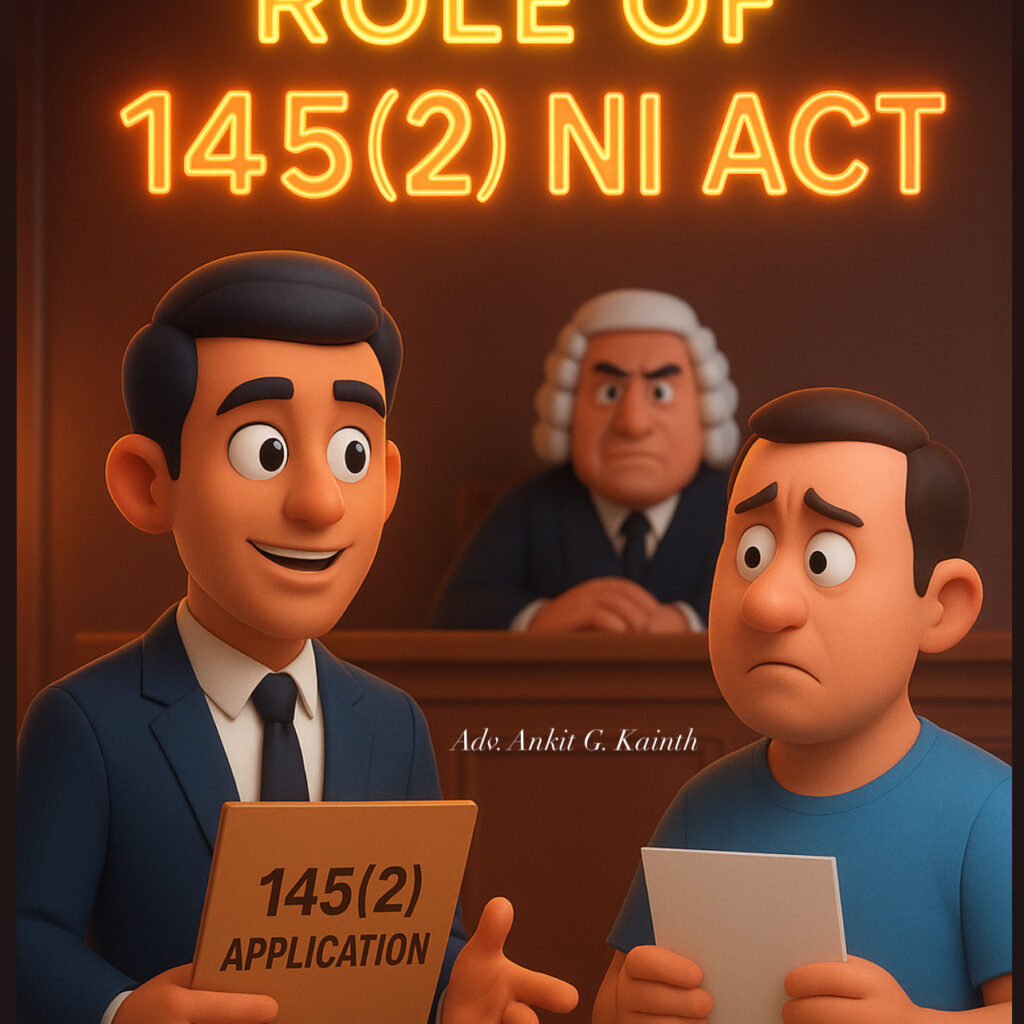
In cheque bounce cases under the Negotiable Instruments Act, one small application often decides the entire direction of the trial — the Application U/s 145(2). Many treat it casually, and surprisingly, some courts even allow the accused to proceed without filing it. But if you appear for the complainant, this practice can seriously weaken your case.
So the real question is — Is Section 145(2) important?
👉 Absolutely. Extremely. Unavoidably. Important.
⸻
⚖️ What is Section 145(2)?
Section 145(1) NI Act permits evidence-by-affidavit of the complainant.
But Section 145(2) empowers the accused to seek permission to cross-examine the complainant/witnesses.
In simple terms:
📝 No 145(2) = No Cross-Examination.
⸻
🎯 Why Filing 145(2) is Mandatory (in complainant’s interest)
🛡️ 1. Accused Must Disclose Defence
A 145(2) application is not a formality — it forces the accused to reveal:
• What is his defence?
• Which parts of the complainant’s affidavit he disputes?
• On which points he wants to cross-examine?
This removes surprise elements and prevents ambush strategies.
⸻
🎯 2. Cross-Examination Cannot Go Beyond What’s Mentioned
This is the most powerful reason for complainants.
If the accused does not mention specific points in the 145(2) application:
❌ He cannot cross-examine on those points later.
❌ He cannot introduce new defences halfway.
❌ He cannot go on “fishing inquiries”.
This gives the complainant a strong procedural shield.
⸻
⚠️ 3. Silent or Vague Application = No Right to Ask Questions
If the application is vague like:
“I want to cross-examine”
…without explaining why and on what issues, then:
👉 The accused loses the right to question on undisclosed points.
This helps advocates maintain a disciplined and focused trial.
⸻
📚 4. Helps Court Understand the Scope of Trial
Judges can clearly see:
• What is admitted
• What is disputed
• What requires adjudication
It narrows down the controversy and speeds up the trial.
⸻
🔍 Then Why Are Some Courts Allowing Cross-Examination Without It?
Because many courts prioritize speed over procedure.
But speed cannot override statutory safeguards.
If a court allows cross-examination without a 145(2) application, the complainant should object — politely but firmly.
⸻
💡 Final Thoughts
For a complainant’s advocate, never waive the requirement of a properly drafted 145(2) application.
⚖️ Why Choose a Local Lawyer for District Court Dwarka? (2026 Practical Insight)
When a legal dispute arises, most clients focus only on “Who is the best lawyer?” But an equally important question is — “Does the lawyer regularly practice in the same court where my case is filed?”
If your matter is before Dwarka Court, choosing a lawyer who appears there daily can make a measurable difference in strategy, speed, and results.
With 18+ years of continuous practice in Dwarka Court, I have personally observed how local courtroom experience impacts outcomes.
Let us understand this practically.
🏛️ 1️⃣ Understanding the Court Environment
Every court has its own functioning style.
A local lawyer practicing regularly in Dwarka Court understands:
Filing procedures and registry objections Court staff coordination Daily cause-list patterns Bench-specific working styles Practical courtroom discipline
These are not written in books — they are learned through consistent physical presence.
📂 2️⃣ Faster Filing & Quicker Case Movement
Legal strategy is not just about arguments. It is also about timing.
When your advocate is regularly present at Dwarka Court:
Urgent applications can be filed immediately
Defects can be removed the same day
Case status can be checked personally
Listing issues can be followed up promptly
Outstation lawyers may need coordination time. A local lawyer acts instantly.
In bail matters, stay orders, and injunctions — speed often determines success.
⚖️ 3️⃣ Practical Knowledge Beyond Theory
Courtroom litigation is not academic law — it is applied law.
A regular practitioner at Dwarka Court knows:
Which arguments receive judicial attention
a.How evidence is typically scrutinised
b.How to structure anticipatory bail
c.How mediation trends work in matrimonial disputes
d.How property disputes often convert into criminal complaints
This practical knowledge cannot be replaced by reputation alone.
👥 4️⃣ Easy Accessibility for Clients
Clients often need:
Quick meetings
Urgent documentation review
Strategy discussions before hearing
Immediate response in emergencies
When your lawyer’s chamber is in Dwarka Court premises, coordination becomes seamless.
There are No delays. Don’t worry about No long scheduling gaps. No communication hurdles.
📑 5️⃣ Confidence in Representation
A lawyer who appears daily before the same benches develops:
Courtroom confidence Familiarity with judicial expectations Better anticipation of queries Stronger oral advocacy
This comfort level translates into effective representation.
Whether it is:
Divorce litigation
Bail matters
Cheque bounce cases
Domestic violence proceedings
Property disputes
Confidence matters inside the courtroom.
🎯 6️⃣ Strategic Advantage in Complex Cases
In 18+ years of regular appearance before Dwarka Court, I have seen that:
Timing of filing anticipatory bail is critical
Drafting errors delay relief
Registry objections can derail urgent cases
Procedural compliance avoids dismissal
A local lawyer anticipates these hurdles in advance.
📍 Serving Dwarka Court Jurisdiction
Clients from:
Janakpuri
Vikaspuri
Dwarka North
Dwarka South
Najafgarh
Uttam Nagar
Bindapur
often prefer representation by a lawyer who understands the local litigation pattern of Dwarka Court.
If you or someone you know has been arrested, understanding the bail procedure becomes extremely important. In Dwarka Court, New Delhi, the process is straightforward, but knowing the right steps can save both time and stress.
1. What Is Bail?
Bail is a legal process that allows an arrested person to remain free while their case is ongoing, by submitting a bond or surety in Dwarka Court.
2. Types of Bail in Dwarka Court
Regular Bail – applied after arrest in Dwarka Court.
Interim Bail – temporary bail until a regular hearing Dwarka Court.
3. Documents Required in Dwarka Court
Aadhar Card / ID Proof
Surety documents
FIR copy
Personal bond
Arrest memo (in some cases)
4. How the Bail Hearing Works in Dwarka Court
Your lawyer files the bail application → Matter is listed before the judge → Arguments from both sides → Judge grants or denies bail.
5. Why Legal Help Matters in Dwarka Court
A strong bail application can significantly improve your chances. An experienced lawyer ensures correct drafting, powerful arguments, and timely filing.
When an arrest happens, panic spreads faster than facts. Families rush to Dwarka Court with one urgent question — “How do we get bail?”
After 18+ years of continuous practice in Dwarka Court, I can confidently say this: timely strategy matters more than emotional reaction. If you understand the procedure clearly, the process becomes structured, manageable, and far less stressful.
Let us break it down step-by-step.
📌 What Is Bail?
Bail is a legal mechanism under the Code of Criminal Procedure that allows an accused person to remain free during investigation or trial, subject to conditions imposed by the court.
In simple words: Custody is the exception. Liberty is the rule — subject to judicial discretion.
🏛️ Step 1: Identify the Type of Bail Required
Before filing anything in Dwarka Court, the first question is — what kind of bail applies?
1️⃣ Anticipatory Bail
Filed before arrest when apprehension exists.
2️⃣ Regular Bail
Filed after arrest when the accused is already in custody.
3️⃣ Interim Bail
Temporary protection granted until final hearing.
Choosing the correct category is the first strategic decision.
📄 Step 2: Collect Essential Documents
Documentation strength often determines success. Typically required:
FIR copy
Arrest memo (if applicable)
ID proof of accused
Surety documents
Previous case details (if any)
Medical documents (if relevant)
Incomplete paperwork delays relief in Dwarka Court.
🖊️ Step 3: Drafting the Bail Application
This is not a routine formality.
A professionally drafted bail application must include:
✔ Brief facts of case ✔ False implication or defence theory ✔ Lack of criminal antecedents ✔ Cooperation with investigation ✔ Legal grounds under CrPC ✔ Judicial precedents (if required)
In my experience, weak drafting is one of the most common reasons for rejection.
⚖️ Step 4: Filing Before the Appropriate Court
Most bail matters first come before the Metropolitan Magistrate in Dwarka Court.
Serious offences may require filing before the Sessions Court.
Correct forum selection prevents technical objections.
🗣️ Step 5: Bail Hearing & Arguments
On the hearing date:
Prosecution presents objections
Defence counters allegations
Court examines gravity, evidence, and conduct
Judges in Dwarka Court carefully evaluate:
Nature of offence
Role attributed to accused
Possibility of tampering evidence
Flight risk
Criminal history
Calm, structured arguments always perform better than emotional pleas.
🧾 Step 6: Bail Order & Conditions
If granted, the Court may impose:
Personal bond
Surety bond
Travel restrictions
No contact with complainant
Regular investigation attendance
Compliance is critical. Violation may lead to cancellation.
⏳ Step 7: Post-Bail Responsibility
Many accused believe bail means the case is over. That is incorrect.
After bail:
Attend all court dates
Avoid influencing witnesses
Maintain clean conduct
Stay in coordination with your lawyer
Bail is liberty with responsibility.
🔎 Common Bail Trends in Dwarka Court (2026)
Based on recent courtroom experience:
Digital evidence is heavily scrutinized
Delay in FIR sometimes strengthens defence
Matrimonial disputes often receive balanced approach
Judicial reasoning is structured, not sentimental.
🎯 Why Experience Matters
In 18+ years of practice at Dwarka Court, I have observed:
✔ Each judge has a distinct courtroom style ✔ Filing defects delay urgent matters ✔ Timing of anticipatory bail is crucial ✔ Coordination with investigation officers helps
Bail strategy is courtroom science — not guesswork.
📌 Practical Advice for Families
👉 Do not delay consultation 👉 Do not hide facts from your lawyer 👉 Preserve digital communication 👉 Avoid media or social confrontation 👉 Stay patient and disciplined
Prepared clients always stand stronger in Dwarka Court.
❓ Frequently Asked Questions
Q1. How long does bail take in Dwarka Court?
Usually 1–3 hearings, depending on seriousness and prosecution response.
Q2. Can bail be rejected?
Yes. However, remedy lies before a higher court.
Q3. Is anticipatory bail easy?
It depends on allegations, evidence, and timing of filing.
Q4. Does court consider settlement?
In matrimonial or minor disputes, settlement discussions help.
🌟 Final Words
Arrest creates fear. Law provides structure.
Understanding the bail procedure at Dwarka Court reduces uncertainty and builds confidence.
If you or your family member requires urgent bail assistance, professional guidance makes a decisive difference.
With over 18 years of active courtroom experience, I ensure: