“Coming to Court with Clean Hands” is not merely a legal phrase—it is a timeless principle of justice. It means that any person seeking relief from a court of law must approach the court with honesty, transparency, and good faith. Courts are meant to protect truth, not to assist those who conceal facts, fabricate stories, or mislead the judicial system.
As beautifully said:
“Sachhai chhup nahi sakti banawat ke usoolon se,
khushboo aa nahi sakti kabhi kagaz ke phoolon se.” 🌸
Truth can never be hidden behind artificial rules, just as fragrance can never come from paper flowers.
📘 Meaning of “Coming to Court with Clean Hands”
To come to court with clean hands means that a litigant must disclose all material facts, whether favourable or unfavourable. ❌📝
A party should not suppress documents, twist facts, or make false statements. Courts expect litigants to act fairly and honestly. Even a legally strong case may fail if the court finds dishonesty, suppression, or fraud.
⭐ Importance of This Principle
Justice is based on equity, conscience, and fairness. ⚖️
Courts have consistently held that a person who approaches the court with falsehood is not entitled to relief. Even if the opposite party is wrong, a dishonest litigant will not be rewarded.
👉 Truth builds credibility.
👉 Suppression destroys trust.
👉 Honesty strengthens your case.
📌 Relevance in Today’s Litigation
In today’s legal environment—especially in property disputes, matrimonial cases, civil suits, commercial matters, and criminal litigation—many cases fail not because of weak law, but because of hidden facts. 📂
Courts at Dwarka, Sector-10, and across Delhi now carefully examine pleadings, documents, and conduct of parties. A single concealed fact can collapse years of litigation.
Civil Advocate in Dwarka court
👨⚖️ Why Clients Must Tell the Complete Truth to Their Advocate
For an advocate, drafting a case is like laying the foundation of a building. 🧱
✔ Guiding clients on what must be disclosed and how
An experienced advocate knows that truthful disclosure combined with correct legal strategy is the strongest weapon in court.
Advocate in Dwarka Court
✅ Conclusion
Coming to court with clean hands is both a legal requirement and a moral responsibility. 🌿
Courts may forgive mistakes, but they rarely forgive dishonesty. Whether you are a litigant or an advocate, remember—truth is not a weakness; it is your greatest strength.
In earlier times, when families lived together and values were passed orally from one generation to another, the word of elders carried great sanctity. Property, responsibilities, and legacies were understood, respected, and rarely questioned. With changing times, nuclear families, growing assets, and increasing disputes, the law stepped in to preserve certainty. This is where the concept of a Will and Probate assumes great importance.
A Will is the final declaration of a person’s wishes regarding his property, assets, and responsibilities after his death. It is not merely a document; it is the voice of the testator speaking even after life has ended. In olden days, this voice was honoured without question. Today, however, written law and judicial confirmation are necessary to give that voice legal authority.
📜 Meaning of Probate – In the Classical Sense
Probate is the formal recognition of a Will by a competent court. It is a judicial seal certifying that the Will placed before the court is genuine, valid, and the last testament of the deceased. Once probate is granted, the Will stands on the highest legal footing, beyond suspicion or casual challenge.
Traditionally, courts have treated probate proceedings with seriousness and reverence. The objective is not to decide ownership disputes but to ensure that the intent of the deceased is respected and lawfully executed.
⚖️ Why Probate Becomes Essential After the Death of the Testator
🕯️ Respecting the Dead, Protecting the Living
In earlier times, a man’s word was his bond. Probate today plays the same role—it gives dignity to the wishes of the departed and protection to those left behind.
📖 Authenticity and Finality
Probate establishes that the Will was executed voluntarily, in sound mind, and without coercion. This prevents fabricated claims, forged documents, and false assertions by interested parties.
🔑 Legal Authority to the Executor
Without probate, an executor remains powerless. With probate, he is clothed with legal authority to manage, distribute, and safeguard the estate exactly as directed by the testator.
🏛️ Acceptance by Authorities
Banks, municipal bodies, revenue departments, and registrars rely on probate as conclusive proof. Property mutation, transfer of shares, release of fixed deposits, and execution of documents become smooth and unquestionable.
🏠 Mandatory Nature in Traditional Jurisdictions
In cities like Delhi, Mumbai, Chennai, and Kolkata, probate has long been treated as essential, especially for immovable property. Courts have consistently held that probate removes uncertainty and prevents future litigation.
⚠️ Consequences of Ignoring Probate
In earlier times, disputes were settled within families. Today, absence of probate often leads to:
❌ Endless litigation
❌ Objections by legal heirs
❌ Refusal by authorities
❌ Delay in enjoying one’s rightful inheritance
❌ Emotional and financial strain
A Will without probate is like a letter without a seal—written with intent but lacking authority.
🧠 Wisdom from Experience
Those who understand law in its traditional sense know that prevention is better than cure. Applying for probate at the right time avoids suspicion, safeguards property, and preserves family harmony. It also reflects respect towards the wishes of the testator, who trusted the legal system to carry forward his intent.
🪔 Conclusion
In the old days, honour was enough. In modern times, probate is honour recognised by law. It transforms a Will into an enforceable command, protected by judicial wisdom. Probate is not a mere technicality—it is a bridge between the past wishes of the deceased and the future security of the living.
A Will speaks once. Probate ensures it is heard forever.
Anyone who has spent even a little time in Dwarka Court (criminal courts) knows this truth: IPC and CrPC sections never behave the same way twice. You may read the same section a hundred times, cite it in dozens of matters, yet when a new case lands on your table, that very provision suddenly appears unfamiliar—almost like a new legal combination with a fresh mystery.
On paper, the Indian Penal Code and the Code of Criminal Procedure are fixed statutes. Their language does not change. Their numbering remains the same. But law is not meant to live only in books. It comes alive in courtrooms, through facts, evidence, arguments and judicial interpretation.
📌 Law Is Static in Text, Dynamic in Application
A section of IPC is only a framework. Its real meaning emerges when it meets facts. The same section relating to cheating, cruelty, criminal breach of trust or hurt may lead to completely different outcomes depending upon:
the intention (mens rea) of the accused
the sequence of events
the conduct of parties before and after the incident
the quality of evidence produced
the judicial mind interpreting it
Thus, every case gives the same section a new colour and a new soul.
🧠 Facts Are the Heart of Criminal Law
Criminal law is not arithmetic. It is not that Section “X” automatically results in punishment “Y”. Two FIRs may mention the same sections, yet one ends in discharge while the other proceeds to conviction. Why? Because facts make all the difference.
Even a small factual variation can change the entire complexion of a case. Timing of the incident, presence or absence of witnesses, medical opinion, recovery, delay in FIR—each factor reshapes how a section is understood and applied.
🧩 CrPC: Procedure With Infinite Possibilities
CrPC is often considered technical and procedural, but in practice it is deeply strategic. From registration of FIR to investigation, remand, bail, charge, trial and final arguments—no two criminal proceedings follow the same route.
A bail application under the same provision may be allowed in one case and rejected in another, solely because of:
seriousness of allegations
stage of investigation
criminal antecedents
cooperation of the accused
societal impact of the offence
This is why CrPC sections feel like a new puzzle every time.
🎓 Why Interns Must Understand This Early
For interns, this is a crucial lesson. Do not limit yourself to memorising sections. Bare Acts are important, but judgments are essential. Reading case law shows how courts breathe life into statutory provisions. This understanding separates a bookish student from a future lawyer.
👨⚖️ For Advocates: This Is Where Real Advocacy Beginsin Dwarka Court
For advocates, this changing nature of sections is not a problem—it is an opportunity. The strength of a case lies in how well facts are presented within the legal framework. A skilled advocate does not merely quote sections; he connects law with life and presents a convincing legal story before the court.
🤝 For Clients: Why Outcomes Differ Under the Same Sections
Clients often ask, “This section is applied, what will be the result?” The honest answer is: it depends. Courts decide cases, not sections alone. Facts, evidence, conduct and credibility together shape the final outcome. Understanding this builds trust and realistic expectations.
✨ Conclusion
IPC and CrPC are not rigid formulas. They are living instruments of justice, evolving with every new case. Each matter gives sections a fresh interpretation, a new dimension and sometimes an unexpected twist. That is why criminal law remains challenging, fascinating and deeply human.
📌 Every case gives the law a new life—and every lawyer must learn to read the story hidden between the sections.
WRITTEN BY:-
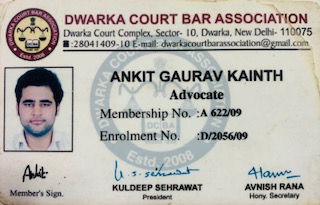
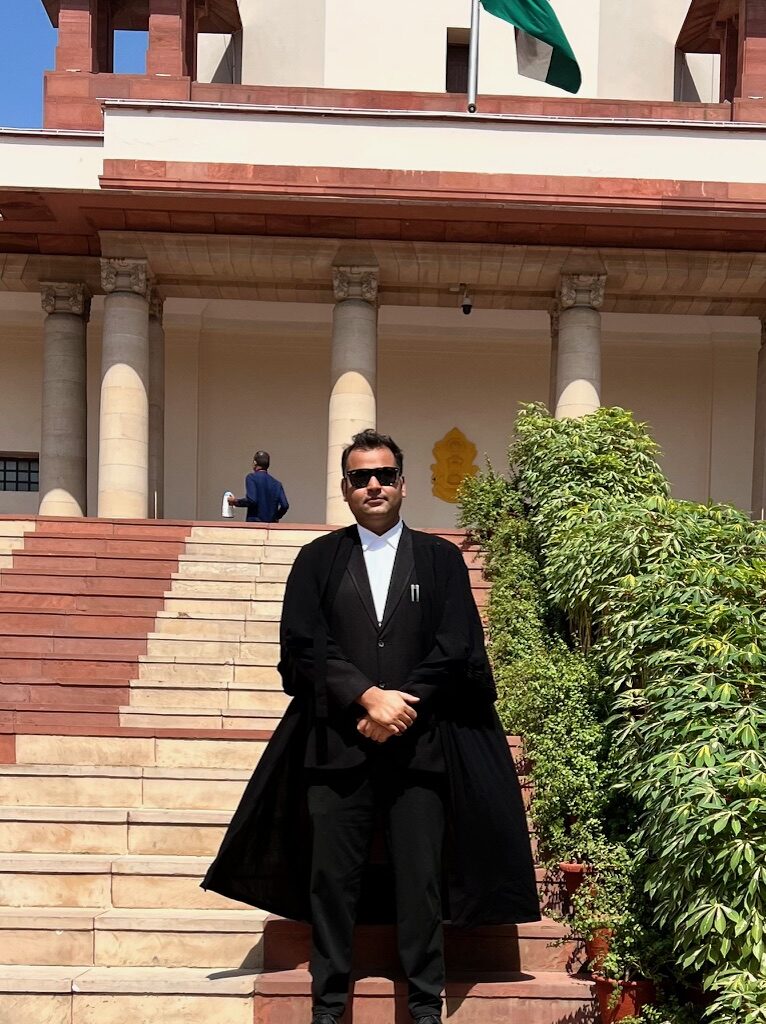
Ankit Gaurav Kainth
Advocate
Chamber No.728, 7th floor, District Court Dwarka, New Delhi
When searching for a trusted advocate in Dwarka Courts, experience, local presence, and proven case handling matter the most. With 18+ years of continuous legal practice in District Courts, Dwarka, I have successfully handled more than 600 cases across Civil, Criminal, Banking, and Matrimonial law.
Legal practice is not merely about knowledge of law books — it is about courtroom strategy, judge-wise approach, timely filings, and practical solutions developed only through years of hands-on experience.
Justice is achieved through consistency, honesty, and courtroom strength — values we strictly follow.
Advocate in Dwarka Court
📍 Why Choose a Local Dwarka Courts Advocate?
Choosing an advocate practising daily in Dwarka Courts offers clear advantages:
Daily court presence
Familiarity with judges & procedures
Faster filings & follow-ups
Easy client accessibility
Reduced delays & costs
Local experience directly impacts case efficiency and outcomes.
⭐ FAQs – Clients Commonly Ask
❓ How many years of experience do you have in Dwarka Courts?
I have 18+ years of continuous practice exclusively in District Courts, Dwarka.
❓ Do you personally handle cases or delegate them?
I personally supervise and argue matters, supported by a trained legal team.
❓ Do you handle multiple types of cases?
Yes, I handle Civil, Criminal, Banking, Cheque Bounce, and Matrimonial cases.
❓ Why should I avoid hiring an outstation advocate?
Outstation advocates lack daily court presence and local procedural familiarity, which can delay matters.
Advocate in Dwarka Court
⚖️ Trusted Advocate in Dwarka Courts – Experience That Works for You
Choosing the right advocate is the first step toward justice. With 600+ cases handled, 18+ years of courtroom practice, and a strong local presence, my aim is to provide clear advice, strong representation, and reliable results.
When searching for a trusted advocate in Dwarka Courts, experience, local presence, and proven case handling matter the most. With 18+ years of continuous legal practice in District Courts, Dwarka, I have successfully handled more than 600 cases across Civil, Criminal, Banking, and Matrimonial law.
Legal practice is not merely about knowledge of law books — it is about courtroom strategy, judge-wise approach, timely filings, and practical solutions developed only through years of hands-on experience.
Civil cases form a substantial part of litigation in Dwarka Courts. Over the years, I have handled:
Property disputes & ownership claims
Permanent & temporary injunctions
Recovery suits & money disputes
Partition & declaration suits
Landlord–tenant matters
✔️ How We Help Clients in Civil Cases
Accurate drafting of plaints & replies
Strong interim relief strategy
Evidence-based arguments
Focus on early disposal
Civil litigation demands precision, patience, and procedural clarity, which my team ensures at every stage.
Criminal Appeal Advocate Dwarka
🚔 Criminal Advocate in Dwarka – Bail, Trial & FIR Matters
Criminal cases directly affect personal liberty and reputation. I have represented clients in:
Anticipatory & regular bail matters
FIR defence & quashing
Trial cases under IPC & special laws
Cheque bounce & economic offences
🔍 Client-Focused Criminal Defence
Immediate legal action
Rights protection during investigation
Strategic cross-examination
Result-oriented trial handling
Our priority is to safeguard liberty while ensuring lawful defence.
🏦 Banking & Cheque Bounce Lawyer in Dwarka Courts
Banking and financial disputes require technical expertise and strict timelines. I have handled:
Cheque bounce cases under NI Act
Loan recovery & settlement disputes
SARFAESI & DRT related matters
Financial documentation disputes
Advocate in Dwarka
💼 Why Experience Matters in Banking Cases
Proper notice & reply strategy
Documentation verification
Strong courtroom representation
Negotiation & settlement support
💔 Matrimonial Advocate in Dwarka – Divorce & Family Disputes
Matrimonial cases are legally complex and emotionally sensitive. I have dealt with:
Divorce (contested & mutual consent)
Maintenance & alimony cases
Domestic violence matters
Child custody & visitation disputes
🤝 Balanced & Confidential Legal Support
Sensitive handling of personal issues
Clear legal guidance
Strong representation without escalation
Focus on dignity & lawful relief
👥 How My Legal Team Helps You Get Justice
With 18+ years of Dwarka Court experience, I am supported by a dedicated team of advocates ensuring:
Continuous case monitoring
Accurate drafting & research
Regular client updates
Court-specific strategy
Justice is achieved through consistency, honesty, and courtroom strength — values we strictly follow.
📍 Why Choose a Local Dwarka Courts Advocate?
Choosing an advocate practising daily in Dwarka Courts offers clear advantages:
Daily court presence
Familiarity with judges & procedures
Faster filings & follow-ups
Easy client accessibility
Reduced delays & costs
Local experience directly impacts case efficiency and outcomes.
⭐ FAQs – Clients Commonly Ask
❓ How many years of experience do you have in Dwarka Courts?
I have 18+ years of continuous practice exclusively in District Courts, Dwarka.
❓ Do you personally handle cases or delegate them?
I personally supervise and argue matters, supported by a trained legal team.
❓ Do you handle multiple types of cases?
Yes, I handle Civil, Criminal, Banking, Cheque Bounce, and Matrimonial cases.
❓ Why should I avoid hiring an outstation advocate?
Outstation advocates lack daily court presence and local procedural familiarity, which can delay matters.
⚖️ Trusted Advocate in Dwarka Courts – Experience That Works for You
Choosing the right advocate is the first step toward justice. With 600+ cases handled, 18+ years of courtroom practice, and a strong local presence, my aim is to provide clear advice, strong representation, and reliable results.
A Practical Guide by an Advocate with 18+ Years’ Experience in Dwarka Court ⚖️
In the digital era, a person’s reputation, dignity, and personal safety can be destroyed within minutes. Threats such as posting derogatory videos, abusive content on social media, or visiting someone’s residence to defame or intimidate are no longer rare. Civil law provides a strong, immediate, and effective remedy in the form of an interim restraining order / stay order from a civil court.
An interim restraining order is a temporary injunction passed by a civil court directing the opposite party to immediately stop certain harmful acts, such as:
📵 Posting or circulating defamatory or obscene videos/photos
📱 Uploading abusive content on WhatsApp, Instagram, Facebook, YouTube, etc.
🚫 Visiting the plaintiff’s residence to threaten, defame, or harass
📞 Making repeated calls, messages, or public allegations harming reputation
These orders are preventive in nature and are passed before irreparable damage occurs.
Civil courts derive the power to grant such protection under:
✅ Order XXXIX Rules 1 & 2, Code of Civil Procedure, 1908 (CPC)
The court considers three settled legal principles:
1️⃣ Prima Facie Case – There must be a genuine and immediate threat to reputation or safety
2️⃣ Balance of Convenience – The inconvenience caused to the plaintiff is far greater
3️⃣ Irreparable Injury – Damage to reputation, dignity, and peace cannot be compensated by money
🛑 Courts have repeatedly held that reputation is an integral part of the right to life under Article 21 of the Constitution.
🏛️ How Civil Courts Pass Such Orders
When urgency is shown, especially in cases of imminent online defamation or physical intimidation, the court may pass an ex-parte interim injunction (without notice to the opposite party).
The order may restrain the defendant from:
🚷 Uploading or sharing any defamatory content
🏠 Entering or visiting the plaintiff’s residence
📡 Communicating directly or indirectly
📢 Making public allegations or threats
Violation of such orders attracts contempt of court proceedings and strict legal consequences.
👨⚖️ How I Assist Clients – My 18+ Years of Experience in Dwarka Court and I can tell ways How to Get an Interim Restraining Order / Stay from Civil Court Against Online Defamation & Threats
With over 18 years of continuous practice in Dwarka Courts, I understand:
✔️ The urgency required in defamation-related matters
✔️ The mindset of courts while granting ex-parte relief
✔️ Precise drafting that highlights irreparable harm
✔️ Strategic use of civil remedies alongside criminal law, where needed
I personally handle:
Emergency injunction suits
Online defamation restraint matters
Protection of women from harassment and threats
Civil remedies for reputation management
📌 Having a chamber and office in Dwarka Court, I ensure quick filing, effective arguments, and timely relief for my clients.
🌟 Why Interim Injunction Is the Most Effective Remedy
For Clients 👩💼👨💼
✅ Immediate protection
✅ Mental peace and dignity preserved
✅ Prevention of viral damage
For Advocates ⚖️
✅ Strong civil remedy
✅ Speedy relief
✅ Powerful preventive jurisdiction
🔑 Conclusion
When someone threatens to defame you online or intimidate you at your residence, delay can be dangerous. Civil courts act swiftly to protect reputation, privacy, and personal liberty.
🛡️ An interim restraining order is not just a legal remedy—it is a shield against irreversible harm.
If you are facing such threats, timely legal action in Dwarka Court can stop the damage before it begins.
A Practical & Reassuring Guide by Ankit Gaurav Kainth, Advocate (18+ Years of Practice in Dwarka Court)
For most clients, the court case itself is not the biggest fear.
The real fear is choosing the wrong advocate again.
I am Ankit Gaurav Kainth, Advocate, practicing in Dwarka Court for more than 18 years, and I regularly meet clients who are anxious, confused, and emotionally exhausted—not because the law is against them, but because their earlier experience with an advocate has shaken their confidence.
This article is written for clients who feel stuck, unheard, and afraid to take the next step.
The Real Pain Clients Face in Dwarka Court
1️⃣ Fear of Changing an Advocate Mid-Case
Many clients silently worry:
“If I change my advocate, my case will get spoiled”
“My previous advocate may create trouble”
“A new advocate won’t understand my matter”
The legal reality:
Every client has a full legal right to change their advocate at any stage. A professional advocate respects this right. Fear usually comes from lack of correct guidance.
2️⃣ Lack of Communication & Transparency
One of the most common complaints I hear in Dwarka Court is:
Calls not answered
No explanation of court dates
Repeated assurances like “ho jayega” without a real plan
A client deserves clarity, honesty, and regular updates, not uncertainty.
3️⃣ Fear of Being Misled Again
Many clients say:
“Sir, pehle bhi promise kiya gaya tha, par kaam nahi hua.”
False assurances damage trust and mental peace.
Law is a serious responsibility, not a business of false hopes.
4️⃣ Financial Stress & Already Paid Fees
Clients often continue with the wrong advocate because:
Money has already been paid
They fear additional expenses
They feel trapped
But in reality, staying with the wrong advocate often results in more delays, higher expenses, and emotional stress.
5️⃣ Confusion While Searching “Best Advocate in Dwarka Court”
Google shows hundreds of advocates, but clients ask:
Who is genuine?
Who actually practices daily in Dwarka Court?
Who will personally handle my case?
Online presence is useful—but real court experience matters more.
How to Safely Choose the Right Advocate in Dwarka Court
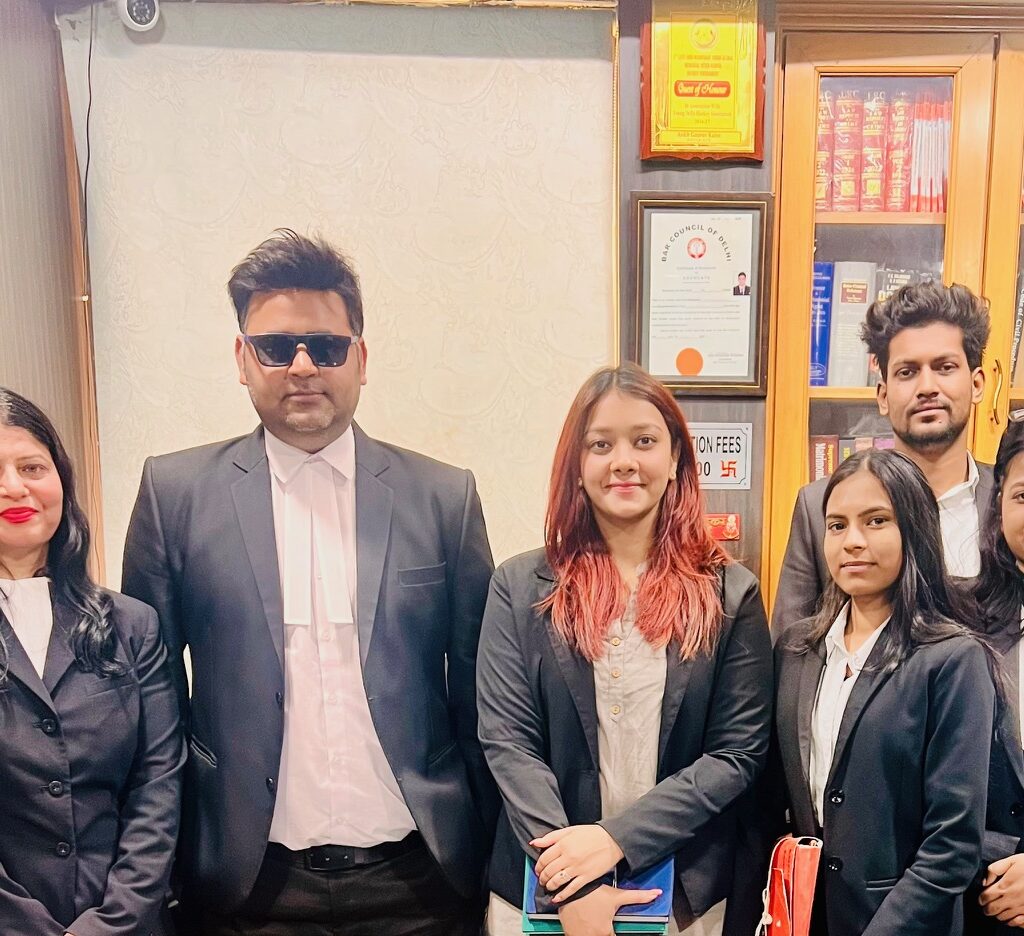
When facing a criminal case, it is essential to have experienced legal representation on your side. Ankit Gaurav Kainth & Associates is a highly respected Criminal Advocate in Dwarka Court, offering over 18+ years of practice in criminal law matters across the District Court Dwarka and Delhi High Court. Our firm is dedicated to protecting the rights of clients, providing expert legal guidance, and achieving the best possible outcomes.
Why Choose a Criminal Advocate? 🏛️
Criminal cases can have long-lasting effects on your reputation, finances, and freedom. Whether you are accused of a crime or are seeking legal remedies as a complainant, expert advocacy is vital. A criminal lawyer ensures:
Proper evaluation of your case
Guidance through complex legal procedures
Strategic planning and effective representation in court
Support in investigations, bail, trial, and appeals
With our firm, clients are assured confidential, professional, and result-oriented service.
Cheque Bounce Cases (Section 138, NI Act) 💳 Effective legal remedies for both complainants and accused, including recovery, compounding, and trial representation.
FIR Cases and Police Complaints 🚨 Guidance from the initial investigation stage to filing petitions and counter-arguments.
Our vast experience ensures that every case is analyzed, planned, and executed with precision, minimizing risk and maximizing results.
Criminal Advocate in Dwarka court
How We Assist Our Clients 👥
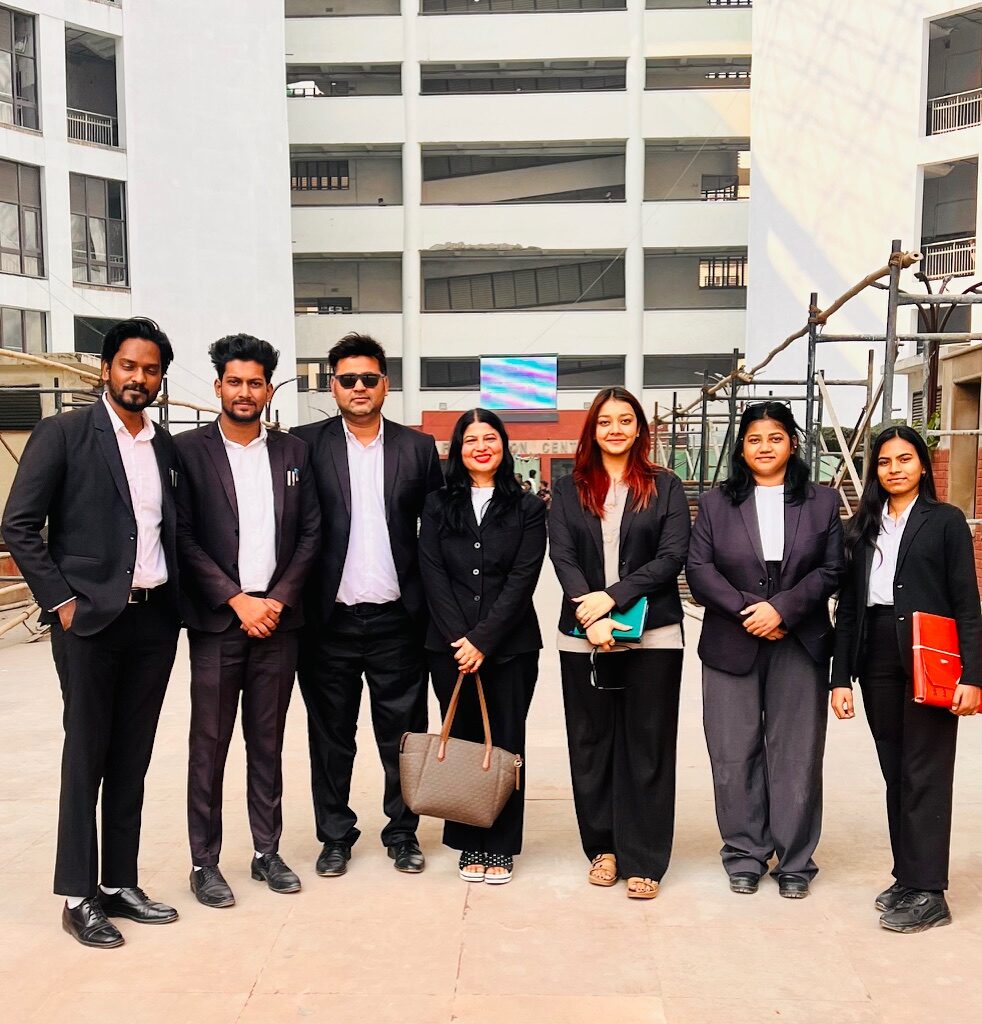
With a strong team of 35+ advocates and trained staff, we provide comprehensive criminal law services:
Detailed case evaluation and legal opinion
Drafting complaints, replies, and applications
Representation during bail hearings, trials, and appeals
Regular case updates and client communication
Guidance on strategic legal options and risk assessment
Our firm treats every client with respect, confidentiality, and personal attention. We believe in transparent legal communication, ensuring clients are informed and confident throughout the legal process.
Our Offices in Dwarka Court 🏢
For client convenience, our firm operates from two strategic locations:
Chamber No. 728, District Court Dwarka, New Delhi Easily accessible for attending court hearings and consultations.
Office Address: Plot No. 14, Pocket-9, Sector-23B, Dwarka, New Delhi A professional office for detailed case discussions, documentation, and client meetings.
These locations ensure clients receive timely legal assistance and have easy access to our team.
Why Clients Trust Us ⭐
18+ years of criminal law experience
Regular practice in Dwarka Court and Delhi High Court
We combine knowledge, experience, and dedication to deliver high-quality legal services. Our team stays updated with latest legal amendments and case law, ensuring accurate and reliable representation for our clients.
Contact Us for Expert Criminal Legal Advice 📞9899085554, 9811885554
Facing a criminal case can be stressful, but with the right advocate, you can protect your rights, reputation, and future. Ankit Gaurav Kainth & Associates is committed to delivering effective legal solutions with professionalism, ethics, and strategic expertise.
For consultations or representation:
Chamber No. 728, 7th Floor, District Court Dwarka, Sector-10, New Delhi
Office: Plot No. 14, Pocket-9, Sector-23B, Dwarka, New Delhi
Service of summons is the foundation of every judicial proceeding. No civil or criminal case can effectively proceed unless the opposite party is duly served and given a fair opportunity to appear before the court. The entire object of service is to ensure knowledge of the case, not to defeat justice by technical objections. Over time, Indian courts have evolved from rigid traditional methods to modern, technology-driven modes of service, ensuring speed, transparency, and accountability.
This article explains the legally recognized modes of service of summons, commonly used in district courts, including Dwarka Courts, in a practical and easy-to-understand manner.
📱 Service of Summons through WhatsApp to the Party
With the growing misuse of avoidance tactics by defendants, courts have acknowledged WhatsApp service as a valid and effective mode of service.
When summons are sent to the mobile number of the concerned party, and the message shows double tick (✓✓), service is treated as complete. It is important to note that blue tick is not mandatory. The purpose of law is not to insist on proof of reading, but proof of delivery.
Screenshots showing: ✔ Mobile number ✔ Date and time of delivery ✔ Double tick confirmation
are placed on court record. This method is now widely accepted as it prevents deliberate evasion and ensures speedy progress of the case.
👨⚖️ Service of Summons through WhatsApp to Counsel
Courts also recognize service through WhatsApp to the Advocate of the opposite party, especially when the counsel has already appeared or is known to represent the party.
Service to counsel is considered valid intimation because an advocate is duty-bound to inform his client about court proceedings. This mode reduces unnecessary adjournments, saves court time, and promotes professional accountability.
📄 Dasti Service of Summons
Dasti service refers to personal service of summons directly handed over to the opposite party by the serving party, with prior permission of the court.
This mode is commonly used in urgent matters such as: ✔ Interim relief applications ✔ Injunction matters ✔ Maintenance and domestic violence cases
Once served, the serving party files an affidavit or report confirming delivery. Dasti service is fast, reliable, and minimizes procedural delay.
🏠 Service of Summons by Affixation
When the opposite party deliberately avoids service or remains unavailable despite repeated attempts, courts may order service by affixation.
Under this mode: ✔ Summons are affixed at the last known residential or business address ✔ Affixation is done at a conspicuous place ✔ The process server files a detailed report
Affixation is treated as valid service once the court is satisfied that avoidance was intentional.
⚖️ Importance of Proper Service of Summons
Improper or defective service can delay proceedings and may even render subsequent orders vulnerable to challenge. Hence, courts focus on effective service rather than mere formality. The trend clearly shows that substance prevails over technical objections.
A party cannot take advantage of its own wrong by deliberately avoiding service.
⚖️ Conclusion
Modern courts have adapted to practical realities by recognizing electronic service, including WhatsApp, alongside traditional methods like Dasti service and affixation. These modes ensure that justice is not stalled by procedural abuse.
For litigants, understanding the correct mode of service is crucial. For advocates, selecting the most effective mode saves time, cost, and unnecessary litigation.
📌 Consult an experienced advocate to determine the most suitable mode of service based on the facts of your case and court practice.
Contact me for Consultation :- 9899085554, 9811885554
A Step-by-Step Practical Guide by an 18+ Years Experienced Advocate in Dwarka Court
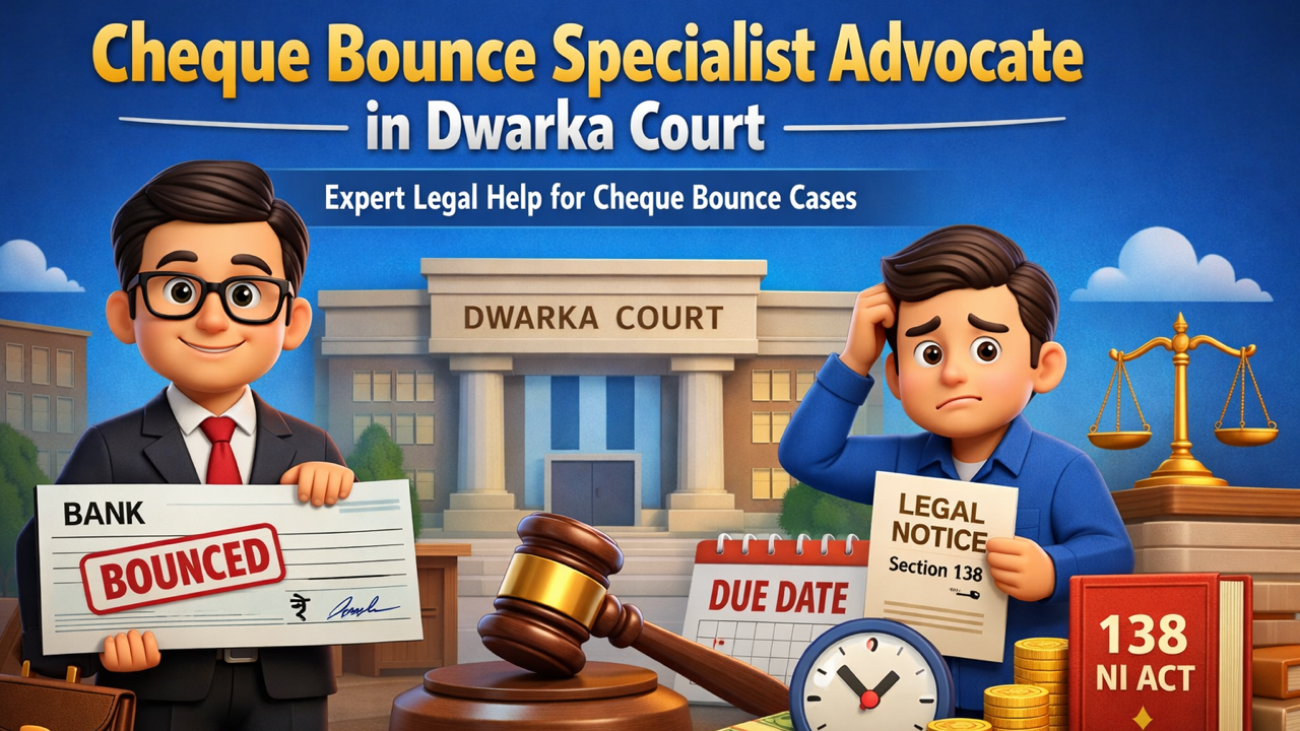
Cheque bounce cases are among the most common financial disputes filed in Indian courts today. Despite being a criminal offence under law, many people—both complainants and accused—do not fully understand the procedure, timelines, and stages involved in a cheque bounce case.
As an advocate practicing for more than 18+ years in Dwarka Court, I have handled hundreds of cheque bounce matters, from the stage of legal notice to final conviction or settlement. This guide explains the entire process step by step, in simple language.
⚖️ What Is a Cheque Bounce Case?
A cheque bounce occurs when a cheque issued by a person is returned unpaid by the bank due to reasons like:
Insufficient funds
Account closed
Payment stopped
Signature mismatch
Such cases are governed by Section 138 of the Negotiable Instruments Act, 1881.
🧾 Essential Ingredients of a Valid Cheque Bounce Case
Before filing a case, the following conditions must be satisfied:
✔ The cheque must be issued for a legally enforceable debt
✔ Cheque should be presented within its validity period
✔ It must be returned unpaid by the bank
✔ Legal notice must be sent within the prescribed time
Failure in any of these may weaken the case.
📌 Stage 1: Issuance of Cheque
The process begins when the accused issues a cheque towards repayment of a loan, liability, or business transaction.
This cheque acts as a written promise to pay.
🏦 Stage 2: Presentation & Dishonour of Cheque
The cheque is deposited in the bank and returned unpaid with a Cheque Return Memo, mentioning reasons such as:
After dishonour, the complainant must send a legal demand notice within 30 days of receiving the return memo.
The notice must:
Demand payment of cheque amount
Give 15 days’ time to make payment
Clearly mention cheque details
⚠️ Improper drafting of notice can lead to dismissal of the case.
⏳ Stage 4: Waiting Period of 15 Days
Once notice is served, the accused gets 15 days to make payment.
If payment is made → case ends.
If not → cause of action arises.
🏛️ Stage 5: Filing of Complaint in Court
After expiry of 15 days, the complaint must be filed within 30 days before the Metropolitan Magistrate, Dwarka Court, having jurisdiction.
Documents required:
📑 Original cheque
📑 Bank return memo
📑 Copy of legal notice
📑 Postal receipts & tracking report
📑 Affidavit of evidence
👨⚖️ Stage 6: Pre-Summoning Evidence
The complainant files an affidavit and documents.
The Magistrate examines whether a prima facie case is made out.
If satisfied → summons are issued to the accused.
📜 Stage 7: Appearance & Notice Under Section 251 CrPC
The accused appears before the court.
Notice of accusation is framed, and plea is recorded:
Guilty
Not guilty
Most cases proceed to trial.
🔍 Stage 8: Trial & Evidence
This includes:
Cross-examination of complainant
Defence evidence (if any)
Arguments by both sides
At this stage, experience of the advocate matters most.
⚖️ Stage 9: Final Arguments & Judgment
After hearing arguments, the court may:
✔ Convict the accused (fine / compensation / imprisonment)
✔ Acquit the accused
✔ Encourage settlement / mediation
💡 Punishment Under Section 138 NI Act
Imprisonment up to 2 years
Fine up to twice the cheque amount
Compensation to complainant
🤝 Importance of an Experienced Advocate
Cheque bounce cases look simple, but technical lapses can destroy a strong case. Proper drafting, correct limitation, effective cross-examination, and strategic settlement require practical court experience, especially in Dwarka Court procedures.
👨💼 How I & My Associates Can Assist You in Dwarka Court
With 18+ years of continuous practice in Dwarka Court, I, Advocate Ankit Gaurav Kainth, along with my dedicated team, provide:
✔ Drafting & sending of legal notice
✔ Filing & contesting cheque bounce cases
✔ Strong representation for complainant & accused
✔ Settlement & mediation assistance
✔ Regular court updates & transparent advice
📍 Chamber & Office in Dwarka Court Complex
📞 Professional, ethical, and result-oriented approach- 9899085554, 9811885554.
If you are facing a cheque bounce issue or want to recover your hard-earned money through legal means, timely legal action is crucial. Proper guidance at the initial stage can save years of litigation.
📌
For consultation and representation in Cheque Bounce Cases before Dwarka Court, feel free to connect with me and my associates.
Experienced Criminal Advocate in Dwarka Court with 18+ yrs. Experienced Civil Advocate in Dwarka with 18+ yrs. Experienced Matrimonial Advocate in Dwarka
In today’s digital era, choosing a lawyer is no longer based only on word of mouth. Clients first search on Google, read reviews, check location credibility, and then decide whom to consult. As an Advocate practicing at Dwarka District Court, New Delhi, I believe in complete transparency regarding my professional presence, credibility, and client satisfaction. This article explains my Google presence, how it helps clients, and why it matters in Dwarka Court.
Why Google Presence Matters for an Advocate
Google has become the first point of contact between a client and a legal professional. When someone searches for “Advocate in Dwarka Court” or “Best lawyer in Dwarka Court Delhi”, Google listings, reviews, maps, and websites shape the first impression. A strong Google presence ensures:
Easy accessibility for genuine clients
Transparency of professional details
Authentic feedback from past clients
Protection from misleading or fake claims
My Google Visibility as an Advocate in Dwarka Court
My professional presence is visible across:
Google Maps (Chamber location inside Dwarka District Court)
Google Search Results
Legal directories such as Justdial and other business listings
My official website
Professional social platforms
This allows clients to verify my chamber address, court association, and professional standing before visiting or consulting.
Client Reviews & Reputation
Client reviews play a vital role in building trust. My Google presence reflects:
Honest feedback from clients who have consulted or engaged legal services
Appreciation for transparency in legal advice
Recognition for timely communication and case updates
Positive remarks regarding court experience and legal strategy
I do not believe in artificial reviews or paid ratings. Genuine feedback helps future clients make informed decisions and also helps me improve my services continuously.
Transparency & Ethical Practice
As an Advocate, professional ethics are paramount. My Google presence strictly adheres to:
Bar Council norms
Ethical legal advertising standards
No false promises or guaranteed results
Clear communication of legal procedures, costs, and risks
Clients can independently verify my credentials, chamber location, and practice details online without any hidden information.
How This Benefits Clients
A verified Google presence ensures:
Clients can locate my chamber easily within Dwarka Court
Confidence before consultation
Reduced chances of fraud or impersonation
Clear expectations from the very first interaction
It also helps first-time litigants who are unfamiliar with court systems to feel more secure and informed.
Continuous Improvement & Digital Responsibility
I actively update my online presence to ensure accuracy of:
Address and contact details
Office timings
Practice areas
Informative legal articles and updates
This effort reflects my commitment not only inside the courtroom but also outside it—towards responsible digital conduct.
Final Words
My Google presence is not about marketing; it is about accessibility, accountability, and trust. I encourage every client to verify legal professionals online, read genuine reviews, and make informed choices. Transparency strengthens the advocate-client relationship and upholds the dignity of the legal profession.