Disclaimer: This article is published only for educational, informational, and inspirational purposes. It does not constitute legal advice, does not create an advocate-client relationship, and should not be treated as a substitute for professional legal consultation. Every matrimonial dispute depends upon its own facts, applicable law, and judicial discretion. This article is intended to comply with the applicable standards of the Bar Council of India (BCI/BCD), and readers are advised to seek independent legal advice before taking any legal action.
The issue of Recover Dowry Articles frequently arises when a marriage breaks down. In many matrimonial disputes, jewellery, gifts, valuables, documents, and other belongings remain in the possession of the husband or his family. Naturally, this creates emotional as well as legal concerns.
However, every case depends upon its own facts. Therefore, the legal remedy may differ from one matter to another. Proper documentation, evidence, and legal strategy play a significant role while seeking to Recover Dowry Articles.
If you are facing such a situation in or around Dwarka Court, Delhi, it is advisable to understand the legal process before initiating any proceedings.
📋 What Are Dowry Articles?
The expression generally includes articles allegedly entrusted during or around marriage, such as:
Every dispute does not necessarily begin inside a courtroom.
Before litigation, professional legal assistance may include:
✅ Reviewing the complete factual background.
✅ Examining available documentary evidence.
✅ Preparing legally appropriate notices where required.
✅ Advising on available legal remedies.
✅ Exploring mediation or settlement.
✅ Assisting clients in preserving evidence.
✅ Explaining possible legal consequences of every available option.
A properly planned pre-litigation strategy may reduce unnecessary litigation and may help parties explore lawful resolution wherever possible.
⚖️ Litigation Stage Assistance
Where litigation becomes necessary, professional legal assistance generally includes:
Drafting pleadings.
Filing appropriate proceedings before the competent court.
Representation before the Court.
Assistance during evidence.
Cross-examination preparation.
Filing applications whenever legally required.
Case strategy discussions.
Regular case updates.
Every litigation requires careful preparation. Therefore, timely legal assistance often becomes valuable throughout the proceedings.
📍 Why Choose a Local Advocate in Dwarka Court?
Choosing an Advocate in Dwarka Court can offer practical advantages because local advocates are familiar with:
Court filing procedures.
Registry requirements.
Court practice and administrative processes.
Daily functioning of various courts.
Local jurisdictional requirements.
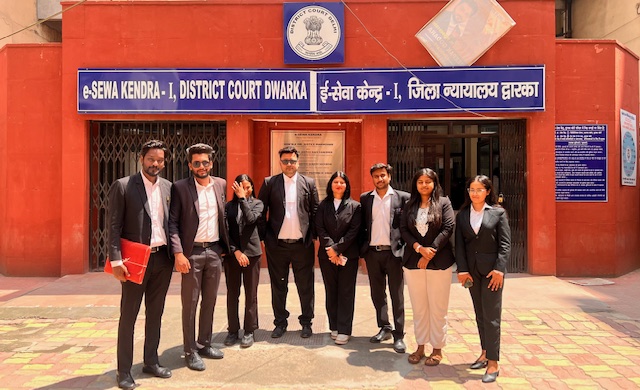
With 18+ years of experience in Dwarka Court, our office has regularly represented clients in civil, criminal, matrimonial, cheque bounce, property and commercial disputes. Our familiarity with local procedures enables prompt filing, efficient coordination and smoother case management.
We regularly assist clients from:
📍 Dwarka Sector 6, Dwarka Sector 10, Dwarka Sector 12, Dwarka Sector-23, Dwarka North, Dwarka South, Janakpuri, Vikaspuri, Uttam Nagar, Najafgarh, Dabri, Mohan Garden, Palam Village, Delhi Cantonment, Chhawla, Baba Haridas Nagar, Bindapur, Samalka, Kapashera, Jaffarpur Kalan and other areas near Dwarka Court.
1. Can I legally Recover Dowry Articles from my in-laws?
The available legal remedy depends upon the specific facts, evidence, ownership, and applicable law. Independent legal advice should always be obtained.
2. Which court generally deals with such disputes?
Jurisdiction depends upon the facts of each case, including residence, cause of action, and applicable legal provisions.
3. Is documentary evidence important?
Yes. Bills, photographs, bank records, lists of articles, and other documents may become relevant depending upon the nature of the dispute.
4. Is settlement possible?
Yes. In suitable cases, mediation or negotiated settlement may resolve disputes without prolonged litigation.
5. Should I immediately file a case?
Not necessarily. Every matter should first be evaluated by a qualified advocate to determine the most appropriate legal course.
The process to Recover Dowry Articles requires careful legal planning rather than haste. Every matrimonial dispute presents different facts, different evidence, and different legal considerations. Therefore, understanding your legal rights, preserving evidence, and obtaining timely professional guidance are important steps before initiating any legal proceedings.
Whether assistance is required during the pre-litigation stage or during ongoing litigation, a structured and transparent legal approach can help clients understand the available legal remedies and procedural requirements. Local familiarity with Dwarka Court procedures also helps in efficient case management and timely representation.
📞 Contact Us
If you wish to understand the legal process relating to Recover Dowry Articles, matrimonial disputes, criminal litigation, civil litigation, property disputes or other legal matters, you may contact our office for a professional consultation.
Consultation is subject to professional engagement and applicable terms. No result or outcome can be guaranteed as every legal matter depends upon its own facts and judicial determination.
⚖️ Introduction – Quashing of FIR in Domestic Violence
The process of Quashing of FIR in Domestic Violence matters has become one of the most important legal remedies available before the Delhi High Court. In many cases, matrimonial disputes escalate into criminal proceedings. However, after settlement, reconciliation, or discovery of legal infirmities, parties often seek Quashing of FIR in Domestic Violence cases to bring an end to prolonged litigation.
The Delhi High Court has consistently adopted a nuanced approach while dealing with petitions for Quashing of FIR in Domestic Violencematters. Every case is examined on its own facts, the nature of allegations, the settlement terms, and the larger interest of justice.
If you are facing criminal proceedings arising from matrimonial disputes in Dwarka, Janakpuri, Vikaspuri, Uttam Nagar, Najafgarh, Palam Village, Kapashera, Chhawla, Dabri, Samalka, Dwarka Sector-6, Dwarka Sector-10, Dwarka Sector-12, Dwarka Sector-23, Dwarka North, Dwarka South, Jaffarpur Kalan, Mohan Garden, Bindapur, Baba Haridas Nagar, Delhi Cantonment, or nearby Dwarka Court areas, understanding the law relating to Quashing of FIR in Domestic Violence is essential.
📖 What is Quashing of FIR in Domestic Violence?
Quashing of FIR in Domestic Violence refers to the power of the High Court under Section 528 BNSS (earlier Section 482 CrPC) to set aside criminal proceedings where continuation of the case would amount to abuse of the process of law.
The Delhi High Court may exercise this power when:
✅ Parties have entered into a genuine settlement.
✅ Matrimonial disputes have been resolved.
✅ The allegations do not disclose commission of an offence.
✅ Continuation of proceedings serves no useful purpose.
✅ The interests of justice require intervention.
Therefore, Quashing of FIR in Domestic Violence serves as a powerful remedy to prevent unnecessary criminal trials.
🏛️ Pre-Litigation Assistance: Why Early Legal Advice Matters
Many people approach lawyers only after receiving summons or notices. However, strategic intervention at the pre-litigation stage often prevents unnecessary complications.
Our office assists clients before litigation by:
✅ Legal consultations
✅ Drafting replies to notices
✅ Settlement negotiations
✅ Mediation assistance
✅ Documentation review
✅ Legal risk assessment
As experienced advocates near Dwarka Court, we help clients evaluate the possibility of Quashing of FIR in Domestic Violence even before criminal proceedings escalate.
With more than 18 years of experience in Dwarka Court, we understand:
✅ Filing procedures
✅ Court registry practices
✅ Administrative requirements
✅ Listing processes
✅ Local court functioning
Because we regularly appear before courts in South West Delhi, we can act quickly and efficiently for our clients.
This local advantage benefits clients from Janakpuri, Vikaspuri, Uttam Nagar, Najafgarh, Palam Village, Kapashera, Chhawla, Dabri, Samalka, Mohan Garden, Bindapur, Baba Haridas Nagar and surrounding areas.
The remedy of Quashing of FIR in Domestic Violence continues to play a vital role in resolving matrimonial criminal disputes. Nevertheless, success depends upon proper legal strategy, accurate documentation, genuine settlements, and effective representation before the Delhi High Court.
Since every case presents unique facts, professional legal advice becomes indispensable. Early intervention often saves significant time, cost, and emotional stress. Therefore, parties should seek experienced legal assistance before taking any major legal step.
If you require assistance regarding Quashing of FIR in Domestic Violence, criminal defence, bail matters, property disputes, commercial litigation, recovery suits, or High Court representation, contact us today.
Q1. Can an FIR in a domestic violence-related criminal case be quashed? Yes, the Delhi High Court may quash criminal proceedings if parties have settled the dispute and the interests of justice support such relief.
Q2. Which court can quash an FIR in Delhi? Generally, the Delhi High Court exercises powers to quash FIRs under its inherent jurisdiction.
Q3. Is personal appearance necessary for quashing proceedings? In many cases, parties are required to appear before the Court to confirm the settlement.
Q4. How long does a quashing petition take in Delhi High Court? Timelines vary depending upon listing, documentation, and case complexity.
Q5. Can a settled matrimonial dispute still continue as a criminal case? In appropriate cases, parties may seek quashing so that unnecessary criminal proceedings do not continue after settlement.
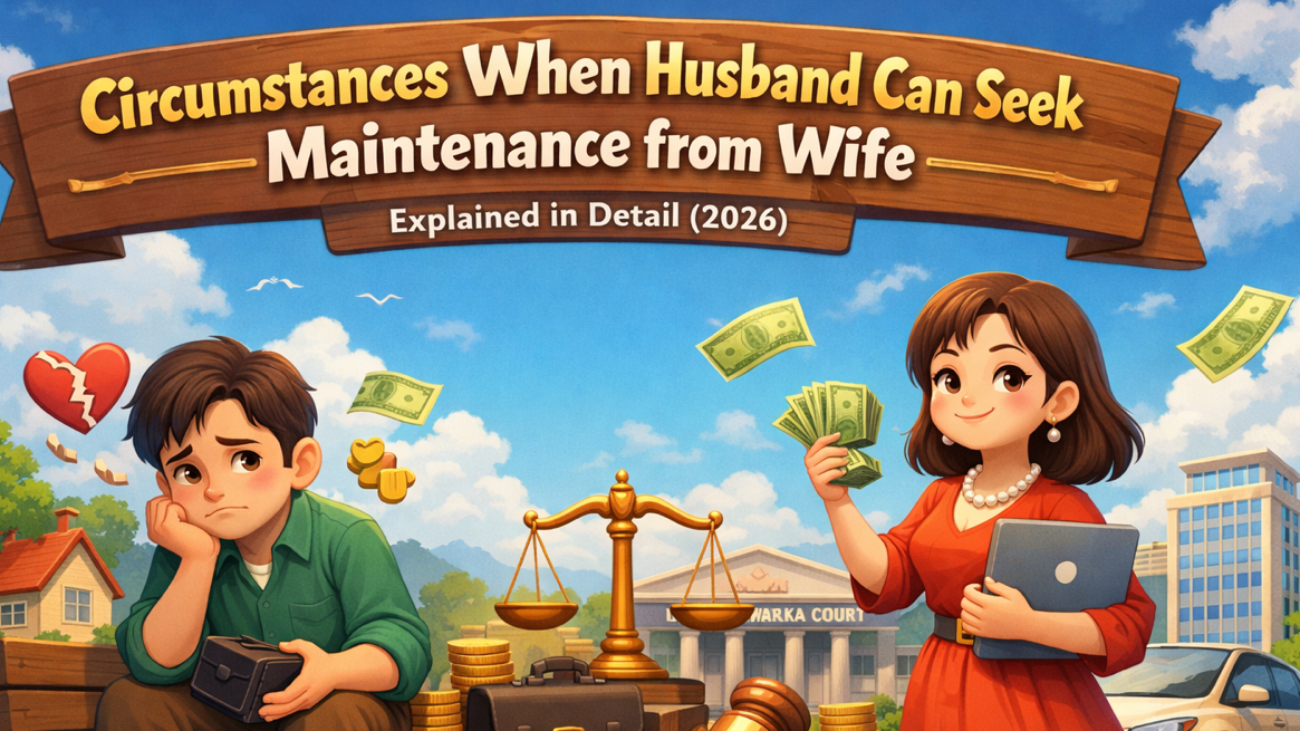
A common assumption in matrimonial disputes is that maintenance can only be claimed by a wife from her husband.
That is not completely correct.
Under the Hindu Marriage Act, 1955, a husband may, in appropriate circumstances, seek interim maintenance, litigation expenses and even permanent alimony from his wife.
However, this right is not automatic merely because the wife earns more.
The husband must establish the legal requirements of the provision under which maintenance is claimed, disclose his own financial position honestly and satisfy the Family Court that the circumstances justify monetary support.
For matrimonial proceedings falling within the jurisdiction of Dwarka Courts, Delhi, this distinction becomes particularly important because different maintenance statutes confer different rights.
This 2026 guide explains:
When a husband can claim maintenance
Section 24 Hindu Marriage Act
Section 25 Hindu Marriage Act
Whether Section 144 BNSS helps a husband
Whether the Special Marriage Act permits a husband’s maintenance claim
What financial documents the Family Court examines
How the Rajnesh v. Neha financial disclosure requirements affect the case
Circumstances in which a husband’s application may be rejected
Practical procedure before the Family Court at Dwarka
Short Answer: Can a Husband Claim Maintenance from His Wife?
Yes, under certain matrimonial laws.
For a Hindu marriage governed by the Hindu Marriage Act, 1955, both husband and wife are expressly covered by Sections 24 and 25.
Section 24 HMA
A husband who does not have independent income sufficient for his support and the necessary expenses of the matrimonial proceeding may seek:
Maintenance during the pendency of the case; and
Expenses of the matrimonial proceedings.
The provision expressly refers to “either the wife or the husband.”
Section 25 HMA
At the time of passing a matrimonial decree, or subsequently, either spouse may apply for permanent alimony and maintenance.
The Family Court considers the income, property and financial circumstances of both parties along with other relevant circumstances.
Therefore, the legal question is not simply:
“Is the wife earning?”
The better question is:
“Does the husband satisfy the requirements of the particular maintenance provision after his own income, assets, liabilities, qualifications and circumstances are examined?”
Sections 24 and 25 expressly permit an application by either spouse.
1. Section 24 Hindu Marriage Act – Interim Maintenance for Husband
Section 24 of the Hindu Marriage Act deals with maintenance pendente lite and expenses of proceedings.
In simple terms, it operates while the main matrimonial proceeding is pending.
The provision applies where it appears to the Court that either spouse has no independent income sufficient for his or her support and the necessary expenses of the proceeding.
Therefore, a husband may make an application under Section 24 where the factual circumstances support such a claim.
The Court may consider:
Husband’s actual monthly income
Wife’s income
Assets belonging to both spouses
Employment status
Educational and professional qualifications
Business interests
Investments
Rent or other recurring income
Financial liabilities
Dependants
Medical circumstances, where relevant
Reasonable monthly expenditure
Standard of living
Overall financial circumstances
Section 24 does not say that merely earning less than the wife automatically entitles a husband to maintenance.
The Court examines whether his independent income is sufficient for his support and litigation expenses.
2. What Does “No Independent Income Sufficient for His Support” Mean?
This expression is important.
A husband does not necessarily have to prove that he has absolutely no income.
The statutory question is whether the income available to him is sufficient for:
His reasonable support; and
The necessary expenses of the matrimonial litigation.
For example, suppose:
The husband is temporarily without employment;
The wife has substantial independent income;
The husband has little or no independent assets;
Matrimonial litigation is already pending; and
His financial disclosures support the claim.
The Court can examine whether relief under Section 24 is justified.
But the result may be different if the evidence shows that the husband:
Has substantial undisclosed income;
Has income-producing property;
Continues to operate a business;
Deliberately suppresses bank accounts;
Is financially supported by significant investments or assets; or
Is intentionally avoiding work despite substantial capacity and opportunity to earn.
Every application therefore depends upon evidence rather than gender alone.
3. Wife Earning More Does Not Automatically Mean Husband Gets Maintenance
This distinction should be prominently understood.
Consider:
Husband earns ₹80,000 per month. Wife earns ₹2,00,000 per month.
The fact that the wife earns substantially more does not automatically establish that the husband has no sufficient independent income.
Compare it with another situation:
Husband has no current income because of genuine circumstances. Wife earns ₹2,00,000 per month. Husband has no significant assets or recurring investment income.
The second situation raises a materially different question.
Thus, income disparity is relevant, but it is not the sole test.
The Court examines the complete financial picture.
4. Section 25 Hindu Marriage Act – Can Husband Claim Permanent Alimony?
Yes.
Section 25 of the Hindu Marriage Act permits an application by either the wife or the husband for permanent alimony and maintenance.
The application may arise at the time of passing a decree or at any time subsequent thereto, subject to the statutory framework.
While deciding the question, the Court may consider matters including:
Income of the wife
Property of the wife
Income of the husband
Property of the husband
Conduct of the parties
Other circumstances of the case
The relief may take the form contemplated by Section 25, depending upon the Court’s determination.
Permanent alimony is therefore discretionary judicial relief, not an automatic consequence of divorce.
The Supreme Court has continued to emphasise that maintenance under Sections 24 and 25 requires consideration of the relevant financial material and circumstances of the parties.
5. Can Husband Claim Maintenance Under Section 144 BNSS?
This is where the law must be clearly distinguished.
Since 1 July 2024, Section 144 of the Bharatiya Nagarik Suraksha Sanhita, 2023 is the present provision corresponding broadly to the earlier Section 125 CrPC maintenance framework.
But Section 144 BNSS does not create a reciprocal claim by a husband against his wife merely because she earns more.
The provision deals with maintenance of specified categories such as:
Wife
Children
Father
Mother
Therefore, a husband seeking maintenance from his wife should not describe Section 144 BNSS as a general gender-neutral spousal maintenance provision.
The appropriate remedy depends upon the personal matrimonial law governing the parties and the pending proceedings.
6. Section 125 CrPC or Section 144 BNSS?
For current proceedings, legal content should ordinarily refer to:
Section 144 BNSS — corresponding to the earlier Section 125 CrPC framework.
Section 125 CrPC remains important for understanding older proceedings, orders and precedents.
However, a husband cannot simply file a Section 144 BNSS application against his wife seeking personal maintenance on the same footing on which a wife may proceed against her husband.
This distinction is particularly important when reading older websites that broadly state that “maintenance law is gender-neutral.”
That statement is too wide.
Some matrimonial provisions are gender-neutral.
Others are not.
7. Can Husband Claim Maintenance Under the Special Marriage Act?
This also requires an important clarification.
The Special Marriage Act, 1954 should not be described as giving husbands the same maintenance entitlement as Sections 24 and 25 of the Hindu Marriage Act.
Section 36 of the Special Marriage Act addresses alimony pendente lite on an application by the wife.
Section 37 deals with permanent alimony and maintenance in favour of the wife.
Therefore, where a marriage has been solemnised or matrimonial proceedings are governed by the Special Marriage Act, the statutory provision should be examined carefully rather than assuming that the Hindu Marriage Act rules automatically apply.
8. Other Personal Laws May Have Different Rules
Maintenance rights depend partly upon the statute governing the marriage.
For example, Sections 39 and 40 of the Parsi Marriage and Divorce Act, 1936 contain provisions framed in terms of either the wife or husband in the relevant matrimonial proceedings.
Other matrimonial statutes may use different language.
Therefore, before filing any maintenance application, determine:
What law governs the marriage?
What matrimonial case is presently pending?
Which provision authorises the relief?
Which Court has jurisdiction?
Does that provision permit a husband to apply?
A maintenance application drafted under an incorrect statutory provision can create unnecessary procedural difficulties.
9. Rajnesh v. Neha – Financial Disclosure Is Extremely Important
Modern maintenance litigation is heavily document-driven.
In Rajnesh v. Neha, (2021) 2 SCC 324, the Supreme Court laid down guidelines requiring disclosure of assets and liabilities in maintenance proceedings.
The disclosure framework is intended to enable Courts to examine the actual financial position of the parties.
The Supreme Court directed that the prescribed affidavits of assets and liabilities should be filed in maintenance proceedings before Family Courts, District Courts and Magistrates’ Courts across the country.
For a husband claiming maintenance, therefore, merely stating:
“My wife earns more than me”
is unlikely to be sufficient by itself.
The applicant should be prepared to disclose his own finances comprehensively.
10. Documents a Husband Should Keep Ready
Depending upon the facts of the case, relevant financial material may include:
Income Documents
Income-tax returns
Form 16
Salary slips
Employment records
Professional receipts
Business accounts
GST documents, where relevant
Partnership or company records
Bank and Investment Documents
Bank statements
Fixed deposits
Mutual funds
Shares and securities
Demat statements
Insurance investments
Other financial instruments
Property Documents
Ownership documents
Rent agreements
Rental income records
Loan statements
Property-related liabilities
Expense Documents
Rent
Medical expenditure
Loan EMIs
Household expenditure
Dependant family expenses
Litigation expenses
Other recurring liabilities
Employment Material
Where unemployment or loss of employment is relied upon, relevant material may include:
Termination letter
Resignation records
Previous salary documents
Medical records where health affects employment
Evidence explaining the present employment position
Full and truthful disclosure is important.
11. Can an Unemployed Husband Claim Maintenance?
Potentially, yes.
But unemployment by itself does not automatically establish entitlement.
The Court may examine:
Why is the husband unemployed?
How long has he been unemployed?
What was his previous employment?
What are his qualifications?
Does he own property?
Does he have investments?
Does he earn through business or professional activity?
Has he voluntarily stopped working?
Is the financial difficulty temporary or genuine?
What is the wife’s actual financial position?
There is a significant difference between:
genuine inability to maintain oneself
and
deliberately remaining unemployed to create a maintenance claim.
The Court may examine the surrounding circumstances.
12. What If the Husband Is Highly Qualified but Not Working?
Educational qualification is relevant, but it should not be treated as a substitute for evidence about actual finances.
The Family Court may consider:
Educational qualifications
Professional experience
Previous employment
Past salary
Present employment opportunities
Medical condition
Age
Business interests
Assets
Reasons for unemployment
A highly qualified person cannot necessarily establish a maintenance claim merely by showing zero current salary.
At the same time, qualification alone does not mean the Court must pretend that actual unemployment, illness, business failure or other genuine circumstances do not exist.
The decision is fact-specific.
13. What If the Wife Is a Government Employee or Senior Corporate Executive?
Her actual income will naturally become relevant if the husband invokes a statutory provision such as Section 24 or Section 25 HMA.
Relevant documents may include:
Salary records
Income-tax returns
Employment information
Bank records
Investment information
Property details
But again, the wife earning a substantial salary is only one part of the analysis.
The husband’s own resources must also be disclosed.
14. Can a Businessman Husband Claim Maintenance?
Being described as a “businessman” does not decide the application either way.
The Family Court may examine:
Nature of business
Turnover
Profit
Income-tax returns
GST filings
Directorships
Shareholding
Partnership interests
Bank transactions
Business assets
Loans
Lifestyle
Financial commitments
A business may have substantial turnover but limited profit.
Conversely, a person may show little salary while exercising significant control over business resources.
Therefore, financial analysis cannot be reduced to a single salary figure.
15. Can a Husband Claim Litigation Expenses from Wife?
Under Section 24 HMA, the relief is not confined to monthly maintenance.
The statute also refers to necessary expenses of the matrimonial proceeding.
Therefore, where the statutory conditions are satisfied, a husband may seek litigation expenses from his wife.
This can be relevant where there is a substantial financial imbalance and the husband genuinely lacks sufficient resources to conduct the matrimonial litigation.
16. What About Maintenance for Children?
Maintenance payable for a child is legally distinct from personal maintenance claimed by a husband.
A father who has custody of a child should therefore distinguish between:
His personal claim as a spouse; and
Financial support required for the child.
The rights and obligations concerning children require a separate legal analysis based upon the applicable statutory framework and facts.
Do not mix the husband’s personal maintenance claim with the child’s financial entitlement.
17. Circumstances in Which Husband’s Maintenance Claim May Face Difficulty
An application may face serious resistance where evidence indicates that the husband:
Has sufficient independent income
Owns substantial assets
Receives rental income
Has profitable business interests
Has investments capable of supporting him
Has deliberately concealed income
Has provided incomplete financial disclosure
Has intentionally left employment without reasonable explanation
Has misstated his expenses
Has suppressed bank accounts or property
Has presented financial claims inconsistent with his apparent lifestyle
The Court decides the application on the evidence before it.
Therefore, accuracy is more important than exaggeration.
18. Wife’s Defence to Husband’s Maintenance Application
A wife opposing such an application may produce material showing:
Husband’s salary
Previous salary
Business interests
Income-tax returns
Company directorships
Ownership of property
Rental receipts
Investments
Bank transactions
Professional qualifications
Lifestyle indicators
Other financial resources
She may also challenge inaccuracies in his affidavit of assets and liabilities.
Maintenance proceedings can therefore involve detailed financial scrutiny of both parties.
19. Practical Procedure Before Family Court at Dwarka
The exact procedure depends upon the matrimonial case and applicable law, but broadly an application may involve:
Step 1 – Identify the Governing Matrimonial Law
First determine whether the proceedings arise under:
Hindu Marriage Act
Special Marriage Act
Parsi Marriage and Divorce Act
Another applicable matrimonial law
Step 2 – Identify the Correct Provision
For a Hindu husband, Sections 24 and 25 HMA may become relevant depending upon the stage and nature of proceedings.
Step 3 – Prepare Financial Disclosures
Collect complete records relating to:
Income
Bank accounts
Property
Investments
Loans
Expenses
Dependants
Employment
Step 4 – File the Application
The application should explain:
Pending matrimonial proceeding
Applicant’s present financial condition
Respondent’s known financial position
Relevant expenses
Legal basis of relief
Supporting documents
Step 5 – Reply by Opposite Party
The wife can contest the allegations and place her own financial documents on record.
Step 6 – Financial Affidavits
The Court may examine the parties’ affidavits of assets and liabilities in accordance with the applicable maintenance framework.
Step 7 – Hearing and Order
The Family Court considers the pleadings, documents, disclosures and submissions before determining whether any relief is justified.
20. How Much Maintenance Can a Husband Get?
There is no universal formula saying:
“The husband gets X% of the wife’s salary.”
Maintenance is not calculated by simply applying one fixed percentage.
The Court examines the relevant statutory factors and financial circumstances.
These can include:
Income of applicant
Income of respondent
Assets
Liabilities
Reasonable expenditure
Dependants
Standard of living
Nature of employment
Financial obligations
Circumstances of the case
Every matter therefore requires individual assessment.
21. Does Husband Automatically Get the Same Lifestyle as Wife?
Not automatically.
Maintenance law is not intended simply to equalise every difference in income between spouses.
The Court examines whether the statutory threshold for relief is satisfied and, if so, what amount would be reasonable in the circumstances.
This is why comparing only two salary figures can be misleading.
22. Is Section 24 Maintenance Permanent?
No.
Section 24 concerns maintenance and litigation expenses during the pendency of matrimonial proceedings.
Permanent alimony is separately dealt with under Section 25 HMA.
This distinction should remain clear in pleadings and client advice.
23. Can Husband Seek Maintenance After Divorce?
Where Section 25 of the Hindu Marriage Act applies, either spouse may seek permanent alimony in accordance with that provision.
The Court retains discretion after considering the statutory circumstances.
A husband’s claim therefore does not automatically end merely because the decree of divorce has been passed.
The applicability of Section 25 and subsequent modification of an order must be examined according to the facts and statutory conditions.
24. Maintenance Cases Require Financial Evidence, Not Assumptions
Maintenance litigation increasingly depends upon documentary financial evidence.
Statements such as:
“She earns a lot”
“He has no income”
“His business is running well”
“She owns several properties”
should, wherever possible, be supported by credible material.
Useful documents may include:
Salary statements
Income-tax filings
Bank statements
Property documents
Corporate records
Loan records
Investment statements
Employment information
Accurate documentation helps the Court make a more informed determination.
25. Why Correct Statutory Provision Matters
A particularly important point for clients is that all maintenance laws are not interchangeable.
For example:
Law
Can Husband Claim Personal Maintenance from Wife?
Section 24 Hindu Marriage Act
Yes, subject to statutory requirements
Section 25 Hindu Marriage Act
Yes, subject to statutory requirements
Section 144 BNSS
Not as a husband’s reciprocal spousal claim
Earlier Section 125 CrPC
Not as a husband’s reciprocal spousal claim
Sections 36–37 Special Marriage Act
Provisions are framed in favour of wife
Sections 39–40 Parsi Marriage & Divorce Act
Relevant provisions refer to either spouse
Therefore, before asking, “Can the husband claim maintenance?”, first ask:
“Under which statute?”
That is often the decisive starting point.
S. No.
Supporting Page / Blog
Main Topic
Why It Supports This Article
Suggested Anchor Text
Internal Link
1
How a Wife Can Get Maintenance from Husband in Dwarka Court
Maintenance proceedings, income and financial disclosure
Provides the corresponding guide explaining maintenance claims from the wife’s perspective and helps build a complete maintenance-law content cluster.
Useful for readers considering whether maintenance and permanent alimony issues can instead be resolved through a negotiated mutual-consent settlement.
1. Can a husband claim maintenance from his wife in Dwarka Court?
Yes, where the applicable matrimonial statute permits it. Under Sections 24 and 25 of the Hindu Marriage Act, either spouse may seek the specified maintenance or alimony subject to the statutory requirements.
2. Can a husband claim maintenance merely because his wife earns more?
No. Higher income of the wife is relevant, but it does not by itself create an automatic entitlement. The husband’s own income, assets, expenses and financial circumstances are also examined.
3. Can an unemployed husband get maintenance?
Possibly, depending upon why he is unemployed, his financial resources, earning circumstances, qualifications, assets and the wife’s financial position.
4. Can a husband claim maintenance under Section 144 BNSS?
Section 144 BNSS does not provide a general reciprocal maintenance remedy enabling a husband to claim personal spousal maintenance from his wife.
5. Can a husband claim maintenance under Section 24 HMA?
Yes. Section 24 expressly applies to either the wife or the husband who lacks sufficient independent income for support and necessary litigation expenses.
6. Can a husband claim permanent alimony?
Section 25 HMA permits an application by either wife or husband, subject to judicial determination of the relevant circumstances.
7. Can a husband claim litigation expenses?
Yes, Section 24 HMA also deals with expenses of matrimonial proceedings where its statutory requirements are satisfied.
8. Does the husband have to disclose his bank accounts?
Financial disclosure is an important feature of maintenance proceedings. The Supreme Court’s directions in Rajnesh v. Neha provide for affidavits disclosing assets and liabilities in maintenance matters.
9. Can a working husband still seek Section 24 maintenance?
The fact that he earns something does not automatically bar an application. The statutory test concerns whether his independent income is sufficient for his support and necessary proceeding expenses. However, actual income and resources will be closely examined.
10. Is maintenance automatically 25% of the wife’s salary?
No. There is no universal fixed percentage applicable to every matrimonial maintenance case.
Conclusion – Husband’s Maintenance Claim Depends on the Applicable Law and Financial Evidence
A husband can claim maintenance from his wife in India under certain matrimonial statutes, but the proposition should never be stated as though every maintenance law is gender-neutral.
For Hindu matrimonial proceedings, Sections 24 and 25 of the Hindu Marriage Act expressly recognise applications by either spouse.
At the same time:
Section 144 BNSS should not be treated as a husband’s reciprocal maintenance remedy.
The Special Marriage Act should not be incorrectly described as granting the husband the same statutory right under Sections 36 and 37.
Financial disclosure remains central.
The wife’s higher income alone does not guarantee an order.
The husband’s income, property, earning circumstances and expenses must also be examined.
For proceedings before Dwarka Courts, Delhi, the correct approach is therefore:
First identify the matrimonial law → identify the correct maintenance provision → examine jurisdiction → prepare complete financial disclosures → then decide whether a maintenance application is legally sustainable.
Learn how a wife can claim maintenance in Dwarka Court under Section 144 BNSS, DV Act and HMA, including income affidavits, interim relief and evidence.
When spouses separate, one of the first practical questions may be:
Can the wife claim monthly maintenance from the husband, and how is the amount decided?
The answer depends upon much more than simply whether the parties are living separately.
A maintenance court may examine:
the income and financial resources of both spouses;
whether the wife has sufficient independent income;
reasonable monthly needs;
standard of living during marriage;
responsibility for minor children;
rent and accommodation expenses;
medical and educational expenses;
liabilities and dependants;
reasons for living separately;
previous maintenance orders; and
the financial disclosures made by both sides.
For cases instituted under the present criminal procedural law, the principal provision is now Section 144 of the Bharatiya Nagarik Suraksha Sanhita, 2023 (BNSS).
This substantially corresponds to what was previously known as Section 125 CrPC.
Therefore, people searching for “Section 125 maintenance”, “wife maintenance from husband” or “maintenance case in Dwarka Court” should understand the transition from the old CrPC framework to the present BNSS provisions.
Section 144 BNSS – The Present Maintenance Provision
Section 144 BNSS provides a summary remedy where a person having sufficient means neglects or refuses to maintain specified dependants, including a wife who is unable to maintain herself.
The provision also permits the Court to grant:
monthly maintenance;
interim maintenance; and
expenses of the proceedings.
For the purposes of this chapter, the term “wife” also includes a woman who has been divorced by or has obtained a divorce from her husband and has not remarried.
This is important because a maintenance claim does not necessarily end merely because a divorce decree has been passed.
The precise effect of divorce, settlement, permanent alimony, remarriage and other orders must, however, be examined in each individual case.
Section 144 BNSS vs Former Section 125 CrPC
Earlier Provision
Current Provision
Section 125 CrPC
Section 144 BNSS
Section 126 CrPC
Section 145 BNSS
Section 127 CrPC
Section 146 BNSS
Section 128 CrPC
Section 147 BNSS
Older judgments concerning Section 125 CrPC continue to be important for understanding maintenance principles, but current petitions should be drafted by reference to the applicable BNSS provisions where the new law governs the proceedings.
Where Can a Wife File a Maintenance Case?
Territorial jurisdiction should be checked before filing.
Under Section 145 BNSS, maintenance proceedings may be instituted in a district including where:
the respondent is;
the husband and wife reside;
the wife resides; or
the parties last resided together.
Accordingly, a wife residing within the territorial jurisdiction of South-West Delhi may, depending upon the facts and applicable court allocation, be able to institute maintenance proceedings before the competent Family Court at the Dwarka Courts Complex, New Delhi.
Jurisdiction should never be assumed merely because one spouse has some connection with Dwarka.
The residence, previous matrimonial home, existing proceedings and applicable statutory provision should all be checked.
Can Maintenance Be Claimed Under More Than One Law?
Yes, different matrimonial statutes provide different maintenance remedies.
Depending upon the facts, a wife may have remedies under:
Section 144 BNSS
This is the present general summary maintenance provision corresponding to former Section 125 CrPC.
Section 20 of the Protection of Women from Domestic Violence Act, 2005
Where the requirements of the Domestic Violence Act are satisfied, monetary relief may include maintenance for the aggrieved woman and her children.
The DV Act also provides other remedies that are different from a simple maintenance claim, including protection, residence, custody and compensation orders.
Section 24 Hindu Marriage Act, 1955
During a pending matrimonial proceeding under the Hindu Marriage Act, either spouse who does not have independent income sufficient for support and litigation expenses may seek maintenance pendente lite and litigation expenses.
Section 25 Hindu Marriage Act, 1955
Permanent alimony or maintenance may be considered at the time of a matrimonial decree or subsequently, subject to the requirements of the provision.
Other personal or matrimonial laws may also become relevant depending upon the parties and nature of the marriage.
The correct provision should therefore be selected after examining the existing litigation and relief actually required.
Can a Wife File Maintenance Cases Under Different Statutes?
Multiple statutory remedies may exist, but maintenance litigation is not intended to result in double recovery.
The Supreme Court in Rajnesh v. Neha laid down important guidelines for situations where maintenance proceedings are pending under more than one enactment.
A party claiming maintenance should disclose earlier maintenance proceedings and orders.
The subsequent court can then consider and adjust the amount already awarded under another law.
Therefore, hiding an existing maintenance order is not a sound litigation strategy.
Full disclosure helps the Court determine the correct overall financial arrangement.
Rajnesh v. Neha – Why the Income Affidavit Matters
One of the most important developments in maintenance litigation is the Supreme Court judgment in:
Rajnesh v. Neha, (2021) 2 SCC 324
The Supreme Court introduced a structured disclosure mechanism for maintenance proceedings.
Both sides may be required to file an Affidavit of Disclosure of Assets and Liabilities containing detailed financial information.
The purpose is to enable the Court to decide maintenance on actual financial material rather than unsupported allegations.
A maintenance case should therefore be prepared with financial accuracy from the beginning.
What Does a Wife Normally Need to Disclose?
Depending upon the applicable affidavit and circumstances, disclosure may involve information concerning:
employment;
salary;
professional income;
business income;
bank accounts;
investments;
immovable property;
vehicles;
loans;
liabilities;
household expenditure;
children’s expenditure;
medical costs;
educational expenses;
rent;
previous employment;
income-tax records; and
other material financial resources.
A person seeking maintenance should not suppress her own income merely because the husband earns substantially more.
The Court needs a realistic picture of both sides.
What If the Wife Is Working?
A working wife is not automatically disqualified from receiving maintenance.
The relevant question is not simply:
“Does she earn anything?”
The Court may examine whether her independent income is sufficient for her reasonable support in the circumstances of the marriage.
Relevant considerations can include:
her actual net income;
husband’s income;
lifestyle during marriage;
rent or accommodation;
responsibility for children;
employment history;
qualifications;
medical circumstances;
reasonable expenses; and
financial commitments.
Likewise, being educated does not automatically mean that a woman must be treated as financially self-sufficient.
Actual income and surrounding circumstances matter.
What If the Wife Is Not Working?
Non-employment by itself does not automatically determine the amount of maintenance.
The Court may consider why the spouse is not presently earning and whether, during the marriage, she devoted time to:
household responsibilities;
raising children;
caring for dependent family members; or
other family responsibilities.
The financial position of both spouses must still be disclosed and evaluated.
Maintenance is not intended as a punishment against the earning spouse, nor should it be based upon an exaggerated claim.
Its assessment is fact-specific.
How Much Maintenance Can a Wife Get?
There is no universal fixed percentage of a husband’s income that automatically determines maintenance in every case.
The Supreme Court in Rajnesh v. Neha expressly recognised that there is no straitjacket formula.
Courts may consider factors such as:
1. Income of both spouses
Salary, business income, professional earnings, rental income and other regular financial resources may be relevant.
2. Reasonable needs
The Court may examine legitimate household, food, clothing, transport, medical, communication and accommodation expenses.
3. Standard of living during marriage
Maintenance is assessed in the context of the matrimonial standard of living, subject to the actual financial capacity and circumstances of the parties.
4. Children
Where minor children reside with one parent, expenses relating to:
school fees;
books;
uniforms;
transport;
tuition;
healthcare;
extracurricular activities; and
daily living
may require separate consideration.
5. Existing liabilities
Genuine loans, dependent parents, medical liabilities and other financial obligations may be considered.
6. Earning capacity and actual income
The Court may distinguish between actual earnings, capacity to earn and unsupported claims about the other spouse’s income.
The final amount therefore depends upon evidence—not a fixed online calculator.
Learn how a wife can claim maintenance in Dwarka Court under Section 144 BNSS, DV Act and HMA, including income affidavits, interim relief and evidence.
Can a Wife Claim Interim Maintenance?
Yes.
Section 144 BNSS expressly permits an order for interim maintenance and expenses of proceedings while the main maintenance case is pending.
The statute says that an interim maintenance application should, as far as possible, be disposed of within sixty days from service of notice.
This is an aspirational statutory timeframe and should not be represented as a guarantee that every case will be decided within sixty days.
Actual timelines depend upon:
service upon the respondent;
completion of pleadings;
filing of income affidavits;
document production;
court workload;
adjournments; and
disputed facts.
From Which Date Can Maintenance Be Awarded?
This can have substantial financial consequences.
In Rajnesh v. Neha, the Supreme Court directed that maintenance should ordinarily be awarded from the date of filing of the application.
Section 144(2) BNSS itself permits maintenance or interim maintenance to be made payable from the date of the order or, where so ordered, from the date of the application.
Therefore, delay in adjudication may affect arrears substantially.
The specific court order must always be read carefully to determine the commencement date.
Important Documents for a Wife Seeking Maintenance
A maintenance petition becomes stronger when the Court is given organised financial material rather than broad allegations.
Depending upon the case, useful documents can include:
Marriage and Family Documents
marriage certificate;
wedding documents where relevant;
children’s birth certificates;
address proof;
relevant matrimonial court orders.
Wife’s Financial Documents
salary slips;
bank statements;
income-tax returns;
Form 16;
employment documents;
rent agreement;
medical bills;
loan details.
Children’s Expenses
school fee receipts;
transport charges;
tuition receipts;
medical expenditure;
activity expenses;
childcare expenses.
Documents Relating to Husband’s Income
Where lawfully available:
salary information;
ITRs already exchanged in proceedings;
business records;
company information;
property information;
admitted bank or investment records;
professional profile;
earlier affidavits filed before a court;
other legally obtainable financial material.
A spouse should not obtain documents by unlawful access to private accounts or electronic systems.
Where relevant records are not available, the Court may be requested through appropriate legal procedure to direct disclosure or production.
What If the Husband Hides His Actual Income?
Disputes about income are common in maintenance litigation.
One spouse may allege that the other:
understates business turnover;
receives income in cash;
controls businesses indirectly;
holds substantial property;
shows artificially low salary;
conceals investments; or
does not disclose complete bank records.
An allegation alone is usually not enough.
The case should identify objective material that supports the contention.
The Court can examine financial disclosures, documents and surrounding circumstances and may pass appropriate directions for further information where legally justified.
Likewise, the applicant wife must also make complete disclosure of her own finances.
Is the Husband’s Gross Salary the Same as Disposable Income?
Not necessarily.
Salary slips may contain:
statutory deductions;
taxes;
provident fund;
loan deductions;
voluntary deductions; and
other components.
The Court may examine which deductions are genuine and legally relevant rather than simply relying upon one headline salary number.
Similarly, in business cases, turnover is not automatically the same thing as personal income.
Financial documents should therefore be analysed rather than quoted selectively.
Can Maintenance Be Claimed for Children?
Yes.
A child may have an independent entitlement to maintenance depending upon age, circumstances and applicable provision.
Expenses of children should therefore not simply be merged into a vague figure claimed for the wife.
The petition should clearly identify, where applicable:
school fees;
tuition;
healthcare;
transport;
food;
clothing;
activities; and
other reasonable requirements.
Child maintenance and spousal maintenance involve related but distinct considerations.
When Can Maintenance Under Section 144 BNSS Be Refused?
Under Section 144(4), a wife is not entitled to maintenance under that section if the statutory conditions mentioned there are established, including situations where she:
is living in adultery;
refuses to live with her husband without sufficient reason; or
the spouses are living separately by mutual consent.
These are legal issues requiring proof and judicial determination.
A husband’s mere allegation does not automatically defeat a maintenance petition.
Likewise, the wife should clearly explain the factual and legal basis upon which she is residing separately where that issue is disputed.
Does a Divorced Wife Have a Right to Apply?
Section 144 BNSS expressly includes within the meaning of “wife” a woman who has been divorced by, or obtained divorce from, her husband and has not remarried.
However, post-divorce maintenance may also be affected by:
permanent alimony orders;
settlement agreements;
full and final settlements;
applicable personal law;
remarriage;
surrender or settlement of maintenance rights;
amounts already paid; and
other judicial orders.
Accordingly, a divorced woman’s case should be evaluated from the complete settlement and litigation record.
Domestic Violence Act Maintenance
Where allegations and facts fall within the Protection of Women from Domestic Violence Act, a woman may also seek monetary relief under Section 20 of the DV Act.
Such monetary relief can include maintenance.
The DV Act can additionally provide remedies concerning:
protection;
residence;
custody;
compensation; and
interim orders.
A maintenance claim under the DV Act should not be filed merely because it appears to provide another route.
The factual requirements of the legislation must genuinely be satisfied.
Maintenance During a Divorce Case – Section 24 HMA
Where matrimonial proceedings under the Hindu Marriage Act are already pending, Section 24 HMA permits either spouse with insufficient independent income for support and litigation expenses to seek:
maintenance during proceedings; and
litigation expenses.
This remedy is connected to a pending proceeding under the Hindu Marriage Act.
It should therefore be distinguished from an independent maintenance petition under Section 144 BNSS.
Permanent Alimony – Section 25 Hindu Marriage Act
Section 25 HMA concerns permanent alimony and maintenance.
Depending upon the circumstances, the Court may consider a lump-sum or periodic payment.
Factors include the parties’ income, property, conduct and other circumstances considered relevant by the Court.
A settlement involving permanent alimony should clearly specify whether it resolves:
past maintenance;
present maintenance;
future maintenance;
child expenses;
stridhan;
litigation expenses; and
other matrimonial claims.
Ambiguous settlements may lead to further litigation.
Should a Wife File Every Possible Maintenance Proceeding?
Not necessarily.
More cases do not automatically produce better relief.
Before filing, the existing litigation should be mapped:
Is a divorce case already pending?
Is there a Domestic Violence Act case?
Has maintenance already been granted somewhere?
Is there an earlier settlement?
Are minor children’s expenses included?
Is there a pending execution case?
Which court has territorial jurisdiction?
Which provision provides the relief actually required?
The objective should be a legally coherent strategy, not multiplication of proceedings.
Common Mistakes in Maintenance Cases
Hiding the Applicant’s Own Income
Incomplete financial disclosure can damage credibility.
Making an Unrealistic Income Allegation
If the husband earns ₹1 lakh per month, alleging an income of ₹10 lakh without supporting material does not improve the petition.
Filing Without Expense Details
A maintenance claim should explain the applicant’s reasonable monthly financial requirements.
Copying Generic Matrimonial Allegations
Maintenance litigation should focus on relevant facts and finances.
Ignoring Previous Maintenance Orders
Orders passed under other statutes must be disclosed.
Treating Every Bank Credit as Income
Transfers, reimbursements and loan receipts may not represent earnings.
Assuming a Fixed Percentage
There is no automatic universal percentage applicable to every marriage.
Failing to Preserve Financial Documents
Documents available at the beginning of the dispute may become difficult to obtain later.
How a Maintenance Case Generally Proceeds in Dwarka Court
Although individual cases differ, the process may broadly involve:
Step 1 – Case Assessment
The advocate examines marriage details, separation, residence, children, existing litigation and finances.
Step 2 – Selection of the Correct Remedy
The appropriate provision may be Section 144 BNSS, Section 20 DV Act, Section 24 HMA or another applicable remedy.
Step 3 – Preparation of Petition
The petition sets out the material facts, jurisdiction, neglect or refusal where relevant, financial circumstances and relief sought.
Step 4 – Financial Disclosure
The required affidavit of assets and liabilities is prepared with supporting documents.
Step 5 – Filing and Scrutiny
The matter is filed before the competent court and processed according to court procedure.
Step 6 – Service Upon Respondent
The husband is served and given an opportunity to appear and respond.
Step 7 – Reply and Husband’s Financial Disclosure
The respondent may file objections, financial disclosures and documents.
Step 8 – Interim Maintenance Arguments
Where interim relief is sought, both sides may address the Court on immediate financial requirements and capacity.
Step 9 – Evidence Where Required
Disputed factual matters may require evidence.
Step 10 – Final Order
The Court determines the maintenance claim based upon the statute, pleadings, financial disclosures, evidence and applicable precedents.
What If Maintenance Is Not Paid After an Order?
A maintenance order does not become irrelevant merely because the person directed to pay does not voluntarily comply.
Different statutes contain enforcement mechanisms.
For Section 144 BNSS maintenance, the BNSS provides mechanisms relating to enforcement and recovery.
Depending upon the order and applicable statute, legal steps may be taken for:
recovery of arrears;
execution;
enforcement directions; and
other remedies permitted by law.
Execution should be considered promptly rather than allowing arrears to accumulate indefinitely.
Can Maintenance Be Increased or Reduced Later?
Yes, in appropriate circumstances.
Section 146 BNSS allows alteration of maintenance where there has been a change in circumstances.
Examples may include:
substantial increase or decrease in income;
loss of employment;
major medical circumstances;
change in children’s educational expenses;
remarriage where legally relevant;
change in custody;
retirement;
change in accommodation needs; or
other material financial developments.
A variation is not automatic. The changed circumstances must be placed before the competent Court.
Maintenance Litigation Is About Financial Evidence
A maintenance case should not be treated as an emotional extension of the matrimonial dispute.
The questions before the Court are substantially financial and statutory.
The most useful preparation usually involves:
accurate pleadings;
complete disclosure;
organised bank records;
realistic expense calculations;
child-expense documents;
proper identification of income sources;
disclosure of earlier orders; and
consistent factual statements.
Good preparation does not guarantee a particular maintenance amount.
It enables the Court to assess the claim on reliable material.
Strengthens your Dwarka Court local relevance and provides a broader navigation route to your practice.
Frequently Asked Questions
What is the new Section 125 CrPC?
For present BNSS proceedings, the corresponding maintenance provision is Section 144 BNSS.
Can a wife living separately claim maintenance?
Potentially yes, depending upon the facts and applicable law. Where separation is disputed, the Court may examine the reasons for living separately and the restrictions contained in Section 144(4).
Can a working wife receive maintenance?
Employment by itself is not an automatic bar. The Court examines whether her independent income is sufficient and considers the overall financial circumstances.
Can an unemployed but highly educated wife claim maintenance?
Educational qualification alone does not automatically establish actual financial independence. The Court may consider qualifications, actual income, employment history and other relevant circumstances.
Is maintenance always 25% of the husband’s salary?
No. There is no universal percentage applicable to every case.
Can a wife seek maintenance for children also?
Yes. Children may have independent maintenance claims depending upon the applicable law and facts.
Can maintenance be sought before divorce?
Yes. Maintenance does not necessarily require a prior divorce case.
Can maintenance be claimed after divorce?
Section 144 BNSS includes a divorced wife who has not remarried, subject to the statute and the effect of settlements, alimony orders and other applicable law.
Can maintenance be granted from the date of filing?
Yes. The Supreme Court’s guidelines in Rajnesh v. Neha support maintenance being awarded from the date of the application, while Section 144(2) BNSS should also be examined together with the final order.
Do both husband and wife have to disclose income?
Maintenance proceedings ordinarily involve detailed financial disclosure. The Supreme Court in Rajnesh v. Nehaprescribed affidavits of assets and liabilities for maintenance proceedings.
Can a wife simultaneously claim maintenance under the DV Act and BNSS?
Different remedies can coexist, but previous awards must be disclosed and the Court must account for overlapping maintenance so that there is no unjustified double recovery.
Can the amount later be changed?
Yes. A material change in circumstances may justify seeking modification under the applicable law.
Maintenance Matters in Dwarka Court
A maintenance dispute may involve much more than asking the Court to select a monthly amount.
It can require analysis of:
jurisdiction;
applicable statute;
interim relief;
income affidavits;
business or salary records;
children’s expenses;
overlapping matrimonial proceedings;
previous settlements;
enforcement; and
subsequent modification.
For matters falling within South-West Delhi jurisdiction, proceedings may come before the competent Family Court or other designated court at the Dwarka Courts Complex depending upon the remedy invoked.
Legal Assistance for Maintenance and Matrimonial Cases
Every maintenance matter depends upon the parties’ actual financial position, existing court proceedings and evidence. No particular amount or outcome can be guaranteed.
Important Legal References
Bharatiya Nagarik Suraksha Sanhita, 2023 — Sections 144 to 147
Protection of Women from Domestic Violence Act, 2005 — Sections 12, 20 and 23
Hindu Marriage Act, 1955 — Sections 24 and 25
Rajnesh v. Neha, (2021) 2 SCC 324
Applicable Family Courts Act provisions and Delhi court jurisdiction rules
Disclaimer: This article provides general legal information and should not be treated as legal advice for a particular matrimonial dispute. Maintenance depends upon individual facts, financial records, applicable personal law, existing orders and current judicial precedents.
(What Clients Really Want to Know – FAQs Answered) in Dwarka Court
👨⚖️ Choosing the right advocate is not about popularity. It’s about proximity, practice, and performance in Dwarka Court.
When a legal problem arises, most people instinctively search for a “big name lawyer”—someone famous, senior, or highly advertised. But when your case is filed or pending in Dwarka District Courts, New Delhi, the real question is:
❓ Do you need a famous lawyer—or a lawyer who knows Dwarka Courts inside out?
From years of practice and client interaction, one truth consistently emerges:
👉 A competent local Dwarka Court advocate often delivers better, faster, and more practical results than a distant big-name lawyer.
Let us understand why.
Advocate in Dwarka court
🔍
1. Ground Reality of Dwarka Courts Matters
Dwarka District Courts are among the largest court complexes in Asia, with multiple courts functioning simultaneously—family courts, criminal courts, civil courts, magisterial courts, MACT, NI Act courts, etc.
A local Dwarka advocate knows:
✅ Which court functions on which day
✅ How each judge prefers arguments
✅ How cause lists actually move
✅ How registry and filing sections work
✅ Court staff procedures and timelines
📌 A big-name lawyer sitting in another district or High Court often depends on juniors or briefed counsel—you become one of many files.
⏱️
2. Accessibility & Immediate Action
Legal matters often require urgent presence:
⚖️ Bail applications
⚖️ Stay matters
⚖️ Domestic violence cases
⚖️ Interim reliefs in family disputes
⚖️ Execution or urgent objections
A local Dwarka advocate can:
🕒 Appear at short notice
📄 File documents the same day
📞 Update clients in real time
🏃♂️ Handle emergencies personally
A distant “big name” lawyer may not even be available for direct communication.
💰
3. Cost vs Value – What Are You Really Paying For?
Many clients assume:
“Expensive lawyer = better result”
This is a myth.
💸 Big lawyers charge for reputation, not daily involvement
💸 Clients pay high fees for minimal personal attention
💸 Local coordination is often outsourced
A local Dwarka advocate offers:
✔ Transparent fees
✔ Direct handling of your matter
✔ Better value for money
✔ No unnecessary delegation
⚖️ Justice is not sold by brand names—it is earned by preparation.
🧠
4. Local Experience Beats Generic Expertise
Law is not only about sections and judgments—it is about application.
A Dwarka-based advocate understands:
📍 Police stations under Dwarka jurisdiction
📍 Local investigation practices
📍 Mediation and counselling centres
📍 Court-annexed settlement culture
📍 Practical outcomes, not just theory
📌 A big-name lawyer may know the law—but a local advocate knows how the law actually works here.
🤝
5. Client-Advocate Trust & Communication
Clients frequently complain:
❌ “My lawyer never updates me”
❌ “I can’t speak to the main advocate”
❌ “Everything is handled by juniors”
A local advocate builds:
🤝 Personal rapport
🗣 Honest legal advice
📑 Clear explanation of stages
🧭 Realistic expectations
📝 Good advocacy is not about false hope; it’s about honest guidance.
❓
Frequently Asked Questions (FAQs)
❓
Is a big-name lawyer always better?
No. Reputation does not guarantee involvement. Many cases require daily follow-ups and presence—something local advocates excel at.
❓
Can a local Dwarka advocate handle serious cases?
Absolutely. Many Dwarka advocates regularly handle complex criminal, matrimonial, civil, and commercial matters with excellent results.
❓
Will a local lawyer be taken seriously by the court?
Yes. Judges value clarity, preparation, and punctuality, not fame.
❓
Is hiring a local advocate cheaper?
Often yes—but more importantly, it is cost-effective because you pay for actual work, not just a name.
❓
Can a local advocate argue confidently against senior counsels?
Courtrooms are equal grounds. Merit of argument matters, not seniority alone.
⚖️
The Final Word
🌟 A “big name” may impress others—but a local Dwarka Court advocate protects you.
When your liberty, family, property, or reputation is at stake, you need:
✔ Presence over popularity
✔ Preparation over promotion
✔ Commitment over convenience
📌 Choose an advocate who walks the same corridors daily, understands the pulse of Dwarka Courts, and treats your case as personal—not peripheral.
Because in law, local wisdom often wins where distant fame fails.
🔹 Justice is local. Advocacy should be too.
🔍 SEO Titles (Choose Any / Rotate)
1. Why Hiring a Local Dwarka Court Advocate Matters More Than a Big Name Lawyer
2. Local Dwarka Court Advocate vs Big Name Lawyer – What Clients Must Know
3. Why a Dwarka Court Lawyer Is Better Than a Famous Advocate for Your Case
4. Choosing the Right Advocate in Dwarka Court: Local Experience vs Big Names