Cancellation of Bail if Accused Is Misusing It Guide: Complete Legal Guide by an Advocate in Dwarka Court
When a court grants bail, it does not give the accused unrestricted freedom. Bail is a conditional liberty that must be exercised responsibly. If an accused misuses this liberty by threatening witnesses, tampering with evidence, committing another offence, or violating bail conditions, the law allows the complainant or prosecution to seek Cancellation of Bail if the Accused Is Misusing It.
Therefore, understanding the legal procedure for Cancellation of Bail if the Accused Is Misusing It is essential for every victim, complainant, and interested party. This guide explains the legal grounds, procedure, practical strategy, and the importance of engaging an experienced Criminal Advocate Dwarka for effective representation.
What Does Cancellation of Bail Mean?
Cancellation of bail is the process through which a competent court withdraws the liberty earlier granted to an accused because of subsequent misconduct or violation of bail conditions.
However, courts do not cancel bail merely because someone requests it. Strong evidence must establish that Cancellation of Bail if the Accused Is Misusing It is necessary to protect justice.
⚖️ Bail is a privilege, not an absolute right.
When Can You Apply for Cancellation of Bail if the Accused Is Misusing It?
Courts generally consider cancellation when the accused:
✅ Threatens the complainant
✅ Influences or intimidates witnesses
✅ Tampers with documentary or electronic evidence
✅ Violates conditions imposed while granting bail
✅ Commits another criminal offence
✅ Absconds or attempts to evade trial
✅ Misuses liberty granted by the court
Consequently, every application for Cancellation of Bail if the Accused Is Misusing It must clearly establish one or more of these grounds.
Legal Provisions Governing Bail Cancellation
The following provisions are commonly invoked:
Legal Provision
Purpose
Section 483 BNSS
Cancellation of Regular Bail
Section 485 BNSS
Powers regarding anticipatory bail matters
Inherent powers of High Courts
Prevent abuse of the process of law
Constitutional principles
Protection of fair investigation and fair trial
Therefore, proper drafting and presentation before the appropriate court become extremely important.
Evidence Required for Cancellation of Bail if the Accused Is Misusing It
A successful application depends upon credible evidence.
Useful evidence includes:
📱 WhatsApp messages
📞 Call recordings (where legally admissible)
📷 CCTV footage
📄 Police complaints
👥 Witness statements
📍 Location records
📧 Emails
📑 Certified court documents
Moreover, the stronger the evidence, the greater the likelihood that the court may consider Cancellation of Bail if the Accused Is Misusing It.
Why Clients Choose Our Law Office Near Dwarka Court
With 18+ years of experience in Dwarka Court, we understand local court procedures, filing practices, judicial functioning, registry requirements, and litigation management.
Being a local Advocate in Dwarka Court/ Cancellation of Bail if Accused Is Misusing It Guide, us to respond quickly and efficiently.
Clients appreciate our commitment because we maintain:
The law protects both the liberty of the accused and the rights of victims. However, when an accused abuses the privilege of bail, the court has the authority to intervene. Therefore, if there is credible evidence showing threats, witness intimidation, violation of bail conditions, or interference with justice, seeking Cancellation of Bail if Accused Is Misusing It becomes an important legal remedy. Early action, proper documentation, and experienced legal representation can make a significant difference in safeguarding the fairness of the criminal justice process.
If you require assistance regarding Cancellation of Bail if the Accused Is Misusing It, criminal litigation, anticipatory bail, regular bail, property disputes, recovery suits, or commercial litigation, our office is ready to assist.
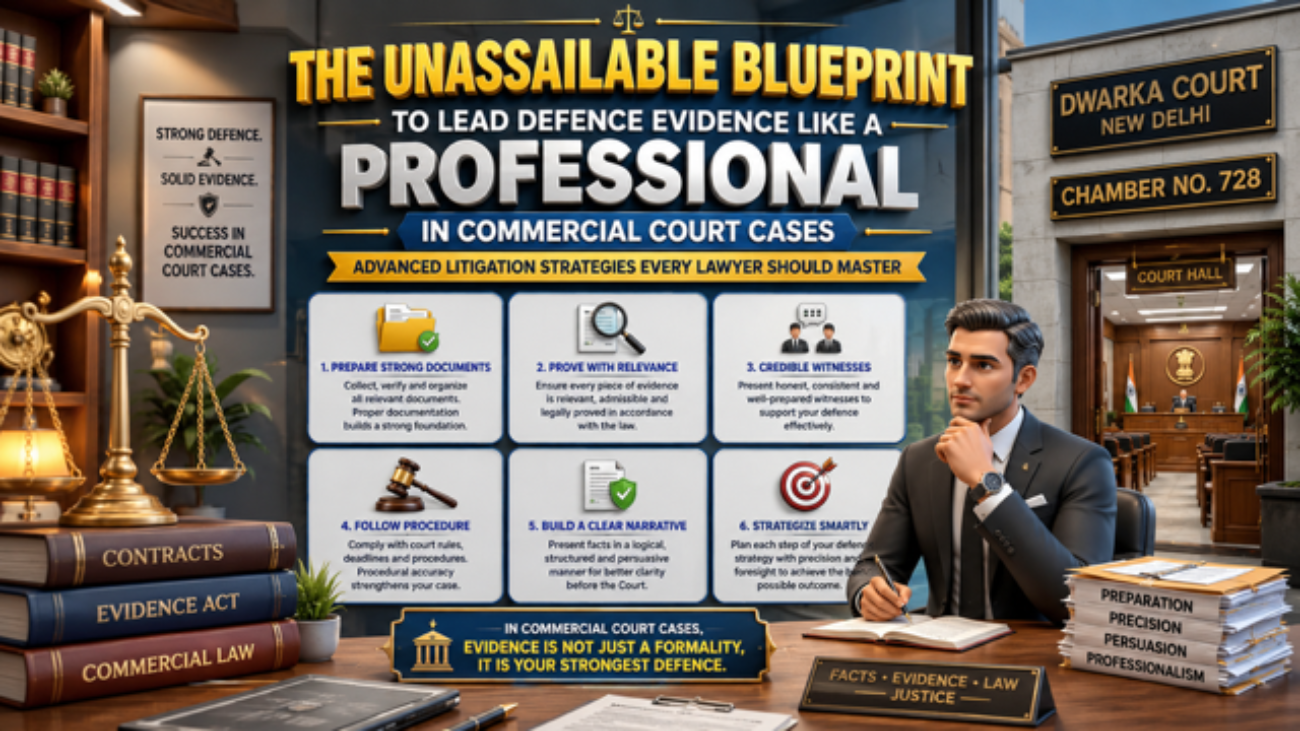
Defence Evidence in Commercial Court Cases – Dwarka Court Delhi
Introduction – Defence Evidence in Commercial Court Cases
A defendant may have a genuine defence in a business dispute, but a Commercial Court does not decide a case merely on what a party says happened.
The Court considers the pleadings, admitted facts, properly disclosed documents, legally admissible evidence, testimony of witnesses and the applicable law.
This makes Defence Evidence in Commercial Court Cases one of the most important stages of commercial litigation.
A written statement tells the Court what your defence is. Evidence is used to establish the facts on which that defence rests.
For example, a defendant may plead that the alleged outstanding amount has already been paid. That assertion becomes considerably more meaningful when it is supported by bank statements, payment acknowledgements, emails, ledger entries or other admissible material.
Similarly, where the dispute concerns defective goods, delayed supply, incomplete services, breach of contractual obligations or reconciliation of accounts, the defence may depend heavily upon contemporaneous business records.
Commercial litigation is therefore not merely about drafting a convincing reply. It requires an evidence strategy from the very beginning.
What Is a Commercial Dispute?
The Commercial Courts Act, 2015 covers specified categories of commercial disputes arising from transactions such as ordinary business dealings, agreements relating to goods and services, mercantile documents, partnership arrangements, shareholders’ agreements, intellectual-property matters and several other recognised commercial relationships.
Whether a particular matter falls within the jurisdiction of a Commercial Court depends not merely upon the parties being businesses. The nature of the transaction, the statutory definition of a commercial dispute, the specified value, territorial jurisdiction and pecuniary jurisdiction must all be examined.
The Commercial Courts Act presently defines “Specified Value” with a statutory floor of ₹3 lakh, subject to the applicable statutory and notified jurisdictional framework. Therefore, jurisdiction should be examined on the facts of the particular case rather than assumed merely from the amount involved. (Indian Kanoon).
What Does “Defence Evidence” Mean?
Defence evidence consists of the material through which a defendant seeks to establish the factual foundation of the defence taken in the written statement.
Depending upon the dispute, this may include contracts, purchase orders, invoices, credit notes, debit notes, delivery challans, e-way bills, bank statements, ledger accounts, GST records, emails, WhatsApp conversations, correspondence, photographs, audio or video material, certificates, reports and oral testimony.
But possession of a document does not automatically mean that the document will prove the case.
The important questions are:
Question
Why It Matters
Is the document relevant?
Evidence should relate to an issue actually arising in the suit.
Was it disclosed at the appropriate stage?
Commercial suits have a stricter disclosure regime.
Can its execution or origin be established?
A document may need to be proved through the appropriate person or record.
Has the opposite party admitted it?
Admitted documents may reduce the extent of formal proof required.
Is it an electronic record?
Electronic evidence may require compliance with the Bharatiya Sakshya Adhiniyam, 2023.
Does it contradict the written statement?
Evidence normally cannot be used to create an entirely different factual case from the pleadings.
Who will prove it?
The correct witness may be essential to establish a disputed document.
That is why Defence Evidence in Commercial Court Cases should ideally be planned while the written statement itself is being prepared.
Written Statement and Evidence Are Not the Same Thing
One of the most common misunderstandings in commercial litigation is:
“We have already stated everything in the written statement. Why do we need evidence?”
Because pleadings and proof perform different functions.
Suppose the plaintiff claims that ₹25 lakh remains unpaid under a supply agreement.
The defendant pleads:
“The entire amount has already been paid.”
That is the defence.
Bank transfers, receipts, reconciliation statements and correspondence acknowledging payment may constitute evidence supporting that defence.
Similarly, if the defence is that the plaintiff supplied defective goods, the relevant evidence may include inspection reports, rejection emails, photographs, replacement requests, debit notes and correspondence generated at the time of the dispute.
A carefully drafted written statement therefore needs to be supported by an equally careful documentary record.
Ordinarily, a defendant is required to file the written statement within 30 days from service of summons. The Commercial Courts framework permits the Court, for recorded reasons and ordinarily upon costs, to allow filing beyond 30 days—but not beyond 120 days from the date of service of summons. On expiry of the 120-day period, the statutory provision states that the defendant forfeits the right to file the written statement and the Court shall not take it on record. (IndiaCode by eCourtsIndia)
The Supreme Court has treated this deadline in commercial suits as mandatory. (Indian Kanoon)
This is important for evidence because the defendant’s document disclosure is closely connected with preparation of the written statement.
Waiting until the last moment to collect business records can therefore create serious procedural problems.
Order XI CPC: The Most Important Provision for Documents
For defendants, Order XI of the CPC as applicable to commercial disputes deserves particular attention.
The defendant is required to file a list and copies of documents within its power, possession, control or custody pertaining to the suit along with the written statement or counterclaim.
Importantly, this disclosure is not restricted only to favourable documents.
Order XI includes documents relevant to matters in question even where they may be adverse to the defendant’s defence. The written statement or counterclaim also carries a declaration regarding disclosure of documents. The duty to disclose continues during the suit. (IndiaCode by eCourtsIndia)
This creates an important practical rule:
Do not prepare the written statement first and start searching for evidence afterwards.
The better approach is to collect, organise and review the documents before finalising the defence.
Can a Defendant File Additional Documents Later?
Sometimes a document is discovered after the written statement has been filed.
However, a defendant should not assume that it can simply produce the document whenever the evidence stage begins.
Under Order XI, where a document was within the defendant’s power, possession, control or custody but was not disclosed with the written statement or counterclaim, later reliance generally requires leave of the Court and the defendant must establish reasonable cause for the earlier non-disclosure. (IndiaCode by eCourtsIndia)
Accordingly, saying:
“We forgot to file it.”
may not necessarily solve the problem.
Document collection should therefore begin immediately after summons or even earlier when the business first becomes aware that litigation is likely.
Create a Commercial Litigation Evidence Folder
A business facing litigation should ideally create a separate litigation record rather than relying upon scattered emails and WhatsApp messages.
The file may contain the contract, amendments, quotations, purchase orders, invoices, delivery records, bank transactions, tax documents, correspondence, legal notices, replies, internal approvals, meeting records and electronic evidence relevant to the dispute.
A chronology is also extremely useful.
For example:
15 January — Purchase order issued.
20 January — Advance payment received.
5 February — Goods supplied.
7 February — Plaintiff complained about quantity.
8 February — Defendant disputed the complaint.
12 February — Joint reconciliation meeting.
20 February — Part payment received.
10 March — Legal notice issued.
A chronology often exposes inconsistencies that cannot easily be identified when hundreds of documents are reviewed individually.
Admission and Denial of Documents Is Not a Formality
Commercial litigation also gives considerable importance to admission and denial of documents.
After disclosure and inspection, parties are required to state whether they admit or deny matters such as the correctness of contents, existence, execution, issuance or receipt, and custody of documents.
Importantly, Order XI requires reasons for denial. Bare and unsupported denials may not amount to an effective denial, subject to the statutory provisions concerning third-party documents. (IndiaCode by eCourtsIndia)
This stage should therefore not be treated as routine clerical work.
Before admitting or denying a document, the advocate and client should examine questions such as:
Was the agreement actually executed?
Was this email received?
Was the invoice generated by our company?
Is the signature admitted?
Does the document contain alterations?
Is only part of the document being relied upon?
Is the purported WhatsApp conversation complete?
Does the ledger correspond with the company’s actual books?
An incorrect admission may damage the defence. An unreasonable denial may also have procedural consequences.
Modern commercial disputes are increasingly decided through electronic records.
Important negotiations may exist only through email.
Purchase confirmations may be sent through WhatsApp.
Payments may be acknowledged electronically.
Meetings may occur through online platforms.
Invoices and accounting data may originate from enterprise software or cloud systems.
Electronic records cannot simply be treated as ordinary paper documents without examining the applicable evidentiary requirements.
The Bharatiya Sakshya Adhiniyam, 2023 recognises electronic and digital records and provides that their contents may be proved in accordance with its provisions. Sections 61 to 63 are particularly relevant to electronic records. Section 63 contains requirements concerning computer output and certification where applicable. (India Code)
Therefore, parties should preserve original devices, complete email chains, attachments, metadata wherever relevant, source files and appropriate electronic-record information instead of merely keeping cropped screenshots.
A screenshot may show what appeared on a screen. It does not automatically answer every question concerning authenticity, completeness, source and admissibility.
Never Delete Electronic Records Once a Dispute Begins
This is a simple but extremely important rule.
Once a commercial dispute is anticipated, businesses should avoid deleting relevant emails, chats, invoices, server records, accounting entries or other electronic material.
The objective should be preservation—not reconstruction.
Where possible, relevant company personnel should be informed that records relating to the dispute must not be routinely deleted.
This is particularly important where email servers, accounting software or cloud storage automatically delete or archive old data.
Accounting Records Can Be Powerful—but Must Be Explained
Many recovery suits depend upon invoices and ledger accounts.
However, simply filing a lengthy ledger may not communicate the defence effectively.
The Court may need to understand:
What amount was originally invoiced?
What payments were received?
What credit notes were issued?
Were goods returned?
Was any amount adjusted?
Was tax deducted?
Was there a running account?
What amount does the defendant actually admit, if any?
Where does the defendant dispute the plaintiff’s calculation?
A proper reconciliation statement can therefore be more useful than hundreds of pages of unexplained entries.
Where necessary, the person familiar with the accounts may also become an important witness.
Choosing the correct witness is an important part of Defence Evidence in Commercial Court Cases.
The witness should ordinarily have genuine knowledge of the relevant transaction and should be capable of explaining the documents relied upon.
For example, depending upon the dispute, the appropriate witness may be a director involved in negotiations, an authorised representative who handled the transaction, an accounts officer familiar with payments, a project manager responsible for execution, or another person with direct knowledge of the relevant facts.
Merely choosing the most senior person in the organisation does not necessarily make that person the best witness.
A witness who repeatedly answers:
“I do not know.”
“I was not handling the transaction.”
“I cannot identify this email.”
“I cannot explain this ledger.”
may weaken otherwise useful documentary evidence.
Affidavit of Evidence Should Match the Pleadings
The affidavit by way of evidence should be prepared with reference to the issues framed by the Court, the written statement and the documents disclosed.
It should not become an attempt to rewrite the defence.
A common mistake is to introduce new factual allegations during evidence that were never pleaded in the written statement.
The safer approach is to create a clear connection:
Pleading → Issue → Document → Witness → Proof
For example:
Defence: Payment already made.
Issue: Whether the defendant discharged the outstanding liability.
Evidence: Bank statement and payment acknowledgement.
Witness: Accounts representative familiar with the payment.
Cross-examination preparation: Date, amount, bank account, reference number and reconciliation.
That is an evidence strategy.
Prepare the Witness—Do Not Coach the Witness
Witness preparation is legitimate and necessary.
Coaching a witness to give an artificial version is not.
A properly prepared witness should understand the chronology, review his or her affidavit, know which documents are being relied upon, distinguish personal knowledge from information received from company records and be prepared to answer questions truthfully.
Witnesses should be specifically warned against guessing.
If a witness does not know an answer, the witness should not invent one merely because the question appears important.
A good defence evidence strategy does not begin on the day the defendant enters the witness box.
It may start during cross-examination of the plaintiff’s witnesses.
For example, the defendant may seek admissions regarding payments, delivery, correspondence, contractual obligations, defects, delays, reconciliation of accounts or other matters relevant to the defence.
Those admissions may later support the defendant’s documentary case.
Therefore, plaintiff evidence and defence evidence should not be treated as disconnected stages.
Case Management Hearing and Evidence Timelines
Commercial Courts employ a structured case-management mechanism under Order XV-A CPC.
After completion of the relevant pleading and admission/denial stages, the Court may establish a timetable dealing with issues, witnesses, affidavits of evidence, recording of evidence, written arguments and oral submissions.
The objective is to prevent commercial suits from proceeding through indefinite adjournments. (Indian Kanoon)
This means that parties should prepare their evidence much earlier than they might expect in an ordinary civil dispute.
What If the Plaintiff’s Case Has No Real Prospect of Succeeding?
Not every commercial suit necessarily requires a full trial.
Order XIII-A CPC provides a mechanism for summary judgment in appropriate commercial disputes where the statutory requirements are satisfied.
Therefore, while preparing defence evidence, the legal team should also consider whether the dispute genuinely requires a complete evidence trial or whether another procedural remedy may be available.
The answer depends entirely upon the pleadings, documents and particular facts of the case.
Counterclaim and Set-Off Must Be Considered Early
Sometimes a defendant is not merely resisting payment.
The defendant may itself have a monetary or contractual claim against the plaintiff.
For example, the plaintiff demands ₹30 lakh for supplies, while the defendant claims ₹12 lakh for defective goods, delay or contractual losses.
The possibility of a legally maintainable set-off or counterclaim should therefore be considered while preparing the written statement rather than after the case reaches the evidence stage.
Jurisdiction, limitation, court fees and the factual basis of the proposed claim must be examined separately.
Section 12A Pre-Institution Mediation Can Affect Strategy
Where a commercial plaintiff proposes to institute a suit that does not contemplate urgent interim relief, Section 12A of the Commercial Courts Act provides for pre-institution mediation. The Supreme Court in Patil Automation Pvt. Ltd. v. Rakheja Engineers Pvt. Ltd. treated the statutory requirement as mandatory in the circumstances governed by Section 12A. (Indian Kanoon)
For a prospective defendant, receipt of a pre-institution mediation notice should not be treated casually.
It may be the first indication that commercial litigation is imminent.
That is an appropriate stage to preserve documents, prepare the chronology, review contractual rights, calculate financial exposure and obtain legal advice regarding possible settlement or defence strategy.
Ten Practical Mistakes That Can Damage a Commercial Defence
The most damaging errors usually occur before the evidence stage formally begins.
These include waiting until the evidence stage to search for documents; filing a written statement without reviewing the complete business record; failing to disclose relevant documents under Order XI; relying only upon oral explanations when written records exist; giving blanket admissions or denials without analysing documents; preserving only screenshots instead of complete electronic records; producing a witness who lacks personal knowledge; allowing the affidavit of evidence to contradict the written statement; attempting to introduce important documents very late; and failing to reconcile invoices, payments, credit notes and ledger entries before the witness enters the box.
Most of these problems are preventable through early preparation.
Practical Defence Evidence Checklist
Before finalising the evidence strategy, examine the contract and amendments, purchase orders, invoices, delivery documents, payment records, bank statements, ledger accounts, GST or tax records where relevant, emails and attachments, WhatsApp or other electronic communications, legal notices and replies, internal correspondence relevant to the issues, credit/debit notes, photographs and videos, original documents, electronic-evidence requirements, witness availability, chronology of events, admission/denial statements, disputed signatures or execution, additional documents requiring leave of Court, and the precise issues the defendant actually needs to prove.
The objective is not to produce the largest possible volume of papers.
The objective is to identify the evidence that proves the defence.
Defence Evidence: Strong Preparation vs Weak Preparation
Stage
Proper Preparation
Weak Preparation
Written Statement
Defence supported by identified records
Drafted before documents are reviewed
Disclosure
Relevant documents organised and disclosed
Documents discovered piecemeal later
Electronic Records
Source and evidentiary requirements examined
Cropped screenshots only
Admission/Denial
Each important document reviewed
Blanket denial
Accounts
Reconciliation prepared
Hundreds of unexplained ledger entries
Witness Selection
Person with genuine knowledge
Senior person with no transaction knowledge
Affidavit
Consistent with pleadings and issues
New facts introduced during evidence
Cross-Examination
Based on documents and chronology
Improvised questions
Timeline
Evidence prepared before deadlines
Preparation begins immediately before hearing
Final Arguments
Evidence connected with each issue
Documents referred to without explaining relevance
Good evidence preparation is therefore not about presentation alone. It is about procedural compliance, relevance and proof.
Why Local Commercial Litigation Experience Can Be Useful in Dwarka Court
Commercial litigation combines substantive law with strict procedure.
For parties whose matters fall within the territorial and pecuniary jurisdiction of courts at Dwarka, regular familiarity with the filing system, court directions, case-management stages and day-to-day procedure can make coordination easier.
Our litigation practice is based at Dwarka Courts, Sector-10, New Delhi, and we assist individuals, proprietorship concerns, partnership firms, professionals, companies and other businesses in commercial and civil disputes.
Our work may include reviewing the dispute before litigation, preparing or responding to legal notices, examining contracts and evidence, drafting commercial pleadings, preparing written statements and counterclaims, document disclosure, admission and denial, applications arising during the suit, witness preparation, cross-examination, written submissions and final arguments.
Each matter, however, requires an independent assessment according to its own facts and applicable law.
FAQ 1 — Is filing a written statement enough to defend a Commercial Court case?
No. A written statement contains the defendant’s pleaded case. The relevant factual assertions may still have to be established through admissible documents and witness evidence, subject to admissions and applicable evidentiary rules.
FAQ 2 — When should a defendant start collecting evidence?
Ideally, immediately after becoming aware of the dispute. Once summons have been received, collection should not be delayed because both the written-statement timeline and Commercial Court disclosure requirements can become critical.
FAQ 3 — Do defendants have to disclose documents that are against their own case?
Order XI applicable to commercial disputes contains an extensive disclosure obligation covering documents relating to matters in question that are within the defendant’s power, possession, control or custody, including documents adverse to the defence, subject to the statutory exceptions. (IndiaCode by eCourtsIndia)
FAQ 4 — Can WhatsApp messages be used in a Commercial Court?
Electronic communications may become relevant evidence depending upon their contents and the issues in the suit. Their admissibility and proof must be examined under the Bharatiya Sakshya Adhiniyam, 2023, including the provisions governing electronic records. (India Code)
FAQ 5 — Can additional documents be filed during evidence?
Possibly, but it should never be assumed. Where documents within the defendant’s power, possession, control or custody were not disclosed with the written statement, leave of Court and a satisfactory explanation consistent with Order XI may be required. (IndiaCode by eCourtsIndia)
FAQ 6 — Should the company director always become the witness?
Not necessarily. The appropriate witness depends on who has knowledge of the transaction and who can properly explain the documents and facts relied upon.
FAQ 7 — What documents are commonly important in commercial recovery cases?
Depending upon the facts, agreements, purchase orders, invoices, delivery challans, bank statements, ledger accounts, credit notes, GST records, emails, acknowledgements and electronic communications may all become relevant.
FAQ 8 — What happens if the written statement is filed after 120 days?
In a commercial suit governed by the relevant Commercial Court provisions, the defendant ordinarily forfeits the right to file the written statement after expiry of 120 days from service of summons, and the statutory framework prevents the Court from taking it on record. (IndiaCode by eCourtsIndia)
FAQ 9 — Is every business dispute a Commercial Court case?
No. The transaction must fall within the statutory framework governing commercial disputes and the requirements relating to specified value and jurisdiction must also be satisfied.
FAQ 10 — Can Commercial Court cases be settled?
Yes. Depending upon the stage and circumstances, negotiation, mediation or a structured settlement may be considered. Settlement should be evaluated commercially and legally rather than treated as an admission of weakness.
Conclusion
Defence Evidence in Commercial Court Cases should never be treated as an exercise that begins only after the plaintiff closes its evidence.
A strong commercial defence is usually constructed much earlier.
The process begins by understanding the plaint, identifying the real issues, collecting the entire documentary record, preparing the written statement carefully, complying with Order XI disclosure, preserving electronic records, handling admission and denial correctly, selecting the appropriate witnesses and preparing cross-examination around the documentary record.
One principle is particularly important:
Do not ask only, “What is our defence?”
Also ask:
“How will we prove each important part of that defence?”
That question can fundamentally change the quality of Commercial Court preparation.
Professional Consultation for Commercial Court Matters in Dwarka, Delhi
If you are a defendant in a commercial recovery suit, contractual dispute or other commercial litigation, obtaining legal advice before important procedural deadlines expire may help prevent avoidable difficulties.
Consultations may involve review of pleadings, contracts, invoices, emails, accounts, electronic records and other relevant documents before a litigation strategy is advised.
Disclaimer: This article is intended for general legal awareness and informational purposes only. It is not a substitute for legal advice and does not create an advocate-client relationship. Commercial Court jurisdiction, limitation, admissibility of evidence, procedural requirements and available remedies depend upon the facts of each case and the law applicable at the relevant time. No particular result or outcome is guaranteed.
Caught in a drink-and-drive case in Dwarka Delhi? This practical guide explains Section 185 of the Motor Vehicles Act, the 30 mg alcohol limit, ₹10,000 first-offence fine, court challan procedure, driving-licence issues and what to do before appearing in Dwarka Court.
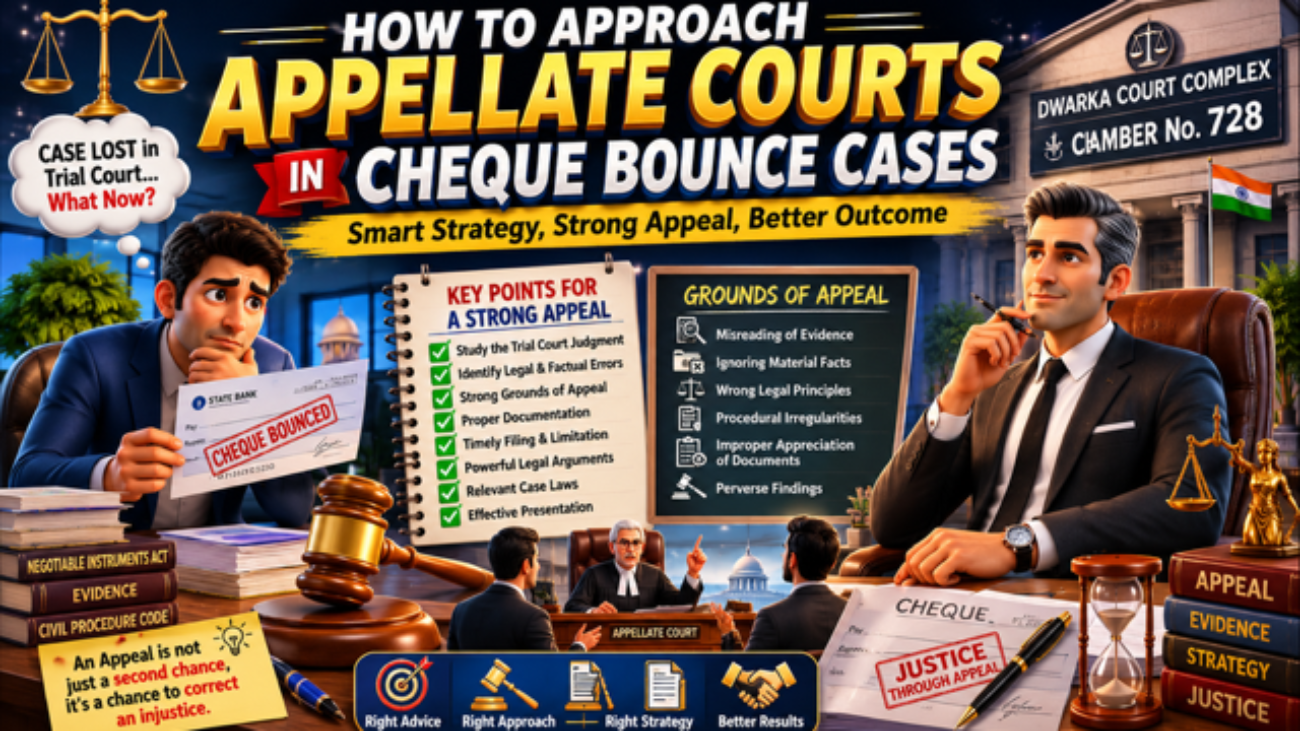
⚖️ Introduction – How to Approach Appellate Courts in Cheque Bounce Cases
Receiving an unfavourable judgment in a cheque bounce case can be frustrating. However, an adverse order does not always mean the end of your legal journey. The law provides an opportunity to challenge eligible orders before the appropriate appellate court. Therefore, understanding how to approach appellate courts in cheque bounce cases is essential.
An appeal is not simply a second chance to repeat the same arguments. Instead, it requires careful legal analysis, proper documentation, and a well-prepared strategy. Consequently, seeking timely legal advice can make the appellate process more effective and efficient.
A cheque bounce case generally arises when a cheque issued towards a legally enforceable debt or liability is dishonoured by the bank due to reasons such as insufficient funds or other legally relevant grounds. Subject to fulfilment of statutory requirements, proceedings may be initiated under the applicable provisions of the Negotiable Instruments Act, 1881.
However, every case depends upon its own facts, evidence, and compliance with legal timelines.
📑 When Can an Appeal Be Filed?
Many people believe that every unfavourable order can automatically be challenged.
That is not always correct.
The right to appeal depends upon the nature of the order and the applicable law.
Generally, appellate courts examine whether:
✅ The trial court correctly appreciated the evidence.
✅ Relevant legal provisions were properly applied.
✅ Procedural requirements were followed.
✅ Material evidence was overlooked.
✅ The judgment contains legal or factual errors warranting appellate consideration.
Therefore, understanding how to approach appellate courts in cheque bounce cases begins with evaluating whether an appeal is legally maintainable.
Where litigation becomes necessary, professional representation remains important at every stage.
We regularly assist clients in matters involving:
⚖️ Cheque Bounce Cases
⚖️ Appeals in Cheque Bounce Matters
⚖️ Criminal Litigation
⚖️ Bail Matters
⚖️ Civil Litigation
⚖️ Commercial Disputes
⚖️ Recovery Proceedings
Each case receives individual attention because every legal dispute has its own facts and legal issues.
📍 Why Choose a Local Advocate in Dwarka Court?
Experience and local knowledge often improve efficiency.
For more than 18 years, we have been assisting clients before Dwarka Court.
Being a local Advocate in Dwarka Court allows us to understand filing procedures, registry practices, documentation requirements, and day-to-day court functioning.
Consequently, clients benefit from timely filings, procedural clarity, and effective coordination throughout the litigation process.
We regularly represent clients across:
📍 Dwarka Sector 6
📍 Dwarka Sector 10
📍 Dwarka Sector 12
📍 Dwarka Sector 23
📍 Dwarka North
📍 Dwarka South
📍 Janakpuri
📍 Vikaspuri
📍 Uttam Nagar
📍 Najafgarh
📍 Palam Village
📍 Mohan Garden
📍 Dabri
📍 Bindapur
📍 Delhi Cantonment
📍 Chhawla
📍 Baba Haridas Nagar
📍 Samalka
📍 Kapashera
📍 Jaffarpur Kalan
…and other areas near Dwarka Court and across South West Delhi.
Our objective is to ensure every client understands the legal process before making important decisions.
📌 Conclusion
Understanding how to approach appellate courts in cheque bounce cases requires more than simply filing an appeal. Careful legal evaluation, proper documentation, adherence to limitation periods, and well-structured legal arguments are all essential.
Every appeal depends upon its own facts, evidence, and applicable law. Therefore, obtaining timely legal guidance helps parties understand their rights, procedural requirements, and available legal remedies.
If you are considering an appeal in a cheque bounce matter, early preparation can make the legal process more organised and effective.
Depends on court workload and the facts of the appeal
Objective
Decide the original dispute
Examine whether the impugned judgment calls for appellate interference
📋 Common Reasons Parties Prefer Filing an Appeal
Situation
Why Legal Advice Matters
Conviction in a cheque bounce case
Evaluate available statutory remedies and appellate grounds
Acquittal of the accused
Assess whether an appeal or other legal remedy is maintainable
Procedural irregularities
Review compliance with applicable law
Improper appreciation of evidence
Examine whether the record supports an appellate challenge
Legal errors in the judgment
Identify sustainable grounds under the law
Limitation concerns
Ensure timely filing or consider applications where legally permissible
Frequently Asked Questions (FAQs)
1. Can every cheque bounce judgment be challenged in appeal?
Not necessarily. The availability of an appeal depends on the nature of the order, the applicable law, and the facts of the case. A lawyer can advise you on the appropriate legal remedy.
2. What documents are generally required for filing an appeal?
Commonly required documents include the certified copy of the judgment, trial court record, pleadings, relevant documentary evidence, and any other documents necessary for preparing the appeal.
3. Is there a time limit for filing an appeal in a cheque bounce case?
Yes. Appeals are generally subject to statutory limitation periods. If there is a delay, the court may consider an application for condonation where the law permits and sufficient cause is shown.
4. Can a cheque bounce matter be settled even after litigation has started?
Depending on the facts and the applicable legal framework, parties may explore lawful settlement options at different stages of the proceedings.
5. Why should I engage a local Advocate in Dwarka Court?
A local advocate is familiar with the court’s filing procedures, registry practices, and day-to-day functioning, which can help ensure efficient handling of procedural aspects and representation.
If you require legal assistance regarding a cheque bounce case, an appeal arising from such proceedings, criminal litigation, civil disputes, recovery matters, or commercial litigation, we are available to assist with professionalism, transparency, and dedicated legal support.
⚖️ 18+ Years of Experience before Dwarka Court
📍 Local Advocate in Dwarka Court serving clients throughout South West Delhi.
📞 Call:9899085554 | 9811885554
Timely legal advice can help you understand your legal position and the procedural steps relevant to your case.
⚖️ Lost a cheque bounce case?
An appeal may be available—but success depends on proper legal grounds, documentation, and timely filing, not simply disagreeing with the judgment.#ChequeBounce#DwarkaCourt#Appeal#LegalAwareness
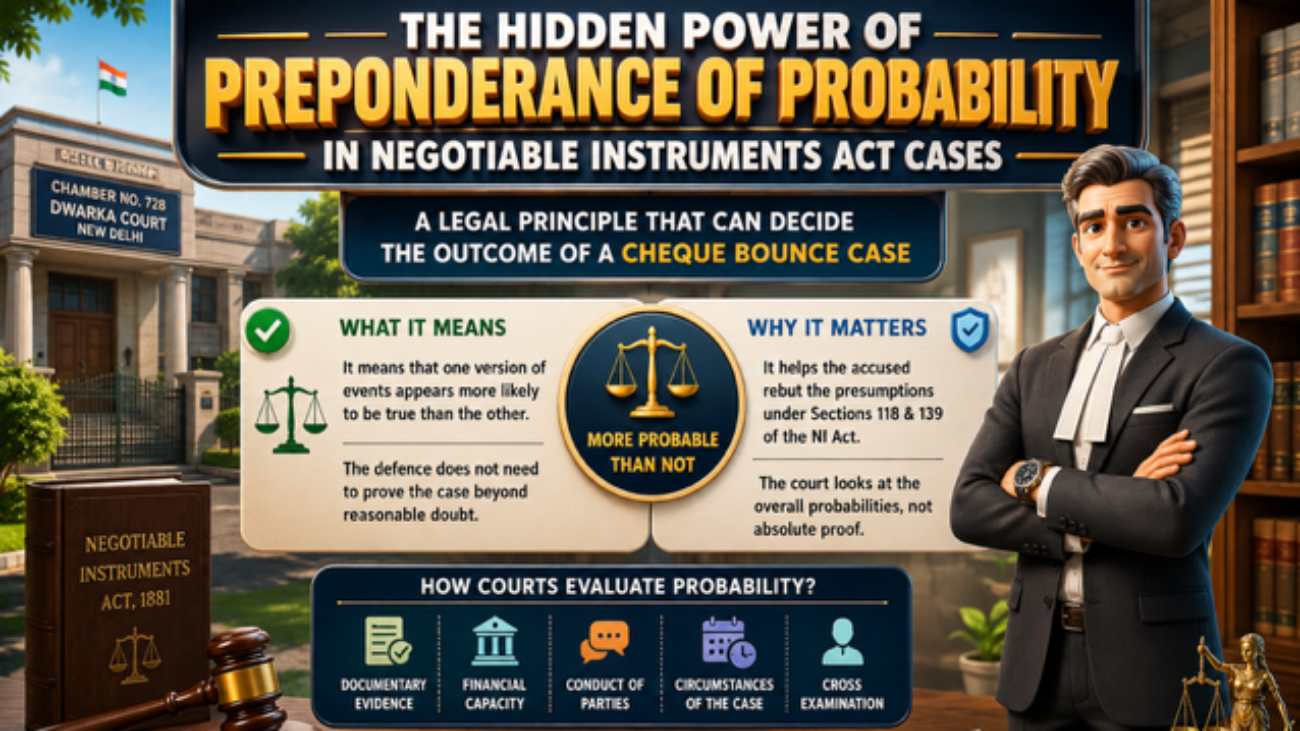
Understanding Why This Legal Principle Can Decide the Outcome of a Cheque Bounce Case – Preponderance of Probability in Negotiable Instruments Act Cases
A cheque is more than just a piece of paper. It is a promise to pay. Therefore, when a cheque is dishonoured, the law provides a remedy under the Negotiable Instruments Act, 1881. Most people believe that once a cheque is returned unpaid, the complainant automatically wins the case. However, that is not how the law works.
The Preponderance of Probability in Negotiable Instruments Act Cases is one of the most powerful legal principles available to the accused. It enables the court to determine whether the defence appears more probable than the complainant’s version, even without proving the defence beyond every reasonable doubt.
Understanding the Preponderance of Probability in Negotiable Instruments Act Cases is essential for complainants, accused persons, business owners, and legal professionals alike. Whether you are filing a complaint or defending one, this principle can significantly influence the final outcome.
At our chamber, we have been representing clients before Dwarka Court for more than 18 years. As a local Advocate in Dwarka Court, we understand the court procedures, filing requirements, judicial practices, and day-to-day functioning, enabling us to represent our clients efficiently and effectively.
The phrase “Preponderance of Probability” means that one version of events appears more likely to be true than the other. Unlike criminal trials, where guilt must be established beyond reasonable doubt, the defence in cheque bounce cases only needs to present a probable explanation that creates reasonable doubt regarding the complainant’s claim.
Accordingly, the Preponderance of Probability in Negotiable Instruments Act Cases allows the accused to rebut the statutory presumptions under Sections 118 and 139 of the Negotiable Instruments Act.
In simple words, the accused is not required to conclusively prove innocence. Instead, the accused must only convince the court that the defence is more believable than the complainant’s version.
Why is this Principle Important in Cheque Bounce Cases?
Cheque bounce litigation is unique because the law initially presumes that:
✅ The cheque was issued voluntarily.
✅ The cheque was issued towards a legally enforceable debt.
✅ The holder received the cheque lawfully.
However, these presumptions are rebuttable.
Consequently, the accused may rely upon the Preponderance of Probability in Negotiable Instruments Act Cases to demonstrate that the cheque was not issued towards a legally enforceable liability or that other surrounding circumstances create doubt.
Burden of Proof under the Negotiable Instruments Act
Initially, the complainant enjoys statutory presumptions.
However, once the accused raises a probable defence, the burden gradually shifts back to the complainant.
Therefore, courts carefully examine:
Financial transactions
Documentary evidence
Conduct of parties
Bank records
Income Tax Returns
Loan agreements
WhatsApp chats
Emails
Witness testimony
Cross-examination
Each piece of evidence helps determine whether the defence satisfies the Preponderance of Probability in Negotiable Instruments Act Cases.
Difference Between Criminal Standard and Preponderance of Probability
Particulars
Beyond Reasonable Doubt
Preponderance of Probability
Standard of Proof
Very High
Moderate
Used By
Prosecution
Defence in NI Act cases
Requirement
Near certainty
More probable than not
Objective
Prove guilt
Rebut statutory presumption
Evidence Required
Strong and convincing
Probable and believable
Benefit of Doubt
Goes to accused
Helps accused rebut presumptions
The table clearly shows why the Preponderance of Probability in Negotiable Instruments Act Cases plays such a crucial role in cheque dishonour litigation.
How Courts Assess Preponderance of Probability
Courts do not merely examine whether a cheque bears the accused’s signature. Instead, they analyse the entire transaction.
The court may consider:
📌 Source of Funds
Did the complainant possess sufficient financial capacity to advance the alleged loan?
📌 Documentary Trail
Are there written agreements, receipts, account statements or acknowledgements supporting the transaction?
📌 Conduct of Parties
Did both parties behave consistently with the alleged transaction?
📌 Delay and Circumstances
Was there an unexplained delay in presenting the cheque or initiating legal proceedings?
📌 Cross-Examination
Can contradictions be brought out during the complainant’s testimony?
These factors often determine whether the defence successfully establishes the Preponderance of Probability in Negotiable Instruments Act Cases.
Common Defences Based on Preponderance of Probability
Several successful cheque bounce defences rely upon this principle.
For example:
The cheque was issued only as a security.
No legally enforceable debt existed.
The loan amount was never advanced.
The complainant lacked financial capacity.
The cheque was lost or misused.
The amount had already been repaid.
Material alterations were made.
The transaction itself was doubtful.
Each defence is evaluated on the basis of the Preponderance of Probability in Negotiable Instruments Act Cases rather than proof beyond every reasonable doubt.
How We Assist Clients Before Litigation ⚖️
Legal disputes can often be prevented through timely legal advice. Therefore, we assist clients before litigation to minimise legal risks and strengthen their legal position.
Our pre-litigation services include:
✅ Legal consultation and case assessment.
✅ Drafting and replying to legal notices.
✅ Cheque transaction documentation.
✅ Debt recovery strategy.
✅ Settlement negotiations.
✅ Evidence preservation.
✅ Documentation review.
✅ Legal opinion before filing or defending proceedings.
Early legal guidance frequently helps clients avoid unnecessary litigation while protecting their legal rights.
Why Early Legal Advice Matters
Many parties approach a lawyer only after receiving summons from the court. Unfortunately, valuable evidence may already be lost by then.
However, obtaining legal advice at the earliest stage enables proper documentation, strategic planning and timely action.
Whether you are a complainant seeking recovery or an accused preparing a defence, understanding the Preponderance of Probability in Negotiable Instruments Act Cases from the beginning can substantially improve your legal strategy.
How We Assist Clients During Ongoing Litigation ⚖️
Once litigation begins, every hearing becomes important. A well-planned legal strategy can make a significant difference in the outcome of a case. Therefore, our approach is not limited to filing documents. Instead, we guide clients through every stage of the proceedings.
Our litigation services include:
✅ Drafting and filing complaints under the Negotiable Instruments Act.
✅ Defending accused persons in cheque bounce cases.
✅ Preparing written submissions and legal applications.
Throughout the proceedings, we continuously evaluate the Preponderance of Probability in Negotiable Instruments Act Cases to build a strong legal strategy. Every document, witness statement, bank record and admission is carefully examined to support our client’s case.
Why Choosing a Local Advocate in Dwarka Court Makes a Difference
Legal knowledge alone is not enough. Familiarity with the local court system also plays a vital role.
Having practised before Dwarka Court, Delhi for more than 18 years, we understand the court’s filing procedures, documentation requirements, listing practices and day-to-day functioning. Consequently, we are able to initiate proceedings promptly and represent our clients efficiently.
Whether it is filing a complaint, obtaining certified copies, responding to court objections or ensuring timely appearances, our local presence helps clients save valuable time.
Clients searching for an Advocate in Dwarka Court, Criminal Advocate Dwarka, Cheque Bounce Lawyer Dwarka, Cheque Disputes Advocate Dwarka Court, Regular Bail & Anticipatory Bail Lawyer Dwarka, Civil Litigation Lawyer in Delhi, Property Dispute Advocate, Recovery Suit Counsel, Commercial Litigation Lawyeror a Lawyer in South West Delhi often prefer local representation because accessibility and familiarity with the court system matter.
Our Commitment to Professional Excellence 🤝
Every client deserves honesty, professionalism and complete transparency. We have built lasting relationships by maintaining high professional standards in every matter entrusted to us.
Our commitment includes:
📞 Quick Responsiveness
We understand that legal matters often require immediate attention. Therefore, we respond to client queries promptly and keep clients informed about important developments.
💬 Dedicated WhatsApp Support
Communication should be convenient. Clients receive dedicated WhatsApp support for sharing documents, receiving updates and seeking clarification whenever required.
📄 Transparent Fee Structure
We believe legal services should never involve uncertainty regarding fees.
Accordingly, our fee structure is:
Clearly explained in advance.
Reasonable and transparent.
Free from hidden charges.
✅ Proper Lawyer–Client Fee Agreement
Every engagement is supported by a written Lawyer–Client Fee Agreement. This ensures clarity regarding the scope of work, professional responsibilities and payment terms.
🧾 Fee Receipts and Acknowledgements
Transparency builds confidence. Therefore, every professional fee received is acknowledged through proper receipts and records.
⚖️ Honest and Fair Dealings
We provide practical legal advice based on the facts and applicable law. We do not make unrealistic promises or guarantee results. Instead, we explain both the strengths and possible challenges of every case so that clients can make informed decisions.
Practical Example of Preponderance of Probability
Consider the following example.
Mr. A alleges that he advanced a friendly loan of ₹15,00,000 to Mr. B. A cheque is later dishonoured, and proceedings are initiated under the Negotiable Instruments Act.
During the trial, Mr. B produces evidence showing:
No written loan agreement existed.
Mr. A’s Income Tax Returns do not reflect such a loan.
Bank statements do not show withdrawal of the alleged amount.
WhatsApp messages contradict the complainant’s version.
Although Mr. B does not conclusively prove that the loan never existed, the defence creates sufficient doubt. Consequently, the court may conclude that the defence satisfies the Preponderance of Probability in Negotiable Instruments Act Cases, thereby rebutting the statutory presumptions.
This example demonstrates why documentary evidence and consistent legal strategy are often more valuable than mere allegations.
Before initiating or defending a cheque bounce case, always remember:
✔️ Every dishonoured cheque does not automatically result in conviction.
✔️ Documentary evidence often determines the outcome.
✔️ The Preponderance of Probability in Negotiable Instruments Act Cases provides an important legal defence.
✔️ Early legal advice can strengthen your position.
✔️ Proper documentation significantly improves the chances of presenting a convincing case before the court.
Frequently Asked Questions (FAQs)
1. What does “Preponderance of Probability” mean in a cheque bounce case?
The Preponderance of Probability in Negotiable Instruments Act Cases means that the accused only needs to establish a defence that appears more probable than the complainant’s version. Unlike the prosecution, the accused is not required to prove the defence beyond reasonable doubt.
2. Can an accused win a cheque bounce case without proving complete innocence?
Yes. Under the Negotiable Instruments Act, the accused can successfully rebut the statutory presumptions by presenting a probable defence supported by documents, circumstances, or cross-examination. Courts assess whether the defence satisfies the standard of preponderance of probability.
3. Why should I consult a lawyer before filing or defending a cheque bounce case?
Early legal advice helps preserve evidence, draft legally sound notices, evaluate documents, and prepare an effective litigation strategy. Proper preparation often strengthens the client’s position before court proceedings begin.
4. Why should I engage a local Advocate in Dwarka Court?
A local advocate is familiar with the filing procedures, documentation requirements, court practices, and day-to-day functioning of Dwarka Court. This practical experience can help ensure timely filings, efficient representation, and smoother case management.
5. Do you handle only cheque bounce matters?
No. We also represent clients in civil litigation, criminal matters, recovery suits, property disputes, commercial litigation, regular bail, anticipatory bail, and other legal proceedings before the appropriate courts.
Conclusion
The Preponderance of Probability in Negotiable Instruments Act Cases is far more than a technical legal principle. It is a practical tool that enables courts to assess the overall credibility of the parties and the surrounding circumstances. While the law presumes that a dishonoured cheque was issued for a legally enforceable debt, those presumptions are not absolute.
Therefore, careful preparation, proper documentation and strategic presentation of evidence are essential for both complainants and accused persons. Whether you are seeking to recover your money or defend yourself against an unfounded claim, timely legal guidance can make a substantial difference.
With over 18 years of experience before Dwarka Court, we remain committed to providing practical legal advice, transparent professional services and dedicated representation at every stage of the proceedings.
If you require legal assistance regarding cheque bounce matters, recovery proceedings, criminal litigation or civil disputes, we are here to assist you.
⚖️ Chamber No. 728, Dwarka Court, New Delhi
📱 Mobile: 9899085554 | 9811885554
Whether you need advice before litigation or representation during ongoing court proceedings, our team is committed to protecting your legal rights with professionalism, transparency and dedication.
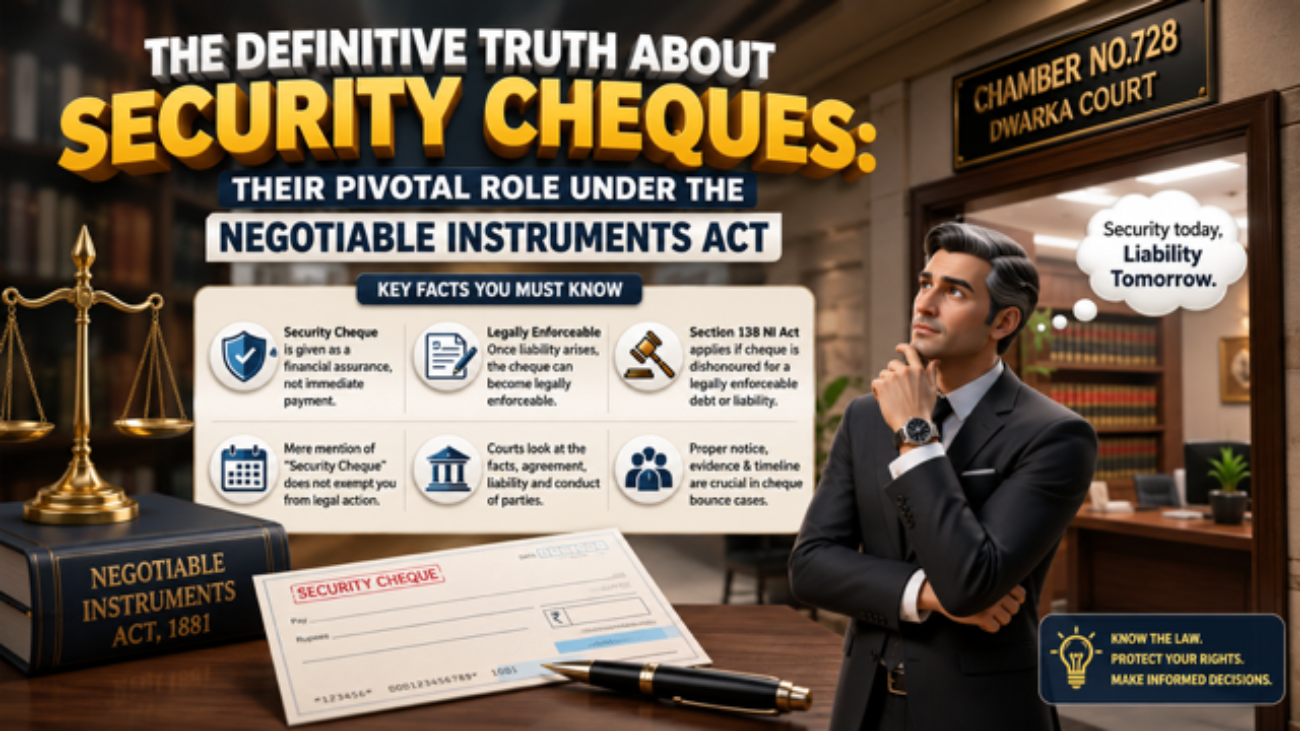
⚖️ A “Security Cheque” is not automatically exempt from legal action.
15 important mistakes accused persons should avoid, including summons, Section 139 presumptions, Section 145(2), cross-examination, defence evidence and Section 143A.
Introduction: Free Legal Advice vs Paid Consultation
Welcome to India’s Largest Law Firm – The Tea Stall
Imagine this.
You have a legal problem.
Instead of consulting an advocate, you consult your neighbor, your cousin’s friend, your gym trainer, two WhatsApp groups, three YouTube videos, and one retired uncle who proudly declares:
“Beta, mujhe sab pata hai.”
Congratulations.
You have just entered the fascinating world of Free Legal Advice vs Paid Consultation.
Ironically, many people spend ₹500 on pizza without blinking. However, when it comes to legal advice that could save lakhs of rupees, suddenly everyone becomes a financial expert.
Therefore, today’s discussion is about Free Legal Advice vs Paid Consultation and why the word “free” often becomes surprisingly expensive.
Free Legal Advice vs Paid Consultation
The Great Indian Legal Expert
In India, everyone knows law.
The shopkeeper knows law.
The property dealer knows law.
The cousin in Canada knows Indian law.
Even the person who has never entered a courtroom knows exactly how to win a case.
As a result, countless people rely on free opinions rather than professional consultation.
Unfortunately, courts do not accept “My uncle told me so” as legal authority.
Truth About Security Cheques: Do They Really Have No Legal Value?
Many people believe that a security cheque cannot lead to legal action if it is dishonoured. However, this is one of the biggest misconceptions in commercial transactions. The Truth About Security Cheques is that merely writing the words “Security Cheque” on a cheque does not automatically protect the drawer from legal liability.
Therefore, understanding the Truth About Security Cheques is essential for every business owner, borrower, landlord, supplier, employer, and individual dealing with financial transactions.
At our office near Dwarka Court, we regularly advise clients at both the pre-litigation and litigation stages involving cheque dishonour matters. With 18+ years of experience before Dwarka Courts, we have successfully guided clients through legal disputes with professionalism, transparency, and prompt action.
⚖️ What is a Security Cheque?
A security cheque is a cheque given as a form of financial assurance. It is generally handed over before the actual liability becomes due.
For example:
✅ Loan transactions
✅ Business agreements
✅ Rent or lease arrangements
✅ Supply contracts
✅ Partnership transactions
✅ Employment agreements
Initially, the cheque acts as security. However, once the agreed liability becomes payable, the security cheque may become legally enforceable.
This is the first and most important Truth About Security Cheques that every person should understand.
⚖️ Truth About Security Cheques Under the Negotiable Instruments Act
The Truth About Security Cheques is that the Negotiable Instruments Act, 1881 does not create any special exemption merely because a cheque is called a “security cheque.”
Instead, the law examines:
Whether a legally enforceable debt or liability existed.
Whether the cheque was presented according to the agreement.
Whether statutory requirements under Section 138 were fulfilled.
Accordingly, if these legal requirements are satisfied, even a security cheque may attract proceedings under Section 138 of the Negotiable Instruments Act.
📋 Simple Table to Understand Security Cheques
Situation
Can Section 138 Apply?
Explanation
Security cheque issued before liability
❌ Usually No
No existing liability at that stage.
Liability arises later and cheque is presented
✅ Yes
Cheque may become legally enforceable.
Cheque dishonoured after debt becomes due
✅ Yes
Legal action may be maintainable.
No debt or liability ever existed
❌ No
Essential ingredient of Section 138 is missing.
Liability already discharged before presentation
Depends on facts
Court examines evidence carefully.
⚖️ Important Ingredients for a Section 138 Case
The Truth About Security Cheques becomes clearer when the following conditions are fulfilled:
✅ A legally enforceable debt exists.
✅ The cheque was issued towards that liability.
✅ The cheque is presented within its validity period.
✅ The cheque is dishonoured.
✅ A legal demand notice is issued within the prescribed limitation.
✅ Payment is not made within the statutory period.
Only after these requirements are fulfilled can criminal proceedings generally arise.
The courts have repeatedly observed that merely calling a cheque a “security cheque” does not automatically defeat proceedings under Section 138.
Instead, the court examines:
Nature of transaction
Terms of agreement
Evidence produced
Timing of liability
Conduct of parties
Therefore, the Truth About Security Cheques always depends upon the complete facts and surrounding circumstances of each case.
⚖️ Common Myths vs Truth
Myth
Truth
Security cheques are never valid.
Incorrect. They may become legally enforceable.
Writing “Security” on cheque avoids liability.
Incorrect. Courts examine actual liability.
Every dishonoured security cheque leads to conviction.
Incorrect. Facts and evidence matter.
No agreement is required.
Documentary evidence always strengthens the case.
Security cheques have no legal importance.
They may carry significant legal consequences.
🛡️ How We Help Before Litigation (Pre-Litigation Stage)
Proper legal advice before filing a case often saves valuable time, money, and unnecessary litigation.
We assist clients by:
✅ Examining agreements and documents.
✅ Verifying whether a legally enforceable liability exists.
✅ Drafting and reviewing legal notices.
✅ Advising on settlement opportunities.
✅ Negotiating commercial disputes.
✅ Evaluating strengths and weaknesses of the case.
✅ Protecting clients from avoidable legal risks.
Our objective is always to resolve disputes efficiently whenever possible.
⚖️ How We Assist During Litigation
If litigation becomes unavoidable, we provide complete representation before Dwarka Court and other competent courts.
Our services include:
Filing complaints under Section 138 NI Act.
Defence in cheque dishonour matters.
Criminal complaint proceedings.
Bail applications.
Recovery suits.
Civil litigation.
Commercial disputes.
Evidence preparation.
Cross-examination.
Final arguments.
Appeals and revisions.
Whether you require a Cheque Bounce Advocate Dwarka, U/s 138 NI Act Lawyer Dwarka, Criminal Disputes Advocate Dwarka Court, Regular Bail & Anticipatory Bail Lawyer Dwarka, Recovery Suit Counsel, Commercial Litigation Lawyer, Property Dispute Advocate, Civil Litigation Lawyer in Delhi, or an Advocate in Dwarka Court, we provide practical legal guidance based on the facts of each matter.
We believe legal services should be transparent and client-focused.
Therefore, we provide:
✅ High professional standards
✅ Honest legal advice
✅ Quick responsiveness
✅ Easy availability on calls
✅ Dedicated WhatsApp support
✅ Reasonable and transparent fees
✅ Proper Lawyer–Client Fee Agreements
✅ Fee receipts and written acknowledgements
✅ Fair and ethical dealings
Our goal is to build long-term trust through professionalism and accountability.
✅ Conclusion
The Truth About Security Cheques is that there is no universal rule stating that every security cheque is legally enforceable or legally invalid. Instead, courts carefully examine whether a legally enforceable debt or liability existed when the cheque was presented.
Therefore, before initiating legal proceedings—or before assuming that a security cheque has no legal effect—it is advisable to obtain proper legal guidance. Early legal advice can help protect your rights, reduce unnecessary disputes, and improve the overall strategy of your case.
If you are facing a cheque bounce dispute, have received a legal notice, wish to file or defend a case under Section 138 of the Negotiable Instruments Act, or require assistance in civil or criminal litigation, our team is here to help.
⚖️ 18+ Years of Experience in Dwarka Court
📍 Office Near Dwarka Court, Delhi
📞 9899085554
📞 9811885554
We assist clients with professionalism, transparency, prompt communication, and practical legal solutions tailored to their specific needs.
⚖️ A “Security Cheque” is not automatically exempt from legal action.
15 important mistakes accused persons should avoid, including summons, Section 139 presumptions, Section 145(2), cross-examination, defence evidence and Section 143A.
⚖️ Introduction – Contesting a Case vs. Settlement in Dwarka Court
One of the most common questions clients ask about Contesting a Case vs. Settlement in Dwarka Court whether they should continue fighting a case in court or settle the dispute. This question arises in civil disputes, criminal matters, property disputes, recovery suits, commercial litigation, family disputes, and many other legal proceedings.
Therefore, understanding the difference between Contesting a Case vs. Settlement in Dwarka Court becomes extremely important. Every case is unique. Consequently, the right strategy depends on facts, evidence, risks, costs, timelines, and long-term objectives.
With more than 18 years of experience in Dwarka Court, our legal team has guided hundreds of clients through both litigation and settlement processes. We assist clients during the pre-litigation stage as well as throughout ongoing court proceedings to help them make informed legal decisions.
📌 Understanding Contesting a Case vs. Settlement in Dwarka Court
The debate regarding Contesting a Case vs. Settlement in Dwarka Court is not about choosing a universally better option. Instead, it is about selecting the approach that best protects your legal rights and interests.
What Does Contesting a Case Mean?
When a person contests a case, the dispute is decided by the court after considering evidence, witness testimony, legal arguments, and applicable laws.
The matter proceeds through various stages such as:
✅ Filing of pleadings
✅ Evidence
✅ Cross-examination
✅ Arguments
✅ Final judgment
As a result, the court determines the rights and liabilities of the parties.
Prepare a chronology, organise documents and list your questions before your first consultation.
What Does Settlement Mean?
Settlement means resolving the dispute through mutual agreement between the parties without waiting for a final court judgment.
Settlement can occur:
✅ Before filing a case
✅ During court proceedings
✅ During mediation
✅ At any stage of litigation
Consequently, both parties gain certainty and avoid prolonged litigation.
📊 Contesting a Case vs. Settlement in Dwarka Court – Quick Comparison
Factor
Contesting a Case
Settlement
Time
Usually longer
Generally faster
Cost
Higher litigation expenses
Often cost-effective
Outcome
Decided by Court
Decided mutually
Evidence Requirement
Extensive
Limited
Stress Level
Higher
Lower
Appeal Possibility
Available
Usually limited
Relationship Preservation
Difficult
Better possibility
Risk Factor
Uncertain judgment
Greater predictability
Therefore, while evaluating Contesting a Case vs. Settlement in Dwarka Court, parties must consider both legal and practical factors.
Legal consultation by appointment at Chamber No. 728, Dwarka District Court, Sector 10, New Delhi.
🏛️ When Contesting a Case May Be Appropriate
There are situations where contesting the matter becomes necessary.
Strong Legal Position
If evidence strongly supports your claim, pursuing litigation may be beneficial.
Property Disputes
Many property disputes require judicial determination. A skilled Property Dispute Advocate can help protect ownership rights.
Commercial Litigation
Businesses often need court intervention to enforce contracts. In such situations, a Commercial Litigation Lawyer may advise litigation.
Recovery Suits
Where the opposite party refuses repayment, a Recovery Suit Counsel may recommend contesting the case.
Therefore, in certain situations, Contesting a Case vs. Settlement in Dwarka Court may clearly favor litigation.
🤝 When Settlement May Be the Better Option
Settlement can be beneficial where:
✅ Parties want quick resolution
✅ Litigation costs are high
✅ Business relationships need preservation
✅ Family disputes require practical solutions
✅ Risks of trial are significant
Moreover, settlement allows parties to maintain greater control over outcomes.
Thus, while considering Contesting a Case vs. Settlement in Dwarka Court, settlement should never be overlooked.
⚖️ Our Role During the Pre-Litigation Stage
Many disputes can be resolved before reaching court.
Therefore, we actively assist clients during the pre-litigation stage through:
Legal Consultation
We assess legal strengths and weaknesses.
Legal Notices
We draft and send effective legal notices.
Negotiations
We negotiate with the opposite party whenever appropriate.
Risk Assessment
We evaluate whether litigation or settlement would be beneficial.
As a result, clients often save significant time, stress, and expenses.
This early guidance is extremely valuable when evaluating Contesting a Case vs. Settlement in Dwarka Court.
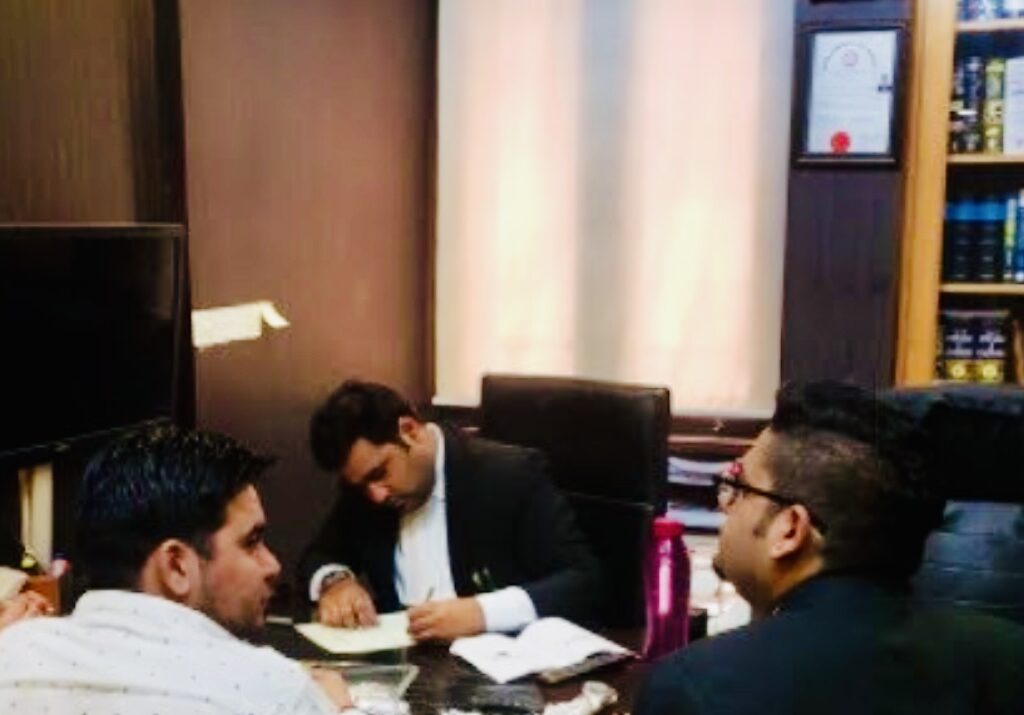
Advocate explaining contesting a case vs settlement in Dwarka Court Delhi
🏛️ Our Role During Ongoing Litigation
When settlement is not possible, we provide comprehensive litigation support.
Our services include:
✅ Drafting pleadings
✅ Filing suits and applications
✅ Court appearances
✅ Bail applications
✅ Evidence management
✅ Cross-examination preparation
✅ Legal strategy development
Whether you require a Criminal Advocate Dwarka, Civil Lawyer Dwarka, Criminal Disputes Advocate Dwarka Court, or a Civil Litigation Lawyer in Delhi, our team remains committed to protecting your interests.
Preparation and legal advice before attending a police station in Dwarka, Delhi.
📍 Why Choosing a Local Advocate in Dwarka Court Matters
A local Advocate in Dwarka Court offers significant advantages.
Since we regularly practice before Dwarka Courts, we understand:
✅ Filing procedures
✅ Registry processes
✅ Court functioning
✅ Documentation requirements
✅ Day-to-day procedural practices
Consequently, cases can often be handled more efficiently.
Our office is strategically positioned to assist clients appearing near Dwarka Court and throughout South West Delhi.
How to Find a Practising Advocate in Dwarka Court Delhi – 10 Checks Before Engaging a Lawyer
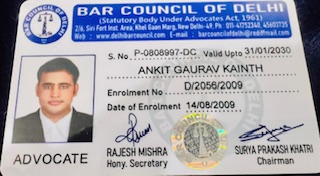
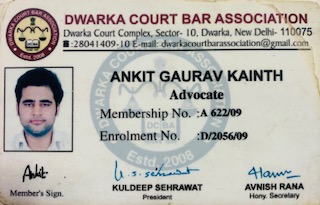
How to Verify a Practising Advocate in Dwarka Court Delhi
🔒 Why Clients Trust Us
Trust is the foundation of every lawyer-client relationship.
Over the past 18+ years, clients have chosen us because we maintain:
✅ High Professional Standards
Every matter receives dedicated attention.
✅ Quick Responsiveness
Client queries are addressed promptly.
✅ Availability on Call
Clients can reach us when guidance is needed.
✅ Dedicated WhatsApp Support
Convenient communication improves case management.
✅ Transparent Fee Structure
No hidden surprises.
✅ Proper Lawyer-Client Fee Agreements
Professional documentation promotes clarity.
✅ Fee Receipts and Acknowledgements
Every payment is properly documented.
✅ Honest and Fair Dealings
Transparency remains our core principle.
As a result, many clients continue to rely on us for long-term legal support.
⚖️ Criminal Matters and Bail Representation
If you require assistance from a:
✔ Criminal Advocate Dwarka
✔ Regular Bail & Anticipatory Bail Lawyer Dwarka
✔ Criminal Disputes Advocate Dwarka Court
our legal team can provide strategic guidance and representation.
Moreover, every criminal matter is carefully evaluated to determine whether litigation, negotiation, or settlement opportunities exist.
Professional criminal legal assistance for clients appearing before Dwarka Court, Delhi.
📌 Conclusion
The answer to Contesting a Case vs. Settlement in Dwarka Court depends entirely upon the facts of your case, available evidence, legal rights, financial considerations, and desired outcomes.
Sometimes litigation is necessary to secure justice. However, in many situations, settlement can provide a quicker and more practical resolution.
Therefore, before making any decision regarding Contesting a Case vs. Settlement in Dwarka Court, it is advisable to obtain professional legal advice from an experienced local advocate who understands the functioning of Dwarka Courts and can objectively evaluate your options.
Litigation practice at Dwarka Courts, Sector-10, New Delhi.
📞 Contact Us Today
If you need assistance regarding civil disputes, criminal matters, property disputes, recovery suits, commercial litigation, bail applications, or legal consultation, our experienced team is ready to help.
Money recovery disputes are among the most common civil disputes filed before the Dwarka Courts, Delhi. Whether the amount arises from an unpaid loan, business transaction, friendly borrowing, professional services, dishonoured commitments, or commercial dealings, the law provides an effective remedy through a civil suit for recovery of money.
This Guide to Filing a Civil Suit explains the complete process of filing a recovery suit in Dwarka Court. Moreover, it highlights the importance of obtaining legal assistance from experienced local advocates who understand the court procedures, documentation requirements, and litigation strategy required for successful recovery.
With over 18+ years of experience in Dwarka Court, our legal team has represented clients from Dwarka Sector 6, Dwarka Sector 10, Dwarka Sector 12, Dwarka North, Dwarka South, Dwarka Sector-23, Uttam Nagar, Janakpuri, Vikaspuri, Najafgarh, Palam Village, Dabri, Mohan Garden, Chhawla, Kapashera, Delhi Cantonment, Samalka, Bindapur, Baba Haridas Nagar, Jaffarpur Kalan, and nearby areas.
⚖️ What is a Civil Suit for Recovery of Money?
A civil suit for recovery of money is a legal proceeding filed before a competent civil court seeking recovery of an unpaid amount from a debtor.
A person may file such a suit when:
✅ A loan remains unpaid.
✅ Business dues are outstanding.
✅ Payments for services are withheld.
✅ Contractual obligations are breached.
✅ Friendly loans are not returned.
✅ Commercial transactions remain unsettled.
This Guide to Filing a Civil Suit is designed to help individuals and businesses understand their legal rights and available remedies.
A properly planned recovery suit can be a powerful legal remedy for recovering unpaid dues. However, success depends upon documentation, strategy, procedural compliance, and effective representation.
This Guide to Filing a Civil Suit demonstrates that timely legal advice, proper preparation, and experienced court representation can make a substantial difference. Whether you are dealing with a personal loan dispute, commercial debt recovery, contractual claim, or business outstanding, professional legal guidance can help protect your rights and improve recovery prospects.
With over 18 years of experience near Dwarka Court, our team remains committed to providing practical, transparent, and result-oriented legal services for clients across South West Delhi.
FAQ Section
Q1. How long does a money recovery suit take in Dwarka Court? The timeline depends on facts, evidence, court workload, and cooperation of parties. Each case proceeds according to its specific circumstances.
Q2. Is a legal notice mandatory before filing a recovery suit? In many cases, a legal notice is advisable and beneficial. It may encourage settlement and create useful documentary evidence.
Q3. Can interest be claimed in a recovery suit? Yes. Depending on the facts, contract terms, and applicable law, the plaintiff may claim interest along with the principal amount.
Q4. What documents are required for a recovery suit? Common documents include agreements, invoices, receipts, bank records, emails, WhatsApp communications, and payment acknowledgements.
Q5. Why hire a local Advocate in Dwarka Court? A local advocate understands court procedures, filing systems, jurisdictional requirements, and day-to-day court functioning, which can improve efficiency.
Cross-examination is often described as the soul of courtroom advocacy. A well-conducted cross-examination can expose falsehoods, reveal contradictions, and significantly influence the outcome of a case. However, this skill is not learned overnight. It develops through years of courtroom practice, strategic thinking, and deep understanding of human behavior.
This is precisely why an Experienced Advocate in Dwarka enjoys a decisive advantage in court proceedings. Whether it is a criminal trial, a civil dispute, a property matter, a recovery suit, or commercial litigation, effective cross-examination can make the difference between success and failure.
With more than 18 years of experience in Dwarka Court, our legal team has witnessed how proper preparation, local court knowledge, and courtroom advocacy help clients secure favorable outcomes. Therefore, choosing an Experienced Advocate in Dwarka becomes one of the most important decisions for any litigant.
⚖️ What Makes Cross-Examination an Arcane Art?
Cross-examination is not merely asking questions. Instead, it is the art of obtaining useful answers while preventing a witness from explaining away inconsistencies.
An Experienced Advocate in Dwarka understands:
✅ Witness psychology
✅ Courtroom strategy
✅ Timing and sequencing of questions
✅ Reading body language
✅ Identifying contradictions in testimony
✅ Effective use of documents and evidence
Moreover, experienced advocates know when to ask questions and, equally important, when not to ask them.
As a result, they can effectively challenge unreliable testimony while strengthening their client’s case.
Why Experience Matters in Cross-Examination
Years of Courtroom Exposure
Every case presents unique challenges. Consequently, advocates who have handled hundreds of matters gain insights that cannot be learned from books alone.
An Experienced Advocate in Dwarka has encountered:
Criminal trials
Civil litigation matters
Property disputes
Commercial litigation
Recovery suits
Family disputes
Bail proceedings
Therefore, such experience allows them to anticipate witness responses and prepare effective strategies.
Cross-examination remains one of the most powerful tools available in litigation. However, mastering this skill requires years of courtroom experience, strategic thinking, and practical exposure.
An Experienced Advocate in Dwarka brings these qualities together. From pre-litigation consultation and dispute resolution to courtroom representation and cross-examination, experience often becomes the decisive factor that shapes case outcomes.
Furthermore, local knowledge of Dwarka Court procedures, combined with professional ethics and transparent client service, creates a significant advantage for individuals and businesses seeking legal assistance.
Therefore, when your rights, property, liberty, or business interests are at stake, choosing an Experienced Advocate in Dwarka can be one of the most important decisions you make.