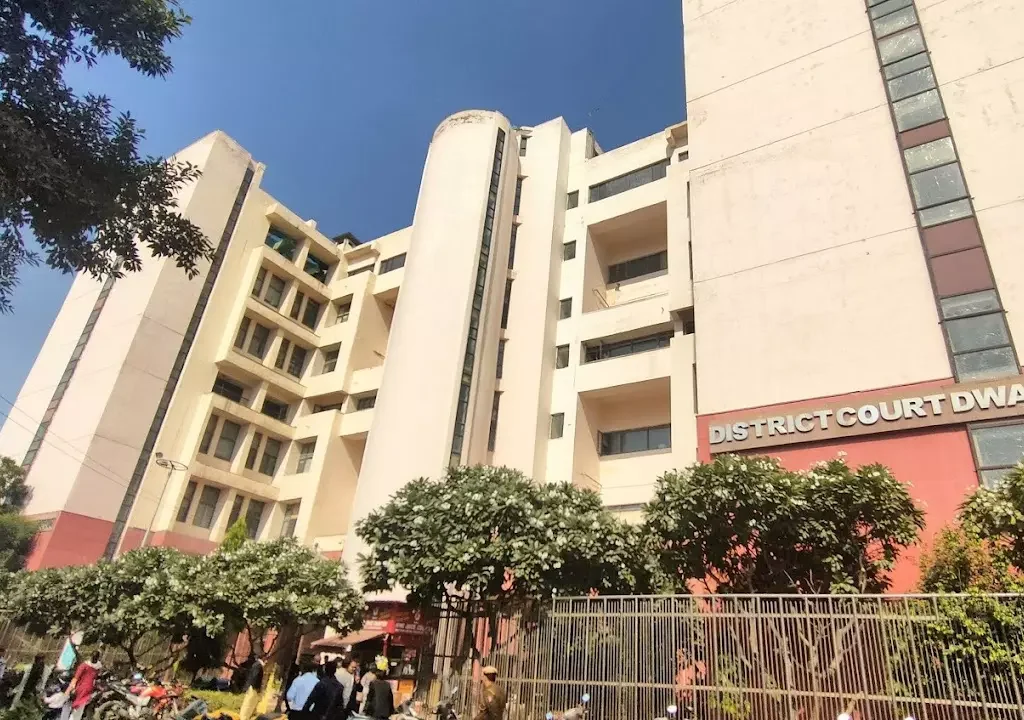
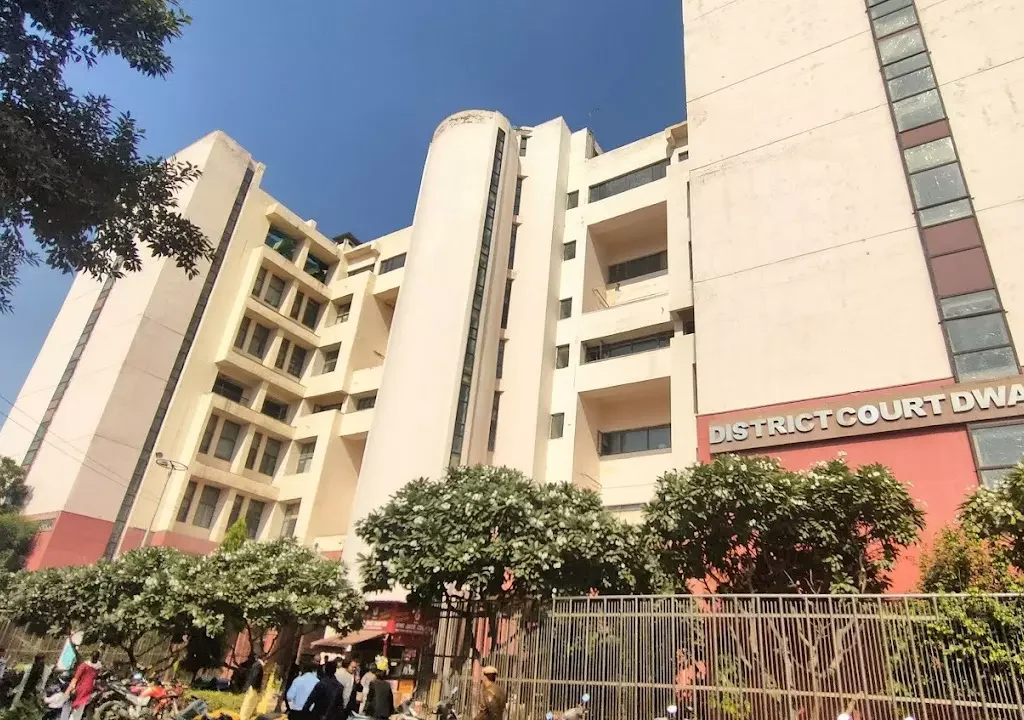
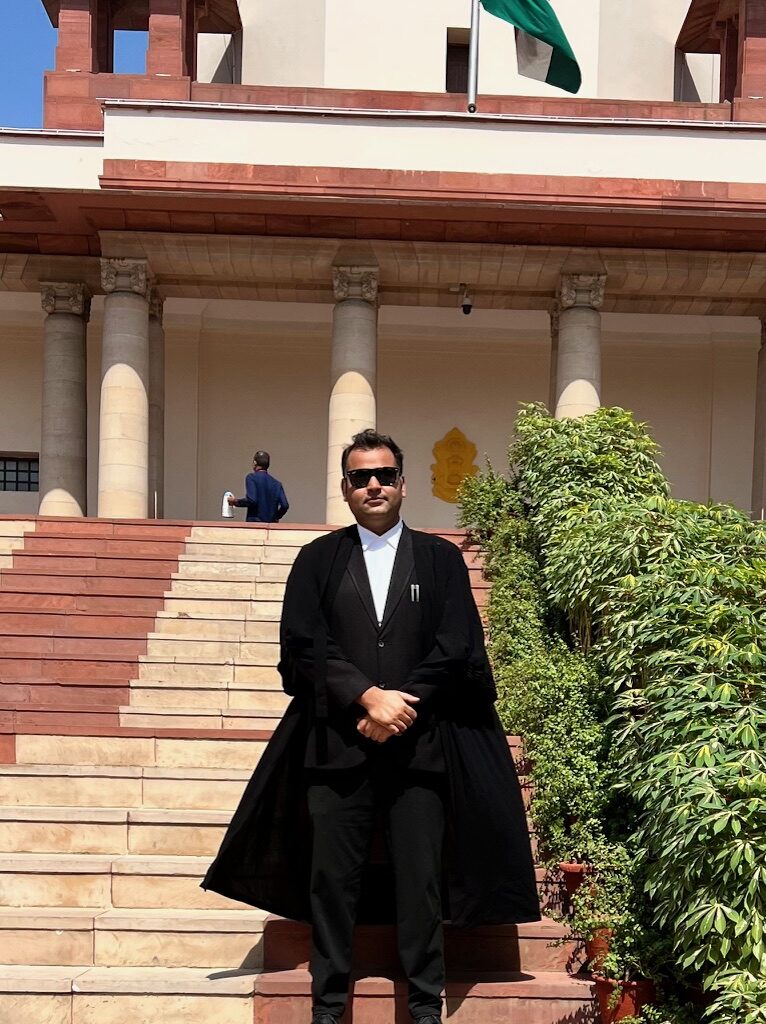
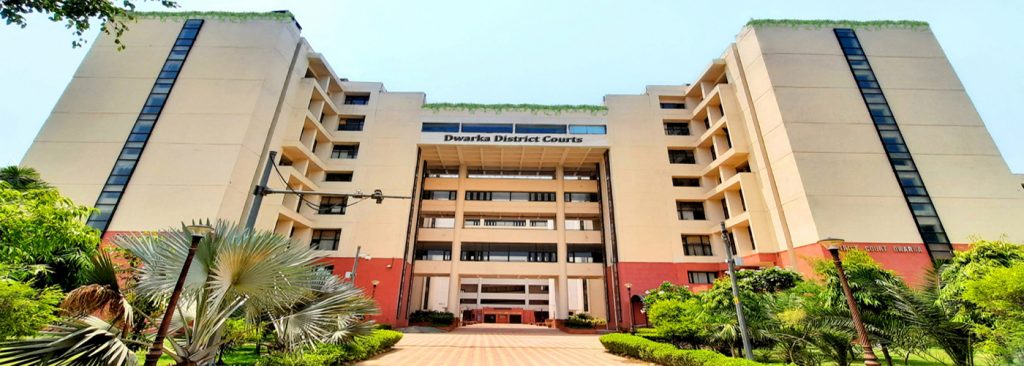
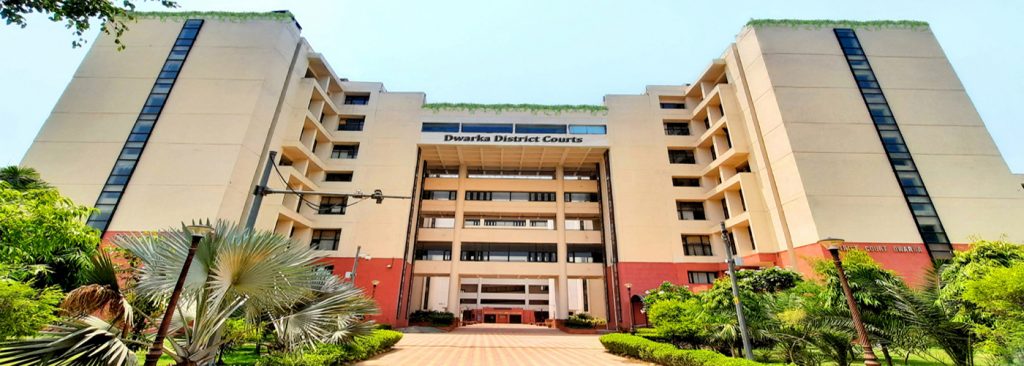
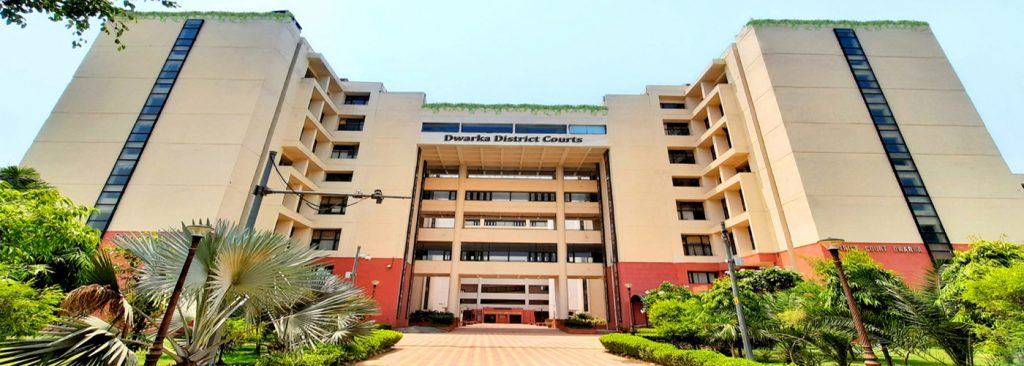
Resident Welfare Associations (RWAs), Cooperative Group Housing Societies, and Apartment Owners’ Associations often face complex legal disputes. From builder defaults to recovery suits, from defamation complaints to FIR defence, societies regularly approach Dwarka Court for timely relief. With 18+ years of active practice in Dwarka Court, my firm provides structured, strategic and result-oriented legal support to societies across Dwarka, Janakpuri, Vikaspuri, Uttam Nagar, Najafgarh, Bindapur and nearby jurisdictions.
⚖️ Why Societies Need Strong Representation in Dwarka Court
Societies operate collectively. However, disputes arise due to:
🏢 Builder delay, structural defects or misrepresentation
💰 Non-payment of maintenance by members
📜 Recovery of friendly loans or society dues
🚨 Criminal complaints between residents
🧾 Defamation or social media allegations
🔐 Trespass, nuisance or illegal construction
In such matters, proper drafting and procedural compliance before Dwarka Court becomes crucial. A small technical error can delay justice.
🏛 Civil Cases Filed by Societies in Dwarka Court
As a leading Property Lawyer Dwarka, we handle:
1️⃣ Recovery Suits
When members default on maintenance, we file civil recovery suits before the competent court at Dwarka Court with complete documentation—resolution copies, ledgers, notices and interest calculations.
2️⃣ Injunction Matters
Illegal alterations? Unauthorized construction? Encroachment of common areas? We move urgent injunction applications before Dwarka Court seeking stay orders.
3️⃣ Builder Disputes
Delay in conveyance deed? Parking disputes? Structural defects? We represent societies in civil litigation and execution proceedings before Dwarka Court.
4️⃣ Defamation (Civil)
If office bearers are targeted with false allegations, we initiate civil defamation claims in Dwarka Court for damages and injunction.
🚔 Criminal Matters Handled for Societies in Dwarka Court
As an experienced Criminal Lawyer Dwarka, we assist in:
1️⃣ Filing Criminal Complaints
Cheating by builder? Forgery? Criminal breach of trust? We draft detailed complaints and pursue proceedings before the Magistrate in Dwarka Court.
2️⃣ FIR Quashing & Defence
If society office bearers are falsely implicated, we coordinate defence strategy and bail protection connected to matters arising within Dwarka Court jurisdiction.
3️⃣ Bail Matters
We regularly handle Bail Matters Dwarka Court, ensuring prompt filing, documentation and arguments for anticipatory or regular bail.
4️⃣ Cheque Bounce Cases
Under Section 138 NI Act, societies can recover dues through criminal proceedings before Dwarka Court effectively.
👨⚖️ My 18+ Years of Experience in Dwarka Court
For over 18 years, I have been appearing daily before various courts at Dwarka Court. This practical exposure ensures:
✔️ Strong drafting aligned with court practice
✔️ Accurate jurisdiction selection
✔️ Strategic interim relief applications
✔️ Efficient follow-ups and compliance
✔️ Practical settlement advice
Experience matters because procedural clarity directly impacts results in Dwarka Court.
In 2026, litigation at Dwarka Court has become more interconnected than ever before. A matrimonial dispute may involve domestic violence allegations. A property dispute may suddenly include cheating or criminal breach of trust. A cheque bounce case may also require civil recovery.
Therefore, engaging a lawyer who practices both Civil & Criminal law in Dwarka Court gives clients the best of both worlds. Instead of hiring separate advocates, you get a one-stop legal solution under one chamber.
As a practitioner with 18+ years of experience at Dwarka District Courts, I have seen how integrated strategy makes a decisive difference.
Why Dual Practice Matters in Dwarka Court
1️⃣ One Strategy – Two Dimensions
Many disputes overlap. For example:
Divorce proceedings + 498A complaint
Property dispute + Criminal trespass
Cheque bounce + Civil recovery suit
Domestic violence + Custody battle
If two different lawyers handle these matters, coordination gaps may arise. However, when one counsel handles both civil and criminal aspects at Dwarka Court, the strategy remains consistent and stronger.
2️⃣ Cost Effective & Time Saving ⏳
Clients often search for a Divorce Lawyer Dwarka, a Property Lawyer Dwarka, and a Criminal Lawyer Dwarka separately. This increases cost and confusion.
Instead, a lawyer practicing both streams in Dwarka Court reduces:
Duplicate consultation fees
Repetition of facts
Contradictory pleadings
Delay in decision-making
Consequently, the client benefits from clarity and efficiency.
3️⃣ Stronger Courtroom Impact 🎯
In criminal matters like Bail Matters Dwarka Court, arguments must be precise and urgent. At the same time, civil pleadings require drafting skill and documentary focus.
A dual-practice advocate understands:
Evidence Act application in both forums
Cross-examination dynamics
Interim relief strategy
Injunctions and anticipatory bail coordination
This balance enhances credibility before the judges at Dwarka Court.
4️⃣ Complete Protection in Matrimonial Disputes
Matrimonial cases are rarely simple. A divorce may involve:
Maintenance petitions
Domestic violence complaints
FIR under 498A
Child custody proceedings
If handled separately, there may be inconsistent positions. However, a combined Civil & Criminal practice ensures unified defence and prosecution strategy within Dwarka Court jurisdiction.
Thus, the client receives structured and legally safe representation.
5️⃣ Property Disputes Need Criminal Insight 🏠
Property litigation in areas like Janakpuri, Vikaspuri, Dwarka North, Dwarka South, Najafgarh, Uttam Nagar, and Bindapur often escalates into:
Forgery allegations
Cheating complaints
Police intervention
Status quo orders
A seasoned Property Lawyer Dwarka with criminal practice understands how to:
Protect possession
Seek injunctions
Defend FIR
File counter complaints
Hence, litigation remains balanced and strategic in Dwarka Court.
6️⃣ Bail & Trial Strategy Integration ⚖️
In serious allegations, bail arguments influence trial direction. An experienced Criminal Lawyer Dwarka who also drafts civil suits ensures:
Documentary contradictions are identified early
Settlement scope is evaluated
Evidence gaps are exploited lawfully
This integrated approach benefits clients appearing in Dwarka Court for both civil and criminal hearings.
Why Experience Matters – 18+ Years at Dwarka Court
With over 18 years of continuous practice, I have handled:
Clients across Janakpuri, Vikaspuri, Dwarka North, Dwarka South, Najafgarh, Uttam Nagar, and Bindapur approach for comprehensive litigation solutions in Dwarka Court because clarity builds confidence.
One Stop Legal Solution 🏛️
Instead of running between different offices, you receive:
Unified drafting
Coordinated court dates
Single case file management
Structured long-term litigation roadmap
Therefore, engaging a lawyer practicing both domains at Dwarka Court ensures peace of mind.
Frequently Asked Questions (FAQ)
Q1. Is it better to hire separate lawyers for civil and criminal cases?
Not necessarily. If matters overlap, one experienced advocate handling both before Dwarka Court ensures consistency and strategic advantage.
Q2. Can one lawyer handle divorce and criminal complaints together?
Yes. A competent Divorce Lawyer Dwarka with criminal experience can manage maintenance, custody, and FIR defence together.
Q3. Why is bail strategy linked to civil disputes?
Because documents filed in civil cases may affect criminal defence. Coordinated drafting avoids contradictions in Bail Matters Dwarka Court.
Q4. Do property disputes require criminal expertise?
Often yes. Forgery, trespass, and cheating complaints commonly arise in property litigation before Dwarka Court.
Final Thoughts
Legal disputes today are interconnected. Civil and criminal dimensions frequently overlap. Therefore, choosing a lawyer who practices both in Dwarka Court offers strategic clarity, financial efficiency, and stronger representation.
If you are searching for the Top and Best Advocate in Dwarka Court, Janakpuri, Vikaspuri, Dwarka North, Dwarka South, Najafgarh, Uttam Nagar, or Bindapur — choose experience backed by integrated practice.
📞 Book a Consultation Today:- 9899085554, 9811885554
With 18+ years of courtroom experience, I provide complete civil and criminal litigation support under one roof.
👉 Call now for strategic legal guidance.
👉 Visit Chamber for detailed case evaluation.
👉 Protect your rights with structured legal planning.
Your case deserves expertise, coordination, and commitment.
Law Tip ⚖️ | One Stop Legal Solution at Dwarka Court (2026)
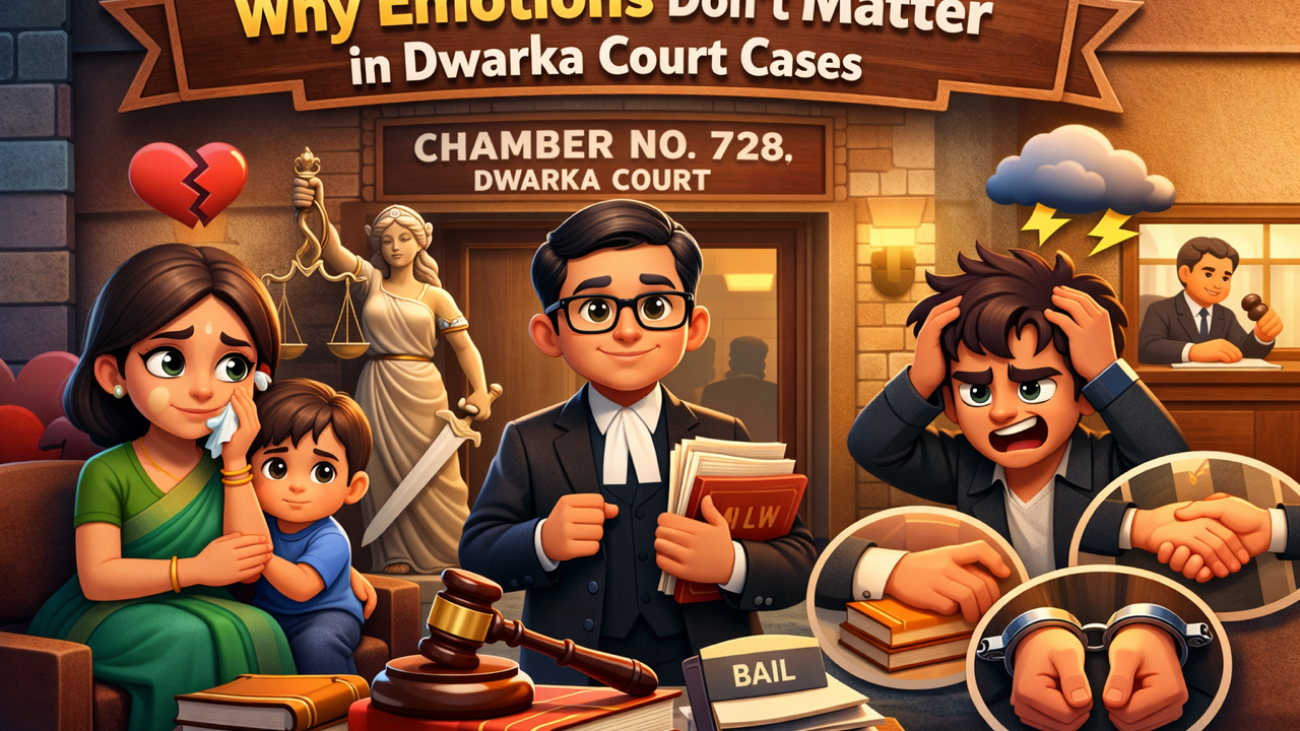
Do Don’t Let Emotions Weaken Your Case in Dwarka? When clients walk into Dwarka Court, they often carry anger, fear, betrayal, or frustration. However, one hard truth remains the same — emotions alone do not win cases in Dwarka Court. Evidence, law, procedure, and judicial reasoning decide the outcome.
Yet, at the same time, Dwarka Court does take a lenient view in specific circumstances where justice demands compassion. Understanding this balance is crucial if you want the best result in your case.
With 18+ years of continuous practice in Dwarka Court, I have seen how legal strategy works far better than emotional arguments. Let us understand why.
⚖️ Why Emotions Don’t Decide Cases in Dwarka Court
In criminal cases, prosecution must establish guilt beyond reasonable doubt.
Therefore, even if you feel deeply wronged, Dwarka Court requires proof.
2️⃣ Procedure Is Supreme in Dwarka Court
Every case in Dwarka Court follows strict procedural law:
Civil Procedure Code
Criminal Procedure Code
Indian Evidence Act
If procedure is not followed properly, even a strong emotional case may fail in Dwarka Court.
3️⃣ Judges Maintain Neutrality
Judges in Dwarka Court are trained to remain neutral. They cannot decide matters based on sympathy. Instead, they must apply statutory law. Consequently, emotional arguments without legal backing rarely succeed.
When Does Dwarka Court Take a Lenient View? 🤝
Although emotions do not control judgments, Dwarka Court may adopt a balanced and humane approach in certain situations.
✔️ 1. First-Time Offenders in Criminal Cases
In minor offences, Dwarka Court may grant probation instead of imprisonment. Particularly in Bail Matters Dwarka Court, the court examines:
Past record
Family background
Nature of offence
Thus, leniency may be granted.
✔️ 2. Matrimonial Disputes
In family matters before Dwarka Court, reconciliation is often encouraged. Courts attempt mediation before granting divorce. Therefore, emotional breakdowns are handled sensitively, though legally.
✔️ 3. Maintenance and Financial Hardship
In maintenance cases, Dwarka Court considers:
Earning capacity
Dependents
Genuine hardship
Here, human circumstances are evaluated carefully.
✔️ 4. Compromise & Settlement
In certain criminal and civil matters, if parties settle amicably, Dwarka Court may pass orders based on compromise. However, serious offences are treated strictly.
Practical Reality of Dwarka Court Litigation
Many litigants believe shouting truth loudly will win. Unfortunately, that is not how Dwarka Court functions.
Instead:
Structured pleadings matter
Proper drafting matters
Cross-examination matters
Strategic filing matters
As a practicing advocate in Dwarka Court for over 18 years, I have observed that calm, prepared clients succeed more often than emotionally reactive ones.
✔ A skilled Divorce Lawyer Dwarka focuses on evidence, not anger.
✔ A strategic Property Lawyer Dwarka strengthens documentation.
✔ An experienced Criminal Lawyer Dwarka builds defence through contradictions in prosecution case.
✔ In Bail Matters Dwarka Court, timing and drafting are crucial.
Your case in Dwarka Court deserves preparation, not panic.
Why Experience in Dwarka Court Matters
With 18+ years of active litigation in Dwarka Court, I understand:
Courtroom approach of different judges
Filing procedures and registry objections
Mediation trends in matrimonial disputes
Bail patterns in Dwarka Court
Property dispute strategies
Therefore, clients from Janakpuri, Vikaspuri, Dwarka North, Dwarka South, Najafgarh, Uttam Nagar, Bindapur and other jurisdictions of Dwarka Court trust experienced representation.
Client-Oriented Advice for Dwarka Court Cases
👉 Do not hide facts from your lawyer.
👉 Bring complete documentation.
👉 Avoid emotional confrontation in court premises.
👉 Follow legal advice patiently.
Remember, Dwarka Court respects preparation and discipline.
Frequently Asked Questions (FAQ)
Q1. Does Dwarka Court consider emotional suffering in divorce?
Yes, but only when supported by legal evidence like messages, medical records, or witness testimony.
Q2. Can Dwarka Court reduce punishment due to family hardship?
In minor cases, yes. Dwarka Court may consider mitigating factors.
Q3. Are bail cases decided emotionally?
No. Bail Matters Dwarka Court are decided based on legal parameters such as gravity of offence and possibility of tampering evidence.
Q4. Is settlement encouraged in Dwarka Court?
Yes, especially in matrimonial and civil disputes.
Final Words – Law Above Emotion, Justice With Balance ⚖️
Dwarka Court does not ignore emotions — but it filters them through law. Therefore, if you want success in Dwarka Court, focus on legal strength rather than emotional arguments.
If you are looking for the Best / Top Advocate in Dwarka Court serving Janakpuri, Vikaspuri, Dwarka North, Dwarka South, Najafgarh, Uttam Nagar, Bindapur and surrounding areas — choose experience backed by results.
📞 Consult Today for Strategic Legal Representation in Dwarka Court.
With 18+ years of courtroom experience, I ensure your case is presented with clarity, strength, and professionalism.
With 18+ years of regular practice in Dwarka Court, I have seen clients confused, overcharged, or misinformed. Therefore, this detailed 2026 guide explains how advocate fee works and how you should safely pay your lawyer.
Why Advocate Fee in Dwarka Court Varies?
There is no fixed government rate for advocate fees in India. In fact, fee depends on multiple professional and practical factors.
1️⃣ Nature of Case
The fee differs depending on the complexity and urgency of the matter:
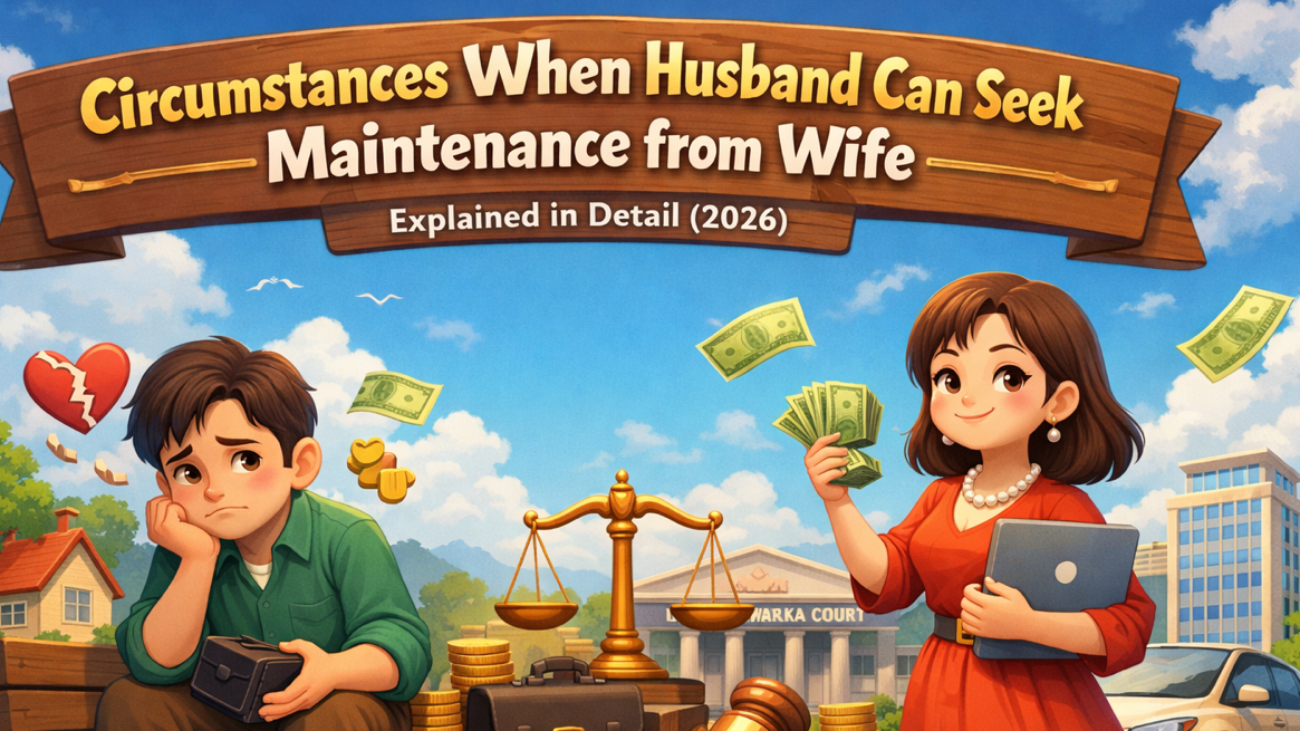
A common assumption in matrimonial disputes is that maintenance can only be claimed by a wife from her husband.
That is not completely correct.
Under the Hindu Marriage Act, 1955, a husband may, in appropriate circumstances, seek interim maintenance, litigation expenses and even permanent alimony from his wife.
However, this right is not automatic merely because the wife earns more.
The husband must establish the legal requirements of the provision under which maintenance is claimed, disclose his own financial position honestly and satisfy the Family Court that the circumstances justify monetary support.
For matrimonial proceedings falling within the jurisdiction of Dwarka Courts, Delhi, this distinction becomes particularly important because different maintenance statutes confer different rights.
This 2026 guide explains:
When a husband can claim maintenance
Section 24 Hindu Marriage Act
Section 25 Hindu Marriage Act
Whether Section 144 BNSS helps a husband
Whether the Special Marriage Act permits a husband’s maintenance claim
What financial documents the Family Court examines
How the Rajnesh v. Neha financial disclosure requirements affect the case
Circumstances in which a husband’s application may be rejected
Practical procedure before the Family Court at Dwarka
Short Answer: Can a Husband Claim Maintenance from His Wife?
Yes, under certain matrimonial laws.
For a Hindu marriage governed by the Hindu Marriage Act, 1955, both husband and wife are expressly covered by Sections 24 and 25.
Section 24 HMA
A husband who does not have independent income sufficient for his support and the necessary expenses of the matrimonial proceeding may seek:
Maintenance during the pendency of the case; and
Expenses of the matrimonial proceedings.
The provision expressly refers to “either the wife or the husband.”
Section 25 HMA
At the time of passing a matrimonial decree, or subsequently, either spouse may apply for permanent alimony and maintenance.
The Family Court considers the income, property and financial circumstances of both parties along with other relevant circumstances.
Therefore, the legal question is not simply:
“Is the wife earning?”
The better question is:
“Does the husband satisfy the requirements of the particular maintenance provision after his own income, assets, liabilities, qualifications and circumstances are examined?”
Sections 24 and 25 expressly permit an application by either spouse.
1. Section 24 Hindu Marriage Act – Interim Maintenance for Husband
Section 24 of the Hindu Marriage Act deals with maintenance pendente lite and expenses of proceedings.
In simple terms, it operates while the main matrimonial proceeding is pending.
The provision applies where it appears to the Court that either spouse has no independent income sufficient for his or her support and the necessary expenses of the proceeding.
Therefore, a husband may make an application under Section 24 where the factual circumstances support such a claim.
The Court may consider:
Husband’s actual monthly income
Wife’s income
Assets belonging to both spouses
Employment status
Educational and professional qualifications
Business interests
Investments
Rent or other recurring income
Financial liabilities
Dependants
Medical circumstances, where relevant
Reasonable monthly expenditure
Standard of living
Overall financial circumstances
Section 24 does not say that merely earning less than the wife automatically entitles a husband to maintenance.
The Court examines whether his independent income is sufficient for his support and litigation expenses.
2. What Does “No Independent Income Sufficient for His Support” Mean?
This expression is important.
A husband does not necessarily have to prove that he has absolutely no income.
The statutory question is whether the income available to him is sufficient for:
His reasonable support; and
The necessary expenses of the matrimonial litigation.
For example, suppose:
The husband is temporarily without employment;
The wife has substantial independent income;
The husband has little or no independent assets;
Matrimonial litigation is already pending; and
His financial disclosures support the claim.
The Court can examine whether relief under Section 24 is justified.
But the result may be different if the evidence shows that the husband:
Has substantial undisclosed income;
Has income-producing property;
Continues to operate a business;
Deliberately suppresses bank accounts;
Is financially supported by significant investments or assets; or
Is intentionally avoiding work despite substantial capacity and opportunity to earn.
Every application therefore depends upon evidence rather than gender alone.
3. Wife Earning More Does Not Automatically Mean Husband Gets Maintenance
This distinction should be prominently understood.
Consider:
Husband earns ₹80,000 per month. Wife earns ₹2,00,000 per month.
The fact that the wife earns substantially more does not automatically establish that the husband has no sufficient independent income.
Compare it with another situation:
Husband has no current income because of genuine circumstances. Wife earns ₹2,00,000 per month. Husband has no significant assets or recurring investment income.
The second situation raises a materially different question.
Thus, income disparity is relevant, but it is not the sole test.
The Court examines the complete financial picture.
4. Section 25 Hindu Marriage Act – Can Husband Claim Permanent Alimony?
Yes.
Section 25 of the Hindu Marriage Act permits an application by either the wife or the husband for permanent alimony and maintenance.
The application may arise at the time of passing a decree or at any time subsequent thereto, subject to the statutory framework.
While deciding the question, the Court may consider matters including:
Income of the wife
Property of the wife
Income of the husband
Property of the husband
Conduct of the parties
Other circumstances of the case
The relief may take the form contemplated by Section 25, depending upon the Court’s determination.
Permanent alimony is therefore discretionary judicial relief, not an automatic consequence of divorce.
The Supreme Court has continued to emphasise that maintenance under Sections 24 and 25 requires consideration of the relevant financial material and circumstances of the parties.
5. Can Husband Claim Maintenance Under Section 144 BNSS?
This is where the law must be clearly distinguished.
Since 1 July 2024, Section 144 of the Bharatiya Nagarik Suraksha Sanhita, 2023 is the present provision corresponding broadly to the earlier Section 125 CrPC maintenance framework.
But Section 144 BNSS does not create a reciprocal claim by a husband against his wife merely because she earns more.
The provision deals with maintenance of specified categories such as:
Wife
Children
Father
Mother
Therefore, a husband seeking maintenance from his wife should not describe Section 144 BNSS as a general gender-neutral spousal maintenance provision.
The appropriate remedy depends upon the personal matrimonial law governing the parties and the pending proceedings.
6. Section 125 CrPC or Section 144 BNSS?
For current proceedings, legal content should ordinarily refer to:
Section 144 BNSS — corresponding to the earlier Section 125 CrPC framework.
Section 125 CrPC remains important for understanding older proceedings, orders and precedents.
However, a husband cannot simply file a Section 144 BNSS application against his wife seeking personal maintenance on the same footing on which a wife may proceed against her husband.
This distinction is particularly important when reading older websites that broadly state that “maintenance law is gender-neutral.”
That statement is too wide.
Some matrimonial provisions are gender-neutral.
Others are not.
7. Can Husband Claim Maintenance Under the Special Marriage Act?
This also requires an important clarification.
The Special Marriage Act, 1954 should not be described as giving husbands the same maintenance entitlement as Sections 24 and 25 of the Hindu Marriage Act.
Section 36 of the Special Marriage Act addresses alimony pendente lite on an application by the wife.
Section 37 deals with permanent alimony and maintenance in favour of the wife.
Therefore, where a marriage has been solemnised or matrimonial proceedings are governed by the Special Marriage Act, the statutory provision should be examined carefully rather than assuming that the Hindu Marriage Act rules automatically apply.
8. Other Personal Laws May Have Different Rules
Maintenance rights depend partly upon the statute governing the marriage.
For example, Sections 39 and 40 of the Parsi Marriage and Divorce Act, 1936 contain provisions framed in terms of either the wife or husband in the relevant matrimonial proceedings.
Other matrimonial statutes may use different language.
Therefore, before filing any maintenance application, determine:
What law governs the marriage?
What matrimonial case is presently pending?
Which provision authorises the relief?
Which Court has jurisdiction?
Does that provision permit a husband to apply?
A maintenance application drafted under an incorrect statutory provision can create unnecessary procedural difficulties.
9. Rajnesh v. Neha – Financial Disclosure Is Extremely Important
Modern maintenance litigation is heavily document-driven.
In Rajnesh v. Neha, (2021) 2 SCC 324, the Supreme Court laid down guidelines requiring disclosure of assets and liabilities in maintenance proceedings.
The disclosure framework is intended to enable Courts to examine the actual financial position of the parties.
The Supreme Court directed that the prescribed affidavits of assets and liabilities should be filed in maintenance proceedings before Family Courts, District Courts and Magistrates’ Courts across the country.
For a husband claiming maintenance, therefore, merely stating:
“My wife earns more than me”
is unlikely to be sufficient by itself.
The applicant should be prepared to disclose his own finances comprehensively.
10. Documents a Husband Should Keep Ready
Depending upon the facts of the case, relevant financial material may include:
Income Documents
Income-tax returns
Form 16
Salary slips
Employment records
Professional receipts
Business accounts
GST documents, where relevant
Partnership or company records
Bank and Investment Documents
Bank statements
Fixed deposits
Mutual funds
Shares and securities
Demat statements
Insurance investments
Other financial instruments
Property Documents
Ownership documents
Rent agreements
Rental income records
Loan statements
Property-related liabilities
Expense Documents
Rent
Medical expenditure
Loan EMIs
Household expenditure
Dependant family expenses
Litigation expenses
Other recurring liabilities
Employment Material
Where unemployment or loss of employment is relied upon, relevant material may include:
Termination letter
Resignation records
Previous salary documents
Medical records where health affects employment
Evidence explaining the present employment position
Full and truthful disclosure is important.
11. Can an Unemployed Husband Claim Maintenance?
Potentially, yes.
But unemployment by itself does not automatically establish entitlement.
The Court may examine:
Why is the husband unemployed?
How long has he been unemployed?
What was his previous employment?
What are his qualifications?
Does he own property?
Does he have investments?
Does he earn through business or professional activity?
Has he voluntarily stopped working?
Is the financial difficulty temporary or genuine?
What is the wife’s actual financial position?
There is a significant difference between:
genuine inability to maintain oneself
and
deliberately remaining unemployed to create a maintenance claim.
The Court may examine the surrounding circumstances.
12. What If the Husband Is Highly Qualified but Not Working?
Educational qualification is relevant, but it should not be treated as a substitute for evidence about actual finances.
The Family Court may consider:
Educational qualifications
Professional experience
Previous employment
Past salary
Present employment opportunities
Medical condition
Age
Business interests
Assets
Reasons for unemployment
A highly qualified person cannot necessarily establish a maintenance claim merely by showing zero current salary.
At the same time, qualification alone does not mean the Court must pretend that actual unemployment, illness, business failure or other genuine circumstances do not exist.
The decision is fact-specific.
13. What If the Wife Is a Government Employee or Senior Corporate Executive?
Her actual income will naturally become relevant if the husband invokes a statutory provision such as Section 24 or Section 25 HMA.
Relevant documents may include:
Salary records
Income-tax returns
Employment information
Bank records
Investment information
Property details
But again, the wife earning a substantial salary is only one part of the analysis.
The husband’s own resources must also be disclosed.
14. Can a Businessman Husband Claim Maintenance?
Being described as a “businessman” does not decide the application either way.
The Family Court may examine:
Nature of business
Turnover
Profit
Income-tax returns
GST filings
Directorships
Shareholding
Partnership interests
Bank transactions
Business assets
Loans
Lifestyle
Financial commitments
A business may have substantial turnover but limited profit.
Conversely, a person may show little salary while exercising significant control over business resources.
Therefore, financial analysis cannot be reduced to a single salary figure.
15. Can a Husband Claim Litigation Expenses from Wife?
Under Section 24 HMA, the relief is not confined to monthly maintenance.
The statute also refers to necessary expenses of the matrimonial proceeding.
Therefore, where the statutory conditions are satisfied, a husband may seek litigation expenses from his wife.
This can be relevant where there is a substantial financial imbalance and the husband genuinely lacks sufficient resources to conduct the matrimonial litigation.
16. What About Maintenance for Children?
Maintenance payable for a child is legally distinct from personal maintenance claimed by a husband.
A father who has custody of a child should therefore distinguish between:
His personal claim as a spouse; and
Financial support required for the child.
The rights and obligations concerning children require a separate legal analysis based upon the applicable statutory framework and facts.
Do not mix the husband’s personal maintenance claim with the child’s financial entitlement.
17. Circumstances in Which Husband’s Maintenance Claim May Face Difficulty
An application may face serious resistance where evidence indicates that the husband:
Has sufficient independent income
Owns substantial assets
Receives rental income
Has profitable business interests
Has investments capable of supporting him
Has deliberately concealed income
Has provided incomplete financial disclosure
Has intentionally left employment without reasonable explanation
Has misstated his expenses
Has suppressed bank accounts or property
Has presented financial claims inconsistent with his apparent lifestyle
The Court decides the application on the evidence before it.
Therefore, accuracy is more important than exaggeration.
18. Wife’s Defence to Husband’s Maintenance Application
A wife opposing such an application may produce material showing:
Husband’s salary
Previous salary
Business interests
Income-tax returns
Company directorships
Ownership of property
Rental receipts
Investments
Bank transactions
Professional qualifications
Lifestyle indicators
Other financial resources
She may also challenge inaccuracies in his affidavit of assets and liabilities.
Maintenance proceedings can therefore involve detailed financial scrutiny of both parties.
19. Practical Procedure Before Family Court at Dwarka
The exact procedure depends upon the matrimonial case and applicable law, but broadly an application may involve:
Step 1 – Identify the Governing Matrimonial Law
First determine whether the proceedings arise under:
Hindu Marriage Act
Special Marriage Act
Parsi Marriage and Divorce Act
Another applicable matrimonial law
Step 2 – Identify the Correct Provision
For a Hindu husband, Sections 24 and 25 HMA may become relevant depending upon the stage and nature of proceedings.
Step 3 – Prepare Financial Disclosures
Collect complete records relating to:
Income
Bank accounts
Property
Investments
Loans
Expenses
Dependants
Employment
Step 4 – File the Application
The application should explain:
Pending matrimonial proceeding
Applicant’s present financial condition
Respondent’s known financial position
Relevant expenses
Legal basis of relief
Supporting documents
Step 5 – Reply by Opposite Party
The wife can contest the allegations and place her own financial documents on record.
Step 6 – Financial Affidavits
The Court may examine the parties’ affidavits of assets and liabilities in accordance with the applicable maintenance framework.
Step 7 – Hearing and Order
The Family Court considers the pleadings, documents, disclosures and submissions before determining whether any relief is justified.
20. How Much Maintenance Can a Husband Get?
There is no universal formula saying:
“The husband gets X% of the wife’s salary.”
Maintenance is not calculated by simply applying one fixed percentage.
The Court examines the relevant statutory factors and financial circumstances.
These can include:
Income of applicant
Income of respondent
Assets
Liabilities
Reasonable expenditure
Dependants
Standard of living
Nature of employment
Financial obligations
Circumstances of the case
Every matter therefore requires individual assessment.
21. Does Husband Automatically Get the Same Lifestyle as Wife?
Not automatically.
Maintenance law is not intended simply to equalise every difference in income between spouses.
The Court examines whether the statutory threshold for relief is satisfied and, if so, what amount would be reasonable in the circumstances.
This is why comparing only two salary figures can be misleading.
22. Is Section 24 Maintenance Permanent?
No.
Section 24 concerns maintenance and litigation expenses during the pendency of matrimonial proceedings.
Permanent alimony is separately dealt with under Section 25 HMA.
This distinction should remain clear in pleadings and client advice.
23. Can Husband Seek Maintenance After Divorce?
Where Section 25 of the Hindu Marriage Act applies, either spouse may seek permanent alimony in accordance with that provision.
The Court retains discretion after considering the statutory circumstances.
A husband’s claim therefore does not automatically end merely because the decree of divorce has been passed.
The applicability of Section 25 and subsequent modification of an order must be examined according to the facts and statutory conditions.
24. Maintenance Cases Require Financial Evidence, Not Assumptions
Maintenance litigation increasingly depends upon documentary financial evidence.
Statements such as:
“She earns a lot”
“He has no income”
“His business is running well”
“She owns several properties”
should, wherever possible, be supported by credible material.
Useful documents may include:
Salary statements
Income-tax filings
Bank statements
Property documents
Corporate records
Loan records
Investment statements
Employment information
Accurate documentation helps the Court make a more informed determination.
25. Why Correct Statutory Provision Matters
A particularly important point for clients is that all maintenance laws are not interchangeable.
For example:
Law
Can Husband Claim Personal Maintenance from Wife?
Section 24 Hindu Marriage Act
Yes, subject to statutory requirements
Section 25 Hindu Marriage Act
Yes, subject to statutory requirements
Section 144 BNSS
Not as a husband’s reciprocal spousal claim
Earlier Section 125 CrPC
Not as a husband’s reciprocal spousal claim
Sections 36–37 Special Marriage Act
Provisions are framed in favour of wife
Sections 39–40 Parsi Marriage & Divorce Act
Relevant provisions refer to either spouse
Therefore, before asking, “Can the husband claim maintenance?”, first ask:
“Under which statute?”
That is often the decisive starting point.
S. No.
Supporting Page / Blog
Main Topic
Why It Supports This Article
Suggested Anchor Text
Internal Link
1
How a Wife Can Get Maintenance from Husband in Dwarka Court
Maintenance proceedings, income and financial disclosure
Provides the corresponding guide explaining maintenance claims from the wife’s perspective and helps build a complete maintenance-law content cluster.
Useful for readers considering whether maintenance and permanent alimony issues can instead be resolved through a negotiated mutual-consent settlement.
1. Can a husband claim maintenance from his wife in Dwarka Court?
Yes, where the applicable matrimonial statute permits it. Under Sections 24 and 25 of the Hindu Marriage Act, either spouse may seek the specified maintenance or alimony subject to the statutory requirements.
2. Can a husband claim maintenance merely because his wife earns more?
No. Higher income of the wife is relevant, but it does not by itself create an automatic entitlement. The husband’s own income, assets, expenses and financial circumstances are also examined.
3. Can an unemployed husband get maintenance?
Possibly, depending upon why he is unemployed, his financial resources, earning circumstances, qualifications, assets and the wife’s financial position.
4. Can a husband claim maintenance under Section 144 BNSS?
Section 144 BNSS does not provide a general reciprocal maintenance remedy enabling a husband to claim personal spousal maintenance from his wife.
5. Can a husband claim maintenance under Section 24 HMA?
Yes. Section 24 expressly applies to either the wife or the husband who lacks sufficient independent income for support and necessary litigation expenses.
6. Can a husband claim permanent alimony?
Section 25 HMA permits an application by either wife or husband, subject to judicial determination of the relevant circumstances.
7. Can a husband claim litigation expenses?
Yes, Section 24 HMA also deals with expenses of matrimonial proceedings where its statutory requirements are satisfied.
8. Does the husband have to disclose his bank accounts?
Financial disclosure is an important feature of maintenance proceedings. The Supreme Court’s directions in Rajnesh v. Neha provide for affidavits disclosing assets and liabilities in maintenance matters.
9. Can a working husband still seek Section 24 maintenance?
The fact that he earns something does not automatically bar an application. The statutory test concerns whether his independent income is sufficient for his support and necessary proceeding expenses. However, actual income and resources will be closely examined.
10. Is maintenance automatically 25% of the wife’s salary?
No. There is no universal fixed percentage applicable to every matrimonial maintenance case.
Conclusion – Husband’s Maintenance Claim Depends on the Applicable Law and Financial Evidence
A husband can claim maintenance from his wife in India under certain matrimonial statutes, but the proposition should never be stated as though every maintenance law is gender-neutral.
For Hindu matrimonial proceedings, Sections 24 and 25 of the Hindu Marriage Act expressly recognise applications by either spouse.
At the same time:
Section 144 BNSS should not be treated as a husband’s reciprocal maintenance remedy.
The Special Marriage Act should not be incorrectly described as granting the husband the same statutory right under Sections 36 and 37.
Financial disclosure remains central.
The wife’s higher income alone does not guarantee an order.
The husband’s income, property, earning circumstances and expenses must also be examined.
For proceedings before Dwarka Courts, Delhi, the correct approach is therefore:
First identify the matrimonial law → identify the correct maintenance provision → examine jurisdiction → prepare complete financial disclosures → then decide whether a maintenance application is legally sustainable.
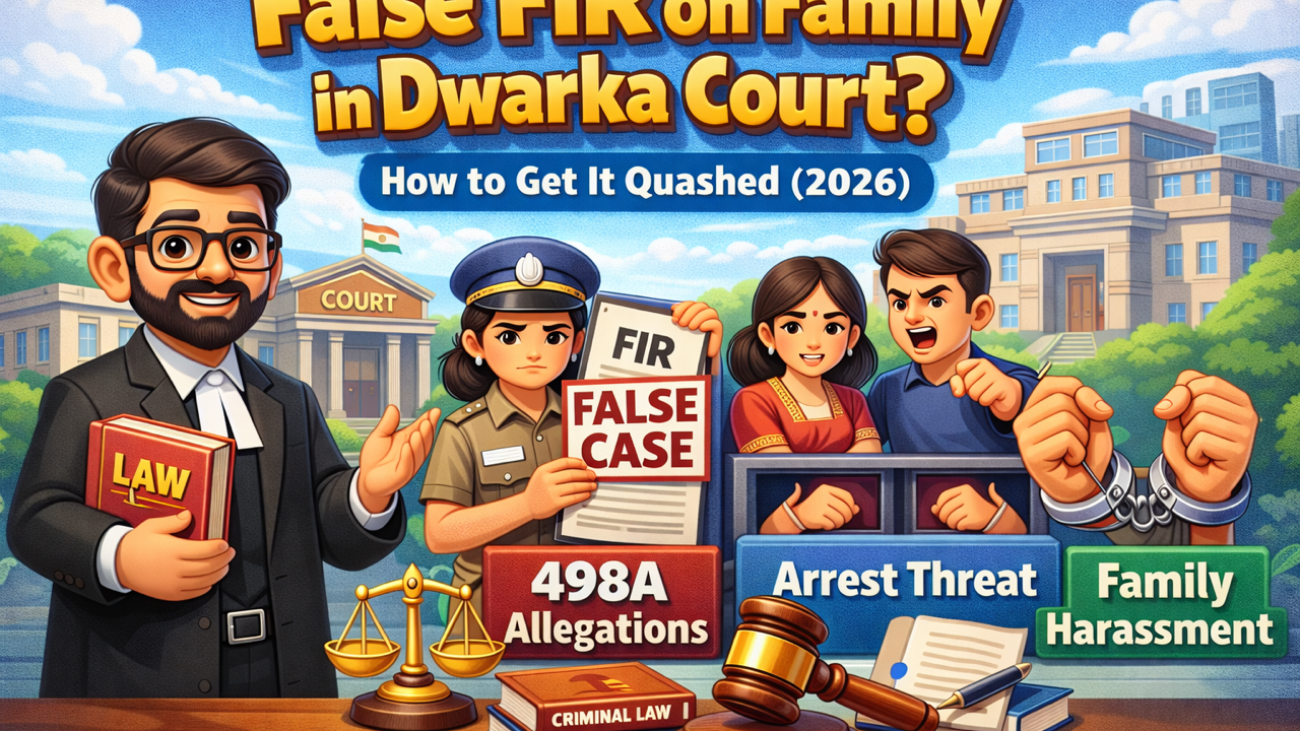
A false FIR against you or your family can destroy peace, reputation, and liberty overnight. In matrimonial and property disputes, it is common to see entire families being named in criminal complaints without specific allegations.
If you are facing a false FIR under 498A, domestic violence, assault, cheating, or other criminal sections within Dwarka Court jurisdiction, this 2026 practical guide explains how you can legally challenge and quash it.
With 18+ years of continuous practice in Dwarka Court, I have handled complex criminal, matrimonial, and property disputes for families from Janakpuri, Vikaspuri, Dwarka North, Dwarka South, Najafgarh, and surrounding areas.
Let’s understand your legal remedy step-by-step.
🚨 What Is a False FIR?
An FIR (First Information Report) is the starting point of a criminal case. However, sometimes:
Entire family members are added without specific roles
Distant relatives are falsely implicated
Allegations are exaggerated during matrimonial disputes
FIR is used as pressure in divorce or property negotiations
Such misuse of criminal law must be challenged strategically.
If you are searching for a Criminal Lawyer Dwarka to handle a false FIR, early legal action is critical.
⚖️ Legal Remedies Available in Dwarka Court
1️⃣ Anticipatory Bail
If arrest is apprehended, immediate filing of anticipatory bail is essential. Handling Bail Matters Dwarka Court requires:
✔ Proper drafting
✔ Highlighting absence of specific allegations
✔ Showing clean antecedents
✔ Demonstrating misuse of process
Early bail protection prevents unnecessary custody.
2️⃣ Regular Bail
If arrest has already happened, strong arguments before the court can secure regular bail based on:
Lack of evidence
No recovery required
Family background
Cooperation with investigation
Timely representation by an experienced Criminal Lawyer Dwarka makes a significant difference.
3️⃣ Quashing of FIR Before High Court
Where allegations are:
General and omnibus
Malicious
Purely matrimonial in nature
Settled between parties
A petition for quashing can be filed before the High Court.
Courts examine:
Specific role of each accused
Delay in filing complaint
Evidence consistency
Settlement terms
A properly drafted petition supported by documents increases success chances.
💍 False FIR in Matrimonial Disputes
In many cases, false FIRs arise during divorce or alimony disputes. As an experienced Divorce Lawyer Dwarka, I have seen situations where:
Parents living separately are implicated
Married sisters living in other cities are named
No specific date or incident is mentioned
Strategic defence includes:
✔ Timeline analysis
✔ Contradictions in complaint
✔ Documentary evidence
✔ Call record and residence proof
A balanced approach protects rights without escalating conflict unnecessarily.
🏠 Property Disputes Turning Criminal
Sometimes property disputes are converted into criminal FIRs to create pressure. As a seasoned Property Lawyer Dwarka, I handle matters involving:
False cheating allegations
Criminal breach of trust
Forgery claims
Possession disputes
Civil disputes should not be converted into criminal harassment tools. Courts recognise this distinction when properly argued.
And Why Clients Approach Us in Dwarka Court for Consultation
In the legal world, delay is expensive. Silence is risky. Assumptions are dangerous.
That is why consultation is considered positive proactiveness in legal issues.
When a person chooses to seek legal consultation in Dwarka Court, it reflects awareness, responsibility, and strategic thinking. Instead of reacting after damage is done, a proactive client acts early — and that early action often changes the entire outcome of a case.
With 18+ years of courtroom experience, I guide clients toward the correct legal step from Day One. That clarity prevents unnecessary adjournments, defective filings, and avoidable delays.
💰 How Consultation Saves Money
Many people hesitate to pay consultation fees. However, avoiding consultation often leads to higher legal costs later.
A single wrong step can result in:
❌ Multiple litigations
❌ Penalties or interest
❌ Dismissed petitions
❌ Additional advocate fees
An effective legal consultation in Dwarka Court helps clients understand:
✔ Whether litigation is required
✔ Whether settlement is possible
✔ Whether mediation is a better route
✔ Whether criminal or civil remedy is appropriate
Strategic advice at the right time reduces long-term legal expenditure.
🧠 How Consultation Saves Energy & Mental Stress
Legal disputes are emotionally draining — especially in matrimonial, criminal, and family matters.
During consultation, clients receive:
🔹 Legal clarity
🔹 Emotional reassurance
🔹 Practical solutions
🔹 Realistic expectations
Clarity reduces fear. Strategy reduces anxiety.
This is why clients from Dwarka, Janakpuri, Vikaspuri, Najafgarh, Uttam Nagar, Bindapur, Samalka, and Kapashera approach Dwarka Court for structured legal guidance.
🎯 Why We Charge Hourly Consultation Fees
Professional legal consultation is not casual advice — it is structured legal analysis.
When you book a legal consultation in Dwarka Court, you receive:
✔ Dedicated time
✔ Case law based evaluation
✔ Risk assessment
✔ Strategy planning
✔ Confidential discussion
Our hourly consultation fee reflects:
🔹 18+ years of courtroom experience
🔹 Expertise in civil, criminal, banking & matrimonial litigation
🔹 Practical exposure to Dwarka Court procedures
🔹 Strategic advisory approach
Clients are not paying for minutes. They are paying for experience, accuracy, and preventive legal protection.
📚 Consultation Provides a Clear Roadmap
Every client approaches with specific targets 🎯 — whether it is:
• Filing for divorce
• Defending a criminal complaint
• Recovering money
• Handling banking disputes
• Drafting agreements
• Protecting property rights
A professional legal consultation in Dwarka Court provides:
✔ Step-by-step action plan
✔ Timeline clarity
✔ Risk vs benefit analysis
✔ Required documentation list
✔ Court process explanation
It enlightens clients about what should be done according to their requirements — not based on assumptions or third-party opinions.
🏛 Why Clients Choose Consultation at Dwarka Court
Dwarka Court serves a large population of West Delhi and nearby regions. Clients searching for the best advocate & lawyer in Dwarka Court prefer structured consultation because:
✔ It prevents legal surprises
✔ It builds case strength from the beginning
✔ It improves chances of favorable outcomes
✔ It gives confidence before litigation
Our consultation approach is practical, honest, and strategy-driven. We do not create unnecessary litigation — we create legal solutions.
💼 Experience Matters
With 18+ years of experience in Dwarka Court, handling diverse litigation across civil, criminal, banking, and matrimonial cases, I understand:
• Courtroom psychology
• Judge expectations
• Procedural technicalities
• Practical litigation strategy
That insight helps clients make informed decisions — not emotional ones.
Conclusion
Consultation is not an expense. It is an investment in clarity.
It is a shield before the sword.
It is preparation before litigation.
Choosing legal consultation in Dwarka Court reflects maturity, responsibility, and strategic thinking. It saves time, money, and energy — while giving you a powerful roadmap toward your legal goals.
📞 Book Your Legal Consultation Today
If you are facing legal challenges in Dwarka, Janakpuri, Vikaspuri, Najafgarh, Uttam Nagar, Bindapur, Samalka, or Kapashera — take the proactive step.
Searching for the right Advocate in Dwarka Court, New Delhi can feel overwhelming—especially when legal issues are already causing stress. Whether the matter is civil, criminal, matrimonial, or banking-related, what clients truly need is clear advice, honest guidance, and an advocate who understands the real working of Dwarka District Court.
Why Choosing the Right Advocate in Dwarka Court Matters 🏛️
Dwarka District Court is one of the busiest courts in Delhi. Each courtroom follows its own pace, procedure, and approach. An advocate unfamiliar with the local court culture, filing practices, and judicial expectations may cause unnecessary delays or weak presentation.
An experienced Dwarka Court advocate offers:
Correct legal strategy from day one
Proper drafting and filing without defects
Effective arguments based on court practice
Realistic timelines and expectations
Legal matters are not just about winning—they are about handling the process correctly.
Areas of Practice 🧾
Clients approaching Dwarka Court usually seek help in the following matters:
🔹 Civil Cases
Property disputes
Recovery suits
Injunction matters
Declaration and possession cases
🔹 Criminal Cases
Bail applications
FIR-related matters
Trial and defence cases
Complaint cases
🔹 Matrimonial & Family Law
Divorce and mutual consent matters
Maintenance and alimony
Domestic violence cases
Child custody disputes
🔹 Banking & Financial Disputes
Cheque bounce cases
Recovery proceedings
Legal notices and replies
Each case is handled with personal attention, keeping the client informed at every stage.
What Clients Often Look for in a Dwarka Court Advocate 👨⚖️
Most clients are not just looking for a lawyer—they are looking for clarity and confidence. Common concerns include:
“How long will my case take?”
“What are my chances?”
“What is the correct legal procedure?”
An experienced advocate ensures:
✅ Honest assessment of the case
✅ Transparent advice without false promises
✅ Regular updates on progress
✅ Clear explanation in simple language
This approach builds trust and reduces anxiety.
Experience That Makes a Difference ⭐
With 18+ years of legal practice, courtroom experience brings:
Strong drafting skills
Effective argument strategy
Familiarity with judges and procedures
Ability to handle complex situations calmly
Experience allows an advocate to anticipate challenges before they arise, saving time and effort for clients.
Client-Centric Legal Approach 🤝
Every legal matter affects lives, families, and businesses. That’s why the focus remains on:
Listening patiently
Understanding the client’s situation
Offering practical legal solutions
Avoiding unnecessary litigation
The goal is always resolution with dignity and clarity.
When Should You Consult an Advocate in Dwarka Court? ⏰
Early legal advice can prevent long-term problems. You should consult an advocate:
Before filing or replying to any case
Immediately after receiving a notice or summons
Before signing legal documents
When unsure about your legal rights
Timely consultation often saves time, money, and stress.
Serving Clients Across Dwarka & New Delhi 📍
Legal assistance is regularly provided to clients from:
Dwarka Sectors
South-West Delhi
Nearby areas of New Delhi
Being based around Dwarka District Court ensures easy access, faster follow-ups, and better coordination.
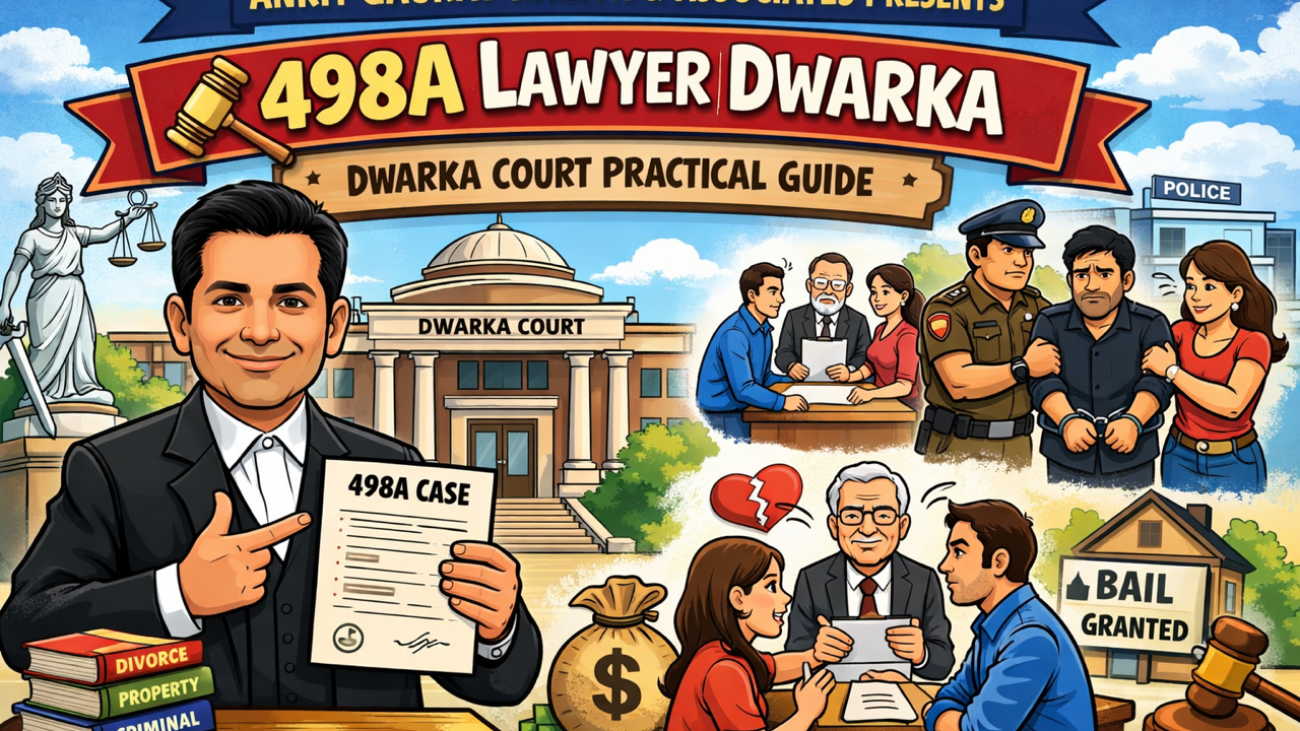
Facing a case under Section 498A IPC? Whether you are a husband, wife, or family member, understanding the legal process at Dwarka Court is crucial. A 498A case can impact your liberty, reputation, property rights, and even ongoing divorce proceedings.
This practical guide explains everything you must know before stepping into court — from FIR to bail, trial, settlement, and connected matrimonial disputes.
⚖️ What is Section 498A IPC?
Section 498A deals with cruelty by husband or his relatives towards a married woman. Cruelty includes:
Physical or mental harassment
Dowry-related demands
Threats or coercion
Continuous emotional abuse
It is a cognizable and non-bailable offence, which means police can register FIR and arrest without court permission (subject to Supreme Court guidelines).
🏛 498A Procedure in Dwarka Court – Step-by-Step
1️⃣ FIR Registration
The complaint is usually filed at the local police station having jurisdiction over Dwarka. After investigation, police file a chargesheet before the Magistrate at Dwarka Court.
2️⃣ Bail Matters in Dwarka Court
In most 498A cases, the first legal priority is anticipatory bail or regular bail.
A practical strategy considers all parallel cases together.
📌 Common Mistakes People Make
❌ Ignoring legal notice before FIR
❌ Delaying anticipatory bail
❌ Filing emotional replies without legal drafting
❌ Fighting criminal case without planning divorce strategy
❌ Not documenting financial transactions
Avoiding these mistakes can reduce long-term damage.
🛡️ Bail Matters Dwarka Court – Practical Insights
In bail hearings, courts usually examine:
Nature of allegations
Specific role of each accused
Medical evidence
Settlement possibility
Cooperation with investigation
Preparation of detailed anticipatory bail application, supported by facts and documentation, increases success probability.
🤝 Is Settlement Possible in 498A?
Yes. Many cases are resolved through:
Mutual consent divorce
Mediation at Dwarka Court
Settlement agreements
Quashing of FIR before High Court
But settlement must be structured legally to avoid future complications.
📈 Why Experience Matters in 498A Cases
498A is not just a criminal file — it is a family dispute converted into litigation. It requires:
✔ Trial skills
✔ Negotiation ability
✔ Drafting precision
✔ Understanding of matrimonial law
✔ Practical courtroom exposure
With 18+ years of experience practicing in Dwarka Court, I have handled numerous 498A, divorce, property and bail matters. Practical courtroom experience helps in:
Securing timely bail
Preventing unnecessary arrests
Structuring strategic settlements
Protecting property and financial interests
Coordinating criminal and matrimonial cases efficiently
Experience inside Dwarka Court matters more than theoretical knowledge.
🏆 Choosing the Top & Best Advocate in Dwarka Court
When selecting a 498A lawyer, ask:
Do they regularly appear in Dwarka Court?
Do they handle both criminal and divorce litigation?
Do they understand bail strategy?
Can they manage connected property disputes?
A practical courtroom lawyer who understands local procedure gives a significant advantage.
📚 Frequently Asked Questions (FAQ)
Is arrest mandatory in 498A?
No. Supreme Court guidelines require police to follow proper procedure before arrest.
Can 498A be withdrawn?
It can be quashed by High Court after settlement.
How long does a 498A case take?
It depends on evidence and settlement possibility. Strategic handling reduces unnecessary delay.
🎯 Final Advice
498A cases are sensitive and emotionally charged. Early legal strategy determines whether the matter escalates or stabilizes.
Divorce does not always have to be painful, aggressive, or dragged on for years. When both husband and wife mutually agree to separate, mutual divorce in becomes the most dignified, time-saving, and legally secure option.
With the right legal guidance, mutual divorce in Dwarka made simple and can be completed smoothly, respectfully, and with minimal emotional stress. As an advocate practicing for over 18+ years in Dwarka Court, New Delhi, I have helped hundreds of couples achieve mutual divorce in Dwarka through a structured and hassle-free legal process.
This guide explains how to file mutual divorce, step-by-step, so you never miss anything important.
What Is Mutual Divorce?
📌 Mutual divorce is a divorce by consent where:
Both spouses agree that the marriage has irretrievably broken down
They mutually decide on alimony, child custody, visitation, and property settlement
The divorce is filed jointly under Section 13B of the Hindu Marriage Act (or relevant personal law)
In mutual divorce in Dwarka, cooperation and correct legal drafting are the keys to quick relief.
Why Choose Mutual Divorce in Dwarka Court?
✔ Faster than contested divorce
✔ Lower emotional and financial burden
✔ Complete control over settlement terms
✔ Privacy and dignity maintained
✔ Less court appearances
Dwarka Court is one of Delhi’s most efficient district courts for family matters, making mutual divorce in Dwarka Court an ideal choice when guided by an experienced advocate.
Step-by-Step Process to File Mutual Divorce in Dwarka Court
Step 1: Fulfil Basic Eligibility
📝 To file mutual divorce in Dwarka, you must:
Be living separately for at least 1 year
Mutually agree to dissolve the marriage
Settle issues related to maintenance, children, and assets
Step 2: Drafting the Mutual Divorce Petition
📄 This is the most critical stage. A well-drafted petition ensures:
My approach ensures mutual divorce in Dwarka Court is not just fast, but also legally secure.
How We Assist You in Easy Mutual Divorce in Dwarka
🤝 Personal consultation
🖊 Precise drafting of petitions
⚖ Strong representation in Dwarka Court
📅 Minimal court visits
🕊 Peaceful resolution with respect
Our goal is simple: easy, stress-free mutual divorce in Dwarka, handled professionally from start to finish.
Final Words
If you are considering mutual divorce in Dwarka, do not navigate the process alone. The right legal guidance can save months of time, unnecessary stress, and future disputes.
📞 Speak to an experienced Dwarka Court advocate today
📍 18+ years of trusted legal practice
⚖ Specialised in mutual divorce in Dwarka Court
Call Now for Confidential Consultation
📱 Mobile: +91-9899085554
📱 Alternate: +91-9811885554
Let us help you complete your mutual divorce in Dwarka Court with dignity, clarity, and peace of mind.