
Best Criminal Advocate Dwarka

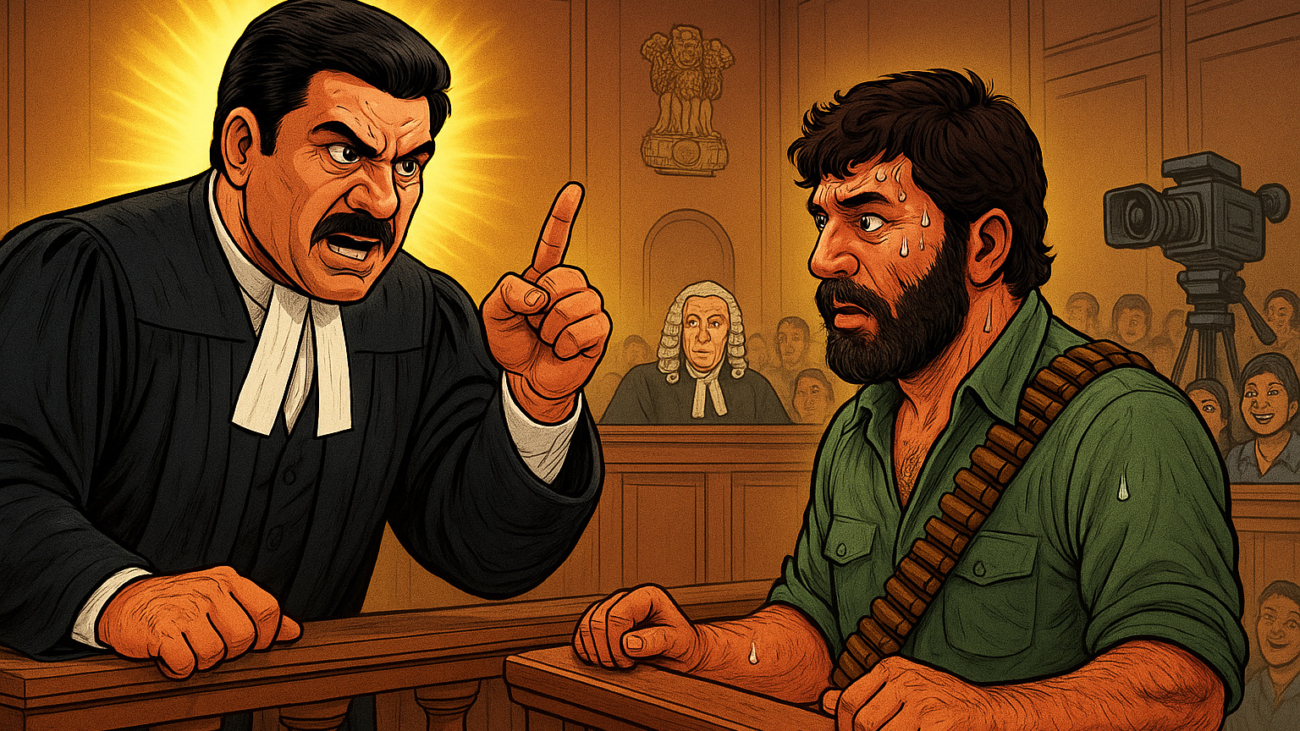
⚖️ How Advocates Can Grill a Police Officer Misusing His Position in Dwarka Court, New Delhi

Top Advocate in Dwarka Court

⚖️ How Advocates Can Grill a Police Officer Misusing His Position- Dwarka Court

The uniform of a police officer represents law and order, but unfortunately in Dwarka Court Jurisdiction, some misuse this sacred duty. From forcing illegal settlements inside the police station, demanding bribes to “close” cases, destroying or hiding evidence, or even beating an accused in custody — such acts are not only immoral but illegal.

An advocate’s role is not just to defend the client but also to ensure that misuse of police power is exposed in court. Here are effective strategies:


📜 1. Know the Legal Arsenal
• IPC Provisions:
• Sec. 166 IPC – Public servant disobeying law with intent to cause injury.
• Sec. 201 IPC – Causing disappearance of evidence.
• Sec. 323/325 IPC – Assault on accused in custody.
• Sec. 383 IPC – Extortion by threat.
• CrPC Provisions:
• Sec. 154 – Mandatory registration of FIR.
• Sec. 161/162 – Recording and use of witness statements.
• Sec. 172 – Case diary – defence can cross-check if officer uses it.
• Constitutional Safeguards:
• Art. 21 – Protection of life and liberty.
• D.K. Basu Guidelines – Mandatory safeguards in arrests and detention.


🛡️ 2. Cross-Examination in Court

A corrupt officer’s weakest point is his record. During trial:
• Confront him with contradictions between the FIR, case diary and charge sheet.
• Ask why material evidence/witness statements were omitted.
• Highlight any illegal “settlement” attempt – this shows abuse of power.
• Expose custody violence by producing medical reports, injury photographs, or witness testimony.
• Demand CCTV footage of the police station/cell (mandated in law).

Remember, courts take procedural lapses seriously. A single inconsistency can demolish an officer’s credibility.


📝 3. Filing Complaints Against Misuse

Beyond the courtroom, advocates should document and report misconduct:
• Lodge complaints with the Station House Officer, insist on DD entry.
• Escalate to Superintendent of Police or Commissioner.
• File before the State Police Complaints Authority or NHRC/SHRC for custodial torture, extortion, or illegal detention.
• Move the Magistrate under Sec. 190 CrPC for cognizance of offences committed by police officials.
• File RTI applications to obtain records and expose delays or tampering.


🔍 4. Practical Tips to “Grill” a Cop
• Always insist on case diary inspection if officer relies on it.
• Use independent witnesses and medical evidence to counter false police versions.


🌟 Conclusion

A police officer misusing his position is not above law. The courtroom is where truth meets record — and an advocate can ensure that corruption is grilled, exposed, and punished. By combining sharp cross-examination, solid documentation, and proper complaints, you not only protect your client but also safeguard the integrity of the justice system.


🤝 Pre-Litigation Support: Solving Problems Before Court

Many clients approach us before filing a case. As a Criminal Case Advocate Dwarka Court, we strongly believe:

👉 Not every dispute should reach the courtroom.

How We Help Before Litigation:

  • Legal consultation and case analysis
  • Drafting legal notices
  • Negotiation and settlement discussions
  • Risk assessment and strategy planning

Clients from Janakpuri, Vikaspuri, Uttam Nagar, Palam Village, Najafgarh, and Samalka often resolve disputes at this stage itself.

Therefore, hiring a Criminal Case Advocate Dwarka Court early can save time, money, and emotional stress.

🏛️ Litigation Stage: Strong Representation When It Matters Most

When the matter reaches court, you need a Top and Best Advocate in Dwarka Court who understands the system deeply.

As a Criminal Case Advocate Dwarka Court, we provide:

  • Case filing and drafting
  • Bail applications (regular & anticipatory)
  • Evidence handling and cross-examination
  • Strong courtroom representation

Our presence in Dwarka Court allows quick filings and faster action—a major advantage over non-local lawyers.

📍 Advantage of Choosing a Local Dwarka Court Advocate

Being a Criminal Case Advocate Dwarka Court is not just about experience—it is about local expertise.

Why Local Matters:

  • Familiarity with court procedures
  • Understanding of court staff and filing systems
  • Faster case movement
  • Immediate availability in urgent matters

We regularly handle cases from:

Dwarka North, Dwarka South, Sector-23, Bindapur, Dabri, Chhawla, Delhi Cantonment, Baba Haridas Nagar, Kapashera, Jaffarpur Kalan, Mohan Garden

This local presence ensures efficient and timely legal support.

💼 Transparency in Advocate Fees – Our Commitment

Clients often fear hidden charges. However, as a Best Criminal Disputes Advocate Dwarka Court, we follow a strict ethical system:

✅ Clear Fee Structure

We explain fees in detail before starting the case.

✅ Written Fee Agreement

Every engagement includes a proper Lawyer-Client agreement.

✅ Receipts & Acknowledgements

Every payment is documented.

✅ No Hidden Charges

What we commit is what you pay.

Therefore, when you choose a Criminal Case Advocate Dwarka Court, you deserve clarity—and we ensure it.

advocate in Dwarka Court
Advocate in Dwarka Court

📞 Trust, Accessibility & Professional Standards

Legal matters are stressful. Therefore, clients need more than just a lawyer—they need support.

As a Best Crime Lawyer Dwarka, we provide:

  • 📞 Availability on call
  • 💬 Dedicated WhatsApp support
  • ⚡ Quick responses
  • 🤝 Honest legal advice

Over 18+ years, clients have trusted us not just for results, but for ethical and transparent dealings.

❤️ The Emotional Side of Legal Fees

Behind every case, there is a story—fear of arrest, family disputes, financial stress.

As a Criminal Case Advocate Dwarka Court, I always remind clients:

👉 You are not just paying fees. You are investing in protection, strategy, and peace of mind.

Therefore, we always aim to keep fees reasonable and justified.

🏆 Why Clients Choose Us in Dwarka Court

✔ 18+ Years Experience

✔ Local Court Expertise

✔ Transparent Fee Structure

✔ Strong Criminal Practice

✔ Trusted by Clients Across Dwarka

Whether you need a Criminal Case Advocate Dwarka Court or guidance from a Top Regular Bail & Anticipatory Bail Lawyer Dwarka, we are here to help.

📢 Call-To-Action

⚖️ Facing a legal issue? Don’t wait.

📞 Call now for honest legal guidance:- 9899085554, 9811885554.

💬 WhatsApp for quick consultation

Choose a trusted Criminal Case Advocate Dwarka Court who values transparency, trust, and results.

❓ FAQ Section

1. How much does a Criminal Case Advocate Dwarka Court charge?

Fees depend on case type, complexity, and stage. However, we always provide a clear and transparent fee structure.

2. Do you provide written fee agreements?

Yes, every case includes a proper Lawyer-Client agreement.

3. Are there any hidden charges?

No. We follow a strict no hidden charges policy.

4. Can disputes be resolved without going to court?

Yes, many cases are resolved during pre-litigation through negotiation and legal notices.

5. Do you handle urgent bail matters?

Yes, we are experienced as a Top Regular Bail & Anticipatory Bail Lawyer Dwarka.

FOLLOW US FOR MORE LEGAL UPDATES ON :-

civil advocate in Dwarka court
Criminal & Civil advocate in Dwarka court

advocate in Dwarka Court

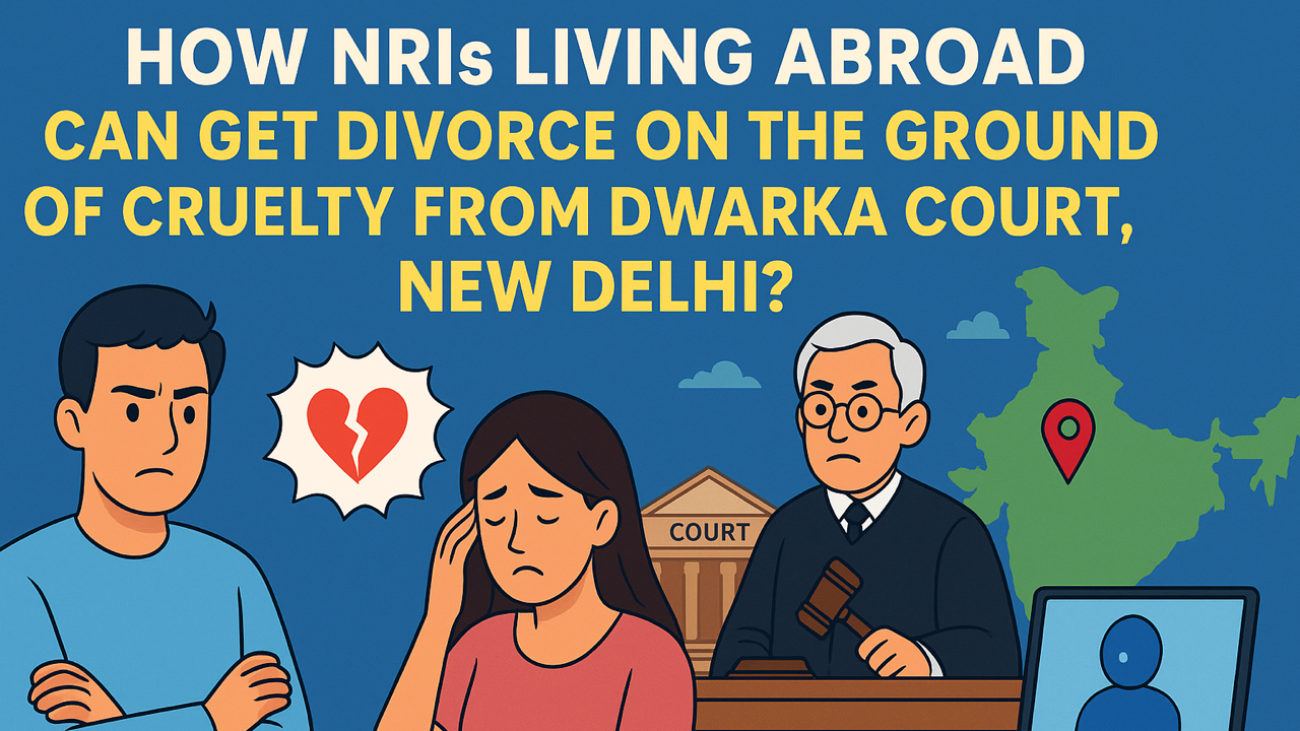
How NRIs Living Abroad Can Get Divorce on the Ground of Cruelty from Dwarka Court, New Delhi? 🌏⚖️

Divorce litigation becomes even more complex when one spouse is living abroad. For Non-Resident Indians (NRIs), distance, time-zone differences, and unfamiliarity with procedures often create confusion and anxiety. However, Dwarka Court, New Delhi (South-West District) has emerged as one of the most efficient and technologically adaptive court complexes for handling such matters, especially NRI matrimonial disputes.

After 18+ years of practice in New Delhi’s District Courts—particularly Dwarka Court—let me clarify one essential truth:

👉 No advocate can secure a decree of divorce on the ground of cruelty unless you provide strong, clear, and admissible evidence.

Law is evidence-driven. Experience only matters when it is combined with your cooperation and factual material.

Why NRI Clients Can File Divorce in Dwarka Court? 🏛️

There are multiple territorial jurisdiction grounds under the Hindu Marriage Act (HMA) that make Dwarka Court the correct forum. You may file your case in Dwarka Court when:

1️⃣ Marriage was solemnized within South-West Delhi

If your wedding took place in Delhi—especially within areas like Dwarka, Palam, Najafgarh, Vikas Puri, Uttam Nagar, Sagarpur, Dabri—Dwarka Court has clear jurisdiction.

2️⃣ Wife last resided within the South-West District

Under Section 19 of HMA, the wife’s last place of residence gives Dwarka Court the authority to hear the matter.

3️⃣ Both parties last resided together in South-West District

If the matrimonial home was in Dwarka or nearby areas, the case can be filed here even if you are currently abroad.

4️⃣ Husband resides or works for gain in South-West Delhi

If you have a residence, rented accommodation, or employment address here, the court can exercise jurisdiction.

Why NRI Clients Prefer Lawyers With Strong Practice in Dwarka Court? 👨‍⚖️✨

✔ Deep familiarity with local court procedures

Every court has its own working culture, timing patterns, document preferences, and registry’s way of handling filing defects. A seasoned Dwarka practitioner knows exactly how to navigate these efficiently.

✔ Strong coordination with court staff & filing counters

For NRIs, avoiding unnecessary adjournments is crucial. An advocate who regularly practices here ensures smooth listing, timely filing, and quick rectification of objections.

✔ Understanding of NRI matrimonial complexities

Issues like foreign addresses, apostille of documents, POA attestation, and overseas evidence need a lawyer experienced in international matrimonial litigation.

✔ Practical know-how for Virtual Hearing (VC) matters

Dwarka Courts have become highly VC-friendly. Experienced local advocates know how to ensure smooth hybrid appearances.

You Can Appear Through Video Conferencing 💻📱

If you’re unable to travel to India, the court may permit appearance through VC (Video Conferencing)—especially for evidence, counselling sessions, and arguments.

Technology is playing a critical role today:

📌 Hybrid hearings

📌 E-filing in some matters

📌 WhatsApp/email updates

📌 Online certified copy applications

This convenience allows NRIs to litigate without physical presence on most dates.

What Constitutes Cruelty for NRI Divorce Cases? 💔❗

Cruelty under Section 13(1)(ia) HMA includes both physical and mental cruelty. Common grounds used by NRIs include:

🌐 Typical Grounds of Cruelty for NRIs

  • Constant abuse, humiliation, or threats
  • Regular fights and mental harassment
  • False criminal cases filed against the spouse or family
  • Denial of conjugal rights without reasonable cause
  • Abandonment or refusal to join spouse abroad
  • Excessive interference by in-laws
  • Financial exploitation, forcing money transfers, or harassment for funds
  • Blackmailing, emotional manipulation, cyber harassment
  • Making false allegations affecting career abroad
  • Refusing visa cooperation, intentionally sabotaging professional life
  • Public insults or sharing defamatory content online

Remember, merely alleging cruelty is not enough. You must prove it.

What Evidence Do NRI Clients Need to Provide? 📂🔍

This is the heart of your case. The court needs tangible, admissible, and consistent evidence.

Essential Evidence Under HMA for Cruelty Cases

📌 WhatsApp chats, emails, messages showing abuse, threats, or unreasonable behaviour

📌 Audio/Video recordings (lawful, non-staged, non-manipulated)

📌 Photographs showing injuries, broken objects, violent incidents

📌 Medical records for physical harm or psychological counselling

📌 Police complaints, Daily Diary (DD) entries, PCR calls

📌 Flight records or travel history showing desertion or refusal to join abroad

📌 Bank statements showing financial cruelty or unusual withdrawals

📌 Witness statements—family members, neighbours, colleagues

📌 Proof of false criminal cases filed by spouse

📌 Proof of visa refusal due to spouse’s non-cooperation

📌 Emails/letters requesting spouse to join abroad (no response = evidence of cruelty/desertion)

Your advocate builds the entire case around your evidence.

Why Experience & Precision Matter in Choosing the Right Advocate 🎯👨‍⚖️

1️⃣ Courtroom precision comes only with long practice

Matrimonial law is emotional, technical, and highly procedural. A seasoned lawyer knows how judges think, what evidence matters, and how to structure arguments.

2️⃣ Experienced advocates avoid delays

Proper drafting, proper filing, and proper pre-analysis prevent unnecessary adjournments—crucial for NRIs.

3️⃣ Strong cross-examination skills

Winning a cruelty case often depends on exposing contradictions in the opposite party’s testimony.

4️⃣ Strategy & foresight

An experienced advocate knows when to push, when to settle, and when to seek judicial intervention.

5️⃣ Better negotiation for settlement or mutual consent

Experience brings balance—something essential in emotionally charged cases.

“How NRIs Can Get Divorce on Cruelty Grounds from Dwarka Court, Delhi – Complete Guide”

#NRIDivorce #DwarkaCourt #CrueltyGrounds #FamilyLawIndia #DelhiLawyer #IndianMatrimonialLaw #VirtualHearing #NRILegalHelp #DivorceLawyerDelhi #HMA13

Consult an experienced advocate to determine the most suitable mode of service based on the facts of your case and court practice.

Contact me for Consultation :- 9899085554, 9811885554

Ankit Gaurav Kainth Advocate, Dwarka Court, Chamber No.728, 7th Floor, Dwarka, New Delhi

https://share.google/4r7kHm3s4da3OS9rS

Follow us for more Legal & Recent Updates :-

3470BA4D-3C01-4A1E-8F5F-7EF9DE44D00D

“How to Get Divorce in Dwarka Court: Top 10 Supreme Court Citations Every Client Must Know”

Divorce in Dwarka Court, Family Cases: Expert Guide + 10 Most Important Supreme Court Judgments.

Top Supreme Court Judgments on Divorce | Complete Guide for Dwarka Family Court Clients

Best 10 Supreme Court Judgments for Divorce | Guide to Filing Divorce in Dwarka Family Court, Delhi.

Introduction

Divorce is never easy — emotionally, socially or legally. But if a marriage becomes unworkable, sometimes ending it with dignity is the only practical solution. For those approaching a family court such as the one in Dwarka Court (New Delhi), knowing the landmark rulings of Supreme Court of India (SC) can make a big difference. These judgments shape how divorce petitions are framed, argued, and decided.

Here I outline ten of the most important Supreme Court judgments / principles that influence divorce law in India — particularly under the Hindu Marriage Act, 1955 (HMA) — along with “important notes” on each, and then offer my practical view and guidance: how a client in Dwarka Family Court may approach divorce “like a pro.”

Top 10 Supreme Court Judgments / Principles for Divorce

1. Irretrievable Breakdown / Irreconcilable Differences — Judicial Recognition

  • In a recent ruling, SC held that even though “irretrievable breakdown of marriage” is not explicitly a ground under HMA, the Court — under its constitutional powers (Article 142) — can dissolve a marriage when it is “emotionally perished, dead, unworkable and beyond repair.”  
  • The Court emphasized that forcing a couple to continue living together when there is no possibility of reconciliation serves no purpose and only prolongs agony.  
  • Important Note: This judgment is a game-changer because it moves jurisprudence beyond the rigid “fault-based” grounds (cruelty, desertion, adultery), by recognizing “no-fault but failed marriage” as a valid basis for divorce — provided facts justify it. Courts will evaluate: period of separation, when last cohabited, attempts at reconciliation, gravity of allegations, etc.  

2. Long Separation + Mental Cruelty / Failed Marital Relationship — Naveen Kohli v. Neelu Kohli (2006, 4 SCC 558)

  • In this case, SC noted that when parties have lived separately for a “sufficient length of time,” petition for divorce may be granted — since continuation of an unworkable marriage causes more misery.  
  • The Court observed that “cruelty” under HMA need not always be active; prolonged hostility, humiliation, false accusations, separation etc., may cumulatively amount to mental cruelty.  
  • Important Note: This helps clients who may not have overt “violent cruelty” but have undergone years of alienation, neglect or irreparable breakdown. Long separation with no hope of reconciliation becomes a valid ground.

3. Definition of “Mental Cruelty” — Samar Ghosh v. Jaya Ghosh (2007, 4 SCC 511)

  • In this landmark case, SC provided “illustrative guidelines” of what may constitute mental cruelty under Section 13(1)(i-a) of HMA. These are not exhaustive, but indicative.  
  • Examples include: sustained abusive or humiliating behaviour; refusal to fulfil marital obligations; public humiliation; false accusations of immorality; refusal to have children; long separation making cohabitation impossible.  
  • The Court also stressed that “cruelty” must be evaluated from the perspective of a “reasonable” spouse — not by sensitivity of petitioner. Everyday conflicts, small irritations or normal wear-and-tear do not count.  
  • Important Note: This case is often the foundation when clients come with allegations of “emotional cruelty,” “mental harassment,” “denial of marital rights,” especially where there are no physical abuses but persistent neglect, hostility or alienation.

4. Broad Application of “Cruelty” — V. Bhagat v. D. Bhagat (1994, 1 SCC 337)

  • In this older but foundational case, the Court held that mental cruelty under HMA must be considered in light of the social status, background, capacity to endure, and individual circumstances. What is cruelty in one context may not be in another.  
  • The Court observed that cruelty does not require physical violence or injury; mental pain, suffering, anguish, intolerability of continued cohabitation suffice.  
  • Important Note: This judgment remains relevant — especially in Delhi courts — for clients whose suffering is intangible (emotional neglect, humiliation, pattern of hostility). It ensures that courts do not look only for physical abuses.

5. Adultery / Extramarital Relations as Component of Cruelty — e.g. Savitri Pandey v. Prem Chandra Pandey (AIR 2002 SC 591)

  • In this case (and related jurisprudence), extramarital affairs, if proved, have been held to amount to mental cruelty, causing indignity, social humiliation, breach of trust, and therefore valid ground for divorce.  
  • Important Note: For clients in Dwarka, if there is credible evidence (phone records, testimonies, etc.) of infidelity, this ground remains viable — though courts today treat allegations carefully, and a mere suspicion may not suffice.

6. Provision for Alimony / Maintenance even in Void / Voidable or Broken Marriages — Sukhdev Singh v. Sukhbir Kaur (2025) (recent)

  • In a 2025 decision, SC ruled that even when a marriage is declared void under HMA, a spouse may be entitled to interim maintenance or permanent alimony under Sections 24/25 of HMA.  
  • Important Note: This judgment brings hope to people whose marriage may be void or voidable (for example due to earlier existing marriage, bigamy, etc.) — they may still claim financial relief even if the marriage is annulled.

7. Preventing Misuse — Void Second Marriages / Bigamy and Legal Consequences — Sarla Mudgal v. Union of India (1995, AIR 1995 SC 1531)

  • In this important precedent, the SC held that a second marriage obtained via conversion (to Islam) without dissolving the first marriage remains void, and such bigamy constitutes an offence under Indian Penal Code — thus emphasizing the sanctity of the first marriage and need for formal dissolution.  
  • Important Note: For clients in Dwarka (or elsewhere), this serves as caution: one cannot “escape” first marriage by conversion or back-door mechanisms — formal divorce/decree of annulment must precede any new marriage.

8. Judicial Finality — SC Encouraging “Quietus” to Prolonged Matrimonial Litigation: e.g. Manju Kumari Singh v. Avinash Kumar Singh (2018 SCC OnLine SC 739)

  • In this case, SC observed that where parties have lived separately for long, all mediation / conciliation attempts failed, and litigation has dragged on, giving a final decree may bring peace and closure — especially when there are children grown-up and settlement is possible.  
  • Important Note: This demonstrates the Court’s sensitivity to mental distress, social impact and future of children; showing that SC can — and will — intervene to end “never-ending matrimonial warfare.”

9. Cooling-Off Period (Mutual Consent) Can Be Waived — Role of Consent under HMA’s Section 13B

  • Under HMA, mutual-consent divorce typically requires a waiting (cooling) period (six months). But SC has held that in appropriate, exceptional situations — such as irretrievable breakdown, long separation and mutual agreement — this waiting period can be waived.  
  • Important Note: For couples seeking amicable separation and divorce by mutual consent, this flexibility helps expedite the process — especially useful in a busy family court like Dwarka, saving time, cost and emotional burden.

10. “Fault Theory” Remains, but Courts Interpret It Broadly — Understanding Statutory vs Judicial Grounds

  • Under the HMA, Section 13(1) lists “fault-based” grounds (adultery, cruelty, desertion, etc.) for divorce. SC judgments — such as those above — show that fault need not be only physical or obvious; mental cruelty, desertion, prolonged separation, breakdown of relationship may all count.  
  • The Court’s jurisprudence reflects that “fault” is not narrowly defined; courts must look at totality of conduct, whether continued cohabitation is reasonable, and whether marriage has become a mere formality.  
  • Important Note: Clients should not assume that only dramatic events (violence, bigamy etc.) give grounds for divorce — repeated neglect, emotional cruelty, or long separation also qualify.

My View (as a Practitioner) — Divorce Cases in Dwarka Court, Delhi: How I Would Approach Them

Having seen several cases in Delhi’s Family Courts (including Dwarka), I believe that these developments make divorce more accessible — but proper strategy, documentation, and realistic expectations are essential. Here is how I would guide a client “like a pro”:

  1. Frame the Petition Based on Facts, Not Emotions Alone
    • Use facts to show prolonged separation, breakdown of marriage, lack of cohabitation, no chance of reconciliation.
    • If there is cruelty — whether mental, emotional, neglect, indifference — gather evidence: WhatsApp messages/chats, proof of separation, statements of friends/family, mail records, financial neglect, refusal to fulfil marital obligations, etc.
  2. Decide Between “Contested Divorce” vs “Mutual Consent / Waiver”
    • If both spouses agree, a mutual-consent divorce could be fastest; but ensure consent is free, informed, documented.
    • If there are differences or disputes (custody, alimony, behaviour), go the contested route — but anchor it on SC precedents (e.g. modern broad definition of cruelty / irretrievable breakdown).
  3. Prepare for Alimony / Maintenance — Even in Void / Voidable Cases
    • If marriage is being annulled or declared void (void second marriage, bigamy, etc.), you can still claim maintenance / interim alimony under law as per recent SC judgment. This matters in Delhi, where cost of living is high.
  4. Use Separation/Cohabitation Gap Strategically
    • Long separation itself is a strong ground now (see Naveen Kohli, Samar Ghosh). Many clients underestimate this. Show evidence of no cohabitation, no contact, estrangement, efforts of reconciliation failed — this helps even if there is no clear “violence.”
  5. Avoid “Over-Legalising” — But Don’t Under-Document Either
    • Courts dislike petty “non-cooperation” or trivial complaints — they expect a threshold for cruelty. But also avoid vague allegations. Present well-documented, concrete behaviour that objectively shows breakdown.
  6. Be Realistic — Litigation Takes Time; But With Right Approach, Family Court in Dwarka Can Be Approached Confidently
    • Family courts in Delhi are busy. But if the case is built properly, based on SC precedents, with clarity of facts and reasonable expectations, one can aim for a solid hearing.

How to File a Divorce “Like a Pro” in Dwarka / Delhi: Step-by-Step Guide

  1. Consult an experienced family-law lawyer. Review facts, documents, separation history, communications, behaviour.
  2. Decide grounds: cruelty, irretrievable breakdown, mutual consent, desertion, etc., whichever fits facts.
  3. Draft the petition under HMA (or relevant law) citing relevant SC judgments (as above) for support.
  4. Attach affidavits, proof of separation/cohabitation gap, correspondence, evidence of conduct, assets/income for alimony.
  5. Attend mandatory processes (reconciliation attempts, mediation if required), but be prepared to push for scrutiny under SC precedents.
  6. Be prepared for cross-examination if allegations involve cruelty / misconduct — ensure evidence backing.
  7. If mutual consent divorce, document voluntary agreement, settlement of alimony, custody, assets — and consider requesting waiver of cooling period if justified.
  8. After decree, complete ancillary proceedings (alimony, property settlement, custody, maintenance) — courts in Delhi generally respect SC-based precedents.

Conclusion

Divorce law in India has evolved significantly — from rigid fault-based grounds to a more realistic and humane jurisprudence recognising irretrievable breakdown, mental cruelty, long separation and overall unworkability of marriage. If you (or your client) are approaching a family court such as in Dwarka, New Delhi, understanding the key judgments of the Supreme Court is not just academic — it is strategic and practical.

With proper facts, documentation, and realistic strategy — built on the pillars of precedent such as Naveen Kohli, Samar Ghosh, V. Bhagat, Sukhdev Singh v. Sukhbir Kaur, Sarla Mudgal, among others — one can approach divorce proceedings confidently, with clarity, and a fair chance for a just outcome.

  • Divorce in Dwarka CourtDivorce lawyer in Dwarka
  • How to file divorce in Dwarka Family Court
  • Supreme Court judgments on divorce
  • Best divorce lawyer in Delhi
  • Divorce on the ground of cruelty
  • Irretrievable breakdown of marriage judgments
  • Mutual consent divorce Dwarka
  • Contested divorce Delhi
  • Important divorce citations
  • IndiaSupreme Court rulings on marital cruelty
  • Dwarka Family Court legal advice
  • Divorce case procedure Delhi
  • Divorce filing process step by step
  • Mental cruelty divorce case laws
  • Separation and divorce Delhi
  • Best Supreme Court judgments for divorce
  • Filing divorce like a pro
  • Legal guide for divorce clients Delhi

Consult an experienced advocate to determine the most suitable mode of service based on the facts of your case and court practice.

Contact me for Consultation :- 9899085554, 9811885554

Ankit Gaurav Kainth Advocate, Dwarka Court, Chamber No.728, 7th Floor, Dwarka, New Delhi

https://share.google/4r7kHm3s4da3OS9rS

FOLLOW US FOR MORE LEGAL AND RECENT UPDATES:-

https://www.linkedin.com/embed/feed/update/urn:li:share:7413981654014328832?collapsed=1

BEST CHEQUE ADVOCATE IN DWARKA COURT

Best Supreme Court Judgments for Divorce on Grounds of Cruelty | By Experienced Advocate in Dwarka Court

Advocate in Dwarka Court

Explore the most important Supreme Court citations for divorce on cruelty. Clear explanations of mental, emotional, and litigation-based cruelty grounds.

  • All-Time Best Citations for Divorce on the Ground of Cruelty

    Your Ultimate Legal Guide by Advocate Ankit G. Kainth
    When a marriage becomes a source of constant pain, humiliation, or emotional exhaustion, the law provides a powerful remedy—divorce on the ground of cruelty. Over the years, Indian courts have delivered landmark judgments that define, reinterpret, and expand the meaning of “cruelty” under matrimonial laws. Whether you are a litigant, a law student, or a professional, understanding these iconic citations helps in grasping how courts view cruelty in modern marriages.
    Below are the all-time most impactful and frequently relied-upon judgments that shaped the legal landscape of divorce based on cruelty.


    1. K. Srinivas Rao v. D.A. Deepa (2013)

    This landmark Supreme Court judgment is one of the clearest illustrations of emotional and mental cruelty. The Court held that false allegations, filing multiple baseless complaints, and continuous harassment by one spouse amount to cruelty. The ruling emphasized that litigation misuse itself can destroy marital peace.


    2. Naveen Kohli v. Neelu Kohli (2006)

    One of the most quoted cases in divorce jurisprudence, this judgment recognizes that when a marriage has irretrievably broken down and both parties are living in constant bitterness, forcing them to stay together serves no purpose. The Court’s observation that a marriage dead for all practical purposes must be dissolved became a guiding principle.


    3. Shobha Rani v. Madhukar Reddy (1988)

    This classic Supreme Court ruling expanded the definition of cruelty by holding that cruelty need not be physical. Emotional trauma, humiliation, repeated taunts, financial harassment, and conduct making life unbearable are equally potent grounds. This case laid the foundation for psychological cruelty in Indian matrimonial law.


    4. Samar Ghosh v. Jaya Ghosh (2007)

    No discussion on cruelty is complete without this judgment. It serves as a master checklist of what constitutes mental cruelty. The Court listed illustrations such as:
    • Persistent refusal to have marital relationsIndifference or neglectHumiliation in publicUnfounded allegationsLong periods of separation
      This judgment is frequently used by courts as the gold standard for evaluating cruelty.


    5. V. Bhagat v. D. Bhagat (1994)

    A groundbreaking decision where the Court held that long-drawn, bitter litigation itself can be cruelty. When spouses engage in continuous allegations, cross-allegations, and stressful court battles, the emotional strain is considered sufficient ground for divorce. This case is especially relevant in contested matters where hostility has lasted for years.


    Why These Citations Are Considered “All-Time Best”

    These judgments collectively cover every dimension of cruelty:✔ Physical cruelty✔ Emotional and psychological cruelty✔ Social humiliation✔ Litigation harassment✔ Breakdown of marriage✔ Continuous mental agony
    They empower courts to evaluate not just single acts, but the overall impact on the mental peace and dignity of the spouse.


    Final Thoughts

    Cruelty is no longer limited to physical violence. The modern interpretation recognizes emotional harm, loss of dignity, and sustained mental stress as equally damaging. These judgments have shaped a more humane and realistic understanding of marriage and personal freedom.
    If you are facing similar issues or need precise legal guidance on divorce matters, consulting an experienced advocate can provide clarity, strategy, and confidence at every stage.

#divorceoncruelty

#SupremeCourtcrueltyjudgments

#mentalcrueltyinmarriage

#landmarkdivorcecitationsIndia

#bestjudgmentsfordivorceIndia

Consult an experienced advocate to determine the most suitable mode of service based on the facts of your case and court practice.

Contact me for Consultation :- 9899085554, 9811885554

Ankit Gaurav Kainth Advocate, Dwarka Court, Chamber No.728, 7th Floor, Dwarka, New Delhi

https://share.google/4r7kHm3s4da3OS9rS

FOLLOW US FOR MORE LEGAL UPDATES ON :-

Best Advocate in Dwarka Court

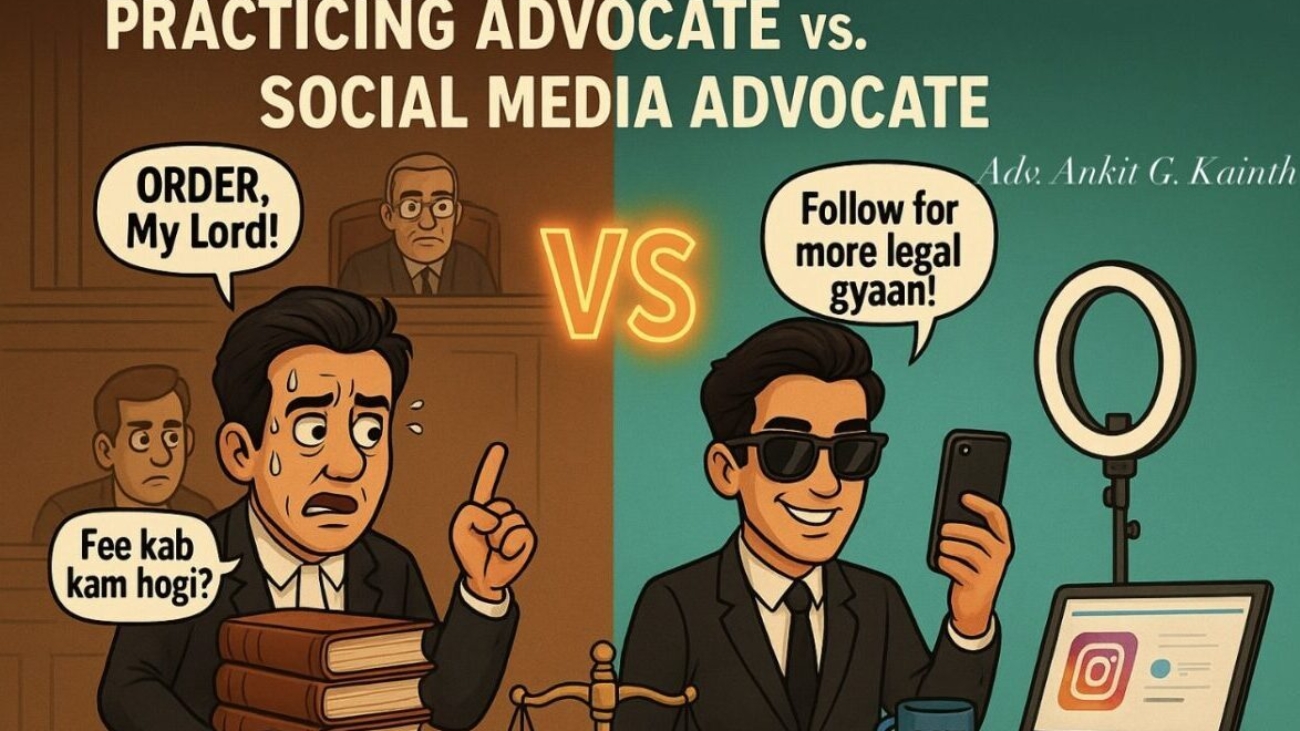
Practicing Advocate vs. Social Media Advocate 🤓📱⚖️

In today’s era, there are two species of Advocate/lawyers roaming freely—
1. Practicing Advocates: Found in courts, drenched in sweat, burdened with files.
2. Social Media Advocates: Found online, drenched in filters, burdened with hashtags.

Let’s decode the epic differences between the two—because trust me, it’s more entertaining than any Netflix drama.

  1. Workstation 🏛️ vs. 📱
    • Practicing Advocate: Courtrooms, bar libraries, dusty registers.
    • Social Media Advocate: Cafés with Wi-Fi, reels with trending songs.
    👉 One-liner: “Court mein date milti hai, Insta pe followers!”

  1. Uniform 👔 vs. 👕
    • Practicing Advocate: Black coat, band, sweaty face.
    • Social Media Advocate: Blazer for DP, T-shirt for reel.
    👉 One-liner: “Practicing advocate wears black, social media advocate adds filters to black.”

  1. Arguments 🎤 vs. 🎶
    • Practicing Advocate: Argues before judges with citations.
    • Social Media Advocate: Argues before comments section with emojis.
    👉 One-liner: “One needs case laws, other just needs good captions.”

  1. Reality ⏳ vs. Views 👀
    • Practicing Advocate: Waits 4 hours for their matter to be called.
    • Social Media Advocate: Waits 4 seconds for likes to roll in.
    👉 One-liner: “Court ka patience > Insta ka algorithm.”

  1. Income 💰 vs. 💕
    • Practicing Advocate: Fee comes late, after multiple reminders.
    • Social Media Advocate: Payment? Nah, just “exposure” and “collabs.”
    👉 One-liner: “Advocate paisa ke liye fight karta hai, influencer spotlight ke liye.”

  1. Clients 👨‍👩‍👦 vs. 👥
    Practicing Advocate: Handles emotional clients shouting “Humari izzat ka sawal hai!”
    • Social Media Advocate: Handles followers shouting “Next reel kab aayegi?”
    👉 One-liner: “One manages affidavits, other manages aesthetics.”
Best Advocate in Dwarka Court
Advocate in Dwarka Court

  1. Legacy 📚 vs. 📸
    • Practicing Advocate: Builds reputation after years in court.
    • Social Media Advocate: Builds reputation after one viral reel.
    👉 One-liner: “Court mein senior ban’ne mein 20 saal, Insta pe sirf 20 seconds.”

Final Verdict ⚖️😂

Both are advocates in their own kingdoms. The practicing advocate fights for justice, while the social media advocate fights for attention. One seeks judgments, the other seeks engagement. Yet both remind us—law is not just about black coats, but also about adapting with time.

👉 Closing one-liner: “Courtroom ho ya Instagram, sabko apni audience chahiye!”

Consult an experienced advocate to determine the most suitable mode of service based on the facts of your case and court practice.

Contact me for Consultation :- 9899085554, 9811885554

Ankit Gaurav Kainth Advocate, Dwarka Court, Chamber No.728, 7th Floor, Dwarka, New Delhi

https://share.google/4r7kHm3s4da3OS9rS

FOLLOW US FOR MORE LEGAL & RECENT UPDATES:-

Criminal lawyer in dwarka court
Criminal lawyer in Dwarka Court

5E85460A-7BFF-4A11-A9CC-417359B15A25

Before Panic, Know the Law – Strong Legal Defences for Husbands in Dwarka Court

In matrimonial litigation, discussions often focus on the rights of wives. However, husbands also have strong legal protections under Indian law, especially when cases are filed in Dwarka Court. With 18+ years of active practice before Dwarka Court, I have represented numerous husbands facing false allegations, exaggerated maintenance claims, property disputes, and criminal complaints.

This article explains the legal remedies available to husbands in Dwarka Court, how to protect yourself, and when to consult a Divorce Lawyer Dwarka, Criminal Lawyer Dwarka, or Property Lawyer Dwarka.

⚖️ Understanding the Reality in Dwarka Court

In matrimonial disputes before Dwarka Court, husbands commonly face:

  • False complaints under Section 498A IPC
  • Domestic Violence cases
  • Maintenance claims under Section 125 CrPC
  • Property and residence disputes
  • Child custody battles

However, the law is balanced. Dwarka Court ensures that misuse of law does not go unchecked. Therefore, husbands have procedural and substantive rights.

🛡️ 1. Right to Defend False Criminal Allegations

When a false FIR is lodged, a husband can:

  • Seek anticipatory bail
  • File for quashing before the High Court
  • Challenge exaggerated allegations through evidence

A seasoned Criminal Lawyer Dwarka can strategically handle Bail Matters Dwarka Court and protect reputation and liberty. Over the years in Dwarka Court, I have secured bail relief and protected clients from unnecessary arrest.

💰 2. Right to Contest Maintenance Claims

Maintenance is not automatic. In Dwarka Court, the husband can:

  • Prove wife’s independent income
  • Show desertion without cause
  • Demonstrate suppression of facts
  • Seek modification of excessive interim maintenance

The court examines income affidavits carefully. Thus, financial transparency is critical in Dwarka Court proceedings.

🏠 3. Property & Residence Rights

Contrary to common belief, a wife does not automatically get ownership in husband’s self-acquired property.

Before Dwarka Court, a Property Lawyer Dwarka can help:

  • Defend self-acquired property rights
  • Contest false shared household claims
  • Protect ancestral assets

In multiple matters at Dwarka Court, I have successfully defended husbands from illegal property occupation claims.

👶 4. Child Custody & Visitation Rights

Under guardianship laws, fathers have equal parental rights. In Dwarka Court, custody decisions are based on:

  • Welfare of the child
  • Financial stability
  • Emotional bonding
  • Educational continuity

Even if custody is granted to the mother, fathers can secure structured visitation orders from Dwarka Court.

📑 5. Right to Seek Divorce on Legal Grounds

A husband can file for divorce in Dwarka Court on grounds such as:

  • Cruelty (mental or physical)
  • Desertion
  • Adultery
  • False criminal complaints

A professional Divorce Lawyer Dwarka ensures documentation, evidence preservation, and strategic pleadings before Dwarka Court.

🚨 6. Protection Against Misuse of Domestic Violence Act

The Protection of Women from Domestic Violence Act is meant for genuine cases. However, if misused, the husband can:

  • Challenge interim residence orders
  • Contest inflated monetary relief
  • Seek dismissal for lack of evidence

Dwarka Court carefully evaluates affidavits and cross-examination.

🎯 Strategic Approach in Dwarka Court

From my 18+ years of litigation in Dwarka Court, I have learned:

  • Early legal advice prevents escalation
  • Documentation is your strongest defense
  • Calm strategy works better than emotional reactions
  • Proper drafting influences judicial perception

Clients from Janakpuri, Vikaspuri, Dwarka North, Dwarka South, Najafgarh, Uttam Nagar, Bindapur and surrounding jurisdictions frequently approach Dwarka Court for relief. Each locality falls within the territorial jurisdiction of Dwarka Court, making it one of the busiest courts in Delhi.

📊 Why Choosing the Right Advocate Matters

If you are searching for the Top and Best Advocate in Dwarka Court, focus on:

  • Experience in matrimonial + criminal litigation
  • Proven record in Bail Matters Court
  • Knowledge of property disputes
  • Transparent strategy

As a practicing advocate with 18+ years exclusively appearing before Court, I bring courtroom insight, procedural command, and tactical negotiation skills.

📍 Jurisdictional Advantage

Litigation strategy changes depending on courtroom practice. Regular practice in Dwarka Court gives:

  • Familiarity with procedural nuances
  • Speed in listing and relief
  • Practical knowledge of filing defects
  • Efficient coordination with registry

This practical exposure makes a significant difference.

❓ Frequently Asked Questions (FAQ)

1️⃣ Can a husband get anticipatory bail in 498A cases?

Yes. Court regularly grants anticipatory bail depending on facts and cooperation.

2️⃣ Is maintenance mandatory?

No. In Dwarka Court, maintenance depends on wife’s income, conduct, and circumstances.

3️⃣ Can a husband evict his wife from self-acquired property?

Ownership rights remain protected. However, residence rights are assessed by Court based on facts.

4️⃣ Can false cases be dismissed?

Yes. With strong evidence and proper representation before Court, false cases can be challenged.

5️⃣ Does father get child custody?

Yes. Court prioritizes welfare of the child, not gender.

🏛️ Final Thoughts

The legal system is not one-sided. Upholds fairness, evidence, and justice. Husbands facing litigation should act wisely, not emotionally. Early intervention by a skilled Divorce Lawyer Dwarka, Criminal Lawyer Dwarka, or Property Lawyer Dwarka can completely change the outcome.

With 18+ years of hands-on experience, I have defended countless clients across Janakpuri, Vikaspuri, Dwarka North, Dwarka South, Najafgarh, Uttam Nagar, Bindapur and nearby areas.

📞 Call to Action

If you are facing matrimonial, criminal, property, or Bail Matters, consult an experienced professional immediately.

Book a confidential consultation today and protect your rights before Court. ⚖️

https://share.google/znGCrPkZYMJG4P3BD

Consult an experienced advocate to determine the most suitable mode of service based on the facts of your case and court practice.

Contact me for Consultation :- 9899085554, 9811885554

Ankit Gaurav Kainth Advocate, Dwarka Court, Chamber No.728, 7th Floor, Dwarka, New Delhi

https://share.google/4r7kHm3s4da3OS9rS

https://www.instagram.com/reel/DTzDA-6ic_c/?utm_source=ig_web_copy_link&igsh=MzRlODBiNWFlZA==

Follow us for More Legal updates on :-

Civil advocate in Dwarka court

Don’t Risk Your Case – Choose a Lawyer Who Lives and Breathes Dwarka Court (2026)

People often underestimate how important it is to hire a lawyer who regularly practices in the same court where their case is filed.

1. Understanding of Court Environment

A local lawyer is familiar with Dwarka Court’s procedures, staff, filing etiquettes, and judge-specific working styles.

2. Faster Filing & Case Movement

Since the lawyer is available on-site, filing documents, case follow-ups, and urgent applications happen quickly.

3. Practical Knowledge Matters

Local practitioners know which arguments work better, how to navigate complex court days, and how to avoid unnecessary delays.

4. Easy Availability for Clients

Meeting, discussing strategies, or submitting documents becomes easier when the lawyer is close to the court.

5. Better Representation & Confidence

A lawyer who appears daily in Dwarka Court is more confident with court timings, cause-lists, and judge behaviour—leading to better results.

Consult an experienced advocate to determine the most suitable mode of service based on the facts of your case and court practice.

Contact me for Consultation :- 9899085554, 9811885554

Ankit Gaurav Kainth Advocate, Dwarka Court, Chamber No.728, 7th Floor, Dwarka, New Delhi

https://share.google/4r7kHm3s4da3OS9rS

Follow us for more Legal Updates:-

⚖️ Why Choose a Local Lawyer for District Court Dwarka? (2026 Practical Insight)

When a legal dispute arises, most clients focus only on “Who is the best lawyer?”
But an equally important question is — “Does the lawyer regularly practice in the same court where my case is filed?”

If your matter is before Dwarka Court, choosing a lawyer who appears there daily can make a measurable difference in strategy, speed, and results.

With 18+ years of continuous practice in Dwarka Court, I have personally observed how local courtroom experience impacts outcomes.

Let us understand this practically.


🏛️ 1️⃣ Understanding the Court Environment

Every court has its own functioning style.

A local lawyer practicing regularly in Dwarka Court understands:

✔ Filing procedures and registry objections
✔ Court staff coordination
✔ Daily cause-list patterns
✔ Bench-specific working styles
✔ Practical courtroom discipline

These are not written in books — they are learned through consistent physical presence.


📂 2️⃣ Faster Filing & Quicker Case Movement

Legal strategy is not just about arguments. It is also about timing.

When your advocate is regularly present at Dwarka Court:

  • Urgent applications can be filed immediately
  • Defects can be removed the same day
  • Case status can be checked personally
  • Listing issues can be followed up promptly

Outstation lawyers may need coordination time. A local lawyer acts instantly.

In bail matters, stay orders, and injunctions — speed often determines success.


⚖️ 3️⃣ Practical Knowledge Beyond Theory

Courtroom litigation is not academic law — it is applied law.

A regular practitioner at Dwarka Court knows:

  • Which arguments receive judicial attention
  • How evidence is typically scrutinized
  • How to structure anticipatory bail
  • How mediation trends work in matrimonial disputes
  • How property disputes often convert into criminal complaints

This practical knowledge cannot be replaced by reputation alone.


👥 4️⃣ Easy Accessibility for Clients

Clients often need:

  • Quick meetings
  • Urgent documentation review
  • Strategy discussions before hearing
  • Immediate response in emergencies

When your lawyer’s chamber is in Dwarka Court premises, coordination becomes seamless.

No delays. No long scheduling gaps. No communication hurdles.


📑 5️⃣ Confidence in Representation

A lawyer who appears daily before the same benches develops:

✔ Courtroom confidence
✔ Familiarity with judicial expectations
✔ Better anticipation of queries
✔ Stronger oral advocacy

This comfort level translates into effective representation.

Whether it is:

  • Divorce litigation
  • Bail matters
  • Cheque bounce cases
  • Domestic violence proceedings
  • Property disputes

Confidence matters inside the courtroom.


🎯 6️⃣ Strategic Advantage in Complex Cases

In 18+ years of regular appearance before Dwarka Court, I have seen that:

  • Timing of filing anticipatory bail is critical
  • Drafting errors delay relief
  • Registry objections can derail urgent cases
  • Procedural compliance avoids dismissal

A local lawyer anticipates these hurdles in advance.


📍 Serving Dwarka Court Jurisdiction

Clients from:

  • Janakpuri
  • Vikaspuri
  • Dwarka North
  • Dwarka South
  • Najafgarh
  • Uttam Nagar
  • Bindapur

often prefer representation by a lawyer who understands the local litigation pattern of Dwarka Court.

Consistency builds courtroom familiarity.

https://www.facebook.com/share/p/1bgNRat17N


🧠 Final Thoughts – Experience + Proximity = Stronger Representation

Choosing a lawyer is not only about qualifications — it is about regular presence, procedural awareness, and strategic clarity.

If your matter is pending in Dwarka Court, selecting a local advocate ensures:

⚖ Faster procedural movement
⚖ Better courtroom confidence
⚖ Immediate accessibility
⚖ Practical litigation strategy
⚖ Reduced unnecessary delays

Legal success is rarely accidental. It is prepared.


📞 Consultation

If you are seeking representation in District Court Dwarka, feel free to consult for structured and strategic guidance.

Ankit Gaurav Kainth
Advocate, Dwarka Court
Chamber No. 728, 7th Floor
New Delhi

📱 9899085554
📱 9811885554

Experience. Preparation. Professionalism.

https://www.instagram.com/reel/DUhlx6xCUSn/?utm_source=ig_web_copy_link&igsh=MzRlODBiNWFlZA==

https://share.google/n2yJmIruGDzESNyTs