


Introduction – Supreme Court Transfer Petition Delhi
Section 25 CPC | Section 446 BNSS | Interstate Case Transfer | Matrimonial, Civil & Criminal Proceedings
A court case pending hundreds or thousands of kilometres away can create serious practical difficulties. This is particularly common in matrimonial disputes where spouses reside in different States, civil proceedings involving parties in different jurisdictions, and criminal matters where circumstances may justify transfer from a court under one High Court to a court under another High Court.
Indian law gives the Supreme Court of India specific powers to transfer appropriate proceedings from one State to another.
However, a Transfer Petition is not allowed merely because another court would be more convenient. The Supreme Court considers the facts of the case, the nature of the proceedings, comparative hardship, access to justice, the interests of both sides and whether transfer is genuinely required for the ends of justice.
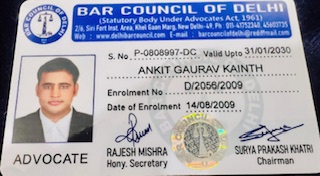
At Ankit Gaurav Kainth & Associates, we assist litigants with preliminary case assessment, review of the pending proceedings, preparation of the factual and legal grounds, supporting documents, drafting strategy and coordination of proceedings before the Supreme Court through the applicable Advocate-on-Record framework.
Is the Supreme Court the Correct Court for Transfer of Your Case?
Before preparing a Transfer Petition, the first question is not simply whether transfer is desirable.
The first question is:
Which court legally has the power to order the requested transfer?
Different provisions apply to different types of proceedings.
| Nature of Transfer | Relevant Provision | Appropriate Forum |
| Civil or matrimonial proceeding from one State to another | Section 25, Code of Civil Procedure, 1908 | Supreme Court of India |
| Criminal case or appeal requiring interstate transfer between courts subordinate to different High Courts | Section 446, Bharatiya Nagarik Suraksha Sanhita, 2023 | Supreme Court of India |
| Older criminal proceedings governed by the previous Code | Section 406 CrPC may remain relevant depending upon the proceeding | Supreme Court of India |
| Criminal transfer within the jurisdiction governed by a High Court | Section 447 BNSS may become relevant | Appropriate High Court |
| Civil transfer within the same State | Sections 22–24 CPC may become relevant | Appropriate District Court/High Court |
| Certain proceedings involving High Courts or common substantial questions of law | Article 139A of the Constitution | Supreme Court of India |
The Supreme Court currently classifies Transfer Petitions separately under Article 139A(1), Article 139A(2), Section 25 CPC and Section 446 BNSS/Section 406 CrPC.
Correct identification of jurisdiction is therefore an essential first step.
Transfer Petition Under Section 25 CPC
Section 25 of the Code of Civil Procedure empowers the Supreme Court, where the legal requirements are satisfied, to transfer a suit, appeal or other proceeding from a High Court or civil court in one State to a High Court or civil court in another State.
This provision is frequently invoked in matrimonial disputes where proceedings have been instituted in one State while the other spouse resides in another.
It may also arise in other civil proceedings where an interstate transfer is sought.
The central consideration remains whether transfer is expedient for the ends of justice.
Recent Supreme Court office reports continue to record civil Transfer Petitions being filed under Section 25 CPC read with Order XLI of the Supreme Court Rules, 2013.
Matrimonial Transfer Petition Before the Supreme Court
Matrimonial disputes form an important category of Transfer Petitions.
A common situation arises when one spouse files a divorce, restitution, custody or connected matrimonial proceeding in one State while the other spouse is residing in another State.
For example:
Divorce proceedings pending in Jaipur → transfer sought to Delhi
or
Family Court proceedings in Delhi → transfer sought to another State
The Supreme Court examines the factual circumstances rather than applying a mechanical rule.
Relevant circumstances may include the residence of the parties, financial position, employment obligations, responsibility for minor children, health circumstances, availability of family support, distance, travelling requirements, connected proceedings and the hardship likely to be caused to both parties.
Is a Wife Automatically Entitled to Transfer?
No.
The circumstances of a wife who has to travel a substantial distance, particularly while caring for a child or facing genuine financial or medical difficulties, can be highly relevant.
However, transfer is not automatic merely because the applicant is the wife.
The Supreme Court has emphasised that matrimonial Transfer Petitions must ultimately be considered on their individual facts and merits. In Delma Lubna Coelho v. Edmond Clint Fernandes, the Court referred to the earlier decision in Anindita Das v. Srijit Das and reiterated the need for case-specific consideration.
A properly prepared petition should therefore demonstrate actual hardship through facts and supporting material rather than rely upon general statements.
What Does the Supreme Court Consider in a Matrimonial Transfer Petition?
A Transfer Petition should present a clear comparison of the circumstances of both parties.
The Court may examine factors such as:
| Factor | Why It May Matter |
| Distance between the two courts | Repeated interstate travel may create genuine hardship |
| Financial position | Ability to bear travel and litigation expenses may be relevant |
| Minor children | Childcare responsibilities may affect ability to travel |
| Employment | Repeated absence from employment may create difficulty |
| Medical circumstances | Genuine health issues should ordinarily be supported by records |
| Connected proceedings | Multiple proceedings in different jurisdictions may be relevant |
| Residence of parties | Helps establish the practical impact of the existing forum |
| Family support | May become relevant where a party depends upon family assistance |
| Stage of the existing case | Transfer at a very advanced stage may require separate consideration |
| Conduct and factual accuracy | Incorrect or exaggerated pleadings can adversely affect credibility |
The objective should be to demonstrate why the requested transfer serves justice—not merely why one city is personally preferable.
Filing a Transfer Petition vs Opposing a Transfer Petition
A strong Supreme Court Transfer Petition page should address both sides of the litigation.
If You Want to File a Transfer Petition
The case should clearly identify the pending proceeding, existing court, proposed transferee court, legal provision invoked, factual hardship, jurisdiction of the proposed court and supporting documents.
The pleadings should explain why the requested transfer is necessary and why the proposed court is legally competent to receive the proceeding.
If You Have Received Notice of a Transfer Petition
A respondent is entitled to contest the request.
The reply may examine whether the alleged hardship is supported by documents, whether material facts have been omitted, whether the proposed court has jurisdiction, whether the respondent would suffer greater hardship, whether the underlying matter has reached an advanced stage and whether practical alternatives are available.
A Transfer Petition should therefore never be treated as a formality merely because notice has been issued.
Transfer Petition From Another State to Delhi
Delhi frequently becomes the proposed transferee jurisdiction where one of the parties resides or where connected litigation is pending.
Depending upon the facts and jurisdiction, a party may seek transfer of proceedings from another State to an appropriate court in Delhi.
Examples may include proceedings presently pending in Rajasthan, Haryana, Uttar Pradesh, Uttarakhand, Madhya Pradesh, Maharashtra or another State where transfer to a competent Delhi court is sought.
The legal question remains whether the proposed Delhi court has jurisdiction and whether the circumstances justify transfer.
Residence in Delhi by itself does not automatically establish a right to transfer.
Transfer Petition From Delhi to Another State
The reverse situation is equally possible.
A matrimonial or civil proceeding may already be pending before a Delhi court while the opposite party seeks transfer to another State.
The Delhi-based litigant should carefully examine:
the reasons stated for transfer, the factual accuracy of the petition, comparative inconvenience, connected litigation, the stage of the Delhi proceeding, availability of evidence and whether the proposed transferee court is legally appropriate.
The respondent’s circumstances are relevant and should be properly placed before the Supreme Court.
Transfer of Matrimonial Proceedings to or From Dwarka Family Court
Dwarka Courts handle a substantial number of matrimonial and family disputes arising from their territorial jurisdiction.
Where a matrimonial proceeding is pending in another State and the applicant is residing within an area falling under the competent jurisdiction of the Family Court at Dwarka, transfer to the appropriate Delhi court may be considered depending upon the facts and applicable matrimonial law.
Similarly, if matrimonial proceedings are pending before the Family Court at Dwarka and the opposite party seeks transfer to another State, the Supreme Court may examine the competing circumstances of both parties.
The correct approach is therefore:
Residence → territorial jurisdiction → pending proceeding → proposed transferee court → comparative hardship → supporting evidence.
Criminal Transfer Petition Under Section 446 BNSS
For present-day criminal proceedings, the important provision is Section 446 of the Bharatiya Nagarik Suraksha Sanhita, 2023.
The provision corresponds broadly to the earlier Section 406 of the Code of Criminal Procedure.
Current Supreme Court cases expressly record criminal Transfer Petitions under Section 446 BNSS read with Order XXXIX of the Supreme Court Rules, 2013.
This is an important update.
A page dealing with present criminal Transfer Petitions should therefore not continue to describe Section 406 CrPC as though it remains the primary current provision for newly governed proceedings.
Section 406 CrPC remains relevant to the older statutory framework and proceedings to which the previous Code continues to apply.
When Can a Criminal Case Be Transferred?
Criminal transfer jurisdiction is exercised cautiously.
A party seeking transfer may rely upon circumstances affecting the administration of justice, but allegations should be specific and supported by material wherever possible.
A mere allegation that a fair hearing will not take place is ordinarily insufficient by itself.
The Supreme Court has reiterated that transfer jurisdiction must be considered in light of the interests of justice and not merely on unsupported apprehensions or convenience.
Depending upon the case, issues concerning witnesses, connected proceedings, genuine apprehension regarding a fair trial, location of parties and other circumstances may require examination.
Every criminal Transfer Petition therefore requires case-specific assessment.
Section 446 BNSS vs Section 447 BNSS
The distinction is important.
Where transfer is sought between criminal courts falling under different High Courts, the Supreme Court’s jurisdiction under Section 446 BNSS may arise.
Where the transfer sought is within the relevant High Court’s jurisdiction, the statutory route may instead fall under Section 447 BNSS, subject to the facts and nature of the proceeding.
Selecting the wrong forum can create unnecessary delay and expense.
Article 139A Transfer Petitions
Article 139A of the Constitution provides a separate constitutional transfer mechanism.
It should not be confused with an ordinary matrimonial Transfer Petition under Section 25 CPC.
Article 139A includes circumstances involving proceedings before High Courts and, under Article 139A(1), cases involving the same or substantially the same questions of law of general importance in the circumstances contemplated by the Constitution.
Article 139A(2) separately provides constitutional power relating to transfer from one High Court to another where the constitutional requirements are satisfied.
The Supreme Court continues to maintain separate case categories for Article 139A(1) and Article 139A(2) Transfer Petitions.
For an ordinary spouse seeking interstate transfer of a matrimonial case pending in a Family Court, Section 25 CPC is ordinarily the more directly relevant provision.
Transfer Petition Is Different From Transfer of Investigation
A request to transfer a pending court case should not be confused with a request to transfer a police investigation.
Section 25 CPC and Section 446 BNSS deal with transfer jurisdiction concerning judicial proceedings within their respective fields.
A request involving transfer of investigation to another police agency, State police force or specialised investigating agency raises different legal questions and should not simply be presented as an ordinary Transfer Petition.
Correct identification of the relief sought is therefore essential before proceedings are initiated.
Documents Commonly Required for Assessment of a Transfer Petition
The exact documents depend upon the case, but a proper assessment ordinarily begins with the pending case itself.
| Document/Information | Purpose |
| Copy of the pending petition, plaint, complaint or case papers | Establishes nature of underlying proceeding |
| Summons/notices | Confirms pending proceedings and dates |
| Orders passed by existing court | Shows present procedural stage |
| Complete case details and case number | Necessary for accurate drafting |
| Residential documents | May support residence-related grounds |
| Employment records | May support employment hardship |
| Medical records | Required where health is relied upon |
| Child-related documents | Relevant where childcare or schooling is pleaded |
| Details of connected proceedings | Helps show parallel litigation |
| Travel details and distance | May demonstrate practical hardship |
| Earlier settlement/mediation documents, where relevant | Helps understand litigation history |
| Documents contradicting the other side’s allegations | Particularly important when opposing transfer |
A Transfer Petition should be built around verifiable facts.
Does Filing a Transfer Petition Automatically Stay the Existing Case?
No.
The mere filing of a Transfer Petition does not by itself mean that proceedings before the existing court have automatically stopped.
Where appropriate, interim protection or stay may be separately sought from the Supreme Court.
Recent Supreme Court Transfer Petition records show separate stay or ex-parte stay applications being filed along with civil Transfer Petitions.
Until an effective stay order is passed, litigants should not assume that the underlying court proceeding can simply be ignored.
How a Transfer Petition Moves Through the Supreme Court
A Transfer Petition involves much more than drafting a few paragraphs about inconvenience.
The practical workflow generally involves:
Case assessment → identification of correct statutory provision → identification of existing and proposed courts → collection of court record and supporting material → preparation of Transfer Petition and interlocutory applications → affidavit and filing documentation → filing through the applicable Supreme Court mechanism → Registry scrutiny → curing procedural defects, where any → listing → consideration of notice/interim relief → response by opposite party → further hearing → transfer order or dismissal → transmission/implementation of the order.
The exact sequence will depend upon the case and the orders passed by the Supreme Court.
Advocate-on-Record and Supreme Court Filing
Supreme Court practice has a specific Advocate-on-Record (AOR) framework.
The Supreme Court’s e-filing system confirms that filing and refiling through an advocate’s account is connected to the Advocate-on-Record framework, while it also separately recognises party-in-person filing.
Accordingly, litigants should understand the distinction between:
case assessment and strategy, drafting and preparation, appearing/arguing counsel, and the Advocate-on-Record responsible for filing and acting before the Supreme Court.
Our assistance may include review of the case, preparation of the factual and legal strategy, drafting support, compilation of documents, briefing and coordination of Supreme Court proceedings through the applicable Advocate-on-Record framework.
This avoids creating unrealistic expectations regarding the Supreme Court filing process.
What Happens After Notice Is Issued?
Once notice is issued, the respondent gets an opportunity to place their position before the Supreme Court.
Depending upon the order and circumstances, this may involve filing a counter-affidavit or response dealing specifically with the grounds relied upon by the petitioner.
A respondent should not merely repeat the allegations from the underlying matrimonial, civil or criminal dispute.
The focus should remain upon the question actually before the Supreme Court:
Should the underlying proceeding be transferred?
This requires a comparative and evidence-based presentation.
How to Oppose a Transfer Petition
A respondent opposing transfer should carefully examine the petition rather than assume that opposition will fail.
Important questions include whether the applicant has disclosed all connected proceedings, whether the residence claimed is genuine and current, whether the applicant is employed, whether childcare or medical grounds are supported, whether personal appearance in the underlying proceeding is routinely required, whether the respondent has comparable or greater hardship and whether the proposed transferee court has jurisdiction.
The stage of the underlying proceeding may also matter.
A properly drafted response should therefore answer the transfer case—not unnecessarily argue the entire matrimonial or criminal dispute.
Can Video Conferencing Affect a Transfer Petition?
Availability of video conferencing may become relevant in an appropriate case, but it should not be treated as an automatic substitute for transfer in every matter.
Equally, distance alone does not necessarily determine the result.
In Delma Lubna Coelho, the Supreme Court considered the individual circumstances of the parties and referred to its earlier guidance concerning virtual participation. The Court ultimately reiterated that transfer questions must depend upon the facts of the particular case.
The relevance of video conferencing therefore depends upon the nature of the proceeding, requirement of personal presence, evidence, mediation and other practical circumstances.
Mediation in Matrimonial Transfer Petitions
A Transfer Petition sometimes brings the wider matrimonial dispute before the Supreme Court at a stage when settlement may still be possible.
Depending upon the circumstances, the matter may be referred for mediation.
Mediation can address issues extending beyond the geographical location of the pending proceeding, including settlement of matrimonial disputes, maintenance, custody, return of articles and connected litigation where legally permissible and agreed upon.
However, mediation should not be presented as a guaranteed consequence of filing a Transfer Petition.
The primary relief in the proceeding remains the requested transfer.
What Happens After a Transfer Petition Is Allowed?
If the Supreme Court directs transfer, the order identifies the proceeding and the court to which it is to be transferred.
The concerned courts then act upon the Supreme Court’s directions and the judicial record is transmitted in accordance with the order and applicable procedure.
The matter does not ordinarily begin as an entirely new dispute merely because the venue changes. It generally proceeds from the procedural position already reached, subject to the Supreme Court’s order and directions of the transferee court.
The parties should therefore obtain and review the transfer order carefully and follow the case in the receiving court.
Common Mistakes in Supreme Court Transfer Petitions
Many Transfer Petitions become weaker because the factual foundation is not properly developed.
Common problems include vague statements about inconvenience, incorrect description of the pending proceedings, absence of supporting documents, failure to establish jurisdiction of the proposed transferee court, outdated reliance upon Section 406 CrPC without considering Section 446 BNSS, suppression of connected cases, exaggerated allegations, incorrect case numbers, inconsistent addresses and failure to explain comparative hardship.
A Transfer Petition is ultimately a pleading before the Supreme Court.
Accuracy matters.
How We Assist in Transfer Petition Matters
Our approach begins with the underlying court file rather than with a predetermined assumption that a Transfer Petition must be filed.
The process may include review of the pending proceeding, jurisdictional assessment, identification of the correct statutory provision, assessment of transfer grounds, examination of connected litigation, review of supporting documents, preparation of factual chronology, drafting strategy, interim-relief assessment, preparation for opposition where notice has been received and coordination with the applicable Supreme Court Advocate-on-Record framework.
For matters originating from or proposed to be transferred to Delhi, our litigation practice in Delhi also allows the Supreme Court strategy to be coordinated with the underlying district, matrimonial, civil or criminal proceedings where required.
Transfer Petition to or From Delhi – Why the Underlying Case Still Matters
A Supreme Court Transfer Petition should never be prepared in isolation from the pending case.
For example, where divorce proceedings are pending in another State but maintenance, Domestic Violence Act or custody proceedings are already pending in Delhi, those proceedings may form part of the factual background.
Similarly, where proceedings are pending before Dwarka Courts, the court orders, pleadings and procedural stage should be properly examined before responding to an interstate transfer request.
The better approach is therefore to treat the Transfer Petition and the underlying litigation as connected parts of one overall case strategy.
| Category | Related Page / Blog | Suggested Anchor Text | URL | Best Placement | SEO Purpose |
|---|---|---|---|---|---|
| Supreme Court | Essential Nuances Before Filing a Petition in the Supreme Court of India | filing a petition in the Supreme Court | https://ankitgauravkainth.in/essential-nuances-before-filing-a-petition-in-the-supreme-court-of-india/ | Supreme Court Filing & AOR section | Strengthens Supreme Court litigation cluster |
| Transfer Petition | Supreme Court Transfer Petition Delhi – Grounds for Transfer | grounds for a matrimonial transfer petition | ADD YOUR EXISTING SEPTEMBER 2026 TRANSFER PETITION BLOG URL | Matrimonial Transfer Petition section | Connects service page with detailed informational article |
| Matrimonial | Divorce Advocate in Dwarka Court | divorce and matrimonial proceedings in Dwarka Court | https://ankitgauravkainth.in/divorce-advocate-dwarka-delhi-2026/ | Dwarka Family Court section | Connects Supreme Court transfer intent with underlying matrimonial litigation |
| Domestic Violence | Domestic Violence & Maintenance Cases in Dwarka Court | connected domestic violence and maintenance proceedings | https://ankitgauravkainth.in/%E2%9A%96%EF%B8%8F-domestic-violence-maintenance-cases-in-dwarka-court/ | Connected proceedings discussion | Builds matrimonial topical authority |
| Criminal | Criminal Defence Lawyer in Dwarka | criminal litigation and defence proceedings | https://ankitgauravkainth.in/criminal-defence-lawyer-in-dwarka-delhi-2026/ | Section 446 BNSS section | Supports criminal transfer topic |
| Matrimonial Procedure | Divorce Timeline in Dwarka Court | stages of a divorce case in Dwarka Court | https://ankitgauravkainth.in/divorce-timeline-in-dwarka-court/ | What Happens After Transfer section | Explains underlying Family Court procedure after transfer |
Frequently Asked Questions – Supreme Court Transfer Petition
1. Which section applies to a matrimonial Transfer Petition before the Supreme Court?
Interstate transfer of an appropriate civil or matrimonial proceeding is ordinarily considered under Section 25 of the Code of Civil Procedure, 1908.
2. Which provision now applies to criminal Transfer Petitions?
For proceedings governed by the new criminal procedural law, Section 446 BNSS is the important Supreme Court transfer provision. Section 406 CrPC remains relevant to the previous statutory framework and proceedings where the earlier law continues to apply.
3. Can a divorce case be transferred from one State to another?
Yes, where the legal requirements are satisfied, the Supreme Court can consider transfer of matrimonial proceedings from a competent court in one State to an appropriate competent court in another State.
4. Is transfer automatically granted to the wife?
No. The Court examines the particular facts and comparative circumstances of the parties. Matrimonial Transfer Petitions are not supposed to be decided through an automatic rule.
5. Can a husband oppose a Transfer Petition filed by his wife?
Yes. The respondent may place the relevant facts, documents and comparative hardship before the Supreme Court.
6. Can a husband himself file a Transfer Petition?
Yes, provided a legally sustainable case for transfer exists. Transfer jurisdiction is not restricted to wives.
7. Can a case be transferred from another State to Delhi?
Yes, subject to jurisdiction and the facts justifying transfer.
8. Can a Delhi case be transferred to another State?
Yes. The Supreme Court can consider an appropriate interstate transfer application seeking transfer from Delhi to another State.
9. Can proceedings be transferred to Dwarka Family Court?
Where Dwarka is the legally competent territorial jurisdiction and the Supreme Court finds transfer appropriate, a matrimonial proceeding may be transferred to the competent court identified in the order.
10. Does filing a Transfer Petition stay the original proceeding?
No. Stay is not automatic merely because the Transfer Petition has been filed. Interim relief should be separately examined and, where appropriate, sought.
11. Are medical grounds sufficient?
Medical circumstances may be relevant, but they should ordinarily be supported by genuine medical documentation and considered along with the overall circumstances.
12. Does having a minor child matter?
Childcare responsibility may be an important circumstance, but the complete factual position of both parties remains relevant.
13. Can employment difficulties be relied upon?
Yes, genuine employment obligations and the practical consequences of repeated interstate travel may be relevant factors.
14. What if I have already received Supreme Court notice?
The petition and accompanying documents should be reviewed promptly so that the transfer allegations, proposed jurisdiction and supporting facts can be properly answered.
15. Do I have to personally attend every Supreme Court hearing?
Personal presence is not necessarily required at every stage. The requirement depends upon the nature of the matter and the directions passed by the Court.
16. Can the Supreme Court send parties to mediation?
In appropriate matrimonial matters, mediation may be considered. Whether it is ordered depends upon the circumstances and directions of the Court.
17. Does the case restart after transfer?
Ordinarily, transfer changes the forum rather than erasing the procedural history of the case. The effect of the transfer order and the stage from which proceedings continue should be examined from the particular order and court record.
18. Can an investigation itself be transferred through Section 25 CPC?
No. Section 25 CPC concerns civil transfer jurisdiction. Transfer of a police investigation involves a different legal framework.
19. How should a Transfer Petition be prepared?
It should clearly identify the proceeding, existing court, proposed court, legal provision, material facts, comparative hardship and supporting documentation.
20. Should a Transfer Petition be filed merely because travelling is inconvenient?
Not necessarily. The strength of a Transfer Petition depends upon the overall circumstances and whether transfer is justified in the interests of justice.
Consult for a Supreme Court Transfer Petition
A Transfer Petition involves more than selecting a convenient court.
The underlying proceeding, territorial jurisdiction, correct statutory provision, comparative hardship, supporting documents, interim relief and Supreme Court procedure should all be examined before filing or opposing the petition.
Ankit Gaurav Kainth & Associates assists clients in assessing civil, matrimonial and criminal Transfer Petition matters connected with Delhi and interstate litigation.
Where Supreme Court proceedings are required, the matter can be prepared and coordinated through the applicable Advocate-on-Record framework.
Office/Chamber: Chamber No. 728, Dwarka Courts, Sector 10, New Delhi
Consultation: By prior appointment.
Disclaimer
The information on this page is intended for general legal awareness and does not constitute legal advice for any particular case. Transfer jurisdiction depends upon the facts, applicable statutory provisions, procedural history and orders of the courts concerned. A litigant should obtain case-specific legal advice after review of the complete record.